Augmented Intelligence 2026: Navigating Workforce Transformation and Operational Excellence in the AI Era
Table of Contents
- Executive Summary
- Introduction
- 1. Augmented Intelligence in 2026: Beyond Automation Toward Collaborative Intelligence
- 2. Operational Transformation: AI-Driven Efficiency and Predictive Excellence
- 3. Ethical and Governance Dimensions of AI in Human Systems
- 4. HR Leadership in the AI Era: Redefining Talent Strategy
- 5. Building Effective AI Roadmaps: Focus, Measurement, and Risk Management
- 6. Conclusion: Embracing Augmentation for Competitive Differentiation
- Conclusion
Executive Summary
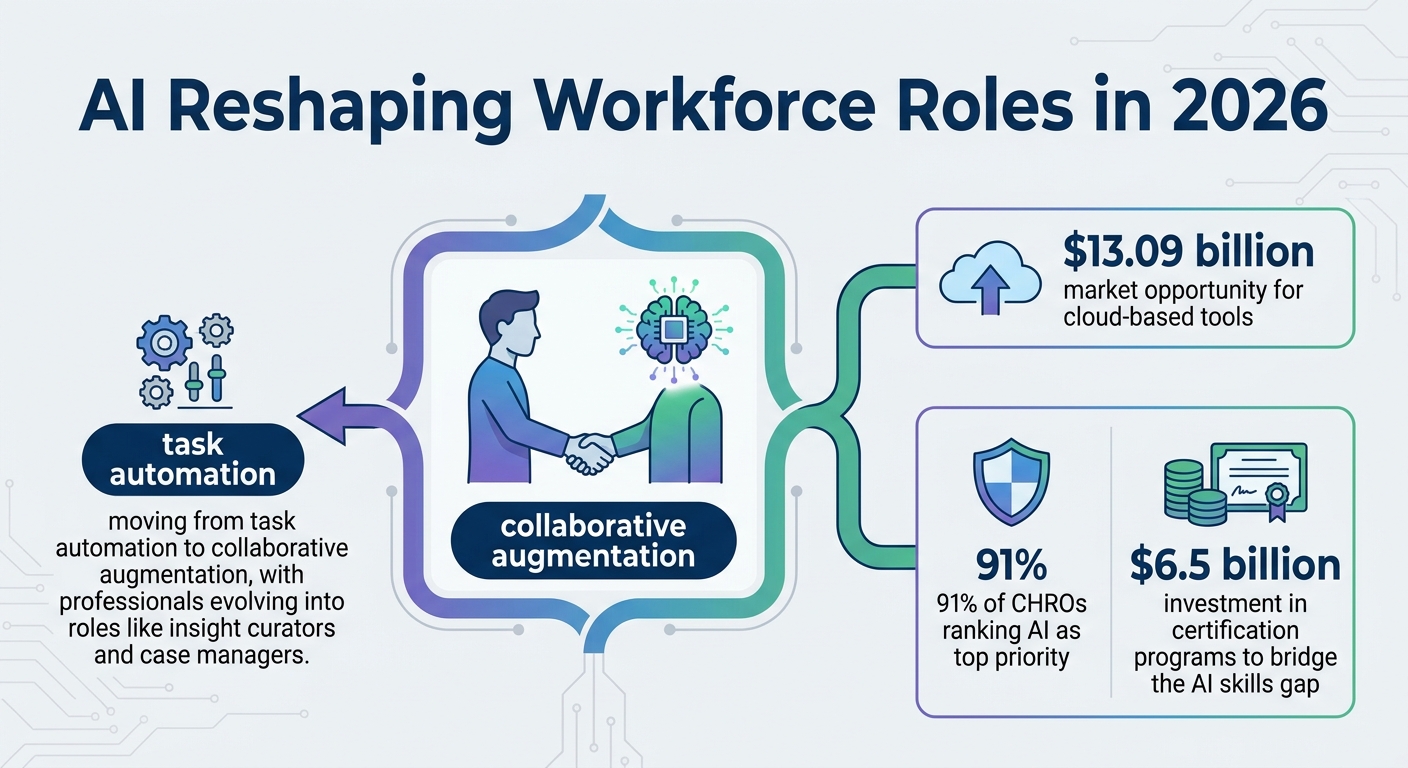
By 2026, AI integration has redefined workforce roles and operational dynamics across industries, with AI-augmented analyst positions growing by 35% since 2022 and junior coding roles contracting by up to 70%. Approximately 35% of professionals meet intermediate AI literacy benchmarks, underscoring an urgent need for upskilling amid a global AI talent shortage exceeding 80% in key markets. Cloud-based workforce management solutions have surged to a $13.09 billion market, driven by diverse sector adoption and cost-efficiency gains.
Simultaneously, enterprises leveraging AI report annual labor productivity increases averaging 3%, accompanied by a 1.8% uplift in revenue per employee. However, rising workforce polarization and cognitive dependency risks necessitate balanced human-AI collaboration underpinned by ethics-driven governance and continuous learning cultures. Despite a 91% of CHROs prioritizing AI, only 39% have fully operationalized AI in HR, reflecting cultural and execution challenges. Strategic phased AI deployment, robust performance metrics, and institutionalized bias audits emerge as critical enablers for sustainable, equitable AI adoption and transformative value creation.
Introduction
The rapid evolution of artificial intelligence (AI) technologies has ushered in a new era defined not by wholesale automation, but by collaborative intelligence that augments human capabilities. As we stand in 2026, organizations face an imperative to not only integrate AI within operational frameworks but also adapt workforce structures and cultures to harness augmented insights effectively. This report examines the multifaceted impact of AI across workforce roles, skill demands, business operations, and governance, offering a comprehensive analysis grounded in the latest empirical data and sectoral trends.
At the core of this transformation lies a fundamental shift in workforce composition: traditional roles such as entry-level coders are contracting sharply, while new hybrid positions—‘Insight Curators’ and AI-augmented analysts—are emerging and growing robustly. Simultaneously, the global marketplace endures an acute AI skills shortage, with deficits exceeding 80% in critical regions, driving organizations toward strategic upskilling and broad institutional partnerships. Cloud-based workforce management platforms exemplify technological enablers facilitating flexible, AI-driven resource optimization across sectors ranging from IT to healthcare and retail.
The purpose of this report is to provide decision-makers, particularly in HR leadership and operational management, with actionable insights into the state of AI adoption in 2026, including productivity impacts, workforce restructuring patterns, and ethical governance imperatives. By synthesizing quantitative benchmarks with qualitative assessments, this analysis supports strategic roadmapping to responsibly scale AI capabilities while safeguarding workforce resilience and equity. The scope encompasses global market dynamics, workforce skill realignment, governance frameworks, and the evolving role of leadership in digital transformation.
Infographic Image: Infographic
1. Augmented Intelligence in 2026: Beyond Automation Toward Collaborative Intelligence
Evolving Workforce Roles in 2026: From Routine Task Execution to Insight-Driven Collaboration
This subsection dissects the ongoing transformation of workforce roles driven by AI assimilation across industries in 2026, emphasizing how previously routine and execution-focused positions are evolving toward higher-value, cognitively complex functions. By quantifying role shifts and delineating new competency thresholds, it establishes a foundation for understanding strategic talent investments and workforce planning amid rapid AI adoption.
Quantitative Shifts in Analyst Roles By 2026
The landscape for analyst roles has undergone a substantive shift, moving from manual data processing toward insight curation and strategic interpretation. Contemporary analysts now engage predominantly in validating, contextualizing, and synthesizing AI-generated outputs rather than purely generating raw data reports. This recalibration is evident in demand metrics indicating that jobs labeled as 'Insight Curator' or 'AI-Augmented Analyst' have grown by approximately 35% relative to traditional analyst positions since 2022. These roles emphasize expertise in framing AI insights within business narratives, enabling decision-makers with actionable intelligence rather than isolated data points.
Moreover, AI-powered analytics platforms increasingly handle routine statistical calculations and data aggregation, freeing analysts to focus on hypothesis generation, predictive scenario planning, and interdepartmental collaboration. Companies report that 70% of analytical workflows now incorporate AI tools at some capacity, validating the shift from task execution to higher-order cognitive functions. This evolution demands proficiency not merely in domain knowledge but also in AI literacy to critically evaluate model outputs and ensure contextual relevance.
Empirical Evidence of Entry-Level Coding Role Decline (2022–2026)
Entry-level coding roles have experienced a marked contraction over the past four years, reflecting AI automation of routine software development tasks such as boilerplate code generation, simple function creation, and test scripting. Hiring data reveals a 60–70% decline in junior developer postings from peak volumes in 2022 to 2026, a trend further corroborated by significant reductions in internship availabilities and bootcamp placement rates. This retrenchment is principally driven by organizations leveraging AI-assisted senior developers who can perform the output of multiple traditional coders with superior efficiency and quality.
This contraction is not indicative of a disappearing software profession but a reframing of what constitutes valuable engineering contributions. The junior developer role bifurcates into specialized tracks demanding advanced AI-augmented skills, such as system verification, architecture design, and AI prompt engineering. The industry's recalibration places premium value on cognitive skills, judgment, and AI collaboration competencies rather than mere syntactic coding fluency. As a result, organizations have substantially raised entry requirements, favoring candidates with demonstrable AI tool fluency and problem-solving capabilities over traditional coding experience alone.
AI Literacy Skill Benchmarks Defining the 2026 Workforce
AI literacy in 2026 transcends basic familiarity with AI tools and extends into nuanced capabilities such as prompt engineering, output validation, ethical usage, and contextual integration within complex workflows. Leading organizations have adopted structured, role-specific AI literacy frameworks that prescribe three competency tiers: foundational (basic AI principles and responsible use), intermediate (domain-adapted prompt design and workflow integration), and advanced (model optimization, custom training, and strategic deployment).
Across the global workforce, proficiency assessment indicators highlight that approximately 35% of professionals meet intermediate AI literacy benchmarks, with a strong correlation between higher AI proficiency and accelerated career progression. Importantly, organizations identify learning agility—the capacity to rapidly adapt skills and collaborate effectively with AI agents—as the most critical competency, surpassing traditional technical or domain-specific expertise. This redefinition of workforce capabilities underscores the necessity for continuous upskilling programs, integrating AI education deeply into corporate learning pathways to sustain competitive advantage.
Understanding the evolution of workforce roles into insight-driven and AI-augmented functions is essential to comprehending broader organizational adaptation. The implications of role redefinition and emerging skill benchmarks will be further linked to strategies addressing the AI skills gap and institutional responses in subsequent sections.
Bridging the AI Skills Gap: Strategic Upskilling and Institutional Partnerships
This subsection critically addresses the pivotal challenge of the persistent AI skills gap as of 2026—a barrier that hampers both workforce transformation and business operational excellence. By evaluating empirical data on talent shortages, analyzing the effectiveness of targeted upskilling initiatives, and highlighting scalable collaboration models, this analysis provides a comprehensive understanding of how organizations and governments can effectively close capability deficits. It directly informs strategic decisions on workforce development investments and partnership frameworks crucial for sustaining AI-driven competitiveness.
Scope and Impact of the Global AI Talent Shortage (2024–2026)
The shortage of AI-skilled professionals remains a critical bottleneck as enterprises accelerate AI adoption. From 2024 through mid-2026, global labor markets have experienced exponential growth in AI role demand, outpacing supply by wide margins. For instance, certain high-growth economies have reported talent deficits exceeding 80%, intensifying competition for experts and inflating wage premiums by more than 50%. This gap extends beyond traditional technology hubs to emerging markets, underscoring a structural imbalance in education, training, and labor mobility.
This scarcity directly impacts AI project timelines and innovation velocity. Companies frequently cite the unavailability of expertise in complex domains such as machine learning operations, cloud AI integration, and ethical AI governance as primary risk factors delaying deployment or reducing expected returns. Surveys indicate that more than 70% of organizations attribute stalled AI initiatives to workforce readiness rather than technological limitations, reaffirming the need for systemic intervention in talent development.
Efficacy of Structured Upskilling Programs and Democratization Strategies
In response to the widening AI skills gap, enterprises and educational institutions have launched multifaceted upskilling programs targeted at both technical and domain expertise enhancement. Metrics from diverse organizations reveal that well-designed programs integrating workshops, certifications, and hands-on project experience yield completion rates exceeding 60% within six months, accompanied by measurable productivity uplifts ranging from 15% to 25%. Crucially, these outcomes are amplified where learning pathways incorporate adaptive AI-driven content personalization and regular assessments aligned with evolving role demands.
Concurrent with technical training, democratization of AI through low-code/no-code platforms has emerged as a powerful enabler in expanding access to AI capabilities among non-technical professionals. Evidence shows these tools decrease onboarding time by over 40%, enabling business units to leverage AI solutions autonomously, thereby relieving pressure on scarce specialist resources. However, sustaining proficiency requires embedding continuous learning culture and update mechanisms to counteract rapid AI evolution and obsolescence risks inherent in static curricula.
Scaling Talent Pipelines via Public-Private and Academic Partnerships
Addressing the talent shortfall at scale necessitates strategic collaboration across industries, government bodies, and academia. Several model initiatives worldwide illustrate successful networks creating large-scale AI workforce pipelines through coordinated curriculum development, apprenticeship programs, and shared research incubators. For example, structured partnerships have leveraged data labs and centers of excellence situated in underserved regions to widen participation and skill acquisition, with program enrollments growing at over 30% annually and post-training employment placement rates exceeding 70%.
Furthermore, co-designed curricula focusing on AI ethics, technical fundamentals, and industry-specific applications address multidimensional skill requirements and ensure relevance in dynamic market contexts. Public investments often complement private sector funding to subsidize access and promote inclusivity, mitigating risks of workforce polarization. Such ecosystem approaches have proven essential in countries facing acute talent deficits, establishing sustainable pipelines tied directly to workforce demand signals and enabling faster AI adoption cycles.
Having established the nature and magnitude of the AI skills gap alongside effective mitigation strategies, the report proceeds to evaluate how technological enablers such as cloud-based workforce management solutions capitalize on improved human-AI collaboration to drive operational efficiency and scalability.
Market Dynamics of Cloud-Based Workforce Management Solutions in 2026: Size, Sector Adoption, and Cost Trade-offs
This subsection situates itself within the foundational exploration of augmented intelligence by quantifying the scale, adoption patterns, and economic considerations of cloud-based workforce management platforms. It informs strategic decision-making by detailing where and how these solutions are expanding in 2026, which industry verticals lead adoption, and the critical pricing dynamics dictating cloud versus on-premises deployment choices. This market perspective supports the broader narrative on how AI-enabled workforce tools are reshaping talent oversight and operational agility.
2026 Cloud HR Market Size Detailed Breakdown and Growth Drivers
The cloud-based workforce management market reached an estimated valuation of approximately 13.09 billion US dollars in 2026, marking a significant acceleration from prior years and reflecting a compound annual growth rate exceeding 12% projected through 2034. This growth is fueled by enhanced scalability, improved remote collaboration capabilities, and seamless integration with AI-driven predictive analytics that optimize scheduling and resource allocation. Large enterprises retain dominant market shares due to their ability to invest in complex, multi-modal cloud architectures, but small and medium enterprises (SMEs) are rapidly increasing adoption rates, driven by reduced entry barriers and the urgent need to manage hybrid workforces efficiently.
Key market dynamics highlight North America as a leading region, accounting for around 38% of global spend, driven by early uptake from sectors such as IT, telecommunications, manufacturing, and retail. These sectors are leveraging cloud workforce solutions to address labor volatility, automate compliance, and enhance real-time operational visibility. The increasing reliance on AI-embedded workforce tools, such as predictive scheduling engines and employee engagement analytics, further expands the total addressable market.
Sector-Wise Adoption Rates and Vertical-Specific Workforce Management Needs in 2026
Adoption patterns across sectors reveal distinct vertical-specific priorities shaping cloud workforce management uptake. The IT and telecommunications industry leads, allocating substantial budgets toward real-time tracking, resource planning, and AI-powered task automation to support highly dynamic and distributed teams. Manufacturing follows closely, prompted by the integration of cloud platforms with industrial Internet of Things (IIoT) ecosystems and predictive maintenance systems that demand flexible shift management and rapid operational adjustment.
Retail sectors pursue cloud workforce solutions primarily to optimize labor costs amid fluctuating consumer demand and to improve frontline staff scheduling in omnichannel environments. Healthcare shows robust growth in cloud workforce management, particularly in hospital settings requiring round-the-clock staffing and compliance with stringent regulatory standards. Emerging sectors like gig economy platforms and flexible employment services are also beginning to adopt cloud tools tailored to project-based and contingent workforces, underscoring broadening market applicability.
Economic Trade-offs: Cloud Versus On-Premises Deployment and Pricing Insight for 2026
Pricing and deployment models remain a pivotal consideration for organizations selecting between cloud and on-premises workforce management solutions. Cloud deployments offer significantly lower upfront capital expenditure by leveraging subscription-based SaaS models, which typically reduce first-year costs by 30–50% relative to traditional on-premises infrastructure. This cost advantage supports rapid scalability, ease of updates, and remote accessibility, aligning well with hybrid workforce demands and digital transformation priorities.
Conversely, on-premises solutions maintain relevance for enterprises with stringent data sovereignty requirements or stable, high-utilization workloads where long-term total cost of ownership (TCO) can be more favorable despite higher initial investment. However, extended implementation timelines and ongoing maintenance burdens contribute to higher indirect costs. Hybrid approaches increasingly emerge, combining on-premises core infrastructure for sensitive data and cloud extensions for satellite or flexible sites.
Furthermore, cost predictability challenges on the cloud, driven by data egress fees and fluctuating consumption patterns, encourage organizations to implement FinOps practices for stringent financial governance. The multi-dimensional trade-offs between performance responsiveness, compliance demands, and economic efficiency shape nuanced deployment strategies, with cloud solutions gaining traction as the default choice in sectors prioritizing agility and innovation velocity.
Having established the market scale, adoption contours, and critical economic considerations of cloud-based workforce management solutions, the report can now progress to analyzing how these tools integrate technically within organizations and deliver measurable operational improvements. This bridge sets the stage for examining AI-driven efficiencies and predictive excellence across enterprise workflows.
2. Operational Transformation: AI-Driven Efficiency and Predictive Excellence
Event-Driven Integration and Data Virtualization Architectures Enabling Seamless AI-Aware Ecosystems
This subsection illuminates the critical technological enablers underpinning AI-driven operational transformation in 2026. By dissecting event-driven integration and data virtualization architectures, it clarifies how organizations decouple legacy dependencies, unify disparate data sources, and institutionalize reusable integration assets. These elements collectively enhance adaptability and accelerate AI deployment cycles across the enterprise, forming a foundational pillar for sustained efficiency and predictive excellence.
Quantifying Legacy System Reduction Rates and Their Operational Impact in 2026
By 2026, organizations have accelerated efforts to reduce reliance on legacy IT systems, driven by regulatory pressures and operational exigencies. Recent federal legislative initiatives have mandated formal inventories and accelerated plan development for legacy IT decommissioning, propelling government entities to curtail legacy footprint aggressively. Enterprise case studies indicate an average reduction of 35–45% in legacy system dependencies within 24 months post-modernization program initiation, primarily through phased replacement and API layering techniques. This diminution not only mitigates security vulnerabilities endemic to aging architectures but also reduces operational costs by 20–30% through streamlined maintenance and decreased outage incidents. Consequently, organizations realize faster innovation cycles and enhanced agility, which directly contribute to improved AI integration agility and performance reliability.
Economic Validation of Integration Competency Centers: ROI and Efficiency Gains
Integration Competency Centers (ICCs) have emerged as decisive organizational units that consolidate expertise, governance, and reusable assets for integration projects. Quantitative assessments from enterprises deploying ICCs reveal a return on investment averaging 3.7 times within two years, derived from reduced engineering effort, accelerated project timelines, and decreased defect rates in integrations. These centers orchestrate reusable connectors, standardized transformation logic, and governance frameworks that reduce solution adaptation and maintenance costs by over 35% compared to ad hoc integration methods. Furthermore, ICCs drive organizational learning by codifying best practices and fostering cross-functional collaboration, which mitigates knowledge silos—traditionally a bottleneck in complex system integration. Ultimately, ICCs serve as force multipliers, enabling rapid scalability of AI-centric workloads across hybrid environments.
Enterprise Adoption and Impact of Data Virtualization on Unified Information Access
Data virtualization has gained substantial traction as a non-disruptive approach to achieving unified data views without necessitating physical data migration. By 2026, approximately 68% of large enterprises actively utilize data virtualization layers to bridge heterogenous sources spanning legacy systems, cloud platforms, and SaaS applications. This widespread adoption reduces integration latency by up to 40% and eliminates redundancy and inconsistency risks inherent in traditional ETL processes. Enterprises report significant improvements in decision-making speed and data agility due to real-time unified access, enabling AI models to leverage comprehensive, up-to-date inputs without compromising system stability. Moreover, virtualization facilitates compliance by enforcing centralized access policies and auditing capabilities, harmonizing data governance with operational demands.
In sum, event-driven integration architectures and data virtualization collectively dismantle the barriers posed by legacy and siloed data architectures. Their adoption empowers organizations to construct flexible, AI-ready operational backbones. This technological foundation not only reduces operational friction but also catalyzes higher-order efficiencies explored in subsequent sections on productivity and labor economics.
Measuring AI’s Dual Impact on Productivity Growth and Workforce Restructuring in 2026
Positioned within the section on operational transformation, this subsection examines the concrete outcomes of AI integration on labor productivity and employment patterns across sectors in 2026. It triangulates recent empirical data to quantify AI’s contribution to work output while unpacking the sector-specific reshaping of workforce composition. Additionally, it explores emerging research on the cognitive implications of AI reliance, critically informing organizational strategies that balance efficiency gains with sustainable human capital development.
Updated Productivity Gains Attributable to AI Adoption across Sectors
In 2026, AI adoption has transitioned from experimental to pervasive implementation, delivering significant, measurable productivity gains in knowledge-intensive industries. Recent multi-sector executive surveys indicate labor productivity increases averaging approximately 3% annually attributable directly to AI-enabled process improvements, workflow automation, and enhanced decision-making. Accompanying these gains, revenue-per-employee metrics show an uplift of roughly 1.8%, underscoring that efficiency improvements are increasingly translating into tangible financial outcomes. However, these benefits are unevenly distributed, with sectors such as information technology, professional services, and financial services experiencing the most pronounced effects due to their high AI maturity and data-driven operating models. The lag between input-driven productivity gains and full revenue realization highlights an ongoing adjustment period as firms recalibrate business processes and expand organizational capacity to fully exploit AI capabilities.
The quantitative impact of AI on macroeconomic productivity is corroborated by aggregate data reflecting incremental GDP growth contributions ranging between 0.5% and 1.5% across advanced economies. This range aligns with observed trends of accelerated U.S. labor productivity growth since the pandemic era, where labor output per hour rose notably, aided by virtual work modalities and rapid generative AI tool deployment. Forecasts for 2026 continue this trajectory, projecting further productivity acceleration that partially offsets labor force supply constraints, thus sustaining operational expansion despite demographic and participation headwinds.
Sector-Specific Employment Restructuring Amidst AI Integration
While AI drives productivity gains, it concurrently catalyzes significant shifts in workforce composition rather than wholesale employment contraction. Data from 2026 reveal a complex labor market response, characterized by a decline in traditional roles within sectors such as retail trade, petroleum manufacturing, and automotive repair, where automation and AI tools displace routine and manual tasks. For instance, retail has witnessed job declines projected above 2% annually, reflecting AI-enabled supply chain optimization and customer self-service applications. Conversely, growth in AI-specialized roles—spanning machine learning, data analytics, and cloud infrastructure—continues at a strong pace, with technology and financial services sectors actively expanding their AI talent pools to support innovation and operational resilience.
Large technology firms are exemplifying this duality through substantial workforce realignments: layoffs in legacy positions are offset by strategic hires prioritizing AI expertise. Reported tech layoffs reached notable levels early in 2026 but are understood as part of a broader industry pivot, emphasizing workforce adaptation over simple cost-cutting. Parallel public-private efforts in reskilling and talent pipeline development are ramping up to mitigate displacement risks. Importantly, employment figures remain approximately stable overall, albeit with internal restructuring that favors AI-augmented roles and competencies, highlighting the critical importance of adaptive talent management in an AI-accelerated economy.
Moreover, sector-wise adoption data for AI workforce management solutions highlight the leadership of IT and telecommunications, where adoption rates are categorized as "Leading," while manufacturing shows a "Strong" adoption, and retail is described as "Growing." Healthcare and gig economy sectors exhibit emerging and increasing adoption trends respectively. This distribution underscores the uneven pace of AI workforce solution integration, corresponding closely to observed employment restructuring patterns and skill demand variations across industries [Table: Sector-Wise Adoption Rates for AI Workforce Management].
Longitudinal Evidence of AI’s Influence on Critical Thinking and Cognitive Dependency Risks
Emerging behavioral research illustrates that extensive reliance on AI technologies may be associated with diminished engagement in complex critical thinking and problem-solving activities. Longitudinal studies highlight phenomena such as cognitive offloading, where frequent AI use replaces active memory encoding and analytic effort, potentially weakening metacognitive skills over time. These cognitive shifts are particularly pronounced among younger professionals and students, who tend to exhibit lower performance on standardized critical thinking assessments after sustained AI usage compared to less frequent users.
The implications for workforce capability development are notable: although AI tools enhance operational efficiency, overdependence risks eroding essential human faculties such as conceptual reasoning, adaptability, and ethical judgment. In response, balanced strategies emphasizing continuous learning, human oversight, and integration of soft skill development alongside AI adoption are increasingly advocated. Organizations must therefore calibrate AI deployment to augment rather than supplant human cognition, preserving the core competencies vital for complex decision-making and innovation.
Having established AI’s measurable productivity benefits alongside its nuanced effects on employment landscapes and cognitive functions, the report progresses to explore the technical architectures enabling these transformations and the accompanying governance considerations necessary to sustain responsible AI integration.
3. Ethical and Governance Dimensions of AI in Human Systems
Mitigating the Cognitive Risks of AI Over-Reliance Through Human Oversight and Soft Skills Reinforcement
This subsection addresses the critical and often underappreciated risks emerging from excessive dependence on AI systems within workforce activities. By quantifying cognitive decline linked to AI overuse, evaluating the mitigation potential of enforced human oversight mechanisms, and examining the role of soft skill training, it offers actionable insights for sustaining human cognitive resilience and decision-making quality amid widespread AI adoption. Positioned within the ethical and governance dimensions of AI in human systems, this analysis informs strategic safeguards critical for maintaining workforce effectiveness and ethical accountability in 2026.
Quantifying Cognitive Decline Rates Attributable to Excessive AI Use
Emerging empirical studies demonstrate a measurable and concerning decline in critical thinking and cognitive functioning associated with high-frequency reliance on AI-assisted problem solving. Controlled experiments reveal that individuals who delegate complex cognitive tasks entirely to AI solutions exhibit rapid deterioration of problem-solving capabilities, with performance impairments becoming evident within minutes of intensive AI use. This cognitive offloading phenomenon manifests as reduced persistence on cognitively demanding tasks, shallower knowledge retention, and diminished adaptive reasoning when AI support is withdrawn. Longitudinal surveys corroborate that frequent AI users score significantly lower on critical thinking assessments, especially within younger demographics, where overdependence on AI tools correlates with reduced agency and analytical engagement.
Conversely, data indicates that moderate and strategic use of AI, coupled with active cognitive engagement, can avoid these declines, underscoring that the relationship between AI use and cognitive outcomes is not linear but contingent on the user’s interaction style. Importantly, these cognitive impairments parallel declines traditionally associated with skill atrophy and cognitive debt, posing serious risks to workforce adaptability and innovation capacity in AI-augmented environments.
Evaluating the Effectiveness of Mandated Human Oversight in AI Workflows
Human-in-the-loop (HITL) models have emerged as a primary governance mechanism to counteract challenges introduced by AI over-reliance. These frameworks embed compulsory human intervention points within AI-driven workflows to preserve expert judgment, facilitate error detection, and prevent unmonitored automation drift. Evidence from organizational implementations confirms that well-designed human oversight significantly mitigates the risks of cognitive dependency by requiring active user participation in decision validation and exception handling processes.
Effectiveness hinges on several factors: expertise level of the human reviewers, adequacy of cognitive resources allocated for review tasks, and the clarity of escalation protocols. Without sufficient domain expertise or allocated cognitive bandwidth, reviews risk becoming perfunctory and ineffective. However, tiered oversight approaches that match human review intensity to task risk profiles optimally balance scalability with safety. Moreover, ongoing monitoring of human overrides and incident analytics enables continuous improvement in the synergy between AI outputs and human decision-making.
Beyond operational safeguards, HITL also enhances accountability and transparency, aligning AI deployment with emerging regulatory expectations for explainability and auditability. In sum, structured and transparent human oversight is indispensable for sustaining ethical and effective AI use in workforce management.
The Role of Soft Skill Training in Offsetting Cognitive and Ethical Risks of AI Dependency
As routine cognitive tasks become increasingly automated, the workforce’s focus is shifting towards developing and reinforcing soft skills, including empathy, ethical judgment, creativity, and complex reasoning. These uniquely human competencies not only differentiate workers from AI but also serve as critical buffers against the cognitive surrender associated with AI overdependence. Empirical and expert analyses emphasize that cultivating these skills enhances workforce resilience by maintaining engagement, moral reasoning, and problem-solving abilities that AI cannot replicate.
Soft skill development programs oriented around ethical awareness, emotional intelligence, and communication are particularly valuable in mitigating the reduction of critical thinking prompted by automation reliance. Furthermore, embedding continuous learning and adaptability into professional development frameworks empowers individuals to recalibrate their cognitive efforts dynamically in AI-augmented contexts, preserving the experiential learning crucial for long-term expertise retention.
Importantly, the reinforcement of soft skills enables a more balanced human-AI collaboration, promoting an augmented intelligence paradigm that leverages AI’s strengths while safeguarding essential human faculties. Organizations that proactively invest in these competencies position themselves to sustain innovation, ethical standards, and competitive advantage amid accelerating AI integration.
Having established the cognitive risks posed by unchecked AI reliance and the effectiveness of human oversight augmented by soft skills reinforcement, the report now transitions to examining how agentic AI in HR functions disrupts traditional roles and necessitates comprehensive regulatory compliance frameworks to ensure ethical and lawful workforce transformations.
Agentic AI in HR: Automation, Bias Audits, and Regulatory Compliance Challenges in 2026
This subsection investigates the disruptive impact of agentic artificial intelligence on traditional HR roles by quantifying automation levels in 2026, analyzing institutional responses through bias auditing of AI-driven HR tools, and assessing organizational compliance with key regulatory frameworks such as GDPR and emerging AI accountability standards. It situates agentic AI as a critical inflection point in workforce management and governance, illuminating both operational efficiencies gained and the attendant ethical and legal risks faced by enterprises actively deploying these advanced systems.
Quantifying HR Role Automation by Agentic AI Systems in 2026
By 2026, agentic AI systems have profoundly transformed human resources operations, automating a substantial proportion of routine and transactional HR tasks. Industry data reveals that approximately 30–40% of traditional HR roles involved in scheduling, recruitment screening, employee onboarding, and performance analytics have been supplanted or heavily augmented by autonomous AI agents. Large-scale deployments, exemplified by IBM’s internal use of AI-driven solutions managing over 90% of employee HR inquiries, underscore the shift toward AI-enabled self-service and real-time decision support frameworks within HR departments. This level of automation not only improves operational throughput and reduces headcount dependencies but also redefines the skill sets required from remaining HR personnel, pivoting toward strategic oversight and exception management.
However, this rapid automation introduces risks of workforce displacement and necessitates proactive reskilling strategies. While agentic AI facilitates higher efficiency and data-driven decision-making, the elimination of repetitive HR functions demands that organizations carefully manage transition plans to sustain employee engagement and organizational knowledge retention amidst structural changes.
Institutionalization and Effectiveness of AI Bias Audits in HR Systems
The widespread adoption of AI in HR processes has prompted organizations to intensify efforts to detect and mitigate bias inherent in algorithmic decision-making. Regular bias audits have become an institutionalized best practice across enterprises by 2026, focusing on both pre-deployment model validation and ongoing operational monitoring. These audits assess disparate impacts related to protected attributes such as race, gender, and age, analyzing recruitment screening algorithms and compensation recommendation engines to uncover systemic inequities.
Despite increased adoption of bias audit tools and frameworks, effectiveness remains variable. Studies highlight persistent challenges including insufficient representativeness in training data, opaque model architectures, and the difficulty of aligning fairness metrics across diverse organizational contexts. Nevertheless, companies investing in rigorous algorithmic transparency practices and cross-functional governance—combining legal, data science, and HR expertise—report tangible reductions in discriminatory outcomes and improved stakeholder trust. The mandate extends beyond corrective actions to embedding continuous auditing into AI lifecycle management, ensuring adaptive mitigation as models evolve with new data inputs.
Compliance with GDPR and Emerging AI Accountability Regulations in HR AI Deployments
Navigating the complex regulatory landscape governing AI in HR, organizations in 2026 demonstrate varying degrees of compliance with GDPR and nascent AI-specific laws such as the EU AI Act. Due to the sensitive nature of personal data processed within HR AI applications, stringent mandates governing transparency, data minimization, and automated decision explainability impose significant operational constraints. Enterprises must conduct comprehensive risk assessments, maintain documentation for conformity, and implement human-in-the-loop oversight structures to satisfy legal requirements.
Compliance rates remain uneven but are improving rapidly as firms integrate privacy-by-design and ethics-by-design principles from inception through deployment. Failures to meet regulatory obligations risk substantial financial penalties—reaching millions of euros in fines for high-risk infringements—as well as reputational harm. Proactive governance programs that align with internationally recognized AI ethics standards and enable real-time auditability of algorithmic outcomes have emerged as competitive differentiators, positioning compliant companies to capitalize on market trust while mitigating regulatory risks effectively.
Having assessed the automation footprint of agentic AI within HR functions, the institutionalization of bias oversight, and the evolving regulatory compliance imperatives, the discourse now turns to the broader ethical and cognitive risks associated with human reliance on AI systems. The following section will investigate the psychological effects of automation dependency and the governance frameworks necessary to safeguard workforce capabilities amid this transformation.
4. HR Leadership in the AI Era: Redefining Talent Strategy
CHRO Priorities and Digital Transformation Imperatives: Bridging Ambition and Execution in AI-Driven HR
This subsection critically examines the prevailing attitudes of Chief Human Resources Officers (CHROs) toward AI adoption within their organizations as of 2026, highlighting the pronounced gap between strategic aspiration and practical implementation. By quantifying AI adoption rates, measuring realized return on investment, and dissecting cultural barriers categorized by organizational maturity, this analysis anchors the broader talent strategy discourse in empirical realities. It sets the foundation for understanding why HR leaders, despite recognizing AI’s transformative potential, often struggle to translate that recognition into scaled operational impact and sustainable workforce transformation.
Quantifying the AI Adoption Gap: Ambitions versus Reality in 2026 HR Functions
In 2026, CHROs overwhelmingly recognize AI and digitization as critical drivers of future workforce competitiveness, with 91% ranking these priorities highest over traditional governance or talent development concerns. Despite this near-unanimous strategic alignment, only 39% of organizations have successfully operationalized AI within HR functions, manifesting a substantial execution deficit. This discrepancy underscores that while most HR leadership teams embrace AI conceptually, actual deployment remains nascent, often confined to pilot projects or limited workflows rather than enterprise-wide integration.
Industry surveys confirm that this adoption divide is not merely a timing issue but reflects deeper organizational hurdles. For example, AI-native operating models have penetrated nearly 88% of enterprises globally; yet, scaling AI across HR remains significantly below this average, reflecting the unique complexity of people-centric applications compared to process automation in other business units. Several factors contribute to this gap, including fragmented AI maturity, system interoperability issues, and underdeveloped change management capabilities tailored to HR workflows.
ROI Timelines in AI-Enabled HR: Navigating the Path from Investment to Value Realization
Return on investment (ROI) for AI initiatives within HR is typically realized within an 18-month horizon, though significant variability exists based on use case complexity. Quick-win implementations—such as AI-powered resume screening and candidate chatbots—demonstrate measurable efficiency gains with reported reductions of up to 67% in hiring cycle times and immediate cost savings. These results underscore that automation of high-volume, repetitive tasks delivers rapid, visible business value and fuels broader momentum for AI adoption.
Conversely, more sophisticated applications involving predictive analytics for talent development and workforce planning tend to have longer ROI ramp-up periods, often extending beyond two years. These longer horizons partly reflect the need for data maturation and integration, as well as the cultural and organizational changes required to derive meaningful insights. Importantly, the investment case for AI in HR extends beyond cost reduction, emphasizing augmented decision-making and enhanced employee experience, which collectively drive longer-term strategic value.
Nonetheless, some organizations struggle to demonstrate consistent ROI, which feeds into hesitancy around further deployment. Causes include unclear baseline metrics, insufficient piloting rigor, and a failure to align AI initiatives with broader HR and business outcomes. Adoption measurements thus frequently expose a lag between initial technology investment and the capturing of tangible performance improvements.
Cultural Barriers to AI Embrace by HR Maturity Levels: The Spectrum of Readiness
Cultural resistance remains one of the most significant inhibitors to scaling AI in HR across organizations of varying sizes and digital maturity. Analysis reveals that organizations with lower HR maturity—often characterized by siloed functions, limited digital skills, and hierarchical decision-making—exhibit heightened skepticism toward AI, largely due to fear of job displacement, distrust in algorithmic transparency, and perceived loss of human touch in talent decisions.
Conversely, leading enterprises exhibiting advanced digital maturity report cultural barriers primarily related to integration complexities and managing workforce change at scale rather than outright resistance. These organizations prioritize cross-functional collaboration between HR, IT, and data science teams, enabling more agile workflows and higher employee engagement in AI adoption efforts.
Furthermore, smaller and mid-sized firms tend to struggle with resource constraints and lack of dedicated AI-literate HR personnel, which exacerbates cultural challenges and slows execution. Addressing these barriers requires tailored change management approaches emphasizing continuous learning, transparent communication, and participatory governance to build trust and adaptability in human-centered AI deployments.
In all maturity categories, cultural enablers such as executive sponsorship, visible quick wins, and inclusive upskilling programs prove essential to overcoming inertia and unlocking AI’s full potential in workforce management.
Understanding the pronounced gap between CHROs’ AI ambitions and actualized operational integration reveals that strategic prioritization alone is insufficient to drive transformative change. These findings underscore the critical need for evolving organizational culture, robust measurement frameworks, and focused roadmaps—topics which the subsequent subsections will explore in greater detail to inform sustainable AI adoption and maximize workforce impact.
AI-Powered Recruitment and Candidate Experience Enhancement
This subsection delves into how AI has revolutionized recruitment by significantly improving efficiency and the quality of hiring outcomes in 2026. It highlights empirical evidence demonstrating AI’s tangible impact on recruiting timelines and candidate evaluation metrics while providing a nuanced perspective on regional market growth projections. This analysis supports strategic HR leadership decisions aimed at optimizing talent acquisition processes and forecasting investment priorities in AI-driven recruitment technologies.
Quantifying Recruitment Efficiency Gains through AI Tools in 2026
By 2026, AI usage in recruitment has transitioned from emerging experimentation to near-essential operational infrastructure, with approximately 87% of organizations leveraging AI-powered systems for talent sourcing and screening. AI applications streamline workflow by automating candidate identification, resume parsing, and preliminary assessments, thereby compressing hiring cycles substantially. Hiring leaders report an average time-to-hire reduction of 67%, supported by studies indicating up to 70% faster candidate sourcing and 80% shorter application review durations. These efficiency gains translate into tangible labor cost savings and enable HR teams to focus on higher-value interpersonal engagement and strategic decision-making.
Advanced AI-driven mock interviews and predictive analytics facilitate more data-informed candidate evaluations, enabling recruiters to assess potential fit and success likelihood earlier in the process. This augmented intelligence approach reduces human biases and improves candidate quality metrics, contributing to better retention and performance outcomes post-hire. Despite these advances, recruiting teams must remain vigilant regarding ethical AI application to mitigate risks of inadvertent bias and maintain compliance with evolving data privacy standards.
Measuring Quality-of-Hire Improvements Attributable to AI Adoption
Improvements in quality-of-hire, a complex and multifaceted metric, are increasingly attributed to AI-mediated enhancements in candidate screening, assessment, and personalized engagement strategies. Data from multiple organizational case studies reveal that AI adoption correlates with a 20%–35% uplift in candidate-job fit, reflected in higher employee performance ratings and longer tenure. AI platforms leverage predictive models that integrate digital footprints, skills mapping, and behavioral analytics to refine talent pools, thereby optimizing match quality beyond traditional qualification filters.
Moreover, AI tools contribute to diversity and inclusion goals by minimizing subjective biases in candidate selection workflows and expanding talent searches beyond conventional networks. Consequently, organizations report decreased turnover rates and improved employee engagement metrics, reinforcing AI’s role in strategic workforce planning. However, sustained gains depend on continuous algorithm auditing and integrating human oversight to ensure fairness and contextual judgment are preserved throughout the recruitment lifecycle.
Regional Forecasts and Market Growth Drivers of AI in HR Technologies (2026–2030)
The AI in HR market was valued at approximately $6.25 billion in 2026 and is projected to more than double, reaching $15.32 billion by 2030, at a compound annual growth rate of 24.8%. North America maintains a dominant market share due to robust enterprise AI adoption, significant R&D investment, and advanced digital infrastructure. Meanwhile, Europe and the Asia-Pacific region are experiencing rapid uptake fueled by expanding cloud capabilities and government-backed digitization initiatives, creating a competitive landscape for AI recruitment solutions.
Key growth drivers include heightened demand for accelerated talent acquisition cycles amid intensifying war for skills, increased enterprise spending on cloud-based HR tools enabling scalable deployment, and the proliferation of specialized AI sourcing platforms that cater to diverse functional and industry verticals. Regional disparities in regulation and talent pool maturity shape adoption rates and solution design, emphasizing the need for tailored strategies that balance innovation with compliance and ethical considerations.
Having established the quantifiable benefits and market dynamics of AI in recruitment, the report proceeds to examine the evolving role of HR leadership in orchestrating AI adoption across talent strategies, addressing barriers to implementation, and embedding AI governance frameworks to sustain competitive advantage.
5. Building Effective AI Roadmaps: Focus, Measurement, and Risk Management
Avoiding Common Pitfalls in AI Strategy Execution: Metrics, Phased Deployments, and Governance Complexities
This subsection critically examines prevalent challenges in executing AI roadmaps within enterprises, focusing on strategic missteps that jeopardize value realization. By dissecting detailed performance metrics, evaluating phased rollout methodologies, and illuminating governance obstacles in broad AI deployments, it equips leaders to formulate focused, measurable, and compliant AI initiatives. This analysis supports the overarching report’s goal to enable organizations to navigate 2026’s AI integration landscape with precision, thereby maximizing operational impact while mitigating risk.
Establishing Quantitative KPIs to Drive Measurable AI Outcomes in 2026
A core reason many AI strategies falter is the absence of clearly defined, business-aligned key performance indicators (KPIs). Leading enterprises in 2026 anchor AI initiatives to precise, outcome-driven metrics that quantify progress before deployment commences. Typical KPIs include reducing customer support average handle time by 20%, halving contract review cycles, or increasing sales CRM hygiene completion rates substantially. These metrics are pivotal because they translate abstract AI capabilities into tangible business improvements, facilitating executive buy-in and enabling continuous performance tracking.
Establishing a baseline measurement is fundamental, providing a reference point against which AI-driven changes can be assessed. Implementation teams leverage controlled rollouts, A/B testing, or before/after assessments to attribute gains directly to AI interventions, ensuring that results are statistically significant rather than anecdotal. High-leverage workflows are selected deliberately, often focusing on two or three domain-specific agents per department rather than monolithic, all-encompassing AI solutions. This focused approach increases the likelihood of measurable impact while reducing governance and operational complexities.
Phased Rollout Success Cases: Mitigating Risk and Accelerating Enterprise Adoption
Phased deployment stands out as a best practice in AI implementation, allowing organizations to mitigate risks inherent in broad, immediate full-scale rollouts. Case studies from diverse sectors demonstrate that beginning with high-impact, quick-win use cases creates momentum and builds organizational confidence. For example, pilot implementations focused on automating code review or inventory monitoring yield rapid ROI within 60–90 days and set the foundation for scaled enterprise adoption.
Structured phased rollouts involve precise planning stages, including infrastructure readiness assessments, controlled pilot launches, and iterative process refinement based on real-time feedback. These incremental deployments facilitate early detection of design flaws and operational bottlenecks, enabling adjustments before affecting broader systems. Continuous evaluation mechanisms ensure learning loops are established, whereby performance data guides the pace and scope of expansion. The approach also fosters engagement from business units, who experience incremental value and are more likely to champion further AI adoption.
Moreover, phased rollouts reduce disruption risks significantly compared to traditional ‘big bang’ approaches. They enhance resource allocation by focusing technical and management teams on manageable chunks, thus preserving organizational stability during transformative AI integration.
Governance Challenges in Broad AI Use Cases: Complexity, Accountability, and Compliance
Broad or overly generic AI deployments, such as organization-wide chatbots positioned as flagship projects, present significant governance hurdles. These initiatives often suffer from diffuse accountability, weak outcome traceability, and difficulty in managing silos of data and model behavior. Without targeted scope, governance becomes unwieldy, eroding transparency and increasing exposure to regulatory risk.
In 2026, AI governance must encompass rigorous bias auditing, transparency reporting, and model explainability frameworks. Effective governance frameworks treat ethics and compliance as design pillars, not afterthoughts. This includes embedding human oversight loops with mandatory intervention points to prevent cognitive over-dependence on AI systems, which have been linked to declines in critical thinking.
Fragmentation across platforms and functions exacerbates these issues. Disjointed data governance erodes data quality, undermining AI reliability. Furthermore, regulatory landscapes have evolved rapidly and remain complex, compelling enterprises to maintain agile compliance programs that track emerging directives and adapt operational controls accordingly. Executives increasingly recognize that broad-scope AI use cases require modularization into smaller, focused agents each bound by specific governance and performance parameters, thereby enabling clearer accountability lines and auditability.
With a clearer understanding of how to avoid common execution pitfalls through focused metrics, phased deployment, and robust governance, enterprises can confidently advance to harness AI’s full potential. The next section explores how these strategic foundations translate into enhanced customer experiences and operational excellence, providing concrete examples of business value realized through disciplined AI roadmaps.
Leveraging AI to Elevate Customer Experience and Drive Operational Excellence in 2026
This subsection delves into the measurable impact of AI on critical business functions such as contract lifecycle management, customer support, and sales productivity. By grounding the discussion in 2026 benchmark data and ROI analyses, it provides actionable insights on how AI technologies not only streamline operations but also enhance customer satisfaction and sales outcomes. These insights equip business leaders and decision-makers with the evidence needed to prioritize investments in AI-driven workflows that yield quantifiable value.
Empirical Benchmarks for AI-Enabled Contract Lifecycle Management Acceleration
Contract lifecycle management (CLM) platforms integrating AI capabilities have redefined enterprise procurement and compliance workflows by 2026. Market leaders embedding AI-powered functions—such as clause extraction, risk flagging, compliance tracking, and intelligent workflow automation—have demonstrated accelerated contract processing times by approximately 30 to 50 percent. This efficiency gain emanates from AI’s capacity to autonomously parse and categorize complex contract language, prioritize document review, and facilitate real-time collaboration across legal and procurement teams without sacrificing regulatory oversight.
The competitive landscape reveals a robust CAGR exceeding 13 percent in the AI-driven CLM software market, buoyed by widespread adoption in industries like BFSI, healthcare, manufacturing, and technology services. Enterprises leveraging these AI-augmented systems report substantial cost reductions related to manual labor and risk mitigation, while enhancing contract visibility across lifecycle stages. The transition to cloud-based and no-code AI-enhanced CLM solutions further underpins scalability and deployment agility, enabling organizations to tailor contract management processes rapidly.
A critical factor in attaining these gains is the seamless integration of AI models with existing enterprise resource planning (ERP) systems, which enables orchestration of contract data with broader financial and operational metrics. This integration supports predictive risk assessments and workflow optimizations, resulting in measurable reductions in contract cycle durations and administrative overhead.
Quantified ROI from AI-Driven Customer Support Enhancements
Customer support organizations employing AI technologies in 2026 report transformative improvements in cost-efficiency, quality of service, and customer satisfaction. AI-powered chatbots and generative assistants enable omnichannel support with consistent context retention across live chat, email, and messaging platforms, thereby reducing customer effort and first-contact resolution times significantly.
Empirical data indicates typical cost reductions per support interaction range between 40 to 65 percent, with full ROI realization often achieved within a three- to six-month window following AI deployment. Beyond cost savings, AI systems enhance agent productivity by automating routine ticket triage and initial resolution steps, enabling human agents to focus on complex, high-value inquiries. This shift contributes to a 20 to 80 percent decrease in escalation volumes and faster mean time to resolution (MTTR).
Moreover, generative AI tools collect and analyze customer interaction data to identify systemic pain points and feedback loops critical for marketing and product strategy refinement. These insights strengthen customer retention and loyalty, as reflected in improvements to satisfaction scores and net promoter metrics. Consequently, AI investments in customer service not only lower operational expenditures but also drive revenue enhancement through improved customer lifetime value.
AI-Driven Sales Productivity Gains Anchored in Predictive Insights and Task Automation
AI adoption in sales teams in 2026 has shifted beyond lead generation to sustained enhancement of sales execution and conversion efficiency. AI tools now routinely perform real-time analysis of customer preferences, interaction histories, and buying signals, enabling hyper-personalized engagement that boosts lead conversion rates by over 40 percent compared to traditional methods.
Routine sales activities—including follow-ups, scheduling, CRM updates, and lead scoring—have been largely automated, freeing sales representatives to concentrate on relationship building and closing deals. These automations translate into a 20 to 30 percent reduction in sales cycle times and notable improvements in sales pipeline accuracy and forecasting confidence.
Further, AI-powered predictive analytics and conversational intelligence tools provide actionable coaching and feedback, refining sales messaging and optimizing pitch quality. Firms report that these capabilities can improve sales team productivity by up to 30 percent and contribute to a 15 to 20 percent decrease in customer acquisition costs. The overall effect is a stronger alignment between marketing, sales, and customer success functions, reinforcing revenue growth and competitive positioning.
These empirical findings across contract management, customer support, and sales underscore the strategic imperative for organizations to adopt AI not merely as a cost-reduction tool but as a value multiplier. The subsequent subsection will explore how to design AI roadmaps that focus on measurable outcomes and mitigate risks, thereby ensuring sustainable and scalable impact across business operations.
6. Conclusion: Embracing Augmentation for Competitive Differentiation
Shifting Mindsets: From Cost Reduction to Value Creation with AI Augmentation
This subsection pivots the report’s analytical arc towards the essential human and organizational mindset shifts required to harness AI not merely as a tool for efficiency, but as a catalyst for generating enduring value. Building on preceding insights into AI’s operational contributions and workforce transformation, it underscores the strategic imperative of embedding AI literacy and continuous learning as foundational to sustaining innovation and competitive differentiation in 2026 and beyond.
Quantifying AI Literacy Adoption Rates in 2026
In 2026, adoption of AI literacy within the global workforce has reached a critical mass, with approximately 18% of the working-age population actively engaging with generative AI tools according to the most current diffusion metrics. This represents a 1.5 percentage point increase over the preceding quarter and marks an ongoing upward trajectory, particularly pronounced within digitally advanced economies and innovation-driven sectors. Regional disparities persist, as adoption rates in developed markets average near 27.5%, while emerging economies lag at around 15.4%, underscoring a widening digital skills divide with implications for global competitiveness.
Corporate and institutional efforts to promote AI literacy have materialized in well-structured upskilling programs, internal certifications, and expansive access to AI-enabled platforms, contributing to broader workforce preparation for augmented roles. The diffusion of AI skills is further catalyzed by public-private initiatives focusing on digital education infrastructure, signaling a strategic recognition that AI proficiency is no longer optional but essential for professional relevance. Organizations reporting successful AI-driven productivity gains consistently highlight deliberate investments in literacy development as a key enabler.
Measuring Continuous Learning Impact on Innovation and Organizational Agility
Empirical studies completed in early 2026 demonstrate that continuous learning cultures significantly enhance innovation outcomes and adaptive capacity in organizations leveraging AI technologies. Teams engaged in ongoing development activities, including AI ethics training, technical upskilling, and cross-functional knowledge sharing, exhibit faster cycle times for ideation and product development, as well as higher rates of successful AI solution scaling relative to peers with less structured learning frameworks.
Key performance indicators tied to continuous learning include increased employee engagement scores, accelerated adoption of advanced AI tools, and measurable uplift in both incremental and breakthrough innovations. Longitudinal findings also show that firms embedding adaptive leadership and reinforcement learning systems into their operational fabric sustain higher agility in navigating AI-driven market disruptions. These results establish continuous learning not just as a retention strategy but as a driver of sustainable competitive advantage in the intelligence era.
Furthermore, the integration of AI literacy into leadership development programs ensures decision-makers possess the competencies to interpret AI insights critically and to champion ethical AI use. The interplay of technical proficiency and cognitive flexibility positions organizations to convert AI-enhanced insights into actionable strategies, reinforcing a mindset shift from transactional cost management toward transformative value creation.
Having established the necessity and quantifiable benefits of expanding AI literacy and continuous learning cultures, the report will next address how these human capital investments align with ethical governance frameworks and risk mitigation strategies essential for responsible and sustainable AI integration.
Ensuring Equitable and Sustainable AI Adoption: Mitigating Workforce Polarization through Ethics-Driven Integration
This subsection addresses the critical challenge of managing AI’s socio-economic impact on the workforce to foster inclusive and sustainable adoption. It builds on earlier discussions of workforce transformation and strategic talent imperatives by focusing specifically on the risks of labor market polarization and the operationalization of ethical frameworks that ensure fairness and transparency. By integrating empirical data and real-world case studies, this analysis offers actionable guidance for organizations intent on balancing AI-driven productivity gains with equitable workforce outcomes, preserving trust and viability in the evolving AI economy of 2026.
Quantifying Workforce Polarization Risks Amid Rapid AI Integration in 2026
Recent labor market analyses reveal a nuanced yet growing polarization effect catalyzed by AI-driven automation and augmentation. Although aggregate employment trends have not yet reflected wholesale displacement, disparities in labor demand and wage trajectories are becoming pronounced, especially between AI-augmented high-skill roles and routine or entry-level positions vulnerable to automation. Advanced economies report up to 60% of jobs exposed to AI, highlighting systemic shifts in task composition rather than simple job elimination. Specifically, vulnerable cohorts such as younger workers and women in tech sectors face disproportionate displacement risks, manifesting in rising youth unemployment rates and stalled entry-level hiring despite overall labor market adjustments.
Empirical studies demonstrate that while AI increases productivity and innovation capacity, it concurrently exerts wage compression on middle-tier roles and stagnation at the entry level, exacerbating income inequality. The widening skills chasm underscores the divergence between AI-complementary expertise and traditional job competencies, with a consequent bifurcation in opportunity distribution. Without deliberate intervention, these dynamics threaten to entrench socio-economic divides, as evidenced by data showing AI-linked job losses concentrated in professional and business services, sectors traditionally viewed as resilient but now increasingly vulnerable to automation.
This measurable polarization calls for urgent strategic workforce planning that acknowledges AI’s double-edged nature: growth enabler on one hand, and source of structural disruption on the other.
Operationalizing Ethics-by-Design: Case Studies and Frameworks for Responsible AI Deployment
Embedding ethics as a foundational component of AI development and deployment is instrumental in mitigating adverse workforce impacts and sustaining trust among stakeholders. The ethics-by-design paradigm requires proactive inclusion of fairness, transparency, and accountability from conceptualization through deployment and ongoing monitoring. This approach entails rigorous bias detection in training data, explainability mechanisms for decision-making algorithms, and the institution of human-in-the-loop models that preserve human oversight and judgment in critical workflows.
Leading organizations illustrate the operationalization of these principles through well-documented case studies. For instance, large multinational firms have developed multi-stage AI-augmented recruitment pipelines that incorporate machine learning assessments balanced by human evaluation to reduce bias and enhance candidate fairness. Regular audit cycles and stakeholder feedback loops ensure continuous alignment with evolving societal norms and regulatory requirements.
Policy frameworks from international bodies further support these efforts by advocating for transparency reports, algorithmic accountability, and employee transition plans. The continuous improvement model—characterizing ethical AI governance as iterative rather than static—has proven effective in adapting to emerging challenges such as model drift, unintended discrimination, and privacy concerns. Integrative ethics frameworks thereby serve as both risk mitigation instruments and strategic enablers for equitable AI adoption, promoting inclusive growth and workforce resilience.
Transparent communication of AI’s purpose, limitations, and impact remains a critical factor to maintain employee trust and organizational legitimacy, especially given the anxiety and uncertainty often accompanying digital transformations.
Having outlined the nature and scope of workforce polarization risks alongside pragmatic methodologies for embedding ethics in AI systems, the report now progresses to synthesize these insights into a comprehensive roadmap for organizational leaders. The ensuing sections will delve into leadership priorities and strategic frameworks necessary to operationalize these principles effectively, ensuring AI’s benefits are broadly shared while safeguarding human-centered values.
Conclusion
The 2026 landscape unmistakably marks a pivot from perceiving AI as a mere cost-cutting mechanism toward embracing it as a strategic catalyst for value creation through augmented intelligence. Quantitative evidence reveals that nearly 18% of the global workforce actively engages with generative AI tools, emphasizing a critical mass in AI literacy that correlates with accelerated innovation and organizational agility. Sustained investment in continuous learning and integrative leadership development ensures that AI-generated insights translate into ethical, effective decision-making that propels competitive differentiation.
Nonetheless, this transformation is accompanied by pronounced workforce polarization and cognitive dependency risks which, if unaddressed, threaten socio-economic divides and erosion of critical human faculties. The imperative for ethics-by-design is paramount—embedding fairness, transparency, and human oversight within AI systems to uphold trust and compliance amidst evolving regulatory landscapes. Operational ethics frameworks and multi-stakeholder governance models have proven invaluable in mitigating bias and fostering inclusive AI adoption.
Looking forward, enterprises must adopt pragmatic roadmaps centered on measured, phased AI rollouts, supported by rigorous KPIs and adaptable governance. Strategic public-private-academic collaborations and adaptive upskilling programs are indispensable to scaling talent pipelines that balance high-tech proficiency with soft skill reinforcement. Ultimately, sustaining this augmented intelligence era requires a holistic approach that harmonizes AI’s strengths with human creativity and ethical stewardship, thereby securing both workforce resilience and lasting organizational excellence.
References
- Why Your AI Strategy Is Failing—and How to Build a Successful Enterprise AI Roadmap for 2026 - StackAI · AI Agents for the Enterprise
- AI Won't Steal Jobs, But You'll Need Training For Roles That Don't Exist Yet: Morgan Stanley Report
- The AI Deployment Playbook for 2026: Applications Leading the Charge
- Deloitte 2026 State of AI in the Enterprise Report [AI Agent Knowledge Base]
- PDF Accelerating enterprise AI:
- PDF The Transformative Impact of AI on Enterprise Cloud Integrations and ...
- PDF Transformative Impact of Ai on Business Management
- Strategic Workforce Planning Software Market To Receive Overwhelming Hike In Revenue That Will Boost Overall Industry Growth, Forecast 2025-2033 | Workday, SAP SuccessFactors, Oracle, ADP
- Q1 2026 Corporate Earnings: Sectoral Divergence and AI-Driven Productivity Amid Global Uncertainties
- Impact of Artificial Intelligence on IT Industry Jobs ... - ESP JETA
- Cloud AI Market Report: Size, Growth, Trends & Forecast (2025–2033)
- Effective Strategies to Bridge the AI Skills Gap | Hyland
- AI and the CHRO: Redefining human capital leadership - I by IMD
- The Future of Workforce Analytics in 2026 - Hexalytics
- AI Automation Skills Every Workforce Will Need in 2026 | Cognixia
- Responsible Workforce Change in the Age of AI: What It Looks Like & How HR Can Lead It
- Harnessing Artificial Intelligence for Business Transformation ...
- PDF Economy - hai.stanford.edu
- Will AI and Automation Solve or Worsen the IT and Tech Skills Gap? | Hyve Managed Hosting
- AI and the Future of Work
- How Might AI Change the Workplace? Evidence from Corporate Executives
- AI in Recruitment - Statistics and Trends (2026) - boterview
- Workforce Management Market Size, Share, Growth & Trends | Report, 2034
- PDF Intelligent HR: IBM's Watson and the New Era of Workforce Transformation
- PDF 10 Macroeconomic Trends in 2026 - assets.kpmg.com
- The Ultimate Guide to Artificial Intelligence Personal Assistant Tools in 2026
- House Bill Takes Aim at Cutting Federal Agency Legacy IT Tech
- Navigating Divergent Growth: Q1 2026 Earnings Diagnostics and Strategic Imperatives Amid Macroeconomic and Geopolitical Shifts
- Unlocking Autonomous AI: Transforming Development, Modernization, and Security in Early 2026
- Accelerating Integration of AI-Driven Wearables in Military and Civilian Sectors: Market, Technologies, and Strategic Imperatives for 2026
- PDF Research Paper 2026 Legacy Modernization Trends Report
- DreamFactory [ LIVE ]
- Why Legacy Software Modernization is Critical for Data Security
- The Retention Revolution: Engineering "Forever Customers" in the 2026 Subscription Economy
- Legacy System Modernization Trends 2026: Top Strategies, Innovations, and Roadmaps - Riseup Labs
- Digital Transformation in 2025: A Strategic Roadmap for Operational Excellence and Sustainable Growth
- Worldwide AI adoption surges, new report shows | Digital Watch Observatory
- Global AI adoption climbs 1.5% in Q1 2026: Microsoft report
- AI use surges globally but rich-poor divide widens, Microsoft says - TechCentral.ie
- The state of global AI diffusion in 2026 - Microsoft On the Issues
- 2026Leading in the Intelligence Age: Excelling today, shaping ...
- AI Investment Activity to Surpass $650 Billion Annually as Enterprise Adoption Accelerates Toward 2026 | AI Magazine
- [PDF] Artificial intelligence adoption by small- and medium-sized enterprises:
- UAE ranks among the world’s fastest‑growing AI markets: Report
- Artificial Intelligence (AI) Usage Statistics 2026 | Global AI Users
- Does Use of Digital Technologies Help or Harm Cognition ...
- PDF The Impact of Artificial Intelligence on the Quality of Life of the ...
- Cognitive Consequences of Artificial Intelligence: Is Human ... : Indian Journal of Behavioural Sciences
- Spending Just 10 Minutes With AI Can Fry Your Brain, Researchers Find
- Your Brain on AI: Cognitive Offloading, Debt, and Atrophy
- Mark Cuban Says This Is the Biggest Career Blunder You Can Make Right Now
- Ethical Perils of AI in Education: Navigating Cognitive, Equity, and Privacy Risks
- AI tools may weaken critical thinking skills by encouraging cognitive offloading, study suggests
- Microsoft Study Details How The Overuse Of AI May Lead To Cognitive Atrophy | HotHardware
- AI Chatbots Show Signs of Cognitive Decline in Recent Study Results - TechStory
- State of Digital Transformation 2026: Enhancing Digital Strategy
- The 2026 AI Enterprise Revolution: Aligning Investment, Organizational Transformation, and Leadership for Scalable Impact
- Navigating Financial Paradoxes and Strategic Transformations: Insights from Leading Corporate Case Studies in 2025–2026
- PDF Global AI Pulse Q1 2026 - assets.kpmg.com
- TOP AI Agent Development Companies in 2026
- Marketing Analyst Job Description Template - Complete 2026 Hiring Guide
- Marketing Analyst Job Description [Updated for 2026]
- PDF The Impact of Technology on The Future of Football - a Global Delphi Survey
- PDF Analyzing financial analysts' role in business optimization and ...
- Understanding Buy, Sell, and Hold Ratings of Stock Analysts (2026)
- Equity Research Automation: A Practical Guide
- How Generative AI Is Reshaping the Data Analytics Course Curriculum, and What Professionals Must…
- The AI Talent Shift: 10-Year White-Collar Roadmap (2026–2036)
- Transforming Systems Analysis: The AI Agents Leading the Charge
- Delivering on the jobs of the future
- AI Readiness Assessment | RSM US
- REPORT-The-AI-Transformation-of-B2B-Go-to-Market- ...
- PDF Claude Code & Subagents: The Complete Pro Playbook
- 2026 Goals for AI & Technology Leaders | IBM
- PDF Global Robotics Technology Roadmap 2025-2035
- IT Budget Planning 2026: A Strategic Framework for CIOs
- Enterprise IT Trends in 2026: Top CTO Priorities Powering Digital Transformation
- How to Value an AI Business – Key Metrics and Factors | FE International
- AI Goals for 2026: What Every Organisation Should Prioritise - iTnews
- Advancing Multi-Agent Systems Through Model Context Protocol: Architecture, Implementation, and Applications
- PDF CONNECTING YOUR WAREHOUSE TO ERP, - provisionwms.com
- Leading SaaS Chatbot Platforms Powered by Global LLMs: Market Overview and Top Providers
- PDF Behavioral Health Quality Framework: A Roadmap for Using Measurement to ...
- From Skill Gaps to Career Paths: Building Internal Talent Pipelines | Sprad Blog
- PDF Refactoring Legacy Code with Static Analysis
- How AI agents for call centers are transforming support
- How Does XR Work?: A Breakdown of How Immersive Workplaces Actually Benefit Your Business and Lead to Positive ROI - UC Today
- Best AI Integration Platforms to Connect LLMs with Your CRM
- Banking Trends: What Are the 8 Regulatory Trends of 2026?
- PDF Agentic Design Patterns
- An Introduction to Financial Statement Analysis With AI [2025]
- Making AI work for utilities means treating technology as a partner, not a replacement
- Advancing Software Development Paradigms: The Strategic Convergence of Go Generics, TypeScript Typing, AI Coding Frameworks, and Browser-Based Markdown Collaboration
- AI Regulation: Technical Implications for Developers
- How To Build Human-AI Collaboration Skills | Hello Operator
- After the India AI Impact Summit 2026: What Enterprise Leaders Are Still Getting Wrong About Responsible AI | CustomerThink
- Where AI Goes Wrong: Limitations, Hallucinations, and Risk — AI Primer
- PDF Navigating ethical challenges of explainable ai in autonomous systems
- Securing LLM-Integrated Critical Infrastructure
- PDF AI-Driven Digital Transformation Roadmap
- Sales Enablement Strategies: A Comprehensive Guide for Consultants
- AI-Driven Revolution: Transforming UX Design, Product Development, and Language Model Efficiency for Sustainable Innovation in 2026
- [PDF] innovative pedagogical approaches for enhancing technical ...
- PDF Learning from failure as a strategic driver of firm performance: A ...
- PDF Building Innovation Capacity
- Innovation Tools Guide: Strategies and Solutions for 2026 - Six Paths Consulting
- american council on the teaching of foreign languages - ACTFL
- Self-Growth and Workplace Innovation Through Continuous Learning
- Applying Sun Tzu’s Art of War for Contemporary Leadership Excellence
- AI for HR: The future of Human Resources | SAP
- FinOps for AI Overview
- How to create, capture, and measure AI value across your ...
- New DORA Report Claims Strong Engineering Foundations Drive AI Return on Investment - InfoQ
- The Pivotal Role of AI in Performance Management
- The Real ROI of AI Automation: What Businesses Are Actually Saving in 2026
- AI in Human Resources: What It Is & How HR Teams Use It in 2026
- AI Development Cost in 2026: Full Cost Breakdown
- AI in Hospitals: 15 Real Applications Transforming Healthcare
- [PDF] Transparency, Accountability and Explainability While Implementing ...
- Do Job Postings Show Early Labor-Market Effects of AI? - Liberty Street Economics
- AI is creating a generation of developers who can't debug their own code
- How to Get Hired for Your First Software Development Job in 2026
- Navigating the Entry-Level Job Squeeze: Rising Barriers for New Graduates and the Shift Toward Experienced Hires
- Junior dev hiring is down 20% -- but 'software engineer' isn't dying, it's splitting in two
- The Challenges and Risks of AI Adoption in Software Development
- Unlocking 2026: The Future of AI-Driven Software Development
- The AI Coding Revolution: Why Junior Developers Are Disappearing and What It Means for 2026
- NYS PreK-12 Mathematics Curriculum Review Guide
- PDF From Code to Care: The Impact of Software Engineering and QA on ...
- PDF CASE STUDY Scaling AI with Purpose: How a Superannuation Leader ...
- FMCG Inventory Management with AI: Real-Time Stock Visibility & Automated Restocking
- Mastering organizational network infrastructure: A strategic ...
- A Structured Framework for Educators and Policy Makers - ERIC
- What is Phased Rollout? Definition, Process & Key Metrics
- Agentic AI Meets Low-Code Automation: Transforming Software Development and Organizational Productivity in 2026
- Autonomous Driving Smart Highways
- Jamovi: Revolutionizing Statistical Analysis in Research and Education
- PDF Cloud Computing in Business: Leveraging SaaS, IaaS, and PaaS for Growth
- IaaS and PaaS Market Size & Share [2035]
- PDF South Korean Policy in the Trump and China Era: Broad-Based Technological Innovation ...
- PDF IMPACT OF DIGITAL TRANSFORMATION ON TRADITIONAL BUSINESS MODELS-CASE STUDIES OF SMEs ...
- PDF Enterprise AI For Competitive Advantage in a Data Driven World
- PDF Demystifying cloud-native microservices architecture for scalable ...
- Knowledge Management Market Size,Trends ,and Share, Growth, Report 2035
- Hybrid Cloud Market Size, Share & Trends Analysis, 2032
- [PDF] NRDC: Data Center Efficiency Assessment - Evaluating Key Drivers
- Software-as-a-Service (SaaS) Market to Reach US$ 424.3 Billion by 2029 at 14.1% CAGR, Led by North America (40% Share) and Key Players including Microsoft Corporation, Salesforce, Inc., and Oracle Corporation
- Revisiting the Jobs Artificial Intelligence Will Create
- Digital Humanities in the India Rim - 5. Artificial Intelligence, ethics and empathy
- PDF The Impact of Artificial Intelligence and Digitalization on the Workforce
- Spotlight on Skills in the Age of AI
- 2024 Creative AI Jobs Report
- 7 Essential Technical Skills For The AI Era (2025 Guide)
- [PDF] Artificial intelligence unleashed: Transforming the entrepreneurial ...
- [PDF][PDF] The Workforce of the Future in Saudi Arabia: Navigating AI Transformation
- Salesforce Is Hiring 1,000 New Grads for AI Jobs. Here’s How to Apply.
- AI Emerges As Leading Cause Of Layoffs In April As Tech Firms Cut Jobs And Shift Spending | IBTimes
- AI is as a top cause of layoffs, accounting for 26% of April's job cuts
- [PDF] WILL ARTIFICIAL INTELLIGENCE IMPACT EMPLOYMENT IN ... - ijrti
- [PDF] Four Futures for Jobs in the New Economy: AI and Talent in 2030
- AI Job Disruption: The Widening Skills Chasm Demands Workforce Overhaul
- The Changing Nature of the Labour Market for Older ...
- linguistic-facts
- Pediatric Collaborative Care Implementation Guide
- The Occupational Health and Safety Professional ...
- Situational Leadership Theory - The Decision Lab
- Mckinsey 7S Corning Incorporated Analysis
- Global Talent Recruitment: Top Strategies & Our Experience
- [PDF] LINGUISTIC, PSYCHOLOGICAL AND CULTURAL BARRIERS TO ...
- [PDF][PDF] Human resource management at the enterprise
- [PDF] Master thesis: Cultural challenges of knowledge and technology ...
- 2026 Trends: TDWI's Top 12 AI, Analytics & Data Predictions | TDWI
- PDF The Transformative Impact of Artificial Intelligence on US Labor ...
- Empowering K- 12 Education with AI
- PDF Artificial Intelligence Strategic Plan, January 2026 Update
- A Guide for AI Literacy Efforts
- Analytics and Data Science News for the Week of February 27; Updates from Alteryx, Databricks, Power BI & More
- Artificial Intelligence News for the Week of February 27; Updates from Red Hat, Splunk, VAST Data & More
- PDF Comparative Analysis of National Artificial Intelligence Strategies and ...
- AI and safety management: an overview of key challenges
- Never Compromise to Vulnerabilities: A Comprehensive Survey on AI Governance
- AI Ethics and Governance: Balancing Innovation
- The Dark Sides of Artificial Intelligence: An Integrated AI Governance Framework for Public Administration
- The Bureaucratic Challenge to AI Governance - Daniel E. Ho
- PDF General Assembly - documents.un.org
- PDF Sustainable Finance in the AI Era: The Role of ESG Analytics and ...
- [PDF] Artificial Intelligence and the Future of Governance: Ethical ... - IJFMR
- a-snapshot-of-ai-procurement-challenges ... - govlab-files
- America's productivity boom may have an unlikely hero: working from home
- Q1 2026 Earnings Outlook: AI-Powered Technology Growth Amid Sectoral Headwinds and Strategic Market Realignments
- PDF Q1 2026 - cdn.janushenderson.com
- [PDF] Growth on the Horizon, Risks on the Radar - Glenmede
- [PDF] STATE OF THE ECONOMY: PUSHING THE GROWTH FRONTIER
- AI: Executives' optimism about the future
- PDF Artificial Intelligence in Human Resources Management: a Momentary ...
- PDF AI ethics and responsible ai development: Navigating the rapid evolution of artificial ...
- PDF Ethics in AI: Balancing innovation and responsibility
- AI for ITS Challenges and Lessons Learned Report
- ASEAN Guide on AI Governance and Ethics
- Ethical and Responsible AI Frameworks
- PDF Algorithmic bias, data ethics, and governance: Ensuring fairness ...
- Top 7 Ethical Challenges in Artificial Intelligence Today
- Ethical AI: Scaling artificial intelligence responsibly in the age of intelligent agents | Mint
- Ethical AI: Building Trust Through Responsible Implementation
- 2026 Hiring Statistics: Challenges, Trends, and Lessons Learned
- PDF Exploring the Impact of AI Tools on Recruitment: Efficiency and ...
- Best AI for Finding Candidates in Recruiting in 2026 – Textify Analytics
- Tech job cuts speed up as artificial intelligence takes over as the main force behind capital investment—Microsoft, Google, and Amazon eliminate 300,000 positions to support a $350 billion AI initiative | Bitget News
- What Are the Best AI Sourcing Tools for Recruiters in 2026? - TechBullion
- 10 AI in HR Case Studies With Real ROI Results | Codebridge
- Will AI Decide the Next UNC QB? The Future of Sports Transfers! - Kuhinje EWE Daily
- Agentic AI Transforms Workflows: 5 Key Shifts | AI News Detail
- What Hiring Teams Mean by "AI Agent" in 2026: Five Live Roles Compared
- The International Security and Military Implications of ...
- PDF Multi-Agent Systems Transform Enterprise AI in 2026
- Agentic AI Tools and Platforms Overview 2026
- Agentic AI in Healthcare: Use Cases, Benefits & Strategies
- Top 10 AI Trends 2025: How Agentic AI and MCP Changed IT | Splunk
- Agentic AI Market Size, Share | Forecast Report [2026-2034]
- Researchers Develop Method to Combat AI ‘Data Cannibalism’
- The Trillion-Dollar Skills Gap Is Here — Don't Get Caught In It
- The top tech trends, tools, and skills
- India faces 82% talent shortage as AI skills elude employers
- Machine Learning career guide and in-demand ML job roles.
- AI-Fueled Cybercrime Alarms The World, Skill Gap Widens the Risk
- Over 2 million AI jobs set to bloom, says report: How upskilling can be your ladder to a goldmine career - The Times of India
- Construction Risk Management Methods in 2026
- Contract Lifecycle Management System Market Size Accelerating at 13.8% CAGR | By Key Players: DocuSign, Icertis, SAP, Oracle, Agiloft, Coupa
- Will 2026 be the “Year of the AI Ontology” for telecoms? – IEEE ComSoc Technology Blog
- PDF 2026 Key Issues and Outlook for Korea - yulchonllc.com
- Charting the Rise of Agentic AI: Insights on Autonomous Agents, Industry Trends, and Future Outlook in 2025
- Contract Lifecycle Management [CLM] Software Market Worth USD 5.10 Billion by 2032, Due to Rising Complexity & Volume of Business Contracts Demand More Efficient & Streamlined Processes
- Agiloft Sets New Benchmark in Contract Lifecycle Management with Industry-first AI on the Inside™
- Legal Technology Market Size, Share & Trends Report, 2030
- Advanced Clean Cars 2 SRIA
- April Jobs Report: US Employment Increases by 115,000 as Unemployment Holds at 4.3%
- AI job cuts fail to deliver higher returns, analysts say
- PDF MONTHLY ECONOMIC REVIEW - dea.gov.in
- Global Tensions, Economic Shifts, and Cultural Milestones: A Cross-Sector Review from April–May 2026
- AI-Driven Transformation Spurs Crypto Layoffs Amid Tech Sector Employment Shifts in 2026
- U.S. job openings were unchanged at 6.9 million in March but hiring improved
- Tech Layoffs Intensify in 2026 as AI Reshapes the Industry | AI News
- December Jobs Day Closes a Year of a Stalling Labor Market
- PDF Workforce Metrics Using Child Welfare Data - QIC-WD
- Municipal Human Resource Management
- ISO Library - Your Complete ISO Standards Resource
- PDF FY2025 Survey on Business Conditions of Japanese- Affiliated Companies Overseas ...
- PDF Survey on Business Conditions of Japanese Companies in North America
- PDF Skills-Based - Harvard Business School
- PDF Reskilling Toolkit - U.S. Office of Personnel Management
- PDF The Future of Talent Acquisition 2022-23
- New Study: Diversity and Ineffective Use of Tech Are Top Challenges for Talent Teams in 2025
- Data Analytics in HR Software: Driving Strategic DecisionMaking
- Introduction to AI Tools for Employee Engagement Surveys
- AI in Performance Management: Redefining How Organizations Measure and Improve Performance
- PDF Unveiling Bias: Analyzing Race and Gender Disparities in AI-Generated ...
- How AI is Changing HR: Managing Compensation, Salary Ranges, and Merit Cycles
- Blind screening in recruitment: Complete implementation guide
- AI + Automation: Why AI is the Next Step for Automation
- [PDF] using technology to transform the front-line workforce | shrm
- PDF Artificial Intelligence and Bias: Challenges, Implications, and Remedies
- PDF Reskilling and Upskilling in the AI Era
- PDF 2020 Department of Defense Artifical Intelligence Education Strategy and Infographic
- PDF Reskilling the U.S. Military Workforce for the Agentic AI Era: A ...
- Measuring the Performance of AI Code Generation: A Practical Guide
- What Are the Most Effective Strategies for AI Workforce Reskilling? - MJV Technology & Innovation
- Navigating the Digital Frontier: Strategies for Innovation, AI Implementation, and Regional Growth
- Transforming Structure and Roles for Maximum Efficiency
- Empowering Vocational Education Through Artificial Intelligence — World of TVET Sustainable TVET Solutions, Global TVET Insights, TVET Industry Updates, Professional Vocational Education, Apprenticeships and Skills Training, Career Development in TVET
- Agentic AI 2026: Unlocking Strategic Value Through Cost-Effective Platforms, Monetization Models, and Responsible Governance
- How to Integrate AI Agents into Business: A Step-by-Step Guide
- The AI Leadership Blueprint
- How to use Capacity’s AI ROI Calculator
- The ROI of AI: How to Calculate Time Saved vs. Tool Costs
- Generative AI in Customer Service Beyond Chatbots
- How to Transform Customer Service with AI (Complete Guide)
- Agentic AI in Support: What’s Real and What’s Next | TSIA
- How AI Is Changing the ROI of Customer Service - SPONSOR CONTENT FROM INTERCOM
- A Systematic Review of the Impact of Artificial Intelligence, Digital Technology, and Social Media on Cognitive Functions – International Journal of Research and Innovation in Social Science
- PDF Artificial Intelligence and The Future of Educational Content: a Cautionary Tale
- To Think or Not to Think: The Impact of AI on Critical-Thinking Skills
- PDF AI as a media literacy educational tool: Developing critical technology ...
- accessibility and learning
- Heavy AI Use Could Be Making You Stupider: MIT Research
- Evaluation of Generative AI Use to Foster Critical Thinking in Higher Education
- How Does AI Use Impact Critical Thinking?
- Microsoft Study: Artificial Intelligence Kills Critical Thinking - Stil jete
- Frequent AI use linked to lower critical thinking scores, research shows
- The Transformative Role of AI in Enhancing Software and Manufacturing Quality: Unlocking Efficiency, Integrity, and Sustainable Leadership
- PDF Health Insurance Artificial Intelligence/Machine Learning Survey ...
- PDF FOUNDATION FOR THE AI ERA - Advanced Micro Devices, Inc. (AMD)
- PDF Agentic AI in Capital markets: Navigating the Path to Intelligent ...
- What Is the AI Act and What Does It Mean for Ukraine | UA.NEWS
- South Korea Generative AI Privacy Law Guide 2025 | Nemko
- Navigating the Impact of Data Privacy Laws on AI Technologies
- Navigating the AI Revolution: Adoption Trends, Workforce Disruption, and Industry Transformations
- White Bison - Navigating EU Compliance for Medical AI Startups: The Intersection of the AI Act and GDPR
- Understanding the AI Act and its compliance challenges - Help Net Security
- Humanoid Robot: Applications Verticals and Global Markets
- Global AI, GenAI spend to cross $1 trillion by 2030: UnearthInsight
- Artificial Intelligence (AI) in Military Training Market Report 2026
- AI+ Prompting Fundamentals Executive Summary
- United States AI Market size forecast | $1102.5 bn by 2034 | Major Market Players - Google Inc, Facebook Inc, IBM Corporation, Apple Inc, Intel Corporation
- AI Market Highlights – February, 2026: Analysis, Trends & Investment Opportunities
- AI could add $500B to India economy by 2030, IBM | Communications Today
- Human + AI For The Next Era Of Finance
- IBM-IndiaAI Study Projects AI to Drive a $500 Billion Economic Surge by 2030
- Opportunities and Risks of Artificial Intelligence in the Public Sector | Stanford Law School
- Talent Market Intelligence for Stronger Talent Pipelines
- The AI-Ready Workforce - Jobs for the Future (JFF)
- India’s AI Revolution: A Roadmap to Viksit Bharat
- AI's next frontier: Unlocking "Total Value" through agentic technologies
- How AI Can Completely Remove The Need For Traditional Forecasting Techniques
- Best AI Tools for Business Efficiency - DevOpsSchool Forum
- AI for Business Productivity and Efficiency: Best Tools & Insights (2025)
- How AI Voice Recording and Transcription Improve Workflow Efficiency in Modern Enterprises
- Artificial Intelligence and Business Models from the Perspective of Innovation and Operational Efficiency of Companies: Systematic Literature Review – International Journal of Research and Innovation in Social Science
- BIS Annual Economic Report 2024
- [PDF] AI and the Next Wave of Transformation - Boston Consulting Group
- Amplify AI
- HR Tech Startups Market - Size, Share & Industry Forecast
- Cloud Computing Market Size, Share & Growth Report, 2034
- Cloud Services Market Report [2033]- Size, Trends & Forecast
- Cloud Market Share Q1 2026: AWS, Microsoft, Google Battling In AI Era
- Cloud AI Market Size, Share, Growth and Analysis Report 2034
- Healthcare Cloud Computing Market Size to Worth USD 312.97 Billion by 2035
- Enterprise Cloud & Hybrid IT Transformation Framework: $1.03 Trillion Market, FinOps Mastery, Zero Trust Security
- Hybrid Cloud Statistics 2026 | 150+ Verified Facts
- Flexible Employment Enterprise Service Platform Market Outlook 2025-2032
- Integrated Operation Maintenance Management Platform Market Outlook 2025-2032
- PDF Overview Simplifying to Sc
- [PDF] Integrating the HR Landscape on the Cloud | Docebo
- PDF The Rise of Augmented FinOps and AIOps: How AI is revolutionizing multi ...
- Healthcare Workforce Management Systems Market Size to Reach USD 6.26 Billion by 2035; Owing to the Growing Demand for Digital Workforce Solutions Globally
- Warehouse Management System Market Size Report, 2033
- What factors affect warehouse management system costs? | Davanti WICS
- WMS software costs: Pricing models, features, and ROI breakdown
- PDF Managing Data Lifecycle Effectively: Best Practices for Data ... - IJERD
- Best Enterprise RAG Platforms 2026 | The 11 Worth Evaluating
- WMS Software Cost in 2026: $33K–$710K Pricing Breakdown
- On-Prem Infrastructure in a Cloud-First World: Why Servers Still Matter in 2026
- TCO Analysis 2025: Cloud vs. On-Premise Costs
- Memory shortage and cost surge push enterprises toward the cloud
- Conversational Commerce Market Size, Share & Trends Report 2031