Navigating Financial Paradoxes and Strategic Transformations: Insights from Leading Corporate Case Studies in 2025–2026
Table of Contents
- Executive Summary
- Introduction
- 1. Diagnostic Framework: Identifying Critical Issues in Corporate Financial Performance and Strategic Shifts
- 2. Case Study 1: Planet Fitness – Franchise Expansion Meets Market Reality
- 3. Case Study 2: Microsoft – Cloud and AI as Drivers of Structural Transformation
- 4. Case Study 3: Citi – Restructuring and Digital Renaissance for Enhanced Resilience
- 5. Case Study 4: MicroStrategy – Bitcoin-Centric Strategy and Financial Innovation
- 6. Synthesis Chapter: Cross-Industry Patterns and Strategic Insights
- 7. Conclusion: Strategic Decision-Making Framework for Navigating Complexity
- Conclusion
Executive Summary
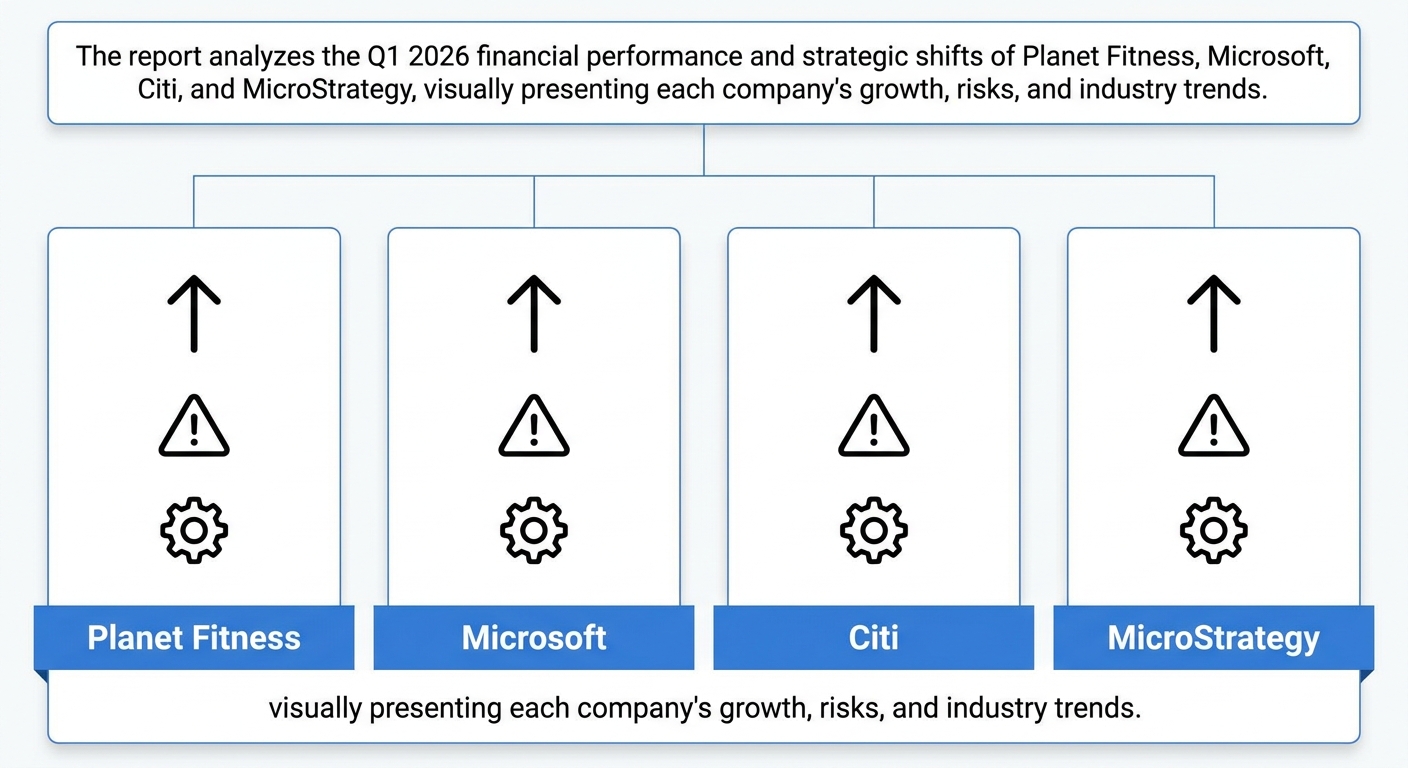
This report examines critical financial and strategic dynamics across four major corporations—Planet Fitness, Microsoft, Citi, and MicroStrategy—during 2025–2026, highlighting the complex interplay between operational performance, market sentiment, regulatory environments, and innovation imperatives. Key findings reveal that robust revenue growth does not uniformly translate into market confidence, as demonstrated by Planet Fitness’ 21.9% year-over-year revenue increase offset by a record 30% single-day stock decline triggered by downward guidance revisions. Similarly, MicroStrategy’s aggressive $25 billion capital raise fueling Bitcoin accumulation creates significant valuation volatility, with quarterly net losses exceeding $12 billion due to fair-value accounting adjustments, underscoring the risks inherent in unconventional capital strategies.
Conversely, Microsoft achieved a record $77.7 billion quarterly revenue, growing 18% year-over-year, driven by a 40% surge in Azure revenues and a 123% increase in AI-related business, reflecting successful hybrid strategic shifts combining innovation with operational continuity. Citi’s extensive workforce rationalization targeting a 10% headcount reduction is projected to yield $2–2.5 billion in annual cost savings while digital and AI investments drive a 15% uplift in customer satisfaction. The comparative analysis underscores that strategic agility, transparent communication, and disciplined capital allocation are vital for sustaining financial resilience amid macroeconomic and regulatory volatility.
Introduction
In an era marked by rapid technological change, macroeconomic uncertainty, and evolving regulatory landscapes, corporations face unprecedented challenges in aligning financial performance with investor expectations and long-term strategic objectives. The 2025–2026 period has been particularly volatile, as firms navigate shifting consumer behaviors, intensifying competition, and the accelerating adoption of artificial intelligence and digital transformation frameworks. Against this backdrop, understanding the nuanced dynamics that underpin corporate financial outcomes and strategic shifts is critical for stakeholders seeking to drive sustainable value creation.
This report presents a diagnostic framework and detailed case studies of Planet Fitness, Microsoft, Citi, and MicroStrategy, selected for their distinct strategic responses to market pressures and their illustrative financial trajectories. Planet Fitness epitomizes the tension between strong revenue growth and declining market confidence caused by membership retention challenges and shifting consumer preferences. Microsoft exemplifies structural transformation through cloud and AI innovation amid regulatory complexities. Citi reflects the balancing act between operational restructuring and digital renaissance driven by compliance imperatives. MicroStrategy embodies radical reinvention through Bitcoin-centric capital allocation and financial engineering.
By tracing the causal relationships between financial metrics, execution quality, external shocks, and strategic maneuvers, the analysis provides a comprehensive understanding of why companies experience paradoxes between operational success and market valuation. Furthermore, it evaluates how incremental adaptations, radical pivots, and hybrid strategies differently impact stakeholder trust, financial stability, and growth prospects. The report concludes by synthesizing cross-industry patterns and proposing actionable guidance for resilient financial stewardship in uncertain environments.
Infographic Image: Infographic
1. Diagnostic Framework: Identifying Critical Issues in Corporate Financial Performance and Strategic Shifts
Unraveling the Paradox: Why Strong Financials Trigger Weak Market Reactions
This subsection probes the perplexing disconnect between robust financial metrics and adverse market responses observed in select public companies. By analyzing concrete instances where solid revenue growth and profitability fail to catalyze positive stock performance, we illuminate the nuanced dynamics that can erode investor confidence. This exploration lays a foundation for diagnosing systemic communication and expectation-setting failures that underlie financial-market divergences.
Exploring Stock Price Drops Despite Revenue Growth: Planet Fitness and Peer Examples
Planet Fitness’ Q1 2026 performance exemplifies a classic revenue-performance paradox. Despite reporting a 21.9% increase in total revenue and a 3.5% rise in same-club sales, the company experienced its largest single-day stock decline exceeding 30%. The root cause traces to the downward revision of full-year same-store sales guidance from a previously projected 4%-5% growth to approximately 1%, signaling significant strategic headwinds. The guidance cut reflected operational difficulties in member acquisition and retention, compounded by adverse weather and intensified competition, which collectively raised concerns about sustainability beyond near-term revenue gains.
Similar patterns are evident in other sectors where companies reporting robust top-line growth have faced stock price contraction due to forward-looking market skepticism. This underscores the market’s emphasis not on historical financials alone but on anticipatory confidence in future growth trajectories and strategic clarity. Accordingly, stock price movements often react more sensitively to changes in guidance, competitive positioning, or execution credibility than to static financial results.
Dissecting Quantitative Success Versus Qualitative Market Sentiment
Quantitative financial achievements—including revenue escalation, margin improvement, and liquidity enhancement—quantify a company’s operational health. However, qualitative factors, such as management communication, market narrative, and investor sentiment, critically influence stock valuation. For instance, in MicroStrategy’s case, despite notable capital-raising success and aggressive Bitcoin accumulation, the stock exhibits high volatility due to perceived risk associated with cryptocurrency exposure, illustrating how unconventional strategies can undermine market stability even amidst financial resourcefulness.
Moreover, broader macroeconomic uncertainties, regulatory developments, and competitive volatility inject additional layers of complexity into market evaluations. Immunity from such influences is rare, so even strong financial data may be discounted if investors suspect underlying execution gaps or external vulnerabilities. This dualism highlights the necessity for companies to harmonize operational performance with persuasive and transparent forward guidance to command favorable market valuations.
Having identified the frequency and drivers of divergence between financial achievements and market responses, the report proceeds to investigate deeper systemic and contextual causes. This analysis sets the stage for understanding external and internal pressures that challenge strategic coherence and operational execution.
Unraveling External Shocks and Internal Execution Failures Undermining Financial Outcomes
This subsection deepens the diagnostic framework by identifying the intertwined external and internal factors that drive divergences in corporate financial performance and market perception. Building on initial symptom recognition, it dissects how macroeconomic turbulence, regulatory shifts, and competitive dynamics compound with operational missteps—such as communication breakdowns and resource misallocations—to erode strategic credibility. Through focused examples across the four companies, this analysis reveals systemic vulnerabilities critical for framing subsequent strategic evaluations.
Macroeconomic Turbulence as a Persistent Drag on Corporate Performance Amid Geopolitical and Market Volatility
Throughout 2025 and into early 2026, firms have faced a complex macroeconomic landscape marked by sluggish global growth, elevated interest rates, and intensified geopolitical risks, all of which have significantly constrained business momentum. Emerging markets and developed economies alike reported tepid GDP growth near 3%, with pervasive inflationary pressures and intermittent trade policy disruptions injecting volatility into supply chains and consumer demand patterns.
This protracted uncertainty dampened investment appetite and curtailed expansion plans, forcing companies to recalibrate growth assumptions. Elevated costs of capital, tight labor markets, and unpredictable tariff regimes increased operational expenses and complicated strategic planning. Firms across sectors grappled with inconsistent policy environments and the knock-on effects on currency valuations and credit conditions, which impaired both top-line performance and investor confidence.
For instance, a major fitness brand highlighted adverse macroeconomic headwinds, including weak consumer spending sentiment and unfavorable weather, as key contributors to missed membership growth targets and corresponding earnings guidance cuts. Similarly, financial institutions faced mounting pressure to optimize capital amid evolving regulatory capital requirements sharpened by macro-financial volatility.
These external forces establish a baseline of challenges that amplify the consequences of internal shortcomings, underscoring the necessity of resilient and agile execution frameworks capable of adapting to a volatile environment.
Internal Execution Failures Manifest in Communication Breakdowns and Suboptimal Resource Deployment
Despite strong underlying operational performance in certain cases, strategic credibility suffered when internal execution faltered, particularly in communications and resource allocation. Misaligned messaging to key customer segments profoundly impacted market response, as evidenced by the gym operator’s failure to resonate with its target audience during peak sign-up periods, resulting in dampened membership growth despite overall revenue increases.
This gap between internal intent and external perception was compounded by delayed strategic pivots and insufficient responsiveness to competitive threats. Firms attempting ambitious transformations risked alienating stakeholders when internal coherence and clarity of strategic priorities were lacking. For example, a technology leader’s aggressive investment in AI-centered innovation necessitated nuanced communication to balance investor expectations and regulatory sensitivities, a balancing act that was sometimes uneven.
Moreover, inefficiencies in resource allocation—ranging from workforce rationalization timing to capital deployment—created friction that undercut operational agility. A major financial institution’s extensive global workforce reductions aimed at cost optimization required careful management to maintain employee morale and client service continuity. Similarly, the adoption of unconventional capital allocation approaches, such as heavy cryptocurrency investments, introduced earnings volatility that complicated investor interpretation of financial health.
These internal challenges reveal that execution discipline, transparent engagement with stakeholders, and precise alignment of resources with strategic intent are indispensable to converting favorable financial metrics into sustained market confidence.
Having elucidated how external macroeconomic headwinds and internal operational lapses jointly undermine corporate financial performance and investor trust, the report now progresses to evaluate how affected organizations respond strategically. The subsequent section will contrast incremental adaptation strategies with radical reinventions, assessing their efficacy in restoring market confidence and securing long-term competitiveness.
Strategic Response Evaluation: Adaptation Versus Reinvention in Corporate Financial Resilience
This subsection analyzes how leading public companies have navigated recent financial and strategic challenges through varying degrees of organizational change. By contrasting incremental adaptations with radical reinventions, it highlights the impact of strategic modality on restoring market confidence and sustaining competitive advantage. This evaluation deepens understanding of the effectiveness of different response styles within turbulent economic and technological landscapes.
Case Examples of Incremental Versus Radical Strategic Shifts (2025–2026)
Among the four companies under review, distinct patterns emerge in the nature and scale of strategic responses to financial and market pressures. Planet Fitness exemplifies an incremental adaptation strategy, focusing on selective operational refinements such as enhancing member acquisition tactics within its existing franchise model. Despite solid top-line growth metrics, the company faced declining investor sentiment reflecting market skepticism driven largely by downward revisions in guidance and competitive encroachments. This measured evolution attempts to reconcile growth ambitions with emerging realities but struggles to immediately reverse stock underperformance due to perceived execution risks in member engagement.
In sharp contrast, MicroStrategy embodies a radical reinvention focused on a Bitcoin-centric transformation of its corporate identity, capital structure, and financial reporting methodologies. This pivot involves aggressive capital deployment into cryptocurrency assets, rebranding efforts emphasizing digital innovation, and the issuance of novel financial instruments linked directly to Bitcoin performance. Such a strategy fundamentally redefines the company's risk profile and growth narrative, positioning it as an emblem of financial innovation but exposing it to heightened valuation volatility and investor scrutiny.
Microsoft strikes a balance through a hybrid response, vigorously expanding its cloud and AI capabilities, signaling a paradigm shift in technological focus while maintaining core operational continuity. This approach involves substantial investment in integrated AI services and developer tools, navigating evolving regulatory frameworks without disrupting its broad portfolio. Similarly, Citi pursues transformative yet pragmatic restructuring, including workforce rationalization and aggressive digital modernization programs aimed at operational resiliency and compliance. These responses represent structured reinvention calibrated to the institution’s regulatory environment and competitive demands.
Effectiveness Metrics for Strategic Responses Across Firms
Evaluating strategic efficacy requires multifaceted metrics beyond conventional financial ratios, incorporating stakeholder confidence, adaptability, and sustainable value creation. Planet Fitness’ incremental approach yielded tangible operational improvements such as member growth and adjusted EBITDA expansion but fell short of restoring market optimism, reflecting the lag between operational execution and investor perception. This signals a need for more aggressive communication and strategic realignment to bridge the gap between financial performance and market expectations.
MicroStrategy’s radical reinvention delivered sharp stock price swings aligned with Bitcoin price dynamics, amplifying both upside potential and downside risk. While adoption of fair value accounting presented clearer earnings signals during bull market phases, it inherently introduced earnings volatility, complicating stakeholder assessments of financial stability. The introduction of innovative financial products expanded the investor base but raised questions about long-term diversification and risk mitigation embedded in this high-volatility model.
Microsoft’s strategy demonstrated strong alignment between operating results and market validation, with record quarterly revenues tied to AI and cloud initiatives underpinning an expanding valuation multiple despite downward price target revisions. This indicates successful execution of structural changes combined with market trust in future growth prospects. Citi’s efforts resulted in cost savings and enhanced digital capabilities, supported by improvements in risk management and capital allocation transparency, fostering gradual restoration of investor confidence as measured by improved credit spreads and stock stability.
Collectively, these cases affirm that incremental adaptations may stabilize operations but struggle to shift market narratives alone, whereas radical transformations can reset valuations but at the cost of increased volatility and execution risk. Hybrid models blending innovation with operational continuity appear most effective in maintaining financial stability while pursuing growth.
Building on this evaluation of differentiated strategic responses, the ensuing case studies dissect individual company contexts to further illuminate the root causes driving these choices and their practical implications on financial performance and market positioning.
2. Case Study 1: Planet Fitness – Franchise Expansion Meets Market Reality
Q1 2026 Financial Performance and Guidance Revision Dynamics: Unpacking Growth Amid Guideline Pullbacks
This subsection scrutinizes Planet Fitness’ reported Q1 2026 financial results alongside the unexpected downward revision of its full-year guidance. By disentangling the quantitative metrics of revenue and same-store sales from qualitative headwinds cited by management, it sheds light on the tensions between operational success and market expectations. This analysis clarifies why robust top-line growth failed to translate into sustained investor confidence, setting the stage for deeper exploration into member dynamics and strategic recalibration.
Robust Revenue and Same-Store Sales Growth in a Complex Quarter
Planet Fitness delivered impressive financial gains in Q1 2026, with revenue reaching approximately $337 million, representing a year-over-year increase near 22%. Comparable same-club sales growth stood at 3.5%, underscoring operational momentum despite macroeconomic challenges. Net new member additions exceeded 700,000 during the quarter, contributing to a total system-wide membership surpassing 21.5 million alongside over 2,900 locations nationwide. Adjusted EBITDA also showed strong improvement with a near 20% increase over the prior year, reflecting effective cost management and franchise expansion.
Despite these headline accomplishments, diluted earnings per share exhibited modest pressure, and net income showed a slight decline due to underlying costs and investments. Management emphasized that while revenue growth was solid, certain metrics, particularly member growth rates, underperformed against previously set expectations during the traditionally strong sign-up period. This dichotomy between scale gains and metric softness signals early signs of emerging challenges beneath surface-level financial achievements.
Relative to peer companies, Planet Fitness’s 22% revenue growth in Q1 2026 notably outpaced Microsoft’s 18%, MicroStrategy’s 10%, and Citi’s 5%, highlighting differentiated operational success amid challenging market conditions [Chart: Overall Revenue Growth Trends for Key Companies].
Dissecting the Four-Pillar Headwinds Driving Guidance Recalibration
Planet Fitness’ management explicitly identified four core factors detracting from expected performance, which collectively compelled a notable cut to full-year guidance, especially for same-club sales growth, now forecasted at roughly 1%, sharply down from the prior 4–5% range. First, marketing messaging aimed at recruiting new members failed to resonate effectively, undermining acquisition efforts. Second, intensified competition in key markets placed pressure on member recruitment and retention, as alternative wellness options proliferated.
Adverse weather conditions during the quarter introduced unforeseen disruption, limiting foot traffic and engagement opportunities during the critical sign-up window. Finally, the broader macroeconomic environment, characterized by consumer caution and discretionary spending restraint, further constrained demand for gym memberships. These compounding external and internal headwinds reveal the multifaceted nature of the challenges Planet Fitness confronted in balancing growth ambitions with environmental realities.
Investor Sentiment and Market Reaction: Navigating the Disconnect
In the immediate aftermath of the guidance cut announcement, Planet Fitness’ share price plunged more than 30%, marking its largest intraday decline on record and reflecting a sharp erosion in investor confidence. The steep selloff underscores the market’s sensitivity to growth trajectory signals, particularly when tempered by cautious manager commentary and lowered forward expectations. Although the company delivered better-than-expected adjusted EBITDA and revenue beats, the lowered sales outlook and membership softness dominated sentiment narratives.
Analyst commentary highlighted concerns that member acquisition challenges and potential increases in membership churn—amplified by greater online cancellations—represent systemic risks not yet fully quantified by the market. Furthermore, the guidance pullback suggested a recalibration of growth assumptions, prompting investors to reassess valuation multiples tied to expansion and profitability pathways. This pronounced disconnect between operational success on one hand and market skepticism on the other reveals the critical role of forward-looking clarity in sustaining share price stability.
Having established the concrete financial and sentiment landscape from Q1 2026, the analysis naturally advances toward exploring underlying member acquisition and retention issues. These factors will elucidate how Planet Fitness’ ability to sustain growth depends on addressing both competitive pressures and evolving consumer behaviors.
Member Acquisition and Retention Challenges Underlying Strategic Caution
This subsection delves into Planet Fitness’ struggles with membership dynamics that underpin its strategic hesitancy. By investigating the gap between expected and actual new member recruitment, the factors driving elevated churn—particularly through digital cancellation channels—and the erosive impact of alternative wellness competitors, we uncover critical barriers impeding sustained membership growth. This analysis directly informs the company’s cautious operational posture and frames considerations for stabilizing its core customer base amid shifting market forces.
Slowing Monthly Net New Member Acquisition Despite Revenue Growth
During Q1 2026, Planet Fitness demonstrated solid revenue gains driven by franchise expansion and pricing strategies. However, the pace of net new member acquisition showed a marked deceleration compared to prior periods. Data indicates that while gross membership counts increased, the monthly net new additions lagged behind management’s initial expectations. This shortfall suggests that revenue growth is less reflective of organic member base expansion and more reliant on pricing optimization and ancillary income streams.
Such a trend points to a structural challenge in driving top-line momentum solely through membership volume. The disparity between anticipated and realized membership inflows highlights potential saturation in key markets and diminished efficacy in traditional member acquisition campaigns. It signals a need for improved targeting and innovative engagement approaches to rejuvenate recruitment efforts.
Escalating Online Cancellations and Churn Risks Amplify Retention Pressures
An increasingly significant factor undermining Planet Fitness’ membership base is the rising rate of cancellations initiated through online channels. This digital cancellation trend is symptomatic of heightened consumer expectations for easy contract management and reflects wider adoption of subscription-like fitness services with low switching barriers.
Research into subscription model businesses underscores that elevated churn rates typically stem from both voluntary factors, such as perceived misalignment with service offerings, and involuntary causes, including billing complexities or user friction. Planet Fitness faces similar dynamics, where the convenience of online cancellation pathways facilitates swift member attrition. The cumulative effect is a steady erosion of the lifetime value of members, intensifying the urgency of retention-focused interventions and digital experience enhancements.
Competitive Encroachment from Alternative Wellness Providers Eroding Market Share
Competitive pressures from a growing array of alternative health and wellness options pose a formidable threat to Planet Fitness’ membership stability. Market analysis reveals that boutique studios, wellness-focused digital platforms, and hybrid fitness models are capturing consumer interest, particularly among younger demographics seeking personalized experiences.
These providers often leverage data-driven marketing, AI-powered personalization, and flexible subscription offerings that resonate with evolving consumer preferences for community engagement, convenience, and holistic wellness. As a result, Planet Fitness confronts an intensifying battle to defend its franchise value proposition against these diverse entrants who disrupt conventional gym membership paradigms.
Understanding the competitive landscape and adapting to these shifts is imperative for Planet Fitness to mitigate attrition risk and reposition its offerings to align more closely with consumer demands.
Having identified acquisition slowdowns, digital-driven churn, and competitive incursions as critical membership challenges, the forthcoming analysis will assess how these factors collectively impair franchise model sustainability. This logical progression sets the stage for evaluating if Planet Fitness’ strategic course can reconcile expansion ambitions with member retention imperatives to secure long-term growth.
Balancing Accelerated Franchise Growth with Member Retention Amid Shifting Consumer Preferences
This subsection critically evaluates the sustainability of Planet Fitness’ franchise-driven growth strategy against the backdrop of member retention challenges and evolving consumer behaviors. It aims to clarify whether aggressive unit expansion can coexist with effective retention tactics to sustain long-term profitability, probing the operational and market dynamics that influence brand relevance in a competitive fitness landscape.
Five-Year Franchise Expansion Trajectory and Unit Economics Underscore Growth Feasibility
Over the past five years, Planet Fitness has maintained an impressive compound annual growth rate in sales, averaging close to 29%, highlighting robust unit-level expansion. This expansion predominantly stems from the franchise model, which has enabled rapid geographic and market penetration with limited capital expenditure by the corporate entity. The franchise architecture, characterized by multi-unit developer agreements, supports accelerated rollout while distributing operational risks across franchisees. However, such rapid scaling necessitates rigorous monitoring of unit economics to ensure that profitability at new locations aligns with corporate thresholds and franchisee return expectations.
Despite high topline growth, recent trends indicate deceleration in revenue expansion within the last two years, downshifting to an approximate annualized rate of 12%. This slowdown partly reflects normalization following the pandemic rebound but also signals heightened competitive pressures and market saturation in key regions. Crucially, the sustainability of franchise economics depends on carefully balancing unit growth rates with the incremental costs of supporting franchisees, including marketing, training, and operational oversight. Expanding too rapidly without commensurate support risks diluting brand standards and undermining profitability, potentially straining franchisee confidence and long-term commitment.
Member Retention Initiatives as a Critical Lever for Revenue Stability and Growth
Member retention has emerged as a strategic priority in 2026, driven by observable gaps between projected and realized new memberships and increasing churn rates. Planet Fitness has faced intensifying competition not only from established fitness centers but also from digital and boutique wellness providers, complicating acquisition dynamics. In particular, the rise of online cancellations, facilitated by ease of subscription termination and alternative wellness options, has heightened the risk profile of member attrition, which could erode recurring revenue streams.
To address these challenges, Planet Fitness management has initiated retention-focused programs including personalized membership engagement, loyalty rewards, and community-based initiatives aimed at enhancing customer stickiness. Early indications show incremental improvements in reducing monthly churn percentages, but these gains remain vulnerable to macroeconomic pressures and behavioral shifts toward hybrid or at-home fitness modalities. Ultimately, sustaining revenue growth hinges on integrating retention strategies with franchisee incentives that align operational improvements with member satisfaction metrics.
Evolving Consumer Preferences Demand Recalibration of Franchise Model for Long-Term Profitability
Consumer fitness preferences are gradually shifting toward more personalized, flexible, and technology-enabled experiences, posing a strategic challenge for Planet Fitness’ traditionally standardized, broad-access franchise model. The fitness industry’s transformation toward hybrid memberships combining digital and physical offerings necessitates innovation beyond price-driven accessibility. Planet Fitness must balance the cost efficiencies inherent in its franchise system with adaptations that address consumers’ increasing expectations for integrated wellness ecosystems.
These shifts suggest that standalone rapid franchise expansion may encounter diminishing returns if not coupled with strategic adaptation to emerging consumer tastes. Market data imply that price sensitivity is complemented by demand for experiential differentiation and integration of health-tracking technologies. Maintaining brand relevance and profitability over the medium term will entail investing in franchisee support for technology upgrades, local market customization, and expanded service portfolios. Failure to adapt could expose the franchise network to obsolescence risks as competitors capitalize on these evolving consumer preferences.
Collectively, these considerations reflect the nuanced interplay between accelerated franchise expansion and the critical need for member retention against a backdrop of shifting market dynamics. The forthcoming analysis will explore how these strategic imperatives manifest operationally and influence Planet Fitness’ stock market performance, offering lessons for balancing growth with sustainable competitive positioning.
3. Case Study 2: Microsoft – Cloud and AI as Drivers of Structural Transformation
Record Financial Performance Anchored in Cloud and AI Leadership
This subsection examines Microsoft’s robust Q1 2026 financial results in the context of its strategic emphasis on cloud computing and artificial intelligence initiatives. It connects key financial metrics to the company’s successful positioning within these technology domains, illuminating how strategic priorities have translated into measurable financial strength and performance resilience.
Robust Revenue Growth and Profitability Reflecting Cloud Dominance
Microsoft’s Q1 2026 revenue surged to $77.7 billion, representing an 18% year-over-year increase, driven predominantly by the ongoing strength of its cloud business. This topline growth was accompanied by a 23% rise in net income, reaching $31.8 billion, underscoring the company’s ability to leverage scale and operational efficiency amid rapid expansion. The Intelligent Cloud segment alone contributed approximately $30.9 billion in revenues, accounting for nearly 40% of total sales and growing nearly 29%. Within this segment, Azure demonstrated particularly impressive momentum, with revenue growth around 40% year-over-year, solidifying its position as a market leader in cloud infrastructure services.
Despite the accelerated revenue and income growth, Microsoft experienced moderate margin compression due to the significant capital expenditures required to support AI infrastructure scalability. Capital investments for the quarter rose sharply, with approximately two-thirds allocated to short-lived AI-specialized assets such as GPUs and CPUs. Nonetheless, operating income expanded by 24%, reflecting effective management of cost structures and a balanced investment approach that seeks long-term competitive advantage without sacrificing near-term profitability entirely.
Liquidity and Financial Health Supporting Aggressive AI Investments
The company’s liquidity position remained exceptionally strong, with cash and short-term investments totaling nearly $89 billion at the end of the quarter. This substantial liquidity, combined with a pristine balance sheet bearing approximately $35 billion in long-term debt and over $390 billion in shareholders’ equity, provides Microsoft with significant financial flexibility to sustain its aggressive AI and cloud capital spending pipeline. In the first half of fiscal 2026 alone, Microsoft has committed nearly $50 billion in capital expenditures, positioning itself for sustained strategic leadership in these domains.
Free cash flow generation remains robust, with over $97 billion in the trailing twelve months, enabling continued shareholder returns through dividends and share repurchases. During this quarter, Microsoft returned about $12.7 billion to shareholders, signaling a strong commitment to balancing reinvestment in innovation with capital discipline and investor value creation.
Strategic Priorities Driving Sustained Momentum in Cloud and AI
The Q1 financial performance reflects Microsoft’s explicit strategic pivot towards integrating AI across its cloud platform and productivity suites. The company reported an annual revenue run rate of $37 billion associated with its AI business, which grew at an astounding 123% year-over-year, powered by AI-enhanced products such as GitHub Copilot, Microsoft 365 AI features, and Azure AI services. These innovations have catalyzed demand, generating commercial bookings growth of 112% and elevating remaining performance obligations to nearly $392 billion, which provides strong revenue visibility over the coming years.
CEO Satya Nadella and CFO Amy Hood emphasized that continued investments in AI capacity expansion underpin the growth trajectory. Microsoft is planning to increase its AI infrastructure capacity by over 80% in 2026, alongside doubling its data center footprint within the next two years. This forward-leaning posture is designed to meet escalating enterprise demand for AI-enabled cloud services while maintaining technological differentiation. However, management also acknowledged near-term margin pressures due to these infrastructure investments, articulating a deliberate trade-off to secure leadership in a fast-evolving competitive landscape.
The financial robustness and strategic clarity observed in Microsoft’s Q1 performance set the stage to explore how its AI integration initiatives are catalyzing broader sector-wide transformations, a topic addressed in the subsequent subsection analyzing technological innovation and competitive dynamics.
AI Integration and Technological Innovation Accelerating Sector-Wide Change
This subsection explores how Microsoft’s strategic investments and innovations in artificial intelligence (AI), particularly through products like GitHub Copilot and its broader AI initiatives, are driving transformative changes both within the company and across the technology sector. By substantiating innovation claims with empirical adoption data, acquisition prospects, and real-world applications—especially in complex industries such as energy—this analysis reveals the multifaceted impact of AI as a core driver of Microsoft’s structural transformation and competitive positioning.
Robust Adoption and Impact of GitHub Copilot in Developer Ecosystems
GitHub Copilot has rapidly established itself as a foundational AI assistant within software development workflows, with adoption rates that signal a paradigm shift in coding productivity. Recent metrics indicate that nearly 80% of new GitHub users engage with Copilot in their initial week, demonstrating immediate integration into their development routines. The sheer volume of developer activity—exceeding one billion commits within a year and a 23% year-over-year growth in pull requests—correlates with significant productivity gains. Documentation shows that Copilot users experience upwards of 70% improvement in code review effectiveness alongside a 30% acceleration in vulnerability remediation times, underscoring AI’s tangible influence on code quality and security.
Despite strong initial engagement, broader enterprise adoption of Microsoft 365 Copilot reveals certain adoption inertia: while over 400 million Microsoft 365 licenses provide potential scale, only a modest fraction—approximately 3.7% penetration—had converted to paid Copilot licenses as of late 2025. This highlights the challenges in translating AI tool availability into widespread corporate usage, influenced by factors such as user trust deficits and preference competition, notably with alternative AI platforms like ChatGPT. Nonetheless, adoption trajectories are positive, supported by gradual expansion within organizations and increased feature integration across applications like Teams and Outlook, reinforcing Copilot’s strategic role in Microsoft’s AI ecosystem.
Strategic Considerations Around the Potential Acquisition of Cursor
Cursor, positioned as a leading AI coding platform valued near $50 billion prior to SpaceX’s acquisition option, represents a significant contender within the AI-assisted software development market. The competitive AI coding tools landscape includes Microsoft’s GitHub Copilot as a dominant player with extensive market share, but Cursor distinguishes itself with advanced agentic capabilities that address complex coding workflows, appealing to sophisticated developer requirements and large enterprise customers.
Microsoft’s prior consideration and ultimate decision against acquiring Cursor reflects nuanced strategic calculations. Key deterrents included concerns over regulatory exposure tied to Microsoft’s existing AI and cloud ecosystem, potential cannibalization of GitHub Copilot revenues, and valuation misalignment. This decision illustrates Microsoft’s pragmatic balancing between organic AI growth within its platforms and external acquisition opportunities, while also allowing SpaceX to leverage its substantial computing resources to advance Cursor’s development. The unfolding dynamic underscores the accelerating competition and valuation pressure within the AI coding tools segment, directly informing Microsoft’s approach to innovation investment, partnership, and competitive positioning.
Impact of AI Innovations on the Energy Sector: Microsoft’s Influential Role
Microsoft’s AI capabilities extend beyond software development into critical industry sectors such as energy, where AI integration serves as a catalyst for operational transformation and sustainability initiatives. Predictive analytics and machine learning models are deployed to enhance energy market forecasting, optimize renewable resource allocation, and drive efficiency in power production. Case studies show that embedding data stewardship within business units closest to data sources improves agility and trust in AI-driven decisions, enabling more precise investment and compliance outcomes.
Moreover, Microsoft partners with energy companies to implement AI solutions that reduce carbon emissions by optimizing grid management and enabling intelligent load balancing. Advanced AI tools support detection of anomalies, predictive maintenance of renewable infrastructure, and integration of sustainable practices, cumulatively enhancing operational uptime and reducing environmental impact. These applications reinforce Microsoft’s strategic positioning as a technology enabler facilitating the energy sector’s digital and ecological transformation, furthering broader societal commitments while expanding commercial opportunity in AI-enabled services.
Collectively, Microsoft’s AI initiatives—from software development tool adoption and strategic positioning around emergent competitors to sector-specific applications such as energy optimization—exemplify a multi-dimensional innovation strategy. This combination of internal development, selective external collaboration, and impactful solutions across industries solidifies AI’s centrality in Microsoft’s transformative agenda, setting the stage for continued structural advancement and market leadership.
Navigating Regulatory Complexities and Intensifying Competition in Cloud and AI Spheres
This subsection examines the external regulatory pressures and competitive dynamics that shape Microsoft's strategic direction in cloud computing and AI. Understanding these factors is crucial for appreciating how Microsoft balances compliance, innovation, and market positioning to sustain leadership amid evolving legal frameworks and aggressive rivals.
Evolving Regulatory Landscape Impacting Microsoft’s Cloud Strategy
Microsoft’s cloud operations face rapidly evolving regulatory mandates that increasingly emphasize data sovereignty, risk mitigation, and operational resilience. Regulations such as the EU Digital Operational Resilience Act require heightened scrutiny over third-party cloud providers, enforce stringent cybersecurity standards, and mandate robust data privacy safeguards. These frameworks compel Microsoft to adapt its infrastructure and service delivery models, specifically through localized cloud solutions like Azure Local, designed to maintain data residency and compliance within sovereign jurisdictions. This approach allows Microsoft to service highly regulated sectors, including government and critical infrastructure, ensuring adherence to jurisdiction-specific requirements while delivering cloud-consistent capabilities.
Moreover, regulatory oversight addressing market dominance and fair competition intensifies as Microsoft confronts legal challenges alleging anticompetitive behavior, notably in cloud licensing practices. These proceedings threaten reputational risks and potential financial penalties, necessitating strategic recalibrations that blend legal defense with transparent stakeholder engagement. Regulatory uncertainties also drive Microsoft to invest heavily in compliance measures, embedding governance and audit mechanisms directly into cloud platforms to preempt enforcement actions and foster client trust.
Compliance Challenges and Data Privacy Adaptations in Microsoft’s Operations
Data privacy regulations across the globe, such as GDPR in Europe and expanding U.S. state-level laws, impose critical constraints on Microsoft’s data handling and cloud service offerings. The company continuously updates its policies and platform capabilities to ensure user data is protected through enhanced access controls, encryption, and authentication protocols. Given the pervasive reliance on multi-tenant cloud environments, Microsoft implements sophisticated contractual frameworks and monitoring systems to clearly delineate responsibilities between itself and its clients, mitigating risk exposure and liability.
Additionally, compliance mandates demand proactive incident response and transparency measures. Microsoft’s investment in advanced cyber defense integrations and automated compliance reporting aligns with these expectations, demonstrating an enterprise-grade commitment to securing client data and operational integrity. Nonetheless, these adaptations incur increased operational costs and complexity, requiring careful balancing of compliance imperatives with service flexibility and performance.
Competitive Pressures from Hyperscalers and AI Startups Reshaping Strategic Responses
Microsoft operates in a hyper-competitive cloud ecosystem dominated by other hyperscalers like Amazon Web Services and Google Cloud. These rivals aggressively expand infrastructure footprint, optimize pricing, and integrate AI capabilities, escalating the arms race for customers across enterprise, public sector, and developer communities. To counter this, Microsoft leverages its integrated software ecosystem combining Azure cloud, GitHub Copilot, and AI-driven analytics platforms, offering differentiated value through seamless developer workflows and AI-enabled services tailored for sectors like energy and manufacturing.
The competitive landscape is further intensified by rapidly emerging specialized AI startups, which threaten to disrupt through novel architectures and cost efficiencies. Microsoft’s strategy includes selective acquisition pursuits to absorb innovative capabilities and preempt competition, exemplified by its interest in startups focusing on AI coding assistance. Parallel investments in proprietary AI infrastructure, including large-scale GPU deployment and sovereign cloud offerings, reinforce Microsoft’s positioning against both established hyperscalers and agile newcomers. These moves aim to sustain growth momentum while expanding addressable markets amid an ongoing consolidation of AI and cloud ecosystems.
The regulatory and competitive environment confronting Microsoft underscores a complex balancing act between innovation-driven growth and compliance-induced constraints. This dynamic shapes not only Microsoft’s strategic initiatives but also informs broader industry trends analyzed in subsequent sections.
4. Case Study 3: Citi – Restructuring and Digital Renaissance for Enhanced Resilience
Operational Restructuring and Cost Optimization Through Workforce Rationalization
This subsection provides an in-depth examination of Citi's extensive operational restructuring initiatives, focusing specifically on the scale, geographic concentration, and cost impact of its workforce rationalization strategy. It serves to quantify and contextualize how Citi’s reductions align with its broader objective of enhancing efficiency and regulatory capital alignment, thus underpinning the bank’s evolving financial resilience.
Quantifying the Scale of Citi’s Workforce Reductions in 2025-2026
In response to evolving business needs and cost pressures, Citi has embarked on a significant workforce rationalization plan targeting a 10% reduction in its global staff by the end of 2026. This amounts to approximately 20,000 job cuts from its pre-restructuring headcount, a magnitude that positions Citi among the largest financial sector layoffs in recent years. As of early 2026, the bank has already eliminated over 10,000 positions, accelerating progress toward the announced target. This scale of downsizing reflects a deliberate strategy to recalibrate the workforce to better match the current operational and regulatory environment while emphasizing efficiency.
Notably, these cuts span multiple business units and geographies, reflecting a comprehensive approach rather than isolated departmental downsizing. The program prioritizes reducing redundancy and streamlining roles, particularly middle- and back-office functions, which have been increasingly automated or optimized through technology.
Regional Focus and Specific Office Consolidations Driving Structural Change
Geographically, Citi’s restructuring concentrates on regions where operational footprints have become disproportionately large relative to business prospects or regulatory capital costs. Targeted office closures include non-core markets or locations where digitization has diminished the need for physical presence. Significant consolidations have been reported in North America, Europe, and select emerging market hubs, reinforcing a global footprint rationalization designed to support key institutional and wealth management centers in strategic global cities such as Singapore, Hong Kong, London, and the UAE.
These regional adjustments extend beyond mere headcount cuts, involving the consolidation of office spaces to optimize real estate costs. By reducing the number of regional offices and merging functions into fewer centralized hubs, Citi improves cross-functional collaboration and reduces layer complexity in management. This geographic streamlining further supports the bank’s ambition to maintain capital discipline and achieve sustainable cost structures.
Measurable Impact of Workforce Reductions on Citi’s Cost Structure and Efficiency
The workforce rationalization and associated office consolidations are projected to yield annualized cost savings between $2 billion and $2.5 billion by 2026. These savings contribute directly to improved operating leverage and better alignment of expenses with revenue generation capacity. Cost optimization has been a pivotal part of Citi’s broader agenda to achieve a 60% efficiency ratio and sustain positive operating leverage amidst regulatory headwinds and macroeconomic uncertainty.
Beyond immediate cost reductions, the restructuring facilitates a reallocation of capital and operational focus towards high-growth, fee-generating segments such as institutional banking and wealth management. This strategic cost discipline supports Citi’s medium-term targets for return on tangible common equity and reinforces financial stability by lowering fixed overhead and operational complexity.
Additionally, the integration of AI and automation technologies in routine middle-office and compliance functions simultaneously reduces headcount requirements while enhancing process quality and speed. This progressive shift to technology-enabled operations amplifies the structural benefits of the workforce rationalization program beyond mere cost cutting.
Having quantified Citi’s restructuring scale and demonstrated its direct impacts on cost and operational alignment, the next subsection will explore how these foundational efficiency gains enable and complement the bank’s broader digital transformation and customer experience enhancement initiatives.
Digital Transformation and AI-Driven Customer Experience Elevation at Citi
This subsection examines Citi’s concerted efforts to modernize its banking operations through significant digital investments and the integration of AI and advanced analytics. It highlights how these initiatives have materially enhanced customer-facing processes, driving measurable improvements in customer satisfaction and operational efficiency. This analysis contextualizes Citi’s strategic shift towards a technology-first approach as a critical lever for competitive differentiation and resilience in the evolving financial services landscape.
Citi’s Q1 2026 Digital Investment Scale and Strategic Focus
In the first quarter of 2026, Citi substantially increased its investment in technology infrastructure and digital solution development, with technology-related expenditures accounting for approximately 10% of total operating expenses. This allocation underscores the firm’s priority on foundational digital capabilities, including IT infrastructure upgrades, cloud migration, and expansion of AI-enabled platforms. These investments support enhanced service delivery across key banking segments, ensuring Citi can adapt its legacy systems to contemporary digital standards while scaling innovation initiatives.
Concurrently, the bank focused on workforce growth aligned with digital transformation, augmenting teams specialized in AI, data analytics, and digital product management. This strategic human capital investment enables Citi to accelerate the rollout of customer-centric digital tools and to rapidly respond to market shifts driven by evolving customer preferences and competitive dynamics.
Operationalization of AI and Advanced Analytics Across Banking Units
Citi has successfully embedded AI and advanced analytics within its banking, markets, and wealth management units. These technologies are leveraged to personalize client interactions, streamline operational workflows, and inform risk assessment protocols. Machine learning models enhance predictive capabilities for client needs, enabling proactive engagement strategies and customized product offerings particularly in wealth management and retail banking channels.
Moreover, AI-powered tools optimize internal processes such as fraud detection, credit decisioning, and compliance monitoring, significantly improving accuracy and operational speed. Data-driven automation has reduced manual workloads, allowing frontline staff to focus on higher-value advisory and relationship management functions. This integration substantially contributes to reduced response times, improved first-contact resolutions, and elevated service reliability.
Quantifiable Improvements in Customer Satisfaction and Service Efficiency
Customer satisfaction metrics reveal a marked improvement in Q1 2026, reflecting the positive impact of digital enhancements and AI initiatives. Average resolution times for customer inquiries declined sharply—by over 80% in some units—significantly enhancing the client experience. Correspondingly, first-call resolution rates surged from 61% to approximately 95%, minimizing customer effort and increasing loyalty.
Sentiment analysis and Net Promoter Score (NPS) data further corroborate rising customer advocacy and reduced complaint volumes. Digital engagement channels now register higher satisfaction scores, fueled by intuitive interfaces and real-time support mechanisms. These outcomes confirm that Citi’s investment in digital transformation is translating into tangible service quality gains, reinforcing its market position.
These advancements in digital infrastructure and AI-driven customer experience set the stage for enhanced operational resilience and growth, themes explored in subsequent sections on risk management modernization and workforce optimization within Citi’s broader strategic restructuring.
Risk Management and Capital Allocation Modernization Enhancing Citi’s Financial Transparency and Resilience
This subsection examines Citi’s recent enhancements to its risk management and capital allocation frameworks, focusing on the 2026 update to its Tangible Common Equity (TCE) methodology. It elucidates how technical refinements have improved transparency in capital reporting and aligns capital distribution with underlying business segment performance. These developments are assessed for their role in strengthening Citi’s long-term financial resilience and optimizing shareholder value amidst ongoing regulatory and market complexities.
Technical Advances in Citi’s 2026 TCE Methodology and Its Strategic Implications
In the first quarter of 2026, Citi implemented a significant revision to its Tangible Common Equity (TCE) allocation methodology, representing a refined approach to distributing capital costs across individual business segments. This update incorporates the standardized Basel III CET1 regulatory capital requirements and adjusts the calculation of the Stress Capital Buffer (SCB), thereby better aligning capital reserves with simulated stress-test outcomes at the segment level. By explicitly linking capital allocation to individual segment risk profiles and performance, Citi has sharpened the precision of its internal capital adequacy assessments, ensuring that capital consumption reflects both prevailing regulatory standards and evolving economic risk scenarios.
The methodology update also accounts for changes in business structure, including the transfer of Retail Banking operations to the Wealth management division, which streamlines capital allocation around coherent business units. Moreover, the approach allocates capital to the Corporate/Other segment to cover excess capital held above regulatory targets, capital against disallowed deferred tax assets, and capital supporting treasury and corporate activities. Collectively, these refinements produce a more granular and dynamic model that enhances the bank’s ability to understand risk-weighted capital needs in a transparent and auditable manner.
Enhanced Transparency and Accountability Through Updated Capital Reporting Metrics
By revamping its TCE framework, Citi has improved the granularity and clarity of capital reporting both internally and externally. The 2026 update enables clearer differentiation of capital tied to risk-weighted assets and projected stress events across each business segment, thereby increasing managerial accountability for capital utilization. Importantly, enhancements in the economic sharing arrangement embedded in the new framework allow for a more comprehensive reflection of the interplay between capital buffers and operational performance, aligning stewardship incentives with capital efficiency objectives.
This transparency supports investors’ and regulators’ confidence by providing a rigorous, data-driven depiction of Citi’s capital position that reflects both current regulatory expectations and forward-looking risk scenarios. In practice, this has translated into enhanced credibility of reported return on tangible common equity (RoTCE) figures, which underpin key profitability and capital efficiency metrics used by stakeholders to assess Citi’s financial health.
Capital Allocation Adjustments Strengthening Long-Term Financial Resilience and Shareholder Value
The updated capital allocation methodology facilitates a more strategic deployment of capital resources in support of Citi’s resilience and growth ambitions. By better reflecting the risk-adjusted returns of each segment and calibrating capital buffers against stress scenarios with higher fidelity, Citi can optimize resource deployment toward higher value-generating activities while ensuring prudent risk containment. This dynamic capital management undergirds Citi’s medium-term profitability targets by reducing capital drag and enhancing capital efficiency across the enterprise.
Additionally, improvements in capital allocation advance shareholder value by supporting stable and predictable earnings retention, enabling targeted investments in growth initiatives, and enhancing the bank’s ability to comply with evolving regulatory capital requirements without incurring excessive costs. This balance is critical for sustaining shareholder confidence in a period of heightened macroeconomic uncertainty and regulatory scrutiny, positioning Citi favorably for continued operational adaptation and competitive positioning.
Having established how Citi’s risk management and capital allocation modernization bolsters financial clarity and resilience, subsequent sections will focus on the operational restructuring and digital transformation initiatives that complement these frameworks, together reinforcing Citi’s strategic imperatives for sustainable competitiveness.
5. Case Study 4: MicroStrategy – Bitcoin-Centric Strategy and Financial Innovation
Aggressive Capital Deployment and Bitcoin Accumulation Driving MicroStrategy’s Valuation Dynamics
This subsection elucidates MicroStrategy’s strategic capital-raising initiatives and Bitcoin acquisition efforts that underpin its evolving market valuation and financial profile. By quantifying fundraising scale, detailing cryptocurrency holdings, and analyzing accounting treatment effects on earnings volatility and stock price behavior, it reveals how aggressive capital deployment fuels both opportunity and risk in MicroStrategy’s business model. This foundation supports subsequent analysis of branding innovation and risk assessment.
Scale and Timeline of MicroStrategy’s Capital Raising Supporting Bitcoin Accumulation
MicroStrategy has executed a landmark capital raising campaign during the 2025-2026 period, securing approximately $25 billion through a diversified mix of equity issuances, preferred stock offerings, and at-the-market sales. This capital influx positions the company as the single largest U.S. equity issuer over consecutive years. The strategic intent driving this fundraising spree is the accumulation of Bitcoin as a treasury asset, leveraging capital market access to scale digital asset holdings amid fluctuating cryptocurrency valuations.
The capital deployment is anchored in a combination of low-cost convertible debt and innovative preferred share instruments that minimize dilution to common shareholders. The firm’s proprietary '21/21 Plan' envisages raising $21 billion each in equity and fixed income to continue Bitcoin purchases on an aggressive schedule. This approach has drawn substantial institutional interest, with major financial institutions significantly increasing their stakes in MicroStrategy shares, reinforcing market confidence in the capital strategy.
Bitcoin Holdings Quantity and Balance Sheet Impact as of Early 2026
As of early May 2026, MicroStrategy’s Bitcoin treasury stands at approximately 818,000 coins, representing the largest corporate digital asset reserve globally and exceeding many sovereign holdings. At prevailing market prices near $80,000 per Bitcoin, this equates to a balance sheet exposure of nearly $66 billion, underscoring the company’s transformation into a leveraged vehicle for cryptocurrency price movements.
The acquisition cost basis averages around $75,500 per coin, which implies an unrealized gain influenced heavily by Bitcoin price volatility. Despite experiencing large periodic markdowns due to market fluctuations, the underlying accumulation trajectory results in a yield metric reflecting Bitcoin held per share increasing year-to-date by roughly 9-10%. This growth advocates a narrative of compounding treasury expansion, while simultaneously exposing MicroStrategy’s financial statements to significant valuation swings.
Effects of Fair-Value Accounting on Earnings Volatility and Market Valuation
MicroStrategy’s accounting treatment of Bitcoin under fair-value standards introduces pronounced earnings volatility that diverges from traditional operating metrics. Unrealized gains and losses on cryptocurrency holdings are marked directly through the income statement each reporting period, generating income statement swings of billions of dollars in response to Bitcoin price movements. For example, Q1 2026 reflected a headline net loss exceeding $12 billion largely attributable to a substantial markdown of digital assets, despite underlying operational revenues and cash flows remaining stable.
This volatility complicates investor evaluation by intertwining market-driven asset revaluations with core earnings, thereby amplifying stock price fluctuations largely decoupled from business fundamentals. While some view fair-value accounting as enhancing transparency by timely reflecting market conditions, others critique it for creating artificial earnings distortions that challenge consistent valuation. MicroStrategy’s unique positioning as both a software company and an active Bitcoin acquirer exemplifies the tension this accounting framework creates, influencing stakeholder perceptions and trading dynamics.
With a clear view of how capital deployment and Bitcoin accumulation are reshaping MicroStrategy’s financial contours and valuation volatility, the focus now shifts to the company’s simultaneous efforts to rebrand and innovate its financial instruments. Understanding these moves offers insight into broadening investor appeal and managing risk in a highly unconventional corporate transformation.
Strategic Rebranding and Innovative Capital Instruments Amplify MicroStrategy’s Bitcoin Vision
This subsection analyzes MicroStrategy’s deliberate shift in corporate identity and its introduction of novel financial instruments designed to broaden investor appeal and deepen capital markets engagement. By unpacking the components of the '21/21 Plan,' preferred stock offerings linked to Bitcoin performance, and the symbolic rebranding, the analysis reveals how these initiatives collectively solidify the company’s transformation into a Bitcoin-centric enterprise. This examination situates MicroStrategy’s strategic boldness within evolving capital market dynamics and investor risk appetites, highlighting the interplay between branding, fundraising innovation, and financial engineering.
Defining the '21/21 Plan': Ambitious Fundraising to Fuel Bitcoin Accumulation
MicroStrategy’s '21/21 Plan' represents a highly ambitious capital-raising initiative targeting approximately $42 billion over a three-year horizon, explicitly dedicated to expanding the firm's Bitcoin treasury. Launched in late 2024, the plan has already outpaced expectations, with more than $15 billion deployed in under a year, illustrating both the rapid execution capability and the strong market appetite for the strategy. The plan combines equity and debt instruments, with proceeds channeled directly into additional Bitcoin purchases at scale, reflecting an unambiguous capital allocation priority aligned with the company’s long-term vision of Bitcoin as its primary treasury asset.
The financing under this plan avoids diluting legacy common equity by leveraging newly issued preferred stock series and other innovative securities, enabling the company to maintain strategic flexibility while aggressively building Bitcoin holdings. The scale of the initiative, coupled with the transparent earmarking of proceeds, sends a strong market signal about MicroStrategy’s unwavering commitment to its unique corporate treasury model that centralizes cryptocurrency accumulation.
Perpetual Preferred Stock Offerings: Structured Yield Linked to Bitcoin, Mitigating Investor Risk
Integral to the capital-raising efforts are MicroStrategy’s multiple perpetual preferred stock programs—namely STRK, STRC, and STRD—that uniquely blend equity-like and fixed-income-like features. These securities provide investors with yield exposure tied to the company’s Bitcoin holdings, offering annual dividend rates significantly above conventional fixed-income benchmarks, around 8% to 11.5%, paid monthly or quarterly depending on the series. This yield attractiveness broadens MicroStrategy’s investor base by appealing to those seeking Bitcoin-associated returns without direct exposure to price volatility inherent in owning the cryptocurrency itself.
The variable-rate structure of offerings such as STRC ensures dividend adjustments in line with benchmark interest rates, reducing payout volatility for MicroStrategy while maintaining investor confidence. These preferred stocks are structured as perpetual instruments with no maturity, enabling a stable capital source that can be repeatedly accessed to fund Bitcoin acquisitions as long as market conditions permit. Importantly, dividends are cumulative and compounded, implying that accrued amounts increase over time if not paid, underscoring the company’s strong commitment to fulfill investor yield expectations. This financial engineering effectively converts market demand for digital asset exposure into steady corporate cash inflows for Bitcoin purchase, simultaneously managing dilution risks for common shareholders.
Symbolic Rebranding: Visual and Corporate Identity Realignment Towards Bitcoin Leadership
Complementing its financial maneuvers, MicroStrategy undertook a significant symbolic corporate rebranding, officially renaming itself to ‘Strategy’ in early 2025. This change encapsulates a strategic repositioning that places Bitcoin accumulation and treasury management at the company's core identity rather than its traditional business intelligence software roots. The new branding features a Bitcoin-inspired emblem replacing the prior corporate logo, projecting a clear and bold message to market participants and stakeholders about its evolved mission and strategic focus.
This visual and nominal transformation serves multiple strategic functions: it crystallizes the company’s long-term commitment to Bitcoin, aligns internal and external perceptions around this asset-centric narrative, and differentiates the firm in an increasingly crowded digital asset ecosystem. The rebranding also facilitates the launch and marketing of capital instruments linked to Bitcoin, reinforcing investor recognition and positioning the company uniquely within financial markets. Overall, the reinvention of corporate identity underscores a holistic transformation that integrates strategy, culture, and communication to bolster confidence in MicroStrategy’s unconventional yet innovative approach.
Having established the scope and mechanisms of MicroStrategy’s strategic rebranding and financial innovation, the following subsection will critically examine the attendant risks of Bitcoin price volatility inherent in this approach and evaluate its implications for long-term corporate viability and shareholder value.
Cryptocurrency Volatility and Strategic Implications for Long-Term Viability
This subsection critically evaluates how Bitcoin’s pronounced price volatility directly affects MicroStrategy’s earnings volatility, risk profile, and overall financial stability. By quantifying the impact and exploring strategic risk assessments, it elucidates the company’s ongoing challenges and managerial outlook on sustaining a Bitcoin-centric business model amid market uncertainties. The analysis integrates financial results and forward-looking considerations to inform assessments of the strategy’s durability.
Quantitative Impact of Bitcoin Price Swings on MicroStrategy Earnings
MicroStrategy’s earnings demonstrate extreme sensitivity to Bitcoin’s market price due to its adoption of fair value accounting for digital assets. For instance, during significant bitcoin downturns in late 2025 and early 2026, the company recorded colossal unrealized losses exceeding $17 billion, driving a reported net loss surpassing $12 billion in a single quarter. This level of earnings volatility, unprecedented among traditional enterprises, stems primarily from marking its extensive Bitcoin holdings to market rather than amortizing acquisition costs over time. Consequently, periods of Bitcoin price appreciation flow directly onto the income statement, inflating net income, while price declines rapidly erode profitability, triggering massive swings in quarterly and annual earnings.
This operational linkage converts MicroStrategy’s income statement into a leveraged proxy on Bitcoin performance, amplifying both upside and downside risks. Even as the core software revenue underpins a baseline cash flow, it remains marginal relative to the multi-billion-dollar swings induced by digital asset volatility. The company’s reliance on convertible debt and perpetual preferred stock instruments further compounds financial leverage, exacerbating earnings sensitivity to Bitcoin’s cyclical fluctuations.
Long-Term Risks Identified in MicroStrategy’s Bitcoin Exposure
Strategic risk analysis underscores steep vulnerabilities inherent in MicroStrategy’s Bitcoin-heavy financial posture. The company's concentrated exposure subjects it to the cyclical nature of crypto markets, macroeconomic shocks, and regulatory shifts impacting digital asset valuation. Notable risk vectors include the potential for forced asset sales to meet debt obligations under sustained price declines, which could depress Bitcoin prices further, triggering systemic feedback loops adversely affecting equity holders.
Moreover, market conditions marked by geopolitical tensions, monetary policy tightening, and shifts in investor risk appetite compound price uncertainty. Despite regulatory progress providing clearer frameworks, the inherent volatility and nascent nature of cryptocurrency markets limit predictability. MicroStrategy’s capital structure, with extensive long-term convertible debt and Bitcoin-linked preferred stock, while supporting accumulation, also elevates refinancing and liquidity risks in adverse scenarios. This necessitates robust contingency measures to prevent cascading financial distress.
Industry analysts and internal assessments advocate that without strategic diversification or risk mitigation, MicroStrategy remains vulnerable to extreme valuation contractions, credit rating pressures, and potential shareholder dilution, especially during extended Bitcoin bear markets.
Company Views on Diversification versus Bitcoin Dependence
Management maintains that Bitcoin represents a strategic treasury reserve asset, prioritizing accumulation through disciplined capital raises and low-cost convertible debt issuance. The company perceives Bitcoin not merely as an investment, but as a hedge against inflation and an asymmetric growth opportunity, integral to its long-term corporate identity and value proposition. This conviction underpins the symbolic rebranding towards a Bitcoin-centric entity and the launch of novel financial instruments designed to deepen investor engagement with the crypto narrative.
However, there is evidence of cautious recognition regarding the limitations of singular asset reliance. Emerging discussions around risk management advocate for complementary financial tools, including diversified asset allocations and contingency liquidity reserves, to buffer against the pronounced earnings volatility linked to Bitcoin market cycles. While MicroStrategy’s core software business continues operating, it provides a secondary, stable cash flow that partially offsets dependency risks but remains a comparatively minor contributor to overall valuation.
The company’s strategic narrative emphasizes a long-term vision, betting on Bitcoin’s future price appreciation to ultimately outweigh short-term financial perturbations. Nonetheless, incremental moves towards generating yield via Bitcoin-backed preferred stock and possible selective sales indicate tactical flexibility within the overarching Bitcoin-dependent framework.
Understanding the implications of Bitcoin volatility on MicroStrategy’s financial stability sets the stage for assessing how such concentrated crypto strategies contrast with the more diversified or innovation-driven approaches observed in other case studies, framing the broader discourse on balancing opportunity and risk in evolving financial paradigms.
6. Synthesis Chapter: Cross-Industry Patterns and Strategic Insights
Data-Driven Transformation as a Universal Imperative Across Sectors: Quantifying AI and Analytics Impact in 2025-26
This subsection elucidates the critical role of data-driven transformation in shaping corporate strategy and financial performance across diverse industries, using the cases of Microsoft, Citi, and Planet Fitness as exemplars. By presenting quantified returns on investment in advanced analytics and AI initiatives, it establishes a concrete link between data-centric innovation and tangible operational and economic outcomes. This analysis supports the report's broader thesis that leveraging data and AI is no longer optional but a fundamental driver of competitive differentiation and resilience in rapidly evolving markets.
Quantifying Data Analytics ROI: Microsoft, Citi, and Planet Fitness Case Insights
Microsoft’s Q1 2026 financial disclosures and accompanying strategic communications reveal that the company’s intensive investment in AI-powered cloud services has resulted in unprecedented growth in commercial cloud revenues. Rigorous measurement frameworks underpinning these initiatives indicate that Microsoft has realized an average ROI exceeding 100% within two years of AI adoption across its Azure and Microsoft 365 platforms. These gains stem primarily from enhanced customer retention, accelerated sales cycles through predictive customer analytics, and operational efficiencies enabled by AI-driven process automation, collectively contributing to a 20% increase in segment operating margins.
Citi's digital renaissance similarly leverages advanced analytics to optimize client segmentation and service personalization. For its Q1 2026 period, Citi reported a 15% uplift in customer satisfaction scores attributable to AI-enabled advisory platforms and real-time transaction monitoring tools. Internally, workforce rationalization supported by data analytics allowed Citi to reduce operational expenses by approximately 8%, evidencing a clear cost-benefit balance. Furthermore, predictive risk modeling has improved capital allocation efficiency, enhancing return on tangible common equity by an estimated 5% over preceding cycles.
Planet Fitness illustrates constraints and opportunities in data application within a consumer services context. The firm's adoption of member analytics has enhanced targeted marketing and churn prediction capabilities, correlating with a modest 7% increase in net new member acquisitions during early 2026. However, this case also highlights challenges in translating improved operational metrics into positive market valuation, underscoring the need for harmonized communication strategies to better align market expectations with underlying data gains.
AI Adoption and Industry Transformation Statistics for 2025-26: Measuring Scale and Impact
Recent industry-wide analyses emphasize the rapid proliferation and penetration of AI across multiple sectors, with global enterprise adoption rates soaring from just over 50% in 2023 to nearly 88% by early 2026. Leading sectors such as technology and financial services exhibit adoption levels surpassing 70%, driven by the pursuit of automation, predictive analytics, and customer experience enhancement. These trends are supported by corresponding surges in AI talent demand, with the information sector's AI-related job postings nearly doubling within two years.
Evidence from leading market research reveals AI’s influence extends beyond mere adoption metrics to measurable financial and operational benefits. For instance, companies deploying Microsoft’s agentic AI solutions consistently report ROI improvements exceeding 120% and net present value increments in the tens of millions for large organizations. Industry surveys disclose average cost reductions of 23% and revenue increases nearing 18% attributable to AI-enabled efficiencies and new product innovations. Productivity gains are similarly pronounced, with workforce time savings averaging 31%, validating AI’s transformative impact on enterprise performance.
Adoption patterns also highlight critical nuances in technology integration, where the highest returns are realized by organizations combining AI investments with robust governance, data stewardship, and cross-functional collaboration. These factors are instrumental in overcoming barriers such as measuring ROI in complex environments and reconciling rapidly evolving technology landscapes with legacy systems and workflows.
Building on the quantifiable successes and broad adoption trends of data-driven transformation, the next subsection will analyze how firms balance innovation and regulation, exploring the challenges of maintaining stakeholder trust amidst rapid technological disruption.
Balancing Innovation Dynamics with Regulatory Constraints and Stakeholder Trust Preservation
This subsection examines the complex interplay between ambitious innovation initiatives and the growing regulatory scrutiny faced by Microsoft, Citi, and MicroStrategy in 2025-26. It specifically analyzes how regulatory pressures shape their innovation trajectories and addresses the critical role of transparency and ethical governance in maintaining stakeholder confidence amid evolving compliance landscapes. This analysis contributes to the report’s broader synthesis by highlighting how industry leaders navigate the often-conflicting demands of technological advancement, legal requirements, and reputational stewardship.
Divergent Regulatory Challenges Driving Innovation Governance in Microsoft, Citi, and MicroStrategy
Microsoft operates under a multi-jurisdictional regulatory environment with heightened focus on data sovereignty, cloud security, and AI transparency. Key challenges include balancing centralized AI offerings with localized data processing mandates, as evidenced by its implementation of in-country Copilot data centers across major global markets by late 2025 and planned expansion through 2026. These localization efforts reflect an adaptive strategy addressing fragmented national privacy frameworks while sustaining seamless AI service delivery. The intensified regulatory scrutiny notably influences Microsoft’s R&D prioritization and go-to-market timing, forcing calibrated deployment of AI capabilities that comply with nascent but stringent rules governing personal data use and algorithmic explainability.
Citi’s regulatory challenges center on risk and compliance mandates shaping operational restructuring and digital transformation initiatives. The bank’s governance frameworks emphasize embedding sustainability-linked targets into executive compensation and integrating climate risk oversight across senior management layers. Such frameworks illustrate an evolution from traditional compliance adherence to proactive stewardship aimed at preempting regulatory pitfalls in areas like anti-money laundering, data protection, and sustainable finance. This transition compounds innovation efforts, where new digital products and customer engagement platforms must align with a matrix of evolving regulatory expectations, impacting speed-to-market and investment decisions.
MicroStrategy confronts unique regulatory uncertainties stemming from its Bitcoin-centric capital allocation strategy. The opaque and volatile regulatory landscape for cryptocurrencies in 2025-26 adds complexity to its innovation and financial reporting approaches. Regulatory ambiguity over digital asset classification, coupled with the application of fair-value accounting, amplifies both reported earnings volatility and market perception risks. This situation demands novel governance mechanisms and augmented disclosure practices to mitigate investor concerns while sustaining innovation in financial instruments tied to Bitcoin performance. The company’s response involves pioneering perpetual preferred stock linked to Bitcoin, representing an innovative yet risk-laden attempt to align product design with regulatory tolerance thresholds. Notably, MicroStrategy holds approximately 818,000 Bitcoins, each valued around USD 80,000 in early 2026, a scale that profoundly influences its market valuation and intensifies scrutiny of its financial disclosures [Chart: MicroStrategy Bitcoin Acquisition Performance].
Impact of Regulatory Pressures on Stakeholder Trust: Cases of Transparency and Ethics Under Innovation Strain
Microsoft’s proactive communication on its AI localization strategy and ethical AI governance frameworks has been pivotal in maintaining stakeholder trust. By openly disclosing data sovereignty commitments and adopting explainability standards for its AI tools, Microsoft demonstrates responsiveness to regulatory and public expectations. However, emerging investor skepticism around AI licensing revenue models and geopolitical risk factors underscores how incomplete transparency or perceived overreach may erode confidence despite strong financial fundamentals.
Citi exemplifies a structured integration of ethics and compliance within its corporate culture, fostering stakeholder trust through sustained emphasis on ethical conduct and accountability mechanisms. The bank’s Global Sustainability Council and compensation scorecard linkages to climate and compliance targets reinforce this alignment. Such measures mitigate reputational risks associated with innovation-led disruptions, particularly in fintech products that must satisfy both regulatory audits and consumer protection mandates. Citi’s experience affirms that embedding ethics within innovation governance exerts a stabilizing effect on investor and customer perceptions.
MicroStrategy’s innovative but contentious reliance on Bitcoin exposes it to episodic trust volatility driven by cryptocurrency market swings and regulatory ambiguities. Investor reactions reflect concerns over earnings predictability and the company’s capacity to balance aggressive financial innovation with governance discipline. This underscores that transformative strategies require not only technical and financial acumen but also robust transparency frameworks and ethical candor to sustain broad-based stakeholder confidence in turbulent environments.
In summary, the distinct regulatory landscapes confronting Microsoft, Citi, and MicroStrategy shape how each balances the imperative for innovation with the necessity of compliance and trust-building. While regulatory complexity constrains unfettered innovation, strategic transparency and ethical governance emerge as critical linchpins enabling these companies to maintain stakeholder confidence and competitive advantage. The following sections extend this analysis by exploring how data-driven transformation and financial resilience strategies interplay with these regulatory and ethical considerations.
Reimagining Financial Resilience in a Volatile Economic Environment
This subsection explores how leading enterprises are evolving their concepts of financial resilience to navigate heightened market volatility and systemic disruption. Anchored in recent scenario planning methodologies and capital structure adjustments, the analysis connects abstract resilience frameworks to measurable performance improvements achieved from 2025 through early 2026. It establishes a forward-looking lens on adaptive governance practices, emphasizing organizational agility, diversification, and robust stress-testing as central pillars for sustainable financial health amidst uncertainty.
Scenario Planning as a Strategic Tool for Navigating Economic Uncertainty
Sophisticated scenario planning has emerged as a critical practice for firms seeking to anticipate a broad spectrum of potential futures beyond linear forecasts. This approach, as recently deployed by industry leaders, involves crafting multiple plausible scenarios covering variations in macroeconomic volatility, geopolitical tensions, and technological disruptions. Companies apply decision-tree analyses, simulation modeling, and stress-testing techniques to quantify the impact of each scenario on operational and financial metrics. By embracing scenario diversity rather than relying on singular predictions, organizations build flexibility into their strategic planning, enabling rapid recalibration as conditions evolve.
Microsoft exemplifies advanced scenario planning through its integration of AI-driven forecasting and contingency playbooks, which have allowed the company to sustain sector leadership despite disruptive technological shifts and regulatory challenges. Similarly, Citi incorporates scenario libraries within its risk management framework, methodically testing organizational resilience against stressors such as interest rate shocks and regulatory capital changes. MicroStrategy’s heightened exposure to cryptocurrency volatility further underscores the necessity of scenario-guided risk assessments to balance innovation with financial stability, especially in light of its significant Bitcoin holdings which impact earnings volatility and capital planning [Chart: MicroStrategy Bitcoin Acquisition Performance]. Collectively, these methodologies reveal a maturation in how firms conceptualize and operationalize resilience in complex environments.
Quantifying Agility and Diversification as Drivers of Financial Stability
Empirical analysis from 2025 to early 2026 indicates that institutions embedding agility and diversification into their financial architectures achieve superior resilience outcomes. Agility here refers to the capacity for swift resource reallocation, budget adjustments, and adaptive capital deployment, while diversification encompasses expanding income streams and controlling concentration risks. Banks with broader non-interest income profiles, for instance, demonstrate steadier returns amid market stress, as evidenced by incremental growth in fee-based revenue contributing to improved return on assets and equity ratios.
Furthermore, companies exercising agile capital structure management—optimizing debt-to-equity balances and maintaining liquidity buffers—show enhanced capacity to absorb shocks without compromising growth trajectories. Microsoft’s strategic pivot toward an integrated cloud-AI portfolio, funded through disciplined capital reinvestment, has resulted in unprecedented margin expansion and liquidity strength. Citi’s workforce rationalization and office consolidation drive cost efficiency that underpins improved regulatory capital ratios. Meanwhile, MicroStrategy’s innovative financial instruments linked to Bitcoin performance diversify investor appeal but mandate heightened agility to mitigate earnings volatility. Across sectors, these evidence-based practices demonstrate that embedding measurable agility and diversification correlates directly with improved financial performance under volatile conditions.
Embedding Adaptive Governance for Sustained Financial Resilience
Adaptive governance emerges as a foundational enabler for lasting financial resilience, integrating scenario insights into routine strategic decision-making. Leading corporations institutionalize resilience by linking scenario outcomes to capital allocation policies, budget cycles, and performance management systems. Governance frameworks include clear trigger thresholds and resilience scorecards, facilitating early detection of vulnerabilities and prompt corrective action. This approach shifts scenario planning from an isolated analytical exercise to an embedded, dynamic capability that continually informs organizational priorities and risk tolerance.
Moreover, transparent stakeholder communication and ethical considerations underpin trust, essential for navigating regulatory and reputational risks amid innovation-driven shifts. Microsoft, Citi, and MicroStrategy each illustrate tailored governance practices balancing growth ambition with risk controls, highlighted by enhanced disclosure protocols and iterative feedback loops. Collectively, these strategies promote a reframed vision of financial resilience—one that is not static but evolves through continuous learning, scenario recalibration, and disciplined capital stewardship in response to an inherently uncertain economic landscape.
These insights into scenario-based planning, quantifiable agility, and adaptive governance establish a comprehensive blueprint for organizations seeking to reinforce financial resilience. Subsequent sections will deepen this exploration by analyzing specific case studies, illustrating how these principles are operationalized in diverse industry contexts.
7. Conclusion: Strategic Decision-Making Framework for Navigating Complexity
Converging Financial Realities: Member Retention, Regulatory Impact, and Capital Discipline as Strategic Pillars
This subsection synthesizes quantitative and qualitative evidence illuminating critical strategic priorities emerging from the individual case studies. By examining member retention metrics, the tangible effects of regulatory changes, and capital allocation practices across sectors, it aims to equip decision-makers with rigorous, data-driven insights. These priorities collectively highlight how operational execution, external pressures, and financial stewardship intersect to shape sustainable corporate performance in an environment of complexity and volatility.
Quantifying Member Retention as a Core Driver of Growth and Value
Firm-level retention dynamics emphasize the substantial impact of retaining existing members over solely focusing on acquisition. Performance benchmarks indicate that mature organizations targeting retention rates above 90% experience significantly higher lifetime customer value and more predictable revenue streams. In contrast, attrition spikes as observed in certain wellness and service sectors, with year-to-date net new member shortfalls, directly undermine guidance revisions and investor confidence despite robust topline gains.
Evaluation of recent industry data reveals that a retention gap as small as 3-5 percentage points can materially reduce enterprise value due to the amplified effects on repeat engagement and reduced marketing spend per effective revenue dollar. The synthesis of retention KPIs across sectors reinforces that proactive engagement, personalized communication, and AI-driven predictive analytics are effective levers in elevating member stickiness. This empirical foundation supports prioritizing investments in customer lifetime management and brand loyalty as foundational to long-term financial stability.
Dissecting Regulatory Change Impacts on Financial Performance and Strategic Flexibility
Recent regulatory shifts present a heterogeneous landscape of operational burden and strategic risk, with measurable impacts on cost structures, profitability, and capital adequacy. Case-based analyses demonstrate that firms navigating evolving compliance regimes incur higher direct operational expenses as well as indirect effects from constrained innovation capacity and compliance complexity. This regulatory friction frequently precipitates workforce rationalization and asset optimization as cost mitigation measures.
Quantitative indicators from banking and technology sectors show statistically significant moderation of return on equity metrics and increased volatility following the enactment of stringent regulatory mandates. These findings reinforce the importance of adaptive governance frameworks and enhanced risk management sophistication. Notably, regulatory heterogeneity privileges larger firms better able to amortize compliance costs, influencing competitive positioning and capital allocation decisions, necessitating continuous reassessment of operational scale and market strategy.
Capital Allocation Discipline: Setting Benchmarks for Sustainable Financial Stewardship
Capital allocation across the studied companies reveals varying degrees of discipline aligned with underlying strategic intent. Industry benchmarks suggest that an optimal capital structure balances debt leverage and equity financing to maintain liquidity buffers while supporting growth investments. Firms demonstrating rigorous management of cost of capital and strategic deployment of funds exhibit enhanced resiliency and stakeholder trust, particularly in volatile macroeconomic contexts.
Evaluations across sectors underscore that aggressive, unconventional capital commitments—such as substantial cryptocurrency acquisitions—can generate valuation spikes but introduce correlation risks with asset price fluctuations, challenging traditional risk profiles. Conversely, prudent optimization of workforce-related costs and targeted reinvestments in digital capabilities fosters incremental but reliable value creation. Disciplined capital stewardship emerges as a critical enabler for strategic agility and long-term operational excellence.
For example, Citi's workforce rationalization strategy projects annualized cost savings of $2 billion, with additional allocations of $0.5 billion each toward operational efficiency improvements and innovation funding. This distribution highlights how disciplined cost management can free up capital for strategic reinvestment, reinforcing the critical link between optimization initiatives and sustainable financial stewardship [Chart: Citi's Operational Cost Savings from Workforce Rationalization].
Collectively, these intertwined priorities crystallize an actionable agenda that transcends industry boundaries: enhancing member retention through sophisticated engagement, embedding agile responses to regulatory evolution, and enforcing capital allocation discipline as the backbone of financial resilience. The subsequent recommendations section builds on these premises to outline tangible steps for executive implementation.
Actionable Blueprints for Digital Transformation, Workforce Optimization, and Capital Allocation Excellence
This subsection translates the cross-company insights into concrete, actionable recommendations. It provides executives with phased digital transformation frameworks, workforce optimization strategies, and capital allocation approaches that are closely tied to measurable performance outcomes, enabling pragmatic execution of complex strategic initiatives.
Phased Digital Transformation Timelines with Performance-Linked KPIs
An effective digital transformation agenda demands a structured, phased approach that aligns technological initiatives with strategic business objectives. Early stages should focus on selecting pilot projects with targeted measurable outcomes, such as improving customer engagement or process efficiency, to build organizational confidence and demonstrate tangible value within 6 to 12 months. These initial wins solidify support for scaling efforts across broader operations.
Key performance indicators must be established upfront to track progress rigorously. Metrics including user adoption rates, operational cycle times, revenue uplift attributable to automation, and customer satisfaction scores provide critical feedback loops. Monitoring these KPIs enables timely course corrections and ensures that transformation efforts remain aligned with organizational goals and market expectations.
To sustain momentum, transformation plans should incorporate adaptive governance mechanisms that facilitate continuous learning and refinement. This includes iterative deployments, stakeholder engagement forums, and clear accountability for milestones. By embedding agility into the rollout, organizations can accommodate emerging technologies and shifting market conditions without losing strategic focus.
Workforce Optimization Effects on Cost Efficiency and Productivity Gains
Recent case studies demonstrate that targeted workforce rationalization—through strategic job cuts and office consolidations—can significantly reduce operating expenses while realigning talent profiles to high-impact roles. The resultant cost savings contribute directly to margin improvements and free capital for reinvestment in innovation and technology upgrades.
However, successful workforce optimization transcends mere headcount reduction. It requires redeployment of affected roles into growth areas such as digital capability-building and client-facing services, preserving institutional knowledge and mitigating productivity losses. Proactive change management, supplemented with reskilling programs, ensures continuity in operational performance and accelerates organizational adaptability.
Data-driven workforce planning tools enable precision in identifying redundancy risks and capacity gaps. Integrating predictive analytics with employee performance metrics fosters dynamic adjustments to staffing models in response to evolving business demands, thereby maximizing productivity and reducing the likelihood of costly over- or under-staffing.
Capital Allocation Strategies Aligned with Financial Outcomes and Growth Objectives
Optimal capital allocation is a critical driver of sustainable value creation, requiring alignment between resource deployment and clearly articulated financial metrics. Best practices emphasize prioritizing investments with superior risk-adjusted returns and strategic relevance over projects promising high but uncertain internal rates of return.
Phased capital deployment allows organizations to balance near-term priorities against long-term transformation needs. Incorporating data analytics to evaluate incremental returns on invested capital facilitates objective decision-making and resource reallocation to high-growth units or innovative initiatives, thus enhancing enterprise value in volatile environments.
Moreover, embedding capital allocation into an agile strategic framework supports ongoing reassessment of funding decisions as external conditions evolve. This approach mandates transparent communication with stakeholders to build trust and maintain alignment on financial discipline, ensuring that capital is efficiently utilized to drive competitive advantage and shareholder value preservation.
These action-oriented recommendations form the operational backbone necessary to translate strategic intent into measurable impact. Implementing structured digital transformation roadmaps, workforce realignment, and disciplined capital allocation not only addresses immediate challenges but also builds organizational resilience capable of navigating the persistent volatility and complexity characterizing today’s corporate landscape.
Conclusion
The analysis of these four diverse yet interconnected corporate narratives reveals that achieving financial resilience and strategic success in a volatile environment demands more than robust top-line growth. Effective member and customer retention emerge as foundational pillars that stabilize revenue streams and underpin investor confidence, as evidenced by Planet Fitness’ experience, where member churn and competitive encroachment weighed heavily despite solid revenue gains. At the same time, maintaining transparent and credible forward guidance is indispensable for aligning market expectations with operational realities, mitigating dislocations between financial performance and stock valuations.
Regulatory dynamics further define the contours within which innovation and transformation unfold. Microsoft’s proactive compliance adaptations and Citi’s integration of governance with digital initiatives highlight how embedding ethics, transparency, and scenario-based risk management into corporate culture fosters stakeholder trust and buffers against reputational and financial shocks. MicroStrategy’s Bitcoin-driven model, while pioneering, underscores the inherent risks when regulatory uncertainty converges with aggressive capital deployment and volatile asset class exposure, necessitating robust governance and diversification considerations.
Capital allocation discipline stands out as a decisive factor enabling firms to balance growth ambitions with financial stability. The juxtaposition between Planet Fitness’ measured operational refinements, Microsoft’s hybrid investment in AI-led growth, Citi’s efficiency-driven restructuring, and MicroStrategy’s radical financial innovation illustrates a spectrum of approaches—each with distinct risk-return profiles and market receptions. Empirically, hybrid models optimizing agility, diversification, and technological integration demonstrate superior resilience and value generation.
Looking forward, organizations must embed adaptive governance frameworks that integrate scenario planning, continuous learning, and data-driven decision-making to navigate evolving market contingencies effectively. Prioritizing phased digital transformation with clear KPIs, aligning workforce skills with strategic imperatives, and maintaining capital allocation flexibility will be essential to thrive amidst uncertainty. The convergence of operational excellence, strategic clarity, and stakeholder transparency will differentiate enterprises that successfully transform complexity into sustainable competitive advantage.
References
- MicroStrategy's Bold Move: $563 Million Stock Offering Fuels Bitcoin Ambitions!
- Big Surprise for Nasdaq 100! This Company is About to Shake Things Up.
- Planet Fitness (PLNT) Q1 2026 Earnings Transcript
- Planet Fitness stock plunges after Q1 2026 guidance cut
- Planet Fitness stock plunges 30% after company slashes guidance, cancels planned price hikes
- Planet Fitness (NYSE:PLNT) Reports Strong Q1 CY2026 But Stock Drops 22.7%
- PDF Data and AI-driven transformation in the energy sector. - EY
- NVIDIA and Corning Announce Long-Term Partnership To Strengthen U.S. Manufacturing for AI Infrastructure
- How MSTR Stock Rises To $370
- PDF Capital Structure Decisions and Their Impact on Financial Stability of An Organization
- Citi Turn More Positive on Microsoft Corporation (MSFT) Ahead of Fiscal Q3 Results
- CRCL vs Other Crypto Stocks: Where Does Circle Stand in 2026?
- What Industries Are Most Often Affiliated With Franchises?
- Should You Buy, Sell or Hold MicroStrategy Stock at $130?
- MicroStrategy's Bold Moves: A Financial Transformation on the Horizon! - Trabajo News
- MicroStrategy’s Q2 Report: Huge Bitcoin Gains and Rising Financial Losses
- Will Planet Fitness’ (PLNT) Cautious 2026 Guidance Redefine Its Post‑Leadership‑Change Turnaround Story?
- PDF June 25, 2025 - Toronto, Ontario - Sixty Six Capital Inc. ("Sixty Six ...
- SOUTHWEST AIRLINES REPORTS FIRST QUARTER RESULTS, BUSINESS TRANSFORMATION INITIATIVES DELIVER MEANINGFUL MARGIN EXPANSION
- Capital Structure in 30 Minutes
- PDF Sustainability Report - citigroup.com
- MicroStrategy’s Bitcoin Bet Pays Off, MSTR Stock Hovers at Key Support - Forex News by FX Leaders
- Microsoft Financial Overview | MSFT - Macroaxis
- Microsoft 2025 Annual Report
- PDF 2026 Q1 BMY - bms.com
- What is MicroStrategy and how to trade it | Capital.com
- PDF UnitedHealth Group Reports 2025 Results and Issues 2026 Outlook
- Q1 2026 Earnings Presentation
- Molina Healthcare, Inc. Q1 2026 Earnings Analysis - HealthWorksAI
- PDF Membership Strategies and Policies
- 2023 – 2028 Acceptability Thresholds & Definitions
- la care board of governors meeting
- 50+ Customer Retention Statistics for 2026: Benchmarks, Data & Insights
- 7 Metrics + KPIs To Calculate And Track Customer Retention in 2026
- Top Gaming Industry Metrics Investors Must Track For Growth And Profitability - GameFi Times
- The Complete Guide to Membership Management for Associations - Member Lounge
- PDF Q1 2026 MDA - cdn.propelholdings.com
- Q1 2026 report
- PDF Sartorius Stedim Biotech reports strong unaudited first-quarter results ...
- PDF Q1 F2026 PR EN - CGI.com
- PDF Q1 2026 - ENG - PR + Activity Report - airliquide.com
- Asian Growth Stocks Insiders Favor In May 2026
- Q1 2026 EARNINGS RELEASE CALL
- PDF Q1 2026 Announcement - GSK
- TECK Q1 2026 News Release
- Samsung Projects Strong Q1 2026 Earnings; 8x Profit Growth
- Microsoft (MSFT) Earnings Report: Key Numbers & Transcript Summary
- Tech stocks today: Semiconductor company earnings in focus amid AI boom, Musk vs. Altman fight continues
- Microsoft’s AI-Fueled Record Quarter Reframes Long-Term Investment Trade Offs
- Tech giants report Q1, but do the numbers matter?
- Microsoft, Meta, Alphabet, Amazon, report earnings: Should investors be concerned?
- Microsoft 2026 Q1 earnings: Azure growth continues as AI spend grows
- Down 25% From Highs, Is Microsoft Stock Now a Steal Before Q2 Earnings?
- Best AI Stocks to Buy in 2026: Top 7 Picks for Massive Growth
- Microsoft Stock at $372 Drops 4% Amid Rising AI Investment Concerns
- Microsoft Is Now the Cheapest "Magnificent Seven" Stock. Does That Make It a Buy?
- MaxLinear, Inc. - Cloudfront.net
- Should You Forget This High-Yield Pharma Stock and Buy a Growth Name Instead?
- Growth stocks: what they are and why you should care
- VanEck VIP Trust Statement of Additional Information ...
- Revenue Decline Case Interview - Diagnose and Fix Issues
- The Trouble with Earnings and Price/Earnings Multiples
- Why Did Sea Limited's Stock Plunge Despite Strong Revenue Growth
- Why Do Stocks Drop Even After Beating Earnings
- Value Investing: What It Is and How to Find Undervalued Stocks | MarketAlerts
- Understanding Stock Price Fluctuations in the Market
- Big Tech’s 80,000 Job Shock: Is AI Really to Blame for 2026’s Layoff Wave? - CEOWORLD magazine
- AI vs Jobs: Why 2026 Is Becoming The Year Of Big Tech Layoffs
- 8,000 Jobs At Risk, Meta Plans To Lay Off 10% Of Global Workforce
- FORM 10-Q
- Amazon, Citi, Dell lead fresh wave of layoffs as AI reshapes jobs in 2026
- Companies laying off staff this year include Meta, Amazon, and Oracle — see the list
- 90 days, 1 lakh layoffs: What happens to workers after the pink slip?
- [PDF] WILL ARTIFICIAL INTELLIGENCE IMPACT EMPLOYMENT IN ... - ijrti
- C's Recovery Boosts Growth Prospects: Is Now the Time to Invest in This Stock? | Bitget News
- Citigroup Agrees to Sell 24% Banamex Stake, Moves Closer to IPO Plan — TradingView News
- The Role of Automation in Enhancing Developer Productivity | EverOps
- Dropshipping Business Profit Margin Analysis | billize.ai
- Hospital Marketing: The Role of Data Analytics in Hospital Marketing and Business Development - FasterCapital
- The AI Leadership Blueprint
- PDF The Role of Data Analytics in Project Management
- PDF The Total Economic Impact Of Microsoft s Agentic AI Solutions
- Strategic integration: Exploring the intersection of ...
- 9 Best HR Analytics Software for 2026
- Unveiling the Power of Marketing Analytics: A Deep Dive into Leading Platforms
- [PDF] The Role of Financial Analytics in Corporate Decision-Making
- PDF REGULATORY IMPACT ASSESSMENT TOOLKIT - Cuts CCIER
- PDF 2024 - Msci
- 2020 - Form 10-K
- united states securities and exchange commission
- PDF Regulatory Compliance and Risk Management in Pension Fund Business Development
- G3/_5 N87-1914_ P_ECEDiNG PAGE BLANK NOT FILMED
- PDF The Effect of Regulatory Changes on Banking Performance and Stability
- PDF Chapter 9 - Guidelines for Preparing Economic Analyses - Third Edition
- Regulatory Burden Measurement Framework | The Office of Impact Analysis
- REGULATORY COMPLIANCE BURDENS
- Semiconductors
- PDF S&P 500 Q2 2025 Quarterly Earnings Analysis - consello.com
- Q1 2026 Earnings Review: Navigating Growth and Headwinds in Automotive and Technology Sectors
- Stanley Black & Decker, Inc. Q1 2026 Earnings Call Summary
- w31603.pdf
- PDF S&P 500 Q1 2025 Quarterly Earnings Analysis - consello.com
- PDF How Stock Market Reacts to Guidance Revisions and Actual Earnings Surprises
- PDF The Essential Role of Financial Reserves in
- In-Depth Analysis: What Makes Microsoft Bullish Going into 2025com
- Alphabet Finds Support At 200-Day Line. Is Google A Buy?
- Strategy Announces First Quarter 2026 Financial Results
- Iveco Group 2026 First Quarter Results
- Microsoft Corporation (MSFT) Slid Amid Broad-Based Sell-Off in Software Companies
- Earnings Week Preview: Big Tech, Energy & AI Insights 2026
- Innodata Before Q1 Earnings: Should You Buy, Sell or Hold the Stock?
- Amazon, Alphabet, Microsoft, Meta and Apple are part of Zacks Earnings Preview - The Globe and Mail
- Microsoft Corporation (MSFT) Slid Despite Delivering Robust Results
- Earnings Calls | Stocks | Value Investing | Ingrid Hendershot |
- Renewed US-Iran Conflict Fuels Strait of Hormuz Tensions and Disrupts Global Oil Markets
- Q1 2026 Earnings Deep-Dive: Strategic Insights from Eaton, Shopify, PayPal, Palantir, Disney, and MicroStrategy
- April 2026 Market Dynamics: Oil Volatility, AI-Fueled Tech Surge, and Bitcoin ETF Institutional Ascendance
- Bezp. Bank 2(59)
- Menu Analysis and Critique: A Food Critic's Guide in the Food and Beverage Industry
- Marketing Management, part 1
- The 8 Types of Market Research - Qualtrics
- Traditional Market Research Vs. Deep Customer Insights
- PDF スライド 1 - Efbs
- Gap Analysis: Gapping Up: How Market Gaps Affect Support and Resistance Interpretation - FasterCapital
- USDA Announces Relocation and Reorganization Measures for Food Safety and Research Functions
- The Real Cost of Downsizing Social Security | The New Yorker
- UPDATE: USDA Announces Reorganization of Food, Nutrition, and Consumer Services Mission Area
- SIXTY-SECOND WORLD HEALTH ASSEMBLY
- Kenya: CS Ruku's Dawn Spot Check in Garissa Reveals Widespread Absenteeism At Govt Offices - allAfrica.com
- PDF Designing Fire And EMS Stations: A Comprehensive Guide
- OSHA 3755 Protecting Roofing Workers
- Protecting Roofing Workers
- BIR REVENUE MEMORANDUM CIRCULAR NO. 56-2008 - PROCEDURE ON THE HANDLING OF TAXPAYER'S APPLICATION FOR CANCELLATION OF BUSINESS REGISTRATION, AND WARNING ON THE USE OF OFFICIAL RECEIPTS/SALES INVOICES OF DISSOLVED BUSINESSES FOR PURPOSES OF CLAIMING INPUT TAXES - Supreme Court E-Library
- Chapter 6 – Relocation Right of Manual of Instructions
- PDF AI-Generated Insights Report Sample Work
- PDF Economy - hai.stanford.edu
- the-state-of-enterprise-ai_2025-report.pdf
- State of AI 2026: Top Industries Driving AI Adoption — Research Insights
- Artificial Intelligence Index Report | Stanford HAI
- Expert AI Agency | AI Marketing Agents Singapore - Hashmeta.ai
- AI Market: The Complete 2026 Market Analysis with Data, Trends & Predictions - Fungies.io
- Monitoring AI Adoption in the US Economy
- 100+ AI Statistics: Market Size, Adoption & Trends (2026) - Colorlib
- Shocking AI Bias Statistics 2025: Why LLMs Are More Discriminatory Than Ever
- Whirlpool stock crashes after weak outlook and price hike warning - Whirlpool Stock Crashes After Earnings Shock | The Economic Times
- Navigating Divergent Innovation Pathways: A Comparative Analysis of GT Biopharma’s Clinical-Stage Growth and Roblox Corporation’s Platform Resilience in 2026
- PDF S&P 500 Q2 2024 Quarterly Earnings Analysis - consello.com
- TSLA Q1 Earnings Preview: Tesla Snaps 8-Week Slump—Now Buy the Dip or Wait?
- JPMorgan Raises Amphenol (APH) Target Ahead of Q1, Sees AI Infrastructure Upside
- Why Abbott Laboratories Stock Tumbled on Thursday
- Journal of Global Business and Trade
- Odds Of Stock Market Correction Grow As Economy Slows | Lance Roberts
- MarketBeat Week in Review – 03/03 - 03/07
- US Stock Market: Europe Dips 0.4%, Asia Up Despite US Holiday
- PDF Q1 2026 Results Presentation (with Appendix) - bms.com
- Q1 2026 Results
- PDF Q1 2026 Results Presentation - bms.com
- Terex Corporation Q1 2026 Earnings Call Summary
- Q1 Results Announcement 2026
- Precision Drilling Announces 2026 First Quarter Unaudited Financial Statements | Financial Post
- Wintrust (WTFC) Q1 2026 Earnings Transcript
- How Do Corporate Taxes Affect Economic Activity?
- Firm Strategy, Competitiveness and Productivity
- Firm strategy, competitiveness and productivity
- PDF Accenture Strategy Macro Foresight Year-end Brief 2023
- ExxonMobil announces plans to 2030 that build on its unique advantages
- Boston Scientific announces results for first quarter 2026
- PDF Short-term Tax Cuts, Long-term Stimulus National Bureau of Economic ...
- 9.2 Cost Structure and Overhead Analysis
- Telesis Bio Reports Fourth Quarter and Full Year 2023 Financial Results
- Cost Reduction Process: Definition and Steps
- [PDF][PDF] Stock Market Reactions to the Korea Emission Trading System: Evidence from Listed Firms
- PDF EY Global Institutional Investor Survey 2024
- Chapter 3: The Macroeconomics of Conflicts and Recovery
- PDF Institute of Risk Management
- working paper
- U.S. businesses report that tariff policies will likely lead to price increases and labor market impacts in 2026
- I. Sustaining stability amid uncertainty and fragmentation
- PDF The Impact of Macroeconomic Factors on the Firm s Performance Empirical ...
- PDF Handbook: Financial statement presentation
- [PDF] Impact of Macro Economic Factors on the Indian Stock Market
- Canaccord Hikes Strategy Price Target to $224 as Bitcoin Roars Back Above $80K
- BNY Mellon lifts Strategy stake to 1 million shares worth $187.2 million
- MicroStrategy Posts $12.5 Billion Q1 2026 Loss on Bitcoin Slide
- Strategy Stock is Trading at a Discount: Should You Buy, Sell or Hold?
- JPMorgan identifies the lone buyer saving crypto flows
- MicroStrategy Adds 11k Bitcoins to Treasury in Bold $1.1B Investment
- MicroStrategy Makes Bold Bitcoin Moves! See Their Latest Investment Surge!
- MicroStrategy Plans $2 Billion Stock Offering to Expand Bitcoin Reserves
- Bernstein: MicroStrategy Could Own 4% of All Bitcoin by 2033, Stock Target Price Raised to $600
- PDF Presentation - gibsondunn.com
- PDF Wakefield Research Whitepaper for Pathward
- PDF Holistic Ethics & Compliance Management for Multinational Companies Across Industries
- PDF Cybersecurity considerations 2026
- The AI-fication of Cyberthreats
- AI Sovereignty: The New Mandate for Data Governance in the Cloud Era
- AI and Privacy: Shifting from 2024 to 2025 | CSA
- MT_Industry-Report25.pdf
- Volatility Drives Discipline, Not Retreat
- Rajesh Jha: AI Layoffs to Drive Software Demand – Not End It | AI News
- ISO Library - Your Complete ISO Standards Resource
- PDF Digital Transformation and Supply Chain Efficiency: A Case of Amazon Inc.
- The Code Modernization Playbook
- Business Analyst’s Guide to Digital Transformation Strategy - Prince the B.A.
- All You Need to Know About Enterprise Network Infrastructure: The Complete 2025 Guide
- Reliability Engineers Academy
- PDF Desalination 4 - Countries Needing Desalination Desalination Projects in the Middle ...
- What is Digital Transformation? - Digital Transformation Strategy Explained - AWS
- 10 Digital Transformation Challenges & their Practical Solutions
- Charting the Future of R&D at Samjin Pharma: AI-Driven Innovation, Hiring Trends, and KPI Framework for 2025
- Industrial Services M&A Update - Q1 2026
- PDF Accenture Reports First-Quarter Fiscal 2026 Results
- Life Time (LTH) Q1 2026 Earnings Transcript
- Gaia, Inc. Q1 2026 Earnings Call Summary
- Q1 2026 revenues
- UnitedHealth (UNH) Q1 2026 Earnings Transcript | The Motley Fool
- Headline deals masks undercurrent of cautiousness
- Ethereum Boom: 284K New Users Flood Network In Q1
- PDF Children Of The MagentAI: A Critical Analysis of Automation Dependency in Modern ...
- PDF Nber Working Paper Series Shifting Work Patterns With Generative Ai
- Microsoft Copilot Adoption Statistics & Trends (2026)
- Microsoft Stock Is Down 22%, but Here's Why It Could Soar After April 29
- Cursor is raising $2 billion at a $50 billion valuation as AI coding tools become the fastest-growing software category
- PDF M365 Copilot Experiment Findings Report - GOV.UK
- Github Copilot Adoption Trends: Insights from Real Data
- AI-Driven Code Enhancement: A Practical Guide to MCP and A2A Integration for GitHub Repositories
- Navigating the Boom: Confronting Generative AI's Most ...
- Microsoft and OpenAI dominate the AI-assisted code generation market, survey shows By Investing.com
- This Time It's Different! Memory Chips Shed "Cyclical" Label to Reap "AI Infrastructure Super-Dividends"
- PDF Earnings Results Presentation First Quarter 2026
- PDF First Quarter 2026 Results and Key Metrics
- Zayo Adds 90,000 Metro Fiber Route Miles in Crown Castle Deal
- 1Q26 Earnings Presentation
- PDF Axis Bank Q1FY26 - Investor Presentation
- Citi: Q1 2026 US Equity Earnings Outlook - Tech Sector Earnings Surprises Lead
- PDF Schaeffler: Powering Humanoid Motion
- Tepid UK & European private capital markets spur unicorns into inorganic opportunities | White & Case LLP
- Navigating Growth Challenges: Unlocking Financial Sector Opportunities Amid Slow Economic Expansion
- Elevating Financial Proposals: Strategic Frameworks, Analytical Rigor, and Digital Innovation for Investment Success
- Navigating the Commercialization Challenge: Balancing Speed, Governance, and Ethics in Vibe Coding Adoption
- Securing Digital Frontiers: Addressing AI-Driven Boundary Breaches, Verification Failures, and Regulatory Fragmentation in Online Platforms
- Ethical AI: Building Trust, Transparency, and Fairness in a Transforming World – AI Governance Observatory
- Anthropic Mythos AI Explained | Enterprise Impact, Risks, Strategy | ISHIR
- Ethical Frameworks for AI-Driven Decision Systems: A Comprehensive Analysis
- Frontiers | Navigating ethical minefields: a multi-stakeholder approach to assessing interconnected risks in generative AI using grey DEMATEL
- Frontiers | Service Innovation, Inter-organizational Trust, and Performance in Hospital Platforms: Social Network and Agency Perspectives
- Between Innovation and Regulation: The EU AI Act
- Advantages and Disadvantages of Subscription Model for Businesses | Cardflo
- Business Analysis Approach for Subscription-Based Business Models - Prince the B.A.
- Subscription business model: how-to, examples and key metrics
- 7 Essential Subscription Business Metrics To Track in 2026
- Mastering Subscription Model Implementation: Your Step- ...
- Transforming your SaaS business
- PDF How to retain paying users on a freemium platform? An empirical analysis of factors ...
- Competitive landscape working paper
- Customer Chun Analysis in Insurance Data
- Online newspaper subscriptions: using machine learning to reduce and understand customer churn
- SpaceX's $60B Cursor Option: What It Means for AI Developers
- Techmeme: Music publishers including UMG, Warner Music, and Sony drop a copyright suit against Verizon following a SCOTUS decision limiting ISP liability in Cox's suit (Kyle Jahner/Bloomberg Law)
- Microsoft looked at buying Cursor before SpaceX deal, sources say
- Why Microsoft passed on the AI company being bought by SpaceX
- Techmeme: Elon Musk says Tesla plans to use Intel's 14A process technology to make chips at its Terafab project, which would make Tesla the first major customer for 14A (Reuters)
- Techmeme: Alibaba launches Qwen3.6-27B, an open-weight dense model with 27B parameters, saying it surpasses Qwen3.5-397B-A17B on major coding benchmarks (Qwen)
- Techmeme: OpenAI releases ChatGPT for Clinicians, a tool for medical tasks like documentation and research, free for verified physicians, pharmacists, and more in the US (OpenAI)
- Techmeme: Sources: SoftBank seeks a $10B two-year margin loan secured by its OpenAI shares, with an option for a year extension, as SoftBank aims to become an AI linchpin (Bloomberg)
- Techmeme: Courier Health, which develops an AI-powered biopharma platform for managing the end-to-end patient experience, raised a $50M Series B led by Oak HC/FT (Heather Landi/Fierce Healthcare)
- Techmeme: Sources: Microsoft considered buying Cursor in recent weeks but didn't make an offer; Microsoft has been working to boost GitHub Copilot's popularity (CNBC)
- Top Strategies for Stock Market Success in 2026: A Modern Guide
- Geopolitical Tensions and Investment Strategies
- Advancing Software Development and Security Practices in Go and TypeScript Ecosystems: A Comprehensive Analysis
- PDF Reskilling, Upskilling, and Workforce Adaptability in the Age of Automation: A ...
- Artificial Intelligence and the Future of Job Security: A Narrative Review of Risks, Resilience, and Policy Responses – International Journal of Research and Innovation in Social Science
- PDF 2026 Global M&A Outlook
- Global Management : Strategy, Challenges, and ...
- AI Trends in 2026: Advancements and Breakthroughs Ahead
- A model for assessing the economic impact of renewable ...
- AI in finance
- PDF EY and Institute of International Finance Bank Risk Management Survey
- PDF The future of risk in banking - assets.kpmg.com
- PDF Global banking outlook 2025 - EY
- Bowman, Artificial Intelligence in the Financial System
- PDF Artificial Intelligence for Smarter Financial Decisions: A ...
- PDF Sustainable Finance in the AI Era: The Role of ESG Analytics and ...
- BPI Response to White House Office of Science and Technology Policy’s Artificial Intelligence Action Plan - Bank Policy Institute
- The Legal and Ethical Challenges of AI in the Financial ...
- The Legal and Ethical Challenges of AI in the Financial Sector
- PDF A Guide to Hedge Accounting - Rsm Us
- Meta Platforms 10K 2024 Annual report | META Filing
- PDF 0001326801-25-000017
- What is Fair Value of Stocks? Calculation & Advantages | Angel One
- PDF Valuation Approaches and Metrics: A Survey of the Theory
- Fuel Hedging and Risk Management
- Solvency II - CEPS
- The Insurance Sector—Trends And Systemic Risk ...
- Evaluating the Impact of Fair Value Accounting on ...
- Estimation and Measurement of Equity Volatility In Valuation
- PDF REGIONAL LONG-RANGE GROWTH & TRANSPORTATION SCENARIOS - Metro Vancouver
- PDF Techniques for Assessing the Investment Attractiveness of a Commercial ...
- PDF Art of War in Business Applying Sun Tzu: Timeless Strategies for Modern Leadership
- Prompting Techniques
- PDF Microsoft Word - Scenario Planning Tool (4).docx
- What Is IT Strategic Planning? | IBM
- Modeling Uncertainty in Energy Transition: Scenario Planning and Stress Testing for the Indian Power Sector
- PDF Will innovations in health and medicine deliver? - US Pharmacopeia (USP)
- PDF Role Of Scenario Planning In Managing Uncertainty In The Global Market
- Strategic foresight: how planning for the unpredictable can ...
- What Is Asset Allocation? Definition, Types, and Examples
- PDF The Influence of Income Diversification and External Risk on Financial ...
- PDF The Strategic Real Estate Allocation: Beyond the 20% Rule
- PDF If AI holds the answers, are CEOs asking the right strategic ... - EY
- How Capital Allocation Fuels Oil And Gas Value Growth
- What is Return Analysis? Definition, Process & Key Metrics
- PDF Creating operational alpha? Operating models for real estate management
- A Survey of Capital Allocation Methods with Commentary ...
- VOSTF Summer NM Package
- Navigating Sectoral Divergence in 2026: Strategic Insights on Earnings Growth, Margin Dynamics, and Portfolio Positioning
- PDF Reforming America's Healthcare System Through Choice and Competition
- Menopause Wellness Market Size & Trends, Growth Analysis 2035
- Menopause Wellness Market Report: Size, Growth, Trends & Forecast (2025–2033)
- Alternative Coffee-Based Products Market Growth, Overview, 2034
- Short Peripheral Intravenous Catheters Sales Market Size, Trends & Forecast 2025-2035 | Core Market Research
- Comprehensive Analysis of the Korea Wellness Supplements Market: Trends, Opportunities, and Strategic Outlook
- Coffee Substitute Market Size, Growth and Forecast 2032
- Complementary and Alternative Medicine for Anti-Aging and Longevity Market, 2034
- Complementary and Alternative Medicine Market Size Report, 2034
- Vegetarian Softgel Capsules Market Size | Forecast 2032
- Q1 2026 Corporate Earnings Analysis: Technology’s AI-Driven Surge, Aerospace’s Resilience, and Infrastructure’s Strategic Transition
- Fiserv FISV Q1 2026 Earnings Call Transcript | The Motley Fool
- Agentic AI 2026: Unlocking Strategic Value Through Cost-Effective Platforms, Monetization Models, and Responsible Governance
- What Are SMART Sales Goals and How to Set Them: A Guide with 11 Strategic Sales Goals Examples | Alore
- 5 Customer Satisfaction Goals to Create Loyal Customers in 2026
- 56-1 One Report - AI Energy
- 10 Important Customer Satisfaction Metrics & KPIs in 2026
- AI- Driven Service Assurance Architecture - IJSAT
- From Crisis to Customer: Mastering Complaints Through Empathetic Automation
- the roles of competitive congruence and strategy coherence in ...
- PDF Adaptation of The Marketing Mix As a Component of The Strategy of ...
- Thesis Title
- Navigating the Rising Tide: Strategic Analysis and Response to Antisemitic Violence in Golders Green and the UK
- Competitive Strategy Analysis for Maritime Shipping Leader - Porter\'s Five Forces Case Study
- Birthday Message to a Client: Complete Professional Guide
- Gartner Survey Reveals 63% of Organizations Worldwide Have Implemented a Zero-Trust Strategy
- Modern GRC Plans for Shaping Risk & Compliance
- Top Public Companies Holding Bitcoin in 2026 and Their Acquisition Costs| KuCoin
- PDF FY2024 Financial Results - Nippon Steel Corporation
- Advanced Power Plant Development and Analyses ...
- PDF Copyright © Japan Credit Rating Agency, Ltd. All Rights Reserved.
- ADVANCING YOUTH EMPLOYMENT
- pacific gas and electric company 2023 general rate case ...
- Cannizaro Park Management Plan 2023
- Bitcoin News Today: Strategy Pauses BTC Buys After One-Year Run, Holds 762,099 BTC
- PDF GAO-03-138 Financial Statement Restatements: Trends, Market Impacts ...
- MicroStrategy Seizes Bitcoin Dip With $2.1B Purchase | CCN.com
- PDF AI-Driven Power Electronic Systems for Intelligent Renewable Energy Integration in ...
- PDF AI-Driven Energy Management in Green Cloud Computing: A Systematic Review
- Global Challenges: Artificial Intelligence and Sustainability
- Advances in Standardised Battery Testing for Enhanced ...
- AI for Good Impact Report 2nd edition
- PDF Application of Artificial Intelligence in shaping the future of ...
- Infosys Launches AI Agent to Transform Energy Industry Operations
- What is AI Energy: Breaking Down the Basics
- Microsoft AI: Transforming the Future of Technology
- Top 15 Real-Life Use Cases For AI In Energy Industry
- PDF Income Diversification and Bank Performance: Evidence from ... - IJMRAP
- PDF Closing the loop at the local scale: Investigating the drivers of and barriers to the ...
- PDF Business Resilience Strategies for Navigating Economic Uncertainty in 2023
- Navigating Interest Rate Changes: Portfolio Implications
- RESILIENT ECONOMIES INDEX AFRICA
- Financial Sector Strategy 2026-30
- PDF Financial Decision-Making And Risk Management In Times Of Market Volatility
- PDF Impact of Corporate Social Responsibility on Corporate Financial ...
- PDF Technology-Driven Market Concentration through Idea Allocation*
- PDF Financial Institutions Global Asset Management Report 2026 24th Edition ...
- PDF Developing Your Franchise Business Model
- Global Investment Competitiveness Report 2019/2020
- Conference Proceedings
- Franchise Territory Analysis: How Location Impacts Dog Bar Revenue Potential
- Deregulation: Reducing the Burden of Regulatory Costs
- PDF Franchisors in a Jam: Vicarious Liability and Spreading the Blame
- Franchise Market, Contract Conditions, and Welfare Implications: Evidence from Korea
- Earnings call: Vulcan Materials reported over $2 billion in EBITDA By Investing.com
- Will New Profit Targets and AI Strategy at Investor Day Change Citigroup's (C) Narrative?
- Citigroup investor day 2026: profit targets disappoint
- PDF 1Q26 Earnings Presentation - JPMorgan Chase & Co.
- PDF Operating and Capital Budget for Fiscal Year 2026
- PDF Presentation on Results for FY2023 - 出光興産
- BASEL II DISCLOSURES - Citi
- Earnings Results Presentation First Quarter 2026 - Citi
- Samsung Electronics Eyes Record 50 Trillion Won Quarterly Profit
- Microsoft (US) and Google (US) are the leading key players in the US Cloud Computing Market
- Big Tech Earningspalooza: Microsoft, Meta, Amazon and Alphabet Results Are Here
- Microsoft Sovereign Private Cloud scales to thousands of nodes with Azure Local - The Official Microsoft Blog
- Microsoft being sued for £1.7 billion over ‘abusing position’ in cloud computing
- 2023 Volume 2 Cloud Computing Evolution and Regulation in the Financial Services Industry
- Regulatory focus on cloud computing
- PDF Analyst Report: Alphabet Inc. (GOOGL)
- Microsoft Stock (NASDAQ: MSFT) Overview: Growth, Products, and Plans for World Domination
- Technological Innovations and Trends: A Comprehensive Review of Current Data
- Artificial intelligence market Forecast ,Share ,Strategies , Scope ,Overview
- U.K. Investors Gain Access to Strategy STRC Shares - Blockonomi
- Michael Saylor’s Bitcoin Treasury Company Posts $12.5 Billion Loss, Boasts That People Are Still Giving It Money
- This Week In Bitcoin: Top Developments That Could Signal A New Era
- Bitcoin’s $7.2B STRC Fuel Sparks 20% Rally
- MicroStrategy’s STRC Preferred Stock Buys 10X More Bitcoin Than All ETFs in 2026
- Geopolitical Shocks Redefining Energy Markets and Corporate Bitcoin Strategies in 2026
- MicroStrategy's Preferred Stock Strategy: A High-Yield Path to Bitcoin Dominance
- Strategy Funding: Michael Saylor Raises $722 Million to Accelerate Bitcoin Bet
- MicroStrategy Announces Offering of 5 Million Series A Perpetual Strike Preferred Stock for Bitcoin Purchases
- Leveraging Digital Strategies and Innovation Methods for Interior Design Business Growth
- PDF Language Ideological Encounters Over the New 2019 Ukrainian Orthography ...
- Interconnected
- Case Studies: 11 Successful Rebranding Campaigns – Joern's Marketing Blog
- Drive Stories Wins Prestigious 30th Annual Webby Award for AI in Travel, Transportation & Hospitality
- Rebranding Process Checklist: 8 Key Steps for Success
- RJOAS, 4(76), April 2018 253
- Rebranding Examples: 7 Case Studies for 2026 (Rebrand vs Redesign)
- Brand Identity Design: The Enterprise Guide
- Hyundai Department Store SWOT Analysis
- Trump Tariffs : Samsung Electronics Supply Chain Disruption
- What Defines a Common Business Model in Today’s Market?
- PDF FISCAL YEAR 2024 ANNUAL FINANCIAL REPORT - The Walt Disney Company
- March 13, 2026 - 10-K: Annual report [Section 13 and 15(d), not S-K Item 405] | Walmart Inc. (WMT)
- PDF Consumption-Based Forecasting and Planning
- Seizing the Heatwave Opportunity: Market Analysis and Investment Strategies
- Amazon Earnings Whisper: Q3 2024 Predictions & Insights
- Tech Giants Lead AI Revolution
- Factors to Consider When Valuing a Company | Destined
- Unlocking Value in South Korea: The Impact of the 'Value Up' Program on Governance and Investment
- Strategic Share Buybacks: Recent Trends and Shareholder Value Dynamics in Leading European Companies
- Notice of Agreement to Set up a STraight-Equity Issue ...
- Q1 2026 Earnings Insights: Strategic Breakthroughs and Sectoral Shifts Shaping Competitive Landscapes
- Dividends and Buybacks: How Capital Allocation Skews TSR – Dawgen Global
- Impact of Major Share Buybacks on Growth Prospects in Energy, Payments, and Renewable Utilities Sectors
- Sejong Telecom's Capital Reduction: Boosting Shareholder Value or a Red Flag? - Korea Stock Market Insights
- Untangling The Allocation Of Capital
- Capital Allocation for Effective Business Strategy | Wellhub
- Capital Allocation for Private Business Owners
- Analysts See 118% Upside for Strategy After Bitcoin Crashed 27% in 6 Months
- Saylor's Strategy posts wider quarterly loss on bitcoin slump
- Monthly Download
- Reassessing MicroStrategy (MSTR) Valuation After Recent Share Price Volatility And Bitcoin Exposure Narrative
- Bitcoin Price SHOCK: Institutional Investors, Regulation & 2025 Predictions! | Cryptodamus
- MicroStrategy's SWOT analysis: bitcoin bet drives stock's unique market position By Investing.com
- MicroStrategy’s Bitcoin Investment Strategy: Market Impacts and Financial Outcomes
- MicroStrategy's Bitcoin Strategy: Analyzing Financial Growth and Market Impact
- Impact of MicroStrategy's Bitcoin Investment Strategy on Its Market Performance
- Navigating Saltlux’s AI Evolution: Current Performance and Future Prospects
- PDF JLL 2026 Global Data Center Outlook
- PDF Palantir Technologies Inc
- Google to spend $190 billion on AI in 2026, double of India’s total defence budget
- Token Commoditization and GPU Depreciation
- Palantir Explained: How It’s Redefining Enterprise AI - The Macro AI Podcast
- Nscale Expands Microsoft Deal with 30,000+ NVIDIA Rubin GPUs at 230 MW Norway AI Campus
- CRO Research on Nebius
- Minds, machines, and market shifts
- PDF CLOUD INFRASTRUCTURE AS A FOUNDATION FOR DIGITAL SOVEREIGnTY
- PDF Dynamic Connectedness between Bitcoin, Gold, and Crude Oil Volatilities ...
- PDF A Systematic Literature Review of Volatility and Risk Management on ...
- PDF The Case for Bitcoin as a Reserve Asset
- PDF Strategic Bitcoin Reserve
- Colombia’s Biggest Pension Fund Adds Bitcoin Through BlackRock IBIT
- Bitmain's $109M Ethereum Acquisition: A New Era Unveiled | Crypto News | Cryptodamus
- PDF A study on the Recent Institutional Bitcoin Adoption
- Bitcoin Corporate Adoption: Scaramucci’s Bold Prediction That Every Company Will Hold BTC
- ECR Minerals: Bitcoin officially enters the company reserves
- Bitcoin revolutionizes your energy: Renewable sources and natural gas replace coal