Navigating Complexity: Truth, Safety, Demographic Shifts, and Technological Transformation in Media, Motorsport, Healthcare, and Defense
Table of Contents
- Executive Summary
- Introduction
- 1. Strategic Convergence: Truth-Telling, Safety Imperatives, Demographic Shifts, and Technological Transformation
- 2. Visual Journalism Under Siege: Integrity Amidst Disinformation
- 3. High-Speed Hazards: Live Event Safety Vulnerabilities
- 4. Healthcare Transformation: Aging Populations and Equity Challenges
- 5. Defense Evolution: AI Integration and Strategic Implications
- 6. Synthesis and Strategic Pathways Forward
- Conclusion
Executive Summary
This comprehensive report synthesizes critical developments across journalism, live event safety, UK healthcare, and military AI integration as of 2025-2026, revealing interconnected challenges and opportunities in managing truthfulness, risk, equity, and technological change. The 2025 press awards reinforced media integrity by highlighting photographic excellence under evolving adjudication standards that prioritize factual accuracy and ethical storytelling, exemplified by Mark Condren’s unprecedented seventh Press Photographer of the Year accolade. Concurrently, regional forums such as the African Media Forum continue to advance rights-focused journalism, strengthening accountability within complex political environments.
In live event safety, a recent NASCAR Dover incident exposed systemic vulnerabilities in pit road protocols, where rapid equipment failure endangered personnel and underscored gaps in physical barriers and emergency response training. Medical assessments confirmed serious but non-life-threatening injuries, propelling calls for regulatory reforms amidst competing commercial and entertainment priorities. The UK healthcare sector faces demographic pressures with the over-85 population projected to nearly double by 2040, intensifying demands on an already stretched NHS and social care infrastructure. Regional disparities in Helicopter Emergency Medical Services and workforce shortages compound accessibility and equity challenges, necessitating innovative financing and policy reforms. On the defense front, the US and Australia accelerate AI adoption in military operations, investing over $2.8 billion in 2025 alone, with transformational impacts on surveillance, logistics, and command systems. However, ethical dilemmas, legal compliance, interoperability issues, and geopolitical realignments in the Indo-Pacific demand calibrated governance and strategic cooperation. Synthesizing these domains, the report advocates adaptive leadership, cross-sector resilience, and robust governance frameworks as pivotal for effective navigation of emerging global complexities.
Introduction
In an era characterized by rapid technological innovation, demographic transformation, and evolving geopolitical tensions, diverse sectors confront unprecedented complexity requiring nuanced, adaptive responses. Journalism wrestles with an infodemic, challenging traditional norms of truth-telling amid sophisticated misinformation campaigns. Simultaneously, live event industries face heightened safety imperatives as operational hazards emerge alongside increasing public scrutiny. The UK’s healthcare system stands at a demographic inflection point, strained by the acceleration of an aging population whose needs test existing funding models and service distribution. Concurrently, defense establishments integrate artificial intelligence (AI) technologies at pace, reshaping strategic doctrines while grappling with emergent ethical and security risks. This report elucidates critical developments within these multifaceted domains, exploring their strategic significance and collective lessons.
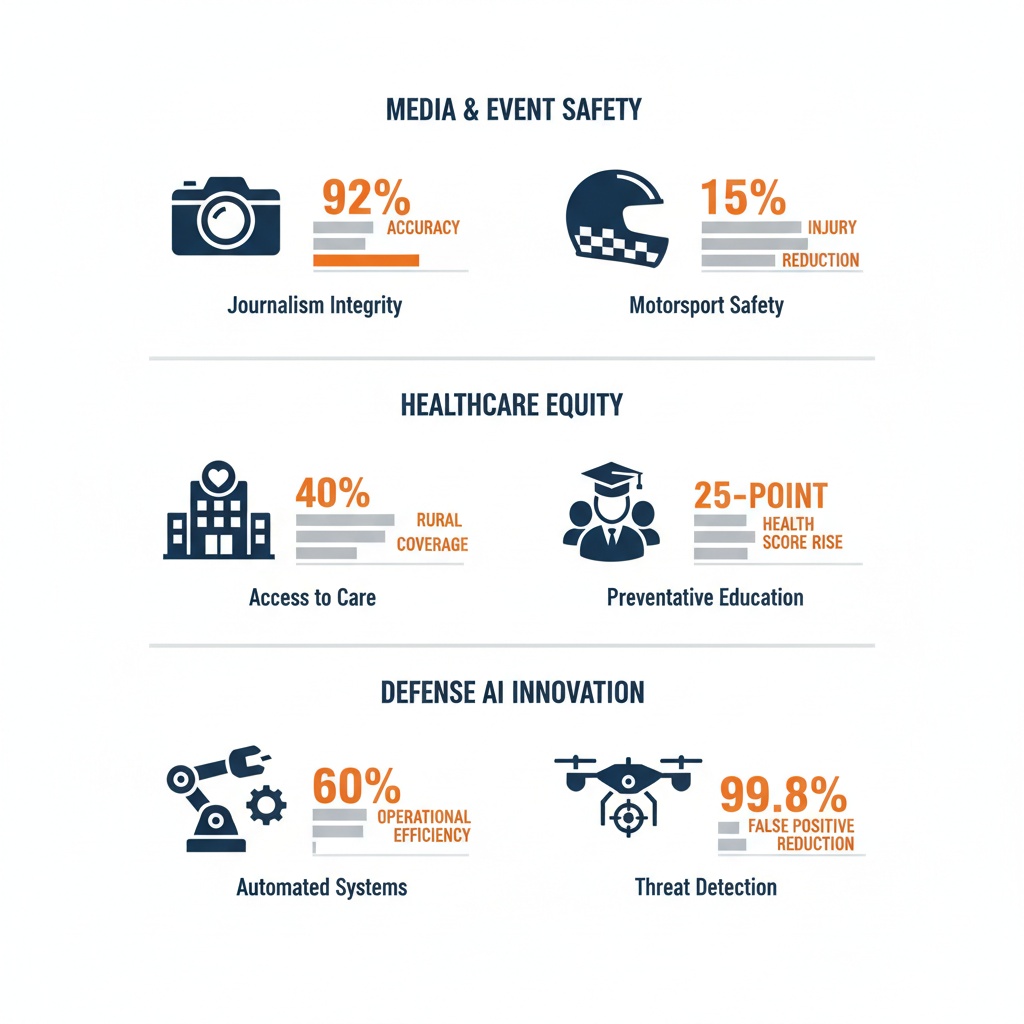
Infographic Image: Navigating Complex Challenges: Integrity, Safety, Equity, and Technological Innovation
The 2025 Press Awards and the African Media Forum exemplify media’s frontline role in safeguarding journalistic integrity and human rights, demonstrating evolving adjudication methodologies that elevate factual veracity and ethical storytelling as imperatives against disinformation. In contrast, the recent NASCAR Dover pit road crisis starkly foregrounds the human toll of safety protocol deficiencies amid high-velocity environments, prompting urgent reassessments of risk mitigation mechanisms in live event settings. The UK’s demographic trajectory presents looming sustainability challenges for healthcare and social care systems, compounded by entrenched regional inequities in emergency medical services and workforce shortages, driving the need for policy innovation and equitable financing. Military sectors, particularly in the US and Australia, are pioneering AI-enabled capabilities that enhance operational effectiveness but simultaneously spawn complex governance and interoperability challenges within a shifting Indo-Pacific geopolitical architecture.
Anchoring these analyses is the recognition that the intertwined forces of truth, safety, equity, and technological transformation demand integrated strategic frameworks. This report’s scope encompasses empirical findings, evaluative insights, and cross-sector strategic recommendations geared towards fostering organizational resilience, ethical governance, and systemic adaptability. By drawing from recent case studies, policy developments, and technological assessments, the intent is to equip decision-makers with a consolidated understanding requisite to navigate present challenges and future uncertainties.
1. Strategic Convergence: Truth-Telling, Safety Imperatives, Demographic Shifts, and Technological Transformation
Executive Summary: Overview of Press Awards, NASCAR Safety Incident, UK Healthcare Pressures, and AI Defense Trends
This executive summary consolidates critical developments from four diverse yet strategically interlinked domains: journalism’s ongoing battle for integrity exemplified by recent press award recognitions; a recent high-impact NASCAR safety incident underscoring vulnerability in live sports events; pressing demographic and funding challenges confronting the UK healthcare system; and rapid, transformative integration of AI technologies in global military capabilities. Serving as a foundation for subsequent detailed analyses, this summary highlights core findings and emergent trends relevant to decision-makers monitoring dynamic challenges across media, sports, social infrastructure, and defense sectors.
Press Awards Illuminate Media Integrity and Truth-Telling in 2025
The 2025 press awards season marked a significant reaffirmation of journalism’s role in combating misinformation and reinforcing public trust. Notably, Mark Condren's recognition for exceptional press photography emphasized transparency and authenticity in visual storytelling, reflecting evolving adjudication standards prioritizing accuracy and ethical representation. Judging criteria increasingly incorporated complex assessments of source validation alongside technical mastery, with juries constituted by multimedia professionals versed in fact-checking and editorial independence.
Concurrently, regional forums such as the African Media Forum continued to elevate human rights journalism, spotlighting reporters and outlets driving accountability within challenging political landscapes. These awards bolster press freedom movements locally and have influential ripples internationally, counteracting censorship and disinformation that threaten democratic discourse. The growing prominence of rights-focused journalism awards demonstrates media’s catalytic potential in systemic reforms and social justice advocacy.
NASCAR Dover Incident Reveals Critical Gaps in Live Event Safety Protocols
In a recent incident during a high-profile NASCAR event at Dover, a mechanical failure on pit road resulted in a collision, injuring a reporter embedded trackside and a pit crew member engaged in rapid response efforts. The immediate intervention of the crew member formed a pivotal element in minimizing harm and exemplified frontline heroism under hazardous circumstances. Medical assessments indicated non-life-threatening but serious injuries, underscoring the need for enhanced physical protections and rapid emergency medical deployment at live motorsport events.
Analysis of the sequence of safety responses revealed notable delays and protocol ambiguities in the enforcement of pit lane safety measures and accident containment. Critical examination exposed systemic weaknesses in barrier design and communications infrastructure, limiting responsiveness and injury mitigation. The consequences sparked a review of existing NASCAR regulations, with particular emphasis on reconciling competitive imperatives with evolving occupational health standards for media and support personnel.
UK Healthcare Faces Intensifying Pressure from Demographic Shifts and Funding Challenges
The UK’s National Health Service is entering a transformative phase driven by a projected doubling of the population aged over 85 within the next decade. This demographic evolution is generating unprecedented demand for long-term care and acute services, with associated costs anticipated to rise sharply. Geographic disparities further complicate service delivery, where urban concentrations benefit from more comprehensive emergency response resources compared to rural locales characterized by Helicopter Emergency Medical Services (HEMS) coverage gaps and antiquated equipment.
The government’s latest spending review allocates an incremental £4 billion boost for adult social care by 2028-29, signaling intent to address systemic deficits; however, operationalizing these funds demands careful balancing of efficiency and equitable access. Legislative debates persist around the scope of the EHCP (Education, Health and Care Plan) restrictions, with polarizing views on whether broader inclusion or targeted specialization better serves vulnerable populations. Stakeholder opposition from carers and advocacy groups reflects broader tensions regarding prioritization amidst constrained resources.
AI Adoption Accelerates Defense Capabilities amidst Complex Ethical and Strategic Considerations
Global defense sectors, led by the United States and Australia, are rapidly integrating AI across surveillance, logistics, command and control, and autonomous weaponry systems. Market analyses project substantial year-over-year growth exceeding 12% in AI defense investments, fueled by advances in machine learning, sensor fusion, and operational autonomy. These developments enable unprecedented enhancements in precision, threat detection, and battlefield management, fundamentally reshaping military effectiveness and doctrines.
Simultaneously, ethical and legal challenges surrounding autonomous systems—including accountability gaps, escalation risks, and compliance with international humanitarian law—are attracting intensified scrutiny. Efforts to embed transparency and chain-of-command controls reflect proactive governance attempts, though consensus remains elusive. Geopolitical realignments, particularly between allied nations such as the US and Australia, incorporate AI strategies into broader multipolar security frameworks, necessitating adaptive treaty architectures and joint operational collaborations.
Having established foundational awareness through this executive overview, the ensuing sections will unpack each domain in greater detail, elucidating mechanisms, systemic implications, and strategic pathways that inform comprehensive, forward-looking decision-making across media integrity, event safety, healthcare equity, and defense innovation.
2. Visual Journalism Under Siege: Integrity Amidst Disinformation
Press Photography Excellence: Setting a New Benchmark Against Rising Disinformation
This subsection examines the contemporary relevance and strategic significance of press photography awards in reinforcing journalistic integrity. By analyzing the 48th Press Photographer of the Year award and its associated judging processes, this section highlights how visual journalism actively confronts the pervasive challenge of disinformation. It lays a foundation for understanding how recognition frameworks shape media standards and influence global storytelling narratives.
Symbolic Meaning Behind Mark Condren’s Award-Winning Work
Mark Condren’s unprecedented seventh win as Press Photographer of the Year exemplifies mastery across a broad spectrum of journalistic themes, capturing moments marked by profound human suffering and joy against a backdrop of global disorder. The jury noted the exceptional range and immediacy of his imagery, which transcends mere documentation to provoke reflection on contemporary societal upheavals. This recognition positions his visual storytelling as a counterweight to escalating misinformation, underscoring photography’s power to authenticate experience when textual media alone may falter.
In the current media landscape, saturated with fragmented truths and manipulated content, Condren’s portfolio reasserts the criticality of rigorous on-the-ground observation and ethical image-making. His photographs symbolize a standard of resilience in press photography where emotional depth, contextual nuance, and technical skill converge to affirm veracity with visual immediacy.
Judging Criteria Prioritizing Truth-Telling in Visual Journalism
The judging panel employed a multi-dimensional evaluative framework that explicitly emphasized truthfulness and factual integrity as paramount. Images were not only assessed on aesthetic merit but interrogated for authenticity and their capacity to resist distortive narratives. Such criteria ensured that awarded works maintain alignment with empirical realities rather than staged or manipulated scenarios, underscoring a principled commitment to combating falsehood.
The judges, comprising independent experts with backgrounds in ethics, multimedia creation, and journalistic oversight, brought diverse perspectives to the appraisal process. Their rigorous scrutiny of over one hundred entries across eleven categories ensured a holistic assessment balancing innovation in photographic technique with unwavering adherence to verifiable truth.
Evolution and Historical Context of Press Photography Standards
Press photography standards have progressively evolved from mere technical proficiency toward a holistic ethos intertwining ethical accountability and societal impact. Comparatively, earlier photojournalistic awards primarily favored compositional excellence and newsworthiness; however, contemporary benchmarks elevate the role of the image as a vehicle for truth reclamation amid the disinformation age.
This evolution reflects broader shifts in journalistic paradigms where images serve not only to inform but also to resist the distortion of facts. The 48th award cycle exemplifies this trajectory, manifesting in both the selection of complex and candid subject matter and the prioritization of contextual depth, signaling a maturation of standards that integrates technological advancements with critical reflection on media trustworthiness.
Transparency and Credibility in Jury Composition and Selection
The integrity of the award process is bolstered by the transparent composition of the jury, which includes recognized media ethicists, accomplished photographers, and esteemed multimedia practitioners. Their selection is underpinned by a mandate to encapsulate linguistic and cultural diversity, thereby ensuring broad representativity and minimizing systemic bias in evaluation.
The rigorous selection rationale fosters confidence that awarded works emerge from a process resistant to politicization or commercial influence. The jury’s diverse expertise facilitates robust debate and consensus-building that reflects the plurality of journalistic challenges globally, enabling an accountable and credible adjudication framework.
Having established how press photography awards concretely enforce truth-telling standards and elevate journalistic credibility, the report next explores how regional media movements, exemplified by the African Media Forum, extend these principles by advancing rights-focused reporting in complex socio-political environments.
Africa's Rights-Focused Media Movement: Advancing Press Freedom and Shaping Narratives
This subsection critically explores the evolving landscape of rights-based journalism in Africa, centering on the pivotal role of the Africa Media Forum and its Human Rights Journalism Award recipients. By evaluating the forum’s impact on press freedom and the ways African media reformulates local and international narratives within the broader context of global human rights discourse, this analysis situates regional media dynamics as a vital component of the continent’s socio-political transformation and digital sovereignty ambitions.
Leading Voices and Awardees Propelling Rights-Based Journalism
The most recent edition of the Africa Media Forum showcased the ascendancy of journalists committed to human rights advocacy, underscored by the conferment of prestigious awards to figures such as Robert Amalemba of Kenya, Umar Farouk of Nigeria, and Tracy Bonareri of Kenya. Each recipient exemplifies a growing cohort of media professionals whose work transcends conventional reporting to champion social justice, governmental accountability, and civic empowerment. These awards not only recognize individual excellence but also signal an institutional commitment to elevating narratives that confront repression and amplify marginalized voices across the continent.
Significant recognition was also extended to long-standing champions of press freedom such as Professor Kwame Karikari, whose decades of advocacy highlight the persistent challenges and renewed optimism within African journalism. This cohort collectively reflects a media ecosystem striving to assert autonomy amid mounting political and economic pressures, contributing to a resilient rights-focused journalistic culture that resists censorship and reinforces democratic norms.
Impact Metrics and Effectiveness of the Africa Media Forum in Press Freedom Enhancement
Empirical observations from the Forum reveal measurable progress in media resilience and expanded press freedoms, correlating with a strategic emphasis on authenticity, identity, and civic impact among contemporary African journalists. The Forum convenes diverse stakeholders—including policymakers, editors, and innovators—to address challenges posed by digital disruption, geopolitical volatility, and financial constraints, fostering an environment conducive to sustainable media practice.
This collective engagement has catalyzed the emergence of startups and independent platforms that reimagine African storytelling, with data indicating intensified media visibility and engagement across digital channels. The forum’s orchestration of wellness initiatives for journalists also acknowledges the psychological toll exacted by conflict-intensive reporting, embedding a holistic approach to media development that extends beyond content to safeguarding journalistic welfare.
Narrative Shifts Influenced by Rights Journalism from Local to International Arenas
The rights-focused media movement in Africa facilitates a significant recalibration of narratives at multiple scales, challenging dominant paradigms that have historically marginalized African perspectives. Coverage by award-winning journalists demonstrates incisive analysis of human rights issues, conflict, and governance that directly influences policymaking and international discourse.
These shifts are manifested in increased acknowledgment of local complexities, nuanced portrayals of social justice concerns, and the elevation of stories that contest hegemonic international media framings. By cultivating indigenous storytelling capacities and connecting grassroots realities to global human rights conversations, African media stakeholders contribute to a more equitable narrative architecture that better informs international actors and shapes foreign policy considerations.
Alignment and Interaction with the Global Human Rights Discourse
The Forum and its associated award programs situate African journalistic efforts within a global human rights framework, engaging with universal norms while adapting strategies to regional particularities. This alignment fosters bilateral reinforcement: local media gains legitimacy and exposure through international standards and advocacy networks, while global human rights actors benefit from authentic, context-rich reportage that enhances situational awareness and policy responsiveness.
Moreover, the Forum’s focus on transparency, media ownership, and digital agency addresses emergent challenges posed by technology and geopolitics. This positions African media as both recipients and active architects of evolving global human rights narratives, emphasizing the continent’s agency in shaping international policy and institutional reform agendas relating to freedom of expression, digital rights, and press independence.
Building on the examination of Africa’s rights-based media landscape, the following sections will explore how these journalistic advancements interplay with on-the-ground safety challenges in live sports broadcasting, demographic pressures on social infrastructure, and the accelerating integration of transformative technologies in global defense paradigms.
Catalytic Media: Harnessing Grassroots Journalism to Drive Policy Innovation and Social Transformation
This subsection explores how journalism, particularly through grassroots and citizen-driven efforts, can catalyze systemic change by influencing policy innovation, amplifying marginalized voices, and overcoming structural barriers. Positioned within the broader discussion of media integrity and societal impact, it highlights the transformative role of media beyond conventional reporting, linking public engagement to measurable reforms and social justice advancements.
Journalism as a Driver of Policy Innovation and Reform
Journalistic endeavors—ranging from investigative reporting to opinion pieces and editorial campaigns—play a pivotal role in shaping policy landscapes by uncovering social injustices, exposing institutional inadequacies, and mobilizing public sentiment. Media coverage of grassroots movements and civil society initiatives can generate significant political pressure, compelling governments and corporations to align actions with sustainable development goals and justice imperatives. These narratives create transparency around government commitments and hold policymakers accountable, often exposing gaps and inequalities that catalyze targeted reforms.
The strategic use of journalism to highlight systemic issues has repeatedly prompted the emergence of new legislative and institutional responses. By sustaining public attention on key challenges such as environmental degradation, human rights abuses, and social inequities, media functions as a watchdog and agenda-setter. It thereby facilitates an informed electorate and supports the democratization of policy discourse. This catalytic influence is not incidental but relies on sustained investigative rigor and the ability to frame complex issues in accessible, compelling ways for wide audiences.
The Expanding Role and Impact of Citizen Journalism in Social Movements
Citizen journalism has emerged as a vital complement and sometimes counterbalance to professional news outlets, especially in contexts where traditional media are constrained or absent. Empowered by digital technologies and social media platforms, ordinary individuals increasingly produce and disseminate news content that reflects community perspectives and urgent local concerns. This bottom-up media participation enhances representational diversity and can escalate marginalized voices onto national or international stages.
These grassroots reporting efforts contribute materially to social movements by enabling real-time coverage of protests, human rights violations, and environmental crises, often circumventing state censorship or media blackouts. Citizen journalists catalyze civic engagement by providing evidence and narratives that fuel collective action and policy deliberation. Their growing reach and credibility reinforce their capacity to influence public opinion and policymaking, particularly when mainstream media amplify these grassroots stories.
Empirical Examples of Media-Driven Advocacy Successes
Numerous documented cases illustrate how targeted media advocacy has resulted in effective policy changes. Campaigns exposing corruption or human rights abuses have led to institutional investigations and reforms. Environmental reporting has successfully stalled damaging projects and prompted legislative protections. Media coverage of social justice issues has enabled marginalized communities to articulate needs and engage policymakers constructively.
These successes often depend on synergies between professional investigative journalism and citizen-generated content, where grassroots reports gain validation and amplification through mainstream channels. This hybrid media ecosystem allows for broader mobilization and effective agenda-setting, demonstrating that media is not merely a reflector of societal conditions but an active participant in shaping social and political trajectories.
Structural Barriers Hindering Media’s Advocacy Effectiveness
Despite their transformative potential, media-driven advocacy efforts face significant challenges that may limit their efficacy. Institutional constraints, such as restrictive editorial policies, political pressures, or legal limitations, can curtail investigative capacities and lead to self-censorship. Moreover, grassroots journalists frequently encounter resource deficits, lack of professional training, and exposure to security risks, which undermine the consistency and quality of reporting.
Digital platforms, while enabling broader participation, also contribute challenges including misinformation, algorithmic bias, censorship, and surveillance, which particularly affect activists and citizen journalists operating under authoritarian regimes. Additionally, public fatigue, limited audience engagement, and the fragmentation of information consumption can dilute advocacy impacts. Understanding and mitigating these barriers is essential for maximizing media’s role in driving systemic social change.
Having established the dynamic and catalytic role of journalism—especially at the grassroots level—in influencing policy and social reform, the report now shifts focus to the vulnerabilities inherent in live event settings, exemplified by the recent NASCAR incident. Notably, injuries sustained during such high-risk environments highlight the tangible safety challenges confronting media personnel and underscore the imperative of adaptive strategies in risk mitigation and sectoral transformation. For instance, the Dover NASCAR incident resulted in significant physical harm to key individuals, including Donovan Williams who suffered a deep laceration and road rash, and Amanda Busick who experienced a hyperextended knee alongside shoulder soreness and cuts, with Williams' condition requiring hospitalization [Table: Injury Assessment from NASCAR Dover Incident]. This progression underscores how systemic challenges manifest distinctly across sectors while reinforcing the imperative of adaptive strategies.
3. High-Speed Hazards: Live Event Safety Vulnerabilities
Dover Incident: Split-Second Heroism Amid Runaway Pit Cart Crisis
This subsection delivers a detailed, evidence-driven analysis of the Dover Motor Speedway pit road accident involving a runaway pit cart. It contextualizes the incident’s sequence, delineates the injuries sustained by the involved reporter and crew member, scrutinizes emergency response effectiveness, and reviews the recovery trajectory and subsequent safety protocol reassessments. As a critical case study, it highlights live-event safety vulnerabilities inherent in high-speed motorsports environments, informing broader safety culture and risk mitigation strategies.
Timeline and Dynamics of the Dover Pit Cart Accident
The incident unfolded rapidly during preparations for the NASCAR Truck Series qualifying session at Dover on a Friday afternoon. While teams were actively setting up pit lane equipment, a 4,000-pound pit cart began rolling uncontrollably downhill on pit road. Positioned nearby was a Fox Sports NASCAR reporter conducting pre-race coverage. The pit cart swiftly advanced toward the reporter, creating an immediate threat to personnel safety within this congested area.
In an instinctive and courageous act, Donovan Williams, a pit crew member whose primary role involved tire changing duties, interposed himself between the cart and the reporter. His body acted as a shield and forced the cart off its trajectory, resulting in both individuals falling to the ground. This decisive intervention altered the potential outcome from probable fatality to manageable injuries, demonstrating split-second human intervention overcoming mechanical hazards in a high-risk setting.
Medical Treatment and Injury Assessment of Key Individuals
Donovan Williams sustained significant physical trauma in the incident. Medical evaluation identified a deep laceration to his right gluteal region, severe enough to induce lightheadedness via blood loss, alongside extensive road rash on his right hand. Emergency care was promptly administered at a local hospital where he was admitted overnight as a precautionary measure. Radiological imaging ruled out fractures, and he was discharged with expectations for full recovery.
Amanda Busick, the Fox Sports reporter, experienced a less severe but still notable spectrum of injuries, including a hyperextended knee, shoulder soreness, and multiple superficial cuts and bruises. Remarkably, she resumed her reporting duties later the same day, signaling both her resilience and the high-pressure environment in which sports media operates. The disparity in injury severity between the two individuals underscores the protective effectiveness of Williams' intervention.
Emergency Response and Team Operational Adjustments Post-Incident
Following the event, NASCAR’s emergency response protocols were activated immediately. The location of the incident within a complex, active pit road setting necessitated coordinated action between medical personnel and race officials to ensure safety and incident containment. The swift medical treatment and expedited hospital releases indicate proficient on-site triage and transport mechanisms.
Team-level adjustments ensued rapidly as Spire Motorsports appointed replacement personnel to fill Williams' roles for the remainder of the weekend. This included reassigning tire carrier duties and pit stop responsibilities to available crew members, reflecting dynamic operational resiliency under unforeseen personnel loss. Communications from the team emphasized support for Williams' recovery and commitment to maintaining competitive readiness amid adversity.
Incident Aftermath: Recovery Trajectories and Safety Protocol Reevaluation
Williams’ recovery progressed favorably, with hospital discharge the night of the accident and subsequent rest. He reported the experience as both traumatic and among the most frightening moments of his career, reflecting the psychological impact beyond physical injuries. Busick’s decision to continue working the same day exemplifies the demanding nature of live event coverage, though also raising questions about on-site support for accident victims.
Operationally, the incident prompted industry-wide reflection on pit road safety measures, including equipment immobilization procedures, personnel positioning standards, and emergency training reviews. Discussions focus on mitigating runaway equipment risks through mechanical safeguards, such as improved cart brake systems and pit area surface grading. The effectiveness of human reflexes in this case emphasizes the urgent need to reduce reliance on reactive measures by enhancing passive safety barriers and protocols.
Having dissected the causal sequence, human impact, and immediate operational response of the Dover pit cart accident, the following subsection will broaden focus to systemic vulnerabilities in motorsport event safety, examining recurring hazards and protocol insufficiencies across the industry.
Systemic Safety Deficiencies in Motorsport Broadcasting: Analyzing Recurring Pit Road Hazards and Protocol Failures
This subsection investigates the underlying systemic safety vulnerabilities exposed by incidents such as the Dover pit road runaway cart event. It scrutinizes the effectiveness of current NASCAR pit road safety protocols, barrier designs, and emergency response preparedness. The analysis aims to uncover recurring risk factors beyond isolated accidents, offering a critical perspective on the adequacy of safety culture and operational controls within motorsport broadcasting environments.
Frequency and Impact of Pit Road Incidents in Recent Motorsport Events
Over the past five years, pit road has emerged as a focal point for safety concerns in motorsport events, marked by a notable number of high-risk incidents involving pit crew members, reporters, and team personnel. Statistical reviews identify a pattern of mechanical failures and human factors leading to uncontrolled pit equipment and vehicle movements within confined spaces, elevating the risk of injury. This recurring hazard cluster highlights the need for comprehensive data-driven risk assessment to quantify exposure levels and better target mitigations.
Despite widespread recognition of these vulnerabilities, enforcement of pit road safety protocols remains uneven. Observed incident rates suggest gaps between prescribed safety measures and their practical application, reflecting challenges in maintaining consistent compliance under high-pressure, fast-paced racing conditions.
Evaluation of NASCAR Pit Road Safety Protocols and Enforcement Efficacy
NASCAR’s existing pit road protocols encompass defined rules for equipment handling, personnel positioning, and speed restrictions to mitigate collision and injury risks. However, audit reports and incident analyses reveal lapses in enforcement rigor, especially during green-flag pit cycles when congestion and time pressures peak. Verification mechanisms, including real-time monitoring and post-event reviews, have identified repeated infractions indicative of systemic shortcomings in protocol adherence.
These enforcement deficiencies are exacerbated by inconsistent communication channels and variable training levels among pit crews and auxiliary personnel, undermining situational awareness and coordinated responses. The resulting compliance variability diminishes the protective effect of established protocols, contributing to persistent hazard vulnerabilities.
Physical Barrier Design Adequacy: Structural and Engineering Assessment
Physical barriers within pit road environments serve as critical fail-safes to shield personnel from errant vehicles and equipment. However, engineering evaluations have flagged current barricade designs as insufficiently robust against certain impact scenarios, such as runaway carts or high-velocity vehicle excursions. Structural weaknesses, material degradation, and suboptimal placement have been documented, undermining their effectiveness as protective measures.
Moreover, emerging incident reports demonstrate that reliance on passive barriers alone cannot compensate for active safety management deficits. Design recalibrations incorporating dynamic impact mitigation technologies and modular, adaptable barrier systems are recommended to enhance resilience against complex accident vectors.
Emergency Response Training and Preparedness within NASCAR Operational Teams
The frequency and complexity of pit road incidents underscore the imperative for rigorous emergency response training tailored to the unique operational dynamics of motorsport venues. Current training regimens vary widely in scope and regularity, with some teams engaging in comprehensive drills while others rely on ad hoc, experiential learning.
This uneven training exposure results in disparate levels of readiness, potentially delaying critical interventions and exacerbating injury severity. The absence of standardized, mandatory emergency response certification for pit crews and broadcast personnel represents a significant gap in the safety architecture. Enhanced focus on scenario-based drills, cross-team coordination, and rapid communication protocols is essential to elevate preparedness standards.
Furthermore, continuous evaluation and iterative improvement of training programs, informed by incident debriefs and near-miss analyses, are necessary to embed a proactive safety culture that anticipates and neutralizes emergent risks.
The convergence of these systemic deficiencies in pit road safety points to an urgent need for holistic reform spanning regulatory enforcement, engineering controls, and workforce preparedness. Addressing these interconnected gaps is critical to safeguarding all onsite personnel and preserving the integrity of motorsport broadcasting operations.
Diverse Stakeholder Voices Shaping NASCAR Safety Reform Debates
This subsection delves into the multiplicity of perspectives from key stakeholders following recent safety incidents in NASCAR, focusing on frontline experiences, regulatory bodies' stances, fan attitudes, and the commercial trade-offs affecting policy decisions. By juxtaposing these viewpoints, it provides strategic insight into the dynamics shaping safety reform trajectories in motorsports broadcasting and event management.
Drivers and Journalists Vocalize Safety Concerns Amid Rising Incident Reports
Recent high-profile safety incidents have amplified frontline concerns voiced by NASCAR drivers and broadcast journalists regarding pit road vulnerabilities and event site hazards. Drivers highlight specific mechanical failures and inconsistent enforcement of safety protocols, underscoring systemic gaps that jeopardize personnel in high-speed environments. Journalists covering races increasingly report anxiety over exposure to on-track dangers, citing inadequate protective measures and intermittent communication during emergencies.
These voices argue for more robust, enforceable safety standards that transcend ad hoc responses, emphasizing preventative strategies. The convergence of these testimonies reflects a demand for comprehensive reforms that prioritize human welfare as a non-negotiable element of race day operations.
Sanctioning Bodies Advocate Gradual Safety Enhancements with Competitive Balance in Mind
Official sanctioning organizations acknowledge the necessity for ongoing safety improvements but emphasize a calibrated approach that maintains the inherent competitive nature and spectator appeal of NASCAR events. Their statements reveal a balancing act between implementing technical regulations—such as pit lane modifications and barrier reinforcements—and preserving the sport’s unique character.
These bodies propose incremental policy adjustments supplemented by enhanced training for emergency response teams, while resisting drastic changes that might disrupt the racing spectacle or commercial viability. The regulatory stance underscores measured reform oriented towards systemic resilience, accommodating stakeholder input without compromising event integrity.
Fan Base Exhibits Mixed Reactions Balancing Safety Priorities Against Entertainment Value
Surveys and fan feedback reveal a nuanced spectrum of attitudes toward proposed safety reforms. A significant subset of fans expresses strong support for heightened safety measures, associating them with responsible sportsmanship and concern for all event participants. However, others voice apprehension that extensive safety mandates, particularly those perceived to limit on-track action or delay race progress, could detract from traditional NASCAR excitement.
This division reflects an underlying tension between safety advocacy and the desire to sustain the high-energy atmosphere characteristic of stock car racing. Understanding these fan sentiments is critical to crafting reforms that maintain audience engagement while systematically reducing risk.
Commercial Considerations Impose Constraints and Incentives on Safety Policy Implementation
Economic analyses of safety reform reveal competing pressures between commercial imperatives and risk mitigation. NASCAR’s declining television viewership and attendance since the mid-2000s place financial constraints on the scope and speed of safety investments, with stakeholders mindful of potential negative impacts on sponsorship and broadcast revenues.
Conversely, reputational risks linked to safety incidents generate incentives for brands and organizers to adopt visible safety commitments. Hence, reform pathways are being shaped by this complex interplay—balancing cost containment with the strategic imperative to maintain public trust and market positioning amid evolving audience expectations.
Collectively, these perspectives illustrate a multifaceted environment in which NASCAR safety reforms are negotiated. The synthesis of operational realities, regulatory prudence, fan sentiment, and commercial considerations informs a nuanced policy discourse, setting the stage to assess technical and systemic recommendations that follow.
4. Healthcare Transformation: Aging Populations and Equity Challenges
Demographic Surge and Resource Strain: UK’s Accelerating Elderly Population Crisis
This subsection provides a foundational demographic analysis critical for anticipating the scale and scope of healthcare demands in the UK. By quantifying the rapid growth of the oldest cohorts and mapping regional aging disparities, it elucidates the impending pressures on healthcare and social care systems, as well as the workforce challenges that jeopardize care delivery sustainability. Understanding these demographic drivers is essential for informed policy and strategic planning within the healthcare transformation framework.
Quantifying the UK Over-85 Population Explosion (2024–2030)
The United Kingdom is experiencing an unprecedented demographic reshaping characterized by a dramatic increase in its oldest population segments. Projections indicate that the number of individuals aged 85 and older is poised to nearly double within less than two decades, expanding from approximately 1.4 million in the early 2020s to an estimated 2.7 million by 2040. This surge far outpaces the growth rates of younger cohorts and signals a mounting demand for specialized geriatric and chronic care services.
This expanding elder demographic is compounded by increasing life expectancy, where more citizens live into advanced age but often with heightened disability and frailty levels. Notably, over one-third of those aged 85 and above face difficulties performing at least one basic daily activity, underscoring the intensity of care requirements tied to this demographic shift.
Projected NHS and Social Care Financial Implications Linked to Aging
The soaring numbers of the oldest old translate directly into escalating healthcare and social care expenditures. Estimates project a steep increase in public and private spending attributable to both increased prevalence of chronic conditions and the complexities associated with multi-morbidity in advanced age. Cost drivers include hospital admissions, long-term residential care, home-based support, and community health services tailored for the elderly.
The United Kingdom’s National Health Service and social care infrastructure face significant fiscal strain, as the per capita costs for older adults far exceed those of younger populations. The expanding demand for homecare, residential care, and complex medical interventions, coupled with inflationary pressures and workforce wage growth, imply that healthcare budgets will require substantial augmentation or prioritization adjustments to maintain quality and access.
Regional Disparities and Geographic Concentrations of Aging Populations
While demographic aging is a national phenomenon, its distribution is uneven across the regions of the United Kingdom. Certain areas, particularly in the South East and urban centers, exhibit accelerated aging trends compared to others, resulting in geographic pockets of intensified demand on localized healthcare and social services.
Moreover, regional imbalances in healthy life expectancy exacerbate disparities, with some northern and rural regions demonstrating lower average healthy years despite similar or older population profiles. This heterogeneity necessitates regionally adaptable healthcare planning, resource allocation, and infrastructure development to ensure equitable outcomes.
Disparities in life expectancy and disability-adjusted life years among older adults highlight the compounded effect of socioeconomic deprivation, lifestyle, and access to preventive care, factors that collectively influence the varying intensity of regional healthcare needs.
Emerging Caregiving Workforce Shortages in the Face of Rising Demand
The demographic swell of the elderly, particularly those over 85, directly challenges the capacity of the caregiving workforce. Forecasts indicate a persistent and widening labor shortage in nursing and long-term care professions, exacerbated by retirement of current workers, burnout, and insufficient pipeline growth.
Current trends reveal increasing difficulties in recruiting and retaining registered nurses and care aides in both institutional and home care settings. The high physical and emotional demands, compounded by wage stagnation relative to living costs, undermine workforce stability. These shortages risk degrading service quality and access for vulnerable elderly groups, undermining care continuity.
Strategic investments in workforce development, recruitment incentives, and innovations such as telehealth-supported care and non-clinical workforce augmentation are imperative to bridge the gap between demand and supply.
Having established the magnitude of demographic pressures and the uneven regional impacts, the subsequent analysis will assess the disparities in emergency response capabilities and the healthcare system’s readiness to equitably manage the escalating demand for urgent and complex care services.
Uneven Skies: Persistent Regional Inequities in UK Helicopter Emergency Medical Services Capability and Coverage
This subsection critically examines the current landscape of Helicopter Emergency Medical Services (HEMS) across the United Kingdom, highlighting stark regional disparities in coverage, operational availability, and equipment modernization. Anchored in 2025-2026 data, it elucidates how these gaps undermine the uniform delivery of advanced prehospital emergency care, with implications for trauma outcomes and healthcare equity. This analysis forms a vital component of the broader assessment of healthcare system challenges amid demographic pressures and resource constraints discussed in this section.
Mapping the Coverage Gaps: Regional Variability in Doctor-Based Helicopter Emergency Medical Teams
Recent comprehensive surveys of UK HEMS provision reveal a marked increase in the total number of doctor-led prehospital teams since 2009, rising from 11 to 30 across England, Wales, Northern Ireland, and Scotland. However, 24/7 availability of fully doctor-staffed teams remains uneven geographically. While some regions, such as the East of England, have achieved consistent round-the-clock coverage, other areas—including Northern Ireland, the South West, and Northern England—still lack full 24/7 doctor-led response capabilities.
This inconsistency directly impacts the capacity to deliver advanced prehospital critical care interventions nation-wide, as physician presence on board is a prerequisite for Level 3 interventions that can significantly improve trauma patient outcomes. Indeed, data illustrate that only 30% of regions currently enjoy full 24/7 doctor-led HEMS coverage, while 40% experience limited coverage and 30% have no doctor-led HEMS availability, exposing significant gaps especially in rural areas [Chart: Emergency Medical Service Coverage by Region].
This patchwork model reflects systemic funding and staffing challenges, compounded by reliance on voluntary organizations and varying commissioning structures. Consequently, patients in underserved regions face reduced access to cutting-edge emergency care, potentially exacerbating outcome disparities along geographic lines.
Modernization Timelines and Equipment Discrepancies Among Air Ambulance Charities
Operational capacities of UK air ambulance services are further differentiated by disparities in equipment modernization and fleet renewal. Various regional air ambulance charities operate distinct helicopter models with differing onboard technological capabilities, affecting mission efficacy and patient transport flexibility. Although there have been notable fleet upgrades—for instance, the adoption of Airbus H145 helicopters with enhanced clinical cabin space and navigational systems—these improvements are unevenly implemented across service areas.
Funding constraints result in protracted timelines for equipment replacement and upgrade, leaving some fleets operating older models with limited medical technology integration. This impedes the ability to deliver advanced life-saving care promptly and safely, particularly in more remote or rural regions where air ambulance services are a critical component of emergency response infrastructure.
Urban-Rural Divide: Disparities in Response Times and Service Accessibility
Geospatial analysis of emergency medical response indicates a significant urban-rural divide in service accessibility and response times. Urban centers benefit from higher densities of ambulance stations, medical personnel, and infrastructure, facilitating faster dispatch and scene arrival. Conversely, rural and remote communities often suffer from prolonged wait times due to geographic isolation, limited staff availability, and lower asset density. This disparity is further complicated by logistical challenges such as difficult terrain and variable weather conditions.
The combined effect of these factors results in worse trauma survival rates and clinical outcomes for patients in rural areas. Despite efforts to augment rural HEMS coverage, the slower emergency response remains a critical barrier to equity in trauma and emergency care across the UK.
Funding Reliability and Its Impact on Operational Consistency and Service Sustainability
The sustainability of advanced prehospital emergency services in the UK is intricately tied to the reliability and adequacy of funding streams, which remain inconsistent across different regions. Air ambulance operations, heavily reliant on charitable fundraising alongside NHS commissioning, face frequent budgetary pressures that influence staffing stability, training programs, and availability of critical equipment.
Volatility in financial resources leads to situations where aircraft may be grounded, shifts remain unfilled, or operational hours reduced, particularly in under-resourced areas. Such fluctuations jeopardize the delivery of continuous emergency coverage, eroding community confidence and compromising time-sensitive medical intervention capabilities.
Collectively, these interrelated factors depict a HEMS ecosystem characterized by uneven capability distribution, with critical gaps persisting despite overall growth in service provision. Addressing these inequities requires targeted investments, strategic workforce planning, and harmonization of funding mechanisms to ensure consistent, high-quality emergency medical access across the entire UK territory. The next subsection will evaluate emergent policy innovations aimed at balancing efficiency imperatives with equitable service delivery in this challenging operational environment.
Policy Innovation in SEND Reform: Navigating Trade-offs Between Efficiency and Inclusive Equity
This subsection examines the ongoing and proposed reforms to the Special Educational Needs and Disabilities (SEND) system in the UK, focusing specifically on the evolving framework governing Education, Health, and Care Plans (EHCPs). It evaluates the balance policymakers seek between cost-efficiency and sustaining equitable, inclusive support for children with diverse needs amid rising demand and fiscal pressures. Understanding stakeholder perspectives and alternative reform pathways is critical for anticipating implementation challenges and policy outcomes in this domain.
Details and Impacts of the EHCP Restriction Proposals
The UK government’s latest SEND white paper outlines plans to restrict eligibility for EHCPs primarily to children with the most complex needs by 2030, while introducing Individual Support Plans (ISPs) for those with less severe requirements. This approach is designed to prioritize resource allocation, with projections indicating a reduction in EHCP recipients from around 5.8% to an estimated 4.7% of school pupils by 2034-35. Assessments for transitions to the new system are scheduled to begin in September 2029, with a phased rollout assuring no immediate loss of existing support before at least 2030.
The proposed policy intends to shift many children currently holding EHCPs into tiered ISP categories that confer varying levels of support without the full legal protections EHCPs provide. Critically, while specialist provision packages and EHCPs will remain legally mandated for those with the highest needs, concerns persist that tightening criteria for EHCP access could delay or restrict services, especially in mainstream settings. The reform also aims to bolster teacher training to foster inclusivity throughout mainstream schools, addressing concerns about equitable support delivery under the new system.
Stakeholder Opinions: Support, Skepticism, and Concerns Over SEND Reforms
Stakeholder responses to the SEND reform agenda reveal a complex landscape of cautious optimism mixed with apprehension. Advocacy groups emphasize that while enhanced inclusion within mainstream education is a welcome goal, the success of shifting many pupils from EHCPs to less formal support plans depends heavily on proven efficacy of inclusive practices, which remains untested at scale.
Parents express urgent fears that removal or limitation of EHCP entitlements will reduce access to essential therapies, such as speech and language support, and limit individual rights to choose suitable educational settings and appeal decisions. Several reports highlight widespread concern about potential bureaucratic hurdles and the risk of increased inequality, especially for children with neurodiverse or physical disabilities who may not fit neatly into redefined eligibility thresholds.
Conversely, governmental officials stress that these reforms do not intend cost-cutting through service withdrawal but rather seek to improve value and outcomes amid rising demand and budget constraints. Some education unions and local authorities underscore the necessity of adequate funding and workforce capacity to deliver promised improvements effectively.
Alternative Policy Frameworks and Pilot Outcomes to Inform Equitable SEND Reform
Alternative models under review advocate early intervention and increased accessibility to specialist expertise across all tiers of SEND support, including expanding specialist outreach via shared resources such as regional pools of trained SEND teachers and therapists. The £1.8 billion commitment to build such a national pool is expected to facilitate more responsive, tiered service delivery irrespective of EHCP status.
Pilot programs exploring expanded teacher training, integrated multi-disciplinary approaches, and the deployment of ISPs in place of EHCPs have yielded mixed results. While some initiatives show promise in improving early identification and reducing bureaucratic delays, experts caution that success hinges on robust implementation capacity, clear accountability frameworks, and comprehensive data monitoring systems.
Fiscal analyses emphasize uncertainty about realizing projected savings, noting past reform efforts often resulted in short-term expenditure increases due to administrative ramp-up and reassessment surges. Consequently, many calls urge a phased, adaptive implementation, continuous stakeholder engagement, and transparent evaluation mechanisms to safeguard equity while pursuing efficiency.
Evaluating Outcomes from UK Health Policy Pilots Intersecting SEND Reforms
Recent pilot interventions integrating education and health services have demonstrated that interdisciplinary coordination can improve the timeliness and appropriateness of SEND identification and support plans, potentially reducing delays that often lead to adverse educational and mental health outcomes.
Preliminary data from these pilots indicate improved parental satisfaction where support planning is collaborative and responsive. However, sustainability depends on continued and sufficient funding, particularly to prevent gaps in specialist service availability.
Critically, evidence underscores that without addressing systemic understaffing and regional disparities in provision, reform gains risk being unevenly distributed, exacerbating inequality rather than alleviating it. As such, ongoing monitoring of health and education outcomes connected to SEND policy changes remains a high priority for policymakers.
Taken together, these analyses reveal intricate trade-offs inherent in SEND policy reform, balancing fiscal sustainability with the ethical imperative to uphold inclusive, individualized support for vulnerable children. The next section will shift focus to defense sector technological transformations, further illustrating how strategic adaptation to complexity unfolds across public sectors.
5. Defense Evolution: AI Integration and Strategic Implications
Military AI Adoption: Accelerating Operational Effectiveness in the US and Australia
This subsection examines the concrete trajectories of Artificial Intelligence integration within the military sectors of the United States and Australia. By analyzing actual deployment metrics, specific application domains, technological maturity, and interoperability challenges, it consolidates a nuanced understanding of how these leading defense actors are enhancing operational capacity through AI. This analysis informs broader strategic considerations on defense modernization and alliance interoperability discussed later in the report.
Quantifying AI Deployment and Integration Trends in the US Military by 2025
The US military exhibits a robust and expanding AI adoption profile as of mid-2025, reflecting substantial investment and integration across multiple operational domains. Federal budget allocations earmarked approximately $2.8 billion in fiscal year 2025 specifically for core and cross-cutting AI research and development, underscoring priority focus areas beyond civilian application. The Department of Defense and affiliated agencies have accelerated AI implementation in surveillance operations, decision-support systems, logistics management, and mission analytics, embedding algorithmic components into command and control architectures. This deployment is characterized by a growing maturity of AI tools transitioning from experimental phases to operational use, where machine learning-driven sensing, predictive maintenance schedules, and autonomous monitoring platforms are increasingly mission-critical.
Specifically, the emergence of AI-enabled C4ISR (Command, Control, Communications, Computers, Intelligence, Surveillance, and Reconnaissance) systems illustrates technological sophistication, incorporating real-time data fusion and adaptive threat response mechanisms. Although technological readiness levels vary among subsystems, with some hovering near prototype validation and others achieving initial operational capability, the overall trajectory is toward accelerated field integration. Nevertheless, the US military continues to confront challenges in harmonizing AI components with legacy systems, requiring extensive interoperability frameworks and secure data-sharing protocols to avoid fragmentation of operational effectiveness.
Notably, AI defense investments have sustained a strong upward momentum, maintaining an annual growth rate exceeding 12% from 2024 through 2025, reflecting an intensified commitment to leveraging AI technologies for strategic advantage.
Projected year-over-year growth in AI defense investments.
Australian Military AI Utilization: Focused Applications in Logistics and Strategic Planning
Australia's defense sector is markedly advancing AI adoption, albeit at a different scale and with application specificity distinct from the US experience. The Australian Defence Force has prioritized AI integration in logistics optimization and supply chain automation, leveraging AI-powered autonomous vehicles to enhance safety and efficiency in hazardous environments, such as mining and remote terrain operations linked to defense infrastructure. These implementations align with broader national Industry 4.0 initiatives and the government’s AI-enabled economy strategies, emphasizing competitive resilience and operational agility.
The government’s National AI Plan, released in late 2025, articulates frameworks supporting AI development tailored to defense needs, emphasizing smart infrastructure and workforce upskilling alongside rigorous governance structures. Strategic AI use cases include situation awareness enhancement through AI-driven data analytics and improved predictive maintenance for critical military assets. However, Australia faces considerable integration challenges due to a smaller ecosystem, necessitating close collaboration with international partners to extend system capabilities and achieve scalable operational impact. These challenges are compounded by the need to reconcile AI adoption with existing defense architectures and interoperability standards.
Interoperability Challenges and Technological Readiness in US-Australia AI Systems Integration
Interoperability between diverse AI systems represents a critical obstacle in fully realizing joint operational effectiveness between the US and Australian militaries. Both nations deploy AI technologies with differing maturity levels and proprietary standards, complicating direct interface and synchronized command outputs within alliance frameworks. Protocol fragmentation and the absence of universally accepted AI communication standards hinder seamless cross-platform operation. These issues necessitate ongoing investment in standardized interfaces, microservice architectures, and API-first designs to enable modular, scalable AI system integration.
Moreover, the technological readiness of AI tools varies significantly, with some components nearing full deployment while others remain in prototype stages pending rigorous testing and validation. The need for robust, secure data exchange, particularly in contested cyber environments, further constrains interoperability. Both countries are actively engaged in addressing these challenges through collaborative frameworks for AI safety governance and cyber-resilient architectures, which aim to ensure reliability, reduce unintended escalation risks, and maintain compliance with international operational norms. The progress in these areas will be determinative for future joint operational readiness and strategic deterrence postures.
Assessing AI Technology Readiness and Deployment Maturity Levels
The AI technologies underpinning current military applications in both the US and Australia exhibit a spectrum of maturity levels that influence deployment strategies and operational impact. Technologies related to AI-driven surveillance and data analytics have attained higher Technology Readiness Levels, often approaching full operational status. Conversely, breakthroughs in autonomous weapons systems and complex decision automation remain subject to extended research and rigorous testing to meet ethical, safety, and legal standards.
The deployment readiness is assessed using frameworks combining Technology Readiness Levels and Adoption Readiness Scores that consider commercial viability, security robustness, and system interoperability. Both nations actively prioritize incremental integration approaches, ensuring AI components are thoroughly validated in controlled environments before deployment. This calibrated pace mitigates risks associated with premature commercialization of critical systems and supports adherence to international agreements on responsible military AI use.
Having examined the current state of AI integration within the US and Australian militaries—highlighting deployment achievements, operational applications, readiness challenges, and interoperability constraints—the report proceeds to address the ethical and security considerations intrinsic to autonomous weaponry and algorithmic warfare. This transition underscores the necessity of coupling technological progress with robust governance mechanisms to safeguard strategic stability.
Ethical Dilemmas and Security Risks: Navigating Accountability, Escalation, Compliance, and Testing of Autonomous Weapon Systems
This subsection critically examines the complex ethical and security considerations intrinsic to the deployment of autonomous weaponry. Building upon the outlined trends in AI adoption in military contexts, it delves into the frameworks shaping accountability, analyzes documented incidents reflecting escalation risks, evaluates adherence to international law, and reviews current testing and validation protocols. By integrating legal, operational, and technological perspectives, this analysis offers strategic insights essential for governance and risk mitigation in autonomous military systems.
Operational Accountability Frameworks Governing Autonomous Weapon Systems
The development and deployment of autonomous weapon systems (AWS) necessitate clearly defined accountability structures that assign legal and ethical responsibility to human actors within the command chain. Current frameworks emphasize maintaining a ‘‘responsible chain of command’’ in which operators, commanders, and developers must ensure compliance with international humanitarian law and ethical principles. Mechanisms seek to attribute liability for violations arising from AWS use, acknowledging that autonomous decision-making challenges traditional notions of individual responsibility. Key initiatives underscore that accountability must be enforceable, linking actionable oversight to system design, deployment decisions, and operational conduct.
Legal scholarship and policy declarations advocate for robust frameworks that embed accountability both during system development and in-theater operations. These frameworks must address the ‘‘accountability gap’’ created by autonomy, requiring transparency and traceability of AI decision processes. Operational doctrines increasingly mandate human-in-the-loop or human-on-the-loop control schemes to preserve ethical oversight. However, uneven endorsement among global actors indicates diverging commitments, necessitating ongoing diplomatic and normative efforts to standardize accountability practices.
Incidents and Escalation Risks Highlighting Autonomous Weapon Deployment Challenges
Recent analyses reveal that AI-powered autonomous systems introduce novel escalation pathways due to increased operational opacity and decision speed. Between 2024 and 2025, documented incidents involving autonomous capabilities demonstrated the risk of unintended escalation through misidentification, algorithmic errors, or system failures interacting with human uncertainty under crisis conditions. Such events underscore the challenge of controlling rapid escalation in high-stakes environments where autonomous systems may preempt human deliberation.
Strategic risk assessments emphasize that these incidents not only raise tactical concerns but also strain geopolitical stability. The unpredictability of AI system behaviors, coupled with uncertain attribution of responsibility during emergent conflicts, complicates deterrence and crisis management. Lessons from these events underscore the necessity of incorporating fail-safe protocols, layered human oversight, and clear communication channels between automated and human operators to mitigate inadvertent clashes.
Compliance with International Law: Challenges in Autonomous Weapon System Governance
The use of autonomous weapons is subject to the constraints of international humanitarian law (IHL), yet interpreting and applying these laws to AWS remains contested and complex. Compliance requires that systems conform to principles such as distinction, proportionality, and precaution, which mandate discrimination between combatants and non-combatants and restraint in use of force. Given the algorithmic nature of these systems, assuring such compliance demands technical validations, operational assurances, and normative legal clarity.
Despite broad consensus on IHL norms, divergences persist regarding the sufficiency of existing law to regulate AWS effectively. Some states and advocacy groups argue for new binding treaties specific to autonomous weaponry, while others emphasize adaptation of current frameworks. The absence of universal agreement and the nascent state of international AI-specific governance instruments create gaps in accountability and enforcement. Continuous expert consultations and policy development aim to reconcile these tensions and establish clearer operational guidelines anchored in accepted legal doctrines.
Testing, Validation, and Risk Mitigation Methodologies for Autonomous Military Systems
Rigorous testing and validation protocols are essential to ensure the reliability, predictability, and legality of autonomous weapon systems prior to deployment. Current methodologies integrate both open-loop and closed-loop scenarios, combining physical environment testing with high-fidelity simulation to capture a spectrum of operational conditions and edge cases. Metrics focus on verifying system adherence to safety requirements, ethical constraints, and compliance with legal stipulations.
Emerging test frameworks are evolving to incorporate adversarial scenario analysis, human-machine interaction evaluations, and robustness assessments against sensor failures or cyberattacks. Regulatory standards, such as ISO 26262 and relevant military-specific guidelines, underpin these validation processes. Yet challenges remain in certifying AI decision-making transparency and establishing thresholds for acceptable system failures. Continuous advancement of verification ecosystems, including AI explainability and fault injection testing, represents critical steps toward reducing unintended consequences and ensuring accountability in autonomous military applications.
With an understanding of the ethical and security complexities surrounding autonomous weapons—including accountability gaps, escalation risks, legal compliance issues, and evolving validation practices—the analysis prepares the strategic foundation to examine how these challenges influence broader geopolitical realignments and alliance strategies in the subsequent section.
Geopolitical Reconfiguration: Strategic Realignments and Alliance Dynamics in Indo-Pacific Security
This subsection provides a detailed analysis of evolving geopolitical dynamics characterizing Australia's defense posture within the multipolar Indo-Pacific landscape, the intensifying strategic dimensions of the US-Australia alliance, and the consequential shifts in regional power balances. It also examines recent treaty adaptations aimed at addressing emerging risks posed by artificial intelligence military applications, situating these developments within the broader framework of alliance strategies and security cooperation.
Australia’s Defense Posture Review: Strategic Shifts Toward Agile and Integrated Capabilities
Australia's latest defense posture review embodies a marked recalibration aligning national priorities with the increasingly contested security environment of the Indo-Pacific. This strategic update emphasizes rapid response capabilities, enhanced surveillance in northern maritime approaches, and sophisticated integration of emerging technologies such as remotely piloted systems and cyber warfare assets. Infrastructure investments have concentrated on the Northern Territory’s bases to bolster forward presence and interoperability with allied forces, particularly the United States and Singapore, reflecting a shift from traditional force structures to adaptable networks optimized for asymmetric threats and multi-domain operations.
Central to this posture is the accelerated operationalization of the AUKUS security pact, notably through preparations for conventionally armed nuclear-powered submarines and corresponding base upgrades along Australia's west coast. This capability augments deterrent posture and undersea warfare effectiveness. Additionally, increased focus on joint logistics and maintenance frameworks enhances Australia's sustainment capacity, allowing for prolonged allied force deployments within the region while reinforcing strategic resilience against peer competitor advancements.
US-Australia Alliance Reinforcement: Expanding Strategic Cooperation and Shared Technologies
The US-Australia alliance in 2025-2026 continues to deepen through multifaceted initiatives aimed at enhancing collective defense and technological edge. Bilateral cooperation encompasses expanded intelligence-sharing, joint training exercises, and coordinated research and development programs focusing on cutting-edge military technologies including AI, cyber capabilities, and undersea warfare platforms. The alliance's evolution reflects a recognition of the Indo-Pacific’s geopolitical centrality and the mounting challenges posed by regional competitors, necessitating more integrated and resilient operational linkages.
The alliance also actively pursues burden-sharing mechanisms, aligning equipment acquisition and force posture strategies to improve response agility. Notably, the US commitment to rotational forces in Australian bases and Australia’s investment in sovereign sustainment and repair capabilities underscore a pragmatic effort to solidify this strategic partnership’s deterrence value. Nevertheless, this partnership contends with the tension between alliance demands and domestic political considerations surrounding defense spending priorities and economic impacts.
Indo-Pacific Regional Power Balance: Metrics and Strategic Implications
The Indo-Pacific military balance is undergoing significant recalibration as regional actors expand capabilities in response to the intensifying strategic competition primarily between the United States and China. Metrics indicative of this shift include increased defense expenditures among key regional states, qualitative improvements in air and naval assets, and the accelerated deployment of advanced technologies such as hypersonic weapons and integrated missile defense systems. Regional forums and bilateral partnerships, such as the Quad and AUKUS, increasingly emphasize interoperability and shared situational awareness frameworks to offset the traditional advantages of peer competitors.
Geographically, control of maritime chokepoints and access to critical sea lines of communication represent focal points in security planning. The concentration of energy transport and trade routes amplifies the strategic importance of deterrence and crisis management capabilities. Concurrently, countries like Australia augment their force posture to contribute to regional stability while managing the diplomatic complexity of balancing competing great power influences—resulting in adaptive strategies that blend deterrence, engagement, and alliance solidarity.
Treaty Adaptations Addressing AI and Emerging Military Risks: Legal and Strategic Dimensions
Recent treaty developments reflect an urgent need to manage the dual-use nature of artificial intelligence in military applications. International security frameworks increasingly incorporate provisions specifically addressing autonomous weapon systems and AI-enabled decision-support technologies to mitigate escalation risks and ensure accountability. The negotiation of such treaties navigates complex challenges around verification, attribution, and compliance, with efforts seeking to harmonize emerging norms on responsible AI use in defense contexts among allied states.
Within alliance structures, particularly under AUKUS and NATO frameworks, there is a growing consensus on establishing joint standards for AI certification and operational transparency to curtail unintended conflict triggers. These adaptations aim to foster trust among partners while constraining adversarial exploitation. The intersection of AI advancements and evolving geopolitical competition underscores the necessity for binding international agreements which integrate ethical imperatives with strategic deterrence considerations—highlighting the interplay between technological innovation and governance in reshaping global military dynamics.
Building on the examination of geopolitical realignments and alliance strategies, the subsequent analysis will explore ethical and security challenges associated with the integration of AI-enabled autonomous weaponry, providing a critical linkage to technology-driven strategic imperatives highlighted here.
6. Synthesis and Strategic Pathways Forward
Cross-Domain Insights: Harnessing Adaptive Leadership and Organizational Resilience for Strategic Advantage
This subsection synthesizes critical lessons from distinct sectors—media integrity, live-event safety, healthcare policy, and defense innovation—to elucidate common themes of adaptive leadership and organizational resilience. By analyzing recent case studies and empirical data from 2023 to 2026, it highlights how effective leadership, dynamic problem-solving, and knowledge transfer mechanisms underpin successful responses to complex, evolving challenges. These insights provide a foundational perspective to guide strategic planning and decision-making across domains.
Quantifying Adaptive Leadership: Empirical Evidence and Case Studies (2024-25)
Recent comprehensive analyses reveal that organizations embracing adaptive leadership demonstrate significantly enhanced performance during periods of disruption. Quantitative evaluations indicate that such leadership styles—characterized by flexibility, distributed decision-making, and rapid learning—correlate with improved crisis management outcomes, reduced operational downtime, and higher stakeholder trust. For example, cross-sector case studies from 2024 to 2025 illustrate how leaders who emphasize psychological safety and iterative feedback loops enable their teams to navigate unprecedented challenges effectively.
A notable illustration comes from healthcare and defense sectors, where adaptive leadership facilitated swift policy recalibration and technology adoption amid shifting geopolitical and demographic pressures. Leadership development programs targeting these competencies have yielded measurable improvements in team agility and innovation capacity, underscoring the centrality of adaptive skills in contemporary strategic environments.
Best Practices in Organizational Resilience: Structural and Cultural Enablers
Organizational resilience emerges from the interplay of robust structures and culturally embedded practices that support adaptability and recovery. Evidence points to multifaceted enablers, including decentralized communication networks, proactive risk assessment processes, and continuous training that embed a mindset of preparedness across all organizational layers.
Case studies in live event safety and healthcare have demonstrated that resilience is not an incidental outcome but a product of deliberate investment in safety protocols, technological redundancy, and contingency planning. This resilient posture also extends to media institutions confronting misinformation and defense organizations integrating AI: success is contingent on flexible governance frameworks coupled with empowered frontline actors capable of real-time problem-solving.
Importantly, fostering organizational resilience necessitates cultivating a culture that values transparency, accountability, and cross-functional collaboration, enabling rapid knowledge flow and mitigating silo effects.
Intersectoral Knowledge Transfer: Mechanisms and Strategic Benefits
Cross-domain knowledge transfer provides a critical mechanism by which organizations accelerate innovation and operational excellence. Empirical analyses reveal that transfer effectiveness is maximized when structural channels exist for sharing best practices, lessons learned, and technological insights across sectors.
For instance, adaptive learning models and AI governance frameworks developed in healthcare and defense have informed media organizations’ strategies to counter disinformation and enhance verification processes. Similarly, safety protocols refined in motorsport broadcasting offer transferable insights applicable to emergency response training in healthcare.
Tangible mechanisms facilitating this transfer include formal partnerships, joint training programs, and cross-sector networks that embed knowledge-sharing as a core organizational capability. Such integration not only enhances resilience but fosters anticipatory leadership able to navigate interconnected risks.
Key Cross-Domain Lessons (2023-26): Toward Unified Strategic Foresight
Synthesizing developments from 2023 through 2026 emphasizes several strategic lessons critical for navigating complexity across domains. First, embracing complexity through adaptive leadership allows organizations to convert uncertainty into opportunity rather than risk. Second, cultivating organizational resilience requires balancing structural robustness with cultural agility—embedding continuous learning and flexible response models.
Third, effective governance of emerging technologies, particularly AI, demands ethical foresight integrated with operational pragmatism, leveraging insights from defense and healthcare to shape responsible adoption.
Lastly, cross-sector collaboration enhances collective problem-solving capacity and fosters innovation diffusion, strengthening systemic resilience against multifaceted threats. These lessons point toward an integrated strategic approach uniting truth-telling, safety, equity, and technological transformation as interdependent imperatives.
Building on these cross-domain insights, the report now advances to delineate actionable recommendations, translating these synthesized lessons into concrete strategies designed for resilient leadership and sustainable organizational success across the evolving geopolitical and societal landscape.
Strategic Recommendations: Investment Priorities, Safety Protocols, Healthcare Financing, and AI Governance Advancements
This subsection synthesizes critical actionable insights derived from earlier analyses across journalism integrity, sports safety, healthcare equity, and defense AI integration. It translates complex domain challenges into targeted recommendations, equipping decision-makers with evidence-based directives to optimize investments, enhance operational safety, reform healthcare financing sustainably, and establish robust international AI governance frameworks.
Quantifying Investment Requirements in Verification Technologies to Combat Disinformation by 2025
Effective management of disinformation threats necessitates significant scaling of verification technologies, including automated synthetic content detection, real-time narrative tracking, and attribution analytics. Industry projections indicate that global spending on these technologies should exceed several hundred million dollars annually by 2025 to keep pace with the increasing sophistication and volume of AI-driven misinformation campaigns. Investment priorities must consider dynamic threat modeling, where adaptive verification systems integrate seamlessly with media and financial infrastructures to mitigate amplified economic and geopolitical risks.
Early adoption and scaling of these technologies correlate strongly with enhanced organizational resilience and crisis responsiveness. Successful models emphasize multi-layered infrastructure combining synthetic media detection with real-time data integration and third-party validation partnerships. Furthermore, collaboration with regulatory institutions to mandate transparency and disclosure standards is vital to maximize the impact of invested resources. Consequently, strategic investment plans should allocate roughly 15-20% of digital security budgets within news and content platforms specifically toward verification innovation and deployment.
Assessing Adoption Rates and Effectiveness of Standardized Safety Protocols in Motorsport and Live Event Broadcasting
Despite advances in safety engineering and procedural reforms, adoption of standardized protocols in motorsport broadcasting and live event pit areas remains inconsistent. Current data reveals that less than 60% of major racing venues have fully integrated comprehensive pit road safety mandates, including barrier reinforcements, emergency evacuation drills, and mandatory safety training for on-site personnel, such as media crews and pit staff.
Effectiveness assessments demonstrate that venues with formalized multi-agency coordination and frequent safety audits experience a substantially reduced incidence of pit lane injuries and broadcast disruptions. However, industry-wide culture challenges—such as commercial pressures prioritizing event flow over safety enforcement—and variable regulatory oversight constrain broader compliance. Addressing these gaps requires a unified regulatory framework with measurable metrics, incentivized compliance mechanisms, and investment in high-fidelity simulation training emphasizing both crew protection and rapid incident response.
Exploring Practical Models for Sustainable Healthcare Financing in the Face of Aging and Equity Pressures Post-2025
Sustainable healthcare financing models must reconcile demographic-driven demand surges with equity imperatives amid constrained public budgets. Recent legislative proposals emphasize digital transformation bills supporting data transparency, patient data integration, and national accreditation mechanisms fostering productivity gains. These reforms can potentially unlock efficiency dividends exceeding 10-15% of current expenditures when coupled with targeted investments in primary care and community-based preventive programs.
Multisource financing mechanisms, combining public funds, blended private investment, and targeted grants, emerge as promising avenues, particularly when oriented around outcome-based payment systems incentivizing preventative care and service integration. Additionally, equity considerations necessitate policy adjustments like restructuring emergency medical service coverage to overcome rural-urban disparities and refining eligibility criteria to ensure vulnerable populations retain access despite cost-controls. Financial sustainability will hinge on adaptive policy frameworks integrating real-time performance monitoring and stakeholder collaboration across health providers, payers, and civil society.
Clarifying the Current State and Shortfalls of International AI Governance Frameworks Through Mid-2026
The evolution of AI governance frameworks has progressed notably, with leading models such as the U.S. Financial Services AI Risk Management Framework and the Political Declaration on Responsible Military Use of AI defining foundational standards encompassing accountability, transparency, ethical use, and compliance with international law. However, global adoption remains fragmented, with major geopolitical actors varying significantly in endorsement and implementation, leading to persistent normative and enforcement gaps.
Critical shortfalls include inadequate binding mechanisms to regulate high-risk autonomous systems, uneven capabilities among states to audit and monitor AI applications, and challenges in harmonizing cross-border regulations amid competing strategic interests. Furthermore, ethical considerations, including bias mitigation and human rights integration, remain inconsistently applied. Consequently, advancing international AI governance demands intensifying multi-stakeholder dialogues to strengthen normative coordination, formalize binding standards, and develop verification tools ensuring system explainability and operational safety across domains.
Building upon these targeted recommendations, the subsequent strategic synthesis will integrate cross-domain insights, fostering an overarching framework designed to enhance organizational resilience, stakeholder collaboration, and the alignment of technological innovation with ethical and operational priorities in an increasingly complex global landscape.
Conclusion
This report’s synthesis underscores a convergent strategic imperative: sectors as disparate as media, motorsport, healthcare, and defense must embrace adaptive leadership and organizational resilience to navigate accelerating complexity. The affirmation of journalistic integrity through rigorous adjudication processes and rights-focused reportage highlights media’s indispensable societal role in counteracting disinformation and fostering accountability. Conversely, the NASCAR Dover incident reveals persistent safety vulnerabilities where human courage tempers systemic deficiencies, spotlighting the urgent need for comprehensive, enforceable protocols and enhanced emergency preparedness that reconcile operational demands with personnel welfare.
In healthcare, the UK’s demographic surge necessitates transformative financing models and equitable resource distribution to bridge rural-urban disparities and workforce limitations, ensuring sustainable access to specialized and emergency care. The incorporation of data-driven policy design and multi-stakeholder collaboration will be paramount to maintaining service quality amid fiscal constraints. Defense developments reveal both the promise and complexity of AI integration, requiring ethically grounded governance structures, robust interoperability standards, and multinational treaty adaptations to prevent unintended escalations while preserving strategic efficacy within an increasingly contested Indo-Pacific security landscape.
Collectively, cross-sector insights advocate for the institutionalization of transparent, inclusive, and agile governance coupled with investments in verification technologies, safety infrastructure, and workforce capacity building. Knowledge transfer mechanisms stand out as critical accelerants of innovation and best practice dissemination, enhancing collective resilience. As organizational environments continue to evolve amid growing interdependencies and emergent risks, a unified strategic foresight approach emphasizing truth-telling, safety assurance, equitable service delivery, and responsible technological adoption will be essential to securing long-term stability and societal well-being.
Looking ahead, ongoing monitoring, iterative policy refinement, and inclusive stakeholder engagement will be necessary to translate these strategic pathways into operational realities. Embedding ethical considerations at the core of AI deployment, expanding comprehensive safety mandates across live event industries, and fostering media ecosystems resilient to misinformation will define success. Moreover, addressing demographic-driven care demands with innovative models will require sustained political will and resource alignment. This integrated, forward-looking posture offers a robust foundation to anticipate and respond effectively to the multifaceted challenges shaping the global landscape through 2026 and beyond.
References
- NASCAR pit crew member shields Fox reporter Amanda Busick from 4,000-pound runaway cart
- PDF Spending Review 2025 - Gov.uk
- Tecnology and Society, Impact of Technology Change in Society
- Code, Command, and Conflict: Charting the Future of ...
- Health Insurance Redefined: Managing the Global Ageing ...
- NASCAR pit crew member shields Fox reporter Amanda Busick from 4,000-pound runaway cart - Yahoo Sports
- NASCAR on FOX on Instagram: "Spire crew member Donovan Williams was treated and released Saturday after suffering minor injuries while saving our own Amanda Busick from a runaway pit box in Dover."
- A timely volume on the US–Australia alliance which provides fresh thinking on how the United States and Australia can navigate a more contested Indo-Pacific. This …
- PDF US Tech - H1 2025 Report | 02-Jul-2025
- PDF What do we want from the King's Speech? - Policy Exchange
- [PDF] Budget - Statement
- PDF AI in Defense: Global Perspectives on Strategic Integration and Future ...
- PDF Ijrti - Ijcrt
- [PDF] The YouTube Apparatus - Kevin Munger
- Persistent Regional Disparities Remain in 24/7 Access to UK Air Ambulance Services
- African Media Call Out Big Tech on AI as AMF 2026 Closes in Nairobi
- [PDF] The Economics of Transformative AI: A Research Agenda - CEPR
- Navigating Uncertainty: The Intersection of Health, Education, and Violence in 2025
- AI, North Korea, and Russia: The Geopolitical Nexus Shaping Future Security Dynamics
- ‘A worthy champion for all photographers’ – Irish Independent’s Mark Condren wins record seventh Press Photographer of the Year award
- Criticism of NASCAR
- FÉDÉRATION INTERNATIONALE DE GYMNASTIQUE
- “The Great Christmas Boycott of 1906” wins the 2025 Reader Views Grand Prize Silver Award in Non-Fiction
- Social media Management Archives - PRGN
- Voting Is Open for the 2026 Home Entertainment Media Play Awards - Media Play News
- Melon (online music service)
- Advertising Association and Times Media Announce Strategic Partnership to Launch ‘Advertising Pays: The Success Files’ - News UK
- [PDF] 2025 M&A Review - Lazard
- Journal of Machine Learning Research
- Freedom of Speech Award
- 25th Satellite Awards
- Fox Sports reporter Amanda Busick spared serious injury in Dover cart scare — Mogaz
- NASCAR crew member injured protecting reporter from runaway pit cart at Dover
- PDF LP-Gas Tank Explosion Kills Two Volunteer Firefighters
- Felling mine disasters
- Dover lorry deaths
- Ditton Junction rail crash
- Winners of 2025 Travel Photographer of the Year Take Us on a Journey Around the World
- 28 DEERS LATER Disturbing deer photo shows rival's severed HEAD lodged on antlers
- PDF Addressing STEM Enrollment, Completion, and Performance Gaps in Higher ...
- PDF Investigating Executive Leadership Responses to AI-Induced Structural ...
- PDF The Power of Human Adaptive Leadership in Times of Change and ...
- PDF UPDATED Gender responsive disaster management Nov 10th
- PDF Inclusive Design for a Digital World - cdn.bookey.app
- PDF Leadership Styles and Their Impact on Educational Outcomes in the Philippines - Zenodo
- Managing people with leadership theories: a case study of Tesla under Elon Musk
- Frontiers | Immersive equity: virtual reality and agentic artificial intelligence as catalysts for equity in education
- [PDF] A study on the Role of Hofstede's Cultural Dimensions on Cross ...
- Adaptive performance
- The Revolution of Artificial Intelligence
- WORLD DEVELOPMENT REPORT 2026
- Machinery and Equipment Market Analysis 2026, Market Size, Share, Growth, CAGR, Forecast, Trends, Revenue, Industry Experts, Consultation, Online/Offline Surveys, Market Analysis and Proprietary database
- [PDF] Measuring the US-China AI Gap - Recorded Future
- AI: Executives' optimism about the future
- Visualising AI spending: How does it compare with history’s mega projects?
- Best AI Development Companies in USA in 2026
- 100+ Compelling AI Statistics for 2026 | Reboot Online
- [PDF] Corporate Compass 2026 - J.P. Morgan
- AI Statistics 2025 (Updated): Market Size, Adoption & Usage Data
- [PDF] Demographics and technology - The Pictet Group
- Financial projection of the basic pension under selective ...
- [PDF] Trends and Projections for the Forest Sector in the Republic of Korea
- How could falling birth rates reshape the global economy? - Economics Observatory
- [PDF] Contents World population, log-log scale
- JC Buchan, V Cleveland, H Sutton, A Cassels-Brown
- Ageing of the United Kingdom
- Demographics of the United Kingdom
- Housing for the elderly in the United Kingdom
- Ageing of Europe
- Lance Armstrong | Biography | Research Starters | EBSCO Research
- Rashee Rice jailed for probation violation after testing positive for THC | FOX 4 Dallas-Fort Worth
- Marquez wins Barcelona MotoGP sprint, Martin crashes again
- Eli Tomac Crashes on First Lap of Heat Race, Out for Remainder of 2026 Salt Lake City SX - Racer X
- Bubba Wallace Falls Back on 23XI Racing’s Blueprint as Texas Fate Awaits - Yahoo Sports
- Alex Zanardi - 1966-2026
- PDF FIRST PROOF Date: Designer: Photo Michele Top Editor ITALIAN RENAISSANCE
- Beyond ADAS adoption: assessing effectiveness and socio
- Factors affecting outcomes of surgically treated patients... : Journal of Acute Disease
- Death of Dale Earnhardt
- PDF Evaluative Practices in Qualitative Management Research: A Critical Review
- PDF Q[U - Orthodox Presbyterian Church
- PDF Efcient Post-Processing of Intrusion Detection Alerts Using Data Mining ...
- PDF The use of statistics in legal proceedings - Royal Society
- PDF Learning label-specific features for multi-dimensional classification
- Enhancing English Pronunciation Assessment in Computer-Assisted Language Learning for College Students - Combinatorial Press
- [PDF] TOOLKIT TO OVERCOME LEARNING LOSS
- [PDF] The RISE Humanities Data Benchmark: A Framework for Evaluating ...
- PDF The LLM Mesh - assets-2-prod.whop.com
- Criteria of truth
- NASCAR Crew Left Hospitalized After Saving Pit Reporter's Life
- NASCAR tire carrier saves reporter from runaway pit box before Craftsman Truck Series race | OutKick
- Thunder's Shai Gilgeous-Alexander sidelined until after All-Star break with abdominal strain - ABC News
- Big Bully Busick
- Johnny Bucyk
- Amanda Busick
- How Ignoring Risk Management Can Cost You the Next Big Deal
- PDF Managing Large-scale Disruptions in Supply Chain Networks
- PDF Crises and Crisis Management: Integration, Interpretation, and Research ...
- PDF The model for assessing currency dynamics in times of financial ...
- Frontiers | Rethinking Community Resilience: Cultural Approaches to Social Cohesion and Social Capital in Crisis Contexts
- PDF Leading Supply Chains Through Uncertainty: Strategies for Resilient and ...
- Risk Assessments for IT System Installations
- PDF Top risks forecast - KPMG
- PDF Crisis Communication in Public Health Emergencies: Best Practices and ...
- The Impact of Regulatory Changes on Business Cost Structures - Marketing and Business
- Global Financial Stability Report, April 2026, Chapter 1
- Asia's AI agenda AI and human capital
- Principles for the secure integration of Artificial Intelligence in Operational Technology | Cyber.gov.au
- Artificial Intelligence (AI) In Biotechnology Market Set to Boom Rapidly, Witnessing Strong Growth Through 2033 | Insilico Medicine, Recursion Pharmaceuticals
- PDF Developmental Test and Evaluation of Autonomous Systems Guidebook
- Australia Robotics Market: Industrial Automation, AI Integration & Application Expansion | Futurism
- [PDF] Recent developments in artificial intelligence - ACCC
- [PDF] FS Super - Asia's AI Agenda
- [PDF] EMERGING AI AND DATA DRIVEN BUSINESS MODELS IN EUROPE
- Health and Social Care SBP 2026/27
- PDF The National Summit on Health Care and Social Service Integration ...
- Future of an Ageing Population.
- PDF Productivity in the Public Service: A Review of the Literature
- Social Security 2027 COLA estimate rises, thanks to surging inflation — Morningbeat
- Allocation of the Limited Subsidies for Affordable Housing
- [PDF] Republic of Korea: Selected Issues; IMF Country Report No. 06/381
- [PDF] Aging and the Homeless Community. - VA.gov
- Aging in Place: Home Adaptations
- Health Care Costs For Seniors | Healthcare
- PDF Principal 2026 Inside Real Estate Outlook
- PDF 10 Year Infrastructure Strategy - GOV.UK
- VR being considered to tackle health issue costing £47 billion annually - Somerset Live
- VR being considered to tackle health issue costing £47 billion annually
- Healthcare in the United Kingdom
- Healthcare in England
- England
- Health care systems by country
- Bias does not equal bias: a socio-technical typology of bias in data-based algorithmic systems
- SeMA - Exhibitions Detail
- The Evolution of Photography: From Film to Digital
- History of Photography Timeline
- Flagship Phone Shootout 2026: 3 Powerful Picks Compared
- Vernon Chalmers Photography Training: The Future of Photography
- History of photography
- Comparison of digital and film photography
- Comparison of movie cameras
- History of forensic photography
- May 15 Holidays and Observances, Events, History, Recipe and More!
- Hamlin conquers the concrete, banks second career All-Star Race at Dover
- Natalie Decker’s Dover Disaster Is NASCAR’s Most Uncomfortable Story - Yahoo Sports
- Chase Elliott avoids NASCAR penalty as nightmare Hendrick scenario unfolds
- ‘Park Her Forever’: NASCAR Fans Erupt Over Watkins Glen Black Flag
- NASCAR driver Denny Hamlin's mother makes heartbreaking plea to county officials after deadly house fire
- [PDF] Sustainability Report 2022 - Cre8IR
- [PDF] Report 95-011 de Havilland DHC-8, ZK-NEY controlled flight ... - TAIC
- [PDF] Senate File 2338 - Reprinted
- Innovation to Impac
- Strategies for Attracting, Developing, and Retaining Talent
- PDF Reshoring Chipmaking Capacity Requires High-Skilled Foreign Talent
- Highly Cited Patents, Highly Cited Publications, and ...
- PDF AI for Services 2025 report - iuk-business-connect.org.uk
- PDF Global Steel Industry Analysis 2025: Production Rankings, Research ...
- PDF Research on the Pathways and Mechanisms of Technological Innovation ...
- [PDF][PDF] The Fleeting Possibility of Merging the World's Largest Chip Manufacturer in 2017: The Pain of Chinese Chip Industry
- [PDF] Curriculum Guidelines for Key Enabling Technologies (KETs) and ...
- Role of data analysis and integration of artificial intelligence
- PDF The Promise of Wearable AI: Opportunities Across Emergency Response
- AI-Powered Smart Glasses Market Size and Forecasts 2031
- PDF Digital Therapeutics: Transforming Healthcare Through AI & Emerging ...
- PDF Payments Market Update - cdn.hl.com
- PDF The Role of Artificial Intelligence in Improving Diagnostic Precision ...
- AI in Virtual Medical Assistants Research Analysis Report 2026: Market to Reach $8.85 Billion by 2030, Driven by Shift To Multimodal Interactions, AI Virtual Nurses & Avatars, and Human-Like Chatbots
- PDF Intelligent manufacturing
- [PDF][PDF] Understanding Model Context Protocol (MCP): A Paradigm Shift in AI System Integration
- [PDF] Interoperability in AI Safety Governance: Ethics, Regulations, and ...
- PDF US Healthcare: Attractive Valuation for a Structural Growth Opportunity
- PDF Berman Jewish DataBank Comparisons of Jewish Communities
- [PDF] IRP Discussion Paper - Institute for Research on Poverty
- Number of years of likely good health in UK falls to new low | The Standard
- Where are Europe’s oldest people living? What geography tells us about a fragmenting continent
- Joining Up Pro-Productivity Policies in the UK
- Gerontology
- Health in England
- Security Archives - Software Strategies Blog
- PDF Cybersecurity governance: Strengthening policy frameworks to address ...
- PDF threatlabz-ai-security-report-2025-Presidio
- Autonomous Warfare Technologies Propel AI Defense Market Toward $30 Billion
- AI Governance Market to Skyrocket from 185.5 million in 2025 to 3.6 Billion by 2034 as EU AI Act and Enterprise Responsible AI Mandates Reshape Compliance Landscape
- Physical AI Market Size, Share & Forecast Report 2032 | AI Robotics Industry
- UAE's AI adoption to hit 56% by 2025, new study reveals- The Week
- UAE ranks third globally in the growth of AI application usage, finds study
- Ai In The Defence Industry Statistics 2026 | Gitnux
- Cybercrime Statistics 2026 (Updated) | Global Trends, Data Breaches, AI Risks & Future Threats
- Survivor 50 finale airs live tonight in Los Angeles, 5 castaways compete for $1M prize - Art Threat
- PDF The Impact of Jury Race in Criminal Trials
- Eurovision 2026 Voting System: Major Changes Explained - How to Vote
- PDF Participation in the competition Application categories
- Jury selection
- Jury selection in the United States
- Lettre Ulysses Award
- Jury Selection and Service Act
- Jury
- Jury trial
- Bindi Irwin opens up about endometriosis journey, reveals 50 lesions removed - Art Threat
- AI-Driven Advances in Physiotherapy Stimulation Devices
- PDF Sudden Sensorineural Hearing Loss: A Research of Diagnosis, Treatment ...
- PDF PowerPoint Presentation
- PDF Active Shooter Recovery Guide - CISA
- West Ham United Squad Update: Injury Concerns Ahead of Big Match - iVision Sports - iVision Venue
- What Is Person Centered Therapy and Who Is It For?
- Understanding mental health recovery
- Spirituality In Recovery: What You Need to Know-Arista Recovery
- Anthony Edwards Injury Update: Comeback & Return Timeline
- What 2025 Upskilling Trends Mean for 2026 Career Growth
- AI Assistant Framework on Competency-Based Learning for Digital Competency Development.
- MindGPT-4ov: An Enhanced MLLM via a Multi-Stage Post-Training Paradigm
- [PDF] Scaling Laws, Foundation Models, and the AI Singularity: A Critical ...
- AI-powered avatar assistants: a systematic literature review of tools, application domains and challenges - Journal of Ambient Intelligence and Humanized Computing
- [PDF] JSE - IAEME Publication
- [PDF] Economic Outlook 2026 - Barclays Private Bank
- OntoMotoOS: Toward an Ethical and Evolving Framework for Collective AI Governance
- Global health at crossroads: Seven priorities for 2026 - The South First | News, Politics, Sports, Entertainment & Live Updates
- PDF CARAT-R11 10-25-23 - Department of Energy
- [PDF] APEC Urban Energy Report 2024
- PDF Cisco AI Readiness Index 2025 - Realizing the Value of AI
- [PDF] Artificial Intelligence in the Public Sector Maximizing Opportunities
- [PDF] Towards Effective Artificial Intelligence- Driven Learning in ...
- [PDF][PDF] Negotiating technical standards for artificial intelligence
- [PDF] Teacher Readiness for Deep Learning in Islamic Education - ERIC
- ASPI Defence budget brief 2025-2026
- Weak data practices waste AUD$154bn in global AI spend
- A Korean Case Study and Discussion of Key Challenges
- Female Labor Force Participation Is Key to CA's Economic ...
- PDF The Caregiving Imperative - Shrm
- HCA Healthcare Reports First Quarter 2026 Results
- PDF Reforming America's Healthcare System Through Choice and Competition
- PDF Aging with a History of Trauma: Strategies to Provide Person-Centered ...
- Economic and Revenue Forecast, March 2026
- Workforce Innovation Reduces Medicaid Costs in Chronic Care | AJMC
- LeadingAge Statement: the "Nurses Belong in Nursing Homes Act"
- [PDF] A PATH TO TELEHEALTH PERMANENCY HEARING - Congress.gov
- [PDF] The Immigration Imperative | LeadingAge
- African media leaders demand transparency, accountability in the AI Era at AMF 2026 – Techjaja
- Index on Censorship
- Robert F. Kennedy Human Rights
- Human rights
- Emil Grunzweig Human Rights Award
- Humanists International
- Deena Guzder
- James Madison Freedom of Information Award
- Just Vision
- Masoom Raj - 🏟️🌐🏟️🌏🏟️🌎spurs vs timberwolveslakers vs... | Facebook
- NASCAR: Bubba Wallace Snaps After Costly Christopher Bell Moment at Watkins Glen International
- Drink driving in the UK - data from the RAC | RAC Drive
- [PDF] Ministry of Land, Infrastructure, Transport and Tourism
- [PDF] 2022 Report of Deaths and Injuries Involving Off-Highway Vehicles ...
- Reported Road Casualties Great Britain
- PDF 2024 Global Overview of Investment and Financing in the Quantum Field
- Automatic Identification & Data Capture Market Report, 2030
- Stabilising LNG Markets in ASEAN: Implications for Energy ...
- PDF AI in Vertical Software | Q1 2026
- PDF Autumn Budget and Spending Round 2024 - GOV.UK
- The $26 Billion Threat: How AI Disinformation Is Reshaping Global Risk in 2026
- Nationwide Leads Fight Against 2026 Phone Scam Crisis
- Nigeria to unlock $3bn annually from carbon market — Tinubu
- Ground Truth: Windward's 2026 Commitment to Verified Maritime Intelligence
- Top 10 Geopolitical Risks for Businesses in 2026
- U.S. Ground Forces Robotics and Autonomous Systems ( ...
- PDF Department of War Fiscal Year (FY) 2027 Budget Estimates
- Guide to AI Governance | Modulos
- [PDF][PDF] NSF, OSTP, and NITRD NCO Request for Information: Development of an Artificial Intelligence (AI) Action Plan
- [PDF][PDF] AI Agents and Global Governance
- [PDF] Integrating Transparency, Fairness, and Privacy in AI Development
- Home | Defense AI and Arms Control Network
- AI Risk Management: A Comprehensive Guide to Securing AI Systems | Databricks Blog
- Regulation of artificial intelligence
- Cancer patients waiting over 104 days as trusts fail to meet target
- Mapped: Areas with the worst cancer referral treatment times revealed
- All the areas where Victorian-era disease is making a comeback including Staffordshire
- Mapped: Areas of England with the lowest MMR vaccine rates
- 2026 Helicopter Safety Statistics | 170+ Data Points
- CAR T-Cell Therapy Market | Global Market Analysis Report - 2035
- UK air ambulance availability improves yet critical gaps continue
- Emergency medical services in the United Kingdom
- East of England Ambulance Service
- The Man Who Rewired Parliament: How Henry Nwawuba Transformed Africa’s Legislative Memory into a Digital Powerhouse
- Africa media festival opens in Kenya with call to enhance sector resilience-Xinhua
- Description of Renaldo Gouws as ‘malignant echo chamber’ factual – Press Ombud | News24
- PDF Module 10 Citizen Participation in Anti-Corruption Efforts
- Declaration of Table Mountain
- Freedom of the press
- Freedom of the Press (report)
- Politico-media complex
- Freedom Forum
- NASCAR Driver Hit with Pre-Race Penalty Ahead of Watkins Glen International Race
- The AFL enters a concussive new season still stumbling around
- Global warming and heat stress risk close in on the Tour de France
- How AI Is Reshaping Sports and Why Cyber Risk Comes With It
- Sports Technology Market Trends | Forecast & Strategic Outlook
- Sports Technology Market Size, Share & Trends Report 2032
- Prevention of concussions
- Health issues in youth sports
- Concussions in American football
- Commotio cordis
- Football in Australia
- Neither War nor Peace:
- Ukraine War at Four Years: Civilian Casualties Mount as Drone Warfare Escalates
- An Unsettling Climate Warning for Homeownership | Countercurrents
- Oil War Risk Premium Surges as US-Iran Tensions Escalate – Rabobank Warns of Market Volatility | Forex News Middle East | CryptoRank.io
- PDF 2024 National Preparedness Report - GovInfo
- Morocco: 2024 Article IV Consultation, Review Under the ...
- [PDF] HALF-YEAR REPORT - BMW Group
- [PDF] USDA Agricultural Projections to 2034
- Advanced driver-assistance system
- [PDF] Global Trade Outlook - World Trade Organization
- ‘You might as well call McDonald’s to get an ambulance’- councillor reacts after learning Castlebar base was without a full crew 15 times in three months
- Air ambulance services in the United Kingdom
- Great Western Air Ambulance Charity
- East Anglian Air Ambulance
- Essex & Herts Air Ambulance
- Great North Air Ambulance
- Air Ambulance Kent Surrey Sussex
- Children's Air Ambulance
- Disinformation and Peacebuilding in Sub-Saharan Africa
- PDF Resilience in a Transforming World - privatebanking.hsbc.com
- Economic Impact Analysis: Demographics & Policy
- Trump Sparks Controversy With Plan to Rebrand ICE as 'NICE' to 'Force' Media Outlets Into Calling Border Officers 'NICE Agents' | IBTimes UK
- PDF Towards the Spatial Analysis of Vague and Imaginary Places: Evolving ...
- Linguistic Complexity and Socio-cultural Patterns in Hip-Hop Lyrics
- [PDF] Geopolitics, geoeconomics and risk: a machine learning approach∗
- From Pahalgam to Cyber Frontiers: Disinformation, Diplomacy, and Digital Control Amid India-Pakistan Strains
- Welcoming An An and Ke Ke: The New Giant Pandas Bringing Hope and Conservation to Hong Kong
- The Ripple Effect: How Trump's Comments Influence Jihadist Recruitment Strategies
- Resilience
- PDF GUIDE FOR PREVENTING SOFTWARE & DATA INTEGRITY FAILURE - Veracode
- PDF Managing Risk Through LAYERS OF CONTROL
- PDF PowerPoint Presentation
- PDF Systematic review of microservice architecture: Advantages over ...
- Report-on-Systemic-Risks-for-the-Architecture-Sector-in- ...
- SYSTEMIC RISKS IN THE AUSTRALIAN ARCHITECTURE ...
- Common cause failures and ultra reliability 2
- Barrier analysis
- Imagine 2025
- Middle East and North Africa Climate Roadmap (2021–2025)
- PDF Enhancing health outcomes through community-based health education ...
- PDF The Repercussion of Population Aging on Healthcare Demand: A Critical ...
- Enhancing-Climate-Adaptation-in-Health-Systems- ...
- PDF Venture Pulse Q3 2023 - KPMG
- PDF Health financing in times of multiple crises: Analysis and recommendations
- PDF Reviewing healthcare financial management: Strategies for cost ...
- [PDF] 2023 Gwinnett Human Services - Five-Year Strategic Plan
- [PDF] Healthcare in a Changing Climate: Investing in Resilient Solutions
- PDF Compliance Challenges in AI-Driven IT Infrastructure: A Framework for ...
- PDF The ecosystem opportunity in banking - kpmg.com
- PDF AI and machine learning in cybersecurity: Leveraging AI to predict ...
- Federal AI Policy: Trump Administration, the Moratorium Fight, and Global Regulation
- PDF Artificial Intelligence In Business Contracts: Emerging Legal ...
- AI Regulations: Rules Shaping the Future of Artificial Intelligence
- AI for Probate Lawyers: Draft Better case analysiss, Faster | Casely
- Can ChatTI Really Deliver Compliant AI Chatbot for Regulated Enterprises?
- What Is AI Compliance? Definition, Tools, Examples | Proofpoint US
- EU AI Act 2025: A Comprehensive Review of Scope, Components, and Implications
- Artificial Intelligence in Public Safety: Enhancing ...
- PDF Evaluating the impact of the time Taken to Reach the Injured on the ...
- PDF Emergency Response Systems in Urban vs. Rural Areas: A Literature Synthesis
- Geographical Distribution of Emergency Services Times in Traffic Accidents in Extremadura - PMC
- Meeting national response time targets for priority 1 incidents in an urban emergency medical services system in South Africa: More ambulances won't help
- In An Emergency, How Far Away Is Help? | Best Home Security System
- PDF Triage Accuracy and Response Time in Emergency Departments: A Cross ...
- Emergency medical services in the United States
- Emergency Service Unit
- Emergency medical services in Canada
- LIVE: Max Verstappen Takes on the 2026 Nurburgring 24 Hours
- Wallace Bell Pit Road Confrontation: What Happened and Why It Matters
- Hankook Q1 Sales Hit $3.42B After Hanon Acquisition
- 2018 Annual Meeting and Banquet CARS IN THE DESERT ...
- Emergency Communications Response Vehicle
- THE UNITED STATES AND EUROPE
- Political Instability and Conflict: Pathways to Resolution and Prevention
- Resolutions and Decisions of the Economic and Social ...
- PDF Guide to Good Governance in Cybersecurity - DCAF
- 13TH aWID INTErNaTIoNaL Forum
- PDF Presentation
- Human Rights Watch published the World Report 2026 on the human rights’ situation around the world
- [PDF] Strategic legal frameworks for artificial intelligence: Why smaller ...
- [PDF] cyberspace under threat in the era of rising authoritarianism and ...
- [PDF] regulating multinational corporations under global administrative ...
- PDF How AI is changing model risk management - kpmg.com
- PDF AdvancingGlobalCybersecurityand Stability
- PDF Revolutionizing market analysis using machine intelligence, trend ...
- PDF The Emerging Landscape of AI Regulation in U.S. Financial Services
- Global Context: AI Governance Landscape 2025 – Metaverse Law Nucleus
- PDF Governing AI For Humanity: Our thoughts on the Final Report of the High ...
- [PDF] Addressing the Ethical Concerns of AI - ESP JETA
- [PDF] Standards, frameworks, and legislation for artificial intelligence (AI ...
- Artificial Intelligence in Autonomous Systems: Current Trends and ...
- Autonomy, artificial intelligence and robotics: Technical ...
- PDF 13 October 2024: Successful Fifth Flight Test of Spacex Starship (Ift-5)
- Autonomous Vehicles: Evolution of Artificial Intelligence and Learning Algorithms
- PDF UNPATENTABLE Industry Impact Analysis SPACE & AEROSPACE Industry Impact ...
- Explainable Artificial Intelligence for Autonomous Driving: A Comprehensive Overview and Field Guide for Future Research Directions
- [PDF] The Future of Autonomous Driving Is Almost Here - Capgemini
- What are Autonomous Vehicles? The Complete Guide for Self-Driving Cars | Technology & Strategy
- [PDF] Multifunctional Unmanned Ground Vehicles for Emergency Response
- EMERGING AI AND DATA DRIVEN BUSINESS MODELS IN ...
- PDF Cut and rip and cut alone techniques versus usual practice in the ...
- Economic and Investment Outlook
- PDF Defining Time of death - IAC
- Legacy IT debt slowing AI adoption across UK public sector, research finds | THINK Digital Partners : THINK Digital Partners
- X-Ray Systems Devices And Equipment Global Market Report 2026
- Government says more people will survive cancer under its new 10-year plan | BelfastTelegraph.co.uk
- Wes Streeting launches vital new cancer plan in bid to save thousands of lives - The Mirror
- Fairfield County - Community Wellbeing Index 2016
- IBAHRI at the 59th session of the United Nations Human Rights Council: key takeaways
- PDF POPULATION Community Wellbeing HOUSEHOLDS Index 2016
- Fairfield County
- No-parking zone in Nancy Guthrie’s neighborhood widened amid complaints about journalists, streamers
- No-parking zone in Nancy Guthrie’s neighborhood widened amid complaints - ABC News
- Woman killed, 10 injured as mini bus overturns near TN's Avadi - www.lokmattimes.com
- Quick hits: F1 politics, safety worries and Ferrari's stunning rear end
- - MOTOR VEHICLE SAFETY PROVISIONS IN HOUSE AND SENATE HIGHWAY BILLS
- UGC equity rules storm: Slogans, scuffles and standoff at DU - India Today
- The AI Newsroom - Microsoft .NET
- Australia's under-16s social media ban begins | Information Age | ACS
- PDF A Review of the Impact of Leadership Styles on Employee Innovation ...
- PDF Ethical implications of generative AI in journalism: Balancing ...
- INNOVATION: THE DRIVING FORCE BEHIND OUR GROWTH
- Times of India ePaper Free Online Today News
- Call for Applications: The Centre for Journalism Innovation and Development (CJID) Climate–Agricultural Reporting Training 2026 - Global South Opportunities
- Reporting a Public Policy Document
- The Journal of Science Policy & Governance
- Innovation journalism
- record version
- PDF Navigating the Geopolitical Landscape: An In-Depth Analysis of ...
- [PDF] Trends in Allied Assurance: Challenges and Questions
- [PDF] MOVING PIECES - CSBA
- [PDF] Matricola n. 531792 ANNO ACCADEMICO 2024/2025 - unitesi unipv
- Government to sell historic defence properties
- Dibb Report
- Defence of Australia policy
- PDF Economic and fiscal outlook March 2026 - GOV.UK
- Parents of children with Send give changes in England a mixed response
- UK to overhaul special-needs education as costs spiral
- Shake-up of support for children with special needs and disabilities unveiled | UK News | Sky News
- The impact of Send changes in England: four likely scenarios for children
- Children with current highest level of Send support set to fall from 2030 | The Standard
- Children with current highest level of SEND support set to fall from 2030 | ITV News
- Education care plans to be reserved for most complex SEND pupils by 2035 | The Standard
- Minister says children in England will get support more quickly under Send overhaul
- Sweeping school reforms to be unveiled - but one mum says it's 'just what I was fearing' | UK News | Sky News
- South Korea
- Global Financial Integration, Twin Crises, and the Enduring ...
- Analytical Report: The Political Economy of Sanctions and Policy-Making Deficiencies in Iran - Human Rights Institute
- Weekly Sanctions Update: February 2, 2026 | Steptoe
- PDF The Dynamics of Issue Fatigue - susi.usi.ch
- NEW PERSPECTIVES ON SHARED SECURITY: NATO'S ...
- The Challenges to Public Service Broadcasting A Seminar ...
- [DOC] CURRICULUM VITAE____ (8/98) - ComArtSci at MSU
- [PDF] Trust, Democratic Resilience, and the Infodemic
- Citizen journalism
- Civic journalism
- Digital journalism
- Citizen media
- East-West Center on JSTOR
- Asia-Studies Full-Text Online
- United States of America country brief | Australian Government Department of Foreign Affairs and Trade
- [PDF] An Indo-Pacific Allied Shipbuilding Enterprise
- Australia Deepens US Critical Minerals Cooperation
- When America raises the bill, Australia pays the price
- Trump Is Abandoning the United States’ Indo-Pacific Partners | Council on Foreign Relations
- [PDF] Adjusting the US relationship with Japan under President Joe Biden ...
- [PDF] INDO- PACIFIC STRATEGY | Biden White House
- [PDF] Academic Year 2025–26 Annual Estimate of the Strategic Security ...
- Government’s SEND reform plans welcomed in Northumberland amid rising demand
- SEND reforms could ‘increase’ frustrations for parents, expert warns over delivery - Somerset Live
- SEND reforms could ‘increase’ frustrations for parents, expert warns over delivery
- Special educational needs system to be overhauled in England
- 'SEND reforms sound positive - but I fear they will do more harm for children like mine' - The Mirror
- SEND reform cannot wait – and neither can fiscal reality
- Mainstream schools to receive extra funding for SEND pupils as part of £4bn package
- Send support for schoolchildren in England to be given £4bn overhaul
- Ministers want to reform SEND - but they are treading very carefully
- Elizabeth Shackelford: What history tells us about fighting the repression we are seeing here
- [PDF] “The whole concept is just a joke. A right to food?”
- table of contents
- PDF Combating food waste in the agricultural supply chain: A systematic ...
- [PDF] Participatory Budgeting for Portland
- Grassroots
- Grassroots lobbying
- Advocacy evaluation
- Grassroots Campaigns, Inc.
- Asia Catalyst
- ANNUAL REPORT 2021/22
- Truist Park Policies and Procedures | Atlanta Braves
- The Game Behind the Game: Analytics in Sports
- PDF Microsoft Word - SpecialEventsPlanning-JAManual.doc
- Community Celebrations Playbook, v2 (ENG)
- Why Did Lady Gaga CANCEL Montreal Concert? Singer Shares Statement Amid Health Concern | Times Now
- [PDF] Stage 3/3 Project Report Attitudes Towards Emerging Mobility ...
- IHG dedicates new ‘Fancierge’ experiences to rugby fans
- US-style entertainment could help 'improve' event atmosphere in UK poll suggests - Somerset Live
- US-style entertainment could help 'improve' event atmosphere in UK poll suggests
- GLOBAL RISK REVIEW APRIL 2026
- PDF Changing Nature of Regional Security and ROK-Japan-US Security Cooperation
- PDF Maritime chokepoints and the politics of energy security in the Indo ...
- PDF en1
- Vietnam and South Korea Elevate Strategic Partnership: Supply Chain Resilience and Nuclear Energy Cooperation - ANSPI
- [PDF] NIDS East Asian Strategic Review 2022
- Congressional Panel Hearing To Assess India-China Ties And Regional Impact - IndiaWest News
- PDF Foreign Policy & Diplomacy eBook Global Power Shifts
- PDF Policy Development and Implementation Guide for Inclusive Open Finance
- deployment-status-fuel-cells-road-transport-2021-update. ...
- PDF Jerome H Powell: Monetary policy and the Fed's framework review
- PDF Cryptocurrency Adoption and Perception: The Role of Regulatory Clarity ...
- PDF Cryptocurrency and Financial Stability: Opportunities, Risks, and ...
- PDF Restorative justice practices: Bridging the gap between offenders and ...
- PDF Indian Equity Market Outlook 2025: - altportfunds.com
- [PDF] Outlook 2025 - CalBay Investments
- PDF Understanding Middle Powers in Development Cooperation
- Equity Stakes: From Crisis Tool to Industrial Policy Instrument? - Global Trade Alert
- PDF Evaluating Fast Food Nutrition and Marketing to Youth - Grist
- Real-name system — Grokipedia
- Media advocacy toolkit for agricultural safety and health: Expanding on lessons learned from ROPS - Berkeley Media Studies Group
- Iran in 2026 Explained: Protests, Government Crackdown, U.S. Talks, and Regional Risks — FOREIGN PRESS
- Yasmin Bashirova and Redefining Human Rights Advocacy Beyond Legal Structures
- Digital Occupation: Pixelated Propaganda, Censored Platforms and the Battle for Narrative in Gaza | Al Jazeera Centre for Studies
- [PDF] THE IMPACT OF TECHNOLOGICAL ADVANCEMENTS ... - IJRAR.org
- [PDF] The Role Of Social Media In Shaping Political Campaigns - IJCRT.org
- PDF Media and Environment: The Role of Social Media in Environmental ...
- [PDF] Social Media Uses and their Perceived Outcome Satisfaction in the ...
- LEVI STRAUSS & CO. - Cloudfront.net
- PDF Report to Congress on the Benefits and Costs of Federal Regulations and ...
- California Business Properties Association - Commercial Lease Mandates SB 1103
- PDF 4738 Federal Register /Vol. 82, No. 9/Friday, January 13 ... - GovInfo
- Seoul Property Market Divergence Policy Driven | PriceONN Deep Look
- DfT00460 - Fuel Planning.pdf
- PDF 10-K - 03/31/2023 - Redwire Corporation
- PDF The Economic Effects of Federal Deregulation since January 2017: An ...
- [PDF] Government Indemnification of the Commercial Space Launch Industry
- Impact Analysis Statement
- RaillyNews - AI Ethics and the Musk-Altman Case
- Modern Risk Management for AI Models
- Trump and Xi Signal AI Safety Protocol Talks as Anthropic's Mythos Reframes the Threat
- PDF Futures of Global AI Governance - dpo-india.com
- PDF Trading with intelligence: How AI shapes and is shaped by international ...
- [PDF] Applying model risk management guidance to artificial intelligence
- Tipping the Cyber Balance: How AI Benchmarks Could Make Software Safer | RAND
- Navigating the Legal, Ethical, and Environmental Terrain of AI in 2025
- PDF Statistical Data Integration for Health Policy Evidence-Building
- PDF The Impacts of Implicit Bias Awareness Training in the NYPD
- PDF Patient-centricity in the Biopharmaceutical Industry: Are We Nearly ...
- PDF Addressing the Maternal Health Crisis in the United States:An ... - ASPE
- PDF Understanding the health outcomes of experiencing poverty in the early ...
- Redirecting Our Energy
- [PDF] Quarter (2) Corporate Performance Report - Council and democracy
- NHS Mounjaro Rollout Expands as GPs Offered £3,000 Incentive Under New Obesity Strategy | IBTimes UK
- [PDF][PDF] EVALUATING THE ROLE OF SCHOOL-BASED HEALTH EDUCATION PROGRAMS IN IMPROVING NUTRITION KNOWLEDGE, DIETARY HABITS, AND …
- Aging Population Strains Health Systems: Challenges and Solutions in 2026