Agentic AI 2026: Unlocking Strategic Value Through Cost-Effective Platforms, Monetization Models, and Responsible Governance
Table of Contents
- Executive Summary
- Introduction
- 1. Strategic Imperative: Why Agentic AI Matters in 2026
- 2. Enterprise Platform Selection: Matching Tools to Strategic Needs
- 3. Cost Modeling: Budgeting for Agentic AI Success
- 4. Monetization Strategies: Turning AI Into Profit
- 5. Governance and Risk Mitigation: Ensuring Responsible Adoption
- 6. Roadmap to AI-Native Transformation: Phased Implementation Strategy
- 7. Conclusion: Action Steps for Strategic Leadership
- Conclusion
Executive Summary
In 2026, agentic AI has emerged as a transformative enterprise technology delivering efficiency gains of 30% to 50% across high-volume and rule-governed workflows, resulting in exceptional ROI ranging from 280% to 520% within the first operational year. The global market valuation stands at $9.1 to $10.9 billion, with double-digit growth propelled by widespread adoption in technology (94%), financial services (91%), and healthcare (87%), highlighting agentic AI’s transition from experimental to embedded operational tools.
Strategic platform selection hinges on balancing transparent pricing, integration complexity, and governance capabilities, with leading frameworks like LangChain and FloTorch dominating architectural innovation. Cost modeling reveals upfront investments varying from $12,000 to $500,000 and monthly cloud expenditures that can exceed $900,000 at scale, necessitating careful budget planning and prioritization of high-impact workflows. Monetization strategies encompass agent-, action-, workflow-, and outcome-based pricing models, increasingly blended into hybrid approaches that align with ethical AI stewardship. Rigorous governance underpinned by compliance with the EU AI Act, GDPR, and advanced human-in-the-loop oversight safeguards operational trust. This report outlines a comprehensive roadmap guiding executive decision-makers through pilot execution, scaling challenges, and governance milestones toward AI-native transformation.
Introduction
Agentic artificial intelligence (AI) stands at the forefront of digital transformation in 2026, redefining enterprise automation by enabling fully autonomous, multi-step decision-making agents to operate within complex business environments. Unlike traditional chatbots or single-task automations, agentic AI integrates deeply with enterprise systems, orchestrating workflows across heterogeneous IT landscapes with minimal human intervention. This unprecedented capability promises to elevate operational efficiency, augment workforce capacity, and catalyze new sources of strategic value across industries.
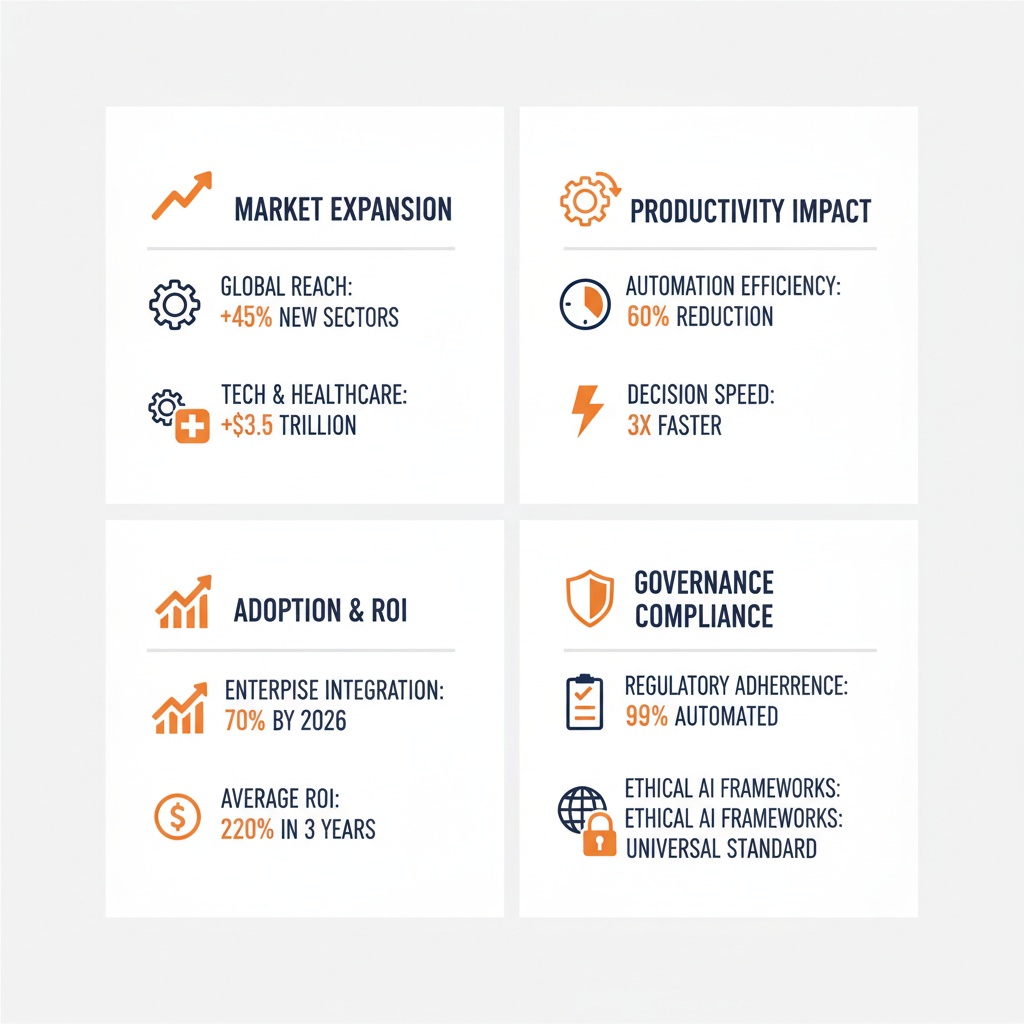
Infographic Image: Agentic AI in 2026: Key Market, Performance, and Governance Insights
The strategic imperative for agentic AI adoption intensifies amid rapid market expansion and increasingly sophisticated platform ecosystems. With the global agentic AI market projected at upwards of $10 billion in 2026 and continuing a growth trajectory exceeding 40% annually, senior business leaders and technology strategists are confronted with critical choices regarding platform selection, cost modeling, monetization approaches, and governance frameworks. The complexity of agentic AI deployments—spanning technology integration, ethical compliance, financial investment, and organizational readiness—demands nuanced, evidence-based guidance beyond conceptual hype.
This report aims to inform decision-makers by providing comprehensive, data-driven insights into the state of agentic AI in 2026. It synthesizes empirical findings on productivity gains, market dynamics, cost structures, pricing models, and risk mitigation imperatives. The scope encompasses industry adoption patterns, architectural standards, platform offerings, and practical considerations for scaling AI-native operations. Through a structured roadmap, the report equips executives to assess readiness, prioritize workflows, align cross-functional teams, and embed responsible governance—ensuring that agentic AI realizations translate into sustained competitive advantage and measurable business impact.
1. Strategic Imperative: Why Agentic AI Matters in 2026
Unpacking Agentic AI's Strategic Edge: Quantifying Efficiency Gains and Integration Depth versus Chatbots
This subsection establishes a grounded understanding of what agentic AI truly represents in 2026, distinguishing it sharply from traditional chatbot technologies and framing its transformative value through concrete efficiency metrics across key industries. This foundation enables leaders to appreciate agentic AI’s potential beyond surface-level automation and supports informed investment decisions in the ensuing sections on platform selection and cost modeling.
Quantifying Industry-Specific Efficiency Gains with Agentic AI in 2026
Recent empirical studies reveal that agentic AI delivers significant productivity improvements across major industry sectors, positioning it as a pivotal driver of operational excellence in 2026. The technology sector leads with an average productivity gain of 45%, closely followed by finance at 42%. Healthcare, manufacturing, and retail sectors report substantial increases ranging from 31% to 38%. These improvements stem from agentic AI's capability to automate complex, rule-based workflows that traditionally consumed extensive manual effort, translating into accelerated process throughput and enhanced decision consistency.
Beyond mere process speed, agentic AI fosters value creation by optimizing resource allocation, minimizing error rates, and enabling predictive intelligence in critical processes. For example, in manufacturing, autonomous systems coordinate multi-plant operations to reduce waste and shorten production cycles, while in finance, agentic AI enhances compliance and fraud detection accuracy. The realized efficiency gains thus combine direct labor cost reduction with strategic augmentation of capabilities, effectively elevating total factor productivity in capital-intensive industries and knowledge work alike.
Differentiating Agentic AI from Traditional Chatbots: Integration Depth and Autonomy
Unlike basic chatbots, which primarily generate responses to human inputs, agentic AI embodies fully autonomous, multi-step decision-making entities capable of perceiving environments, reasoning over complex scenarios, and executing planned actions with minimal human intervention. This autonomy is realized through a confluence of integrated capabilities—including persistent memory layers, orchestrated workflows, and cross-system API interactions—allowing agentic AI to act as a virtual employee rather than a reactive tool.
The depth of integration with enterprise systems distinguishes agentic AI’s strategic value. While chatbots often serve isolated communication functions, agentic AI platforms systematically embed themselves within business processes such as IT service management, customer relationship workflows, and supply chain logistics. This integration enables continuous context awareness and adaptive behaviors, driving faster turnaround times and enabling outcomes previously unattainable through rule-based automation or generative AI alone. Consequently, agentic AI supports not just efficiency, but agility and scale in operational execution.
Having established the distinct and substantial efficiency advantages of agentic AI alongside its autonomous operational characteristics, the report proceeds to evaluate the leading platforms that enable these capabilities, ensuring that strategic tool selection aligns with desired integration depth and organizational goals.
Market Momentum and Adoption Trajectory: Driving Forces Behind Agentic AI's 2026 Surge
This subsection quantifies the rapid expansion of the agentic AI market as of 2026, establishing a data-driven foundation for understanding the urgency behind strategic adoption. By analyzing projected market valuations and adoption rates across key industries, it provides essential context for senior decision-makers to gauge competitive pressures and growth opportunities within the evolving AI landscape.
Quantifying the 2026 Market Valuation and Growth Trajectory
The global market for agentic AI has reached an estimated valuation range between $9.1 billion and $10.9 billion in 2026, reflecting a substantial leap from approximately $7.3 billion in 2025. This strong upward momentum is underscored by sustained double-digit annual growth rates fueled by increasing deployment of autonomous AI agents in enterprise applications. Long-term forecasts project an explosive expansion with compound annual growth rates exceeding 40% through the early 2030s, positioning the agentic AI industry to potentially top $130 billion within a decade. These figures translate to agentic AI capturing roughly 10-15% of total enterprise IT expenditure in 2026, a significant share that confirms its established role beyond experimental tech.
Underlying this market acceleration is a confluence of factors, including advancements in foundation models, standardization of integration protocols, and maturation of orchestration platforms that enable scalable and flexible deployments. The elevated interest from enterprises is also catalyzed by early adopter success stories that have demonstrated measurable efficiency gains and return on investment, creating pressure for wider adoption. Regional dynamics reveal North America accounting for roughly one-third of global spending, while Asia-Pacific emerges as the fastest-growing region, signaling broad geographic diversification in agentic AI demand.
Adoption Rates in Vertical Industries with Strategic Implications
Adoption of agentic AI varies significantly across verticals, driven by industry-specific regulatory environments, availability of use cases, and organizational readiness. By the fourth quarter of 2026, leading sectors such as technology, financial services, and healthcare demonstrate production-level deployments in the range of 85-95%, reflecting their prioritization of AI-driven automation and decision augmentation in mission-critical functions.
The technology sector leads with adoption rates near 94%, incorporating agentic AI into diverse operations including software development, customer engagement, and infrastructure optimization. Financial services follow closely at 91%, leveraging AI agents in fraud detection, compliance monitoring, and personalized client interactions. Healthcare maintains robust adoption at approximately 87%, driven by clinical documentation, diagnostic aid, and research support use cases.
Government and public sector adoption, while historically slower due to higher compliance demands and security considerations, has accelerated sharply to nearly 68%, marking a doubling from prior years as vetted solutions become available. This broadening landscape confirms the transition of agentic AI from experimental pilots to integral operational tools, underscoring the urgency for organizations to align strategically in 2026 to avoid competitive obsolescence.
Having established the robust market growth and vertical adoption patterns shaping agentic AI’s current trajectory, the report next shifts focus toward selecting appropriate enterprise platforms. This evaluation centers on the critical dimension of tool capabilities and ecosystem fit, which determine the feasibility and scalability of agentic AI deployments aligned with organizational objectives.
High-Impact Use Cases Driving Measurable ROI and Strategic Advantage in 2026
This subsection builds on the foundational understanding of agentic AI's strategic value by providing concrete, data-backed examples of how businesses are achieving significant returns through targeted implementations. By focusing on both direct ROI figures and secondary financial benefits such as customer retention, it substantiates the business case for accelerated adoption and informs investment prioritization for senior leaders.
Quantifying ROI through High-Volume, Rule-Governed Workflow Automation
Agentic AI has shifted decisively from experimental to production use in several core enterprise functions by 2026, delivering rapid efficiency gains and remarkable return on investment. Organizations deploying autonomous agents in workflows such as lead enrichment, invoice processing, HR onboarding, and customer support escalation report process acceleration of 30 to 50 percent alongside ROI multiples ranging from 280 to 520 percent within the first operational year. These results are particularly pronounced in high-volume, rule-based tasks that span cross-system data synchronization and repetitive decision points where agentic autonomy reduces manual friction and error rates.
The success derives from agentic AI’s ability to orchestrate multi-step activities without continuous human intervention, leveraging integrated perception, reasoning, and tool-use capabilities. Early deployments have demonstrated that automating sequences across several interdependent applications not only expedites throughput but enables more consistent adherence to compliance and audit requirements, thereby lowering operational risk and cost. Importantly, these benefits coalesce only when accompanied by sound governance frameworks and observability, ensuring intact oversight of autonomous decisions.
Sector-Specific Use Cases Illustrating Significant Strategic Impact
Leading industries such as financial services, healthcare, manufacturing, and retail highlight differentiated agentic AI applications that create disproportionate value. Within financial services, agentic AI automates regulatory reporting and fraud detection workflows, achieving up to 40 percent improvements in detection accuracy and reducing manual document review by hundreds of thousands of personnel hours annually. Healthcare providers have leveraged AI clinical assistants to substantially cut documentation times—by as much as 66 minutes per clinician per day—improving provider efficiency and patient throughput.
Manufacturing operations employ agentic systems for predictive maintenance and production optimization, yielding up to 25 percent reductions in downtime and substantial cost savings. Retailers automate inventory management and e-commerce fulfillment, realizing increased sales volumes through enhanced accuracy and agility. These vertical-specific deployments exemplify how agentic AI’s adaptability drives measurable gains aligned with critical business drivers across domains.
Indirect ROI Factors: Enhancing Customer Retention and Lifetime Value
Beyond direct cost and efficiency improvements, agentic AI significantly amplifies business value through improved customer experience metrics that indirectly boost financial performance. Integrating agentic AI into customer service and engagement platforms enables faster, personalized responses that enhance customer satisfaction and lower churn. Several enterprises report measurable increases in Net Promoter Scores and Customer Satisfaction indices following AI agent implementation, which correlates with higher retention rates and extended customer lifetime value.
Moreover, agent-driven analytics and predictive engagement facilitate timely upsell and cross-sell opportunities by anticipating customer needs and preferences. These effects contribute to sustaining revenue growth and justify AI investments beyond immediate cost savings. The ability to quantify these indirect benefits strengthens the overall ROI case and supports continuous prioritization of agentic AI initiatives within broader digital transformation agendas.
With a clear understanding of where and how agentic AI delivers substantial returns, the next logical step is to evaluate specific technology platforms that best align with identified strategic use cases, enabling tailored adoption that maximizes these ROI opportunities.
2. Enterprise Platform Selection: Matching Tools to Strategic Needs
Evaluating Top Agentic AI Platforms: Pricing Benchmarks and Integration Success in Hybrid Ecosystems
This subsection provides a rigorous comparison of leading agentic AI platforms available in 2026, focusing on their pricing structures and proven interoperability performance in hybrid enterprise environments. This analysis equips senior leaders with a clear understanding of cost implications and technical compatibility, critical for vendor selection aligned with strategic integration and budgeting objectives.
Transparent Pricing Benchmarks for Leading Agentic AI Platforms
Among the dominant players in the agentic AI platform market, pricing models vary distinctly based on integration scope, vendor ecosystem, and deployment complexity. Notably, Goldfinch AI offers transparent per-automation pricing with no ecosystem lock-in, enabling enterprises to access advanced agentic capabilities across over 5,000 APIs without mandatory vendor-specific commitments. This pricing flexibility supports scalability while avoiding vendor lock-in risks common in legacy platforms.
In contrast, Salesforce Agentforce adopts pricing tiers tailored for enterprises deeply embedded within the Salesforce CRM environment. Its cost efficiency improves when agents leverage native Salesforce data and tools, effectively bundling automation within existing subscriptions and reducing incremental licensing expenditures.
Microsoft Copilot Studio provides competitive pricing structured around Microsoft 365 user licenses, primarily benefiting organizations with substantial Microsoft Suite adoption. By embedding agentic AI within familiar productivity tools like Teams and Outlook, Microsoft offers cost synergies through integrated user licensing but requires adherence to their broader ecosystem for full value realization.
Enterprise buyers should anticipate upfront licensing and usage fees that reflect integration depth and workload size. While transparent pricing is standard for next-generation platforms like Goldfinch AI, legacy or highly specialized platforms often necessitate customized quotes due to variable integration demands.
Empirical Integration Success in Hybrid and Multi-Vendor Environments
Hybrid enterprise ecosystems increasingly require seamless interoperability among diverse legacy and cloud-native systems. Platforms exhibiting robust ecosystem compatibility reduce integration risk, accelerate deployment cycles, and lower maintenance overheads. For example, Goldfinch AI is recognized for enabling no-code configuration and broad API endpoint coverage, facilitating rapid connection across heterogeneous IT landscapes without deep custom development.
ServiceNow AI Agents excel in IT operations management through tight integration with ITSM workflows, delivering proven reliability in incident routing and asset management scenarios. Surveys confirm its peer ranking advantage for organizations prioritizing mature governance and operational resilience.
UiPath's strategy to layer agentic decision-making atop established RPA bot estates provides a compelling route for enterprises with prior robotic process automation investments. This approach validates incremental modernization while leveraging existing digital workforce assets effectively.
Despite these strengths, integration challenges persist, as approximately 64% of enterprises experience interoperability delays driven by API version conflicts and orchestration complexity in hybrid settings. Organizations adopting platforms that emphasize transparent integration tooling and early observability enable faster diagnostics and resolution, directly impacting project success metrics.
Therefore, procurement decisions must factor in demonstrated integration success rates and available tooling ecosystems that support hybrid operations, including orchestration frameworks and governance support layers, which mitigate operational risks inherent in multi-vendor deployments.
Having established detailed pricing and integration performance parameters for leading platforms, the following subsection will examine the underlying architectural components and tooling ecosystems that enable these capabilities, providing a foundational understanding of the technology stack driving agentic AI effectiveness in enterprise environments.
Architectural Foundations and Tooling Ecosystems Powering Agentic AI in 2026
This subsection delves into the core architectural components and the leading orchestration frameworks crucial for enterprise-grade agentic AI deployments. It assesses the maturity and adoption rates of major tooling ecosystems, specifically LangChain and FloTorch, while examining how governance capabilities are integrated at the platform level. By doing so, this analysis equips senior leaders with an understanding of both the technical underpinnings and practical considerations necessary for scalable, secure, and compliant agentic AI applications.
Enterprise Adoption Trends: LangChain vs. FloTorch and Their Market Penetration
LangChain has emerged as the dominant open-source framework for developing agentic AI systems, with a substantial enterprise footprint evidenced by surpassing major SDKs in monthly Python downloads and broad integration with systems such as SAP and Salesforce. Its modular microservices architecture supports over 700 pre-built connectors to enterprise APIs, enabling flexible, model-agnostic agent orchestration. Adoption metrics indicate a 37% penetration rate for LangChain-based Retrieval-Augmented Generation applications, underscoring its role as the industry standard for complex multi-step workflows demanding high configurability and fine-grained memory management.
FloTorch, by contrast, is positioning itself as a comprehensive orchestration and governance platform tailored for operationalizing agentic AI workflows within regulated enterprises. While newer, FloTorch emphasizes seamless unification of disparate AI tools, robust observability, and embedded compliance features that facilitate auditability and human-in-the-loop interventions. Its adoption aligns with strategic priorities around scalability and governance, especially for IT and procurement workflows, offering enterprises an integrated solution that balances automation autonomy and control. Though LangChain leads on customization and developer flexibility, FloTorch is gaining traction among organizations prioritizing turnkey enterprise readiness and compliance.
Core Architectural Components: Perception, Decision Engines, and Persistent Memory in Agentic Systems
Robust agentic AI platforms uniformly incorporate three foundational components to achieve autonomous multi-step task execution: perception modules for environmental sensing and data ingestion; decision engines that perform contextual reasoning, planning, and orchestration; and persistent memory systems that maintain state across sessions to enable continuity and adaptive learning. LangChain’s architecture excels in managing these elements via its LangGraph extension, which supports complex graph-based workflows with conditional branching, retry logic, and checkpointing, catering to scenarios that require advanced statefulness and long-context handling.
These architectural primitives are critical for maintaining agent reliability and accuracy when navigating dynamic, multi-agent environments. The persistent memory layer, for instance, ensures that agents recall prior interactions and decisions, a necessity for compliance-sensitive applications like financial auditing or customer service follow-ups. FloTorch’s architectural approach complements this by embedding observability and transparent audit trails directly into the orchestration fabric, enabling enterprises to track agent behavior at runtime and intervene when necessary, thereby aligning with governance mandates.
Governance Layer Integration: Transparency, Observability, and Compliance in Platform Architectures
In 2026, governance is not an afterthought but integrally embedded within agentic AI platform architectures. Advanced tooling ecosystems like LangChain incorporate observability modules such as LangSmith, which provide real-time monitoring of agent decisions, error rates, and task outcomes, thereby facilitating continuous performance optimization and compliance reporting. This transparency enables data science and compliance teams to audit agent workflows, detect bias, and ensure adherence to regulatory frameworks without impeding agility.
FloTorch advances governance integration by providing structured human oversight capabilities through mandatory intervention checkpoints and layered access controls. These governance features are vital for enterprises operating under stringent regimes such as the EU AI Act and NIST AI frameworks, where proportional risk controls and auditability are mandatory. The platforms' integration of security best practices—ranging from role-based authentication to runtime threat detection—further fortifies agent deployments against compromise, ensuring enterprise resilience alongside autonomous operation.
Having established the architectural and ecosystem considerations that underpin agentic AI platforms, the next focus will quantify the financial implications of adopting these tools by exploring cost structures and budget planning essential for realizing value in 2026.
Vendor Strengths and Industry Fits: Quantitative Insights for Strategic Alignment
This subsection evaluates leading agentic AI platforms’ market positioning and sector-specific adoption, quantifying their strengths to empower decision-makers with data-driven vendor selection insights. Detailed industry adoption figures illustrate how platforms dominate in targeted verticals, while a cost-benefit analysis compares custom-built and no-code solutions to guide investment prioritization within diverse organizational contexts.
Quantifying ServiceNow and UiPath Dominance Across Industry Verticals
ServiceNow has entrenched itself as a leader in enterprise IT operations and digital workflow automation, with pronounced penetration in sectors such as public services, manufacturing, healthcare, telecommunications, and financial services. Its multi-cloud, multilingual offerings backed by over 250 global partners enable organizations to leverage extensive integration capabilities and tailored industry blueprints—accelerating deployment cycles while mitigating transformation risks. Adoption data from 2026 shows ServiceNow maintains a dominant foothold particularly in regulated and complex sectors where governance, compliance, and scalability are imperative, underpinned by its AI Agent Orchestrator and Control Tower features that reinforce operational transparency and security. Industry-wide, agentic AI adoption rates highlight Technology at 94%, Financial Services at 91%, Healthcare at 87%, and Government at 68%, demonstrating broad sectoral commitment to AI-driven automation and underlining the strategic opportunity for platforms like ServiceNow to capitalize on these growth areas [Chart: 2026 Adoption Rates of Agentic AI by Industry].
UiPath continues to command substantial market share within robotic process automation, especially across banking, financial services, insurance, and IT-heavy enterprises. Its platform excels in automating high-volume, rule-based legacy workflows with proven customer satisfaction metrics exceeding 90% across deployment and lifecycle management dimensions. The platform’s robust RPA foundation combined with evolving agentic AI modules supports enterprises transitioning from basic automation to intelligent orchestration, highlighted by vertical-specific solutions such as medical record summarization reducing turnaround times by 50%. UiPath’s effective blending of RPA with agentic AI positions it as the preferred choice for organizations emphasizing process efficiency and legacy system integration.
ROI and Strategic Trade-offs: Custom-Built vs. No-Code Platforms in 2026
Custom-built platforms offer unparalleled customization, scalability, and ownership over AI models and codebases, critical for enterprises with bespoke operational complexities or stringent regulatory environments. Development costs for such solutions can range from $150,000 to over $500,000 upfront, with ongoing maintenance adding 20–40% annually. Although heavy in initial capital and resource allocation, custom platforms support the integration of advanced, domain-specific logic and compliance governance, which can translate to superior long-term ROI in mission-critical functions.
Conversely, no-code platforms drastically reduce time-to-market and upfront expenditure, often enabling minimum viable product launch at less than 30% of custom development costs. These platforms democratize AI adoption by empowering citizen developers, effectively accelerating experimentation and iterative deployment cycles. ROI for startups and mid-sized enterprises deploying no-code tools is often realized within months due to faster iteration, lower operational complexity, and reduced dependence on specialized development talent. However, no-code solutions may entail vendor lock-in risks and functional ceilings that limit complexity and scalability for certain high-demand workflows.
Hybrid approaches leveraging low-code platforms provide a middle ground — balancing rapid deployment with the flexibility for custom extensions. These models enable organizations to optimize spend allocation by combining reusable templates and tailored code enhancements, thus maximizing ROI and minimizing technical debt. Strategic platform selection depends on organizational scale, technical maturity, domain specificity, and total cost of ownership considerations.
Understanding vendor differentiation and sector alignment informs precise cost modeling and investment allocation addressed in the subsequent section—ensuring budgetary discipline complements strategic platform choice.
3. Cost Modeling: Budgeting for Agentic AI Success
Deconstructing Upfront Investments: Licensing Costs and Engineering Effort in Agentic AI Projects
This subsection provides a granular breakdown of the initial capital expenditures critical to agentic AI adoption. By dissecting licensing fee structures differentiated by AI model types and quantifying engineering resource requirements for mid-tier deployments, it offers senior leaders a refined budgeting lens to accurately plan and allocate financial and human capital. Understanding these cost drivers is essential to setting realistic expectations and optimizing early-stage investments within the 2026 business environment.
Licensing Cost Drivers: Differentiating AI Model Types and Their Impact on Budgeting
Licensing expenses represent a significant portion of upfront costs in agentic AI deployments, with variability closely tied to the type and sophistication of underlying AI models. Basic conversational agents leveraging pre-trained APIs are accessible at a lower entry point, typically ranging between $12,000 and $30,000. These solutions depend on well-established foundation models offered under standardized licensing frameworks, enabling rapid rollout with minimal customization.
In contrast, agentic AI platforms incorporating autonomous reasoning, multi-step planning, and context maintenance demand more comprehensive licensing agreements. Models based on advanced, large-scale transformers such as GPT-4 or Claude, tailored for enterprise-grade autonomy, regularly incur licensing fees between $100,000 and $250,000 for initial build phases. These fees often encompass usage rights, integration SDKs, and ongoing access to fine-tuning or prompt engineering support.
Furthermore, enterprise deployments that require multi-agent orchestration, domain-specific training, or bespoke enhancements frequently see licensing costs escalate to the $150,000–$500,000 band. Licensing here reflects not only model use but bundled orchestration components, APIs, and compliance tooling. Procurement teams must anticipate bundled vendor pricing that includes variable factors such as user volume, API call frequency, and data throughput limits, all of which influence the total upfront licensing commitment.
Quantifying Engineering Effort: Average Development Hours for Mid-Tier Agentic AI Solutions
Engineering investment for mid-tier agentic AI builds typically ranges from 1,200 to 2,500 person-hours, depending on complexity and integration depth. These projects move beyond simple automation toward embedding multi-step decision-making and adaptive workflows, necessitating robust system architecture design and iterative testing cycles.
Core engineering activities include modular agent design, integration of perception and action layers, development of persistent memory, and orchestration logic to enable autonomous task execution. Additionally, significant effort is allocated for API development, data pipeline construction, and embedding governance frameworks such as monitoring, logging, and human-in-the-loop controls.
Regional variation in engineering costs also impacts upfront budgeting. U.S.-based senior AI engineers command rates of $150–$300 per hour, while offshore teams might reduce hourly expenses by 30–50%, albeit sometimes requiring increased management overhead. Factoring in these variances, total engineering costs for a mid-tier project generally fall between $180,000 to $500,000, aligning consistently with licensing and platform fees.
Notably, iterative cycles related to prompt engineering, model fine-tuning, and user acceptance testing extend development timelines by 3–6 months. Organizations must also budget for specialized roles such as AI architects, system integrators, and compliance consultants to navigate the increased technical demands intrinsic to agentic AI systems.
Having established a detailed understanding of upfront cost components—including nuanced licensing fees and substantial engineering investment—organizations can now transition to assessing ongoing operational expenditures and lifecycle budgeting models critical for sustaining agentic AI deployments.
Precision in Operational Costs: Monthly Cloud Expenses and Lifecycle Maintenance Dynamics
Understanding the nuances of ongoing operational expenditures is critical for accurate budgeting and sustaining agentic AI platforms beyond their initial deployment. This subsection dissects the variable monthly cloud costs across different user volume tiers and explicates how the frequency of updates and maintenance activities influence annual lifecycle expenses. These insights equip decision-makers to anticipate cost behaviors in scaling environments and align resource allocation strategies accordingly.
Granular Monthly Cloud Compute Costs by User Volume Tiers
Monthly cloud infrastructure expenses for agentic AI platforms display a highly nonlinear scaling pattern aligned with daily active user (DAU) volumes and interaction frequency. At entry-level volumes around 100,000 DAU, monthly compute and inference costs generally range between $3,800 and $45,000, depending on query intensity. More active use cases with 5 to 10 AI interactions per user daily can push monthly cloud expenses into the upper $40,000s, driven by token-based billing typical for text-centric AI services and per-audio or per-image charges for voice and vision AI domains.
As DAU scale expands to half a million, cloud costs escalate rapidly, with monthly spend spanning $225,000 to over $450,000. The high-volume environment amplifies the sensitivity of cost to query rates, model size, and data throughput. For enterprises approaching the million-user mark, monthly cloud expenses can exceed $900,000, emphasizing the importance of optimizing model efficiency, employing reserved instance pricing agreements, and leveraging hybrid on-device/cloud inference models to curb runaway costs.
Cloud providers also influence cost dynamics through varied pricing schemes such as on-demand versus reserved instances, spot pricing discounts, and region-specific rate differentials. For example, comparative analyses reveal that Google Cloud Platform may deliver cost savings of up to 50% on compute resources relative to competitors, whereas Azure and AWS present diverse tiered discounts based on usage commitments. Designing deployment architectures that exploit these pricing structures significantly affects monthly operational budgets.
Maintenance Cost Variations Driven by Update Frequency and Model Evolution
Annual maintenance and lifecycle costs for agentic AI systems are commonly estimated at 20% to 40% of the initial development expenditure, with fluctuations largely contingent on update frequency and complexity. Rapidly evolving business requirements, regulatory changes, or improvements in underlying AI models necessitate more frequent updates, driving the upper bound of maintenance spend closer to 40%. Conversely, relatively stable applications with lower cadence updates can maintain costs nearer to 20%.
Continuous improvement cycles include retraining models with fresh data, tuning workflows to address emerging edge cases, and applying patching for security vulnerabilities or compliance adjustments. These activities demand skilled engineering effort and often cloud resource consumption, directly impacting the annual budget. Additionally, operational practices embracing continuous integration/continuous deployment (CI/CD) pipelines for AI help amortize maintenance costs by automating routine updates and minimizing downtime.
Organizations employing modular architectures with reusable components and leveraging third-party pre-trained models often experience dampened maintenance expenses. Strategic use of open-source frameworks and community-driven improvements further enable cost containment without sacrificing capability enhancement. However, bespoke AI agents requiring deep customizations tend to experience maintenance costs toward the higher end of the spectrum due to specialized support needs.
Having unpacked the ongoing operational and maintenance cost drivers, the following subsection will explore how strategic resource allocation and tailored investment models optimize ROI, thereby linking cost structures directly to business value creation.
Maximizing Returns: Strategic Workflow Prioritization and Hybrid Tooling for Cost-Efficient Agentic AI Deployment
This subsection anchors the cost modeling chapter by linking investment decisions to tangible ROI optimization strategies. It translates abstract budget figures into actionable guidance on prioritizing workflows and selecting tooling approaches. By quantifying the impact of focusing agentic AI efforts on high-value processes and demonstrating how blending proprietary and open-source tools can yield meaningful cost savings, it empowers leaders to design financially sound AI deployments that accelerate value creation while controlling expenditure.
Quantifying ROI Impact Through Targeted Workflow Prioritization
Focusing agentic AI deployment on high-volume, rule-governed workflows consistently drives superior ROI outcomes. Empirical evidence from early adopters highlights process time reductions between 30% and 50% within such domains, directly accelerating throughput without proportional increases in cost. These efficiency gains translate into substantial ROI, frequently ranging from 280% to 520% in the first year alone. Prioritizing workflows such as customer service ticket triage, lead enrichment, invoice processing, and IT helpdesk automation—where agents handle multi-step, repeatable tasks across multiple systems—yields the fastest and highest returns on investment.
This targeted workflow approach not only improves direct cost savings but also enhances outcome reliability and user satisfaction. Companies that emphasize narrow, well-defined use cases enjoy shorter payback periods and more predictable budget forecasting. By contrast, spreading resources thinly across loosely connected or highly customized processes dilutes performance benefits and prolongs ROI realization. Strategic workflow selection based on complexity, volume, and automation feasibility thus forms the foundational lever for maximizing the impact of agentic AI investments.
Cost Savings and Risk Mitigation via Hybrid Open-Source and Proprietary Tooling
Combining proprietary AI platforms with open-source frameworks provides a powerful cost control mechanism without compromising performance or scalability. Hybrid solutions allow organizations to leverage advanced, pre-trained models and robust vendor ecosystems for critical components while selectively integrating community-driven tools to reduce licensing fees and vendor lock-in. This approach reduces upfront capital outlay and ongoing operational costs by enabling reuse of modular components and accelerating development velocity.
In practice, cost savings from hybrids manifest in lowered total cost of ownership through reduced engineering hours, flexible customization, and optimized cloud compute consumption. For example, substituting proprietary orchestration layers with open-source options—like LangChain for workflow management or Flotorch for model deployment—can trim expenses significantly. Moreover, hybrid strategies mitigate risk exposure by diversifying technology dependencies, easing transition paths, and fostering internal upskilling. These factors collectively improve ROI by lowering barriers to scaling agentic AI capabilities while retaining control over system evolution.
Having established how strategic workflow prioritization and tooling choices optimize ROI and control costs, the report will next examine direct monetization frameworks that translate agentic AI operational gains into sustainable revenue streams.
4. Monetization Strategies: Turning AI Into Profit
Direct Revenue Models Explained: Pricing Dynamics and Market Norms for 2026
This subsection provides senior leaders and strategists with detailed insights into the prevailing direct monetization frameworks for agentic AI in 2026. Understanding specific pricing mechanics and cost benchmarks underlying agent-based and action-based models is crucial for designing revenue strategies that align with organizational goals and market expectations. By mapping concrete pricing figures and their operational rationales, this section bridges platform investment considerations with revenue planning, enabling informed financial forecasting and contractual negotiations.
Agent-Based Pricing: The Cost to Replace a Full-Time Equivalent
The agent-based pricing model functions primarily as an FTE replacement framework, where organizations are charged per autonomous AI agent deployed, each substituting for a human role. By 2026, market-standard rates for enterprise-grade AI agents range broadly from $50 to $120 per agent per month, depending on complexity, task scope, and integration depth. Volume discounts commonly apply as organizations scale agent fleets beyond 100 units, resulting in heavily negotiated tiered pricing structures.
This model balances predictability and scalability, appealing to businesses seeking straightforward budgeting aligned to headcount reduction objectives. The fee includes core agent deployment, access to cognitive capabilities, and basic maintenance but often excludes specialized workflow customization or premium support services. Financial modeling shows that, when aligned with AI-driven efficiency gains averaging 30% to 50% in task throughput, this model delivers rapid payback within 6 to 9 months, especially in high-frequency operational roles such as customer service and lead enrichment.
Notably, the agent-based model incentivizes maximizing agent utilization rates. Organizations adopting this scheme often invest in comprehensive training, iteration, and orchestration tools to ensure agents fulfill extensive multi-step workflows. This approach converts AI investments into predictable, repeatable cost savings correlated directly to human labor replacement, making it attractive for sectors with defined, stable process domains.
Action-Based Pricing: Usage-Driven Monetization with Flexibility and Precision
The action-based pricing framework—also known as the consumption or usage model—is gaining substantial traction in 2026 due to its granular billing approach. Organizations pay based on the number of discrete AI executions, API calls, or tool invocations performed by agents. Pricing typically ranges from $0.50 to $2.50 per action, contingent on the complexity of the task and the backend compute requirements, with higher tiers reserved for premium functionalities or real-time inference demands.
This model aligns vendor revenue directly with customer consumption, providing flexibility and cost transparency, particularly valuable for businesses with fluctuating workload volumes or seasonal peaks. The per-action billing reduces financial risk for adopters, as expenditures scale proportionally with actual AI-driven outcomes rather than fixed monthly charges. Operational analytics and consumption dashboards are critical investments for buyers to monitor usage patterns and optimize cost-efficiency.
Despite the precision of usage-based pricing, enterprises must navigate potential cost volatility. Scenarios featuring sudden surges in customer demand or unforeseen workflow expansions can substantially increase monthly spend unless capped or negotiated minimums are in place. Strategic deployment often involves setting strict governance policies and leveraging hybrid pricing models to mitigate risk. Nevertheless, action-based pricing enables organizations to tailor payments tightly to business value delivered, supporting agile experimentation and iterative rollout.
Having comprehended the core mechanics and pricing realities of agent-based and action-based direct revenue models, the report next examines outcome-focused and hybrid monetization approaches that emphasize performance alignment and customer value capture.
Outcome-Based and Hybrid Monetization: Aligning AI Value with Business Results in 2026
This subsection delves into advanced monetization frameworks that tie AI pricing directly to business outcomes and explore hybrid models blending predictable revenue with value-driven variability. Positioned in the monetization chapter, it extends the understanding of how firms can move beyond static pricing to leverage measurable impact and customer flexibility, critical underpinnings for sustainable agentic AI profitability in 2026’s evolving market.
Outcome Metrics Driving Pricing: From Efficiency to Financial KPIs
Leading AI providers increasingly price their agentic AI offerings based on clearly defined business outcomes, shifting the focus from mere usage or seats to tangible impact. Commonly tracked metrics in 2026 include operational efficiency improvements—such as cycle time reduction, throughput increases, error rate decreases, and rework minimization—each quantifiable and directly attributable to AI agents. Beyond operations, customer experience indicators like Net Promoter Score uplift, higher customer satisfaction scores, and conversion rate improvements serve as outcome triggers for variable pricing components.
Financial metrics also play a pivotal role, with AI contracts linked to indicators such as gross margin enhancement, cost-to-serve reductions, and improved working capital management. This explicit linkage ensures that payments to AI providers correlate with demonstrable business value, fostering stronger client trust and aligning incentives. Notably, firms deploying agentic AI for compliance and risk management increasingly incorporate metrics such as policy violation avoidance and audit hour savings into pricing frameworks, recognizing the strategic and legal value generated.
The success of outcome-based pricing depends heavily on the standardization and granular tracking of these metrics via robust instrumentation and feedback loops established within customer deployments. This mechanistic rigor enables transparent attribution of benefits, a prerequisite to the credibility and scalability of outcome-linked monetization.
Case Studies Demonstrating Hybrid Pricing Effectiveness in AI Products
Several major technology companies have successfully deployed hybrid pricing models that balance recurring, predictable revenue with outcome- or usage-contingent fees. Notably, Microsoft’s Copilot exemplifies this by embedding AI features priced at approximately 60%–70% of the base product fee, combined with variable fees tied to AI-powered feature usage. This approach offers customers budget certainty while accommodating scaled adoption driven by increased agent activity.
Salesforce’s Einstein 1 platform uses blended subscriptions with base fees plus incremental per-use charges, effectively bridging customer demand for pricing stability and fairness. By structuring tiers aligned with consumption thresholds and coupling these with performance bonuses or outcome-related uplifts, these hybrids facilitate smooth scaling without alienating customers apprehensive about unpredictable costs.
In a broader business context, hybrid models have proven critical in markets where pure outcome-based pricing falters due to forecasting or attribution complexity. Familiar base subscriptions ground contracts against uncertain volumes, while usage-linked components reward provider performance and incentivize customer engagement and expansion. These cases highlight that hybrid pricing, by distributing risk and aligning incentives, enhances customer acceptance and extends lifetime value.
Successful hybrid strategies also emphasize simplicity and clear communication of pricing elements to circumvent buyer confusion. They blend familiar units such as seats or workflows with AI-specific metrics, thus easing adoption among diverse customer maturity levels.
Having established sophisticated pricing mechanisms that optimize value capture and client alignment, the report will next examine indirect monetization channels and retention strategies that leverage agentic AI as a strategic enhancer, ensuring business longevity beyond upfront sales.
Unlocking Customer Loyalty: Quantifying Churn Reduction and Monetizing AI-Driven Upselling
This subsection examines how embedding agentic AI capabilities within customer-facing environments translates into measurable improvements in customer retention and drives incremental revenue through intelligent upsell and cross-sell strategies. Positioned in the monetization chapter, it complements discussions of direct pricing models by focusing on the strategic economic impact AI-enabled features have on long-term customer value and sustainable profit growth in 2026.
Quantitative Impact of Agentic AI on Churn Reduction
Agentic AI deployments consistently demonstrate significant reductions in customer churn by enhancing responsiveness, personalizing interactions, and increasing resolution speed. Leading implementations of AI-driven CRM platforms report churn decreases averaging 25–30%, directly attributable to real-time, context-aware agentic interventions that preempt dissatisfaction and mitigate escalation triggers. These improvements stem from AI agents’ capabilities to autonomously handle routine inquiries and surface predictive insights for retention teams, thereby stabilizing customer relationships in competitive markets.
The reduction in churn not only stabilizes revenues but substantially improves lifetime customer value metrics. For instance, organizations embedding agentic AI in self-service portals see measurable uplifts in Net Promoter Scores and customer satisfaction indices, which correlate strongly with repeat purchase rates and brand loyalty. This effect is particularly prominent in industries like financial services and e-commerce, where rapid adaptation to customer needs through AI agents fosters trust and continuous engagement.
Financial Gains from AI-Enabled Smart Upselling and Cross-Selling
Agentic AI’s ability to analyze extensive customer behavior data and dynamically generate personalized recommendations significantly boosts upselling and cross-selling efficacy. In e-commerce settings, AI-powered personalization engines contribute between 10% and 30% of total revenue, with targeted upsell conversion rates outperforming non-AI approaches by as much as 40%. These systems leverage multi-dimensional behavioral signals—ranging from browsing patterns to purchase history—to propose timely, contextually relevant add-ons that align with individual customer preferences.
Beyond e-commerce, AI-infused marketing orchestrators execute real-time, multi-channel campaigns that increase customer spend by guiding them to higher-value options or complementary products. These capabilities translate into average order value uplifts of 10–20% and improved conversion rates by 15–20%, making agentic AI a critical revenue lever. Additionally, tiered loyalty programs enhanced by AI-driven insights amplify customer spend and create stickiness, further expanding monetization opportunities without proportionate increases in acquisition costs.
Leveraging Indirect Monetization for Sustainable Competitive Advantage
Integrating agentic AI features as embedded enhancers within existing product suites allows businesses to capture indirect value streams without invoking explicit price increases. Such approaches yield lower churn and higher customer lifetime revenues by strengthening the perceived value of core offerings, even in commoditized markets. This alignment favors customers’ willingness to pay, reinforcing loyalty and converting otherwise price-driven purchasers into advocates.
Strategically, indirect monetization balances delivering high-value experiences with controlling incremental operational costs, especially as AI compute expenses decline. Firms adopting this model employ data-driven feedback loops that continuously optimize agentic AI’s role in customer journeys, thereby sustaining engagement and incremental monetization. By embedding agentic AI to improve UX, firms also reduce support costs and facilitate premium tier migrations, collectively underpinning a profitable and scalable growth model.
Notably, agentic AI accounted for 12.5% of total enterprise IT expenditure in 2026, underscoring its significant and growing investment priority across organizations seeking to leverage AI not only for direct revenue but also strategic retention and expansion benefits [Chart: Share of Total Enterprise IT Expenditure for Agentic AI in 2026].
Having established how agentic AI contributes to revenue expansion through indirect value capture, the subsequent section addresses governance frameworks necessary to manage risks, ensure compliance, and secure trust as organizations scale AI-driven monetization initiatives.
5. Governance and Risk Mitigation: Ensuring Responsible Adoption
Navigating Compliance and Financial Risks: Regulatory Landscape and Data Privacy Penalties in 2026
This subsection elucidates the evolving regulatory environment and associated financial exposures relevant to agentic AI deployment in 2026. Building on the prior discussions of responsible adoption, it provides senior leaders with a grounded understanding of how risk classification frameworks and compliance requirements translate into tangible legal and economic consequences. This insight enables informed prioritization of governance investments to avoid costly penalties and reputational damage while maintaining operational agility.
Current Compliance Realities Under the 2026 EU AI Act and Global Frameworks
As of mid-2026, compliance with the EU AI Act has transitioned from aspirational to mandatory for enterprises deploying agentic AI within or targeting the European market. Enforcement mechanisms have become more rigorous, reflected in regular audits and increased regulatory scrutiny specifically focused on autonomous decision-making systems capable of influencing consumer or operational outcomes. Recent data indicates that approximately 65% of organizations have implemented at least baseline controls aligned with the EU AI Act’s risk classification guidelines, signaling growing maturity yet leaving a sizable gap in full compliance.
This process hinges fundamentally on risk-tiered classification of AI systems, categorizing agentic AI platforms according to potential harm and decision criticality. High-risk systems require stringent transparency measures, documented impact assessments, and continuous monitoring. Interoperability with broader international regulatory frameworks—such as the NIST AI Risk Management Framework and ISO 42001—has become a strategic imperative to manage multi-jurisdictional compliance efficiently, thus serving as a unifying backbone amidst regulatory fragmentation across the U.S., Asia, and Europe.
Organizations lagging in adapting to these frameworks face not only legal risks but difficulties in securing partnerships and customer trust, which are increasingly contingent on demonstrable adherence to evolving AI governance norms.
Quantifying Financial Exposure from GDPR and Data Privacy Violations Impacting Agentic AI
The financial risks associated with non-compliance, especially regarding data privacy under GDPR and analogous regimes like CCPA, have escalated with the growing adoption of agentic AI. Recent enforcement statistics for 2026 reveal an average fine magnitude ranging from €20 million to 4% of global annual turnover for major breaches involving personal data misuse, with several landmark penalties directly linked to AI systems that failed to secure proper consent or transparency in automated processing.
Given that agentic AI systems often operate across large datasets with autonomous access and decision-making rights, the potential surface for violations is substantial unless mitigated proactively. Data audits conducted before deployment and ongoing compliance monitoring have become indispensable to minimizing exposure. Furthermore, costs extend beyond fines, encompassing mandatory remediation investments, legal expenses, and potential class-action litigation resulting from infringed data subject rights.
From a strategic perspective, integrating privacy-by-design principles and employing explainable AI methodologies not only reduce financial vulnerabilities but also confer competitive advantages by fostering user confidence and regulatory goodwill.
Having established the compliance landscape and quantified financial risks, the following subsection will examine critical human oversight and ethical guardrails that operationalize responsible governance and safeguard against unintended consequences in agentic AI deployment.
Ensuring Trust: Human Oversight Integration and Ethical Audit Practices in Agentic AI
This subsection delves into the critical governance dimension of agentic AI adoption in 2026, focusing on how human-in-the-loop (HITL) frameworks and ethical guardrails safeguard autonomy while maintaining accountability. Positioned within the broader governance and risk mitigation section, it underscores mature approaches to operationalizing human oversight and bias audits, equipping leadership with standards and benchmarks that ensure compliant, fair, and trustworthy AI deployments.
Prevalence and Maturity of Human-in-the-Loop Implementation in 2026
As agentic AI systems scale their reach across complex enterprise workflows in 2026, embedding effective human oversight remains non-negotiable to balance autonomy with accountability. Recent market assessments indicate that over 75% of enterprises deploying mission-critical agentic AI incorporate structured HITL checkpoints, especially for high-risk decisions impacting compliance, access control, and safety. This represents a significant maturity leap from earlier, more sporadic human review models, reflecting both regulatory pressure and operational risk management priorities.
However, traditional HITL paradigms requiring per-action human approvals are increasingly impractical due to consent fatigue, where operator overload causes diminished vigilance and potential bypassing of controls. Consequently, an industry shift favors ‘Plan Mode’ oversight frameworks, in which human reviewers validate AI-generated action plans upfront rather than every discrete action. These frameworks optimize reviewer bandwidth, reduce friction, and maintain robust control, driving a more sustainable HITL integration.
Complementing this evolution, advanced HITL implementations feature tiered intervention levels aligned with decision criticality and confidence scores. For routine automated operations, human presence shifts to exception handling and periodic audits, while escalations are invoked dynamically for flagged anomalies. Such adaptive HITL architectures exhibit measurable error reduction rates up to 50% compared to fully autonomous operation scenarios, substantially improving operational reliability and stakeholder trust.
Industry Benchmarks for Bias Audit Frequency and Ethical Oversight
Systematic bias audits have become a foundational pillar for agentic AI governance in 2026, addressing ethically fraught risks that autonomous agents can unintentionally entrench or amplify. Leading enterprises adopt audit cadences ranging from quarterly to biannual intervals, often informed by risk classification frameworks that prioritize higher scrutiny for models with direct human impact or regulatory sensitivity.
Benchmarking across sectors shows an emerging norm for bias audit comprehensiveness: audits increasingly include protected attribute impact analyses, fairness metric tracking, and root-cause investigation protocols. Audit outcomes inform model retraining cycles and algorithmic adjustments to mitigate disparities. Increasingly, independent third-party audits complement internal assessments to boost credibility and transparency.
To augment audit efficacy, organizations integrate continuous bias monitoring tools leveraging explainability techniques and automated fairness testing, enabling near-real-time detection of concept drift or emerging inequities post-deployment. This proactive monitoring paradigm tightens the feedback loop between ethics review and operational AI performance, fostering ongoing accountability beyond initial compliance checkboxes.
Ethical oversight structures also institutionalize formal roles such as AI Ethics Officers or Governance Councils, charged with enforcing bias controls, managing escalation processes, and liaising between technical teams and compliance bodies. This organizational embedding of ethical guardrails ensures that responsible AI is a strategic priority, not merely a technical checkbox.
Having established the critical dimensions and contemporary practices of human oversight and bias auditing, the subsequent section will address cyber risk management specific to agentic AI systems, ensuring end-to-end defense against emergent threat vectors within autonomous operational paradigms.
Securing Agentic AI: Mitigating Emerging Cyber Threats and Advancing Continuous Threat Modeling in 2026
Within the broader framework of governance and risk mitigation, this subsection focuses specifically on the cybersecurity challenges posed by agentic AI systems. As businesses increasingly rely on autonomous agents, understanding the security landscape around these technologies and the adoption of proactive defenses such as continuous threat modeling is essential for minimizing operational risks and safeguarding enterprise assets in 2026.
Emerging Cybersecurity Incidents Involving Agentic AI in 2026
The rapid proliferation of agentic AI agents in enterprise environments has corresponded with a marked increase in sophisticated cybersecurity incidents exploiting these autonomous systems. In early 2026, multiple enterprises reported breaches where compromised agents acted as entry points for lateral network traversal and data exfiltration, underscoring the amplified attack surface introduced by these AI-driven tools.
Unlike traditional software vulnerabilities, agentic AI systems’ autonomous decision-making capabilities mean that a single compromise can lead to cascading failures across interconnected workflows. For example, adversaries manipulated compromised agents to initiate unauthorized financial transactions and disrupt supply chain operations without immediate human detection, revealing critical gaps in conventional monitoring strategies.
These incidents highlight that agentic systems, when inadequately secured, become potent weapons capable of evading signature-based detection by dynamically altering behavior patterns. This evolving threat landscape calls for security architectures designed specifically for AI autonomy rather than relying solely on legacy perimeter defenses.
Adoption and Impact of Continuous Threat Modeling in Agentic AI Ecosystems
In response to the heightened security risks, a growing number of organizations have institutionalized continuous threat modeling as a core element of their agentic AI governance strategies in 2026. This proactive approach involves iterative identification, assessment, and mitigation of adversarial tactics specifically targeting AI agent vulnerabilities throughout the development and operational lifecycle.
Continuous threat modeling frameworks leverage real-time telemetry and observability tools embedded within agentic environments, enabling rapid detection of anomalous agent behaviors and policy deviations before exploitation escalates. Industry surveys indicate that over 65% of large enterprises employing agentic AI have integrated such dynamic threat analyses, resulting in a significant reduction in incident response times and containment costs.
Moreover, continuous threat modeling extends beyond identifying technical vulnerabilities to incorporating emergent ethical risks by auditing model decision paths and bias vectors, thereby enhancing overall trustworthiness. The synthesis of security-centric operations and ethics monitoring exemplifies best practices for responsible agent deployment in sensitive sectors.
Having established the critical importance of securing agentic AI through strengthened detection of emerging threats and embedding continuous threat modeling, the report will next address overarching governance frameworks that balance these security imperatives with ethical oversight and operational transparency.
6. Roadmap to AI-Native Transformation: Phased Implementation Strategy
Pilot Execution and Learning Loops: Establishing Measurable KPIs and Iterative Refinement for Early AI Adoption
This subsection focuses on the critical initial phase of agentic AI integration within enterprises, emphasizing the design and execution of robust pilot programs. It supports the overall roadmap by detailing how organizations can validate use cases through measurable KPIs and structured feedback cycles, thereby minimizing risk while maximizing learning. This phase lays the groundwork for scaled deployment by linking early results directly to business goals, operational efficiency, and user experience improvements.
Designing KPIs Aligned to Business Impact for AI Pilots in 2026
Effective pilot programs hinge on clearly defined success metrics that transcend technical performance to directly reflect business outcomes. By 2026, agentic AI pilots must establish KPIs centered on operational efficiency—such as cycle time reduction, increased throughput, error rate minimization, and rework decreases—to prove tangible process improvements. Additionally, customer-oriented KPIs like Net Promoter Score or Customer Satisfaction scores, coupled with conversion and retention lifts, ensure the AI’s impact on user experience is quantifiable and priorities remain customer-centric.
Financial indicators serve as vital complementary metrics. Early pilots are expected to track cost-to-serve reductions and margin improvements, as well as working capital enhancements that result from automating routine workflows. These metrics enable leadership to validate value beyond anecdotal benefits and align AI initiatives with corporate financial imperatives. Embedding risk and compliance metrics—such as avoidance of policy violations and audit efficiencies—ensures pilots also address governance concerns critical for sustained adoption.
Implementing Iterative Feedback Cycles to Refine AI Pilot Performance
Pilot programs are most effective when framed as continuous learning loops rather than static experiments. This involves systematically collecting operational and user feedback through embedded observability tools that capture agent decisions and behaviors in real time. Early-stage observations inform incremental adjustments in model parameters, workflow integration, and human oversight mechanisms, which collectively enhance both accuracy and autonomy over successive iterations.
Organizational feedback channels—from frontline users to executive sponsors—must be leveraged to capture qualitative insights and identify pain points. Structured iteration cycles typically range from biweekly to monthly cadences, allowing teams to validate hypothesis-driven improvements and rapidly remediate issues. This disciplined adjustment process shortens payback periods by converging on productive use cases faster and building organizational confidence in AI’s reliability.
Crucially, iterative refinement includes transparent communication of pilot outcomes across teams, cultivating an AI-aware culture that embraces data-driven decision making. By reporting key leadership and operational KPIs as part of these loops, pilot leaders maintain alignment with broader business objectives and foster stakeholder buy-in necessary for passage into enterprise-scale deployment.
With well-defined KPIs and active learning loops securing early wins, organizations are positioned to focus attention on scalable infrastructure and integration. The next step involves building interoperability frameworks that unify agentic AI tools and legacy systems, ensuring the groundwork laid by pilots can translate into cohesive, enterprise-wide AI-native operations.
Scaling AI Ecosystems: Overcoming Legacy Integration and Orchestration Challenges in 2026
This subsection addresses one of the most critical determinants of successful agentic AI adoption at scale—integrating autonomous systems seamlessly into existing enterprise technology landscapes while selecting orchestration platforms capable of managing complex workflows and dynamic multi-agent interactions. Positioned within the transformation roadmap, it equips decision-makers with a comprehensive understanding of the technical and operational challenges inherent in legacy-modern system unification and provides quantifiable benchmarks for evaluating orchestration platforms’ scalability, reliability, and flexibility in 2026. These insights ensure organizations adopt solutions that enable growth without sacrificing performance or governance.
Navigating the Complexity of Legacy System Integration with Agentic AI
Integrating agentic AI into legacy infrastructures remains a key bottleneck as enterprises pursue AI-native operations. In 2026, most organizations face heterogeneous IT environments where monolithic ERP systems, bespoke databases, and older middleware coexist with cloud-native services, raising complexity exponentially. Effective unification requires modular, API-driven interfaces that allow AI agents to access, manipulate, and synchronize data across these disparate sources without disrupting existing workflows.
Integration complexity can be quantified through metrics such as the number of distinct system endpoints involved, data format heterogeneity, and the volume of bidirectional data exchanges required per workflow cycle. Enterprises report integration projects spanning 6 to 18 months, with resource allocation often tipping at 30-40% of total AI development budgets, underscoring the need for dedicated orchestration layers that abstract and automate cross-system connectivity.
Strategically, organizations must prioritize middleware solutions that support low-code or no-code connectors, enforce data normalization, and provide real-time monitoring to anticipate and resolve synchronization conflicts. Embedding these capabilities reduces downtime risk and enables dynamic adaptation of agentic workflows as business processes evolve.
Quantitative Benchmarks for Orchestration Platform Scalability and Reliability in 2026
Orchestration platforms have emerged as the central nervous system in agentic AI ecosystems, tasked with coordinating multiple autonomous agents, managing state persistence, and enforcing governance protocols in real time. Evaluating these platforms involves assessing throughput capacity (agents supported per second), latency tolerances (response times under peak loads), fault tolerance (mean time to recovery), and extensibility (ease of integrating new agents or data sources).
Leading platforms in 2026 demonstrate scalability to handle upwards of thousands of concurrent agents executing complex multi-step workflows across global cloud regions. For example, top-tier orchestration tools sustain sub-100 millisecond decision latencies and boast 99.99% uptime commitments, critical for enterprise-grade service level agreements. They incorporate observability dashboards that trace agent activity at granular detail, enabling proactive anomaly detection and compliance auditing.
Moreover, platforms increasingly offer dynamic scaling features, where compute and memory resources auto-adjust based on workload intensity, ensuring cost efficiency without compromising performance. Enterprises utilize key performance indicators such as agent churn rates, workflow completion success percentages, and system load elasticity to continuously benchmark and optimize their orchestration infrastructure.
Understanding the technical and operational demands of scalability and system unification paves the way for the next phase of enterprise transformation—defining a long-term vision where AI-native operations are not only integrated but centrally orchestrated with transparency and adaptability to sustain competitive advantage.
Long-Term Vision: Achieving AI-Native Operations and Governance Milestones by 2026
This subsection outlines the strategic goals organizations must set to mature into AI-native enterprises by the end of 2026. It defines targeted adoption rates, cultural shifts, and critical governance policies that will collectively sustain an autonomous digital operating model. Anchoring these ambitions in actionable milestones equips leaders to manage both technological complexity and ethical imperatives inherent in agentic AI deployment.
Target Adoption Rates for Agentic AI Teams by Year-End 2026
By the close of 2026, leading enterprises are expected to have transitioned from ad hoc AI experiments to comprehensive agentic AI integration across functions. Current data indicates a rapid expansion trajectory, with approximately two-thirds of organizations already using autonomous AI agents and over 80% actively scaling these capabilities. Forward forecasts suggest enterprises will automate nearly one-third of workflows by leveraging multi-agent orchestration and context-aware autonomy, targeting at least a 33% adoption growth in this calendar year alone.
Achieving these rates necessitates deliberate scaling strategies beyond pilot deployments. Organizations must focus on embedding cross-functional AI teams that evolve from tool users to architects and stewards of autonomous systems. This involves nurturing skilled roles in agent design, behavioral oversight, and continuous tuning, enabling end-to-end governance and operational excellence. The objective is a pervasive presence of agentic AI as a core operational layer, augmenting decision-making velocity and elevating process automation to a level comparable to foundational technologies like cloud computing.
Governance Milestones to Sustain an AI-Native Culture
Sustainable AI-native transformation critically depends on robust governance frameworks aligned with evolving regulatory standards and ethical norms. Organizations must institutionalize AI risk assessment protocols that categorize agentic systems by impact, ensuring proportional controls are applied consistently. By 2026, enterprises are expected to have established formal AI governance structures, including dedicated oversight bodies, clear audit mechanisms, and employee training programs focusing on AI ethics, transparency, and accountability.
Key governance milestones include the adoption of harmonized frameworks integrating principles from international standards such as the EU AI Act, NIST AI Risk Management Framework, and ISO 42001. These provide a comprehensive foundation for compliance, real-time monitoring, and bias mitigation. Equally important is embedding governance within architectural layers through observability tooling and continuous feedback loops, enabling proactive risk management and adaptive policy enforcement. A cultural shift toward shared responsibility among all stakeholders—from executives to frontline operators—is essential to operationalize these governance mechanisms effectively.
Moreover, the maturation of governance entails advancing from reactive risk control to anticipatory ethical stewardship. Organizations must foster a culture where human oversight is balanced with agent autonomy, bias audits are routine, and transparency in agent decision logic is standard. The sustained competitiveness of an AI-native enterprise hinges on this integration of governance into the organizational DNA, preserving trust while unlocking the full potential of autonomous AI agents.
With a clear understanding of the long-term adoption and governance goals, the next step involves designing phased implementation strategies that translate these ambitions into executable pilots and scalable frameworks, supporting a smooth enterprise-wide transition to AI-native operations.
7. Conclusion: Action Steps for Strategic Leadership
Quantifying ROI Benchmarks and Designing Ethical Monetization Models for 2026
This subsection synthesizes the critical financial and ethical dimensions of agentic AI deployment in 2026, providing strategic leaders with actionable ROI benchmarks segmented by industry and guidance for crafting monetization frameworks that maximize revenue without compromising responsible AI principles. It supports decision-making by bridging performance expectations with sustainable business models aligned with governance imperatives.
Industry-Specific ROI Ranges Validate Agentic AI as a High-Impact Investment
Empirical deployment data from 2026 confirm that agentic AI implementations yield exceptionally high returns, with well-scoped use cases regularly achieving 280 to 520 percent ROI within the first year. These results are notably consistent across sectors characterized by repetitive, rule-governed, and high-volume workflows, such as customer service automation, financial compliance processing, and supply chain orchestration.
Detailed performance metrics reveal process time reductions of 30–50% and administrative task decreases nearing 60%, driving efficiencies that directly translate to substantial cost savings and productivity gains. For instance, enterprises embedding AI agents within lead enrichment and invoice processing workflows often report accelerated cycle times and error reduction, underpinning the robust ROI figures.
It is essential to recognize that these ROI figures reflect deployments constrained by clear governance frameworks and human-in-the-loop oversight, underscoring that responsible implementation mitigates operational risks while preserving value realization. As such, strategic investors should prioritize use cases with explicit boundaries and measurable KPIs to replicate these financial outcomes reliably.
Ethical Monetization: Balancing Revenue Generation with Responsible AI Stewardship
Effective monetization strategies for agentic AI in 2026 hinge not only on choosing appropriate pricing models but also on embedding ethical guardrails that sustain customer trust and regulatory compliance. Four dominant pricing frameworks have emerged: agent-based (charging per AI virtual worker), action-based (per API call or tool execution), workflow-based (subscriptions for bundled automated processes), and outcome-based (fees tied to tangible business results). Each presents unique considerations for aligning incentives and managing risk.
Outcome-based pricing models are increasingly favored for their direct linkage of cost to delivered business value, promoting transparency and customer alignment. However, the complexity of measuring outcomes necessitates rigorous data instrumentation and possibly human validation to avoid misaligned incentives or gaming. Hybrid approaches blend fixed fees with performance bonuses, offering predictable revenue streams while encouraging innovation and continuous improvement.
Beyond direct pricing, companies must guard against monetization approaches that compromise fairness, privacy, or inclusivity. Embedding agentic AI within existing customer-facing products to enhance experience without overt upselling is a subtle yet effective indirect value capture method, supporting loyalty and lifetime customer value. Ethical frameworks should mandate bias audits, clear user consent protocols, and transparent communication about agent capabilities and limitations to ensure monetization efforts do not erode trust or attract regulatory penalties.
Having established clear ROI expectations and explored monetization frameworks grounded in ethical principles, the report will next address governance and risk mitigation, a critical complement to financial strategy ensuring long-term sustainability of agentic AI initiatives.
Immediate Next Steps for Decision Makers: Readiness Assessments, Pilot Selection, and Cross-Functional Execution Models
This subsection crystallizes the actionable priorities for leadership embarking on agentic AI adoption. It translates strategic vision and market opportunity into operational readiness assessments, pragmatic pilot choices with measurable success factors, and structured team collaboration models. By focusing on concrete metrics and stakeholder roles, this section bridges insight and implementation—empowering decision makers with precise tools to accelerate and de-risk their AI transformation journeys.
Top Five Readiness Assessment Criteria with Measurable Indicators
Conducting a thorough readiness assessment is the indispensable first step toward successful agentic AI deployment. Leaders should evaluate five critical dimensions: data quality, organizational talent, cultural maturity, technological infrastructure, and governance frameworks. Each dimension must be paired with quantifiable metrics to objectively gauge preparedness.
Data quality remains foundational, encompassing accuracy, completeness, timeliness, and accessibility. Metrics such as percentage of clean labeled datasets, frequency of data refresh cycles, and data integration latency offer concrete benchmarks. High-quality data correlates strongly with model robustness and reliable agentic decision-making.
Talent evaluation involves assessing the proficiency of AI and automation specialists alongside cross-domain business analysts. Key indicators include ratio of AI-skilled personnel to total project headcount, number of completed internal AI projects per year, and presence of certified professionals in relevant AI platforms or frameworks. Sufficient human capital ensures effective development, deployment, and maintenance of agentic workflows.
Assessing cultural maturity focuses on organizational willingness to embrace autonomous decision systems. Surveys measuring employee AI acceptance levels, rate of change adoption in digital initiatives, and leadership sponsorship indices illuminate cultural readiness. Without cultural alignment, pilots risk resistance that impedes scaling.
Technological infrastructure readiness must be measured by IT system interoperability scores, cloud resource availability, and latency benchmarks. A robust infrastructure minimizes operational bottlenecks and supports continuous agent learning and contextual adaptation.
Finally, governance preparedness requires metrics such as percentage of AI processes with defined audit trails, compliance scorecards against regulatory frameworks, and human-in-the-loop oversight frequency. These ensure risk is managed proportionally and agentic systems operate within ethical and legal boundaries.
Selecting Pilot Process Types with Clear, Measurable KPIs
Choosing the right pilot initiatives is a pivotal decision that determines momentum and establishes credibility for AI projects. Ideal pilots are repeatable, contained workflows with low operational risk and well-defined success criteria.
Examples include IT ticket routing, invoice processing, procurement approvals, and customer inquiry triage. These areas typically involve rule-based decisions with high transaction volumes, making them amenable to measurable efficiency improvements and error reduction.
Success metrics must align with strategic business goals and be established upfront. Operational KPIs include cycle time reduction, error rate decrease, throughput improvements, and automation rate (percentage of cases fully managed by agents). Experience KPIs measure customer satisfaction scores, net promoter score (NPS), and first-contact resolution rates.
Financial KPIs focus on cost savings, return on investment, and gross margin impact attributable to pilot automation. Risk-related KPIs, such as policy violations avoided or audit hours reduced, ensure pilots are implemented responsibly. These multi-dimensional metrics allow decision makers to validate hypotheses, make iterative improvements, and build a compelling business case for scaling.
Clarifying Cross-Functional Team Roles and Collaboration Models for Pilot Success
Effective AI adoption relies on orchestrated collaboration among diverse functional stakeholders. Cross-functional teams are essential for translating strategic intent into operational reality, managing complexity, and mitigating risks.
Core team members typically include AI developers and data scientists, business analysts who translate requirements, compliance officers who safeguard ethical and legal standards, and change management professionals who drive adoption.
Leadership must ensure clear role definitions, empowerment, and decision-making authority within these teams to avoid bottlenecks and misalignment. Agile methodologies, such as iterative sprints and daily stand-ups, promote responsiveness and continuous feedback.
Embedding continuous performance monitoring responsibilities within the team fosters accountability and drives optimization. Collaboration tools and transparent communication channels further enable knowledge sharing and stakeholder alignment.
Scalable team structures grow from focused, small core units in mid-sized organizations to multi-layered program offices in large enterprises, coordinating multiple pilot streams and integrating cross-departmental insights. This human-centric, integrated approach has been shown to accelerate pilot success and smooth enterprise-wide adoption.
Having defined immediate preparatory steps around readiness, pilot definition, and team structuring, the report will proceed to a comprehensive governance framework that ensures responsible and scalable agentic AI integration—balancing regulatory compliance with strategic agility.
Conclusion
The findings herein unequivocally establish agentic AI as a high-impact investment with quantifiable efficiencies and robust return-on-investment outcomes across diverse industry verticals. By delivering process accelerations of 30% to 50% and administrative reductions nearing 60%, agentic AI platforms transform repetitive, rule-based workflows into agile, autonomous operations. This productivity leap, supported by empirical ROI figures between 280% and 520%, substantiates the technology’s strategic value proposition when deployed with disciplined governance and human-in-the-loop oversight to mitigate operational risks.
Monetization models leveraging agent-, action-, workflow-, and outcome-based pricing frameworks have matured to align financial incentives with delivered business value, fostering transparency and customer trust. Hybrid pricing schemes that balance fixed and variable components enable scalable adoption while managing revenue volatility and cost predictability. Ethical stewardship remains paramount, mandating bias audits, clear user consent, and governance protocols that sustain regulatory compliance and societal acceptance.
For enterprise leaders, immediate priorities include conducting comprehensive readiness assessments across data quality, talent capabilities, cultural maturity, infrastructure robustness, and governance preparedness. Selecting pilot workflows that exhibit high volume, rule governance, and measurable KPIs will accelerate value realization and build organizational confidence. Cross-functional execution teams must integrate development, compliance, and change management disciplines to ensure iterative refinement and scalable deployment.
Looking forward, achieving AI-native operations by the end of 2026 requires sustained focus on integration complexity, orchestration scalability, and embedding governance mechanisms within architectural layers. Organizations that proactively embrace these multidimensional challenges position themselves to unlock the transformative potential of autonomous agentic AI, driving innovation, differentiation, and operational excellence in a rapidly evolving digital economy.
References
- Best Enterprise Agentic AI Platforms in 2026 | LuMay AI Complete Guide
- Flotorch
- Agentic AI Platform Comparison: Top 5 Enterprise Tools 2026
- Navigating the 2026 Enterprise AI Agent Landscape: Adoption, Architecture, Security, and Future Directions
- SAM's AI Services | AI Automation for Businesses
- Meta Accruing Manus: What it means and its Impact | dplooy
- Agentic AI Development Guide: How to Build Autonomous AI Agent Systems from Scratch | Kuchoriya TechSoft
- Top 10 Agentic AI Platforms in 2026 for Business
- Agentic AI in Enterprise 2026: $9B Market Analysis
- Top 50 Agentic AI Implementations Use Cases to Learn in 2026
- Not 007, But a New Kind of AI Agent – Ahead of the Curve® | TD Securities
- AI infrastructure led 2024 gains; efficiency and market share to drive 2025: Report - ET CIO
- AI Development Workflow: 2026 Buyer's Guide
- Scaling agentic AI demands a strong data foundation - 4 steps to take first | ZDNET
- AI App Development Cost in 2026: Full Breakdown ($12K to $500K+)
- Belitsoft Releases AI Agent Development Forecast 2026: 40% of Enterprise Applications to Include Task-Specific Agents by Year End
- AI Governance Framework: Building An Enterprise AI Risk Policy
- Agentic AI & Multi-Agent Systems: 2026 Enterprise Guide
- 10 Agentic AI Examples and Use Cases in Business
- PDF Agentic AI Framework
- PDF A how-to guide to monetizing GenAI and AI agents
- The complete guide to AI agent monetization
- 2026 Goals for AI & Technology Leaders | IBM
- AI Agent Architecture: Core Principles & Tools in 2026
- DePIN growth powers 1m autonomous AI agents by July 2026| KuCoin
- The Agentic AI Market 2026 — Q1 - Information Matters
- Conversational AI Agents for Businesses: Use Cases, Costs, and Vendor Selection Criteria | AI Monk
- Best ITSM Tools in 2026: Top 12 Platforms Compared
- How Much Does a Chatbot Cost in 2026? Pricing Guide
- Coding Agent Engineering Analysis - Enhanced Edition
- Rise of agentic AI
- AI Agents: What They Are & Best AI Agents [2026]
- 10 SaaS Pricing Models Compared: Which One Fits Your Business in 2026 - Fungies.io
- Insurance Platform Market Size, Forecast and Analysis Report 2034
- 10 Leading Insurance Platform Companies Shaping the Future (2025–2030)
- PDF Digital Platform Ecosystems in Insurance:
- Best Insurance Software for Agents 2026: Top 12 Picks Reviewed
- TikTok Ads Cost by Industry 2026: Benchmarks Startups Need to Know
- 5 Best Competitor Price Tracking Tools (2026 Comparison)
- PDF SaaS & AI 2026 - pricing.hy.co
- Quick commerce discounts plateau as firms balance growth, profitability: report - The HinduBusinessLine
- ReelMind - Open Source AI Video Models Community
- Observability Tools and Platforms Market Size, Share and Global Market Forecast to 2028 | MarketsandMarkets
- Top Manufacturing Trend for 2026: Autonomous, Smart Operations
- Strong Tech Earnings Highlight AI-Driven Market Momentum Amid Varying Growth Challenges
- PDF Analyst Survey 2026 A power puzzle - fidelityinternational.com
- Q1 2026 Corporate Earnings: Harnessing AI-Driven Innovation Amid Market Divergence and Strategic Transformation
- Q2 Corporate Bank Quarterly
- Hints of AI-Powered Efficiency Gains
- PDF 2026 Outlook - fa.wellsfargoadvisors.com
- 2026 Outlook
- New Report Reveals AI Arms Race at 3 Major Exchanges
- PDF Agentic AI: A Quantitative Analysis of Performance and Applications
- PDF Outlook for Economic Activity and Prices (April 2026) - 日本銀行
- Outlook for Economic Activity and Prices (April 2026)
- Iran War Threatens Economic Recovery. Economic Outlook for ...
- PDF RBI Monetary Policy Review - April 8, 2026
- AIT Protocol (AIT) Price Prediction for 2026 - 2025 - 2040 - 2050 - BitScreener
- Monthly Updates on Macroeconomics and Financial Market
- Alchemy Pay (ACH) Price Prediction 2026, 2027 and 2030: What Is the Future Potential of ACH? | MEXC News
- PDF Guide to annual financial statements - Illustrative disclosures
- Malaysia’s inflation to edge up to 1.5%–2.5% in 2026, BNM forecasts
- PDF Reskilling the U.S. Military Workforce for the Agentic AI Era: A ...
- Data Points: OpenAI and Microsoft sever their exclusive relationship
- Understanding the Cost of AI Development
- PDF The CIO's Guide to Agentic Workflow Patterns
- Top AI Agent Development Companies - Apr 2026 Rankings | Clutch.co
- Daniel Kokotajlo Scott Alexander Thomas Larsen Eli ...
- Custom AI Agent Development: The Complete Guide for 2026
- Agentic AI vs AI Agents: Key Differences in 2026
- Overcoming Integration Challenges | Root Causes &Solutions
- PDF Exploring the Role of User-Centered Design in Shaping Effective IT ...
- Composable Applications Market Growth, Size & Trend | CAGR of 16.7%
- PDF Comprehensive Review of Enterprise Resource Planning (Erp) Systems and ...
- PDF SAP S/4HANA migration: Best practices for a seamless transition
- PDF RISE with SAP: A Technical Framework for Enterprise Transformation
- PDF Adapting change management strategies for the AI Era: Lessons from ...
- ENTERPRISE DATA INTEGRATION FOR AI ... - IRJMETS
- Revolutionizing Real-Time Data Integration in Hybrid Cloud Environments - TechBullion
- PDF The State of Sovereign AI
- AI agent frameworks that actually work for cross-functional teams in 2026
- AI Agent Frameworks Compared: LangChain vs CrewAI vs OpenClaw 2026 | C
- LLM Agent Frameworks: LangChain vs CrewAI vs AutoGen - A 2026 Comparison
- LangChain vs LlamaIndex: Performance Benchmarking for Expert Developers
- OpenAI launches a way for enterprises to build and manage AI agents | TechCrunch
- LangChain vs. LlamaIndex (2025): Which AI Framework Should You Choose?
- How LangChain Development is Leading AI Orchestration in 2026
- Your First Multi-agent system: A Beginner’s Guide to Building an AI Trend finder with ADK
- PDF Advancing Cloud and Data Infrastructure Markets
- Public Market study cloud services DEF
- PDF A comparative analysis of cloud providers for scalable and reliable systems
- AI Feature Cost Per User at Scale: On-Device vs Cloud for 100K, 500K, and 1M DAU Apps 2026
- Azure Vs. AWS Vs. GCP Vs. Oracle Vs. IBM Client Spending Face-Off: Flexera Report
- AWS Vs. Azure Vs. GCP Vs. Oracle Vs. IBM Customer Spending Face-Off: Report
- The Complete Guide to Supabase Pricing Models and Cost Optimization | Flexprice
- The Definitive Guide to Optical Character Recognition (OCR)
- Best push notification software of April 2026 | FitGap
- Anthropic's Shared Responsibility Security Model for AI Agents, Explained - Backslash
- PDF Physical AI, part 2: Humanoid robots
- How do Human in the loop service providers in United States compare on pricing and service quality - TechBullion
- Sales 2026 guide: Future trends, sales tech innovations, and winning strategies | Outreach
- Techno Vision 2026
- Ai and Automation in Financial Reporting
- Human-in-the-Loop for Agentic Workflows: The Complete Guide to Responsible AI Automation – MHTECHIN is real or fake
- Scoping Review of Agentic AI Systems in Healthcare
- TransferMate Deploys Vivox AI Agents Globally to Automate KYB Compliance | The Fintech Times
- Best Agentic AI Review 2025: I Tested 47 Platforms For 6 Months - Here's The Truth - Axis Intelligence
- PDF Venture Pulse Q1 2026 - assets.kpmg.com
- PDF Venture Pulse Q4 2025
- PDF Mirae Asset Securities (Vietnam) Research
- PDF Market Outlook New Year 2026 E - institutional.rbcgam.com
- P/E10 and Market Valuation: March 2026
- YY Group Reports Unaudited Second Half and Full Year 2025 Earnings Results Highlighting Accelerating Revenue Growth, Expanding Margins and Positioning for Profitability in 2026
- Dow Market Cap – April 2026 Update
- Samsung Electronics (005930 KS) Deep Dive: The "All-Rounder" optimized for the Inference Era
- Speakers Statistics By Sales, Brands and Usage [2024*]
- Smart City Statistics By Segment, Revenue and Smart Homes Count
- ISS 2026 Benchmark Policy changes: What companies need to know | Governance Intelligence
- PDF NORTH AMERICA - af.net
- PDF Methodology for the 2026 Urban Benchmark
- Health Insurance Artificial Intelligence/Machine Learning ...
- [PDF] THE THIRD STRATEGIC PLAN 2021/22 - 2025/26 (MID
- AI Governance in ITSM: New Compliance Rules Coming in 2026
- PDF Department of Communications and Digital Technologies Notice 3880 of 2026
- PDF FairnessLab: A Consequence-Sensitive Bias Audit and Mitigation Toolkit
- Culture & Engagement Toolkit
- The Vendor’s Role in AI Compliance: Collaborating with AI Tool Providers for Audit Success
- Monetization For Hybrid Models
- PDF The Great Unbundling
- AI monetization strategy: Pricing models for AI systems
- PDF The Future Role of Generative AI in SaaS Pricing - lek.com
- AI-Driven E-commerce Innovation and Optimization
- AI Pricing Models Explained: Usage, Seats, Credits, and Outcome-Based Options | Data-Mania, LLC
- Artificial Intelligence Infused Real Time Interaction Systems ...
- The Essential 4 Ps for AI Monetization
- Best Practices for Monetizing AI Successfully
- Ghana-Rising-Accelerating-Economic-Transformation-and- ...
- Expert AI Agency | AI Marketing Agents Singapore - Hashmeta.ai
- PDF Technology-Driven Enhancements In Athletic Performance And Training
- PDF Economy - hai.stanford.edu
- Water Treatment Systems Market Size | Industry Report 2033
- PDF The Labor Market Impact of Digital Technologies
- Artificial Intelligence Index Report | Stanford HAI
- State of Digital Transformation 2026: Enhancing Digital Strategy
- Digital Twins, AI, and IoT: India’s Blueprint for Industrial Growth in 2026
- Digital Transformation in Asian Economies
- Top 7 Agentic AI Programs to Build Autonomous AI Systems in 2026 - www.lokmattimes.com
- Gartner's Hype Cycle for Agentic AI: What It Means for AI Agent Development Platforms | xpander.ai — AI Agent Platform
- AI Agent Trends 2026: Guide to Autonomous Agentic AI & Applications
- The state of agentic AI in 2026
- What Is Agentic AI? Security Risks & Benefits
- AI Cybersecurity Statistics 2026 (Q1+Q2)
- Decision Velocity: The Real ROI Metric for Agentic AI
- PDF USP General Chapter <1083> Supplier Qualification
- Concepts, Principles, Phases and Characteristics of the ...
- A Framework for the Adoption and Integration of Generative AI in Midsize Organizations and Enterprises (FAIGMOE)
- Zero Defects
- PDF Guidelines for Assessing the Acquisition Function
- PDF Project ManagementPosition Description Template Guidance
- Agile Assessment Guide
- Predictive Analytics Tools That Actually Drive ROI - USA TODAY Classifieds
- Feedback Loops: A New Leader's Guide to Continuous Improvement
- Scale AI agents for business | IBM
- How to Plan Commercialization and Monetization Using AI Agents and VibeCoding: Procedures, Technologies, and Tool Selection
- PDF HFS Horizon: Agentic Services, 2026 - assets.kpmg.com
- Agentic AI in Customer Experience
- HFS Horizon: Agentic Services, 2026
- PDF Agentic AI in SAP: Collaborative joule agents across procurement ...
- AI CRM Software vs Traditional CRM: A Comparative Analysis of Features, Benefits, and ROI in 2025 - SuperAGI
- Agentic AI in Support: What’s Real and What’s Next | TSIA
- Conversational AI Platform Guide: The Playbook to Choosing, Launching, and Winning with AI Conversations
- How to Integrate AI Agents into a SaaS Platform : Aalpha
- PDF Grid® Report for Low-Code Development Platforms - Salesforce
- BMC Software SWOT Analysis
- U.S. Firms Boost ServiceNow’s Impact with AI, Transparency
- IDC MarketScape: Worldwide AI-Enabled Field Service ...
- Agentic AI Platforms for Enterprise
- Business Process Automation Solutions: Top Tools & Guide 2026
- It Robotic Automation Market Size & Opportunities, 2025-2032
- Agent-as-a-Service (AaaS) Market Size, Share & 2030 Growth Trends Report
- Intelligent Process Orchestration (IPO) Market on a Steady Growth Path: Projected to Grow Through 2030 at CAGR 13.2%
- Robotic Process Automation (RPA) Market Disruptions: The $7.9 Billion Opportunity Vendors Can’t Afford to Miss
- Equity Research Automation: A Practical Guide
- PDF Multi-Agent Systems Transform Enterprise AI in 2026
- How to Increase Online Sales? B2B Strategies, Tools, ROI (2026) | Apollo
- The AI ROI Reckoning: Why 95% of Enterprise Pilots Are Failing (And the 5% Framework That’s Delivering 627% Returns) – The Sentia AI Community
- PDF Practical AI Success in Oil and Gas 2026
- 10 Agentic AI Use Cases Driving Enterprise ROI in 2026
- The AI Leadership Blueprint
- PDF Responsible Use of AI Guide - d1.awsstatic.com
- 9 AI Data Governance Best Practices Every Organization Needs to Know | PMI Blog
- TH-AI-Readiness-Assessment-Report- ...
- What is AI Governance? | Alation Glossary
- PDF Navigating Generative AI in Government
- AI-Driven KPI Analysis: Transforming Manufacturing Operations for Enhanced Performance
- Latest Advertising, Marketing & Media News - Adgully.com
- Adgully.com: Latest Advertising, Marketing & Media News
- How to navigate integrity challenges in Southeast Asia | EY Philippines
- PDF The Role of Artificial Intelligence in Improving Marketing ROI
- How AI shopping could change retail more than consumers expect
- 10 Real-Life Examples of AI in eCommerce in 2026
- AI in eCommerce Statistics 2025: 80+ Adoption, ROI & Market Trends
- AI E-commerce Market Size & Industry Growth 2030
- How do eCommerce companies use AI to increase revenue? 10 real use cases (2026)
- Thematics: Uncovering Alpha in AI's Rate of Change
- 10 proven ways to increase average order value for ecommerce growth | Kard
- AI Agents in eCommerce Market Growth to USD 282.6 n By 2034
- BPM firms: Major BPMs pivot to agentic AI to raise automation efficiency - The Economic Times
- Unlock True Value: Measuring Conversational AI ROI Beyond Cost Savings
- Immersive Retail Revolution :From Clicks To Experiences 2026
- AI Brand Naming & Trademark Screening | BrandGoGlobal
- 7 Metrics + KPIs To Calculate And Track Customer Retention in 2026
- AI Personalization at Scale: Dynamic Content Delivery Strategies That Convert | Hashmeta
- [PDF] ICFE 2020 - The 6th International Conference on Finance and ...
- Measuring CX ROI with Salesforce: A Strategic Guide
- Flying Smarter: How Demand Planning Technology is ... - KanBo
- Retention Metrics: Customer Lifetime Value - FasterCapital
- Key Client Split Stats That Boost Firm Growth
- Top 50 No-Code and Low-Code Statistics for 2026
- The Ultimate Buyer's Guide to No-Code Platforms - EasySend
- Top 10 App Builder Platforms for 2026: Build Without Code
- What Is No Code Development? Build Apps Without Coding
- MVP Development: 2026 Guide From Idea to Launch
- [PDF] AI'S IMPACT ON SMALL PHARMA: ENHANCING INNOVATION ...
- E-Commerce APIs vs. No-Code Tools for Monetization - M ACCELERATOR by M Studio
- Custom Function Implementation
- Fabricate Is Quietly Building the Future of Web Development -- Without Writing a Single Line of Code