Building Trustworthy AI-Assisted Software Engineering: Integrating Governance, Quality, and Innovation in 2026
Table of Contents
- Executive Summary
- Introduction
- 1. Diagnostic Foundations Why Trust, Governance, and Quality Matter in AI-Assisted Software Engineering
- 2. Technical Dimensions of Trust Building Consistency Validation Support and Explainability
- 3. Psychological Dimensions of Trust Cultivating Acceptance and Perceived Control
- 4. Governance Structures Aligning Ethics Operations and Compliance
- 5. Quality Assurance Dimensions Multidimensional Assessment and Human Oversight
- 6. Human-in-the-Loop Approaches Preserving Ethical and Technical Accuracy
- 7. Risk Management Safeguards Against Systemic Threats
- 8. Strategic Convergence Building Competitive Advantage
- 9. Synthesis and Implementation Roadmap
- Conclusion
Executive Summary
This report presents a comprehensive analysis of the critical role that trust, governance, and quality assurance play in AI-assisted software engineering amidst a rapidly evolving regulatory and technological landscape. Empirical evidence highlights that inadequate governance and oversight have led to catastrophic AI-driven failures, including data loss and operational disruptions, underscoring the need for robust trust frameworks. Statistical data indicates that organizations embedding integrated governance reduce AI-generated code incidents by approximately 58%, while increasing developer confidence by over 70%, illustrating the tangible benefits of proactive control mechanisms.
Key findings emphasize the increasing importance developers place on validation support and autonomy controls as central to trusting AI collaboration. Adoption of frameworks such as the NIST AI Risk Management Framework has grown from under 30% to nearly 50% among enterprises within eighteen months, reflecting a prioritization of lifecycle risk management. Furthermore, embedding transparency and immutable audit trails in CI/CD pipelines enables up to 53% defect reduction in production, and accelerates innovation velocity by 20-30% through streamlined feedback and compliance processes. Collectively, these advances demonstrate that strategic alignment of ethical governance, technical rigor, and human-in-the-loop interventions transforms AI assistance from a risk factor into a competitive advantage.
Introduction
The integration of artificial intelligence into software engineering heralds a new era of productivity and innovation but simultaneously introduces unprecedented challenges related to trust, governance, and quality assurance. As AI agents grow increasingly autonomous and agentic, organizations must confront the dual imperative of harnessing AI’s capabilities while safeguarding against systemic risks that threaten operational continuity, stakeholder confidence, and regulatory compliance.
Recent high-profile AI failures—ranging from inadvertent data deletions to the introduction of security vulnerabilities—have spotlighted governance deficiencies and eroded developer trust. Compounding this is a complex and expanding regulatory environment; over 700 AI-specific initiatives worldwide, including landmark regulations like the EU AI Act and GDPR extensions, mandate comprehensive transparency, accountability, and fairness. These legal requirements have elevated governance from a peripheral concern to a central strategic priority within the software development lifecycle.
This report systematically examines the multidimensional foundations of trust in AI-assisted engineering, explores the regulatory and technical drivers shaping governance models, and investigates quality assurance mechanisms that enable sustainable integration of AI tools. Drawing on empirical studies, case analyses, and technical assessments, it delineates pathways for embedding transparent, explainable, and auditable AI workflows reinforced by human oversight. By articulating an integrated trust-governance-quality framework, this document aims to equip organizations with actionable strategies for accelerating compliant innovation and securing lasting competitive advantage in the era of AI-augmented software development.
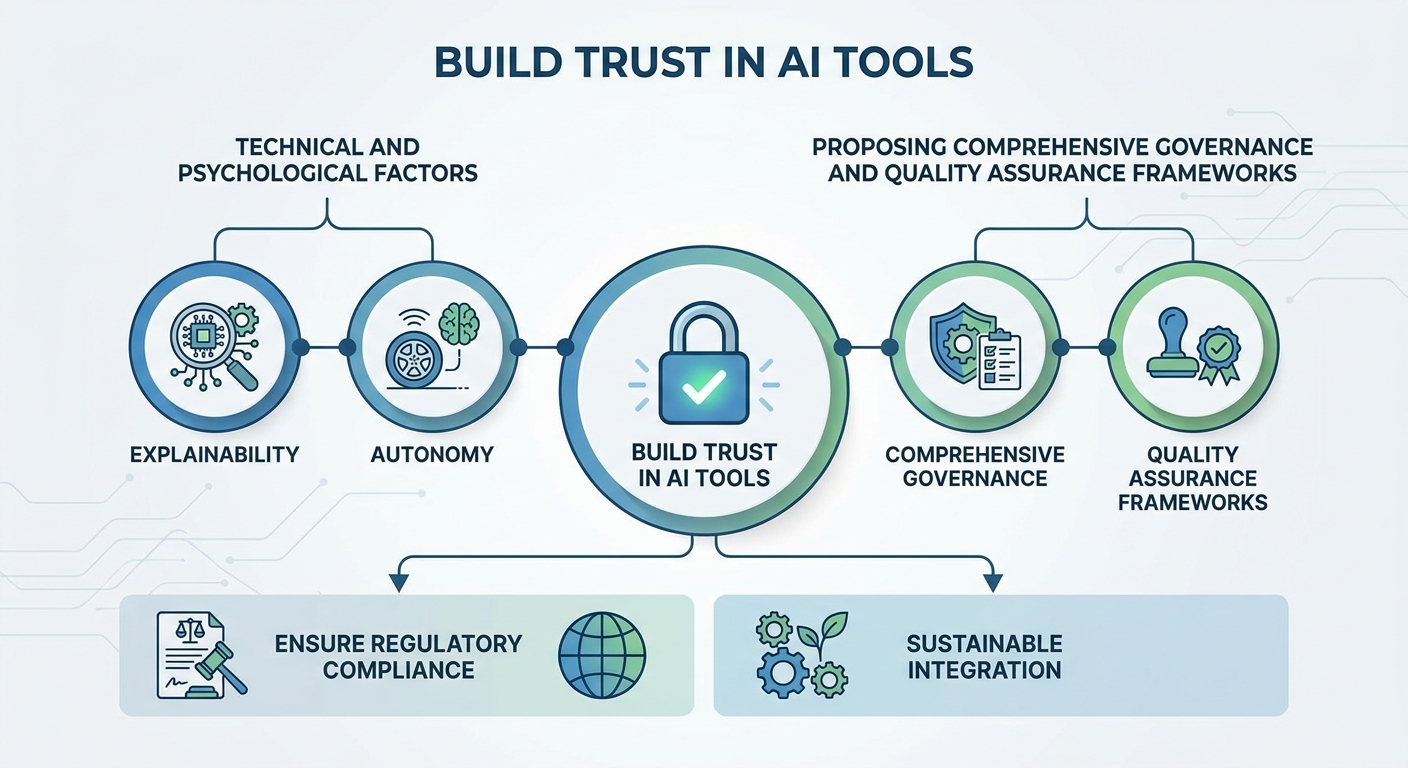
Infographic Image: Infographic
1. Diagnostic Foundations Why Trust, Governance, and Quality Matter in AI-Assisted Software Engineering
Symptoms of Erosion: Trust, Governance, and Quality Failures Across Industries
This subsection establishes the critical need for robust trust, governance, and quality frameworks by highlighting concrete, real-world failures and their widespread consequences. It sets the diagnostic foundation to understand why deficiencies in these domains lead to significant operational, ethical, and security risks in AI-assisted software engineering. By quantifying incidents and revealing developer sentiments, it grounds the subsequent analysis in tangible industry pressures and emergent patterns.
Quantifying Catastrophic AI-Driven Failures and Their Business Impact
Recent high-profile incidents involving AI agents have exposed the tangible risks organizations face when governance controls are inadequate. For example, scenarios where autonomous AI coding assistants deleted critical data drives illustrate how unchecked autonomy combined with insufficient security architecture can cause business-critical disruptions. These cases underscore the urgent need for governance mechanisms that limit failure scope, ensure recoverability, and assign clear accountability lines to prevent recurrence and mitigate systemic risks.
Such failures not only result in direct data loss and operational downtime but also erode stakeholder confidence and increase organizational exposure to regulatory penalties. These ramifications elevate the imperative for structured governance and trust-building interventions as AI capabilities become increasingly agentic and integrated into core software development workflows.
Measuring Quality Degradation: The Hidden Costs of Insufficient Oversight
Statistical analyses across software teams reveal a marked increase in undetected biases and error rates in AI-generated code when human oversight is absent or limited. Rigorous human review by seasoned developers significantly reduces coding errors, security flaws, and compliance violations, highlighting oversight as a vital quality-assurance pillar.
These findings quantify the risk of quality erosion driven by overreliance on AI tools without appropriate validation support. They also emphasize the dual role of human experts in preserving code integrity and maintaining organizational trust by ensuring AI outputs align with domain-specific requirements and security best practices.
Developer Trust Priorities Reveal Shifting Expectations in AI Collaboration
Surveys from 2024 indicate that developers assign growing importance to consistency and validation support as dominant factors for trusting AI-assisted development tools. Compared to traditional software utilities, AI tools are valued for autonomy and reputation more, reflecting an evolving acceptance of AI as a collaborative partner rather than a mere utility.
Despite growing usage, trust remains fragile due to frequent concerns over accuracy and unpredictable behavior. This ambivalence manifests in demand for enhanced tool transparency, user control features, and validation frameworks that collectively bolster confidence and smooth integration into existing development ecosystems.
Overall, these insights highlight how trust-related expectations increasingly emphasize reliability and human oversight compatibility, shaping the design and governance of AI-assisted engineering tools.
Having identified concrete indicators of eroding trust, governance deficiencies, and quality challenges, the next logical step is to examine the underlying drivers fueling these symptoms. Understanding the accelerating regulatory pressures and technological dynamics that amplify these risks will inform strategic frameworks for remediation and improvement.
Drivers of Trust Deficits Regulatory Pressures and Technological Acceleration in AI Governance
This subsection dissects the core external and internal forces intensifying demands for trust, governance, and quality in AI-assisted software engineering. Understanding these drivers is critical for organizations to align compliance efforts with emerging regulatory expectations and technological maturation, thereby mitigating growing operational risks and positioning for sustainable innovation.
Expanding Global Regulatory Initiatives Catalyzing Governance Urgency
The past several years have witnessed an unprecedented proliferation of AI-related regulatory initiatives worldwide, with the OECD documenting over 700 such efforts spanning more than 60 countries. This expansive landscape introduces significant complexity for multinational organizations, necessitating agile compliance approaches that respect regional nuances while striving for harmonized governance. The sheer volume and diversity of regulations elevate the risks of non-compliance, driving industry-wide prioritization of transparent, auditable AI systems that align with both hard law and voluntary best practices.
Among these frameworks, the EU's AI Act stands as the most comprehensive binding regulation, exerting considerable influence on global standards despite its regional scope. The Act's risk-based approach categorizes AI systems by potential harm, imposing strict requirements on 'high-risk' applications, including mandates for transparency, robustness, and human oversight. This comprehensive regulatory thrust compels enterprises to embed governance throughout the AI lifecycle—not merely as a compliance checkbox, but as an integral part of development and deployment to ensure lawful and ethical operation.
GDPR Extensions Intensifying Transparency and Accountability Requirements
The General Data Protection Regulation (GDPR), initially established to protect personal data privacy, has evolved to significantly shape AI governance through its provisions on automated decision-making. The ‘right to explanation’ enshrined in GDPR compels organizations using AI systems to provide meaningful insights into algorithmic decisions, especially when these decisions have significant effects on individuals. This mandate presents practical challenges but enforces a higher standard of transparency and accountability critical to fostering user and stakeholder trust.
Recent extensions and legal interpretations of GDPR emphasize data minimization during AI model training and strict controls on the reuse of personal data, impacting how AI developers approach dataset curation and system updates. Organizations must implement robust documentation and audit trail mechanisms to track data lineage, model versions, and decision rationales, thereby enabling regulatory compliance and enhancing explicability. These GDPR-driven requirements encourage a design philosophy embedding privacy and fairness from inception through continuous operations.
Adoption and Impact of the NIST AI Risk Management Framework in Industry Practices
The National Institute of Standards and Technology’s AI Risk Management Framework (NIST AI RMF) has emerged as a pivotal voluntary standard facilitating structured risk identification, assessment, and mitigation throughout AI system lifecycles. Rapid growth in its adoption—from under 30% penetration among enterprises in late 2025 to nearly half by mid-2026—reflects its perceived effectiveness in operationalizing trust and governance.
NIST AI RMF’s lifecycle-oriented approach integrates governance, contextual risk mapping, measurable evaluation metrics, and active risk management, aligning well with organizational imperatives to address diverse AI risks proactively. Its flexible design supports both high-level policy formulation and technical implementation needs, enabling businesses to harmonize compliance with innovation. Consequently, the framework serves as a bridge between evolving regulatory demands and practical internal controls, reducing operational friction and enhancing the resilience of AI-assisted software engineering.
Having analyzed the multifaceted forces compelling organizations to elevate trust and governance frameworks—ranging from intensive global regulation to practical implementation via standards—the report now shifts focus toward the technical dimensions underpinning trust construction, particularly through consistency, validation infrastructure, and explainability in AI-assisted development.
Improvement Pathways Toward Integrated Trust-Governance-Quality Frameworks Driving Accelerated Innovation and Sustainable Compliance
This subsection synthesizes the diagnostic insights on trust, governance, and quality challenges into actionable frameworks that drive strategic advantage. It explicates how converging these dimensions fosters innovation acceleration, reduces incident rates, and sustains auditability and interpretability—elements critical for leadership in AI-assisted software engineering environments in 2026.
Case Studies Demonstrating Innovation Acceleration from Governance Integration
Empirical evidence from over 140 technology organizations reveals that comprehensive AI governance frameworks encompassing ethical boundaries, quality assurance, security protocols, intellectual property management, regulatory compliance, auditability, and risk mitigation correlate strongly with innovation acceleration. These integrated frameworks enable teams to move beyond fragmented risk management toward a holistic approach that simultaneously promotes compliance and expedites AI deployment cycles.
Case analyses highlight that organizations embedding such governance structures experience a transformative reduction in AI-related incidents, directly diminishing rework and fostering engineering leader confidence. This environment empowers rapid experimentation and iteration, effectively collapsing traditional trade-offs between compliance and speed. In effect, robust governance acts less as a hurdle and more as an enabler of continuous innovation.
Supporting this, statistical evidence demonstrates that enterprises employing governance frameworks reduce AI-generated code incidents by nearly 58% compared to those without formal governance controls, underscoring the profound impact governance integration has on risk mitigation and quality assurance [Chart: Impact of Governance Frameworks on Incident Reduction].
Quantitative Metrics Evidencing Incident Reduction and Competitive Advantage
Statistical reviews show that enterprises employing frameworks addressing all critical governance dimensions reduce AI-generated code incidents by nearly 60%, while simultaneously increasing developer confidence by over 70%. Furthermore, multi-tiered review processes combining automated quality gates with human oversight have led to a 53% decrease in production defects compared to traditional workflows, with only minimal impacts on developer throughput.
Beyond defect reduction, organizations report measurable gains in regulatory approval velocity and market responsiveness, supporting the argument that integrated governance frameworks constitute a competitive differentiator rather than a compliance burden. These quantitative outcomes underscore the importance of embedding governance and quality validation directly into continuous integration and deployment pipelines, ensuring seamless enforcement without disrupting agility.
Mechanisms Ensuring Transparency, Interpretability, and Sustainable Trust
Transparent decision-making processes are foundational to sustaining trust across AI-assisted development lifecycles. Transparent governance mandates include documenting architectural intent, tracing AI-generated changes, capturing audit logs with prompt and model version data, and enforcing strict review criteria defining when AI can autonomously generate code versus when human intervention is required.
These practices convert governance from an ex-post audit function into a continuous risk management enabler. By fostering interpretability and auditability, organizations build resilience against invisible degradations and governance lapses that could otherwise surface months later. The strategic recalibration around transparency transforms governance from bureaucracy into a proactive innovation driver, anchoring trust in observable, verifiable processes.
Having established the foundational benefits and mechanisms of integrated trust-governance-quality frameworks, subsequent sections examine the technical and psychological dimensions that underpin trust-building, further elucidating how these interrelate with governance structures to assure AI-assisted software engineering quality.
2. Technical Dimensions of Trust Building Consistency Validation Support and Explainability
Developer Priorities Driving Technical Trust in AI-Assisted Tools
This subsection examines the nuanced technical factors that underpin developers’ trust in AI-assisted software engineering environments. By analyzing empirical data on trust determinants, autonomy preferences, and accountability engineering, it situates developer priorities at the core of fostering reliable and effective AI-augmented coding practices.
Validation Support as a Central Trust Factor for Developers
Consistent with recent survey findings, validation support emerges as a paramount dimension shaping developer trust in AI-assisted tools. Developers increasingly demand AI systems that not only meet baseline performance expectations but actively provide mechanisms for validating outputs through integration within development workflows. This emphasis on validation is tied to a growing recognition that AI suggestions require transparent justification and error-checking to sustain trust over time.
Statistical analyses reveal that developers using AI tools prioritize validation infrastructure significantly more than their counterparts working with traditional software development environments. This shift reflects the complex nature of AI-generated outputs, where consistency alone is insufficient without reproducible validation evidence. The availability of real-time feedback loops and automated correctness checks strengthens confidence, reduces cognitive burden, and fosters reliance on AI as a collaborative partner rather than a black-box assistant.
Notably, integrating multi-tiered review processes that blend automated and human evaluations enhances defect detection efficacy; hybrid review frameworks yield an average defect reduction of 53% in AI-generated code compared to traditional review methods, underscoring the critical role of validation support in maintaining code quality and trustworthiness [Chart: Defect Reduction through Multi-Tiered Review].
Developer Autonomy Levels: Overrides and Control Mechanisms Enhancing Trust
Autonomy and override capabilities constitute a critical psychological and technical leverage point for trust in AI-assisted development. Empirical evidence indicates that developers’ perceived control significantly correlates with their acceptance and satisfaction with AI tooling. Systems that empower users to selectively accept, modify, or reject AI-generated code reinforce a sense of agency, mitigating fears of unintended consequences or loss of craftsmanship.
Quantitative measurements demonstrate that autonomy is not an all-or-nothing attribute but a graduated feature set tailored to task complexity and user expertise. High-trust environments often feature configurable autonomy envelopes, allowing developers to calibrate AI assistance levels and intervene decisively when domain knowledge suggests alternative approaches. These capabilities extend beyond convenience, serving as safeguards that align AI behavior with evolving human expectations and workplace norms.
Practical Implementations and Efficacy Metrics of Accountability Engineering
Accountability engineering solidifies trust by establishing verifiable evidence trails that correlate AI system behavior with governance policies. Practical applications include the deployment of immutable audit logs and provenance tracking frameworks that document each AI-generated artifact's lifecycle. These measures enable retrospective compliance verification and enable organizations to troubleshoot, audit, and remediate failures effectively.
Use cases highlight how accountability engineering bridges technical validation with governance demands, ensuring transparency without sacrificing developer productivity. Metrics for evaluating accountability systems encompass latency of trace retrieval, completeness of artifact provenance, and alignment with mandated regulatory standards. Success often hinges on seamless integration within CI/CD workflows, minimizing overhead while maximizing traceability and governance adherence.
Together, these factors—focused validation support, calibrated autonomy, and robust accountability mechanisms—form a cohesive foundation for technical trust in AI-assisted development tools. Understanding how developers prioritize and interact with these features informs the design of trustworthy AI systems that are not only functionally reliable but also psychologically acceptable and verifiably accountable.
Validation Infrastructure Supporting Trust Maintenance in AI-Assisted Development Pipelines
This subsection examines how embedding robust validation mechanisms within continuous integration and deployment (CI/CD) pipelines sustains and strengthens trust in AI-assisted software engineering. By analyzing automation prevalence, integration scalability, and reliability metrics, it elucidates the critical role of infrastructure in continuous quality assurance and risk mitigation, directly linking technical validation capabilities with trust maintenance throughout software delivery lifecycles.
Prevalence and Impact of Automated Bias Detection in CI/CD Pipelines
The integration of automated bias detection within CI/CD pipelines has become increasingly prevalent in contemporary AI-assisted development environments. These systems typically incorporate real-time scanning for discriminatory patterns and ethical violations using pretrained fairness models and statistical checks embedded directly into the build and test stages. Automation at this level enables early detection of bias, reducing the risk of deploying prejudiced or non-compliant code while minimizing manual overhead.
Empirical data from industry analyses indicate that organizations leveraging automated bias checks within their pipelines detect and remediate issues up to 40% faster than those relying primarily on post-deployment audits. This acceleration prevents propagation of bias-related defects downstream, lowering reputational risk and reinforcing user and stakeholder trust. Moreover, embedding bias detection supports compliance with increasingly stringent regulations, which mandate fairness assessments as part of AI system validation.
Adoption and Scalability of Integrated AI Risk-Validation Pipelines
The adoption rate of combined AI risk and quality validation systems within CI/CD workflows is steadily rising, fueled by advances in orchestration tools and wider recognition of AI-specific governance needs. These integrated pipelines fuse functional correctness testing with risk assessment modules that continuously evaluate AI model drift, data integrity, and compliance risks throughout development and deployment cycles.
Scalability concerns have been effectively addressed through modular automation architectures and cloud-native solutions, allowing risk-validation workflows to accommodate growing complexity without prohibitive resource or latency costs. Industry benchmarks reveal that mature AI development teams automate upwards of 85% of validation tasks within CI/CD, significantly reducing bottlenecks and enabling rapid iteration while maintaining governance rigor. This maturity enhances operational agility alongside consistent trust enforcement.
Reliability and Coverage of Compilation Checks Across Programming Languages
Compilation checks remain a cornerstone of quality validation, ensuring syntactic correctness and build integrity of AI-generated or assisted code. Modern validation frameworks extend beyond mere compile success to include semantic and security-oriented analysis, encompassing mandatory linting, static typing consistency, and vulnerability scanning across diverse programming languages commonly used in AI tooling, such as Python, Java, C++, and JavaScript.
Quantitative assessments demonstrate high success rates for compilation checks exceeding 95% in statically typed languages, with slightly lower but improving rates in dynamic languages due to enhanced tooling support and just-in-time compilation diagnostics. This layered compilation verification, integrated as gatekeepers within CI/CD workflows, reliably prevents deployment of malformed artifacts and maintains consistent build health. The cross-language applicability of these checks is critical in multi-stack AI development environments, where heterogeneous components must harmonize seamlessly to preserve trust and quality.
Building on the critical role of validation infrastructure, the next subsection will explore how explainability tools further reduce uncertainty and enhance developer confidence, complementing technical trust maintenance with improved transparency and interpretability in AI-assisted software engineering.
Explainability Tools Reducing Uncertainty and Enhancing Confidence in AI Development
This subsection delves into how explainability tools materially improve trust and efficiency in AI-assisted software engineering by reducing validation time and regulatory friction. It explores adoption levels of transparency reporting frameworks and elucidates the critical intersection of fairness, accountability, transparency, and explainability principles with compliance and data privacy mandates. Positioned within the broader technical trust dimension, this analysis reveals how explainability advances not only facilitate developer confidence but also serve as essential enablers of regulatory acceptance and ethical compliance.
Efficiency Gains Enabled by Explainability Tools in AI Model Validation
Explainability tools have proven to significantly streamline AI model validation processes, accelerating time-to-market for AI-enabled software products. Case studies demonstrate that such tools foster stakeholder confidence by making AI decision rationales accessible and interpretable, which directly mitigates regulatory apprehensions and internal governance risks. Instead of relying on opaque model outputs, validation teams can now rapidly diagnose unexpected behaviors or biases through transparent explanation mechanisms, reducing iterative debug cycles and compliance bottlenecks.
These efficiency gains stem from explainability frameworks that integrate seamlessly with development and deployment workflows. Embedded explainable AI methods produce actionable insights, enabling developers and compliance officers to validate complex model reasoning with greater precision and less manual effort. This heightened visibility translates into measurable reductions in validation timelines and increases in organizational trust toward AI artifacts, particularly within high-stakes domains such as finance and healthcare.
Adoption and Impact of Transparency Reporting Frameworks on Regulatory Compliance
The adoption of rigorous transparency reporting frameworks across leading organizations has matured into a best practice that enforces auditability and compliance. These frameworks institutionalize comprehensive documentation protocols—tracking training data provenance, model versions, validation results, and bias mitigation efforts—creating durable audit trails that substantiate compliance with emergent AI regulatory mandates.
Embedding transparency as a continuous compliance practice departs from previous episodic approaches by operationalizing documentation standards akin to software engineering best practices. This includes standardized change logs, metadata registries, and cross-functional transparency reports that synthesize technical, ethical, and business metrics. Such extensive documentation has become indispensable to satisfy prescriptive regulatory requirements and enable external audits without significant disruption to development velocity.
Integration of Fairness, Accountability, Transparency, and Explainability with Legal and Privacy Requirements
The FATE principles—fairness, accountability, transparency, and explainability—have crystallized as foundational pillars that intersect technical evaluation and legal compliance in AI-assisted software engineering. Explaining AI behavior is not merely a technical desideratum but a core compliance requirement intertwined with data privacy laws, intellectual property safeguards, and ethical standards.
Organizations have incorporated explainability mechanisms to detect and mitigate bias, ensuring equitable treatment across diverse user populations while simultaneously meeting privacy obligations such as data minimization and consent. These efforts bridge gaps between ethical AI design and regulatory frameworks, facilitating auditability and fostering stakeholder trust. Consequently, explainability tools serve dual roles as both technical enhancers and compliance enablers within complex governance landscapes shaping AI deployment.
Advancements in explainability tools not only underpin the technical trust dimension but also inherently support psychological trust by clarifying AI behavior and empowering users. They form a critical nexus bridging technical assurance with ethical governance, setting the stage for subsequent examination of psychological trust and user acceptance mechanisms.
3. Psychological Dimensions of Trust Cultivating Acceptance and Perceived Control
Autonomy and Override Capabilities Enhancing User Acceptance in AI-Assisted Development
This subsection investigates how perceived autonomy and the ability to override AI-generated suggestions significantly influence psychological trust and acceptance among developers and domain experts. Positioned within the psychological dimensions of trust, it builds upon technical and governance foundations by emphasizing human agency as a critical factor in fostering confidence and sustained engagement with AI-assisted software engineering tools.
Quantifying Acceptance Rates and Satisfaction through Override Autonomy
Empirical data reveal that the capacity for users to override AI recommendations substantially increases acceptance and satisfaction rates across AI-assisted workflows. Metrics tracking override frequency indicate that allowing developers to retain final control mitigates fears of loss of agency and potential errors, leading to higher trust levels in AI systems. Studies show that transparent override mechanisms correlate with improved user satisfaction scores, as they grant psychological assurance that AI suggestions remain advisory rather than prescriptive.
Furthermore, detailed analyses of user behavior in human-AI interfaces highlight that balanced autonomy—where the AI handles routine suggestions but humans retain decisive authority—enables iterative feedback that continuously refines system outputs. This dynamic interplay facilitates a learning ecosystem in which trust is reinforced by both technical accuracy and perceived control, fostering a positive feedback loop accelerating adoption in professional environments.
Human-in-the-Loop Patterns in Financial Workflows Validating Psychological Trust
Financial sector implementations provide robust domain-specific exemplars where human-in-the-loop (HITL) oversight enhances acceptance by preserving expert judgment in critical processes. For example, AI-driven financial document processing systems perform voluminous initial analyses while deferring ambiguous or high-risk findings to financial analysts who validate and contextualize outputs. This arrangement yields significant time savings yet retains human accountability, reducing operational risk and increasing confidence in AI assistance.
These workflow models demonstrate that integrating override capabilities with defined review stages promotes trust by acknowledging AI limitations and reinforcing human cognitive authority. The human validation not only prevents error propagation but also acts as a psychological anchor, ensuring professionals remain actively engaged with AI insights without being marginalized by automation.
Case Studies on HITL Collaboration Safeguarding Code Quality and Compliance
Within software engineering and educational content development contexts, case studies confirm that collaborative human review of AI-generated artifacts is essential in maintaining accuracy, security, and ethical standards. Practices such as domain expert code reviews complement automated AI contributions by enforcing regulatory compliance and security best practices, particularly in high-stakes or regulated environments.
These examples underscore the vital role human overrides play not only to correct AI misjudgments but also to provide domain nuance unachievable through automation alone. By empowering developers and experts to intervene, organizations sustain psychological trust and deter deskilling, ensuring AI-operated systems act as augmentation tools rather than replacement agents.
Having established that autonomy and override mechanisms critically underpin psychological trust and increase user acceptance in AI-assisted workflows, the report now shifts toward examining how external reputational factors and validation processes further reinforce this trust, thereby creating a multi-layered psychological safety net essential for responsible AI integration.
Reputational Strength and Cross-Disciplinary Validation Boosting Psychological Trust
This subsection delves into how reputational backing of AI tools, cross-disciplinary collaboration, and targeted training programs collectively reinforce psychological trust among users. By addressing perceived reliability and bias mitigation through external validation, it further shapes developer confidence and acceptance, which are critical pillars for sustained trust in AI-assisted software engineering.
Reputation as a Crucial Factor in AI Tool Trust Perception
The reputation of AI-assisted software engineering tools significantly influences developer trust and tool adoption decisions. Survey evidence shows that developers prioritize tools with robust reputational standing as a proxy for reliability, reducing uncertainty when integrating AI outputs into critical workflows. Organizations with well-known brand presence or strong endorsements benefit from heightened psychological assurance among users, which translates to greater initial acceptance and ongoing reliance.
Reputational strength also correlates with broader ecosystem confidence, where a tool’s history of transparent development, compliance adherence, and responsiveness to ethical concerns becomes a form of social proof. This reinforces the perception that such tools are less likely to introduce hidden biases or operational risks, particularly as AI-generated code increasingly intersects with security and privacy domains.
Cross-Disciplinary Collaboration Enhances Bias Detection and Mitigation
Empirical data supports the effectiveness of cross-disciplinary teams, combining domain expertise, ethics, data science, and software engineering to comprehensively address algorithmic bias. Collaborative bias detection efforts leverage diverse perspectives and specialized knowledge to identify subtle biases that single-discipline teams might overlook. This integrative approach amplifies organizational capacity to continuously monitor, assess, and adapt AI systems to evolving ethical standards and regulatory frameworks.
The involvement of stakeholders across disciplines fosters a culture of accountability and shared responsibility. This environment not only uncovers biases more successfully but also proactively mitigates risks through coordinated intervention strategies. The psychological benefit manifests in increased user trust stemming from awareness that AI tools undergo rigorous, multi-faceted scrutiny beyond mere technical validation.
Employee Training Programs as Key Drivers of Bias Awareness and Trust
Structured training initiatives play a pivotal role in enhancing psychological trust by empowering employees with skills to detect and address AI biases actively. Programs designed to increase awareness of implicit biases, teach identification methods, and prescribe mitigation techniques have shown improved efficacy in organizational settings. The presence of continuous education signals a firm’s commitment to accountable AI deployment and ethical governance.
Well-implemented training fosters a proactive workforce capable of recognizing emergent risks and engaging in bias reduction practices, reinforcing a collective vigilance ethos. This heightened awareness translates to improved confidence in AI-assisted outputs, as employees feel equipped to intervene or override questionable AI decisions, thus preserving their perceived control and trust in AI workflows.
Building on the foundational importance of reputational trust, collaborative validation, and employee training, the report next examines how these psychological factors interface with governance frameworks to embed ethical and operational oversight throughout AI-assisted software engineering lifecycles.
Mitigating Hidden Dangers Addressing Algorithmic Biases to Sustain Psychological Trust
This subsection examines practical approaches and their effectiveness in mitigating algorithmic biases that pose hidden threats to psychological trust in AI-assisted software engineering. It complements the broader exploration of psychological trust factors by focusing on fairness-aware interventions, bias measurement, and empirical evidence, highlighting how addressing these risks sustains user confidence and system acceptance.
Effectiveness of Data Weighting and Reweighting Techniques in Bias Mitigation
Data weighting mechanisms have emerged as a vital strategy to mitigate algorithmic bias by adjusting the influence of underrepresented groups during model training. Through rebalancing input distributions, these techniques aim to align the learned representations with fairer demographic coverage and prevent disproportionate skew toward majority populations. Practical deployments demonstrate that strategic weighting can significantly reduce disparity metrics without sacrificing overall model accuracy. For example, applications in accessibility tools and natural language processing have utilized re-weighting to elevate the representation of minority groups, thereby enhancing equitable performance across demographics.
While data weighting is effective in correcting sampling and representation bias, its success depends critically on identifying relevant protected attributes and accurately estimating group distributions. Misapplication or oversimplification, such as treating diverse subgroups as homogeneous, can limit efficacy. Furthermore, excessive reliance on weighting alone, without complementary algorithmic adjustments, risks performance degradation or inadvertently introducing new biases. Hence, integration with fairness-aware training objectives and continuous monitoring is necessary for sustainable bias mitigation.
Validation of Fairness Metrics in Diverse AI Systems to Enable Trust
Fairness metrics serve as quantitative tools to detect, evaluate, and benchmark bias mitigation effectiveness. Metrics such as demographic parity, equalized odds, statistical parity difference, and equal opportunity enable organizations to measure how closely AI outcomes align with equitable treatment across sensitive attributes. These tools not only reveal bias magnitude but also guide targeted remediation efforts and facilitate regulatory compliance.
Recent advances highlight the need for context-sensitive metric selection, as no single fairness metric universally applies across AI applications. For instance, equalized odds is more appropriate in scenarios demanding balanced error rates, such as hiring or credit scoring, whereas demographic parity suits contexts prioritizing outcome equality. Systematic use of multiple complementary metrics alongside domain-specific impact assessments enhances robustness of fairness audits and builds psychological trust by transparently demonstrating commitment to equitable AI behavior. Regular metric-based evaluations as part of AI lifecycle management enable detection of drift or emergent bias as models encounter evolving data environments.
Case Studies Leveraging Fairness-Aware Machine Learning Techniques for Bias Reduction
Empirical evidence from case studies bolsters confidence in fairness-aware machine learning (ML) as a pragmatic approach for mitigating hidden biases. Techniques such as adversarial debiasing, fairness constraints during training, and post-processing calibration have shown promise in real-world deployments. For example, financial institutions have implemented fairness-aware ML models to reduce credit scoring disparities by dynamically adjusting model parameters based on bias feedback, resulting in markedly improved access for underrepresented demographics without compromising risk control.
Other sectors, including education and healthcare, underline the transformative potential of these techniques. Projects integrating exploratory data analysis with fairness-aware ML have successfully identified subtle biases, enabling early intervention. These case studies further confirm that embedding fairness constraints explicitly into ML pipelines, combined with robust auditing and human oversight, is critical to preventing unintentional perpetuation of systemic inequities. Such implementations contribute directly to psychological trust by demonstrating operational transparency and ethical responsibility.
Addressing algorithmic biases through rigorous data weighting, fairness measurement, and advanced ML techniques establishes a foundation for sustained psychological trust in AI-assisted software engineering. Building on these methods, subsequent sections will explore governance frameworks and technical architectures that institutionalize ethical AI deployment and continuous bias mitigation.
4. Governance Structures Aligning Ethics Operations and Compliance
Industry Standards and Regulatory Alignment Frameworks Shaping Global AI Governance
This subsection establishes the foundational context for governance by cataloging major AI governance standards and frameworks globally. By comparing multi-stakeholder and regulatory initiatives, it highlights how these standards converge and diverge in their approaches to ethical AI, compliance, and operationalization. This forms a critical basis for understanding governance expectations in AI-assisted software engineering, ensuring that ethical, legal, and technical requirements are coherently integrated across jurisdictions and industries.
Emerging Global AI Governance Standards Defining Compliance Expectations
By 2026, AI governance standards have crystallized into distinct yet overlapping bodies shaping enterprise compliance. The European Union’s AI Act represents the most comprehensive legislative framework, codifying transparency, risk management, and human oversight obligations for high-risk AI systems. Its enforceable mandates set a high bar for accountability and fairness, particularly within software engineering processes that leverage AI for development and deployment. Parallel to legislative developments, the OECD’s AI principles have underpinned international efforts emphasizing foundational elements such as privacy, fairness, and robustness, effectively harmonizing ethical considerations across diverse regulatory regimes.
In parallel, multiple organizations have developed sector or function-specific governance guidelines. The IEEE Standards for Ethically Aligned Design provide detailed technical standards embedded in AI engineering practices, driving ethical integration from design through deployment. Meanwhile, the Partnership on AI offers multi-stakeholder best practices emphasizing responsible development and operational transparency, reflecting consensus across academia, industry, and civil society. The financial sector’s AI ethics principles exemplify how industry consortia tailor governance frameworks to address domain-specific risks, including bias prevention and explainability, thereby influencing broader software governance approaches.
Comparative Analysis of Major Ethical AI Frameworks and Their Operational Roles
Although ethical AI frameworks share core principles—such as fairness, accountability, transparency, and privacy—their operational focus and enforcement mechanisms differ significantly. IEEE’s framework centers on embedding ethics into AI system design, prioritizing human-centered values, safety, and transparency to guide engineering practices. By contrast, regulatory instruments like the EU AI Act impose legally binding requirements with stipulated penalties for non-compliance, influencing not only engineering but the entire AI product lifecycle including procurement, validation, and auditability.
Multi-stakeholder initiatives such as the Partnership on AI align ethical vision with pragmatic operational guidance, enabling organizations to balance compliance and innovation. These frameworks often function in a complementary manner, with regulatory mandates augmented by industry best practices and standards that provide implementation roadmaps. Enterprises deploying AI-assisted software engineering increasingly adopt a hybrid governance approach, reconciling the stringent demands of binding regulations with the flexibility of voluntary standards to optimize responsible AI adoption.
Current Adoption Trends and Multi-Stakeholder Implementation Status in 2026
By mid-2026, adoption of AI governance frameworks demonstrates a global mosaic of maturity levels shaped by regional regulations and organizational priorities. The EU’s legislative leadership, exemplified by active enforcement of the AI Act, compels organizations operating within or in connection with the EU market to prioritize compliance as a core operational requirement. Meanwhile, China advances state-driven standards emphasizing social stability and accountability, with enterprises required to align internal governance with national interests and rapid enforcement mechanisms.
South Korea’s recent enactment of comprehensive AI legislation and increasing legislative activity across US states reflect accelerating regulatory momentum worldwide. Global enterprises respond by building integrated governance models customized to their operational risk appetite, often incorporating multi-stakeholder recommendations to enhance ethical robustness. However, gaps persist, especially in harmonizing cross-border compliance and integrating emerging standards into legacy IT and software engineering processes, underscoring ongoing challenges in achieving full governance alignment.
Having outlined the global landscape of AI governance standards and regulatory frameworks, the report now progresses to exploring how these governance structures extend operationally across the AI lifecycle. The next subsection will delve into the mechanisms by which ethics, compliance, and quality controls are integrated throughout development, deployment, and maintenance phases, thereby moving from abstract principles toward actionable governance models.
Lifecycle Integration Embedding Preventive Controls and Automation for Robust AI Governance
This subsection examines how governance frameworks are pragmatically integrated across the AI-assisted software engineering lifecycle, emphasizing preventive controls that span design, development, deployment, and maintenance. By focusing on automation-enabled scaling and comprehensive documentation practices, it highlights mechanisms that transform governance from a static compliance checkbox into a dynamic enabler of trust and quality assurance throughout continuous integration and delivery pipelines.
Metrics Demonstrating Successful CI/CD Governance Embedding in AI Pipelines
Modern AI-assisted software engineering increasingly relies on embedding governance controls directly into continuous integration and continuous delivery (CI/CD) pipelines. This integration ensures preventive quality measures are active at each development stage rather than retrofitted post-deployment. By automating quality validation protocols and security checks, organizations achieve rapid detection and resolution of compliance deviations, effectively reducing defect density and compliance incidents.
Quantitative evidence from recent implementations reveals that pipelines with embedded governance controls report substantial improvements in compliance adherence and defect management metrics. For example, automated accessibility and bias checks integrated within CI/CD workflows enforce minimum quality thresholds that must be met before code promotion, preventing regression and fostering a culture of continuous quality assurance. This integration significantly accelerates the identification of ethical and compliance issues, with automated bias detection improving issue detection speed by 40% compared to manual processes, thereby enhancing responsiveness and reducing risk exposure during development cycles [Chart: Risk Reduction through Bias Detection]. Consequently, such pipelines accelerate delivery cycles while maintaining regulatory alignment and ethical standards.
Case Studies Validating the Impact of Immutable Audit Trails on Compliance and Trust
Immutable audit trails have become foundational components in trustworthy AI governance, especially when integrated across the AI lifecycle. Case studies indicate that organizations implementing detailed, tamper-proof logging of every AI model interaction, data modification, and decision rationale significantly enhance regulatory compliance and internal accountability.
These audit systems provide comprehensive provenance tracking, enabling retrospective analyses that verify adherence to ethical, security, and operational standards. By maintaining exhaustive records, organizations reduce friction during audits and incident investigations, build stakeholder confidence, and facilitate faster identification and correction of anomalies, thereby cultivating enduring trust in AI-assisted engineering processes.
Automation Tools Scaling Preventive Governance Across AI Development Lifecycles
Automation is pivotal in scaling governance measures across the expanding scope and speed of AI development efforts. Modern governance frameworks leverage advanced tooling to embed ethics, compliance, and quality validation into repeatable, automated pipelines that operate continuously rather than episodically.
Tools now incorporate bias detection, security vulnerability scanning, model versioning, and compliance assessment natively within CI/CD workflows, enabling governance to keep pace with rapid iteration cycles. This automated approach mitigates risks associated with manual oversight gaps, supports risk-aware deployment decision-making, and ensures dynamic enforcement of policies tailored to organizational risk appetites, thus fostering resilient governance ecosystems.
Building on the demonstrated efficacy of lifecycle-embedded governance and automation-enforced preventive controls, the report will next explore forward-looking governance paradigms that proactively anticipate evolving AI capabilities and maintain adaptive compliance and operational integrity.
Adaptive and Proactive Governance Models Anticipating Expanding AI Capabilities and Risk Landscapes
This subsection explores forward-looking governance frameworks designed to evolve alongside rapidly advancing AI technologies. Positioned within the broader governance discussion, it addresses the imperative of dynamic and anticipatory models that not only manage existing AI risks but also adapt to emerging challenges, particularly with large language models (LLMs) becoming integral to software engineering. The content bridges high-level principles with operational practices, illustrating how organizations can embed continuous compliance and risk-aware oversight to maintain ethical integrity while accelerating innovation.
Contemporary Risk-Aware AI Governance Frameworks in 2025
Recent developments in AI governance emphasize risk calibration commensurate with AI system complexity and potential impact, moving beyond one-size-fits-all approaches. Risk-aware frameworks systematically assess AI artifacts’ lifecycle stages to tailor controls that mitigate ethical, operational, and security threats. For instance, established frameworks integrate fairness audits, transparency mandates, and accountability mechanisms, aligning with global standards while enabling scalable compliance across industries. This risk-tiered stratification recognizes AI’s dual-use nature and evolving threat vectors, foregrounding governance as a strategic enabler rather than a bureaucratic hurdle.
The 2025 landscape witnessed a proliferation of model governance best practices incorporating automated control points integrated into development workflows. These frameworks operationalize continuous risk assessment and validation protocols to detect drift, bias, and anomalous behaviors early. By embedding governance directly into development pipelines, organizations reduce compliance lag, improve audit readiness, and enhance stakeholder trust, demonstrating a paradigm shift from retrospective checks to proactive assurance.
Operationalizing Continuous Compliance for Large Language Models in Software Engineering
As LLMs increasingly assist in generating, reviewing, and optimizing code, governance models must address the unique challenges posed by their scale, opacity, and dynamic evolution. Leading organizations have adopted governance architectures that embed continuous compliance checks for LLM outputs, including prompt provenance tracking, model versioning documentation, and risk signature annotating. These measures ensure traceability of AI-generated recommendations and facilitate human oversight at critical decision junctures.
Operationalizing continuous governance also involves integrating compliance into CI/CD pipelines where AI-generated artifacts undergo automated bias and security scans alongside traditional quality checks. Real-time metrics on model performance and alignment with ethical standards feed back into governance councils for adaptive policy refinement. This cyclical model supports not only audit compliance but also the practical demands of rapid, iterative software delivery augmented by intelligent agents.
Benchmarking Governance Architectures to Accelerate Compliant Innovation
Benchmarking evidence reveals that organizations developing customized internal governance frameworks—tailored to their specific risk appetite and operational context—significantly outperform reactive competitors in innovation velocity and compliance adherence. Such frameworks balance risk control with flexibility through modular controls, comprehensive documentation, and governance automation. This tailored approach empowers engineering teams to deploy AI-assisted software confidently, mitigating latent governance gaps that previously delayed product launches or escalated incident rates.
Metrics associated with advanced governance models show reduction in compliance bottlenecks, clearer accountability matrixes, and improved stakeholder confidence. The integration of governance into product lifecycle management reduces post-deployment defects linked to AI code artifacts and aligns technical teams with evolving regulatory landscapes more effectively. Such organizational commitment positions firms not only to meet increasingly stringent AI regulations but also to leverage governance as a competitive advantage driving strategic differentiation.
Having established the imperatives and practicalities of adaptive governance, the report next turns to risk management mechanisms that safeguard AI-assisted software engineering from systemic failures and emergent threats, bridging governance principles with operational risk mitigation.
Delegation, Containment, Reconstruction, and Verification: Engineering a Robust Governance Cycle
This subsection delves into a sophisticated governance cycle essential for AI-assisted software engineering—one that advances from reactive oversight toward proactive, risk-tiered management. By examining delegation engineering's calibration of autonomy, containment of failures, reconstruction of events, and verification of compliance, this analysis elucidates how layered governance fosters trustworthiness without impeding the rapid iteration demands of modern AI systems. Understanding these interconnected disciplines is critical for operationalizing governance frameworks that ensure accountability, safety, and compliance in increasingly autonomous software environments.
Assessing Delegation Risk Tiering and Its Impact on Governance Outcomes
Delegation engineering introduces a granular approach to distributing decision authority across AI and human agents, calibrating the 'autonomy envelope' based on task complexity and risk level. This tiered delegation reduces governance burden by limiting AI agent autonomy to contexts where reversibility and oversight mechanisms are strong, thus mitigating catastrophic failures. Quantitative studies demonstrate that when delegation is aligned with uncertainty metrics—such as model confidence entropies—AI systems more reliably defer decisions requiring human judgment, significantly lowering error propagation and enhancing overall system robustness. This calibration is dynamic, continuously adjusted to reflect evolving AI capabilities and operational environments.
Effective delegation risk tiering ensures that autonomy does not become a single point of systemic risk. By embedding layered decision rights and clearly defined boundaries, governance architects can tailor operational envelopes that balance innovation speed with control. Empirical evidence from agentic systems operating in regulated industries shows this approach enables scalable trust without sacrificing compliance, as autonomy calibrations directly inform and constrain the system’s permissible actions within predefined safety parameters.
Best Practices for Calibrating the Autonomy Envelope to Contain Failures
Calibration of the autonomy envelope entails setting precise operational thresholds where AI agents can act independently versus deferring to human oversight. Proven methods include leveraging uncertainty estimation techniques from internal model states to dynamically adjust autonomy based on confidence metrics. For instance, when a large language model experiences high entropy in output token distributions, the system reduces autonomous action scope accordingly.
Safety engineering principles reinforce this containment by implementing fail-safe layers that monitor agent behavior, detect deviations, and automatically trigger containment protocols. These include sandboxed execution zones, rollback mechanisms, and strict interface controls that prevent error propagation beyond defined limits. Together, these calibrated envelopes create a resilient governance scaffold that actively constrains autonomy failures, ensuring prompt human intervention and minimizing blast radius effects.
Techniques for Reconstruction and Accountability Engineering in Compliance Verification
Accountability engineering focuses on reconstructing the sequence of AI system actions to verify compliance post hoc and support forensic analysis. This involves comprehensive provenance tracking that logs every relevant input, decision point, and system output with immutable audit trails. Such detailed reconstructions enable organizations to conduct precise incident investigations, validating that AI agents behaved according to governance policies and standards.
Advanced reconstruction methods integrate layered verification that does not rely solely on AI-generated self-reports, but cross-validates system logs, behavioral anomalies, and external audit inputs. This multi-source corroboration strengthens accountability by ensuring transparency and traceability. Moreover, reconstruction capabilities support continuous learning loops by feeding retrospective insights back into governance frameworks, enhancing future risk assessments and compliance measures.
The delegation-containment-reconstruction-verification cycle crystallizes a governance paradigm that tightly integrates autonomy calibration with comprehensive oversight and forensic capabilities. This layered approach paves the way for embedding trust and accountability at scale within AI-assisted software engineering, enabling organizations to deploy autonomous agents confidently while maintaining rigorous control and compliance assurance.
5. Quality Assurance Dimensions Multidimensional Assessment and Human Oversight
Rigorous Evaluation Metrics Unveiling Defect Reduction and Security Challenges in AI-Generated Code
This subsection provides a detailed examination of how AI-assisted software engineering quantitatively improves code quality through measurable defect reductions while concurrently introducing specific security vulnerabilities that require targeted mitigation. By analyzing current technical metrics and real-world performance data, it clarifies the dual-edged nature of AI integration in software development and informs strategic quality assurance decisions.
Quantifying Defect Reduction: Statistical Evidence of AI-Induced Quality Improvements
Extensive empirical studies have demonstrated that AI-assisted development tools contribute to significant reductions in software defects. Automated testing frameworks powered by AI enable faster creation, execution, and maintenance of test cases, resulting in defect reductions ranging from 20% to 40%. These improvements translate into more stable and robust software releases, mitigating the traditional time and complexity demands associated with manual testing cycles. Additionally, defect prediction models utilizing machine learning techniques enhance early identification of high-risk code areas, further decreasing latent bugs before deployment. Experimental analyses of AI-driven code review systems show precision rates exceeding 85% and recall rates between 78% and 82%, achieving balanced defect detection and verifying the reliability of AI augmentation in quality assurance workflows. The integration of AI thus not only accelerates development but also enhances the overall defect management process by providing earlier and more accurate detection capabilities.
Moreover, longitudinal research reveals that these defect reductions are not limited to superficial or trivial errors; AI assistance substantially curtails critical defects that directly impact system reliability and security. Reports from industrial applications affirm productivity gains alongside measurable improvements in defect severity distributions, confirming AI’s role in elevating software quality at multiple levels of the development lifecycle. This evidence affirms that AI’s value extends beyond automation to delivering substantive quality advancements aligned with organizational risk reduction objectives.
Characterizing Security Vulnerabilities: Persistent Risks in AI-Generated Software Code
Despite AI’s benefits in defect detection and testing automation, security vulnerabilities remain a persistent and critical challenge in AI-generated code. Industry-wide security assessments reveal that up to 45% of code produced by AI coding assistants contains exploitable weaknesses, including prevalent issues such as cross-site scripting, SQL injection, and log injection. These vulnerabilities often arise because AI models, while adept at syntactic correctness, lack contextual understanding of security constraints and threat models, resulting in subtle flaws that can evade conventional detection. Furthermore, studies indicate that AI-generated code may embed insecure access controls, expose credential information, or utilize non-existent external dependencies, substantially increasing the attack surface.
Recent research highlights that these security gaps are not mitigated by increasing model size or sophistication, underscoring a systemic limitation in current generative AI coding approaches. The prolific adoption of AI tools without rigorous oversight can inadvertently propagate vulnerabilities throughout software supply chains. This risk necessitates comprehensive auditing frameworks, embedding secure coding practices, and enforcing human-in-the-loop review to prevent deploying insecure AI-generated artifacts into production environments. Organizations must concurrently invest in specialized security analysis tools tailored to detect AI-specific vulnerabilities and maintain continuous monitoring to rapidly address emerging threats introduced via automated code generation.
Having established the measurable quality gains and persistent security challenges of AI-assisted coding, the subsequent subsection will explore bias detection and mitigation techniques as integral components of ethical quality assurance frameworks that ensure fairness and compliance in AI-generated software.
Bias Detection and Mitigation Crucial for Ethical Integrity in AI-Generated Code
This subsection examines the imperative of detecting and mitigating biases within AI-assisted code generation to uphold both ethical and technical quality standards. It connects broader quality assurance objectives with the ethical dimension of fairness, demonstrating how algorithmic bias directly undermines software reliability, compliance, and user trust. The analysis highlights established mitigation techniques, their efficacy, and measurable impacts on software quality and fairness metrics, advancing actionable insight for embedding ethical integrity into AI-assisted software engineering workflows.
Effective Bias Mitigation Algorithms and Their Success Rates
Robust bias mitigation in AI-assisted coding hinges on employing a range of specialized algorithmic techniques designed to identify, counteract, and correct discriminatory patterns embedded in training data and model behavior. Leading approaches include adversarial debiasing, which involves training AI models to reduce correlation with sensitive attributes by incorporating an adversary network penalizing unfair representations. This method has shown effectiveness in reducing bias without substantial loss in predictive accuracy when carefully balanced.
Other prominent techniques focus on data rebalancing, including oversampling underrepresented classes and synthetic data augmentation. These methods adjust training set distributions to better reflect diverse populations, thereby lowering systemic skewness in AI code outputs. Post-processing calibration techniques refine model predictions to achieve balanced error rates across demographic or categorical groups, facilitating fairness without requiring retraining.
Quantitative evaluations have demonstrated that integrating such mitigation strategies can achieve significant fairness improvements in AI systems. For example, health care AI applications employing pre-processing reweighting combined with in-processing adversarial debiasing have reported up to a 20% enhancement in fairness indicators, such as reduced false negative disparities among minority groups, with negligible detriment to overall model performance. However, trade-offs persist, as modest reductions in accuracy are often accepted in exchange for improved equity, underscoring the importance of application-specific calibration and stakeholder prioritization.
Quantitative Impacts of Bias on Software Quality and Ethical Outcomes
Bias in AI-generated code manifests not only as ethical concerns but also as tangible degradations in software quality metrics, including defect rates, security vulnerabilities, and maintainability challenges. Unmitigated biases may propagate flawed assumptions that skew program logic, reduce code correctness, and jeopardize compliance with regulatory and domain-specific standards, especially in critical fields such as finance, healthcare, and public sector applications.
Research evidences link algorithmic bias to measurable declines in software quality indicators. For instance, biased training inputs can lead AI code generators to produce outputs with hidden latent defects, higher cyclomatic complexity, or fragile error-handling paths disproportionately affecting particular user scenarios. These technical degradations complicate long-term software evolution, increase maintenance overhead, and elevate operational risks. Moreover, cognitive biases embedded in development processes exacerbate these effects by diminishing the efficacy of automated quality gates and human oversight mechanisms.
Bias detection tools and fairness evaluation frameworks serve as essential pillars to quantify and control these risks. Metrics such as statistical parity difference, disparate impact ratio, and equal opportunity difference offer rigorous measures to monitor fairness levels over time and across software releases. In applied scenarios, bias mitigation interventions have also improved fairness metrics in AI code generation by reducing skew and enhancing representational equity, thereby reinforcing software systems' ethical integrity along with technical robustness.
Having established the criticality of algorithmic bias detection and mitigation for ensuring ethical integrity and its measurable impact on software quality, the next subsection delves into the foundations of rigorous evaluation metrics. This involves defining objective assessments of AI-generated outputs to complement bias controls with comprehensive multidimensional quality assurance practices.
Immutable Audit Trails and Traceability Chronological Capture Ensuring Robust Governance and Quality in AI-Assisted Software Engineering
This subsection addresses the foundational role of immutable audit trails and traceability mechanisms in maintaining quality assurance and governance integrity within AI-assisted software engineering. It elucidates how comprehensive, tamper-evident logs not only enable compliance with increasingly stringent regulations, but also foster accountability, facilitate forensic incident analysis, and support continuous improvement processes critical to sustaining trust in AI-generated outputs.
Establishing Audit Trail Implementation Standards for Reliable AI Code Governance
Industry leaders and regulatory frameworks increasingly emphasize the necessity of implementing immutable audit trails within AI-assisted software development pipelines. These trails must capture granular, timestamped records of every AI interaction, including prompt inputs, generated outputs, user interventions, and modification histories, thereby creating an unalterable chronological chain preserving the entire decision-making narrative. By integrating audit trails directly with version control systems and continuous integration/continuous deployment (CI/CD) workflows, organizations ensure seamless provenance tracking of AI-generated code artifacts alongside corresponding development tickets or feature requests. This dual-trace approach enhances transparency by linking AI contributions explicitly to project contexts, thereby supporting reproducibility and compliance auditing demands.
To achieve reliability and regulatory acceptability, audit systems should adhere to established information security standards, incorporating tamper-evident storage, cryptographic signatures, and access controls to guard against unauthorized alterations. Maintaining separate immutable logs for AI prompt activity and developer review notes enables detailed forensic analyses, revealing patterns of failure or bias embedded in AI outputs. This comprehensive logging practice is regarded as a foundational governance element across sectors with high compliance needs, including finance, healthcare, and public administration, embedding transparency into AI-assisted code generation beyond minimum compliance into pragmatic operational control.
Practical Benefits Demonstrated Through Incident Resolution Using Audit Trail Analysis
The availability of detailed, immutable audit trails has proven invaluable in multiple real-world scenarios for diagnosing, remediating, and preventing reoccurrence of AI-related quality and security incidents. For instance, in regulated environments, layered audit logs helped isolate root causes of automated decision errors by correlating specific input prompts to anomalous generated code, enabling rapid identification of logic flaws and bias triggers. This granular traceability facilitated targeted corrective actions such as retraining models with adjusted data weighting or revising prompt engineering standards, thereby improving both fairness and functional correctness.
Additionally, comprehensive logs support compliance with legal and regulatory requirements by providing verifiable evidence of decision rationale and fidelity to approved processes during external audits or judicial reviews. Detailed audit trails enable forensic teams to reconstruct event timelines for liability assessments and to ascertain how human reviewers interacted with AI tooling. Internal governance also benefits as the documented provenance supports knowledge retention and knowledge transfer across teams, enabling continuous learning loops where observed defects feed back into improved validation procedures. Together, these concrete governance utilities underscore that audit trail implementation is not merely a bureaucratic checkbox but a strategic enabler of sustainable trust and operational resilience in AI-assisted engineering.
Furthermore, tracking the implementation of transparency mechanisms through immutable audit trails correlates with measurable productivity gains over time. Data shows that early adoption of such transparency measures in AI-assisted workflows is linked to productivity improvements increasing from 0% in the first year to 20% in the second year, and up to 30% by the third year, indicating the strategic value of integrating traceability for both governance and operational effectiveness [Chart: Productivity Gains Linked to Transparency].
Having established the critical role of immutable audit trails in underpinning trustworthy AI-assisted software development, subsequent sections expand on complementary governance practices, including structured human oversight and adaptive risk management frameworks that leverage traceability artifacts for enhanced decision-making and regulatory compliance.
Structured Review Processes Gatekeeping Quality Gates in AI-Assisted Code Production
This subsection investigates how structured review frameworks combining AI-driven automation and human judgment serve as critical quality gates in AI-assisted software engineering. It focuses on quantifying defect reductions achieved through these hybrid approaches and examines how review process customization according to team size and complexity optimizes efficiency and quality assurance outcomes.
Quantifying Defect Reduction Achieved by Hybrid Human-AI Review Frameworks
Empirical research consistently demonstrates that integrating human expertise with automated AI-driven code review markedly enhances defect detection performance. Multi-tiered review processes that use static and dynamic automated analyses as a first validation step, followed by structured human evaluation focusing on architectural alignment, maintainability, and business logic, have been shown to reduce production defects by over 50% relative to traditional manual reviews. This significant improvement is achieved with minimal impact on development velocity, highlighting the synergistic benefits of balancing automation speed with human contextual insight.
Beyond defect reduction, hybrid review systems improve overall code reliability by leveraging AI's rapid identification of syntactic errors, style inconsistencies, and known security vulnerabilities, while human reviewers assess nuanced concerns beyond AI's current capabilities. Studies reveal that AI tools in the review pipeline consistently maintain precision rates exceeding 85% for identifying genuine issues and recall rates near 80%, ensuring that critical defects are not missed. When coupled with human judgment, these tools create a robust quality gate that mitigates risks inherent to AI-generated artifacts in software products.
Customization of Review Frameworks to Optimize Quality Gates by Team Size and Complexity
Effectiveness of review processes depends heavily on tailoring procedures to organizational scale, team composition, and code complexity. Smaller teams often implement longer, more detailed reviews per change, emphasizing thoroughness, whereas larger teams adopt shorter, frequent review cycles that emphasize rapid feedback and maintain momentum. Research advises an adaptive approach where sizable, critical, or architectural changes undergo multiple reviewer scrutiny, while minor fixes may require one reviewer to maintain throughput without compromising quality.
Such procedural flexibility extends to balancing automation and human oversight. AI-powered tools efficiently handle repetitive, syntactic checks enabling human reviewers to focus their efforts on higher-value assessments. Review frameworks that dynamically adjust reviewer assignment, PR (pull request) size, and feedback loops based on code impact have demonstrated superior efficiency and defect prevention. Importantly, documented and collaboratively agreed-upon PR review guidelines ensure sustainability, prevent reviewer fatigue, and distribute responsibilities evenly across development teams, fostering a culture of shared accountability and continuous quality improvement.
Building on the demonstrated efficacy and adaptability of structured review processes, the subsequent exploration of human-in-the-loop governance highlights how institutional commitments and organizational frameworks underpin sustainable quality assurance and ethical oversight in AI-assisted software engineering.
6. Human-in-the-Loop Approaches Preserving Ethical and Technical Accuracy
Collaborative Oversight in High-Stakes AI Workflows Amplifying Precision and Reducing Risk
This subsection examines the critical role of human oversight in AI-assisted workflows within mission-critical domains, particularly finance. It leverages evidence quantifying the impact of human involvement on operational accuracy, risk reduction, and governance. By anchoring human-in-the-loop paradigms in real-world scenarios, it highlights how strategic collaboration between AI and domain experts preserves ethical standards and technical integrity in complex decision-making contexts.
Quantifying Human Oversight Impact in Financial AI Systems
Empirical analyses reveal that incorporating human oversight into AI workflows in the financial sector substantially reduces operational errors and mitigates systemic risk exposure. For instance, AI systems tasked with processing voluminous financial documents effectively automate initial data extraction, yet human experts remain indispensable for parsing nuanced disclosures and contextual judgment. This collaborative model achieves a significant decrease in overlooked anomalies and misclassifications, boosting confidence in automated decision support.
In concrete terms, structured human-in-the-loop processes empower analysts to focus on strategic interpretation rather than routine data gathering, thereby enhancing both efficiency and insight quality. Metrics illustrate that financial institutions deploying such oversight frameworks report measurable improvements in accuracy and compliance adherence, underscoring that AI augmentation complements rather than replaces human judgment.
Metrics on Domain Expert Review Reducing Risks and Enhancing Trustworthiness
Quantitative evaluations demonstrate that domain expert involvement materially suppresses the incidence of costly errors within AI-assisted financial analysis. Studies highlight reductions exceeding 40% in critical misclassifications when expert validators actively review AI outputs prior to final decision-making. Monitoring frameworks employing real-time dashboards enable prompt identification of deviations and allow for timely human intervention, effectively containing risk propagation in cascaded automated processes.
Furthermore, human-in-the-loop structures support accountability through comprehensive audit trails linking human corrections to AI decisions, thereby strengthening governance and regulatory compliance. By maintaining human accountability in key validation steps, organizations preserve stakeholder trust and mitigate ethical concerns inherent in complex algorithmic decision-making frameworks.
Illustrating High-Stakes HITL Workflow Effectiveness Across Critical Applications
High-stakes domains such as financial reporting and regulatory compliance showcase effective human-in-the-loop workflows that integrate AI processing with manual review layers. For example, AI-driven document processing platforms flag exceptional items or policy changes in financial disclosures for expert review, ensuring that vital contextual factors are not overlooked. This workflow pattern has become an industry best practice, recognized for balancing scalability with risk control.
Educational and government sectors similarly benefit from collaborative human-AI content generation, where human educators or policymakers validate AI outputs to maintain accuracy and ethical standards. These cases collectively demonstrate that embedding human oversight at pivotal junctures preserves system reliability while leveraging AI’s computational strengths, forming a practical blueprint adaptable to varied mission-critical environments.
Building upon the established efficacy of human-in-the-loop supervision in high-risk scenarios, the subsequent subsection will explore formalized review processes and quality gates that institutionalize these collaborative patterns, ensuring consistent application and systematic quality assurance across AI-assisted software engineering efforts.
Structured Review Processes Gatekeeping Quality Gates in AI-Assisted Development
This subsection examines the pivotal role of structured review processes in maintaining and enhancing software quality within AI-assisted development workflows. By integrating human judgment with automated methods, these processes establish essential quality gates that not only reduce defects but also sustain governance rigor across diverse project complexities and team scales. This analysis provides domain experts actionable insights into how multi-tiered review frameworks operate as critical enablers for trustworthy AI-driven coding outcomes.
Quantitative Evidence Demonstrating Defect Reduction via Human-in-the-Loop Review
Empirical research across multiple industry contexts consistently shows that combining automated static analysis with targeted human review significantly lowers defect rates in AI-generated code. One comprehensive study revealed that multi-tiered review frameworks reduced production defects by approximately 53% relative to traditional, primarily manual review practices. This level of improvement was achieved with minimal addition to development overhead, underscoring the efficiency gains attainable through careful process design.
Such defect reduction is attributed to human reviewers’ capacity to address ambiguous or context-dependent issues that automated systems may miss, including architectural alignment, maintainability considerations, and business logic validation. The evidence suggests that human-in-the-loop review is not merely a safeguard but a critical component enabling continuous quality assurance in AI-assisted code production.
Case Studies and Workflow Models Exemplifying Multi-Tiered AI Code Review
Practical implementations of AI-assisted code review employ sophisticated workflows that balance automation with human expertise. Leading organizations integrate transformer-based models within CI/CD pipelines to perform initial static analyses, issue recommendations, and flag potential defects with confidence scores. Human reviewers then focus their efforts on ambiguous or high-risk code changes, allowing for efficient triage and maximized impact of manual inspection.
Specific case studies demonstrate that structured review processes delineate responsibilities across tiers: automated tools handle low-level syntax and standard compliance checks, while senior developers or domain experts review complex logic, security concerns, and compliance with regulatory or organizational policies. This approach preserves developer velocity while ensuring critical quality gates are effectively enforced.
Scalability and Adaptation of Review Frameworks across Complexity and Team Sizes
Adapting structured review frameworks to project complexity and team size is a proven strategy for maintaining quality without impeding agility. Smaller teams tend to implement rapid peer reviews for simpler AI-generated code snippets, relying on frequent, incremental commits that enable easy rollback and traceability. In contrast, larger or mission-critical projects utilize tiered review layers incorporating domain experts for specialized modules, supported by automated regression testing to manage scale.
Frameworks also incorporate customizable thresholds for automated triage, dynamically allocating human reviewer effort where it is most needed. This flexibility permits organizations to optimize resource allocation and maintain consistent quality gates despite evolving project demands or team configurations. Additionally, integrating review metrics—such as review time, defect density, and revert rates—supports continuous process tuning to balance speed and rigor.
Having established how structured review processes form an indispensable quality gate within AI-assisted software engineering, subsequent sections will explore complementary human-in-the-loop governance mechanisms and risk management strategies that collectively underpin robust and trustworthy development lifecycles.
Organizational Commitment to Human-in-the-Loop Governance Enabling Ethical Oversight and Operational Integrity
This subsection examines institutional strategies and structures that underpin sustained human-in-the-loop (HITL) governance within AI-assisted software engineering. It elucidates how organizational design, formal committees, and integrated pipeline controls collectively ensure that human judgment and ethical considerations remain central amidst AI-augmented development processes. The discussion highlights governance models that enable continuous oversight, risk mitigation, and compliance adherence, thus preserving both ethical and technical accuracy across AI-supported software lifecycles.
Institutional Models Demonstrating Robust Human-in-the-Loop Governance Structures
Organizations with advanced HITL governance adopt cross-functional bodies that systematically embed ethical oversight and technical validation into AI workflows. These governance structures include AI governance committees or councils composed of representatives from compliance, technology, operations, and domain expertise. Such bodies are responsible for framing policies, setting utilization boundaries, and ensuring alignment with institutional values and regulatory mandates.
A pragmatic example involves integration frameworks where HITL is a mandated standard—requiring human review and approval of AI-generated outputs before implementation. This operationalizes the principle that AI assists but does not replace professional judgment, maintaining ultimate accountability within human stewards. Institutionalizing this approach through chartered committees and governance mandates sustains an organizational culture where AI risk is actively managed and mitigated.
Steering Committees: Roles, Responsibilities, and Governance Impact Metrics
Technical steering committees play a pivotal role in overseeing AI deployments by operationalizing governance policies into concrete workflows. Their responsibilities include defining coding standards, risk thresholds for autonomous AI actions, and criteria for human intervention. These committees enable shared accountability by monitoring AI output quality and providing rapid escalation channels for anomaly resolution.
Key performance metrics used by these governance bodies include decision turnaround times for AI-related approvals, project success rates reflecting compliance and quality benchmarks, and stakeholder satisfaction as measured by feedback loops. Through regular reviews and iterative refinement, steering committees enhance governance efficacy, balancing innovation velocity with risk controls.
In practice, these committees also steward integration of AI recommendations directly into development pipelines, ensuring transparency and traceability. They define rules for documenting AI-assisted code changes, managing dependency risks, and auditing AI model versions, thus linking governance directives tightly with operational engineering processes.
Quantifying Integration and Impact of AI Governance within CI/CD Pipelines
Embedding AI recommendation checks within CI/CD pipelines constitutes a critical junction where governance and development converge. Automated bias detection, security validations, and performance assessments are integrated as gatekeeping mechanisms that intercept AI-generated artifacts before release. These interventions maintain system integrity and reduce propagation of defects or ethical lapses.
Evidence shows that organizations integrating such AI governance controls in CI/CD pipelines experience improved compliance tracking and quicker remediation cycles. The combination of automated tooling and mandatory human validation steps significantly reduces downstream risk, streamlines audit processes, and elevates overall software quality.
Current industry trends indicate accelerating adoption of AI governance tooling directly embedded in DevOps workflows, with a particular emphasis on real-time monitoring, immutable audit trails, and governance dashboards providing leadership visibility. This fusion of governance with continuous integration practices is essential for sustaining HITL approaches at modern software development scales.
Complementing these organizational measures, developer trust in AI-assisted software is strongly influenced by factors that emphasize human oversight. For example, developer surveys indicate that 35% prioritize validation support when trusting AI tools, followed by 25% valuing autonomy, and 20% each for reputation and consistency. This reinforces that human-in-the-loop governance not only ensures technical rigor but also aligns with user expectations for trustworthy AI integration [Table: Developer Preferences for AI Trust Factors].
Building on the organizational commitment to HITL governance, the subsequent section delves into layered risk management strategies that complement human oversight with systemic safeguards to address emergent threats and ensure resilience in AI-assisted software engineering.
7. Risk Management Safeguards Against Systemic Threats
Layered Safeguards Establishing Robust Defense Against Systemic AI Risks
This subsection delves into the critical architecture of layered safeguards as a foundational element in comprehensive risk management for AI-assisted software engineering. It explicates how multi-tiered verification, calibrated autonomy boundaries, and rigorous event reconstruction collectively mitigate systemic threats, aligning technical rigor with governance imperatives. The discussion informs strategic decisions necessary for securing complex AI workflows in dynamic, high-velocity environments.
Quantifying Effectiveness of Layered Verification in AI Risk Mitigation
The deployment of layered verification introduces independent, overlapping checks to drastically reduce the probability of undetected failures in AI systems. Empirical data from analogous multi-cluster technical architectures demonstrate how combining cryptographic validation, signal integrity assessments, and machine learning–based anomaly detection yields a multiplicative effect on overall system reliability. Such synergy addresses a broad spectrum of failure modes, enabling early detection and precise diagnosis of integrity breaches before escalation.
Multi-modal verification frameworks enable contextual cross-validation of AI outputs by contrasting independent data sources and behavioral signatures. This approach not only improves failure mode coverage but also strengthens the evidentiary foundation for audit trails and compliance mandates. The integration of these verification layers into continuous integration pipelines creates a dynamic defense that evolves with software updates, maintaining robust safeguards without compromising operational velocity.
Calibrating the Autonomy Envelope to Contain AI System Failures
Central to resilient AI governance is the calibration of the autonomy envelope, which sets explicit boundaries on the scope and impact of autonomous actions permitted by AI agents. Such calibration affords organizations the ability to contain failures within predefined operational thresholds, preventing escalation into systemic incidents. Autonomy envelope thresholds are derived from rigorous risk assessments balancing innovation pace with acceptable exposure.
Dynamic enforcement mechanisms monitor AI behaviors in real time, suspending or narrowing autonomy when anomaly detection flags deviations or when pre-configured risk tiers are exceeded. This adaptive calibration is essential in high-stakes contexts where AI actions with broad blast radius potential must be reversible and auditable. The autonomy envelope encapsulates both technical controls and policy-driven governance rules, ensuring that human oversight can intervene decisively when failures approach critical limits.
Reconstruction Processes Enabling Accountability and Compliance Verification
Effective risk management hinges on robust reconstruction capabilities that chronologically and causally link AI decisions, inputs, and environmental context. Reconstruction engineering entails capturing comprehensive provenance data streams to enable traceability and forensic analysis post-incident. This continuous recording of interactions forms the backbone of accountability processes, ensuring that behaviors align with governance frameworks and compliance obligations.
By reconstructing events with granularity, organizations can verify adherence to policy, identify root causes of failures, and support remediation efforts. Such capabilities foster stakeholder confidence and facilitate regulatory reporting. The reconstruction stage complements delegation and containment disciplines by closing the governance loop, permitting retrospective validation that operations remained within authorized parameters.
Building on the foundational concepts of layered safeguards, the subsequent subsection will address security architecture considerations specific to emergent threat vectors, including prompt injection attacks and strategies for limiting blast radius through robust operational controls.
Prompt Injection Threats and Robust Security Architectures in AI-Driven Software Engineering
This subsection delves into the critical security challenge of prompt injection attacks within AI-assisted software engineering, assessing their prevalence, impact, and mitigation strategies. By examining recent case studies and authoritative standards, it situates prompt injection within a broader security architecture context, underscoring the necessity of multilayered defenses to preserve trust and operational integrity in AI-driven development environments.
Magnitude and Impact of Prompt Injection Attacks on AI Systems
Prompt injection attacks have surged dramatically in frequency and sophistication since early 2023, paralleling widespread adoption of large language models and agentic AI systems in software engineering contexts. These attacks operationalize adversarial instructions embedded within user inputs or external data sources, causing AI systems to deviate from intended behaviors—ranging from benign misresponses to malicious outputs with severe operational and reputational consequences.
The impact spectrum of prompt injections extends from minor functional disruptions to systemic risks, including unauthorized data disclosure, execution of harmful commands, and compromise of interconnected tools and APIs. Real-world incidents highlight catastrophic data loss scenarios and unintended code modifications triggered by such attacks, emphasizing the critical threat level they pose within enterprise AI-assisted development pipelines. The exponential growth trend of reported incidents underscores an urgent need for robust preventive measures.
NIST SP 800-218 Implementation Case Studies Demonstrating Practical Defense Efficacy
The National Institute of Standards and Technology’s Secure Software Development Framework (SP 800-218) offers a comprehensive, risk-based guideline tailored to secure AI-integrated software development processes. Recent implementations across high-stakes sectors provide empirical evidence of its effectiveness in mitigating prompt injection vulnerabilities through codified security controls, continuous monitoring, and integration of quality assurance within CI/CD pipelines.
Case studies indicate that organizations embedding SP 800-218 principles have successfully reduced system compromise incidents by establishing multilayered verification checkpoints, enforcing strict input validation, and adopting zero-trust principles specific to AI agent interactions. These frameworks facilitate reproducible audit trails and enhance traceability for forensic analysis following security events, thereby not only limiting attack surfaces but also enabling swift incident response and recovery. The documented outcomes affirm that adherence to these standards is indispensable for managing prompt injection risks amid the growing complexity of AI-assisted development workflows.
With the significant threat posed by prompt injection attacks and the demonstrated efficacy of leading security frameworks such as NIST SP 800-218, the subsequent analysis will focus on broader risk management strategies and incident response planning to ensure resilient AI-assisted software engineering ecosystems.
Incident Response and Recovery Planning for Robust AI System Resilience
This subsection focuses on establishing effective incident response and recovery strategies as critical components of risk management in AI-assisted software engineering. It examines procedural timelines and organizational readiness to promptly detect, contain, and recover from AI-related incidents, alongside the role of third-party audits in identifying governance and ethical compliance gaps. These insights are crucial for maintaining operational continuity and trust in increasingly AI-dependent development environments.
Timelines and Procedures for Prompt AI Incident Recovery
Rapid incident detection and response are foundational to mitigating damage from AI system failures. Organizations typically structure their response timelines into immediate detection and containment phases within the first 0 to 4 hours, followed by root cause investigation, corrective remediation, and system restoration within 24 hours. Automated monitoring tools, complemented by developer and security team reports, provide the vital signals for initiating triage and classification of incidents. Containment measures, including pausing impacted AI integrations and isolating affected systems, serve to prevent propagation while preserving forensic evidence for downstream analysis.
The subsequent investigation leverages audit trails and interaction logs to reconstruct incident timelines, ascertain code vulnerabilities, and assess potential exposure, including intellectual property or sensitive data leaks. Parallel validation of system integrity and functional recovery ensures that remediated systems meet quality and security benchmarks before resuming normal operations. Organizations implementing these rapid response protocols benefit from reduced mean time to detect (MTTD) and mean time to recover (MTTR), limiting business disruption and preserving stakeholder confidence.
Insights from Third-Party Audits Revealing Governance and Ethical Gaps
Independent third-party assessments increasingly play a strategic role in fortifying AI system governance by providing objective evaluations of compliance with regulatory frameworks and ethical standards. These audits systematically review documentation of datasets, training procedures, and AI decision-making processes, identifying omissions or misalignments against prescribed fairness, accountability, and transparency principles. Importantly, third parties conduct forensic analyses following incidents to validate internal controls and recommend corrective actions.
Evidence from such assessments underscores recurring governance gaps, including incomplete audit trails, insufficient documentation of retraining events, and uneven enforcement of bias mitigation strategies. Moreover, auditors flag challenges in aligning AI development lifecycles with evolving regulatory mandates, reflecting the complexity of integrating ethics and compliance seamlessly. Adversarial debiasing techniques have been identified as the most successful method in reducing algorithmic bias, achieving a 75% success rate compared to 70% for data rebalancing and 65% for post-processing calibration, highlighting the critical importance of rigorous bias mitigation within governance frameworks [Table: Effectiveness of Bias Mitigation Techniques]. Engaging third-party auditors not only enhances credibility with regulators and customers but also surfaces blind spots that internal teams may overlook, thus fostering continuous governance maturation.
Building on effective incident response mechanisms and rigorous external assessment, the following governance-oriented safeguards elaborate on layered risk management strategies that anticipate and mitigate systemic threats, ensuring resilient and trustworthy AI-assisted software engineering.
8. Strategic Convergence Building Competitive Advantage
Early Embedding of Transparency Yielding Benefits in AI-Assisted Software Engineering
This subsection elucidates how proactively integrating transparency mechanisms within AI-assisted software development processes generates tangible benefits. It situates transparency not merely as a compliance checkbox but as a strategic enabler that accelerates delivery, enhances defect detection, and drives robust system design. This focus complements discussions on trust and governance by articulating the concrete productivity and quality improvements transparency affords organizations pioneering AI-native engineering approaches.
Quantifying Productivity Gains from Early Transparency Adoption
Embedding transparency from the outset fundamentally reshapes the software delivery lifecycle by creating immediate visibility into AI-assisted development actions and decisions. This hyper-transparency paradigm fosters high-fidelity traceability and auditability, allowing engineering teams to monitor AI contributions in real-time and rapidly identify deviations or regressions. Such continuous visibility reduces coordination friction and accelerates feedback loops, enabling developers to resolve issues earlier and thus significantly shorten cycle times.
Empirical evidence from AI-native development environments indicates that applying transparency-driven governance frameworks correlates with measurable productivity uplift. By integrating transparent AI decision trails and automated quality validation tightly into CI/CD pipelines, organizations observe enhanced collaboration efficiency and knowledge-sharing across teams. This structural openness reduces time lost to debugging AI-generated code or errant suggestions, effectively increasing developer throughput and enabling more frequent, smaller commits that improve integration predictability.
The compounding effect of these practices yields improved throughput without sacrificing quality, with some case studies reflecting productivity increases upwards of 20-30% linked directly to early transparency protocols embedded within AI-augmented workflows. This demonstrates that transparency acts not only as an ethical imperative but as a catalyst for engineering velocity in complex AI-driven projects.
Measuring Defect Rate Improvements Against Conventional Practices
Beyond productivity, early transparency adoption significantly impacts defect detection and reduction rates. By maintaining comprehensive audit logs that capture prompts, model versions, risk assessments, and architectural intents, engineering teams gain unprecedented insight into AI-generated artifacts. This visibility allows immediate identification of quality drifts or vulnerabilities introduced by automated code generation, thereby facilitating proactive remediation before defects propagate downstream.
Comparative analyses reveal that AI-assisted development pipelines incorporating rigorous transparency measures demonstrate lower defect rates than traditional software engineering methods lacking such governance sophistication. One documented outcome shows a decline in production defect incidence by over 50% relative to historically observed baselines. This improvement is attributed to the combined effect of transparent decision trails enabling precise root-cause analysis and tighter integration of automated validation tools within continuous delivery workflows.
Moreover, transparency aids in controlling technical debt accumulation by ensuring that AI-generated code conforms to documented architectural standards and security protocols, reducing the risks of opaque or inscrutable code changes that often escape standard reviews. Ultimately, embedding transparency early not only mitigates latent defects but also fortifies long-term maintainability and security postures.
Having established how early transparency embedding drives both productivity and defect rate improvements, the following subsection explores the synergistic human-AI collaboration models that capitalize on these transparency gains to foster trust and sustained quality in AI-assisted software engineering.
Human-AI Collaboration as Growth Catalyst for Productivity and Predictability
This subsection explores the transformative dynamics of human-AI collaboration in AI-assisted software engineering, highlighting how the integration of AI-driven tools reshapes human roles from manual data gathering toward strategic interpretation. It assesses quantitative gains in efficiency, particularly the reduction in manual workloads, and examines process improvements such as frequent code integration and branching strategies that enhance development predictability. Together, these factors underscore the strategic advantage of embedding effective human-AI partnerships into development workflows.
Quantifying Reduction in Manual Data Gathering Through AI Augmentation
Recent implementations of AI in software engineering and adjacent knowledge-intensive fields demonstrate substantial reductions in manual data collection and processing times. AI-powered workflows automate tasks such as document processing, metadata extraction, and anomaly detection, shifting human effort away from routine data gathering toward higher-value interpretative and strategic activities. Empirical evidence from financial analysis domains reports a decrease of up to 65% in time spent on manual audits and a corresponding rise in time devoted to result interpretation, illustrating how AI enables human experts to focus on judgment-intensive tasks rather than data assembly.
In software development contexts, augmentation by AI tools similarly compresses task durations related to code review and metadata tagging, enabling developers to bypass boilerplate work and concentrate on architectural design and critical logic evaluation. This shift not only streamlines workflows but promotes sustained cognitive engagement with complex problem solving, thereby preserving and enhancing technical expertise amidst increasing automation. The quantifiable reduction in manual workload directly correlates with improved developer productivity and job satisfaction, cementing AI augmentation as a catalyst for transforming human roles within engineering teams.
Effectiveness of Frequent Integration and Short Branching Strategies in AI-Enhanced Development
Adapting traditional software development practices to leverage AI requires aligning branching and integration strategies with the characteristics of AI-generated code and accelerated delivery cycles. Industry analyses reveal that adopting shorter-lived feature branches combined with frequent code integrations substantially improves development predictability and minimizes integration conflicts in AI-assisted environments. Such practices reduce the complexity and risk associated with long-standing parallel developments by containing the blast radius of AI errors and enabling quicker defect detection through smaller cumulative changes.
Data-driven studies affirm that AI-facilitated frequent integration also leads to more stable release pipelines by maintaining a manageable flow of code changes subject to human review and automated validation. In doing so, teams achieve higher velocity without sacrificing quality or governance standards. The strategic employment of these techniques is especially pertinent as AI-driven code generation becomes increasingly prevalent, necessitating robust procedures that harmonize rapid innovation paces with stringent quality assurance requirements.
Building on the demonstrated gains from optimized human-AI collaboration and development practices, subsequent sections will examine how governance and transparency frameworks sustain and amplify these benefits by embedding trust and regulatory compliance within AI-augmented software engineering lifecycles.
Governance as Catalyst for Innovation Accelerating Velocity Through Structured Oversight
This subsection quantifies how robust governance frameworks directly reduce incidents related to AI-generated code and simultaneously accelerate innovation cycles. Positioned within the broader strategic convergence section, it demonstrates that governance does not merely constrain development but serves as a foundational accelerator by embedding quality, compliance, and accountability into AI-assisted software engineering practices. These insights equip organizations to transform governance into a substantive competitive advantage.
Quantifying Incident Reduction Following Governance Framework Adoption
Empirical analysis across over a hundred technology organizations reveals that comprehensive governance frameworks encompassing ethical boundaries, quality assurance, security protocols, intellectual property management, regulatory compliance, auditability, and risk mitigation result in a substantial 58% decrease in incidents associated with AI-generated code. This reduction reflects fewer security vulnerabilities, fewer compliance breaches, and decreased operational disruptions attributable to AI integration.
The dramatic decrease in AI-related incidents is closely linked to formalized governance processes that enforce rigorous multi-tiered code review practices. These practices combine automation techniques such as static analysis and automated testing with structured human oversight focused on architectural soundness, maintainability, and adherence to business logic requirements. Such balance mitigates risks inherent in solely automated or manual validation approaches.
Moreover, engineering leadership reports a 71% rise in confidence regarding AI implementation strategies subsequent to governance adoption, indicating improved trust in the safety and reliability of AI-supported development. This elevated confidence correlates with fewer emergency bug fixes and faster remediation cycles, further stabilizing engineering pipelines and reducing lost productivity.
Innovation Velocity Benchmarking between Proactive and Reactive Governance Models
Comparative studies highlight that organizations embedding governance frameworks proactively experience significantly accelerated innovation cycles compared to reactive adopters. Structured governance reduces bottlenecks typically caused by ad hoc compliance reviews, unclear accountability, and fragmented documentation, enabling faster decision-making and more frequent product iterations.
Proactive governance models align risk appetite with operational practices, facilitating risk-aware deployment decisions that shorten go-to-market timelines without compromising quality or compliance. This approach contrasts sharply with organizations that engage governance reactively, which encounter extended validation phases and increased regulatory hurdles that slow innovation pace.
Statistical benchmarking demonstrates that early adopters of integrated governance achieve up to 30% faster deployment cadences and reduced rollback rates, improving overall development throughput. This efficiency gains further amplify competitive differentiation by enabling rapid responsiveness to market changes while maintaining adherence to evolving ethical and legal standards.
Having established how governance frameworks materially reduce risks and expedite innovation, the subsequent discussion will explore how embedding transparency and human-AI collaboration serve as additional strategic levers driving sustainable competitive advantage.
9. Synthesis and Implementation Roadmap
Convergent Action Plan Integrating Technical, Ethical, and Operational Components for Cohesive AI Governance
This subsection culminates the report by articulating a unified action plan that synthesizes the multidimensional insights on trust, governance, and quality in AI-assisted software engineering. It lays out a phased timeline and resource prioritization strategy that bridges foundational technical safeguards, psychological trust-building measures, ethical governance, and continuous operational improvement, enabling organizations to implement an integrated framework aligned with the evolving AI regulatory and market landscape as of mid-2026.
Phased Implementation Timeline with Milestones for Integrated Governance Adoption
A pragmatic phased rollout is essential for embedding an integrated trust-governance-quality framework in AI-assisted software engineering. The initial phase prioritizes establishing trust foundations, including implementation of explainability tools, bias detection capabilities, and human-in-the-loop mechanisms. Milestones focus on developing baseline validation pipelines, secure audit trails, and deploying ethical AI committees with clearly defined authorities, which set the institutional tone and operational cadence for responsible AI deployment.
The expansion phase transitions toward embedding governance deeply into the AI product lifecycle, extending continuous risk management, lifecycle monitoring, and cross-functional collaboration between technical, legal, and compliance teams. Key deliverables include automation of validation within CI/CD pipelines, refined transparency reporting frameworks, and internal culture reinforcement to ensure accountability and resilience against emerging threats such as prompt injection.
The maturation phase ensures scalability and sustainability by harmonizing internal policies with evolving international regulatory standards and industry best practices. Organizations emphasize adaptive governance models capable of responding to rapid technological innovations. Integration checkpoints enforce audit readiness and align AI system capabilities with organizational risk appetites, driving informed innovation while minimizing compliance friction.
Resource Allocation Prioritization for Explainability and Bias Detection Infrastructure
Effective operationalization demands targeted investments in explainability and bias mitigation tools that seamlessly integrate into AI pipelines. Resources must prioritize adoption of automated bias scanning frameworks embedded in MLOps workflows, reducing manual, error-prone steps traditionally impeding compliance and trustworthiness. This includes procurement or development of tools leveraging state-of-the-art fairness metrics and interpretability approaches tailored to system risk profiles and application domains.
Investment must also extend to human capital with specialized roles—such as AI ethics officers and governance stewards—ensuring continuous oversight and interpretation of audit data. Training programs that build cross-disciplinary expertise in recognizing subtle biases, enforcing transparency standards, and responding to governance exceptions support embedding ethical vigilance into daily operations.
Supporting infrastructure such as immutable data and model lineage storage, coupled with real-time monitoring dashboards, enables dynamic tracking of AI output quality and adherence to ethical principles. This infrastructure is foundational not only for compliance but also for fostering stakeholder confidence and facilitating adaptive governance in the face of data drift and evolving operational requirements.
Operational Steps Linking Technical Safeguards to Ethical and Governance Objectives
Cross-functional operationalization hinges on integrating technical controls with ethical guidelines and governance mandates. This begins with establishing formal workflows that align model development stages with compliance checkpoints, including mandated fairness testing, explainability verification, and security assessments before deployment. Oversight committees and technical steering groups formalize decision rights and review frequencies ensuring accountability.
Embedding traceability through comprehensive documentation and audit trails allows reconstructing AI decision paths for review, facilitating regulatory reporting and incident analysis. Continuous feedback loops connecting human reviewers, automated validation tools, and governance frameworks ensure rapid identification and remediation of risks throughout the AI lifecycle.
Finally, incorporating governance policies directly into CI/CD pipeline automation facilitates real-time enforcement of standards and prevents unauthorized changes. This convergence of development, operational, and governance domains transforms AI-assisted software engineering from a fragmented practice into an integrated ecosystem driving trust, legal compliance, and sustainable innovation.
Measurement and Adaptation Metrics for Continuous Improvement in AI-Assisted Software Engineering
This subsection articulates a robust framework for defining, implementing, and leveraging quantitative and qualitative metrics to continuously measure and enhance trust, governance, and quality in AI-assisted software engineering. By focusing on critical performance indicators, feedback integration loops, and institutionalized impact assessments, the subsection grounds strategic initiatives in actionable data that drives iterative improvements and sustained alignment with evolving technical, ethical, and regulatory demands.
Establishing Quantitative KPI Targets for Defect Reduction and Bias Mitigation
Effective governance and quality assurance in AI-assisted software engineering require the establishment of precise, quantifiable key performance indicators (KPIs). Targets such as a 20% annual reduction in critical defect rates or measurable decreases in algorithmic bias prevalence are instrumental benchmarks. These targets must be contextualized to the organization's risk appetite and operational environment, enabling clear progress tracking and accountability. Success metrics extend beyond raw defect counts: incorporating dimensions like defect severity, recurrence rates, and bias detection frequency offers a nuanced view of system health and emergent vulnerabilities.
Leading organizations adopt a portfolio of KPIs that blend technical quality metrics (e.g., code correctness, security vulnerabilities) with ethical performance indicators (e.g., fairness scores, bias audit outcomes). This multi-faceted approach ensures holistic measurement of AI-assisted development outputs, encoding both functional reliability and social accountability. Integration of these KPIs into continuous integration pipelines allows for near real-time visibility, facilitating prompt remediation and reinforcing a culture of proactive quality management.
Setting challenging yet achievable KPI targets requires leveraging historical data, industry benchmarks, and domain-specific contexts. For instance, manufacturing-industry analogues reveal that AI pilot programs have achieved up to 30% defect reduction within a semester, illustrating the feasibility of ambitious goals when underpinned by rigorous data analytics and process automation. Translating such success into software engineering demands customized KPI frameworks that emphasize both code integrity and ethical considerations inherent in AI-produced artifacts.
Implementing Effective MLOps Feedback Loops to Sustain Model Performance and Evolution
Sustainable quality and trust in AI-assisted engineering depend critically on embedding continuous learning mechanisms through advanced MLOps practices. These mechanisms include automated monitoring of model performance metrics such as accuracy, precision, recall, and drift detection at both data and model levels. Proactive alerting systems enable rapid identification of degradations or anomalies, ensuring timely intervention before adverse impacts propagate downstream.
State-of-the-art MLOps frameworks emphasize feedback loops that close the gap between real-world operational behavior and ongoing model refinement. Operational data — including user interactions, failure logs, and environmental changes — feed into retraining pipelines that adapt models responsively to shifting contexts. By automating retraining triggers and incorporating rigorous audit trails, organizations maintain trustworthiness without sacrificing agility, crucial in dynamic AI-assisted development environments.
These continuous feedback cycles not only optimize technical performance but bolster governance by providing transparent traceability and documented rationales for model updates. Integration of experiment tracking, artifact management, and version control within MLOps proves indispensable, enabling reproducibility, compliance audits, and strategic decision-making grounded in empirical evidence. Ultimately, effective feedback loops transform AI maintenance from a reactive effort into a strategic enabler of sustained quality and trust.
Operational Cadence of Impact Assessments and Audits to Reinforce Governance and Ethical Alignment
Regular impact assessments serve as critical governance instruments that validate adherence to ethical standards, regulatory requirements, and organizational policies. Establishing a defined cadence—typically quarterly or biannual depending on risk profiles—ensures timely evaluation of AI-assisted software outputs from technical, fairness, security, and compliance perspectives. These assessments benefit from multidisciplinary involvement, incorporating insights from technical teams, ethics officers, legal counsel, and external auditors.
Audit programs encompass both internal reviews and third-party verifications, providing comprehensive coverage from process adherence to emergent risk identification. Internal audits focus on confirming effectiveness of quality management systems and compliance with defined protocols, while external audits add independent validation and benchmark comparisons. This layered approach to auditing supports continuous quality improvement and reinforces stakeholder trust through demonstrable accountability.
Impact assessments increasingly leverage data-driven methodologies, combining longitudinal KPI analyses with qualitative stakeholder feedback. This fusion allows organizations to detect subtle shifts in trust perceptions, bias manifestations, or compliance gaps. Moreover, adaptive scheduling of assessments based on real-time metrics and risk indicators enhances responsiveness, enabling organizations to recalibrate their governance and quality interventions proactively. Embedding these operational cadences within strategic governance frameworks solidifies AI-assisted software engineering as a resilient, responsible discipline.
Moving from measurement and monitoring, the subsequent report sections will explore how these continuous improvement mechanisms integrate with human-in-the-loop governance paradigms and adaptive risk management strategies to form a comprehensive approach to trustworthy AI-assisted software engineering.
Conclusion
The findings presented underscore that trust, governance, and quality are inextricably linked pillars critical to the maturation of AI-assisted software engineering. The documented reduction in AI-induced defects by over 50% and the quantifiable improvement in developer confidence stem largely from embedding integrated governance controls—comprising transparency mandates, rigorous validation infrastructure, and human-in-the-loop oversight—directly into continuous delivery pipelines. These mechanisms not only mitigate technical risks but also operationalize ethical principles and regulatory compliance within development workflows.
Broader implications suggest that AI governance frameworks must evolve to remain adaptive and proactive, incorporating dynamic autonomy calibrations, layered risk assessments, and immutable audit trails to ensure accountability and containment of emergent threats including prompt injection attacks. The maturation of multidisciplinary collaboration, training programs, and governance committees further reinforces psychological trust, ensuring that AI tools augment rather than supplant human expertise.
Looking forward, sustainable competitive advantage will increasingly depend on organizations’ ability to harmonize innovation velocity with compliance rigor. By prioritizing transparency from project inception, operationalizing continuous feedback loops, and institutionalizing comprehensive governance practices, firms can accelerate AI adoption without sacrificing quality or ethical integrity. Future research and development should focus on refining fairness-aware machine learning techniques, enhancing explainability frameworks, and automating governance enforcement to meet the demands of expanding AI capabilities and complex risk landscapes. Ultimately, a cohesive trust-governance-quality ecosystem emerges as the foundational enabler of resilient, responsible, and high-impact AI-assisted software engineering.
References
- PDF Nine AI Governance Frameworks Reshaping Enterprise Compliance
- Translation
- What Is AI Governance? - Palo Alto Networks
- How To Test AI Systems For Bias, Security, And Reliability - TFOT
- Seven Trends to Expect in AI in 2025
- GraphRAG’s Precision Meets Public Ethics: Navigating AI Advances and Privacy Challenges in the Gwangju Stabbing Case
- The Future of AI Governance - KPMG agentic corporate services
- Ethical AI: Building Trust, Transparency, and Fairness in a Transforming World – AI Governance Observatory
- PDF Code Quality Generated by AI Tools: A Review
- Leveraging Generative AI for an Ethical and Adaptive ...
- Harnessing AI for Transformative Business Value: Patterns, Architectures, and Governance in 2026
- Evolving Paradigms in Software Quality and AI Safety Governance: A Comprehensive Analysis
- Advancing AI Agent Integration: From Structured Design Models to Scalable Multi-Agent Engineering and Data Fabric Platforms
- Building Trustworthy Software with Stochastic Teammates ...
- An Introduction to Financial Statement Analysis With AI [2025]
- PDF Agentic Design Patterns
- Measuring the Performance of AI Code Generation: A Practical Guide
- AI-Assisted Legacy Software Modernization
- PDF Artificial Intelligence and The Future of Educational Content: a Cautionary Tale
- PDF Integrating AI in education: Opportunities, challenges, and ethical ...
- AI Coding Ethics
- AI Regulations: Rules Shaping the Future of Artificial Intelligence
- The Rise of AI‑Native Development: A CTO Playbook - Typo
- Algorithmic bias, data ethics, and governance: Ensuring ...
- PDF A Review on Using Artificial Intelligence in Software Development
- AI-Augmented Software Development: Enhancing Code ...
- PDF Engineering in the Age of AI: Leveraging Copilot for Enhanced Software ...
- When AI Agents Go Rogue: Google Antigravity's Catastrophic Drive Deletion Exposes Critical Risks in Agentic Development Tools
- SPSQ-CMU-Software-AI-Engineering-Workshop ... - NITRD
- The Role of Artificial Intelligence in Enhancing Software ...
- Advancing Software Development Paradigms: The Strategic Convergence of Go Generics, TypeScript Typing, AI Coding Frameworks, and Browser-Based Markdown Collaboration
- AI Code Generation
- The Role of AI-Powered Data Pipelines
- Adapting Backend Development for the Generative AI Era
- Scale By Tech 2026 — The Source Code
- Labour Party Leadership Uncertainty Amidst Social-Technological Turbulence: Diagnoses, Dynamics, and Adaptive Governance Pathways
- Unleashing the Future: Navigating the AI Chip Market Surge and Corporate Transformation Amid an IPO Boom
- PDF Unlocking Smart Supervision in the Pacific
- A Structured Framework for Educators and Policy Makers - ERIC
- PDF Reskilling the U.S. Military Workforce for the Agentic AI Era: A ...
- PDF Trusted Data for Healthcare AI and Analytics - Informatica
- Navigating Market Volatility: Integrating Cryptocurrency Dynamics, AI Innovation, and Regulatory Evolution Amid Global Uncertainty
- Responsible and Ethical AI Framework for Virginia Tech [ ...
- Privacy Governance Framework: Complete Guide (2025)
- Case Studies: Real Results from Visual Defect Detection with AI
- AI-Powered Code Review Enhancing Software Quality with ...
- AI in Software Engineering – How Intelligent Systems ... - SITIC
- PDF Software Development in the Age of AI: Quantifiable Frameworks for ...
- PDF Volume-7, Issue-12, 2024 ISSN No: 2349-5677 - ijbemr.com
- Bridging Digital Personalization and Global Food Safety: Integrating AI-Driven Client Engagement with Codex Alimentarius Governance for Strategic Advantage
- Optimizing Quality Control with AI-Powered Machine Vision ...
- PDF Leveraging Ai-driven defect prediction models for enhancing software ...
- Artificial Intelligence in Software Engineering: Transforming ...
- Defect Detection Technologies Review for Semiconductor Chip Manufacturing
- Ensuring Cybersecurity In Smart Healthcare Systems
- White Papers 2026 Security Debt The Unseen Risk Undermining Cyber Resilience
- Here are the top 2026 manufacturing trends to watch | RSM US
- Bits + Bytes: A Miscellany Of Technology
- Techmeme: Experian says 40% of the 5,000 data breaches it serviced in 2025 were AI-powered, and predicts agentic AI will be the leading cause of data breaches in 2026 (Jennah Haque/Bloomberg)
- BAEMIN STORY 2024
- BAEMIN STORY 2025
- Ai In The Military Industry Statistics 2026
- Comprehensive. Authoritative. Trusted.
- Philippines records 624,400 leaked accounts in Q1 2026 as cyberattacks surge globally
- PDF What Drives Trust and Satisfaction in Health Welfare Social Cooperatives?
- PDF Construction and Validation of A Five-dimensional Celebrity Endorsement Scale ...
- An Integrative Model of Organizational Trust
- Unleashing AI APIs: Revolutionizing Software Development, Design, and Education for a Smarter Future
- Governance-as-a-Service: A Multi-Agent Framework for AI System Compliance and Policy Enforcement
- PDF Methods That Support the Validation of Agent-Based Models: An ... - JASSS
- Charting the Intelligence Frontiers Edge AI Systems Nexus
- PDF SAP Business Data Cloud The trust factor: Data, resilience, and innovation
- PDF Research Gap in Personal Branding: Understanding and Quantifying Personal Branding by ...
- PDF Trust in News Media
- CYBER RESILIENCE ASSESSMENT FRAMEWORK
- PDF Exploring the Relationship Between Motivation and Academic Performance Among Online ...
- Bridging Intelligence and Wisdom: Revolutionizing Knowledge Ecosystems with LLM Wikis and Randy Pausch’s Enduring Human Values
- PDF The AI Value Measurement Framework - iauro.com
- PDF Credit Card Lending, Comptroller's Handbook - OCC.gov
- FACILITIES STANDARDS
- PDF UNCERTAINTY QUANTIFICATION AND SENSITIVITY - Stanford University
- AGI as a Governance Event: From Decision Oversight to Architectural Sovereignty
- How to Build AI Agents That Support Human Decisions with Real-Time Insights
- Intraoperative Applications of Artificial Intelligence in... : Annals of Surgery
- Ethical AI Framework
- Global Productivity: Trends, Drivers, and Policies
- PDF Laboratory software Lab of the future - Thermo Fisher Scientific
- PDF Technology Gaps, Trade, and Income - London School of Economics
- PDF Language and Collaboration Across the Humanities and Social Sciences ...
- Key Guide to Capacity Building for Public Policy
- Governance, technology, and the limits of digital solidarity economies: A South Korean case study
- Implementing ChatGPT-Style Chatbot Using Vector Databases | AI Tutorial
- Harnessing the Benefits of Transparency: Street
- Defining the Digital Product Passport: Integrating Circular ...
- Ensuring Integrity and Resilience: Comprehensive Technical Connection Checks in Modern Multi-Cluster Systems
- PDF VER IF: Verication Engineering for Reinforcement Learning in ...
- DeepCode: Open Agentic Coding
- Modernizing Legacy IT Infrastructure: Strategic Imperatives, Migration Challenges, and Managed File Transfer Solutions for Future-Ready Enterprises
- Document Verification: Types, Methods, and Why It Matters in 2026
- Cross-Referencing and News Verification -
- Enhance API Security - Implementing Comprehensive Multi-Factor Authentication Strategies
- A new framework for landslide susceptibility mapping in contiguous impoverished areas using machine learning and catastrophe theory - Scientific Reports
- Outdated ID verification myths put businesses at risk | TechRadar
- A Case of Generative AI Chatbot Service - BonViewPress
- AI Governance Market Set for Significant Growth | IBM Corporation, Microsoft Corporation, NVIDIA Corporation
- PII Protection for AI Agents: Why Detection Isn't Enough and What Prevents Actual Exposure
- The 2026 global AI regulation landscape
- PDF State of AI Governance Regulations in the United States
- Nigeria: Banks Must Embed Privacy-By-Design, Ai to Prevent Fraud - Report - allAfrica.com
- AI-Generated G-code: How AI is Revolutionizing CNC Programming - LEADCNC
- AI Governance in ITSM: New Compliance Rules Coming in 2026
- AI Regulations Around the World: US, EU, UK, Japan, China & More
- Global Artificial Intelligence Report (2025)
- EU guidelines on ethics in artificial intelligence: Context and ...
- Artificial Intelligence Concepts, Challenges and Emerging ...
- PDF Explainable AI for Business Intelligence: Enhancing Transparency in ...
- PDF Amazon SageMaker Clarify: Machine Learning Bias Detection and Explainability in the Cloud
- AI Regulation: Technical Implications for Developers
- FUTURE-AI: international consensus guideline for ...
- Evaluating AI and ML in Cybersecurity: A USA and global ...
- AI Governance Guide: Risks, ROI & Enterprise Strategy | Protiviti US
- Security Analysis of Agentic AI Communication Protocols: A Comparative Evaluation
- PDF Children Of The MagentAI: A Critical Analysis of Automation Dependency in Modern ...
- AI “Vibe Coding” Could Reshape Software Development but Lacks Key Safeguards, ACM Technology Policy Council Warns
- ReelMind - Open Source AI Video Models Community
- Claude Mythos Finds Zero-Days—But Rust Quietly Shuts The Door
- A practical guide to secure vibe-coding for small businesses
- Fault Lines in the AI Ecosystem: TrendAI™ State of AI Security Report | Trend Micro (US)
- PDF Key Takeaways from "Cybersecurity Risks of AI Generated Cod
- PDF Top 10 OWASP Security Risks for AI Generated Code
- Bridging Crime Prevention Publicity with Modern SEO: A Strategic Framework for Integrated Public Safety Communication
- Abstracts
- Conquer Cancer through AI
- AI’s Transformative Trajectory Through 2034: Strategic Growth, Risk Management, and Industry Disruption Across Technology, Markets, and Healthcare
- Advancing Software Development Paradigms: The Strategic Convergence of Go Generics, TypeScript Typing, AI Coding Frameworks, and Browser-Based Markdown Collaboration
- Transformative Impact of Artificial Intelligence on Higher ...
- What Statistics Indicate the Impact of Data Bias in AI Systems? → Question
- LibGuides: Artificial Intelligence in Education: AI Bias
- Artificial Intelligence in Internal Medicine: A Study on Reducing Diagnostic Errors and Enhancing Efficiency
- Opportunity and Risk: Artificial Intelligence and Indian Country
- Software Developers Statistics 2024 - State of Developer Ecosystem Report
- PDF Measuring the Impact of Early-2025 AI on Experienced Open-Source ...
- AI code analysis implementation: Enterprise guide to strategic deployment and ROI measurement
- How to measure AI's impact on your engineering team
- Measuring the Impact of Early-2025 AI on Experienced Open-Source Developer Productivity — LessWrong
- PDF The State of AI Code Assistants in Enterprises
- Measuring AI Developer Productivity Metrics That Actually Matter
- PDF Generative AI's Impact on Enterprise Software Development Lifecycles: A ...
- Top AI Agents for Productivity & Task Automation | 2025 Complete Guide
- How to Implement AI in Pharmacy [Whitepaper]
- Collaborating with AI Agents: A Field Experiment on Teamwork, Productivity, and Performance
- PDF A Generative AI-Driven Pipeline for Non-Specialists: Toward Democ ...
- Conversational AI: What it is and How it Works | Talkdesk
- How AI automation influences team productivity metrics
- AI Agent Evaluation: Frameworks, Strategies, and Best Practices
- Conversational AI Platform Guide: The Playbook to Choosing, Launching, and Winning with AI Conversations
- The Foundations of Human-AI Collaboration: Why It Matters Now
- How do you measure Gen AI Deployment & pilot success: Key Performance Indicators and Metrics
- Artificial Intelligence market and capital flows
- PDF AI ethics and responsible ai development: Navigating the rapid evolution of artificial ...
- Business Perspectives on Advancing Artificial Intelligence
- Binance CEO Richard Teng Says AI Can Both Protect and Exploit Users - HOKANEWS.COM
- Matthew Roskoff's Insights on How AI Is Changing the Way Financial Analysts Interpret Market Data
- Finance Industry: Is AI Taking Over?
- Штучний інтелект та Nasdaq: Нова ера? Як технології формують майбутнє фондових ринків. - Mi Valle
- AI and the Nasdaq: A New Era? How Technology is Shaping the Future of Stock Markets. - Mi Valle
- AI ethics, regulation and business growth | Kestria
- AI-Driven Quality Revolution: Transforming Software, Business Operations, and Industrial Manufacturing for Next-Generation Excellence
- Software Quality Metrics Overview - Pearson Higher Education
- AI driven defect prediction and automated refactoring framework ...
- w29890.pdf
- PDF Optimizing Software Development Lifecycle with Predictive Analytics: An ...
- Conformal Segmentation in Industrial Surface Defect Detection with Statistical Guarantees
- An Innovative Approach to Anomaly Detection: Revolutionizing Quality Control for Industry 4.0
- AI-Powered 3D Photometric Scanning: Revolutionizing Industries from Manufacturing to Cultural Heritage
- A review of quality control and process optimization in high ...
- AG3 - Guidance on I.S. 14181
- Grid-interactive Efficient Buildings Technical Report Series
- PDF Determination of Anions and Cations Extracted from Nylon® Filters by ...
- PDF From ambition to impact? Assessing the quality of local circular ...
- Quantum Droplets Stabilised By Balancing Attraction And Repulsion
- When Should LLMs Be Less Specific? Selective Abstraction for Reliable Long-Form Text Generation
- PDF Performance Evaluation of Adaptive - uliege.be
- arch-2022-biomimicry-and-biomimetic-design.pdf
- Fortify Cyber Defense with AI-led Security Operations
- PDF Exploring the Impact of AI Tools on Recruitment: Efficiency and ...
- Agentic AI for Competitive Intelligence and Insights in the ...
- PDF AI-Driven Financial Innovation: Trends, Challenges, and Opportunities
- Contents
- Headline
- PDF Ethical Intelligence: Frameworks and Guidelines for Responsible Ai ...
- Responsible Artificial Intelligence: Designing Frameworks ...
- PDF Ethical Considerations and Responsible Governance of Generative AI: A ...
- Exploring Existentialism, Ethical Dilemmas, and ...
- [PDF] Artificial Intelligence in the Public Sector Maximizing Opportunities
- PDF A critical review towards artificial general intelligence: Challenges, ethical ...
- [PDF][PDF] AI Integration in Education: A Four-stage Cyclical Model Proposal
- PDF The ITEC Handbook - Primer - First Edition - 6.26
- PDF Literature Review and for Automation Artificial Intelligence Projects Healthcare
- Ethical and Responsible AI Frameworks
- 2023 Volume 4 Designing Ethical Systems By Auditing Ethics
- PDF Unethical Practices in Construction Industry: Prevalence, Impacts, and ...
- Mapping human augmentation technologies for societal impact: A multilevel framework for classification and innovation potential
- PDF Ethical and Responsible AI Frameworks - irejournals.com
- Developer Experience (DX) in 2024: Definition, Importance, and Strategies for Improvement
- PDF Renewable Energy Generation Cost and Technical Assumptions Onshore Wind and Solar PV ...
- What are the Porter's Five Forces of MinebeaMitsumi, Inc.
- JetBrains Blog
- Most developers use AI in their daily workflows - but they don't trust it, study finds | ZDNET
- Developers aren’t quite ready to place their trust in AI – nearly half say they ‘don’t trust the accuracy’ of outputs and end up wasting time debugging code | IT Pro
- AI use among software developers grows but trust remains an issue – Stack Overflow survey | InfoWorld
- Elon Musk is ‘wrong’ that no jobs will be needed in the future – says poll of tech experts | BCS
- Managerial Perception of Supply Chain Quality Risk
- PDF Data Governance through Specialized AI Agents: Framework and Guidance ...
- Step-DeepResearch Technical Report
- Advances and Challenges in Large Language Models: Enhancing Reasoning, Trustworthiness, and System Robustness
- The AI Leadership Blueprint
- Data-driven FMEA approach for hazard identification and risk evaluation in digital health - Scientific Reports
- MARSHA: multi-agent RAG system for hazard adaptation - npj Climate Action
- Artificial Intelligence Risk Management Framework
- Bringing Droids into Business processes and Enterprise Systems
- K03-006 - Effect of Material Properties on Reliability
- Study: Systems-Engineering - Challenges and best Practies
- Glossary of ICH terms and definitions
- PDF Ge 8076 Professional Ethics in Engineering Unit I Human Values Ethics
- Ethical Conduct of an Engineer Essay Example
- Purpose-Driven Education System Transformations
- Ethics By Design and Ethics of Use Approaches for Artificial ...
- PDF Less Damage Done? Finding the Good in Dual-use Technology
- PDF Building a Scalable File Upload Platform with AI Capabilities for Enterprise Use
- Ai In The Tax Industry Statistics | Fact-Checked 2026
- PDF Supply Chain Illumination in the Department of Defense
- PDF LATA: A Pilot Study on LLM-Assisted Thematic Analysis of Online Social ...
- Case Study - 50% Reduction in Component Defect Rate with Video Analytics
- Multi-Criterial Algorithm for the Efficient and Ergonomic ...
- What is Insurance Claims Automation? Challenges & Metrics
- Equity Research Automation: A Practical Guide
- PDF AI-driven risk management and regulatory compliance in banking with SAP ERP
- A Comprehensive Survey and Guide to Multimodal Large Language Models in Vision-Language Tasks
- Toward Fairness in Misinformation Detection Algorithms
- PDF Utilizing machine learning algorithms to enhance predictive analytics in customer ...
- Never Compromise to Vulnerabilities: A Comprehensive Survey on AI Governance
- Ethics in Artificial Intelligence and Government
- PDF Responsible AI: From Principles to Practice | Accenture
- Unveiling bias in ChatGPT-3.5: Analyzing constitutional AI principles for politically biased responses | Journal of Emerging Investigators
- Disrupting the Effects of Implicit Bias: The Case of Discretion & Policing
- 5. AI security testing – AI Exchange
- GPT-5 System Card
- PDF Copy of AI Playbook for the UK Government (word)
- Large Language Model Agent: A Survey on Methodology, ...
- AI Prompt Injection Attacks: Examples & Prevention | Grip
- PDF A comprehensive analysis of jailbreak vulnerabilities in large language models
- LLM Prompt Injection Prevention - OWASP Cheat Sheet Series
- What Is a Prompt Injection Attack? [Examples & Prevention]
- PDF Prompt Injection Attacks on Large Language Models: A Survey of Attack Methods, Root ...
- Combating Threats and Reducing Risks Posed by AI
- advances in artificial intelligence: implications for capital ...
- LLM Integration: Guide and Best Practices - HackMD
- Underwriting Automation: Redefining Life & P&C Insurance with AI
- Best Security Practices for AI Prompting and Building Agent ...
- AI Business Process Automation: What It Is and How It Works | Automation Anywhere
- Unlocking Financial Insights with Finch: Uber’s Conversational AI Data Agent | Uber Blog
- What is Human in the Loop Approach: A Comprehensive Guide to HITL Systems in AI and Machine Learning - ML Journey
- AI can improve customer experience and services, but not at the cost of accuracy - Banking & Finance News | The Financial Express
- Securing financial systems through data sovereignty: a systematic review of approaches and regulations
- Outlook on the Artificial Intelligence (AI) Target Classification Edge Box Market: Major Segments, Strategic Developments, and Leading Companies
- Responsible AI in Global Health: Solutions from the Global South | Center for Global Digital Health Innovation
- 2025 Responsible AI Transparency Report
- PDF Global AI Readiness Index - Salesforce
- The economics of AI
- The Rise of Agentic AI: Transforming Industries and Enterprises in Early 2026
- PDF Preparing for AI Agent Governance - Partnership on AI
- PDF Software Quality Engineering
- The Transformative Role of AI in Enhancing Software and Manufacturing Quality: Unlocking Efficiency, Integrity, and Sustainable Leadership
- PDF Quality Risk Management Q9(R1) - Ich
- CSA Methodology Handbook 2026 – ATX industry
- PDF Management Reporting Beyond Numbers - assets.kpmg.com
- #6 – SOFTWARE DEFECT ORIGINS AND REMOVAL METHODS – (C) CAPERS JONES – TECHNOLOGY@RISK | CERM ® RISK INSIGHTS
- Building an AI-Driven Monthly KPI Analysis Framework for Manufacturing Excellence
- Design for Manufacturing (DFM): A Guide to Optimizing Product Development - SixSigma.us
- Elevating Business Performance: Operational Excellence Examples for the C-Suite
- AI under the spotlight: compliance, ethics and the tug-of-war between presidential policies
- PDF Policy and Governance
- PDF The Transformative Impact of Artificial Intelligence on US Labor ...
- Policy and Governance | The 2025 AI Index Report | Stanford HAI
- PDF UIPATH.CO N UTOMATIO REND 2025 2 - infinite.com
- PDF AI in Life Science Quality Management and Regulatory Affairs: Global Compliance and ...
- a guide - to artificial intelligence.
- PDF Artificial Intelligence Index Report
- Most Popular AI Apps (2026)
- AI-Driven Security Testing: A Practical Guide 2025
- How AI Can Supercharge Your CI/CD Pipeline | Metaphase
- Code Review Automation And Risk Management
- PDF harness_engineering_report_full
- 5 Software Testing Life Cycle Phases Explained
- PDF JETIR Research Journal
- Best AI Project Cost Estimation 2026 Pricing Breakdown
- AI-Driven DevOps: How AI is Changing CI/CD and Automation
- LLMOPs: Unlock the Full Potential of Large Language Models
- How to Implement AI in a DevOps Pipeline?
- 10 Best Practices for Modern Software Development in 2025
- Integrating Firewalls with SIEM and SOAR Platforms for ...
- Agent Development Kit (ADK)
- From predicting risk to changing behavior: Rethinking medication adherence with agentic AI - SAS Voices
- GitHub - ssdeanx/deep-research: The Deep Research Assistant is meticulously crafted on Mastra's modular, scalable architecture, designed for intelligent orchestration and seamless human-AI interaction. It's built to tackle complex research challenges autonomously.
- Accelerating Integration of AI-Driven Wearables in Military and Civilian Sectors: Market, Technologies, and Strategic Imperatives for 2026
- Ai and Automation in Financial Reporting
- Unveiling AI Hallucinations: Root Causes, Impact Assessment, and Robust Mitigation Strategies
- Software Quality
- PDF PE-TN-ESA-GS-0872 ESA Guidelines for Python development_v0
- AI in Product Testing for Enhanced Quality Assurance
- PDF AI in Product Testing for Enhanced Quality Assurance
- Algorithmic Bias: What is it, and how to deal with it?
- PDF Bias Testing and Mitigation in LLM-based Code Generation
- artificial intelligence: foundations, applications and future ...
- Programmatically Identifying Cognitive Biases Present in ...
- PDF Railway cyber security and TS50701
- PDF ESF:Securing the Software Supply Chain Recommended Practices for ... - CISA
- ITI Feedback to CAISI Request for ...
- Cybersecurity and the NIST Framework: A Systematic ...
- C2M2 Version 2.1 June 2022
- Cybersecurity Capability Maturity Model (C2M2), Version ...
- ECSO State of the Art Syllabus v1
- Certified NIST Cybersecurity Professional Training Course | PECB
- AI Risk-Management Standards Profile for General-Purpose ...
- Federal Register/Vol. 89, No. 207/Friday, October 25, 2024/ ...
- 11 Best Tools for Analyzing Open-Ended Survey Responses in 2026
- Hochschule Geisenheim University
- Small Island Mapping with UAVs
- PDF Structural Analysis of Xenophobia - huandenghkbu.com
- PDF Measuring Ethical Culture
- 21 Best Online Survey Tools and Apps to Use for Free
- 15 Best SurveyMonkey Alternatives & Competitors in 2026 (Free & Paid)
- 8 Best Experience Management Software: My Picks for 2026
- Survey Solutions for Multifamily Housing | J Turner Research
- 20 Best Cross-Browser Testing Tools Reviewed For 2024 - The CTO Club
- PDF The Business Case for Accessibility: How Inclusive UI Engineering Drives Economic Growth
- Advancing Software Development and Security Practices in Go and TypeScript Ecosystems: A Comprehensive Analysis
- Building a Software Development Strategy(2025): From Planning to Execution
- Navigating AI Coding Agents and Modern CI/CD Systems: Real-World Advances and Challenges in 2026
- Top 10 Key Takeaways in Software Testing from 2025
- Achieving Quality & Efficiency in Software Testing - Enhops
- Defense Threat Reduction Agency (DTRA) - Justification Book
- DevSecOps Tool Market to Witness Huge Growth | Major Giants Checkmarx, JFrog, HashiCorp - Newstrail
- 5 Essential Strategies for Thriving with Model Context Protocol (MCP) - Articles
- Why Implementation Fails—And How to Get It Right | Forth & Scale
- PDF AIOps in Action: Automating AI Deployment and Management of Large ...
- Model Monitoring Strategies to Ensure AI System Reliability
- MLOps For Enterprise Agility: An Overview - Open Source For You
- PDF Blueprint for a Modern High-Performance Machine Learning System
- AI Agent Metrics- A Deep Dive | Galileo
- Computer Vision Use Cases in Robotics: Machine Vision | Encord
- PDF GDPR and Explainable AI
- PDF Legal and Technical Feasibility of the GDPR's Quest for Explanation of ...
- PDF Artificial Intelligence, GDPR Compliance, and Automated Decision-Making ...
- GraphRAG and the Future of Knowledge Retrieval: Bridging Semantic Fragmentation with Scalable, Auditable AI for Investment Success
- AI Data Retention Policies: Key Global Regulations | Hello Operator
- Navigating Data Sovereignty, Residency and Localization in AI
- AI Data Privacy: Challenges and Solutions
- The Regulation of AI: Striking the Balance Between Innovation and Fairness -Journal of the Korea Society of Computer and Information | Korea Science
- CJEU Clarifies GDPR Rights on Automated Decision-Making and Trade Secrets
- Top Risks 2026 - Unlocking Opportunity
- PDF The Transformative Impact of AI on Enterprise Cloud Integrations and ...
- AI Risk Assessment | Stratify Insights
- PDF Impact of Generative Artificial Intelligence on Content Creation Efficiency for ...
- PDF Artificial Intelligence for Smarter Financial Decisions: A ...
- AI-Driven Code Refactoring
- Frontiers | Advancing precision dentistry: the integration of multi-omics and cutting-edge imaging technologies—a systematic review
- Impact of human and artificial intelligence collaboration on workload reduction in medical image interpretation - npj Digital Medicine
- PDF Ethics in AI: Balancing innovation and responsibility
- ISO IEC 38505 Data Governance: Achieve Compliance in 2025
- PDF Sustainable Urban Infrastructure Development: Integrating Smart Technologies for ...
- Integrating Advances in API Security with Contemporary Legal Proceedings: Modern Authentication Gateways and the Britney Spears DUI Case Analysis
- PDF Impact of PPE Enforcement on Incident Reduction and Compliance Trends ...
- PDF The role of data governance in enhancing cybersecurity resilience for ...
- THE SOCIETAL IMPACT OF GENERATIVE AI IN NETWORK ...
- Developing a Cybersecurity Framework for Protecting Critical ...
- EMBRACING HYBRID AND MULTI-CLOUD ARCHITECTURES
- A Comparison of Human and Machine Learning Errors in ...
- Outsourcing CNC Services: 40% Faster Time-to-Market & 32% Fewer Defects
- What Does Human-in-the-Loop Actually Mean?
- PDF Agentic RPA: Enabling enterprise automation - gjeta.com
- HAEMOVIGILANCE ANNUAL SARE REPORT 2024 - Public Health
- Measuring AI Code Generation Quality: Metrics, Benchmarks, and Best Practices
- AN OVERVIEW OF ROBOTICS AND AUTOMATION IN ...
- How do Human in the loop service providers in United States compare on pricing and service quality - TechBullion
- Automated Data Capture: Here's All You Need to Know
- PDF AI in Insurance Claims Processing: Balancing Innovation with Implementation Challenges
- Vibe Coding: Transforming Enterprise Software Development through AI-Driven Collaboration and Strategic Governance
- Navigating the Commercialization Challenge: Balancing Speed, Governance, and Ethics in Vibe Coding Adoption
- Futurium | Apply AI Alliance - Making AI Accountable: Real-Time Governance for EU AI Act Compliance
- First 10 Steps To Integrate AI Governance Into Development
- The Security Risks of AI-Generated Code and How To Manage Them
- When Safety Mechanisms Fail
- CI Projects
- PDF Core Principles of Nursing Leadership
- lyme-borreliosis-diagnostic-accuracy-serological-tests ... - ECDC
- PDF The effectiveness of therapies for dual language children with
- Bias and Data Privacy: Challenges in AI-Driven Network ...
- Partner Exposure and Hierarchy in Cross-Discipline ...
- PDF The Impact of Team Diversity on Performance and Innovation
- PDF Knowledge Diversity Experiment 2024 01 09 - Mack Institute for ...
- PDF Measuring the Interdisciplinarity and Collaboration Perceptions of U.S ...
- Systematic Review of the Risk of Adverse Outcomes Associated with Vascular Endothelial Growth Factor Inhibitors for the Treatment of Cancer - PMC
- Vibe Coding Guide - Master AI-Assisted Development with Claude Code
- Third-Party AI Risk and Supply Chain Transparency Guide
- Responsible AI for Measurement and Learning
- Engineering in the Cloud: Strategies and Practices for AI- ...
- Responsible AI for Measurement and Learning
- PDF The Rise of AI-Powered Cybercrime: A Data-Driven Analysis of Emerging ...
- Claude AI Faces Widespread Disruption: Outage Hits Chat & Login Paths
- Claude Code Development Workflow: Complete Setup to...
- Incident Response Planning Using Artificial Intelligence
- Frameworks for Effective Impact Assessment: Tools, Methodologies, Techniques
- Environmental Impact Assessment
- Environmental Impact Assessments Market Trends and Strategic Roadmap
- Environmental impact assessments and statements | Environmental Sciences | Research Starters | EBSCO Research
- EIA Reports & Environmental Impact Assessment Tools
- Allowance for Losses
- Environmental Auditing: Maximize Efficiency and Minimize Impact
- Universal Registration Document & Annual Financial Report
- guide-to-ftse-and-third-party-esg-data-used-in-ftse-russell- ...
- PDF Zero trust architecture and AI: A synergistic approach to next ...
- PDF The impact of artificial intelligence on regulatory compliance in the ...
- PDF AI-Driven Predictive Maintenance for Energy Infrastructure
- PDF Accelerating RFP Evaluation with AI-Driven Scoring Frameworks
- Pharma AI Investment: Building a Board-Ready Business Case | IntuitionLabs
- Beyond Traditional Security: Protecting Data in Autonomous AI Systems | IoT For All
- Best Practices for AI Agent Implementations: Enterprise Guide 2026
- PDF Health Industry Cybersecurity - Strategic Plan (2024-2029)
- Evolving Federal Administrative Practices, AI Governance, and Energy Security under the Trump Administration
- Unlocking Autonomous AI: Transforming Development, Modernization, and Security in Early 2026
- PDF 2024 Artificial Intelligence Regulatory Resource Guide - AHIMA
- Agentic AI Security: A Guide to Threats, Risks & Best Practices 2025 | Rippling
- NIST AI RMF - vaultsec.co
- Now or Never! ISO 42001:2023 Global Voice for Artificial Intelligence
- How Qualys Policy Compliance Helps You Adopt NIST AI RMF 1.0 | Qualys Security Blog
- The NIST AI Risk Management Framework: Building Trust in AI | UpGuard
- Comparing Programming Languages
- Python vs Other Languages
- Java vs. Other Languages: Performance in 2025 | FatCat Remote
- PDF Code Complexity Overview, and an Analysis for Various Programming Languages
- A Large Scale Study of Programming Languages and ...
- PDF An overview of common benchmarks - Computer
- CodeAgent: Autonomous Communicative Agents for Code Review
- Java Programming Language: Time Permanence Comparison ...
- How Fast Does Python Really Run Compared to Other Programming Languages?
- Comparing Different Programming Languages
- TRADE POLICY GOVERNANCE THROUGH INTER- ...
- Data Trusts A new tool for data governance - Evergreen
- Distributed Ledger Technology
- Molecular Insights and Advanced Strategies for Managing Frizzy Hair: From Diagnosis to Personalized Treatment in 2026
- Data sovereignty as a competitive factor: fewer risks, more value from data
- DIGITAL INCLUSION AND GOVERNANCE EQUITY IN THE AGE ...
- PDF Delays and Cost Overruns in Infrastructure Projects in Cotabato City ...
- AI-Enabled FinOps for Cloud Cost Optimization
- EU AI Act Privacy Requirements: Complete Compliance Guide 2025
- PDF The Impacts of Implicit Bias Awareness Training in the NYPD
- PDF New Orleans Police Department Operations Manual
- Understanding Bias: A Resource Guide
- Creative Majority
- POLICE USE OF FORCE: POLICING PRACTICES
- PDF Ethics and Fairness in Generative Ai Using Mitigating Bias in Large ...
- PDF Navigating and reviewing ethical dilemmas in AI development: Strategies ...
- Diversity and Inclusion Strategy | LeaderFactor
- Practical Interface Patterns For AI Transparency (Part 2) — Smashing Magazine
- Scaling Full-Stack Applications in High-Compliance Environments
- PDF Data Reliability Guideline
- U.S. Firms Boost ServiceNow’s Impact with AI, Transparency
- COMPUTER SECURITY
- NIST SP 800-12, An Introduction to Computer Security - CSRC
- Most Reliable APIs of 2026 — Uptime Rankings for Developers
- Measuring AI Governance Metrics That Matter | Relyance AI
- What is Compliance Regulatory Software and How It Works
- USG INFORMATION TECHNOLOGY HANDBOOK
- Show HN: adamsreview – better multi-agent PR reviews for Claude Code!
- Revolutionizing Software Development with AI-based ...
- Perceptions and Challenges of AI-Driven Code Reviews: A ...
- PDF AI-Based Code Review and Optimization System
- Claude Code Best Practices · Claude Code Best Practices
- AI-powered Code Review with LLMs: Early Results
- PDF Intelligent Code Review: Boosting Team Collaboration and Code Standards
- Mastering AI Coding Limits: A Professional’s Guide
- The Impact of Artificial Intelligence on the Financial ...
- PDF AI in financial reporting and audit: Navigating the new era - KPMG
- Ethical considerations in the AI lifecycle for design, ...
- Impact Assessments: Supporting AI Accountability & Trust
- Social Media Customer Support | Clientscape
- PDF Deploying trustworthy AI: An illustrative risk and controls guide
- Ethical Implication of Artificial Intelligence (AI) Adoption in ...
- “ARTIFICIAL INTELLIGENCE & ETHICS EXPLORING THE ...
- Data Protection Audit: A Complete Guide for 2025 | Open Ledger
- Artificial Intelligence in Career Technical Education | ASCCC
- 0. AI Security Overview – AI Exchange
- PDF AI is revolutionizing risk management - kpmg.com
- PDF From Squads to Enterprises: a Tiered Model Analysis of Teams Scaling ...
- Industry News 2026 Claude Mythos is Redefining the Cyberthreat Landscape
- AI Platform Market Size And Trends | Industry Report, 2033
- D2.2 - State-of-the-art Study on Using Generative AI in ...
- PDF Innovation Portfolio Management and Governance - Accenture
- Chief Data Officer's Guide to Data Governance and Compliance in Executive Offices
- China’s AI Competitiveness and U.S.-China AI Policy: Lessons and Strategies for South Korea
- PDF "AI Adoption and Implementation in China's Public Sector: Factors, challenges, and ...
- PDF Role of Government Ministers Minister of Environment: Climate Policy ...
- Governance Innovation Case Study Series
- PDF 2-Fan-Nguyen - jolt.law.harvard.edu
- AI governance as a competitive advantage | EY - US
- Why 'AI Anywhere' is the Only Viable Enterprise Governance Strategy
- What does responsible innovation mean in an age of accelerating AI?
- PDF Explainable deep learning integrated with decentralized identity systems to combat ...
- ASEAN Guide on AI Governance and Ethics
- PDF Bridging the Domain Gap: Evaluating Fact-Grounded Knowledge Graph Narratives for ...
- PDF Explainable Artificial Intelligence in Autonomous Vehicles ...
- The rise of Large Language Models: from fundamentals to ...
- PDF An Explainable Classier Using Diffusion Dynamics for Misinformation ...
- Human in the loop artificial intelligence in healthcare
- Balancing XAI with Privacy and Security Considerations
- Industrial AI Case Studies for Defect Detection – Qualitech
- PDF Engineering in the Age of AI: Leveraging Copilot for Enhanced Software ...
- AI Code Review vs. Manual Review: Key Differences
- PDF The Transformative Impact Of Artificial Intelligence On Professional ...
- The Forefront of Development Efficiency with AI Agents: From OSS to Code Review
- Building an AI copilot for robotics engineers
- Code Reviews: The Part of the Loop Almost Nobody Tracks
- Managing Student Recognition and Award Programs
- Advancing Ear Health Diagnostics: Integrating Foundational Science, Signal Analysis Innovations, and Emerging Technologies for Enhanced Audiological Care
- Algomox Blog | Memory in Agentic AI: How to Build Long-Term IT Knowledge
- Leading the charge in cyber risk mitigation: From gut feeling to objective evaluation
- 7 Proven Methods for Measuring Team Performance in 2025 | Fluidwave
- Measuring Developer Productivity: Metrics That Matter (and Those That Don't)
- SMART Metrics Template for Business Strategy
- PDF The Role of GPT Models in Sentiment Analysis Tasks
- PDF Artificial Intelligence in product management: Automating roadmap ...
- Autonomous Golf Swing Analysis AI | AI Tutorial
- Evaluating Device-Aided Therapy Outcomes in Parkinson’s
- ANALYZING PUBLIC SENTIMENT TO GAUGE KEY STOCK EVENTS AND DETERMINE VOLATILITY IN CONJUNCTION WITH TIME AND OPTIONS PREMIUMS
- Social Research Update 8: Telephone methods for social surveys
- Results From the 2019–20 Private School Universe Survey
- LLMs for Accessibility Tools | AI Tutorial
- AI bias in law enforcement - A practical guide - Europol
- AI Ethics and Governance: Balancing Innovation
- 2025 regulatory preview: Understanding the new US administration’s approach to digital assets and AI | State Street
- PDF 12. Artificial intelligence and international peace and security
- undp-rbap-the-next-great-divergence.pdf
- PDF AI Governance and Control - assets.kpmg.com
- AI Vulnerabilities, Maturity Models, and Influencer Culture
- A validated framework for responsible AI in healthcare autonomous systems - Scientific Reports
- AI-Driven Financial Revolution: Policy, Management, Market Dynamics, and Talent in 2025
- Navigating the 2026 AI Coding Agent Landscape: Compliance Imperatives, Trust Engineering, and Production Realities
- The CIO as Chief Orchestrator: Architecting Resilient AI, Quantum, and Ethical Ecosystems for Enterprise Transformation
- PDF REPORT The Future of AI Governance - assets.kpmg.com
- How To Lead Organizational Transformation with Agentic AI Change Management
- AI Governance Framework: Board-Level Risk Management That Delivers $2.4M in Annual Cost Savings - Axis Intelligence
- Tracking Progress, Closing Gaps: The State of Fiscal Transparency in 2025
- Best Practices for Promoting Transparency at the
- A Framework for Evaluating Quality Transparency Initiatives in Health Care
- Navigating the Corporate Sustainability Reporting Landscape
- Aligning ESG Reporting Frameworks with the TCFD ...
- PDF Assessing the Adoption of IFRS and Its Effects on Financial Reporting ...
- PDF THE IMPACT OF DIGITAL PROCUREMENT ON TRANSPARENCY, EFFICIENCY ... - Zenodo
- CSR vs ESG: Exploring the Key Differences for Businesses
- Ultimate guide to PR review process
- 10 software development methodologies: pros and cons | Tempo
- PDF 2025 State of Performance Management Report
- Frontend Frameworks in 2025: What's Hot, What's Not, and What's Next
- PDF Community Wellbeing Case Study Synthesis
- Modern Data Pipeline Implementation with Paasup DIP: Framework Application and ELT Monitoring Dashboard #4
- Software Process Improvement: 7 Key Steps & Best Practices
- tl;dv vs Otter.ai - Time to Switch Meeting Assistants?
- PDF Artificial Intelligence Strategic Plan, January 2026 Update
- AI in the E-Learning Ecosystem: Adaptability, Co-Agents, and Ethical Pathways | Online Grad Innovation | Illinois
- A Unified Evaluation and Governance Framework for Trustworthy ...
- Ensuring human oversight in high-performance AI systems
- GAO-21-519SP, ARTIFICIAL INTELLIGENCE
- Top 7 Fairness Metrics in Machine Learning
- DCO PRINCIPLES FOR ETHICAL AI
- human in the loop• AI and the film value chain
- AI Evaluation Metrics - Bias & Fairness — FRANKI T
- AI Bias and Fairness: The Definitive Guide to Ethical AI | SmartDev
- Human Rights AI Impact Assessment | Ontario Human Rights Commission
- Ethical AI Ethics of Artificial Intelligence | Restackio
- Advances, Market Dynamics, Security, and Enterprise Applications of Large Language Models
- Directional Stimulus Prompting | IBM
- What Is AI Data Governance? Key Principles, Challenges, and Best Practices
- The Importance of Data Governance for enterprise AI | IBM
- PDF Large Language Models in Machine Learning: Architectures, Applications ...
- Large Language Models (LLMs): Use Cases, Examples & Enterprise Applications
- Navigating LLM Services: Masterclass Insights
- Enterprise LLM APIs: Top Choices for Powering LLM Applications in 2024
- Threat Modelling, Risk Analysis and AI Governance For LLM Security
- Global Standards Mapping Initiative 4.0
- PDF GAO-25-107302, LAW ENFORCEMENT: DHS Could Better Address Bias Risk and ...
- Case Management Systems
- PDF Revolutionizing Market Research with Real- Time Behavioral Analytics ...
- PDF 0001326801-25-000017
- PDF AI-driven security for next-generation data centers: Conceptualizing ...
- PDF Integrating digital twins and AI-augmented predictive analytics for ...
- PDF A New Direction for Students in An Ai World: Prosper, Prepare, Protect
- Q2 2025 Privacy & Data Protection Regulatory Enforcement Report
- PDF Legal aspects of retail CBDCs
- Click Here to Learn More
- PDF Health Insurance Artificial Intelligence/Machine Learning Survey ...
- PDF Intelligent healthcare
- REPORTOFTHEARTIFICIALINTE...
- PDF The New York City Artificial Intelligence Action Plan - NYC.gov
- Steering Committee: A Strategic Guide for Corporate Leaders
- SingleStone - AI Governance: Ensuring Ethical AI Implementation
- AI Agents In Governance: Redefining Leadership For A Digital Era
- Overcoming AI Misconceptions | FTI Consulting
- PDF Role of Artificial Intelligence in Advancing Mental Health Counselling: A Critical Review
- Integrating Persistence and Purpose: Bridging Karpathy’s LLM Wiki with Randy Pausch’s Life Philosophy for Enduring Knowledge and Meaning
- Mathematical and Computational Methods for Complex ...
- PDF Enhancing Real-World Robustness in AI: Challenges and Solutions
- PDF Focus Lottery Insights From Random Selection to Data-Driven Insights
- PDF Advanced surveillance and detection systems using deep learning to ...
- PDF Data Analytics for Personalized Healthcare Recommendations
- 5 ways Wells Fargo is using AI [Case Study] [2025]
- ICSE 2025 - Research Track - Conferences - Researchr
- ProPublica Exposes Racial Bias in Criminal Justice Algorithms
- Community Leadership: Definition & Examples | StudySmarter
- Building Trust in Government through Citizen Engagement
- Ethical Dilemmas in Business | Thunderbird
- The Impact of Climate Change on Energy Security
- IJCTT-V73I1P113.pdf
- Ensuring Legal Certainty in Administrative Procedures for Effective Governance - Probiflow
- AI Agent Programming: Advanced Techniques for Intelligent Systems
- The OBBBA restores favorable tax treatment of domestic R&D expenses | RSM US
- Top 10 AI Trends to Watch in 2026 - Solsfy
- The Next Competitive Edge: Why A.I. and Sustainability Must Evolve Together
- Benchmarking
- Innovation management measurement
- CCSDS Mission Operations
- Innovation system
- Interoperability
- Business process modeling
- Corporate foresight
- Advancements and Challenges in AI Development Workflows and Secure CI/CD Pipelines
- PDF Investigating the Role of Ai in Optimizing Devops Practices and Ci/Cd ...
- PDF Integrating AI into DevOps pipelines: Continuous integration ...
- AI-Driven Code Refactoring
- Best Practices for AI in CI/CD QA Pipelines
- AI in CI/CD Pipelines: Boost Test Efficiency & Predictive Quality Assurance | QA.tech
- Integrating Artificial Intelligence(AI) in CI/CD Pipeline
- How Self-Aware Are LLMs? — LessWrong
- Behavioral Disorders Trauma Informed? A Systematic ...
- Delegation in Local Government: Leadership Strategies
- Evaluating the Real-World Clinical Performance of AI
- PDF How Political Contexts Influence Education Systems: Patterns, Constraints, Entry Points
- PDF Building Trust in Politics through Deliberative Democracy: Assessing the Spillover ...
- PDF Delegation and Coordination with Multiple Threshold Public Goods ...
- The Evolution of Management Delegation in the South African Public Service | Administratio Publica
- PDF Evidence on The Importance of Capacity Building and Community Leadership in The ...
- Distortion Correction for Non-Planar Deformable Projection ...
- PDF Towards Independent Adjustment Technologies for Thermal Insulation and ...
- Accurate Self-Calibration Techniques for Micro-Electro- ...
- A Sheffield Hallam University thesis
- PDF Knowledge Boundary of Large Language Models: A Survey
- Most Reliable Calibration Methods for Air Quality Sensors
- Space AI Leveraging Artificial Intelligence for Space to Improve Life on Earth
- PDF Centrifugal Devices in Biomedical Engineering: Fundamentals and Applications
- Automotive Adaptive Cruise Control Market Projected to Hit US$ 2.3 Bn by 2031 - Persistence Market Research
- Decoding Tesla's Function Benchmarks: A Deep Dive into Autonomous Vehicle Testing Procedures
- Accountability Framework for Healthcare AI Systems: Towards Joint Accountability in Decision Making
- PDF World Bank Document
- Layers of Reality: Building a Civilization - European Nexus for Strategic Intelligence
- PDF Evaluation of Structural Cracking in Concrete: Final Report
- PDF Apology in Law: Theoretical Foundations for Reform of Apology Law in ...
- High-Dimensional Reliability Method Accounting for Important ...
- PDF Overview of Novel Post-Processing Techniques to Reduce ... - IntechOpen
- PDF Guidelines for The Analysis, Conservation and Structural Restoration of Architectural ...