Geopolitical Tensions and Their Impact on Investment Risks in the Energy Sector
An Analytical Review of How Global Conflicts Reshape Energy Markets and Investor Strategies
Table of Contents
Executive Summary
This analysis reveals that escalating geopolitical tensions, especially in the Middle East, substantially amplify investment risks in the global energy sector by disrupting supply chains, elevating price volatility, and prompting regulatory uncertainties. Key conflict zones, such as the Strait of Hormuz, serve as critical chokepoints where military incidents directly translate into sharp market reactions, heightened risk premiums, and systemic supply vulnerabilities.
The investment risk landscape shaped by these geopolitical factors is complex, encompassing price fluctuations, supply interruptions, fluctuating regulatory regimes, currency volatility, and macroeconomic influences like inflation and trade policy shifts. Effective risk management necessitates diversified portfolios, integration of renewable energy assets, and the adoption of advanced technological, policy, and market tools to build resilience against the multifaceted uncertainties driven by global conflicts.
Introduction
The energy sector operates at the nexus of global economic stability and geopolitical dynamics, making it particularly sensitive to tensions arising from international conflicts. Recent years have witnessed heightened regional instability, notably in the Middle East, that exerts profound influence on energy supply chains and market behavior. Understanding the implications of these geopolitical tensions on energy investments is critical for market participants seeking to navigate an increasingly volatile environment.
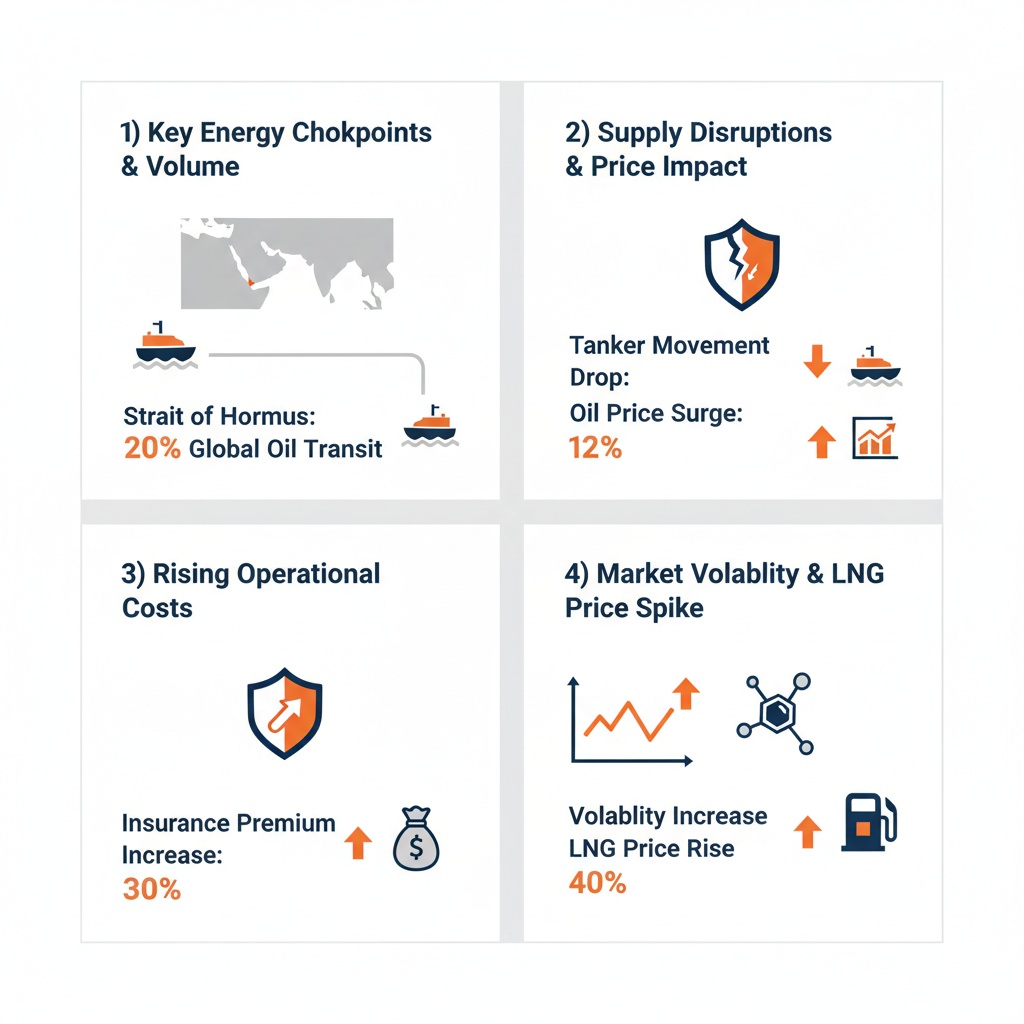
Infographic Image: Geopolitical Risks and Investment Volatility in the Global Energy Sector
This analysis aims to examine how geopolitical conflicts disrupt energy flows, induce price volatility, and reshape the investment risk landscape within the energy sector. It focuses on recent geopolitical flashpoints, such as the Strait of Hormuz incidents and broader Middle East crises, analyzing their cascading impacts on supply security and market sentiment.
The scope encompasses a multi-layered evaluation, integrating geopolitical event assessment with quantitative market analysis and consideration of macroeconomic factors. Methodologically, the report combines case studies, empirical market data, risk typologies, and investment strategy reviews to provide a comprehensive understanding of the risks and potential mitigation approaches available to investors.
1. Geopolitical Drivers of Risk in the Energy Sector
The energy sector remains exceptionally vulnerable to geopolitical tensions, with conflicts in strategic regions exerting profound influences on global supply chains, market stability, and pricing mechanisms. Among these, the Middle East and, in particular, maritime chokepoints such as the Strait of Hormuz stand as critical flashpoints that shape not only regional security but also global energy dynamics. Control, disruption, or threat to these vital corridors disproportionately amplify systemic risks, reverberating across economies and directly affecting the flows of oil, natural gas, and refined products. Understanding these geopolitical drivers is essential to grasp how energy investment environments are contorted by uncertainties that emanate far beyond traditional market factors.
Recent years have highlighted the intersection of prolonged conflicts, military escalations, and fragile political landscapes that have challenged the robustness of energy supply chains. This turbulence has been exemplified by episodes such as the military engagements between the United States and Iran, intermittent hostilities around the Gulf Cooperation Council (GCC) states, and transnational tensions involving Iraq, Syria, and Yemen. Each incident serves as a catalyst for heightening supply interruption risks and price volatility, underscoring the strategic vulnerability embedded in concentrated energy infrastructures. The criticality of maritime routes, regional political fragmentation, and escalating security concerns in these areas collectively form the foundational context shaping geopolitical risk in the energy sector today.
Specific Geopolitical Conflicts Impacting Energy Flows: The Case of the Strait of Hormuz and Middle East Crises
The Strait of Hormuz, a narrow but vital maritime corridor between Oman and Iran, functions as the lifeblood of the global oil market, channeling roughly 20% of the world’s seaborne oil trade. In 2026, military confrontations between U.S. and Iranian forces, including a notable incident on May 5th, dramatically underscored the strait's geopolitical risk. This conflict not only heightened fears of a complete blockade but also triggered a sharp escalation in international oil prices, reflecting the market’s sensitivity to supply chain interruptions. At peak tension, Brent crude surged by over 6%, reaching near $115 per barrel, a direct manifestation of disrupted confidence in the uninterrupted flow of energy commodities through this chokepoint. The strategic calculus of both state and non-state actors around Hormuz has created an environment where even the threat of conflict can disrupt maritime operations, leading to insurance premium spikes and rerouting costs that exacerbate market uncertainties.
Beyond the Strait of Hormuz, Middle Eastern geopolitical crises continue to undermine energy flows through their compounded regional effects. For instance, the ongoing tensions within Gulf countries, the protracted struggle in Yemen, and the complex Syrian conflict have each contributed to systemic vulnerabilities. These crises impact pipelines, port operations, and refinery capacities, further constraining supply. Qatar’s Liquefied Natural Gas (LNG) exports, which also partially transit the Strait of Hormuz, exemplify this risk; reported disruptions in LNG tanker movements have raised alarms of a potential global gas supply crunch, notably affecting Asian markets heavily reliant on Qatari LNG. The political instability intensifies risk premiums levied on oil and gas shipped via Middle Eastern routes, creating unpredictable price shifts that ripple globally.
Moreover, the Middle East’s multipolar geopolitical environment, where traditional alliances face strains and emergent regional powers assert influence, compounds the complexity of energy security. The divergence in political objectives across GCC members such as Saudi Arabia, the UAE, and Qatar manifests in inconsistent energy and security policies, often fueled by rivalries with Iran. These dynamics extend to frequent diplomatic realignments, intermittent border skirmishes, and proxy conflicts, all contributing to a broader geopolitical haze that underlies uncertainty in energy supply commitments and strategic investments.
Supply Chain Vulnerabilities and Price Volatility Attributable to Conflicts
Geopolitical conflicts in the Middle East region translate into tangible disruptions across critical nodes of the energy supply chain. The compounded effects include direct damage to production facilities and infrastructure, intermittent closures of maritime routes, and increased operational risks for transportation networks. Data from early 2026 reveal a discernible decline in the throughput of oil shipments via the Strait of Hormuz, with satellite tracking indicating a sharper reduction of tanker movements by approximately 12% compared to previous quarters. This contraction directly correlates with insurance cost hikes—marine cargo insurance premiums surged by up to 30%, reflecting heightened risk perception—and delays in shipments, which cumulatively strain refinery inputs globally.
| Disruption Source | Effect | Region |
|---|---|---|
| Military Confrontation | Reduced oil shipments by 12% | Strait of Hormuz |
| Political Instability | Increased risk premiums | Qatar and GCC |
| Regulatory Changes | Delays in shipments | Global |
Overview of disruptions affecting energy supply chains due to geopolitical tensions.
The repercussions on oil prices are immediate and volatile. Price spikes in oil futures markets frequently corresponded with spikes in military tensions around these geopolitically sensitive sites. For example, the May 2026 clashes occasioned a rapid price surge, illustrating a market highly reactive not only to physical disruption but to the uncertainty surrounding potential escalations. This volatility transcends purely short-term market shock and feeds into longer-term risk premiums embedded in contracts and hedging instruments. Historical comparisons show that persistent instability in the region causes price volatilities to increase twofold compared to periods of relative calm, which complicates forecasting and investment planning in energy sectors.
Furthermore, natural gas supply chains have equally suffered from conflict-induced vulnerabilities. LNG shipment interruptions, particularly those originating from Qatar, which accounts for nearly 20% of global LNG exports, have intensified price fluctuations in Asian and European gas markets. The confluence of high demand and constrained supply due to geopolitical risks has driven LNG spot prices upward by approximately 40% in key markets, compounding inflationary pressures worldwide. This interplay between geopolitical tension and energy price variability creates a feedback loop where market participants adjust positions rapidly, heightening overall instability.
Lastly, the interconnectedness of global energy supply chains means that localized conflicts have disproportionate systemic effects. Delays and detours caused by conflicts in maritime corridors lead to increased transit times and freight costs. For instance, alternative shipping routes around the Cape of Good Hope, while viable, introduce delays of up to 10 days and additional shipping expenses amounting to several millions of U.S. dollars per voyage for major crude carriers. Such operational adjustments translate upstream into increased commodity prices and downstream into sector-wide inflationary pressures, ultimately affecting producers, consumers, and investors alike.
Strategic Importance of Key Maritime Routes and Regional Political Landscapes
Maritime routes in the Middle East, particularly the Strait of Hormuz, Bab el-Mandeb, and the Suez Canal, form the backbone of global energy logistics. Their geographical locations render them highly susceptible to political contestation and military threats. The Strait of Hormuz, spanning only 39 kilometers at its narrowest point, presents a significant chokepoint through which approximately 21 million barrels per day (mbpd) of oil transit, representing around 20% of global seaborne crude oil trade. The confined physical space means that any military action, or even the threat thereof, is capable of paralyzing global oil flows, triggering immediate supply chain interruptions.
The Bab el-Mandeb Strait, located between Yemen on the Arabian Peninsula and Djibouti and Eritrea in the Horn of Africa, is another critical artery facilitating energy shipments primarily to European and U.S. markets. This route has increasingly suffered from spillover effects of regional insurgencies and piracy, particularly connected to the Yemeni civil war and increased activity of the Houthi rebels, whose missile and drone attacks on commercial vessels have heightened navigational risks and insurance costs. The growing volatility in this corridor amplifies energy supply risks by restricting access and complicating scheduling for shipment operators.
Politically, the Middle East’s fragmented landscape, characterized by the divergence between Gulf Cooperation Council states, Iranian ambitions, and other regional actors such as Turkey and Iraq, manifests in complex power struggles that directly affect energy infrastructure security. For example, Iran’s assertion of military presence and attempts to exert control within the Strait of Hormuz exemplify a strategic effort to leverage control over energy flows as an element of geopolitical influence. Meanwhile, GCC states, backed by the U.S. and European allies, invest heavily in naval assets and regional security cooperation to safeguard these shipping lanes, underscoring the high stakes attached to maritime security.
The combined effect of these strategic imperatives and political rivalries leads to an environment where maritime routes cannot be considered merely transit passages but rather theaters of geopolitical contestation. This elevates the risk profile of global energy supply chains and impacts how energy markets assess the reliability of physical routes and related logistical infrastructures. The uncertainty surrounding freedom of navigation in these waters raises the economic costs of security and insurance and compels nations and corporations to reconsider supply diversification and strategic stockpiling as adaptive strategies to mitigate potential disruptions.
2. Investment Risks and Market Implications Stemming from Geopolitical Tensions
In an era marked by escalating geopolitical tensions, particularly in vital energy-producing regions, the directly observable effects on investment risk profiles have intensified considerably. While geopolitical incidents disrupt supply chains and induce price shocks at the source, their reverberations through financial markets translate into multifaceted investment risks for stakeholders in the energy sector. Understanding how these geopolitical dynamics concretely manifest in volatility patterns, regulatory flux, currency fluctuations, and macroeconomic disruptions is essential for investors striving to maintain resilience amid uncertainty. This section bridges the foundational geopolitical causes explored previously with their tangible consequences on market risk landscapes, offering a nuanced understanding of the intricate interplay between geopolitical events and investment performance.
As energy markets are inextricably linked with global economic and political structures, investment risks spawned from geopolitical instability do not arise in isolation. Instead, they are compounded by concurrent macroeconomic variables such as inflationary pressures, shifts in interest rates, and trade policy adaptations. These elements dynamically interact to reshape valuations, cause abrupt shifts in investor sentiment, and recalibrate risk premia. Analyzing quantitative indicators—including volatility indices and currency exchange movements—within this context reveals the breadth and depth of risk exposure experienced by energy investors. By dissecting these risk dimensions, the present analysis empowers stakeholders to comprehend investment volatility as an evolving phenomenon shaped by both external political events and internal economic feedback loops.
Key Investment Risks Emerging from Geopolitical Tensions
Geopolitical disturbances in critical energy corridors and producing regions inevitably translate into a constellation of investment risks. Foremost among these is heightened price volatility. As demonstrated in the surge of crude oil prices during recent Middle East tensions, the mere anticipation of supply disruptions in strategic chokepoints such as the Strait of Hormuz triggers abrupt price spikes and intensified market gyrations. For instance, Brent crude prices rose from $108 pre-conflict to $115 during conflict, before settling at $110 post-conflict, highlighting the pronounced sensitivity of oil markets to military engagements. This elevated volatility directly affects energy asset valuations, increasing the cost of capital for projects and heightening uncertainty over future cash flows. Investors consequently face greater challenges in forecasting returns, with risk premiums often swelling to reflect geopolitical risk exposures [Chart: Oil Price Surge During Geopolitical Conflicts].
Supply disruption risk remains a principal concern. Physical interruptions to oil and gas shipments – whether actual or threatened – introduce acute uncertainty into the short-term availability of commodities. For instance, the Iran conflict-related naval incidents and blockades have escalated risk premiums as market participants price in the potential for sudden outages. Such disruptions not only affect upstream producers but also cascade downstream, impacting refining, distribution, and consumption sectors, compounding operational risks that can erode investor confidence and depress asset prices.
Alongside physical risks, regulatory and policy uncertainty exerts growing influence on investment calculus. Geopolitical tensions often precipitate rapid shifts in government policies, sanctions, tariffs, and environmental regulations, all of which reshape the legal and operational frameworks in which energy assets function. Recent episodes of sanctions targeting entities related to Iranian energy sectors have demonstrated how unpredictable policy alterations can resize market opportunities and increase compliance costs, effectively transforming the risk-return profile of investments. This regulatory fluidity introduces a layer of political risk distinct from supply concerns but equally detrimental if unanticipated.
Currency risk further complicates the investment environment. As geopolitical instability affects exchange rates, particularly of commodity-linked currencies and emerging market currencies, investors with international exposures face amplified currency fluctuations. For example, the US dollar, traditionally viewed as a safe haven, strengthened amid recent geopolitical frictions, which, while benefiting dollar-denominated asset holders, pressured dollar-pegged liabilities and foreign currency revenue streams. Such movements exacerbate translation risk and transactional risk, demanding careful hedging considerations in portfolio management.
Macroeconomic Impacts Shaping the Energy Investment Landscape
The macroeconomic environment forms a critical backdrop against which geopolitical-induced investment risks unfold. Inflationary pressures, often fueled by rising energy prices amid supply concerns, have become a dominant factor in the global economic context. Increasing energy costs elevate production and transportation expenses across industries, contributing to broader consumer price inflation. This inflationary environment can compress real returns on fixed-income investments and force central banks to adjust monetary policies, introducing further uncertainty into financial markets.
Interest rate dynamics, tightly linked to inflation and central bank actions, significantly influence the cost of capital for energy projects. Rising interest rates increase financing costs, thereby reducing net present values of long-term infrastructure and production investments. Recent data reflecting central banks’ cautious yet tightening stances in response to geopolitical supply shocks highlight the delicate balance policymakers must maintain between curbing inflation and supporting economic growth. For energy investors, interest rate volatility often translates into fluctuating discount rates that directly affect project valuations and financing structures.
Trade policies, frequently impacted by geopolitical considerations, also bear on energy sector performance. Escalating tariffs and sanctions can distort supply chains and increase commodity costs. For example, restrictions on oil exports or on the acquisition of technology crucial for energy infrastructure development can hinder project timelines and inflate capital expenditures. Moreover, protectionist policies may disrupt global energy demand patterns and force shifts in regional energy sourcing strategies, thereby altering market fundamentals and investment opportunities.
Collectively, these macroeconomic variables act as amplifiers or dampeners to the core investment risks derived from geopolitical tensions. The interplay among inflation, interest rates, and trade policies creates a fluid environment where energy prices and asset valuations react not only to immediate political risks but also to the broader economic consequences of these risks.
Quantitative Indicators Reflecting Market Volatility and Investor Behavior
Empirical data substantiate the profound effects geopolitical tensions exert on market volatility and investor behavior within the energy sector. Volatility indices tracking energy commodities have repeatedly spiked in tandem with geopolitical incidents, a recent example being the surge in crude oil market volatility during escalations around Iran which reached levels 40% above the trailing five-year average (d25). These volatility spikes signal increased risk perceptions among investors and heightened uncertainty regarding supply stability.
Investor sentiment, as measured by market flows and implied volatility metrics, demonstrates a clear flight toward safety during periods of geopolitical stress. The May 2026 global market retreat documented in recent trading sessions reflects a palpable pivot away from riskier asset classes toward defensive sectors and safe-haven assets, such as government bonds and the U.S. dollar (d4). Within energy investments, this shift manifests as a preference for upstream producers with strong balance sheets and limited geopolitical exposure, while more vulnerable downstream or geographically concentrated assets tend to suffer valuation pressure.
Currency movements further quantify risk transmission from geopolitical shocks. The strengthening of the U.S. dollar during times of Middle East conflict, increasing roughly 3% within days of heightened escalation, has translated into capital reallocation and raised the relative cost of dollar-denominated energy commodities for non-U.S. buyers (d2). Such currency volatility materially impacts cash flows, especially for investors holding foreign assets without effective hedging mechanisms.
Trading volumes and open interest in derivative instruments like oil futures have also surged amid growing uncertainty, underscoring investors’ heightened hedging activity and speculative positioning. This increased market participation enhances liquidity but simultaneously can exacerbate short-term price swings, reinforcing the cyclical nature of geopolitical risk-driven volatility. Stress testing, value-at-risk (VaR) models, and scenario analyses routinely incorporate these quantitative signals to better forecast downside risk and inform decision making under uncertainty.
3. Risk Management and Strategic Investment Approaches in a Geopolitically Volatile Energy Market
In the contemporary energy landscape, geopolitical volatility has emerged as a defining variable that intensifies investment uncertainties and market turbulence. Building upon the analysis of risks stemming from geopolitical tensions and their direct influence on energy investments, it is imperative to shift focus towards actionable frameworks and strategic approaches that investors can adopt to safeguard and enhance portfolio resilience. While the energy sector remains exposed to a multifaceted risk environment—ranging from supply disruptions and price volatility to regulatory shifts—investors are increasingly recognizing that traditional reactive strategies are insufficient. Instead, a proactive, multifaceted risk management paradigm integrating diversification, technology adoption, and alignment with global energy transition trends is essential to navigate this complexity effectively.
This section illuminates the sophisticated tools and methodologies that underpin a robust response to geopolitical risks in energy investments. It draws on recent empirical insights and best practices to unpack portfolio diversification techniques tailored to energy assets, the strategic incorporation of renewable energy as a geopolitical risk hedge, and the deployment of cutting-edge technological, policy, and market instruments aimed at enhancing sectoral resilience and mitigating volatility. By translating complex risk dynamics into pragmatic investment strategies, this discourse offers a compelling blueprint for investors aspiring to balance growth with durability amid the flux of global geopolitical developments.
Portfolio Diversification and Risk Mitigation Techniques Tailored for Energy Investments
A cornerstone of effective risk management in a geopolitically volatile energy market is the implementation of strategic portfolio diversification specifically adapted to the unique characteristics of energy assets. Unlike conventional asset classes, energy investments are deeply intertwined with geopolitical risk factors, such as supply chokepoints, export embargoes, and sanctions regimes, which create asymmetric risk profiles and heightened sensitivity to external shocks. Recent analyses have demonstrated that traditional diversification across geographical regions or asset types, while foundational, must be expanded to embrace diversification within energy sub-sectors and contractual structures to achieve meaningful risk mitigation (d13, d14).
Investors are advised to construct portfolios that balance exposure between fossil fuels and renewable energy sources, while also incorporating various contract vehicles such as Power Purchase Agreements (PPAs), long-term fixed-price contracts, and flexible pricing arrangements that can dampen price volatility (d1, d13). For instance, a well-diversified energy portfolio may involve a calibrated mix of upstream oil and gas equities, midstream assets with stable cash flows, renewable energy projects with government-backed incentives, and exposure to energy infrastructure funds. Each element contributes distinct risk-return characteristics and geopolitical sensitivities, with renewables typically less exposed to geopolitical hotspots than fossil fuel supply chains, thus acting as a natural hedge within the portfolio.
Moreover, diversification should extend to include intra-renewable asset variety (solar, wind, hydro, battery storage) to reduce weather and technology-specific risks, as well as geographical diversification across stable and emerging markets to leverage local regulatory frameworks and market maturity. This multi-layered diversification strategy reduces idiosyncratic shocks and enhances liquidity options, allowing investors to adjust positions dynamically in response to evolving geopolitical signals (d1, d14, d27). Portfolio rebalancing in response to geopolitical developments ensures alignment with long-term strategic objectives without succumbing to emotional or reactionary trading, a risk highlighted in behavioral finance studies (d3).
Risk mitigation techniques also encompass active hedging through financial instruments such as futures, swaps, and options specifically designed for energy commodities. These instruments enable investors to lock in prices or cap downside risk during episodes of acute geopolitical disruption, such as the Middle East crises that have historically induced price spikes and supply uncertainties (d1, d29). Notably, insurance premiums for marine cargo, a critical component of energy supply chains, have increased sharply—from no increase in Q1 2025 to a 30% rise by Q1 2026—reflecting heightened perceived risks amid escalating geopolitical tensions and signaling additional cost considerations for risk mitigation strategies [Chart: Insurance Premium Increases Amid Geopolitical Risks]. Systematic integration of scenario analysis and stress testing, leveraging geopolitical risk indices and supply disruption probabilities, informs hedging intensity and portfolio reallocation decisions, enhancing preparedness against sudden risk materializations.
The Role of Renewable Energy and Energy Transition as Geopolitical Risk Offsets
The global push towards energy transition and the rapid scaling of renewables fundamentally recalibrate the geopolitical risk profile of energy investments. Unlike fossil fuels, whose extraction and trade are highly concentrated in geopolitically sensitive regions such as the Middle East and Russia, renewable energy sources are more geographically dispersed and less dependent on cross-border supply chains. This inherent characteristic positions renewables as critical instruments to offset systemic geopolitical vulnerabilities within energy portfolios (d13, d18, d33).
Recent geopolitical shocks have underscored the fragility of fossil fuel supply routes, driving investor and policymaker interest in the accelerated adoption of renewable energy as a means of enhancing energy sovereignty and stability. For example, the political and military tensions affecting the Strait of Hormuz have amplified concerns about oil supply security, prompting diversification into renewables and low-carbon technologies from the Middle East and Gulf Cooperation Council (GCC) countries themselves, which are investing heavily in solar, nuclear, and hydrogen projects to diversify their energy economies and reduce export dependency (d9).
From an investor’s perspective, aligning portfolios with the energy transition agenda not only mitigates exposure to fossil fuel geopolitical risk but also capitalizes on policy incentives and emerging technologies that benefit from government support aimed at carbon neutrality targets. Investments in renewable infrastructure, battery storage, green hydrogen, and associated digital infrastructure have demonstrated resilience amid geopolitical uncertainty due to their localized generation profiles and lesser price volatility compared to hydrocarbons (d1, d9, d14). Moreover, the diversification offered by renewables reduces the risk of stranded assets, a growing concern as regulatory regimes tighten in response to climate commitments.
However, it is essential to acknowledge that renewables are not immune to geopolitical influences, as key components such as critical minerals and technology supply chains are concentrated in certain countries. Therefore, geopolitical risk management within the renewable segment requires careful evaluation of supply chain vulnerabilities and investment in circular economy practices, resource recycling, and strategic partnerships to secure materials like lithium, cobalt, and rare earth elements (d9, d30). This nuanced understanding enables investors to optimize the stabilizing role of renewables within broader energy portfolios.
Technology, Policy, and Market Tools for Resilience and Volatility Management
The convergence of advanced technologies, evolving policy frameworks, and innovative market mechanisms is reshaping the toolkit available to investors for managing geopolitical risks and market volatility in energy investments. A hallmark of contemporary risk management is the integration of real-time data analytics and AI-driven monitoring platforms that provide early warning signals of geopolitical events, supply chain disruptions, and price shifts, thereby enabling agile portfolio adjustments and risk hedging (d27, d28, d34).
Technological advancements in energy storage, grid management, and smart infrastructure play a dual role: enhancing operational resilience and enabling flexibility to absorb shocks from geopolitical crises. For example, the deployment of large-scale Battery Energy Storage Systems (BESS) allows for smoothing intermittent renewable generation and mitigating supply-demand imbalances that might otherwise exacerbate price volatility during geopolitical supply shocks (d1, d14). Similarly, smart grids facilitate rapid response to system disturbances and optimize distributed energy resources, thereby reducing dependency on vulnerable centralized fossil fuel infrastructures.
Policy instruments, both domestic and international, provide vital scaffolds for risk mitigation. Investors benefit from jurisdictions with clear regulatory frameworks, stable incentive structures, and transparent governance, which reduce policy uncertainty—a core risk exacerbated by geopolitical shifts (d9, d39). Moreover, multilateral cooperation mechanisms, such as strategic petroleum reserves coordination, joint energy infrastructure development, and standardized cross-border regulations for renewables and hydrogen trade, help buffer the energy system against geopolitical shocks. Understanding and participating in these policy ecosystems allow investors to anticipate regulatory shifts and align strategies accordingly.
Market-based solutions, including Power Purchase Agreements (PPAs), carbon pricing mechanisms, and insurance products, enable tailored risk management at the transactional level. Flexible PPA contracts that blend renewable and fossil fuel sources provide pricing stability and physical energy delivery guarantees, helping to insulate investors from acute geopolitically driven price spikes (d1, d40). Concurrently, the emergence of green finance instruments such as sustainability-linked loans, transition bonds, and risk-sharing facilities catalyzes investment flows into resilient and sustainable energy projects, contributing to systemic risk dilution over time.
Finally, scenario planning and stress-testing have become indispensable for embedding geopolitical risk considerations into investment decision-making. Utilizing geopolitical risk indices, alongside sophisticated modeling of conflict, trade disruptions, and regulatory shifts, allows investors to quantify potential impacts on asset values and cash flows under diverse contingencies, guiding strategic capital allocation and hedging practices (d27, d28). Coupled with continuous monitoring and adaptive governance frameworks, this approach empowers investors to proactively manage volatility and safeguard portfolio robustness in an era defined by geopolitical flux.
Conclusion
The interplay between geopolitical instability and energy markets results in a heightened and evolving risk environment that demands vigilant attention from investors. The analysis demonstrates that supply disruptions, price volatility, regulatory flux, and broader macroeconomic variables converge to create significant challenges for energy investment portfolios. These factors not only complicate valuation and forecasting but also influence investor behavior and capital allocation decisions.
Consequently, proactive risk management strategies become indispensable. Portfolio diversification, particularly the inclusion of renewable energy assets, offers a buffer against geographically concentrated geopolitical risks, while technological innovations and tailored financial instruments provide additional layers of protection. Furthermore, continuous monitoring, scenario planning, and alignment with supportive policy frameworks will be crucial for maintaining resilience.
Looking ahead, further research should focus on the dynamic evolution of geopolitical hotspots, the integration of emerging energy technologies, and the role of policy coordination in mitigating systemic risks. Understanding these evolving dimensions will enable investors to better anticipate and adapt to the geopolitical risk landscape, safeguarding investments and promoting stability within the global energy sector.
Glossary
- Strait of Hormuz: A narrow maritime corridor between Oman and Iran, critical for global oil trade as it channels about 20% of the world’s seaborne oil. It is a strategic chokepoint whose disruption can significantly impact global energy supply and prices.
- Geopolitical Risk: The risk of losses or disruptions in markets or investments arising from political instability, conflicts, or tensions between countries or regions that affect trade, supply chains, or regulatory environments.
- Price Volatility: The frequency and magnitude of price fluctuations in energy commodities like oil and gas, often exacerbated by geopolitical events leading to uncertainty in supply and demand.
- Supply Chain Disruption: Interruptions in the production, transportation, or delivery of energy resources caused by geopolitical conflicts, infrastructure damage, or political instability, affecting availability and market stability.
- Geopolitical Tensions in the Middle East: Ongoing conflicts, rivalries, and political instability among countries in the Middle East region, including U.S.-Iran clashes, Gulf Cooperation Council (GCC) dynamics, and conflicts in Yemen and Syria, significantly affecting global energy flows.
- Gulf Cooperation Council (GCC): A political and economic alliance of six Middle Eastern countries (Saudi Arabia, UAE, Qatar, Kuwait, Bahrain, and Oman) with important roles in regional energy production and geopolitical dynamics.
- Liquefied Natural Gas (LNG): Natural gas cooled to a liquid state for ease of storage and shipment, with key exporters like Qatar relying on vulnerable maritime routes such as the Strait of Hormuz.
- Investment Risk: The potential for financial loss or lower-than-expected returns due to factors such as market volatility, supply disruptions, regulatory changes, currency fluctuations, and geopolitical instability affecting energy assets.
- Portfolio Diversification: An investment strategy that spreads exposure across various asset types, geographic regions, and energy sub-sectors (including renewables) to mitigate risks arising from geopolitical uncertainties.
- Renewable Energy: Energy derived from resources that are naturally replenished, such as solar, wind, hydro, and hydrogen, offering a lower geopolitical risk profile compared to fossil fuels due to geographic dispersion and reduced supply chain vulnerabilities.
- Price Risk Premium: Additional returns demanded by investors to compensate for heightened uncertainty and price volatility caused by geopolitical tensions impacting energy markets.
- Currency Risk: The risk that fluctuations in exchange rates, influenced by geopolitical events, affect the value of investments, revenues, or liabilities denominated in foreign currencies.
- Marine Cargo Insurance Premium: The cost paid by shippers to insure cargo transported by sea, which increases during geopolitical tensions due to elevated risks of disruption or attack along critical maritime routes.
- Power Purchase Agreement (PPA): A contract between electricity producers and purchasers specifying terms such as price and delivery schedules, used as a risk management tool to stabilize revenue in energy investments.
- Battery Energy Storage System (BESS): Large-scale battery installations that store electrical energy to balance supply and demand, enabling resilience against supply disruptions and price volatility in energy markets.
References
- 호르무즈 해협 긴장이 글로벌 에너지 공급망에 미치는 다면적 영향 분석
- Effective Risk Mitigation Strategies for Market Risk Analysts
- 호르무즈 해협 군사 긴장이 중동 사회에 미치는 다차원적 영향 분석
- 호르무즈 해협 군사 충돌과 국제 유가 급등, 국내 휘발윳값 동향 분석
- fatposglobal
- Trading Strategies | Blackwell
- Resilience & Emergency Management | National Energy System Operator
- Russia and the Development of Arctic Energy Resources 119
- Climate Finance
- Montel | Blog - How to Manage Price Volatility in Energy Markets
- Market Risk Modeling | RMA Blog
- How macroeconomic variables impact sector performance
- Middle East and North Africa: Latest analysis, insights and developments
- Planning Phase | LOTTE CM
- Global Markets Retreat - Friday, May 8, 2026
- Top Risk Management Practices for Energy Investments: Expert Insights
- Conflict in the Middle East and the Impact on the Global Economy
- The Future of Middle East Supply Chains: Navigating Geopolitical Crises and Distribution Scenarios - Australian Institute of International Affairs
- Middle East Conflict Reveals the Vital Role of Renewables in Energy Security - The Renewable Energy Institute
- Energy Security and the Energy Transition: A Classic Framework for a New Challenge | Baker Institute
- 9 Types Investment Risk Every Investor Should Know
- 중동 주요국과의 에너지 협력 전략 연구(26-1-31)/이상림外.에너지경제연구원
- Investing in Volatile Markets: Strategies for Uncertain Times
- 국회도서관 국가전략포털
- Oil Industry Surges on Iran War Tensions as Global Markets Brace for Volatility
- 7 Ways to Invest in Energy in a Changing Landscape
- Why global energy volatility is becoming the world’s next crisis | News.az
- How To Manage Fluctuating Raw Material Prices
- Energy Security Returns to the Forefront as a Prolonged U.S.-Iran War Forces a Global Energy Reset - African Energy Chamber
- Currency Risk Analysis for Equity Analysts
- Energy Investment Risk → Term
- Financial Risk Assessment: Tools and Techniques for Modern Businesses
- Pros and Cons of Investment Funds: A Simple Guide to Their Benefits and Risks
- [PB가 들려주는 재테크 이야기]단기 변동성·중장기 성장성 고려한 분산투자 필요 < 경제가이드 < 경제 < 기사본문 - 경상일보
- 호르무즈 해협 군사 충돌과 국제유가 급등, 그리고 국내 주유소 기름값 현황 분석