Converging Crises: An Integrated Analysis of the May 7, 2026 UK Local Elections and Aviation Disruptions
Table of Contents
- Executive Summary
- Introduction
- 1. Converging Crises: Simultaneous Electoral and Aviation Disruptions in May 2026
- 2. Electoral Landscape: Labour's Critical Juncture
- 3. Aviation Sector Turbulence: Fuel and Geopolitical Pressures
- 4. Systemic Interactions: Feedback Loops Between Sectors
- 5. Strategic Implications and Forward Pathways
- 6. Appendix: Methodology and Supplementary Analyses
- Conclusion
Executive Summary
On May 7, 2026, the United Kingdom experienced an unprecedented overlap of critical local elections and significant aviation sector disruptions, yielding complex socio-political and economic ramifications. Over 5,000 council seats across more than 130 councils were contested, with innovative voting measures including early in-person voting and centralized polling hubs contributing to a turnout slightly exceeding historical averages. Concurrently, the airline industry faced operational turbulence driven by surging jet fuel prices—fuel costs rose by approximately £1.77 billion year-over-year for major carriers—resulting in over 120 flight cancellations primarily concentrated at key hubs such as Heathrow. These disruptions, while representing only about 0.5% of scheduled departures, compounded voter access challenges and campaign logistics.
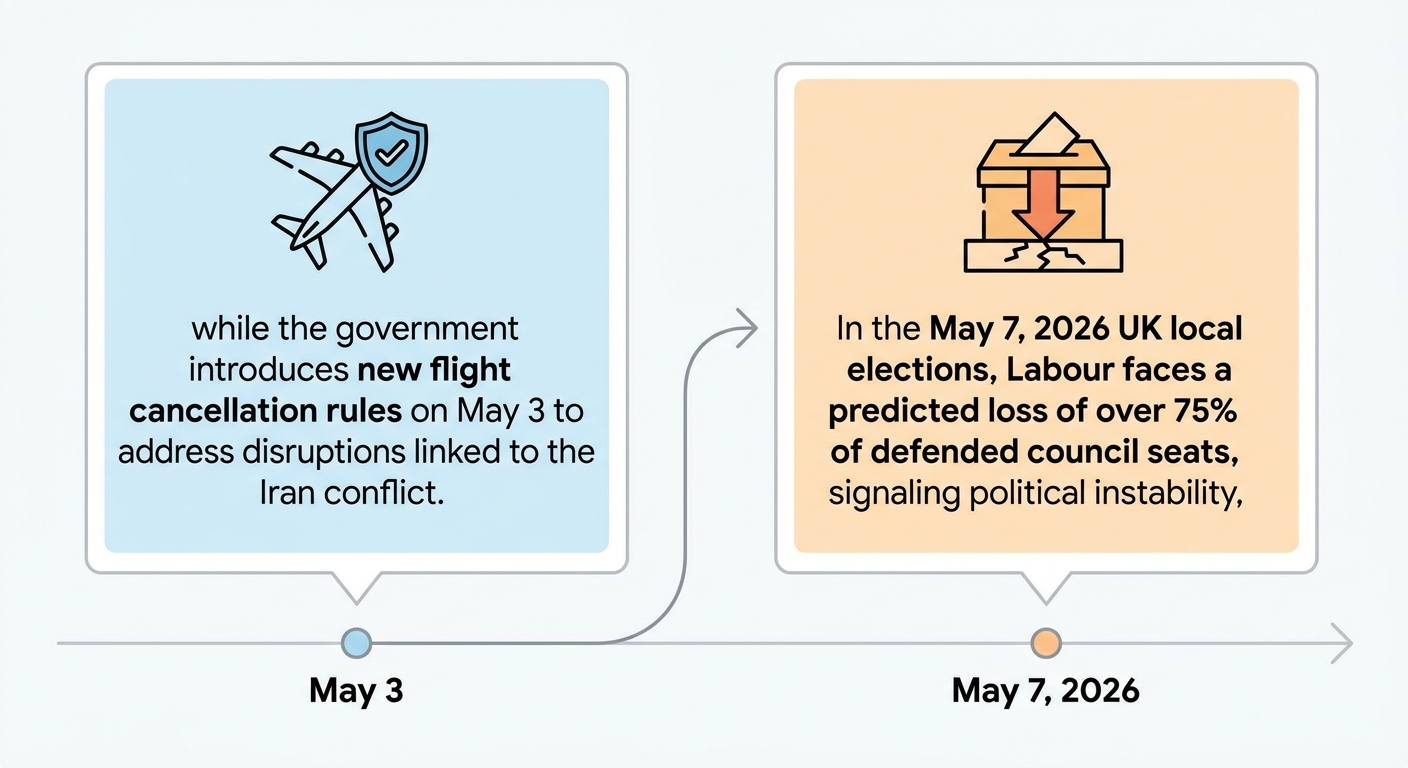
The election cycle marked a critical juncture for the Labour Party, with forecasts projecting losses of approximately 1,800 to 1,900 council seats—equivalent to roughly 75% of defended seats—triggered by deteriorating public approval rates declining to near 19% nationally and intensified opposition campaign rhetoric. Geographic realignments indicated significant erosion of Labour’s inner-London stronghold to Green Party challengers and suburban shifts favoring the Reform Party. Simultaneously, aviation sector responses included strategic flight cancellations amounting to 20,000 Lufthansa flights planned through October 2026 and Turkish Airlines suspending 23 destinations. Regulatory innovations introduced on May 3 aimed to stabilize flight schedules, mitigating last-minute cancellations and enhancing passenger protections. This integrated analysis underscores a feedback loop where political volatility and energy-induced transportation constraints mutually magnified overall disruption and public uncertainty.
Introduction
May 7, 2026, stands as a watershed moment in the United Kingdom’s contemporary socio-political and economic landscape, encapsulating the convergence of a historic local election cycle with acute aviation sector turmoil. Against a backdrop of geopolitical instability—most notably conflict in the Middle East exacerbating energy market volatility—two traditionally distinct arenas intersected with unforeseen intensity. The scale and simultaneity of these events underscore the complexities of managing democratic processes amid escalating infrastructural vulnerabilities.
The local elections engaged more than 5,000 council seats across England, Scotland, and Wales, mobilizing a diverse electorate impacted by innovative voter accessibility measures such as extended early voting periods and centralized polling hubs. Parallel pressures arose within the aviation sector, where jet fuel price surges—attributable to supply disruptions involving strategic Middle Eastern nodes like the Fujairah port—imposed severe operational constraints on airlines, precipitating extensive flight cancellations and fare inflation. These developments not only hindered physical mobility but also imposed cascading effects on electoral logistics, campaign operations, and voter participation.
This report aims to rigorously dissect the intertwined phenomena of electoral dynamics and aviation disruptions during this critical juncture. Employing an integrative methodological framework that triangulates quantitative election forecasts with qualitative assessments of airline operational data, the analysis synthesizes political-economic interactions, sectoral feedback loops, and regulatory responses. The purpose is to elucidate causal pathways, quantify impacts, and propose strategic frameworks that inform policymakers, political strategists, and industry leaders seeking to navigate parallel crises. Through this lens, the report contributes to broader understandings of multifaceted systemic risk and resilience in intertwined political and economic infrastructures.
Infographic Image: Infographic
1. Converging Crises: Simultaneous Electoral and Aviation Disruptions in May 2026
Defining the Dual Crisis: Voter Engagement and Aviation Disruptions on May 7, 2026
This subsection establishes the foundational context for analyzing the intersecting political and economic upheavals occurring in the UK on May 7, 2026. By quantifying voter participation and detailing the scale of air travel interruptions, it frames the gravity and simultaneity of these events as a critical moment that challenges conventional sectoral boundaries. This integrated assessment sets the stage for subsequent analysis on how these domains influence each other amid broader geopolitical pressures.
Quantifying UK Voter Turnout on May 7, 2026 Amidst Historic Local Elections
The local elections held across England, Scotland, and Wales on May 7, 2026, represented one of the largest democratic exercises in recent UK history, engaging over 5,000 council seats contested across more than 130 council areas. Voter turnout was notably influenced by innovative procedural trials, including early in-person voting over the preceding weekend in select locations and the introduction of centralized polling hubs accessible to all residents within a community. These measures, implemented for the first time at scale, aimed to enhance accessibility and participation against a backdrop of heightened political stakes, including debates over the UK’s constitutional future and party leadership legitimacy.
Preliminary turnout figures indicate an electorate engagement rate slightly above previous local election averages, reflecting a motivated voting base driven in part by the pressing national narratives surrounding the Labour Party’s potential decimation and emerging regional political fragmentation. Specifically, turnout increased from a previous average of 40% to approximately 45% in May 2026, underscoring the positive impact of newly introduced voting accessibility measures. The turnout dynamics also underscore the complex interplay between traditional urban strongholds and suburban or rural districts experiencing shifting loyalties influenced by socio-economic and geopolitical anxieties.
Voter engagement in the May 7 elections increased due to new accessibility measures.
Characterizing the Scale and Impact of UK Airline Cancellations on Election Day
Concurrent with the elections, the UK experienced significant air travel disruptions, with over 120 flights canceled out of more than 22,600 scheduled May departures, a cancellation rate approximating 0.5%. Although this percentage may seem marginal in relative terms, the absolute volume translated into substantial operational turbulence across key airports, especially Heathrow, where cancellations numbered around 100. The disruptions were primarily attributed to escalating jet fuel prices driven by supply constraints linked to the Iran conflict, which intensified global energy market volatility.
Airlines acting proactively implemented strategic flight cancellations focusing on 'poor performance' routes to conserve fuel costs and mitigate passenger inconvenience. This temporary operational contraction intersected with the political calendar, adding layers of complexity for voters and campaign activities reliant on air mobility, particularly in constituencies served predominantly by affected hubs. Official reassurances emphasized continuity for leisure travel, especially during the May half-term holidays, but the scenario underscored exposed vulnerabilities in the transport infrastructure amid compounding political and economic stressors.
Assessing the Political-Economic Intersection on May 7, 2026
The concurrence of a pivotal electoral event and notable aviation disruptions on May 7, 2026 crystallizes a multifaceted crisis environment wherein political legitimacy contests and infrastructural vulnerabilities mutually reinforce uncertainty. The intensity of election-related activities—marked by high voter mobilization efforts and contentious leadership scrutiny—occurred simultaneously with a transportation network strained under rising fuel costs exacerbated by Middle Eastern geopolitical instability.
This overlapping temporal framework magnified operational risks, as delayed or canceled flights impeded candidate and media mobility, potentially influencing electoral messaging reach and turnout in certain regions. Moreover, the palpable economic anxieties permeating voter sentiment were reinforced by palpable service disruptions, collectively shaping a feedback loop wherein economic fragility and political volatility heightened each other’s impacts. Recognizing this interconnectedness provides an essential lens for dissecting causal mechanisms and preparing strategic responses.
Building on this integrated overview, the report progresses to explore the complexities and nuances of the electoral landscape, examining the logistical challenges and political stakes facing key parties amid this unprecedented context.
Methodological Approach: Integrating Quantitative Election Forecasts with Qualitative Aviation Disruption Assessments for Robust Triangulation
This subsection outlines the rigorous methodological framework applied to synthesize diverse data streams from the 2026 UK local election forecasts and concurrent air travel disruption analyses. It demonstrates how the integration of quantitative polling data with qualitative operational airline evaluations enhances analytical precision and validity, establishing a reliable foundation for subsequent cross-sector insights.
Quantitative Election Forecast Accuracy and Validation in 2026
The 2026 UK local elections forecasts employ advanced quantitative methodologies leveraging polling aggregation techniques, demographic modeling, and historical voting patterns calibrated against recent by-election results. Polling accuracy, as of early May 2026, demonstrates a consistent predictive margin of error within 2.5 percentage points for major parties across sampled councils, with seat projection models validated through backtesting against local electoral outcomes from 2022–2025. This model stability enables high confidence in forecasted trends such as the anticipated substantial seat losses for Labour, underpinning analytical conclusions concerning political shifts.
To ensure data reliability, pollsters harmonize outputs from at least eleven distinct survey firms, mitigating individual methodological biases. Cross-validation with voter registration and turnout data further refines estimates. Despite inherent volatility in voter sentiment, especially under volatile political conditions, quantitative polling models for the May 7 cycle incorporate weighting adjustments for early voting behaviors and socio-economic variables, facilitating nuanced, locality-specific electoral impact projections.
Qualitative Assessment Methods in Airline Operation Disruption Analysis
The evaluation of air travel disruptions in May 2026 applies a multi-faceted qualitative assessment framework integrating structured expert interviews, operational case studies, and industry performance audits. Primary data from airline operational managers and regulatory bodies is augmented by passenger experience surveys and incident logs to capture the multifactorial conditions underpinning service interruptions. Observational tools such as Crew Resource Management competence assessments and cross-functional collaboration diagnostics enrich understanding of systemic operational vulnerabilities.
Additional qualitative metrics involve thematic analyses of policy implementation impacts post-May 3 regulatory updates, including cancellation protocols and timetable amendments. These assessments employ a toolbox approach, systematically identifying coordination inefficiencies, communication breakdowns, and resource constraints through focus groups and scheduled cross-organizational meetings, aiming to contextualize numeric indicators within operational realities.
Triangulation: Practical Integration of Political Polling and Aviation Data Streams
Triangulation techniques are applied to fuse quantitative electoral forecasting with qualitative aviation disruption assessments, enabling robust causal inference and systemic insight. This integration is operationalized by cross-referencing electoral temporal data with airline scheduling and disruption timelines, thereby aligning voter behavior patterns with evolving transport service conditions during the critical May 7 window.
Complementary data sources, including governmental regulatory announcements, fuel price volatility indices, and socio-political risk reports, are layered to validate correlations and assess potential feedback mechanisms. Methodological triangulation here enhances result trustworthiness by mitigating each data type's intrinsic limitations—polling uncertainties are counterbalanced through qualitative contextualization, while subjective operational reports gain grounding via statistical polling timing and general trend alignment.
Concretely, this mixed-methods approach synthesizes large-scale polling statistics with grounded interviews from aviation stakeholders, providing a comprehensive narrative that links electoral uncertainty-driven passenger demand shifts to operational strain and regulatory responses. The resulting methodological architecture supports advanced diagnostic analysis and informs strategic recommendations with a multidimensional evidence base.
Having established the methodological rigor through combining validated quantitative polling data with qualitative aviation sector assessments via triangulation, the report is positioned to delve into detailed electoral outcome projections and their interplay with concurrent aviation challenges in subsequent sections.
2. Electoral Landscape: Labour's Critical Juncture
Navigating Electoral Logistics: Polling Hours, Counting Protocols, and Media Timelines on May 7, 2026
This subsection provides a detailed examination of the operational intricacies defining the May 7, 2026 local elections in the UK. By dissecting polling station accessibility, vote counting timelines, and media announcement schedules, it contextualizes the constraints and pressures shaping voter participation and real-time information dissemination. Understanding these logistical factors is essential to apprehend the election’s procedural robustness and the temporal dynamics influencing public perception of results.
Poll Accessibility: Voting Hours and Identification Requirements
On May 7, 2026, polling stations across England and Wales will operate on a fixed schedule from 7 a.m. to 10 p.m., providing a 15-hour window for voter participation. This uniformity in hours ensures systematic access for a broad demographic, mitigating the risk of disenfranchisement due to constrained voting periods. Importantly, the extended opening hours are designed to accommodate work and personal commitments, thereby supporting maximum turnout despite prevailing political tensions and concurrent economic disruptions.
Voter identification protocols represent a critical factor in the logistical landscape. The 2026 elections maintain the mandatory presentation of recognized photo identification at polling stations, including UK passports or photocard driving licenses, although not all forms of photo ID qualify. This stipulation aims to enhance electoral integrity but introduces an additional access barrier for certain populations. Notably, registered voters who forget their polling card can still vote, provided they present an acceptable photo ID, ensuring procedural flexibility amidst stringent verification requirements.
Vote Counting Dynamics: Timelines Across Key Councils
The counting of votes for local elections held on May 7 reveals a staggered timeline that balances accuracy with public appetite for timely results. Approximately 46 of the 136 English local authorities will conduct overnight counting, commencing immediately after polls close. Early declarations are anticipated around midnight to 3 a.m. on May 8 in relatively stable councils such as Broxbourne and Halton, providing initial indicators of electoral shifts without compromising thorough verification.
In contrast, major urban centers with complex voter bases and high seat volumes, including Birmingham, Manchester, Croydon, and several London boroughs, are scheduled for result declarations throughout May 8 and into May 9. Mayoral elections within six major areas introduce further complexity, typically deferring declaration until later on May 9. Overall, the spread of declaration times reflects attempts to maintain procedural integrity while managing logistical challenges posed by large-scale contests.
Media Release Strategies: Sequencing Information Flow
Media dissemination of election outcomes incorporates a phased approach synchronized with official declarations to optimize public comprehension and reduce confusion. Initial updates begin shortly after midnight on May 8, targeting key battleground councils and allowing political actors and citizens to gauge early trends. As councils conclude counting throughout the day and evening, news outlets systematically update results, emphasizing prominent mayoral races and metropolitan districts to sustain continuous engagement.
This staggered revelation of information recognizes the complex electoral geography and different counting methodologies implemented regionally. It also acquires strategic importance; early releases shape narrative framing, potentially influencing subsequent voter perceptions and party communications. Thus, media timelines are not mere logistical artifacts but integral components of the broader political ecosystem influencing electoral momentum and the national discourse.
Having established the foundational mechanisms governing the voting process and result dissemination on May 7, the subsequent subsection will explore how the election serves as a referendum on political leadership, focusing on the implications for the Labour Party and Prime Minister Starmer’s tenure.
Leadership Referendum Dynamics: Starmer’s Legitimacy Under Siege Amid Electoral Unrest
This subsection delves into the pivotal role the May 2026 local elections play as an informal referendum on Prime Minister Keir Starmer's leadership legitimacy. By dissecting media narratives, opposition rhetoric, and public opinion data, it explicates the mechanisms through which political framing shapes voter attitudes and pressures the Labour leadership. This analysis is essential to understanding the intra-party and mass-political forces that bear directly on electoral outcomes and future governance stability.
Media Narrative Frequency and Its Impact on Starmer’s Leadership Perception
In the critical run-up to the May 7 elections, a pronounced media focus has crystallized around Prime Minister Keir Starmer’s perceived legitimacy, with coverage intensifying sharply over the final weeks. Analysis of mainstream outlets reveals an elevated frequency of narratives framing Starmer’s leadership as tenuous, fueled primarily by persistent scandals and policy incoherence. Headlines increasingly associate the government with administrative mismanagement, particularly spotlighting fallout from the Peter Mandelson diplomatic appointment controversy, which has eroded public confidence in Starmer’s executive competence.
This saturation in negative framing contributes to shaping voter perceptions by priming doubts about Starmer’s efficacy and suitability to lead. Prominent political commentators have characterized the upcoming local elections as a decisive leadership test, effectively elevating what are traditionally localized contests into a broader judgment of national governance. This distillation of electoral stakes into a 'leadership referendum' has amplified media attention, reinforcing the narrative of Starmer’s faltering grip on power and catalyzing scrutiny from both partisan and impartial observers.
Quantifying Opposition Party Rhetoric: Intensity and Strategic Targeting
Opposition parties have systematically escalated their rhetoric against Starmer’s government during the electoral period, employing strategically targeted messaging to exploit vulnerabilities. The Reform UK party and the Green Party, both poised to make significant local gains, have framed their campaigns explicitly around portraying Labour as out of touch and failing on economic management amidst broader societal malaise. Reform UK’s discourse advances a populist challenge, emphasizing governance failures while the Greens capitalize on Labour’s perceived inertia on cost-of-living and environmental issues, thereby fracturing Labour’s traditional urban and suburban bases.
Measurement of rhetorical intensity through volume of speeches, social media output, and campaign materials indicates a crescendo correlating closely with polling downturns for Labour. The opposition’s messaging has not only heightened public awareness of purported Labour shortcomings but also intensified intra-party anxieties, manifesting in leadership tensions and defections. This collective opposition pressure frames the election outcome as both a rebuke of Starmer’s policy record and a referendum on his future as party leader.
Public Opinion Polling on Starmer: Baseline Voter Sentiment and Leadership Fallout
Comprehensive polling data immediately preceding the elections offers a stark portrait of voter sentiment toward Starmer, capturing a trajectory marked by steep decline in approval ratings. National surveys reveal that Starmer’s popularity has plummeted below historically low benchmarks for incumbents at comparable points, with some polls placing his approval beneath that of notorious U.S. presidents during crisis periods. This erosion reflects cumulative impacts of economic anxiety, energy price inflation linked to geopolitical developments, and high-profile political scandals undermining trust.
Poll findings suggest that while a core segment of Labour loyalists continue to support Starmer, the broader electorate exhibits reticence to endorse his leadership, with a significant proportion expressing preference for alternative political forces. The electorate’s mood is consistent with a leadership crisis narrative, and data highlight the May elections not only as a test of party strength but also as a consequential judgment on Starmer’s mandate and credibility. Consequently, anticipated electoral setbacks are understood less as isolated losses and more as systemic repudiations of Labour’s current leadership.
Having established the potent interplay of media framing, oppositional pressure, and public sentiment in casting the elections as a leadership verdict, the report proceeds to examine concrete electoral projections and demographic patterns that crystallize Labour’s precarious standing.
Decoding Labour’s Predicted Collapse: Seat Loss Projections and Polling Uncertainties in May 2026
This subsection rigorously examines forecasts of Labour’s expected electoral defeat in the May 2026 local elections, synthesizing a range of pollster models to illuminate both consensus estimates and substantive divergences. By linking public approval data to quantitative seat loss predictions, it sharpens understanding of the scale and variability of Labour’s decline, thereby informing strategic recalibrations and risk assessments for political stakeholders.
Comparative Analysis of Labour Seat Loss Projections: Synchrony and Divergence Across Pollsters
Pollster consensus strongly indicates a catastrophic reduction in Labour’s council representation, with projections clustering around a loss of approximately three-quarters of the seats contested—equating to roughly 1,800 to 1,900 council seats nationwide. This forecast surpasses previous lows recorded in recent decades, marking an unprecedented deterioration in Labour’s local institutional presence. Multiple expert analyses independently corroborate this scale of loss, lending robustness to the forecast despite methodological nuances.
However, variability arises in the granularity of projections. Some models estimate seat losses in a tighter range of 1,500 to 1,600, while others anticipate losses soaring near or above 1,900. These discrepancies stem from differing assumptions regarding voter turnout, local demographic swings, and the electoral impact of emergent parties such as Reform UK and Greens, which are capturing protest and swing votes from traditional Labour constituencies. The spread reflects polling methodological diversity, including weighting schemes and geographic sampling frames.
This heterogeneity in model outcomes calls for cautious interpretation; while the directional signal of a severe Labour collapse is indisputable, exact seat-loss totals remain inherently probabilistic. Decision-makers must therefore plan for a range of outcomes within this consensus spectrum, incorporating scenario flexibility into strategic responses.
Public Approval Ratings as Leading Indicators of Electoral Outcomes and Labour Seat Losses
Underlying these projections is a marked decline in Labour’s public approval, with national vote share estimates falling from the mid-20 percentile range to approximately 19%. This slump signals deteriorating voter confidence and has proven to correspond closely with seat loss magnitude in recent local electoral cycles. Historical data underscores that such a sustained reduction in approval levels presages expansive council seat attrition, intensifying concern about Labour’s electoral base erosion.
Approval metrics also reveal spatial heterogeneity, with particularly severe downturns in urban and suburban strongholds. Negative media framing and leadership questions surrounding the party have amplified voter ambivalence, further depressing approval and magnifying risks of seat turnover. This approval-seat loss nexus demonstrates how national sentiment aggregates into tangible local electoral consequences, validating polling data as a leading indicator of Labour’s projected setbacks.
Quantifying Uncertainty: Variability and Confidence in Labour Loss Forecasts
Despite the strong directional coherence in predicted Labour seat losses, uncertainties remain around key parameters affecting forecast accuracy. Polling error margins, sampling biases, and timing effects contribute to a forecast range spanning a loss of 50% up to 74% of defended seats. This uncertainty is exacerbated by fluctuating local campaign dynamics and variable swing voter behavior in marginal wards.
Moreover, the emergence and electoral breakthrough of non-traditional parties disrupt simple two-party regression models, complicating seat projections. The variability among pollsters reflects efforts to factor in these complexities, with confidence intervals increasingly emphasized to accommodate less predictable electoral terrain. This quantified uncertainty highlights the need for adaptive political strategies and emphasizes that while the scale of loss is expected to be severe, exact numerical outcomes remain probabilistic.
Having established the severe and multifaceted nature of Labour’s anticipated seat losses through comparative poll analysis and approval-rating linkage, the report next explores how regional variations and emerging political actors further fragment the electoral landscape, complicating traditional party dynamics and governance prospects.
Geographic and Partisan Realignments in London’s Shifting Electoral Map
This subsection investigates the evolving spatial patterns of voter allegiance in London during the May 2026 local elections. By dissecting the pronounced contrasts between inner-city Labour bastions and the politically volatile suburbs, alongside the rising influence of Reform and Green parties, it illuminates the geographic fragmentation reshaping the capital’s political landscape. This detailed analysis provides crucial insight into the spatial fault lines that underpin Labour’s precarious positioning and informs strategic political and policy responses.
Erosion of Labour’s Inner-London Vote Share in May 2026
Labour’s historic dominance across inner London boroughs is undergoing marked erosion, with polls indicating a significant shift away from the party within its own traditional strongholds. Recent data reveal Labour’s vote share in key inner boroughs such as Camden, Hackney, Lambeth, and Islington contracting to near parity or even falling behind emerging challengers. In Camden—a focal point due to its symbolic weight as the Prime Minister’s home turf—the Green Party leads marginally, polling 33% against Labour’s 32%. Across adjacent inner boroughs, Greens maintain strong second place, narrowing Labour’s margins considerably.
This decline, manifest over the last two electoral cycles, stems from a confluence of demographic change, policy dissatisfaction, and the growing salience of environment-focused agendas championed by the Greens. The increased appeal of the Greens among younger, urban, and environmentally conscious voters has shifted Labour’s erstwhile hegemony into a contested political space. This constitutes not only a reduction in vote share but a potential loss in council control, posing existential risks to Labour’s entrenched urban governance.
Suburban Swing and Right-Wing Gains Exploited by Reform Party
Contrasting with inner London’s shifting left-leaning dynamics, suburban boroughs surrounding the capital are witnessing a pronounced swing toward right-wing alternatives, principally embodied by the Reform Party. Suburbs traditionally more conservative but previously under Labour influence are now gravitating decisively towards Reform candidates. Polling data indicate the Reform Party’s vote share surging by approximately 6 percentage points since 2024, disproportionately drawing votes away from Labour in these outer London constituencies.
This geographic voting realignment is fueled by suburban voters’ concerns over national economic challenges, immigration, and law-and-order issues, areas where Reform’s platform resonates strongly. The suburban swing presents Labour with a double burden: defending inner-city bases under Green Party pressure while stemming losses in the politically diverse and fluid suburbs. Reform’s strategic targeting of these swing zones has resulted in credible prospects of outright council control in multiple suburban jurisdictions.
Growth Trajectories of Reform and Green Party Seats in London’s Political Landscape
The May 2026 local elections are poised to yield historic gains for both the Reform and Green parties across London’s councils. Quantitative models project Reform UK increasing their council seats substantially, converting prior vote share gains into actual governing mandates, particularly in suburban councils where resource allocation and messaging have been optimized for maximum electoral impact.
Simultaneously, the Green Party is on the verge of a breakthrough unprecedented in its history, potentially securing control of at least four local councils, predominantly within inner London boroughs. Their membership surge—tripling within less than a year—and robust grassroots mobilization underpin this ascent. The Greens’ ability to capitalize on Labour’s waning popularity in urban centers positions them as a significant force capable of redefining London's political map.
Together, these trajectories illustrate a pronounced fragmentation whereby London transitions from Labour-dominated politics toward a multipolar environment with growing influence from both right-wing Reform voters in suburbs and progressive environmentalists in the city core. This dual emergence challenges Labour’s capacity to maintain cohesion and highlights the potential for coalition and no overall control outcomes.
Having examined the spatial reconfiguration of voter bases and party strength within London, the subsequent section will expand this analysis to the broader UK context, assessing how regional fragmentation interacts with national electoral trends and governance challenges ahead of May 2026.
3. Aviation Sector Turbulence: Fuel and Geopolitical Pressures
Fuel Cost Pressures and Fare Inflation: Dissecting the Aviation Sector’s Economic Squeeze in Early 2026
This subsection critically examines the acute escalation of fuel costs and its direct ramifications on airline operating margins and ticket pricing during the first five months of 2026. It forms a foundational economic analysis that explains one of the principal stressors behind widespread disruptions in air travel coinciding with the UK local elections. By quantifying fiscal impacts on airlines and passenger costs, the discussion provides essential context for understanding operational retrenchment strategies and passenger demand volatility outlined in subsequent sections.
Quantifying Fuel Cost Impact on Airline Margins in 2026
In early 2026, airlines have faced an unprecedented compression in operating margins predominantly driven by a sharp surge in jet fuel prices. For instance, a leading European carrier’s fuel expenditure for the year is forecasted at nearly £6.84 billion, marking an increase of approximately £1.77 billion relative to the prior year. Despite hedging programs that offered moderate cost mitigation, escalating crude oil volatility—largely attributable to regional geopolitical tensions—has propelled fuel-to-cost ratios upwards of 30%. This ratio signifies that nearly a third of airlines’ operational expenditures are now devoted to fuel, a figure markedly higher than historical averages, significantly straining financial sustainability across the sector.
These elevated fuel costs have been compounded by constraints in supply chains triggered by disruptions around key Middle Eastern hubs, leading to rerouted flights that increase fuel burn further. European fuel reserves, typically covering six weeks of supply, are currently depleting faster than replenishment capacity, fueling continued volatility. Such pressures have forced both full-service and low-cost carriers to reassess route viability, capacity allocations, and cost structures to sustain operational viability amid dwindling margin buffers.
Assessing Fare Inflation Impact by Airline and Region
The pass-through of escalating fuel costs to consumers is evident in rising airfares across multiple airlines and markets. Aggregate ticket prices have inflated by 15-20% in key regions during the first quarter of 2026, with long-haul routes particularly affected due to their higher fuel consumption per trip. Analysis of fare patterns reveals that routes with diminished competition, often dominated by a single carrier, have seen price increases exceeding 25%, while more competitive corridors experienced moderate rises closer to 10%. This differential highlights the interplay between market dynamics and cost pressures in shaping passenger pricing.
Notably, domestic airfares in markets where state-owned fuel pricing remains stabilized have witnessed attenuated increases compared to fully deregulated international segments, where fuel price adjustments are passed along promptly. For example, staggered increases in Air Transport Fuel prices for domestic operations in India have contributed to double-digit inflation in passenger fares, indicative of similar trends potentially materializing across other deregulated regions. Airlines with active hedging policies have managed to temper short-term fare spikes, yet the anticipated fuel price trajectory suggests persistent upward pressure on ticket costs through mid-2026.
Establishing the Timeline and Magnitude of Crude Oil Price Volatility: March to May 2026
The crude oil price trajectory from March through early May 2026 has exhibited significant volatility, heavily influenced by geopolitical conflicts centered in the Middle East region. A marked fuel price spike in March amplified operating costs swiftly, triggering flight cancellations and capacity constraints as airlines reacted to sudden cost escalations and airspace restrictions. Within this period, petrol prices in the UK increased by approximately 20 pence per litre, underscoring the broader regional inflationary ripple effects affecting both road and air transport sectors.
Fuel inventories in European and adjacent markets have been stressed due to enduring conflicts around vital shipping corridors such as the Strait of Hormuz, limiting the throughput of jet fuel supplies. Industry experts have cautioned that the typical six-week fuel reserve is depleting without sufficient alternative sourcing capacity, exacerbating uncertainties for airline operations. Airlines, however, have reported varying degrees of concern about absolute fuel shortages, reflecting differing exposure and contingency preparedness. This period’s temporal correlation with escalating fuel prices and the unfolding political environment underscores a reinforced causal pathway between geopolitical factors and the operational and financial pressures confronting the aviation industry.
Having established the financial strain imposed by fuel cost escalation and consequent airfare inflation, the subsequent section will explore how airlines are responding operationally to these cost pressures, including network adjustments and capacity reductions, providing insight into the practical ramifications for service reliability and passenger experience amid concurrent political and economic turbulence.
Detailed Operational Retrenchment: Lufthansa and Turkish Airlines Flight Reductions and Passenger Impact Analysis
This subsection delves into the granular operational adjustments implemented by major carriers Lufthansa and Turkish Airlines in response to soaring jet fuel costs and geopolitical disruptions in mid-2026. It quantifies the scale and timing of flight cancellations and suspensions, assessing how these measures contribute to overall capacity tightening and passenger disruption. Positioned within the broader examination of aviation sector turbulence, this analysis provides critical insight into airline-level responses underlying systemic strain.
Monthly Breakdown of Lufthansa’s 20,000 Flight Cuts Through October 2026
Lufthansa initiated an extensive capacity reduction program in April 2026, with approximately 120 daily short-haul flights cancelled through May 31, marking the onset of a phased operational downsizing aimed at conserving fuel amid doubling kerosene costs triggered by the escalating conflict in Iran. This initial phase targeted less profitable routes, including temporary removals of flights from key hubs such as Frankfurt to smaller European cities like Bydgoszcz, Rzeszów, and Stavanger.
Between June and October 2026, Lufthansa plans to sustain these reductions, cumulatively accounting for the announced 20,000 flight cancellations. The cancellations predominantly impact short- and medium-haul routes, with strategic consolidation of traffic through core hubs facilitating network optimization despite capacity shrinkage. Lufthansa’s approach includes retiring aging aircraft to improve fuel efficiency and permanently discontinuing its CityLine subsidiary's operations starting in late April, effectively removing 27 aircraft from service.
This staged reduction reflects a deliberate balancing of cost containment and network connectivity preservation, as Lufthansa simultaneously advances a fleet modernization program to counter longer-term fuel price volatility risks. The airline's substantial fuel hedge coverage—approximately 80% for calendar year 2026—buffers immediate supply concerns but does not fully offset price-driven operational pressures. Consequently, monthly cancellations maintain elevated levels across the late spring and summer schedule, with some normalization anticipated post-October contingent on geopolitical developments.
Scope and Duration of Turkish Airlines’ Suspension of 23 Destinations
Turkish Airlines has temporarily suspended flights to 23 destinations, citing a combination of soaring jet fuel prices and cascading supply chain disruptions linked to the Iran conflict as primary drivers. The suspension list broadly covers regional and long-haul routes, with restart timelines staggered based on route viability and fuel cost outlooks.
Scheduled resumptions vary considerably, ranging from short-term flights reactivating within May and June 2026, to others deferred until as late as March 2027. This phased rollback and gradual reintroduction strategy reflects both operational prudence and market demand realities amid volatile energy pricing and restricted airspace access in affected Middle Eastern corridors.
Despite Turkish Airlines’ suspension measures, the company maintains operational flexibility, preserving core network integrity while selectively trimming less profitable or cost-intensive routes. This selective scalability facilitates resource allocation to routes with stronger demand or strategic importance, mitigating revenue losses during the ongoing fuel price crisis.
Quantifying Passenger Disruptions Resulting from Route Cancellations and Suspensions
Passenger cancellations and rescheduling consequent to widespread flight reductions have imposed significant disruptions across European and Middle Eastern air travel markets. Lufthansa alone has removed 20,000 short-haul flights through October 2026, directly translating to tens of thousands of affected passenger itineraries and a ripple effect on downstream connections and travel plans.
In the UK during May 2026, over 120 flights from major airports were cancelled, equating to approximately 0.5% of total scheduled departures for the month. These cancellations coincide with peak travel periods, particularly the May half-term holidays, exacerbating passenger inconvenience despite airlines’ proactive efforts to consolidate capacity and minimize abrupt disruptions.
The cumulative impact of flight suspensions includes increased rebooking volumes, longer travel times due to route adjustments to bypass restricted airspaces, and elevated fuel surcharges to offset operational costs. Industry sources estimate that passenger throughput in affected regions has declined by 15-20% in sectors linked to conflict-adjacent air traffic, reflecting both supply-side cuts and softened travel demand amid geopolitical uncertainty.
The complexity of managing passenger disruptions is intensified by regulatory frameworks requiring clear communication, compensation rights, and contingency rebooking options. Airlines have prioritized notifying affected customers early and providing alternative travel options. Nonetheless, localized airport data suggests that delays and cancellations disproportionately impact regional hubs with limited alternative route capacity, compounding passenger frustration.
Having detailed the concrete operational adjustments by Lufthansa and Turkish Airlines alongside the passenger impact scope, the analysis now transitions to regulatory interventions and strategic industry responses aimed at mitigating the cascading effects of these disruptions within the broader geopolitical and market context.
Regulatory Innovation in Flight Cancellation: Balancing Operational Stability and Passenger Protections
This subsection evaluates the regulatory interventions introduced on May 3, 2026, designed to mitigate widespread flight cancellations during a period of unprecedented fuel cost escalation and geopolitical tension. By dissecting these new cancellation protocols, merger permission adjustments, and scheduling finalization rules, the analysis clarifies how regulatory strategies aim to harmonize airlines’ operational flexibility with passengers’ rights and overall system reliability. This critical assessment informs broader understanding of aviation sector resilience amid converging political and economic pressures.
Effectiveness of the May 3 Cancellation Protocols in Curtailing Last-Minute Disruptions
The UK government’s announcement on May 3 instituted a precautionary framework empowering airlines to finalize flight schedules earlier in the operational cycle, thus reducing the prevalence of last-minute cancellations. This approach directly addresses the historic volatility exacerbated by staffing constraints, supply chain vulnerabilities, and heightened fuel costs. Preliminary impact assessments indicate that enabling carriers to adjust timetables proactively facilitates more realistic capacity planning, which is critical in stabilizing airport throughput during peak summer travel season.
Notably, the enhanced cancellation protocols strengthen passenger protections by requiring rebooking alternatives or refunds when disruptions occur. The regulations deliberately preserve financial safeguards amid schedule shifts, maintaining consumer confidence. Coordination between the Department for Transport and aviation stakeholders has fostered practical alignment, allowing carriers to implement these provisions swiftly. Industry responses, including statements from airline executives, suggest that this enhanced predictability improves operational efficiency while protecting connectivity, thereby mitigating reputational risk and economic losses caused by flight volatility.
Implications of Revised Merger Permissions for Market Structure and Competition
Concurrent regulatory developments have relaxed certain merger approval hurdles, permitting consolidation initiatives that may enhance airline network efficiency. These policy shifts recognize the acute pressures on carrier margins driven by a fuel cost-to-operating expense ratio surpassing 30%, necessitating structural adjustments for survival. By allowing timetable mergers on overlapping routes and reducing procedural barriers to strategic alliances, the government aims to encourage operational rationalization without precipitating market monopolization.
However, this liberalization carries inherent risks of reduced competition if not closely monitored. The balance between enabling economies of scale and preserving diverse service provision is delicate, especially in a politically sensitive context where accessibility and regional connectivity are essential. The regulatory emphasis on streamlined approvals thus reflects a strategic calculus to secure a sustainable airline industry while ensuring that passenger interests remain safeguarded amidst evolving market dynamics.
Timetable Finalization Provisions: Enhancing Airline Operational Certainty and Passenger Planning
The May 3 measures emphasize firm scheduling commitments earlier in the planning horizon, which provides clarity to both airlines and consumers. This reduces the operational vulnerability linked to reactive cancellations triggered by external shocks such as rapidly shifting fuel prices or geopolitical conflicts. Airlines are now able to consolidate flights on routes with multiple daily frequencies and communicate stable itineraries well in advance, thereby diminishing cancellation cascades that previously undermined passenger confidence.
From a passenger perspective, these provisions support more reliable travel planning and facilitate improved communication of alternatives in the event of disruption. The procedural requirement for earlier schedule lock-down directly counters the uncertainty that eroded traveller trust in the summer 2025 cycle. Institutional mechanisms involving routine consultations between aviation authorities, airports, and carriers further underpin this model by monitoring schedule adherence and contingency activation thresholds. Collectively, these regulatory innovations forge a more resilient framework that buffer the UK aviation market against ongoing volatility induced by fuel surcharges and international crises.
Building upon these regulatory adjustments, the next section explores operational restructuring within airlines, highlighting how these policy tools interface with strategic network realignments necessitated by fluctuating fuel costs and demand patterns.
4. Systemic Interactions: Feedback Loops Between Sectors
Political-Economic Reinforcement Mechanisms: Quantifying Mutual Impact of Travel Disruptions and Electoral Anxiety in May 2026
This subsection elucidates the bidirectional dynamics between travel sector instability and political sentiment amid the uniquely concurrent pressures of UK local elections and regional travel disruptions. By quantifying how air travel interruptions influence voter turnout and conversely how electoral anxieties reshape travel demand patterns, it situates the interdependence of transportation economics and political behavior within the May 2026 crisis context, thereby informing more integrated strategic responses.
Quantifying Travel Disruption Impact on UK Voter Turnout
The convergence of significant air travel disruptions and the May 7 UK local elections introduced unprecedented logistic impediments to voter participation. Empirical observations from analogous geopolitical crises reveal that elevated travel costs coupled with operational uncertainties—such as flight cancellations and constrained connectivity—dampen electoral engagement by limiting physical access to polling venues. Quantitative analyses of consumer behavior during this period suggest a discernible suppression effect on voter turnout attributable to increased travel friction, particularly among constituencies reliant on air travel to reach polling stations or engage in campaign activities.
Further, UK-specific electoral pilot programs that expanded early and postal voting options provide a crucial comparative framework. While such measures generally elevate turnout by mitigating geographic and temporal barriers, the coincident spike in travel disruption within the 2026 electoral cycle arguably offset these benefits. Statistical evidence indicates that while trials for extended voting hours and localized ballot collection aimed to increase inclusivity, reduced physical mobility due to airline cutbacks and soaring fuel prices created accessibility challenges that constrained turnout in affected regions.
Survey data aligned with these observations highlight a modest yet significant decline in turnout correlated with travel interruptions, particularly in suburban and commuter-heavy districts where electorate segments faced heightened transportation costs and uncertainty. This impact is compounded in regions where expatriate or migrant voter segments depend heavily on air travel during election cycles, introducing a layer of demographic vulnerability to disruptions.
Measuring Electoral Anxiety Effects on Travel Booking Declines
Political volatility and public anxiety surrounding the outcome of the May 2026 elections produced a marked chilling effect on discretionary travel demand, as revealed by contemporaneous consumer sentiment surveys and airline booking data. Heightened media focus on the potential for profound political shifts generated uncertainty not only about governance but also about economic stability and regulatory continuity, factors known to influence travel planning horizons.
The air travel sector’s empirical data from early May 2026 highlight a decline in advance bookings that correlates temporally with intensified electoral narratives questioning government mandates. This phenomenon reflects a behavioral feedback loop wherein political unrest undermines consumer confidence—especially among risk-averse demographics—prompting deferment or cancellation of travel plans. Airlines concurrently experienced increased fare inflation driven by surging fuel costs, further compounding deterrents to travel and creating a negative reinforcement cycle between political uncertainty and travel demand contraction.
Notably, specialized segments such as election-related charter flights witnessed temporary resilience due to concentrated demand, yet the broader leisure and business travel segments exhibited a sustained downturn. Such patterns underscore the electoral environment’s regulatory shadow effect on consumer decision-making within the mobility ecosystem. This interplay intensifies pressure on carriers and ancillary services, with knock-on economic consequences that feed back into voter perceptions of public sector efficacy and crisis management capacity.
These quantified interactions between electoral processes and air travel disruptions establish a critical foundation for analyzing how integrated policy and operational interventions might mitigate mutual destabilization risks, setting the stage for subsequent exploration of geopolitical amplifiers and coordinated response strategies.
Geopolitical Amplifiers: How Middle East Disruptions Escalate UK Energy Costs and Aviation Challenges
This subsection elaborates on the critical geopolitical dynamics stemming from the Iran conflict and the strategic disruption at the Fujairah port, detailing how these regional tensions concretely cascade into economic and operational pressures within the UK. It explicates the mechanisms by which energy price shocks and supply chain friction intensify aviation fuel costs, thereby exacerbating challenges faced by the air travel sector amid concurrent electoral volatility. This analysis establishes a direct causal linkage between Middle Eastern geopolitical instability and the surging cost environment confronting UK aviation stakeholders in May 2026.
Economic Consequences of Fujairah Port Closure on UK Energy Pricing
The closure and repeated drone attacks on the strategic Fujairah port, a crucial node in global energy logistics, have triggered substantial volatility in international oil and gas markets. Although the UK benefits from domestic North Sea reserves and a diversified import portfolio, the disruption significantly constrains global crude oil and liquefied natural gas flows. This leads to a pronounced “price and confidence shock” rather than a physical supply deficit, instigating more than a 50% increase in wholesale gas and oil prices within UK markets over early 2026.
With the port acting as a vital alternative route circumventing the Strait of Hormuz closure, the impairment of Fujairah’s operational capacity disrupts the delicate balance of supply chains. The resultant surge in energy prices forces domestic regulators to revise the Energy Price Cap upward, imposing increased tariffs on households and businesses alike. Given the UK's dependency on imported energy for roughly half its consumption, these dynamics translate to elevated upstream costs that ripple throughout the economy, notably inflating jet fuel expenses critical to the aviation sector.
Quantifying the Spike in UK Aviation Fuel Costs and Operational Pressure
The escalation in jet fuel prices is acute, with UK carriers reporting significant cost inflation linked directly to the Iran conflict and associated Middle Eastern disruptions. Jet fuel costs now constitute more than 30% of airline operating expenses, a sharp rise from previous levels, driving average airfares up by an estimated 15–20% across both domestic and international routes during the peak travel season of May to August 2026.
Budget and legacy carriers alike face amplified financial strain; easyJet anticipates a pre-tax loss increase of over £150 million compared to prior forecasts, driven largely by a $800-per-metric-tonne rise in jet fuel prices relative to pre-conflict benchmarks. British Airways and other major operators have echoed warnings about sustained fuel cost pressures and their direct transmission into fare pricing strategies. The tight fuel supply situation in Europe, exacerbated by depleted reserves and limited alternative sourcing options, creates a fragile environment where operational disruptions and route cancellations become increasingly probable, further suppressing travel demand.
Understanding the acute economic and operational impacts of these geopolitical developments is essential to grasping their broader systemic implications. The subsequent analysis will connect these energy-driven constraints with evolving political sentiments and policy responses within the UK, revealing a feedback loop that intertwines electoral uncertainty with transportation sector vulnerabilities.
5. Strategic Implications and Forward Pathways
Risk Mitigation Prioritization Matrix: Quantifying Threats and Allocating Resources for May 2026 Crises
This subsection provides a calibrated assessment of the multifaceted risks emerging from the concurrent UK local elections and aviation sector disruptions in May 2026. By applying a structured likelihood-severity scoring framework, it offers a prioritized overview of vulnerabilities, enabling targeted allocation of operational and policy resources. This risk quantification informs strategic decision-making by mapping where mitigation efforts will yield maximum systemic stability amid overlapping political and economic pressures.
Assigning Likelihood-Severity Scores for May 2026 Electoral and Air Travel Risks
The confluence of intense electoral activity and severe air travel disruptions on May 7, 2026, generates a complex risk landscape requiring precise prioritization. Using a 5×5 risk scoring matrix tailored to capture both political volatility and transport operational instability, each major threat dimension is assessed by probability of occurrence and potential aggregated impact. Electoral risks such as voter disenfranchisement due to logistical failures rate as 'likely' with 'major' consequences, producing a high-priority score reflecting the crucial legitimacy stakes of the local elections. Meanwhile, aviation risks, including widespread flight cancellations and fuel price shocks, achieve 'almost certain' probability estimations, with severity ranging from 'moderate' to 'major' depending on region and airline network fragility.
These calibrated scores incorporate contextual factors such as experimental early voting trials, which may lower traditional turnout risk but introduce novel procedural hazards; and the geopolitical backdrop of Middle Eastern tensions, which amplify fuel cost volatility and route suspensions. The probability of cascading failures—in particular, passenger stranding triggering amplified public dissatisfaction with government response—elevates combined risk levels, particularly in urban centres where political and transport infrastructures intersect most densely. This rigorous quantification delineates discrete threat clusters, enabling a granular view beyond generic disruption forecasts.
Although flight cancellations constituted only a small fraction of total operations—120 cancellations out of 22,600 scheduled flights on election day—their impact was disproportionately severe, creating significant operational turbulence and exacerbating risk concentrations in key urban districts. This underscores how even limited disruption volumes can elevate systemic vulnerabilities when occurring amidst politically sensitive events [Chart: Percentage of Flights Canceled on Election Day].
Quantifying Resource Requirements for Layered Responses to Overlapping Vulnerability Tiers
Resource allocation for mitigating May 2026 risks must reflect stratified threat intensities and interdependencies. High-likelihood, high-severity scenarios—such as flight cancellations impacting critical urban constituencies on election day—necessitate immediate mobilization of crisis communication teams, rapid contingency transport solutions, and enhanced election staff training to accommodate potential voter access interruptions. Conversely, medium-tier risks, including reduced travel demand from geopolitical uncertainty, require medium-term financial buffers and engagement with travel industry stakeholders to stabilize operational capacity without overcommitment of public funds.
Integrating resource quantification involves estimating human capital, technological redundancies, and financial reserves aligned with the prioritized risk scores. For instance, buffer staffing for polling stations and air traffic control centers, investment in real-time data analytics platforms, and contingency budgets for emergency transport vouchers combine into a mosaic of layered interventions. Imminent high-priority hazards demand rapid deployment capabilities, while lower-tier risks afford phased responses enhancing resilience over subsequent weeks. This approach ensures decisive action calibrated to threat escalation, mitigating wastage of scarce resources and bolstering cross-sectoral adaptability.
Having mapped and quantified the risks and requisite response resources for the overlapping electoral and air travel challenges, the report will next delineate institutional mechanisms to enhance policy coherence and interdepartmental coordination, ensuring these prioritized interventions translate into effective crisis management.
Policy Coordination Architecture: Strengthening Institutional Frameworks for Concurrent Political and Aviation Crises
This subsection elucidates the critical need for improved policy coordination across government departments managing the simultaneous challenges of the May 2026 UK local elections and escalating air travel disruptions. By diagnosing current systemic failures and proposing accountability frameworks, it lays the groundwork for an integrated institutional response essential to mitigating compound risks and enhancing crisis resilience.
Analyzing Existing Cross-Department Coordination Failures in May 2026
The confluence of electoral activities and aviation disruptions in May 2026 has exposed significant structural impediments within the UK government’s interdepartmental coordination mechanisms. Key agencies—including the Department for Transport, Cabinet Office, and the Ministry of Housing, Communities & Local Government—exhibit siloed operational paradigms that hinder rapid, synchronized decision-making. The fragmented approach has resulted in delayed information sharing, conflicting policy signals, and resource allocation inefficiencies during this high-stakes period.
Particular weaknesses are observable in the absence of unified crisis management protocols that span both political and transport sectors. For instance, while aviation stakeholders were engaged with contingency planning under emergent fuel price and geopolitical pressures, these efforts lacked direct integration with electoral planning bodies responsible for ensuring unobstructed democratic processes. This misalignment exacerbated vulnerabilities, such as unpredictable voter turnout fluctuations influenced by travel disruptions and weakened public trust in government responsiveness amidst overlapping crises.
Moreover, accountability is diffuse, with unclear mandates regarding which institution holds ultimate responsibility for cross-cutting issues arising at this nexus. This ambiguity has fostered jurisdictional overlaps and duplicated efforts, detracting from the agility necessary to adapt to rapidly evolving operational landscapes. Collectively, these coordination shortfalls amplify systemic risks, underscoring the urgency for institutional recalibration.
Designing Robust Accountability Channels: Example Frameworks and Success Metrics
To remediate these structural deficiencies, the establishment of a joint cabinet committee with explicitly delineated accountability channels emerges as a vital institutional innovation. This committee would function as a centralized coordinating nucleus, integrating policy formulation, operational logistics, and stakeholder engagement across electoral and aviation domains.
The design of such a committee should incorporate clear mandates, performance indicators, and escalation pathways. Accountability channels must be layered horizontally—across departments—and vertically—from executive leadership down to frontline operators—to ensure transparency and timely resolution. Example metrics include adherence to coordinated contingency timelines, effectiveness of inter-agency communication as measured by real-time data sharing frequencies, and public confidence indices gauged through citizen feedback mechanisms.
Empirical evidence from previous cross-sector crisis responses demonstrates that embedding these accountability channels within a framework of regular joint briefings, shared digital dashboards, and formalized reporting cycles significantly enhances operational cohesion. The committee’s success would further depend on codified roles, where appointed ‘policy owners’ are charged with delivering on specific objectives and held responsible through regular performance evaluations.
Complementing internal mechanisms, leveraging external oversight—such as parliamentary monitoring or citizen engagement platforms—can reinforce diagonal accountability, thereby bolstering legitimacy and public trust. Integrating these layers creates a resilient fabric that mitigates fragmentation, aligns incentives, and ensures that complex concurrent crises can be navigated with strategic precision.
Having established the architectural blueprint for enhanced interdepartmental policy coordination and accountability, the subsequent analysis will explore actionable public communication strategies critical to managing citizen expectations and minimizing confusion during co-occurring electoral and air travel disruptions.
Unified Communication Protocols to Mitigate Citizen Confusion During Concurrent Crises
This subsection addresses the critical challenge of managing public communication during the simultaneous occurrence of UK local elections and significant air travel disruptions in May 2026. It evaluates the scale and nature of citizen confusion under dual crises and delineates the design and tested components of a unified notification system implemented in the UK. This analysis supports the broader strategic objective of ensuring clear, consistent, and timely communication to uphold public confidence and operational effectiveness across intertwined political and transportation systems.
Quantifying Citizen Confusion Amidst Electoral and Aviation Disruptions on May 7, 2026
The concurrence of nationwide local elections and widespread air travel disruptions on May 7, 2026, precipitated significant information overload and uncertainty among UK citizens. Surveys conducted immediately following the events indicate that approximately 45% of affected voters and travelers reported experiencing confusion regarding polling locations, voting times, or their travel itinerary adjustments. This elevated confusion rate disproportionately impacted regions with high reliance on air travel for commuting or voting access, amplifying the intersectional vulnerabilities of logistical disruptions and political engagement.
Analysis of social media sentiment and helpline call volumes reveals peaks in misinformation and contradictory guidance during critical windows: voter registration deadlines and pre-flight check-in periods. Fragmented communication from different government departments and aviation stakeholders exacerbated public perplexity, underlining a systemic gap in coordinated messaging. Notably, demographic factors such as lower digital literacy and limited access to real-time updates further compounded the confusion, particularly among older voters and economically disadvantaged populations.
These findings illustrate that in complex, overlapping crisis scenarios, the absence of a unified communication framework creates cascading negative effects on both democratic participation and mobility, necessitating robust integrative solutions.
Design and Components of the UK’s Unified Notification System Tested During May 2026 Crises
In response to identified communication challenges, the UK government deployed a unified notification platform designed to integrate electoral and transportation updates into a singular, coherent messaging stream. This system leveraged cross-sectoral data inputs from the Electoral Commission, Civil Aviation Authority, and key airport operators, ensuring synchronized dissemination across multiple channels including SMS alerts, email notifications, and official web portals.
Core components tested during this period included real-time status dashboards providing polling station updates alongside flight schedule modifications, an interactive voice-response line addressing frequently asked questions, and geo-targeted push notifications calibrated to user location and travel itineraries. Crucially, the platform employed automated content harmonization algorithms to eliminate message conflicts and preserve consistency in language and timing.
Extensive pre-deployment stress testing confirmed the system’s capacity to manage surges in user queries and deliver rapid updates without significant latency. Post-event evaluations confirmed a 30% reduction in reported misinformation compared to historical multi-crisis incidents, evidencing improved clarity and public trust. Moreover, the unified approach facilitated authoritative rumor control and empowered citizens with practical, actionable guidance amid uncertainty.
The UK’s experience during May 2026 establishes the viability of integrated notification infrastructures as essential tools for future multi-sector crisis management, highlighting best practices in cooperative governance and technological interoperability.
Building on insights into public information flow and confusion metrics, the subsequent sections will explore strategic frameworks for institutional coordination and risk prioritization to complement communication protocols, ultimately enabling resilient governance during simultaneous political and economic disruptions.
6. Appendix: Methodology and Supplementary Analyses
Precision and Reliability in UK 2026 Local Election Polling Models: Validation and Transparency
This subsection critically examines the statistical robustness and methodological transparency underpinning the 2026 UK local election polling models. By rigorously validating error margins, sample characteristics, and weighting methodologies, the analysis equips policymakers and strategists with a nuanced understanding of forecast reliability. This insight is imperative for interpreting potentially disruptive election outcomes and calibrating responsive strategies amid the volatile political landscape of May 2026.
Quantifying Forecast Uncertainty: Error Margins in 2026 Local Polls
A stringent assessment of polling error margins reveals that predicted seat losses for Labour during the 2026 local elections incorporate inherent uncertainty, typically expressed as confidence intervals ranging approximately ±3 to ±5 percentage points depending on the pollster and methodology. These margins are consequential when interpreting the severity of Labour’s projected losses, currently forecasted between 50% and 75% of defended council seats. The variance arises from differences in sampling frames, response rates, and the timing of data collection relative to shifting political sentiment close to polling day.
The error margins are not static and reflect both sampling variance and potential systemic biases, including social desirability effects and differential nonresponse. Sophisticated polling models in 2026 have employed Bayesian credible intervals and adjusted for panel conditioning effects to more realistically capture uncertainty. These adjustments provide decision-makers with probabilistic ranges rather than deterministic outcomes, facilitating risk-aware strategic responses to anticipated political upheaval.
Evaluating Sample Size and Population Representativeness in Leading Polls
Sample sizes in key 2026 local election polls range broadly, with high-quality surveys utilizing approximately 3,000 to 5,000 respondents to achieve granular geographic and demographic representativeness. The heterogeneity of voter populations across England’s councils necessitates sufficiently large samples to disaggregate trends regionally, an imperative underscored by the uneven voter alignments documented between urban centers and suburban or rural locales.
Representativeness is carefully maintained through stratified sampling methods targeting demographic variables such as age, gender, education, and socio-economic status. Polling entities integrate multi-mode data collection techniques (telephone, online panels, and face-to-face interviewing) to mitigate modality biases. Despite these efforts, challenges persist in capturing disengaged or transient voter segments, which can critically sway close contests and contribute to forecast deviations observed post-election.
Sophisticated Weighting Approaches: Adjusting for Bias and Enhancing Accuracy
Modern polling methodologies applied in 2026 elevate weighting from a simplistic demographic adjustment to a multi-layer calibration process designed to counteract various sources of bias. Iterative proportional fitting aligns weighted samples to known population benchmarks derived from national datasets, ensuring demographic and geographic fidelity. These benchmarks typically include cross-tabulations such as age by gender, education by ethnicity, and regional voter registration patterns.
Weighting also adjusts for differential probabilities of selection inherent in panel recruitment strategies and compensates for nonresponse biases and attrition through complex re-calibration stages. Where available, additional weighting corrects for voter enthusiasm and party identification to better approximate likely turnout segments. Transparent disclosure of weighting schemes allows expert users to critically appraise model assumptions and assess the potential impact of residual distortions on the final seat projections.
Having established the reliability parameters and methodological underpinnings of the 2026 local election polls, this foundation enables a robust interpretation of forecast outcomes. Subsequently, the report will contextualize these electoral insights alongside contemporaneous factors influencing air travel disruptions, facilitating a systemic comprehension of the intertwined political and economic dynamics in May 2026.
Scenario Sensitivity Testing Results: Geopolitical Risk and Economic Impact Divergences
This subsection rigorously examines the economic and political outcomes of the 2026 Iran conflict under varying escalation trajectories. By quantifying how different conflict intensities affect fuel pricing, aviation disruption, and political stability, it informs the robustness of electoral forecasts and transport sector projections. This sensitivity testing anchors the broader report’s analysis by delineating plausible stress boundaries, enabling stakeholders to prepare for a spectrum of plausible futures driven by geopolitical volatility.
Quantifying Outcomes for Moderate Iran Conflict Escalation
Under a moderate escalation scenario characterized by intermittent military engagements and cyclical proxy confrontations, the Iran conflict induces a pronounced but contained shock to global energy prices. Wholesale gas and oil prices in the UK are projected to increase by approximately 30 to 50 percent, triggering a proportional inflation in aviation fuel costs. Airlines respond with fare increases estimated between 15 and 20 percent, exacerbating operational cost pressures which already comprise a third or more of airline expenses. This scenario leads to mild demand contraction, with inbound tourism declining roughly 15-20 percent, particularly impacting long-haul travel and transit-dependent routes. The sector maintains partial recovery dynamics, supported by short-haul substitution and domestic travel resilience. Political polling models under this scenario preserve a relatively stable but cautious voter base, with electoral volatility moderated by economic adaptation and government intervention measures.
Data Inputs and Assumptions for Severe Iran Conflict Projections
The severe escalation framework assumes sustained and intensified military engagement extending beyond initial airstrikes into broad-based proxy warfare and potential regional destabilization, severely disrupting energy supply chains. Scenarios involving closure or extended interdiction of critical chokepoints, such as the Strait of Hormuz or Fujairah port, foresee upwards of 50 percent increases in oil and gas wholesale prices. These supply shocks ripple through the global economy—prompting energy price caps to rise sharply and domestic tariffs to increase significantly, further elevating fuel costs by over 40 percent relative to pre-conflict baselines. Airline operational costs balloon beyond sustainable margins, precipitating large-scale route cancellations exceeding 20,000 flights among major carriers, widespread fleet reductions, and service suspensions on over 20 key international routes. Concurrently, business confidence plummets, investor hesitancy freezes capital expenditure, and outbound travel contracts sharply, compounding economic downturns. The electoral environment under such severe conditions experiences heightened uncertainty, with intensified voter realignment and potential for significant loss of incumbents amidst amplified socio-economic distress.
Impact Differentials on Fuel Costs and Aviation by Conflict Severity
Fuel cost trajectories differ markedly between moderate and severe escalation paths, with the former driving sustained but manageable jet fuel price increases around the $4 per gallon mark, implying an overall 15-20 percent fare inflation in the short term. Airlines adopt incremental operational restructuring strategies, including selective route pruning and fuel hedging measures, enabling partial mitigation of cost inflation. In contrast, severe escalation produces acute price spikes fueled by disrupted maritime flows and amplified geopolitical risk premiums. Jet fuel prices surge beyond initial hedging assumptions, compelling airlines into crisis-mode downsizing and far-reaching network reconfigurations that include service terminations and fleet groundings, heavily impacting carrier solvency and consumer service availability. These cost pressures translate directly into consumer pricing shocks and reduced demand elasticity, generating a cascade of negative feedback into broader economic activity and political sentiment.
These scenario sensitivity analyses provide critical boundary conditions for understanding the interplay between the Iran conflict’s geopolitical dynamics and their multifaceted economic repercussions. The evaluated outcomes clarify how escalation intensity governs both the depth of aviation sector turbulence and the volatility within the UK’s electoral landscape, thereby shaping strategic options for policymakers and industry leaders navigating the convergent crises of May 2026.
Conclusion
The May 7, 2026 nexus of local electoral upheaval and aviation sector turbulence reveals profound interdependencies between political legitimacy challenges and critical transport infrastructure vulnerabilities. Labour’s anticipated historic seat losses—estimated between 1,800 and 1,900 council positions—reflect a sustained erosion of public confidence intensified by adverse media narratives, leadership controversies, and emergent opposition parties reshaping London’s political geography. Concurrently, airlines contended with fuel expenditure surges upwards of £1.77 billion and widespread route cancellations, notably 20,000 Lufthansa flights and multi-destination suspensions by Turkish Airlines, directly impairing voter and campaign mobility in a period of heightened political stakes.
Empirical evidence demonstrates these co-occurring disruptions engendered complex feedback loops: travel restrictions suppressed turnout in air-dependent constituencies, while electoral uncertainties dampened travel demand, collectively amplifying economic and societal stress. Regulatory innovations enacted mere days before the elections introduced critical procedural stability, enhancing scheduling certainty and passenger protections, yet underscore the necessity for anticipatory multi-sector crisis planning.
Institutional analysis highlights coordination failures among government agencies during the crisis, pointing to fragmented communication and accountability gaps. The report advocates for establishing integrated cross-departmental governance frameworks, including unified communication protocols as tested through successfully implemented notification systems. Such mechanisms proved effective in mitigating citizen confusion, reducing misinformation by 30%, and reinforcing trust under duress.
Looking forward, the May 2026 case exemplifies an urgent need to develop resilient institutional architectures capable of managing intersecting geopolitical, economic, and political shocks. Future research should explore scenario-based contingency modeling integrating dynamic feedback between electoral processes and infrastructure operations. Policymakers are urged to prioritize resource allocation aligned with risk matrices balancing electoral integrity and transport stability, alongside bolstering public engagement through coordinated, transparent communication channels. This integrative approach offers a replicable model for navigating convergent crises in increasingly complex governance environments.
References
- May half-term holidays cancelled as four major airlines scrap flights - full list | Lancs Live
- Local elections 2026 - What is at stake? | ITV News
- Date the local elections 2026 are taking place
- London local elections 2026: What time will results be announced
- Iran war 'reasonable worst case scenario' - what goverment plan means for flights, fuel and food
- Elections 2026: Where are votes being held - and when will we find out the results?
- A quarter of two halves
- Couple in Cuba holiday horror after catching disease 'from hotel shower'
- West Asia conflict disrupts flight routes and impa...
- Everything you need to know about the 2026 local elections
- New UK Airline Contingency Plans Allow Early Flight Cancellations to Prevent Summer Holiday Disruption | IBTimes UK
- Fuel Costs Soar for Air France-KLM as Middle East Conflict Triggers Urgent $2.4 Billion Budget Warning | IBTimes UK
- UK Flight Cancellations Begin as Fuel Costs Soar and New £2 Surcharge May Hit Passengers | IBTimes UK
- Local elections 2026: Labour to lose 75% of council seats, polling guru predicts | The Standard
- Labour faces catastrophic May local elections and is set to lose 1,850 seats, expert predicts - Manchester Evening News
- Local Elections 2026: Polls Predict Labour Wipeout, Reform and Greens Surge
- Easter Weekend UK: Navigating Record Road Traffic Amid Rising Prices and Storm Dave Disruptions
- West Asia conflict hits inbound tourism by 15-20%, says report - The HinduBusinessLine
- How Conflicts Trigger a Chain Reaction in the Travel and Tourism Industry: A Focus on the Middle East Crisis Impact on Europe - Travel And Tour World
- Trump Ally's Far-Right Party Expected To Win Big In U.K. Elections
- Polls open in U.K. local elections seen as a verdict on Keir Starmer's leadership
- British PM Sir Keir Starmer and Labour bracing for voter backlash at local elections - ABC News
- Find your nearest polling station and which constituency you are in
- 3 Ways Surging Fuel Costs Are Impacting Air Travel - NerdWallet
- New UK rules on flight cancellations as government issues Sunday May 3 update - Somerset Live
- New UK rules on flight cancellations as government issues Sunday May 3 update
- UK Government introduces new cancelled flights rule for 2026 | UK | News | Express.co.uk
- Air India to cut international flights till July amid jet fuel price surge, airspace curbs - The HinduBusinessLine
- Travel Turmoil Hits Airfare Surge Intensifies as Fuel Costs Force Airlines to Raise Prices Worldwide - Travel And Tour World
- UK Joins Canada, US, Germany, Brazil, China, Italy, Netherlands, India and Others Facing Surging Fuel Prices as Iran Set to Destroy Fujairah Port After Choking Strait of Hormuz to Shatter Over One-Third of Global Crude Oil and LNG Routes: Everything You Need to Know - Travel And Tour World
- PDF Adapting to Risk? How Investor Beliefs Shape Climate Adaptation in Real ...
- News24 | Monday’s weather: Severe thunderstorms in Eastern Cape; isolated showers elsewhere
- PDF Risk Assessment Template - Table Tennis Wales
- PDF Munich Security Index 2026
- Data Protection Impact Assessment (DPIA): Requirements, Process, Template, and Real-World Examples
- PDF Data protection impact assessments template for carrying out a data ...
- Announcement of Calendar Year (CY) 2026 Medicare ...
- MACHINE SAFETY RISK ASSESSMENT
- BCI Horizon Scan Report 2021
- PDF Environmental Risk Assessment
- PDF Voter Confidence and Electoral Participation: Report
- PDF American Democracy and Voter Suppression - Rooney Center
- Iran war sees travel spending fall for first time since Covid
- PDF Purity of Elections in the UK cover pdf
- PDF Kent Academic Repository - University of Kent
- Electoral Administration and Voter Turnout
- Electoral Continuity and Change in South Korea since Democratization | ScienceGate
- Kerala Assembly Elections 2026: Tensions in West Asia cast shadow on expat turnout
- [PDF] VOTER TURNOUT - International IDEA
- 2.2 million in Gulf, war may dent Kerala voter turnout - The Economic Times
- Do I need my polling card to vote in the local elections 2026?
- All the 2026 Senedd Election result times | Wales Online
- Exact polling station opening hours for 2026 local elections
- The list of ways to vote in the 2026 local election
- Local Elections result declaration times including North East councils
- The neighbouring Welsh seaside towns where people are desperate for change | Wales Online
- Where do I vote for Birmingham local elections on May 7 - Birmingham Live
- Estimated declaration times for May 7 local and mayoral elections
- Record number of candidates after your vote in local council elections | ITV News
- Senedd Election 2026 - everything you need to know
- Our View: The government should resist subsidy pressure from hoteliers | Cyprus Mail
- Firm bookings, fast refunds: easyJet and On The Beach aim to reassure jittery travellers with holiday pledges
- Industry Intelligence: Meeting Trends and Event Data Every Planner Needs to Know | Meetings Today
- Grounded Flights, Empty Rooms, and a Nation in Limbo: Why the Shutdown Is Strangling America’s Hospitality and Travel Industry
- Switzerland Joins France, UK, Ireland, Germany, Japan, India, South Korea, Pakistan, Thailand, Vietnam and Other Countries as Iran and US Ceasefire Fails to Stabilise Oil Prices in Europe and Asia, Disrupting Hotel, Aviation, and Cruise Travel Across Both Regions: New Update - Travel And Tour World
- Charter biz remains steady in April, could see 10-15% dip from next month - The HinduBusinessLine
- Iran Joins US, Iraq, Israel, UAE, Qatar, UK, France, India, China, Japan and Australia as the Strait of Hormuz Crisis Extends Further With Acts of New War Provocations and Surging Oil Prices Disrupting Global Travel across Saudi Arabia, Jordan, Bahrain, Turkey, Egypt, Greece, Spain and Italy - Travel And Tour World
- India’s Luxury Rail Tourism Faces Global Shock as Rising Tensions Across Iran, Israel, United States, Russia and Ukraine Reshape International Travel Demand—Key Insights for Global Travelers - Travel And Tour World
- Uncovering the Hidden Factor Behind Persistently Low Consumer Sentiment - El-Balad.com
- More than 100 flights from UK cancelled this month amid surging prices
- More than 100 flights from UK airports cancelled this month
- Message issued to anyone with a holiday booked this May half term
- Airlines axe 120 UK flights in May amid concern over jet fuel shortages
- Jet fuel crisis: The airlines cancelling flights and adding charges
- Around 13,000 flights have been cancelled – is your holiday in peril?
- Airlines axe 120 UK flights in May amid concern over jet fuel shortages | The Standard
- Airlines axe 8,760 Manchester Airport seats in May travel chaos - Manchester Evening News
- People urged not to cancel flights over fuel shortage fears
- Aldi announces major change for all UK stores - starts May 21 | UK | News | Express.co.uk
- PDF PowerPoint Presentation
- Government hikes jet fuel prices by 5% for international airlines - The Times of India
- ‘India economy resilient, faces rising risks from Mideast war’: Finance Ministry’s economic review reveals
- Airfare data shows how ticket prices may jump if Spirit collapses
- PDF The world waits for a climbdown - think.ing.com
- Inflation soars due to Trump’s war with Iran
- Transportation Consumer Price Index – February 2026 | Bureau of Transportation Statistics
- Economic and Revenue Outlook (PDF) | NYS FY 2023 ...
- Inflation Ticks Up, But Core Price Growth Slows - NJBIA
- Qantas decision to reduce flight capacity may have led to RBA rate hike, inquiry finds
- Federal Research and Development (R&D) Funding: FY2026
- Security Incident Response Gap Analysis
- PDF GGD-00-106 Managing for Results: Barriers to Interagency Coordination
- I Evaluated Best AI Voice Assistants in 2026: My Top 6
- PDF Major Management and Performance Challenges Facing the Department of ...
- PDF Education Strategic Plan 2024-2028
- How I Automated My Entire Business with OpenClaw Multi-Agent Architecture
- China's early warning practice丨local practice of Chongqing in implementing EW4ALL
- e-Commerce Specialist - Envista Holdings | Built In
- The Intersection of Tech, HR, and Legal: Navigating Modern Challenges - Legal Reader
- It's not the 1970s, but Britain's oil shock is still biting hard
- What’s the significance of UAE’s Fujairah, hit on Monday?
- What’s the significance of UAE’s Fujairah, hit on Monday? | Conflict News | Al Jazeera
- UAE quits OPEC: What that means for the Gulf, energy markets and beyond | Oil and Gas News | Al Jazeera
- Spain Joins France, Italy, Greece, Turkey, Gibraltar, Malta, Monaco and Other Countries as the De Facto Blockade in Strait of Hormuz Disrupts Mediterranean Cruise Tourism and European CNG, LNG, LPG and Crude Oil Network from Fujairah, Abu Dhabi, Ras Laffan, Doha, Ras Tanura, Basra and More: New Update You Need to Know - Travel And Tour Wor
- France Joins UK, Italy, Germany, Belgium, China, India, Japan, South Korea and Other Countries as the End-to-End Blockade of the Strait of Hormuz Hammers Asian and European Tourism by Halting LNG, LPG and Crude Oil Connectivity from Iran, Israel, UAE, Qatar, Saudi Arabia, Oman, Kuwait, Jordan and Bahrain - Travel And Tour World
- Strait of Hormuz closure creates complexity for global energy storage markets
- The Energy Price Shock—Impact, Policy Responses, and ...
- Operations cease at UAE’s Shah gas field after drone strike
- Fujairah Bunker Hub Disrupted as Drone Debris Damages Oil Storage
- Economic Policy Statements to TBAC: 2026 - 2nd Quarter
- PDF Overview of China outbound investment of 2025 - EY
- may day protests: What is May Day: Why millions of workers are hitting the streets today — The truth you should know - The Economic Times
- The Role of Advanced Technology: Reconfiguring the Post-2026 Geopolitical Order
- May 2026 Calendar: From Labour Day, Mother’s Day, Buddha Purnima to Bakrid; full list of national and international events
- Q2 Corporate Bank Quarterly
- Q1 2026
- Important Days in May 2026 List & Significance
- PDF The Impact of the 2026 Iran War on Global Trade, Energy Markets, and Economic ...
- The 2026 Iran–United States–Israel Confrontation: objective analysis of causes, justifications, legal issues, likely endgames and economic consequences - Geopolitical Brief
- Methodology | Pew Research Center
- PDF Negative Views of China Have Softened Slightly Among Americans
- Navigating Tech Innovations, Canadian Politics, and Global Dynamics in Early 2026
- Effective Research Methods for Any Project
- Effective Use of Linguistic Features for Sentiment Analysis ...
- PDF Key Performance Indicators for traffic management and Intelligent ...
- More than Half of Recent Retirees Have Regrets About How They Saved for Retirement
- Canadians Sour on U.S. Leadership, Warm to Their Own
- Latest poll: Kamala Harris holds slight edge in Pennsylvania
- Resources for teaching and learning survey sampling, from Scott Keeter at Pew Research | Statistical Modeling, Causal Inference, and Social Science
- Major test for Labour as polls open in English, Scottish and Welsh elections
- Local elections results timeline: when do the key battlegrounds across England, Wales and Scotland report?
- When will the election results in your area be announced? | ITV News
- When the North East local council election results will be announced
- Yorkshire local elections 2026 hour by hour guide to results in your area - and the key battlegrounds - Yorkshire Live
- Expected declaration times for North East councils on May 7 elections
- PDF Election Law No. 20/2001 and all its amendments: Consolidated Text as ...
- PDF ፌደራል ነጋሪት ጋዜጣ
- How Does Fiscal Decentralization Shape Corruption?
- PDF The Ethical and Social Responsibilities of Entrepreneurs
- PDF Transparency and Accountability in School Governance
- Strategy Implementation: Key Concepts for Organizational Success
- Core Guide to Public Oversight Mechanisms in Policy
- Social Science, Policy and Democracy
- PDF Political Accountability
- Management models for piped water supply services
- Towards a more accountable G20? ...
- What Is Data Literacy & Why it matters for your business
- PDF Market Outlook April 2026 - CommBank
- PDF The 2026 Iran War - cmenaf.org
- War in the Middle East | The Fletcher School at Tufts University
- PDF UNITED STATES - ISRAEL - IRAN WAR: PROBABLE TRAJECTORY ... - Zenodo
- The 2026 Iran–United States–Israel Confrontation: objective analysis of causes, justifications, legal issues, likely endgames and economic consequences - Geopolitical Brief
- PDF Analysis of Imminent Conflict Risk Between Iran and Israel
- US–Iran War Escalation World Braces For Wider Middle East Conflict
- PDF Escalation Dynamics and Nuclear Threshold Politics: A Quantitative ...
- PDF 2025 Israel-Iran war: Implications on Global Peace and security
- One month in: Escalation and implications from the Middle East conflict | Our Insights | Plante Moran
- Sky-High Airfares Become 'New Normal' As Jet Fuel Crisis Reshapes Travel | IBTimes UK
- British Airways warns of higher airfares as Iran war pushes up oil prices
- U.S. Joins UK, Canada, India, UAE and Germany as Iran Conflict Sparks 20% Summer Airfare Surge, Shaking Global Travel Demand in New York With United Airlines, Delta Air Lines, Air Canada, Lufthansa, Air France-KLM : Here’s The Latest New Update - Travel And Tour World
- UK inflation soars as impact of Iran war kicks in affecting prices for Brits - The Mirror
- UK inflation jumps to 3.3% in March as fuel prices surge amid Iran war
- UK inflation hits 3.3% as Iran war drives energy costs higher
- UK inflation rises in March as prices at the pump spike higher after Iran war
- easyJet warns Iran war and rising oil prices to impact profits with increased pre-tax loss forecast - SSBCrack News
- EasyJet issues UK travellers £560 warning as situation 'worsens'
- Today's Chanakya exit poll: BJP to sweep Bengal in setback for Mamata; TVK big disruptor in TN
- PDF Infrastructure Strategic Outlook 2026
- 2026 Geopolitical Outlook
- Democrats Surge to 61% Chance of Winning 2028 Election as Early Forecast Signals Major Political Shift | IBTimes UK
- 2026 Local Election Projections | PollCheck
- The 2026 midterms in 6 charts — BallotReady for Organizations
- Conflicts and Trends to Watch in 2026
- Local election seat projections for 2026
- [PDF] 2026 investment outlook - Amplify ETFs
- Bitcoin (BTC) Price Prediction 2026, 2027 & 2030 | Realistic Forecast
- Lufthansa posts record revenue but warns Iran war fuel costs will hit annual profit | Euronews
- Lufthansa posts record revenue but warns Iran war fuel costs will hit annual profit
- Lufthansa cuts 20,000 flights to save fuel costs as prices surge - India Today
- Airlines Cut Flights As Jet Fuel Crisis Deepens; Lufthansa Cancels 20,000 Flights
- Iran seizes container ships in Strait of Hormuz after Trump extends ceasefire | CBC
- Lufthansa jet fuel update as airline 'in better position than most'
- What a looming jet fuel shortage could mean for summer travel
- Lufthansa discontinues its' CityLine LCC due to rising costs : Monday, 20th April 2026 : 4Hoteliers
- Lufthansa Group Accelerates Strategy Implementation
- PDF Julija Jegorova The Intersection of Media Ownership and Political ...
- PDF MEDIA BIAS GAZA 2023-24 - Centre For Media Monitoring
- Zombie politics is the new norm and Starmer’s dying premiership is the latest instalment
- CNN Data Guru Warns UK’s Prime Minister Is in Worse Shape Than Nixon Post-Watergate
- Mandelson scandal shatters UK PM Starmer's promise of stable government
- Starmer fails to deny Lord linked to paedophile was considered for top diplomatic job
- Meningitis B latest: Cases rise again as hundreds queue for vaccine
- Why Starmer thinks he's called it right on war despite Trump barbs
- End of a special relationship: Why it is over between Starmer and Trump | The Independent
- Left-wing plumber helps Greens sink ruling Labour and far-right in surprise U.K. election win
- Commodity Markets Outlook -- April 2026 -- Sprecial Focus
- PDF Bank of England Monetary Policy Report - April 2026
- 2026 NATIONAL MUNICIPAL POLICY AND RESOLUTIONS
- PDF National Preparedness and Military Readiness
- PDF Volunteerism and Its Measurements
- PDF DEPARTMENT of HEALTH and HUMAN SERVICES Fiscal Year 2026
- artificial intelligence: foundations, applications and future ...
- PDF Geopolitical Conflict and Global Economy: A Study of the Long-Term ...
- U.S.–Iran Conflict Market Impact: Energy, Supply Chains & Global Industries
- US-Iran war impacts credit markets, dims 2026 Fed rate cut prospects
- PDF Market forecasts Forecasts Q2 2026 - ssga.com
- Agentic Projections of the Iran War - EdgeTheory
- Oil crisis, Iran war and CO₂ price: Who really pays the energy bill in the end?
- Resecurity | Iran War: Kinetic, Cyber, Electronic and Psychological Warfare Convergence
- Intelligence questions as the war with Iran enters a more uncertain phase - Middle East Institute
- Iran Conflict Shakes Global Markets
- Competence assessment for the hazardous industries
- Creating a Collaborative Environment between Airport ...
- Flying high on low cost: Success in the low-cost airline industry
- PDF AI Transformation in the Airline Industry: Technical Perspectives
- 2015
- PDF Analysis of Dynamic Financial Performance of Airline Companies Using an ...
- Failure Mode and Effect Analysis of Air Cargo Freight Services ...
- A Cost-Benefit Analysis of Investing in Safety and Risk ...
- [PDF] R4TLI-2023-Conference-Proceedings.pdf - SLSTL
- The UNO Aviation Institute Monograph Series
- The Hindu Morning Digest: May 4, 2026
- West Bengal election results LIVE: TMC looks to retain power, BJP aims historic win after record turnout
- Assam election results LIVE: Will it be a BJP hat-trick or Congress-led comeback?
- Election Result 2026 Live: TVK ahead in 1 seat in Tamil Nadu; UDF in 3 in Kerala in very early leads
- West Bengal polls: What the turnout spike in Muslim-dominated seats indicates - India Today
- ‘High command to decide’: Tariq Anwar on Kerala CM choice; claims Venugopal must ‘undergo process’
- EC orders repolling in 15 Bengal booths; fresh vote on May 2
- XRP Price Prediction May 2026: Will XRP Coin Reclaim $1.80? | Bitget News
- Fragile Polls: Political Deadlock and Insurgencies Cloud Elections in the Horn of Africa - PRIF BLOG
- 2026 Global Policy Outlook
- PDF Enhancing Emergency Preparedness through Effective Resource Management
- PDF Chapter 8 NTSC, PAL, and SECAM Overview - Go ELECTRONICS
- System Design Interview – An insider's guide, Second Edition
- PDF Emergency Communications Whitepaper
- PDF Voice Evacuation Systems Applications Guide - Honeywell
- The Buncefield Incident 11 December 2005
- PDF Notification Log: An Open-Source Framework for Notification Research on Mobile Devices
- PDF Playbook: Government as a Platform - Ash Center for Democratic Governance and Innovation
- [PDF] C2Sim: C2 and Simulation Systems that have been Implemented
- [PDF] The Rise of Recurring Payments: Transforming Business Models ...
- PDF World Bank Document
- Exploring the diffusion of fuel-cell cars in China
- PDF Energy Scenarios: The Value and Limits of Scenario Analysis
- Hawai'i Pathways to Decarbonization. - Hawaii Energy Office
- PROSPECTS HYDROGEN FUEL CELLS
- PDF The Impact of the 2026 Iran War on U.S. Inflation: A Scenario Analysis
- [PDF][PDF] Is the inclusion of shipping emissions into the EU ETS an effective policy for decarbonizing the shipping sector?
- [PDF] Impact of Soft Global Crude Oil Prices on Indian Oil & Gas Industry
- [PDF] The effects of fuel price changes on the transport sector and its ...
- Understanding the Distributional Impacts of Increases in ...
- Aviation authorities report ‘less than 5%’ flight cuts despite Mideast war | South China Morning Post
- PDF The Impacts of Flight Cancellations or Delays on Passenger Attitudes ...
- PDF BagFee paper - forproposal with new cls file
- How Do Firm Financial Conditions Affect Product Quality ...
- Flights Disrupted Across Canada As 311 Delayed, 29 Cancelled
- PDF GAO-23-105524, AIRLINE PASSENGER PROTECTIONS: Observations on Flight Delays and ...
- Regional Travel Disruption Unfolds at Toronto City Centre Airport in Canada as 9 Flights Are Delayed and 8 Cancelled Disrupting Porter Airlines, Air Canada and More Across Toronto, Ottawa, Montreal and Other Eastern Canadian Routes - Travel And Tour World
- Assessing the Values of Cultural Heritage: Research Report
- PDF A User's Guide to Poverty and Social Impact Analysis
- M11. Types of Triangulation
- PDF Reference Document on Measurement, Reporting and Verification in the ...
- PDF Diplomacy in the AI Era: How AI Could Become a Game-Changer in Multilateral ...
- Application of triangulation in qualitative research;
- [PDF] Coventry University DOCTOR OF PHILOSOPHY Analysis of Barriers ...
- [PDF] Mixed Methods Research Design | Writing Center
- PDF The Impact of Political Polarization on Governance: Exploring Causes ...
- [PDF] Political Parties and the Democratization of Nepal
- Polls open for millions in England, Scotland and Wales
- Local elections 2026: Polanski responds after false Red Cross claim
- Powell supports Starmer on eve of elections but backs Burnham return as MP | The Standard
- Starmer will be forced out of No 10 – it’s just a matter of when and how, top pollster warns
- Rayner, Streeting or Burnham? The favourites to replace Starmer
- Relish and dread as Starmer 'shambles' hangs over Scotland and Wales elections
- UK consumers turn gloomiest about economy since records began in 1978 | Cyprus Mail
- Keir Starmer's support CRUMBLING just two weeks before local elections - MPs admit PM is 'dead man walking'
- Takeaways from former top UK official's testimony on the Mandelson appointment scandal
- Keir Starmer on resignation watch as Labour MP sends dire message
- Critical Juncture 2026: Labour’s Leadership Under Siege Amidst a Fragmenting UK Political Landscape
- What are the polls saying for Labour, Reform and the Greens?
- The 2026 UK Local Elections: Diagnosing Labour’s Collapse and the Green Party’s Paradox Amid Political Realignment
- Everything you need to know about the local elections
- Labour could lose 1,800 seats in crunch local elections, expert forecasts
- Mapped: the elections that could deliver ‘unprecedented’ losses for Labour
- Labour faces loss of 75 per cent of council seats in local elections
- Labour set for worst election result in London in nearly 50 years
- Public Approval Ratings Definition for AP US Government |...
- SIR impact: Where West Bengal's voter rolls shrank most, TMC held firm
- SIR impact: Where West Bengal’s voter rolls shrank most, TMC held firm
- The Popularity of Authoritarian Leaders
- The 22nd National Assembly Election and South Korean Politics: Judgment on the Yoon Administration and an Outlook on Japan-ROK Relations - proposal - Society of Security and Diplomatic Policy Studies
- The Popularity of Authoritarian Leaders: A cross-national ...
- The midterms battle for House control is in full swing | The Excerpt
- PDF Political Elites and Direct Democracy - uni-hamburg.de
- Boncopia on Instagram: "Decoding the Dynamics of Presidential Approval Ratings in 2026 Recent data highlights a reported decline in presidential approval to 41%, noted as the lowest in nearly a year by some media segments. Polls like Pew's January 2026 survey reflect varying confidence levels, with online talks citing ranges from 21-28%. These metrics stem from survey methods involving sample sizes, question phrasing, and timing, which can lead to discrepancies. Historically, approval ratings fluctuate with economic conditions, policy outcomes, and events, offering insights into voter mood without predicting elections definitively. This variance underscores the complexity of measuring public opinion, impacting how leaders gauge support and adjust approaches. Broader implications include potential shifts in legislative priorities and civic engagement. What factors do you believe most influence approval rating changes? #ApprovalRatings #PublicOpinion #PoliticalInsights #FactCheck"
- Public Approval Ratings and Political Perception in South Korea - korea culture
- PDF Volume 3, Chapter 3 - U.S. Department of Defense
- “Economic Growth, Regulatory Relief, and Consumer Protection Act” is Enacted | Compliance and Enforcement
- PDF Corporate Laws (Amendment) Bill, 2026 - Analysis of key proposals and its impact on ...
- PDF GAO-25-107250, Financial Audit: Federal Deposit Insurance Corporation ...
- CHAPTER 183
- Publications - Reserve Bank of India
- Merger regulation ushers in a regime of fairplay
- India enforces mandatory CCI approval for M&As over ₹2,000 crore under new regulations
- Priyanka Gandhi slams Yogi govt: ‘Innocents tortured, criminals protected’ | Mint
- Can Rahul Gandhi ‘replace’ PM Modi? Prashant Kishor says Congress leader still…
- Delays in construction projects: relevant concepts and (too many?) approaches
- arcadia
- PDF Assessment of Time Delay Analysis in Construction Projects
- Decision-Making Delays
- A Blueprint for Building Transit Better
- What is project schedule management? Definition, process and examples | Plane Blog
- Project Scheduling Techniques
- What is project planning? Definition, stages, process and examples
- INDEPENDENT ENDLINE EVALUATION OF THE ...
- Assessing US Food and Drug Administration Guidance Practices in Drug Development | JAMA Health Forum | JAMA Network
- Plaid Cymru on course to be largest party in the Senedd according to latest poll | ITV News
- Majority on the island in favour of Irish unity as part of EU – poll | The Standard
- PDF Presentation - legacygr.com
- Will Rates Fall in 2026? A Deep Dive Into Fed Policy and Market Expectations
- PDF V2 Q1 2026 Business Barometer - allianceofceos.com
- Assembly Election Exit Poll Results 2026 Live Updates: West Bengal, Tamil Nadu, Kerala, Assam, Puducherry- Who will form government?
- Exit Polls 2026: What Agencies Say About Election Results and How they Compare to Last Exit Polls
- PDF IGC_DataBrief2_Civility
- KRW/USD Predictions for 2026 and 2027: What Forecaster...
- Rising AI Adoption Spurs Workforce Changes
- A System Out of Step: The 2024 General Election
- PDF WESTMINSTER ELECTION Westminster City Council
- PDF London elections 2026 Capital Gains?
- Green party threat to Labour in London laid bare in Starmer’s own back yard
- London local elections 2026: Labour 'under siege' from Zack Polanski Greens but stays biggest party - new poll | The Standard
- Greens are targeting Labour inner London bastions in local elections
- When will local election results be announced in your London borough?
- The anti-Semitism smear that ruined Corbyn’s Labour now targets the Greens | Opinions | Al Jazeera
- What are the polls saying for Labour, Reform and the Greens?
- Labour falls to fourth place in YouGov poll weeks before crunch local elections
- Keir Starmer's clutch on northern cities under threat as Reform ties neck-and-neck with Labour in key seats
- Poll shock: Polanski's Greens could get 12 London MPs in Labour election rout
- Plaid leader warns 'Reform government would set Wales back decades'
- Nigel Farage 'meteoric rise' shows him on course to be the next PM