Juvenile Justice in Transition: Navigating Age Thresholds, Developmental Science, and Systemic Reform in a Global Context
Table of Contents
- Executive Summary
- Introduction
- 1. Foundational Frameworks and Philosophical Underpinnings of Juvenile Justice
- 2. Definitional Complexity and Jurisdictional Fragmentation
- 3. Scientific Rationale for Developmental Approaches
- 4. Implementation Strategies and Structural Innovations
- 5. Equity Imperatives and Systemic Barriers
- 6. Regional Dynamics and Emerging Reform Frontiers
- 7. Strategic Pathways Forward
- Conclusion
Executive Summary
This report provides a comprehensive analysis of the evolving landscape of juvenile justice systems worldwide, with a specific focus on definitional complexities surrounding age thresholds, developmental neuroscience underpinnings, and ongoing reform agendas. Key findings reveal substantial jurisdictional variation in the legal age of criminal responsibility, ranging from 10 to 18 years, alongside divergent application of the doctrine of doli incapax. Empirical evidence demonstrates that adjustments such as 'raise-the-age' reforms—prominent in U.S. states like Massachusetts and Louisiana—are correlated with reductions in juvenile crime rates and recidivism, affirming the neuroscientific consensus on adolescent brain immaturity extending into the mid-twenties.
The report further highlights the pervasive overrepresentation of minority youth in juvenile justice systems, with Black juveniles being detained at rates up to four times those of white peers, underscoring entrenched systemic biases. Implementation of implicit bias training and data transparency initiatives yield promising, albeit partial, mitigation of disparities. Additionally, trauma prevalence among justice-involved youth reaches 90%, signifying imperatives for trauma-informed practices and screening. Finally, regional case studies—including South Korea’s political stalemate over lowering age thresholds and innovative U.S. local pilot programs integrating developmental science—illustrate the complex interplay of social, cultural, and scientific forces shaping juvenile justice transformation.
Introduction
The juvenile justice system stands at a critical juncture internationally, challenged by increasingly complex social dynamics, scientific advancements, and evolving legal norms. Traditionally grounded in philosophical doctrines such as parens patriae and doli incapax, juvenile justice seeks to balance protecting youth welfare with societal demands for accountability. However, these foundational principles are complicated by wide disparities in defining 'juvenile' — especially regarding age thresholds — and by divergent interpretations informed by cultural, religious, and developmental considerations. Against a backdrop of rising juvenile crime concerns in certain regions and persistent calls for reform, this report examines these definitional challenges and their practical implications.
Recent decades have seen significant shifts propelled by developmental neuroscience revealing extended adolescent brain maturation, particularly in executive functioning areas vital to legal competence and culpability. This research has prompted many jurisdictions to reconsider rigid age-based limits in favor of more individualized assessments and expanded juvenile court jurisdiction. Concurrently, empirical data reveal stark racial and ethnic disparities in system involvement, compounded by socioeconomic disadvantages and systemic bias. These intertwined scientific, social, and legal factors underscore the urgent need for informed, equity-focused reforms grounded in evidence and respectful of cultural diversity.
This report synthesizes interdisciplinary research and jurisdictional analyses to elucidate the complexities of juvenile justice definitions and practices, spotlight innovations in diversion and restorative justice, and articulate pathways for future reform. Drawing upon global legal frameworks like the UN Convention on the Rights of the Child, regional case studies from South Korea and the United States, and the integration of developmental psychology into procedural safeguards, the report aims to equip policymakers, practitioners, and scholars with a holistic understanding of this evolving field.
Infographic Image: Infographic
1. Foundational Frameworks and Philosophical Underpinnings of Juvenile Justice
Tracing the Origins and Cross-Cultural Philosophies Underpinning Juvenile Justice Systems
This subsection lays the groundwork for understanding juvenile justice by charting its intellectual and legal heritage, from early historical practices to the theoretical rationale that informs contemporary juvenile court systems. It situates the doctrine of state guardianship within both secular and religious frameworks, emphasizing the variegated cultural interpretations of childhood culpability. This foundational analysis is critical for appreciating the complexity of juvenile justice reforms and divergent age-based legal thresholds discussed in subsequent sections.
Historical Progression from Medieval Minority Concepts to Modern Developmental Justice
The conceptualization of childhood and juvenile accountability has evolved significantly from medieval Europe’s limited and often punitive approaches to youthful offenders to the modern era's nuanced appreciation of developmental maturity. During the medieval period, societal structures and legal responses to juveniles were largely shaped by rudimentary notions of minority status intertwined with feudal obligations and widespread religious dominion. Childhood was frequently perceived through a lens of moral ambiguity, with inconsistent recognition of distinct juvenile characteristics influencing culpability and punishment.
Early juvenile justice frameworks were less focused on rehabilitation and more on either direct punishment or parental and community control, reflective of a broader societal tendency to equate children with small adults in legal terms. The transition to recognizing juveniles as a distinct class requiring specialized treatment began in the late nineteenth century, exemplified by the 1899 establishment of the world’s first juvenile court in Chicago. This milestone embodied a paradigm shift, acknowledging the potential for change and the need for protection under the doctrine of parens patriae, which positioned the state as a benevolent guardian providing oversight and care when familial supervision was inadequate.
Comparative Dimensions of Parens Patriae across Secular and Religious Traditions
The principle of parens patriae, often translated as 'parent of the nation,' forms the legal backbone of juvenile justice by authorizing state intervention for the protection and welfare of children who cannot adequately care for themselves. While firmly entrenched in Western legal traditions, this doctrine also finds resonance across various cultural and religious milieus, albeit manifested diversely according to local legal and theological doctrines.
In Islamic jurisprudence, perspectives on juvenile accountability reflect nuanced distinctions, particularly regarding discretionary punishment for prepubescent children. Divergent scholarly opinions grapple with whether certain forms of punitive measures are permissible and obligatory, especially when a child's actions infringe upon the rights of others. This contrasts with the Western model, which increasingly emphasizes rehabilitative over punitive imperatives. Importantly, some Islamic views incorporate developmental markers such as puberty as thresholds for legal culpability, illustrating a convergence with scientific understandings of maturation in setting age boundaries.
Religious perspectives beyond Islam also contribute to shaping juvenile justice philosophies, often framing childhood moral agency within broader theological and ethical doctrines. The interplay between secular legal standards and religious understandings of childhood culpability continues to influence legislative frameworks globally, reinforcing the necessity of culturally informed policy adaptations that respect pluralistic values while safeguarding children's rights.
Philosophical Divergences Between Secular and Religious Notions of Childhood Culpability
The delineation of childhood culpability starkly contrasts in secular and religious contexts, influencing legal definitions and procedural frameworks within juvenile justice systems. Secular philosophies often root juvenile culpability in modern developmental science, emphasizing cognitive and psychosocial immaturity as mitigating factors for legal responsibility. This perspective undergirds rehabilitative justice models and procedural safeguards tailored to youth’s diminished culpability relative to adults.
Conversely, religious frameworks may integrate theological imperatives that attribute varying degrees of moral accountability based on spiritual, chronological, or physical maturity. For instance, certain interpretations within Islamic legal thought consider moral liability linked to a child’s capacity to understand the nature of their actions and distinguish right from wrong, evaluated often in relation to puberty and religious education. Such views sometimes entail more rigid thresholds for liability but also incorporate discretion and contextual assessments.
This philosophical dichotomy reflects broader debates within juvenile justice discourse concerning the balance between protection and accountability, compassion and retribution. Understanding these underlying conceptual tensions is essential for crafting reforms that harmonize respect for cultural and religious norms with advancements in scientific knowledge and internationally recognized human rights standards.
Having established the historical origins and foundational legal and philosophical principles of juvenile justice systems, including state guardianship and moral conceptions of childhood, the report will next delve into the practical complexities of how juveniles are legally defined and segmented across jurisdictions. This will illuminate the operational challenges posed by differing age thresholds and transfer mechanisms that negotiate the boundary between juvenile and adult legal treatment.
Global Legal Norms, Cultural Variations, and Religious Dimensions in Defining Juvenile Personhood
This subsection situates the legal conception of juvenile personhood within the framework of international standards and cultural divergences. It illuminates the challenges in uniformly applying the UN Convention on the Rights of the Child, exposing how regional legal doctrines and religious beliefs impact the determination of criminal responsibility and childhood agency. Understanding these variations is crucial for comprehending the heterogeneous juvenile justice landscapes globally and informs reform strategies sensitive to cultural and normative pluralism.
Implementation Complexities of the UN Convention on the Rights of the Child in Diverse Jurisdictions
The UN Convention on the Rights of the Child (UNCRC) establishes a global normative framework affirming the rights and protections due to individuals under 18 years of age. Despite near-universal ratification, its implementation encounters significant jurisdictional hurdles rooted in varying legal traditions, resource capacities, and societal priorities. Some countries have institutionalized the Convention's principles into domestic law, granting enforceable rights that shape juvenile justice procedures. However, others struggle with incomplete integration, leading to inconsistencies in safeguarding children’s rights during legal proceedings and post-adjudication.
For example, while Scotland has embedded the UNCRC directly into domestic legislation with statutory effect, thereby strengthening accountability and inclusivity for children's rights, many states, including those in developing regions, face systemic barriers that hinder effective enforcement. These include lack of monitoring institutions, insufficient funding for child services, and competing priorities within broader social protection systems. Hence, the aspirational mandates of the UNCRC unfold through a prism of national legal cultures and political will, resulting in a patchwork of juvenile justice realities.
Cross-Cultural Divergences in the Doctrine of Doli Incapax and Legal Age Thresholds
The principle of doli incapax, which presumes that children below a certain age lack the capacity for criminal intent, manifests differently across legal systems, reflecting cultural attitudes towards childhood culpability. While common law jurisdictions traditionally apply presumptions that vary between absolute and rebuttable forms depending on the minor's age bracket, civil law and other legal traditions articulate this capacity with distinct age thresholds and evidentiary standards.
Empirical studies reveal considerable disparity in minimum ages of criminal responsibility, ranging from as low as 10 years to 16 or older, with some nations maintaining flexible discretionary approaches based on maturity assessments. For instance, some jurisdictions assert an irrebuttable presumption of incapacity below a fixed age, whereas others allow for case-by-case rebuttal, emphasizing psychological and contextual evaluation. This differentiation bears significant implications for juvenile justice outcomes, including diversion eligibility, sentencing severity, and access to rehabilitative services.
Influence of Religious Beliefs and Practices on Legal Definitions of Childhood and Criminal Responsibility
Religious traditions continue to markedly influence how societies conceptualize childhood, moral agency, and legal accountability. These perspectives shape not only social norms but also inform statutory age thresholds and procedural protections within juvenile justice systems. For example, interpretations of spiritual maturity and the age of moral discernment within religious communities guide expectations for youth behavior and responsibility.
Divergent religious doctrines articulate varying views on when a child acquires sufficient understanding to be held accountable for misconduct. In some faith contexts, parental rights and community obligations toward moral formation are emphasized, often aligning with conservative age thresholds for criminal liability. Additionally, practices concerning the child's participation in religious rites and freedom of belief interact with legal concepts of evolving capacities, creating complex jurisdictional accommodations. These dimensions require juvenile justice reforms to balance respect for religious customs with the imperative to uphold children's rights and developmental science findings.
Having established the multifaceted global normative landscape and cultural-religious contours shaping juvenile legal personhood, the subsequent section turns to assessing how these definitional complexities translate into jurisdictional fragmentation and operational challenges across diverse legal systems.
2. Definitional Complexity and Jurisdictional Fragmentation
Navigating Jurisdictional Labyrinths: Defining 'Juvenile' Amidst Divergent Age Thresholds and Legal Contexts
This subsection interrogates the operational definitions of 'juvenile' across disparate legal systems, highlighting how variable age thresholds and inconsistent categorizations complicate the administration of juvenile justice. By elucidating the wide-ranging state-level age limits and contrasting chronological age with developmental maturity considerations, this analysis supplies foundational clarity crucial for understanding jurisdictional fragmentation and its systemic effects on adjudication, resource distribution, and rehabilitative outcomes.
Diverging Age Thresholds Shape Juvenile Jurisdiction: An Updated Jurisdictional Overview
Significant divergence persists among jurisdictions regarding the precise age boundaries that define juvenile legal personhood and thereby confine access to specialized juvenile courts. While the majority of states establish 18 as the age of majority, their handling of delinquency jurisdiction varies markedly. Many states extend juvenile court jurisdiction to individuals up to 17 years of age, but exceptions include locales where the upper age limit has been legislatively 'raised' to 18 to prevent premature transfers to adult court systems. For instance, recent legislative reforms in states like Louisiana and South Carolina reflect this trend towards aligning jurisdictional ceilings with modern developmental understandings, thereby expanding juvenile protections.
Further complexity ensues from practices such as the 'once a juvenile, always a juvenile' approach, adopted in certain states, which maintains juvenile court jurisdiction over offenses committed before the age limit—even if adjudication occurs after the individual reaches adulthood. Conversely, some jurisdictions permit transfer to adult courts once defendants cross the threshold of majority during legal processing, exposing inconsistent treatment hinging on both offense severity and procedural timing. This mosaic of age thresholds underscores the critical need for clear, consistent policy aimed at reducing legal ambiguities that can disenfranchise youth or impede effective rehabilitative efforts.
These jurisdictional divergences are further illuminated by international comparisons, where minimum ages of criminal responsibility can vary dramatically—from as low as 10 in countries like the UK and some U.S. states, to 16 in Japan. Such disparities reflect differing cultural and legal attitudes toward juvenile accountability, underscoring that the United States' broad range of 10 to 17 years for minimum ages is part of a global variation in defining juvenile culpability [Table: Minimum Ages of Criminal Responsibility Across Countries].
Chronological Age versus Developmental Maturity: Legal and Scientific Disjunctions
Despite legal systems predominantly relying on chronological age as the benchmark to define juveniles, emerging empirical research problematizes this reliance, advocating for a more nuanced approach that incorporates developmental maturity. Neuroscientific findings reveal that critical regions involved in executive function—such as the prefrontal cortex—continue maturing into early adulthood, thereby challenging the assumption that chronological age neatly correlates with cognitive or psychosocial capacities relevant to culpability or rehabilitation potential.
This discordance materially impacts legal outcomes and resource allocation; youths of the same chronological age may differ significantly in their developmental readiness to understand legal processes or conform their behavior to societal norms. Consequently, jurisdictions that rigidly enforce age thresholds may inadvertently either over-penalize immature youths or under-protect more developmentally advanced individuals. Integrating scientifically informed developmental assessments into judicial procedures could better tailor interventions, reducing recidivism and optimizing rehabilitative potential while respecting youths' evolving capacities.
Consequences of Definitional Ambiguity: Legal Outcomes and Systemic Resource Implications
The operational ambiguity surrounding juvenile definitions precipitates tangible consequences for case processing, sentencing, and system resource distribution. Variances in age eligibility influence the accessibility of specialized interventions, eligibility for diversion programs, and the threshold for transfer to adult courts. Juveniles processed under adult jurisdiction disproportionately face harsher sentencing and increased exposure to systemic risks, whereas inconsistent application of juvenile status delineations can fragment data collection and impede comprehensive policy evaluation.
Moreover, resource challenges emerge from these contradictions; jurisdictions lacking uniform definitions encounter difficulties coordinating services such as mental health screenings, educational programming, and aftercare support tailored for juveniles. In light of these issues, harmonizing legal definitions with developmental science and empirical data is paramount to enhancing justice system efficacy, promoting equity, and optimizing allocation of finite rehabilitative resources.
Having established the definitional complexities and jurisdictional fragmentation that characterize juvenile legal personhood, the report next examines the mechanisms facilitating transfer between juvenile and adult systems, illuminating the hybrid dual-age models and their impact on youth justice outcomes.
Navigating Transfers and Dual-Age Systems: The Impact and Nuances of Juvenile-to-Adult Court Transitions
This subsection critically examines the mechanisms and effects of transferring juveniles to adult court systems, emphasizing recent empirical evidence on recidivism, the evolving legislative landscape surrounding raise-the-age initiatives, and the varied legal criteria governing transfers. This analysis situates the complex interplay of public safety, rehabilitation prospects, and legal thresholds within the broader definitional fragmentation of juvenile justice systems, informing strategic decisions on reform implementation and policy calibration.
Empirical Insights on Recidivism Following Juvenile-to-Adult Court Transfers
Extensive longitudinal studies reveal that transferring juveniles to adult courts often correlates with higher and accelerated rates of recidivism. One matched-sample study controlling for offense severity, prior history, and demographic factors found that youths processed in adult courts reoffended more frequently and with shorter intervals between offenses than peers retained in juvenile systems. These findings underscore that the transfer process itself may exacerbate criminogenic outcomes rather than mitigate them, arguably due to exposure to harsher punitive environments and diminished access to developmentally appropriate rehabilitation.
Nonetheless, quantitative analyses must consider selection bias inherent in transfer decisions, as juveniles transferred to adult courts disproportionately present with higher risk profiles from the outset. While causal attribution to transfer remains challenging, consistent evidence indicates that adult court processing fails to reduce recidivism relative to juvenile adjudication and may, in fact, increase the likelihood of persistent offending, complicating policy discourse on the efficacy of adult prosecution for juvenile offenders.
Evaluating 'Raise-the-Age' Initiatives: Progress, Challenges, and Impact since 2020
Since 2020, numerous U.S. states have enacted raise-the-age reforms, extending juvenile court jurisdiction to include older adolescents, primarily 17- and 18-year-olds. These policy shifts align with neuroscience research highlighting adolescent developmental immaturity and the resulting potential for rehabilitation when processed within juvenile frameworks. Empirical outcomes from states adopting these reforms, such as Massachusetts, demonstrate substantive declines in juvenile crime rates and recidivism, outperforming national trends and reinforcing the public safety rationale for raise-the-age implementation.
Implementation challenges persist, including data inconsistencies that obscure the precise impact on juvenile caseloads and system capacities. Additionally, balancing public concerns over serious offenses committed by older youths with aspirations for therapeutic intervention complicates legislative momentum. Nonetheless, the progressive expansion of juvenile jurisdiction exemplifies a growing consensus affirming developmental science, highlighting the need for sustained investments in community-based alternatives and case management to optimize reform benefits.
Legal and Procedural Criteria Governing Case Transfers to Adult Courts
Jurisdictions exhibit considerable variation in criteria that authorize or mandate transfer of cases from juvenile to adult court. Common factors include the offender's age, the severity and nature of the offense, prior juvenile adjudications, and judicial discretion informed by assessments of rehabilitative potential and public safety risks. For example, many states set a minimum age threshold—often 14 or 16—for possible transfer, with automatic transfers required for specified serious or violent offenses committed by older adolescents.
Procedural safeguards accompany transfer decisions, including probable cause hearings and evaluations of the best interest of both the youth and the community. However, procedural standards and attorney training vary widely, contributing to uneven application and potential for disparities. The spectrum of transfer mechanisms—from discretionary waivers to mandatory statutory directives—reflects underlying policy tensions between punitive accountability and developmental considerations, necessitating harmonized criteria grounded in empirical effectiveness and equity.
Having explored the operational dynamics and outcomes of transfer mechanisms within dual-age systems, the subsequent sections will delve into the developmental science underpinning juvenile justice reforms and the structural innovations designed to support rehabilitative pathways, thereby advancing an integrative understanding of age thresholds and legal definitions.
3. Scientific Rationale for Developmental Approaches
Neurodevelopmental Foundations of Juvenile Justice: Brain Maturation, Peer Influence, and Competency Considerations
This subsection grounds the juvenile justice discourse in contemporary neuroscientific research elucidating adolescent brain development. By detailing the neurological and cognitive distinctions between youth and adults, it supports the rationale for differential legal treatment, informing policy and practice on age thresholds and competency evaluations within juvenile justice systems.
Adolescent Brain Maturation Timelines and Executive Function Limitations
Recent meta-analyses confirm that adolescent brain maturation, particularly within the prefrontal cortex responsible for executive functions such as planning, impulse control, and risk assessment, extends well into the early to mid-twenties. This delayed maturation profoundly influences adolescents’ capacity for self-regulation, decision-making, and understanding long-term consequences, which are critical in legal settings where culpability and competency are assessed.
The underdevelopment of neural circuits governing cognitive control explains why juveniles differ systematically from adults in their legal reasoning and behavioral outcomes. The Supreme Court and juvenile justice policies increasingly reflect these findings by recognizing that youthful defendants possess reduced capability to fully comprehend legal processes or resist impulsive and peer-influenced conduct, thereby justifying modified standards for adjudication and sentencing.
Quantitative Evidence of Peer Influence Impacting Juvenile Decision-Making
Empirical research demonstrates that peer presence significantly amplifies adolescents' propensity for risk-taking through heightened activation of reward-related brain regions. Neuroimaging studies reveal that social contexts engage the striatal reward system, increasing sensitivity to peer validation and diminishing inhibitory control. This neurobiological mechanism contributes to the distinct behavioral patterns observed in juvenile offenders, where decisions are often made under social pressure rather than rational deliberation.
These findings have direct implications for competency assessments and legal responsibility frameworks, as they suggest juveniles’ choices are not merely less mature but are contextually modulated by heightened social susceptibility. Therefore, juvenile justice systems must account for peer influence dynamics when evaluating intent, culpability, and the appropriateness of traditional punitive measures.
Global Variation in Executive Function Development and Implications for Sentencing Age Thresholds
Comparative data highlight that while the neurodevelopmental trajectory of the adolescent brain shows remarkable consistency globally, socio-cultural and environmental factors can modulate the pace and expression of executive function maturation. Cross-national research emphasizes the necessity of contextualizing age-based legal thresholds within both biological and social developmental frameworks to avoid arbitrary cutoff ages that may fail to reflect meaningful maturity.
This scientific perspective supports policies favoring flexible or raised minimum ages for juvenile jurisdiction and argues against premature transfer to adult courts. Incorporating developmental neuroscience ensures sentencing standards align with empirically grounded benchmarks of adolescent competency, promoting fairer and more effective justice outcomes.
Building on the neurodevelopmental understanding of adolescent behavior and cognitive limitations, subsequent sections will explore psychological vulnerabilities arising from system involvement and trauma, further enriching the justification for developmentally informed juvenile justice policies.
Psychological Vulnerabilities and Trauma Considerations in Juvenile Justice Systems
This subsection explores the profound psychological challenges faced by juveniles within justice systems, highlighting the high prevalence of mental illness and trauma among detained youth. Understanding these vulnerabilities is critical to shaping trauma-informed policies and practices that mitigate long-term harm and enhance rehabilitation prospects. It builds on developmental science foundations to emphasize how justice-involved juveniles’ mental health shapes legal outcomes and necessitates specialized procedural safeguards.
Prevalence and Complexity of Mental Health Disorders among Detained Youth
Juveniles entering detention facilities exhibit disproportionately high rates of mental health disorders compared to their non-detained peers, imposing significant challenges on justice and health systems alike. Studies from multiple jurisdictions reveal that between 50% and 75% of youth in juvenile detention meet criteria for at least one diagnosable mental disorder, with many presenting multiple co-occurring conditions, including substance abuse. For instance, epidemiological data from a multi-state U.S. study show that approximately 70% of youth in various juvenile justice settings qualify for a mental illness diagnosis, with girls disproportionately affected, reaching as high as 80% prevalence.
These mental health challenges span a spectrum including depression, anxiety, post-traumatic stress disorder (PTSD), attention deficit/hyperactivity disorder (ADHD), learning disabilities, and personality disorders. Co-morbid substance use disorders are especially prevalent among youth committing more serious offenses, thereby exacerbating their behavioral risks and complicating rehabilitation efforts. Despite this known burden, many juvenile justice facilities lack adequate mental health screening and treatment referral protocols, resulting in significant underidentification and undertreatment of psychological disorders in this population.
Longitudinal Impact of Trauma and Justice System Involvement on Youth Development
Extensive research underscores that trauma exposure is nearly ubiquitous among justice-involved juveniles, with over 90% experiencing at least one traumatic event and many enduring polyvictimization involving multiple trauma types across their lifetime. This trauma exposure fundamentally affects brain development, emotional regulation, and behavioral control, reinforcing cycles of delinquency and justice contact.
Longitudinal studies link early and sustained trauma with adverse developmental trajectories characterized by increased susceptibility to mental health disorders, involvement in high-risk behaviors, and diminished capacity for prosocial decision-making. Juveniles can develop maladaptive coping mechanisms, such as gang affiliation for perceived protection or substance use to manage psychological distress, which further entrench offending patterns. Moreover, justice system contact itself can exacerbate trauma symptoms, especially in unsupportive or punitive settings, contributing to heightened risks of school dropout, unemployment, and recidivism.
Efficacy and Principles of Trauma-Informed Interrogation and Testimony Practices
Traditional justice procedures often fail to account for the psychological vulnerabilities of youth, risking retraumatization and unreliable outcomes during interrogation and court proceedings. Trauma-informed approaches emphasize understanding the impact of trauma on youth’s cognitive, emotional, and social functioning to reduce harm and enhance procedural fairness.
Effective trauma-informed interrogation techniques prioritize minimizing coercive tactics, avoiding retraumatizing questions, establishing rapport, and permitting victims and witnesses to respond at their own pace. Empirical data indicates these methods improve information accuracy, cooperation, and legal outcomes, particularly by reducing false confession rates and supporting valid testimony from juveniles exposed to trauma.
Justice systems adopting trauma-sensitive practices also improve youths’ engagement and trust, thereby facilitating rehabilitation. Training for law enforcement and legal professionals on trauma effects and supportive interrogation strategies is crucial for institutionalizing these approaches. Such reforms not only protect juveniles’ rights but also strengthen the justice system’s legitimacy and effectiveness in addressing juvenile offending.
Having established the significant psychological vulnerabilities and trauma histories prevalent among justice-involved youth, the subsequent section will explore how neuroscientific insights into adolescent brain development further justify differential treatment in legal processes and sentencing, reinforcing the imperative for system-wide reform tailored to juveniles' unique needs.
4. Implementation Strategies and Structural Innovations
Efficacy and Innovation in Juvenile Diversion and Restorative Justice Models
This subsection critically examines alternative approaches to traditional juvenile detention, focusing on diversion programs and restorative justice frameworks. By synthesizing quantitative success metrics, community-based alternatives to incarceration, and the nuances of victim-offender reconciliation, the analysis highlights both the operational effectiveness and the philosophical underpinnings driving contemporary reform efforts. This forms a crucial link between emerging scientific insights on adolescent development and the practical modalities implemented to reduce recidivism, enhance rehabilitation, and restore community trust.
Quantitative Assessment of Juvenile Diversion Program Outcomes Across Jurisdictions
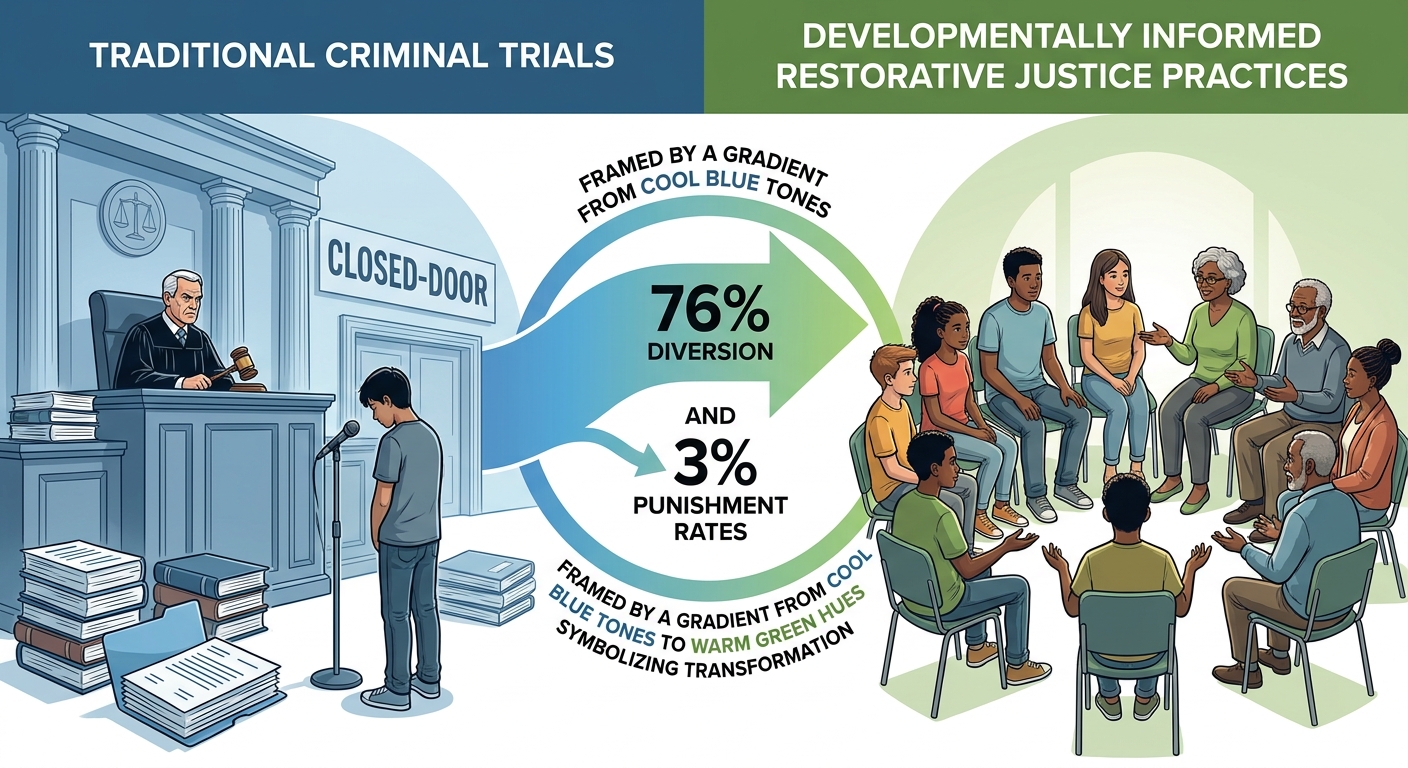
Diversion programs for juvenile offenders have shown significant increases in application and success rates over the past decade. In several progressive jurisdictions, diversion has evolved from a marginal alternative to an integral part of the juvenile justice framework. Empirical analysis indicates that diversion rates have grown substantially, with some offices reporting diversion of over three-quarters of juvenile cases in recent years. This expansion reflects both policy shifts favoring rehabilitation and broader efforts to reduce youth incarceration rates.
However, these rates are uneven and highlight persistent disparities, especially in racial representation. Differential diversion rates between white and minority youth expose a systemic gap in equitable access to rehabilitative resources. Recent policy adjustments incorporating screening reforms have demonstrated measurable improvements in narrowing these disparities, though continued vigilance is necessary to ensure parity.
Overall, quantitative data underscore the effectiveness of diversion programs in reducing juvenile detention populations and in channeling youth toward community-based support systems. Success metrics increasingly incorporate both recidivism reduction and improvements in educational, psychological, and social outcomes for participating juveniles.
Community-Based Alternatives to Incarceration: Scope, Implementation, and Cost-Effectiveness
Community alternatives to incarceration have gained traction worldwide due to their dual potential to reduce costs and improve rehabilitative outcomes. These initiatives range from intensive supervision models that integrate probation with tailored mental health or substance abuse treatment, to more holistic therapeutic programs emphasizing education, vocational training, and family engagement.
Economic analyses consistently demonstrate that community-based approaches are significantly less expensive than secure detention or incarceration, often costing a fraction of the latter while achieving comparable or improved reductions in recidivism. For example, treatment programs focusing on at-risk youth and juveniles with mental health needs yield promising recidivism outcomes while fostering critical developmental supports.
Moreover, non-custodial sanctions that promote community reintegration and preserve social bonds align closely with evidence-based approaches that view offending behavior as embedded in social and environmental contexts. These models leverage supervision with rehabilitative services to mitigate criminogenic needs without the collateral damage associated with institutionalization.
Restorative Justice Protocols: Impact on Victim Satisfaction and Juvenile Recidivism
Restorative justice (RJ) protocols, with their emphasis on victim-offender dialogue and community involvement, represent a paradigm shift from punishment to reparative processes. Empirical review of face-to-face restorative justice conferences reveals at least parity with traditional adjudication in recidivism outcomes, with many studies demonstrating greater victim satisfaction and psychological benefits.
RJ programs foster offender accountability through facilitated meetings that confront youth with the real-world consequences of their actions, facilitating personal reflection and remorse. Victims, in turn, report higher levels of validation and empowerment compared to conventional court procedures, which often marginalize victim voices.
While the evidence base for long-term reductions in recidivism remains mixed and limited by study quality, the integration of responsive restorative practices in juvenile justice systems continues to expand. The success of these programs depends on proper screening, voluntary participation, careful facilitation, and cultural considerations that maintain safety and equity for all participants.
Furthermore, restorative justice initiatives can contribute to community healing by repairing social ruptures and reducing the adversarial nature of traditional justice, thereby supporting vulnerable youth in transitioning away from offending.
Having established the empirical benefits and operational mechanisms of diversion and restorative justice models, the analysis now moves toward evaluating procedural safeguards and professional training standards critical to sustaining these programs' quality and efficacy within juvenile justice frameworks.
Enhancing Juvenile Defense: Training Standards, Competence Assessments, and Ethical Nuances
This subsection critically examines the procedural safeguards and professional standards underpinning legal representation in juvenile justice systems. It analyzes how specialized training in developmental science enhances attorney effectiveness, explores the role of adjudicative competence assessments in safeguarding fairness, and addresses distinct ethical challenges attorneys confront when representing minors. Positioned within the implementation strategies section, this analysis highlights the intersection of legal expertise, scientific understanding, and ethical responsibility necessary for improving juvenile defense outcomes.
Specialized Attorney Training Elevates Juvenile Defense Quality
Effective legal representation of juveniles necessitates targeted attorney training that integrates core principles of developmental science with legal advocacy. National juvenile defense standards mandate that juvenile defenders acquire knowledge not only of relevant statutes and procedures but also of adolescent cognitive capacities, the developmental underpinnings of culpability, and effective communication tailored to youth clients. This dual competency as both advocate and counselor acknowledges that developmental immaturity affects juveniles’ decision-making processes, rendering informed legal counsel vital for ensuring that youths comprehend their rights and the consequences of legal actions.
Empirical observations confirm that juveniles are less likely to waive important procedural protections or make self-incriminating statements when counsel appropriately employs adolescent-sensitive interviewing techniques and provides a deliberative, unhurried advisory process. The specialized training requirements thus embody a paradigm shift from traditional adult criminal defense to a holistic approach that respects the unique vulnerabilities and potential for rehabilitation inherent in juvenile clients.
Adjudicative Competence Assessments Enhance Fairness and Legal Accuracy
The assessment of juveniles’ adjudicative competence plays a pivotal role in ensuring due process and just outcomes within juvenile courts. Developmental research demonstrates significant variability in the capacities of youth to understand legal proceedings, exercise decision-making, and appreciate the ramifications of waiving constitutional rights. Incorporating standardized competence evaluations, grounded in neuroscientific and psychosocial insights, allows courts to tailor procedures to the individual juvenile’s developmental level, thereby mitigating risks of unfair prosecutions or invalid guilty pleas.
Recent legal reforms and scholarly guidance advocate for consistent application of competence assessments, emphasizing criteria such as age, intelligence, educational background, and cognitive-emotional functioning. These evaluations tend to reduce systemic disparities by preventing premature or uninformed judicial actions and contribute to a justice process that respects juveniles’ differential maturity. Moreover, the use of competence assessments has been linked to improvements in case outcomes by fostering environments in which juveniles can actively and knowingly participate in their defense.
Navigating Ethical Complexities in Juvenile Representation
Representing minors in the juvenile justice system entails multifaceted ethical challenges that diverge from those typically encountered in adult defense practice. Attorneys must strike a delicate balance between respecting a juvenile’s evolving autonomy and protecting their best interests in the context of legal decision-making limitations tied to cognitive and emotional development. Ethical obligations compel lawyers to maintain confidentiality while also engaging with parents, guardians, and the court system in ways that protect the minor’s rights without imposing undue adult biases or pressures.
Furthermore, defenders face dilemmas related to ensuring informed consent, managing conflicts between a juvenile’s expressed wishes and legal strategy, and addressing systemic inequities that may influence prosecutorial or judicial conduct. Ethical frameworks underscore the importance of ongoing professional development in trauma-informed lawyering and implicit bias awareness, alongside adherence to standards that promote zealous, competent, and compassionate advocacy. These professional norms improve defense quality and contribute to systemic reforms that acknowledge the distinct justice needs of youth.
Building on the imperative for skilled and ethically grounded juvenile defense, subsequent sections explore how intergovernmental coordination and resource allocation support structural innovations that sustain these professional standards and expand access to developmentally appropriate legal services.
Federal-State Coordination and Strategic Resource Allocation: Insights from Funding Mechanisms, Implementation Challenges, and Prioritization Dynamics
This subsection critically examines the interplay between federal funding frameworks and state-level juvenile justice implementation, focusing on the role of incentive grants, the practical hurdles faced by jurisdictions in reform execution, and the strategic distribution of financial resources between prevention and intervention. By unpacking these elements, the analysis situates federal-state coordination as a pivotal factor in shaping effective juvenile justice outcomes and informs future policy design aimed at optimizing resource utilization and systemic impact.
Evaluating the Impact of Juvenile Accountability Incentive Block Grants on Systemic Reform
The Juvenile Accountability Incentive Block Grants (JAIBG) program, initiated in 1998 and subsequently restructured, represents the federal government’s primary financial instrument dedicated to enhancing juvenile justice systems through accountability and best practice frameworks. Originally, the funding concentrated on expanding prosecutorial and court personnel and infrastructure, signifying an emphasis on system capacity to address juvenile offenders. However, the 2004 realignment expanded the scope to include graduated sanctioning, comprehensive training across law enforcement and detention sectors, and the institution of risk and needs assessments, which collectively underscore a strategic shift towards a more nuanced, developmentally informed approach to juvenile justice administration.
Empirical assessments suggest that JAIBG and its successor initiatives have catalyzed measurable improvements in procedural rigor, with funded jurisdictions incorporating restorative justice paradigms and enhancing their capacities to stratify cases according to offender risk. The dynamic nature of juvenile justice mandates jurisdictions continually adapt to evolving federal priorities and evidence-based guidelines, reflecting the fluid policy environment intrinsic to this domain. These grant programs have thus not only provided critical resources but have also served as policy levers to steer state and local reforms towards accountability balanced with rehabilitative intent.
State-Level Implementation Challenges and Case Study Reflections
Despite the infusion of federal funds, state-level implementation reveals a heterogeneous landscape characterized by logistical, financial, and administrative challenges. Case studies from large urban jurisdictions illustrate obstacles ranging from the integration of new procedural mandates into existing court workflows to sustaining trained personnel amid funding volatility. For example, some states have contended with lapses in federal grant continuity, necessitating local budget reallocations that imperil program stability.
Moreover, complexities arise in aligning inter-agency coordination, particularly between courts, probation offices, and law enforcement, which can be compounded by decentralized governance structures. A notable instance involves the LA Bridges program, which blends prevention and intervention components funded through a combination of local and federal sources but requires intricate collaboration across public safety and community service entities to maximize effectiveness. These pragmatic constraints underscore the essential role of adaptive management, resource diversification, and the cultivation of stakeholder buy-in in ensuring that policy intentions translate into sustainable reform outcomes at the state and local levels.
Strategic Prioritization: Balancing Prevention and Intervention in Juvenile Justice Funding
Resource allocation within juvenile justice must judiciously balance upstream prevention efforts with downstream intervention and enforcement to optimize system impact and cost-effectiveness. Current funding trends display a persistent orientation towards intervention, including detention infrastructure and court processing, partly reflecting political and public safety imperatives. However, research and policy analyses indicate that enhanced investment in prevention—such as early risk identification, community-based supports, and mental health services—yields more sustainable reductions in recidivism and system burden over time.
Federal incentive mechanisms could better align appropriation ratios to favor preventative frameworks, integrating measures that address underlying social determinants of juvenile offending. The reorientation towards prevention is corroborated by data suggesting that jurisdictions with dedicated prevention funding streams experience improved long-term outcomes. Nevertheless, operationalizing this shift requires revising grant guidelines, enhancing outcome reporting to capture prevention efficacy, and fostering inter-sector collaborations that extend beyond traditional justice system confines to include education, health, and social services.
Building on the foundations of federal funding and state-level execution dynamics explored here, subsequent sections will address procedural safeguards and systemic innovations that enable these resources to be leveraged effectively within juvenile justice systems.
5. Equity Imperatives and Systemic Barriers
Enduring Racial Disparities and Systemic Bias in Juvenile Justice Processing
This subsection critically examines entrenched racial disparities permeating juvenile justice processing, illuminating how minority youth are disproportionately detained and subjected to harsher sentencing. It serves to highlight the systemic mechanisms—both overt and implicit—that produce unequal outcomes, contextualizing these disparities within broader socioeconomic and intersectional frameworks. This analysis provides a necessary foundation for equity-centered reform efforts discussed in subsequent sections.
Quantifying Overrepresentation: Minority Youth Detention and Case Processing Patterns
Empirical data consistently demonstrate a stark overrepresentation of minority youth in detention and juvenile justice processing relative to their demographic share. Black youth, for example, constitute a disproportionately large percentage of detained juveniles, with figures indicating their representation often exceeds 40 percent in many jurisdictions despite comprising a substantially smaller portion of the youth population. Hispanic and Native American youths show similarly elevated detention rates, with some regions reporting Native American incarceration rates up to ten times those of white peers. These disparities extend beyond simple arrest data, penetrating pretrial detention, prosecution referrals, adjudications, and sentencing stages, where minority youth are more likely to face restrictive confinement and longer sentences.
Moreover, national trends reveal that Black juveniles are held in detention facilities at rates multiple times higher than white counterparts, with the likelihood of incarceration often exceeding fourfold. This prompts critical inquiries into systemic drivers, as research controls for offense severity and prior criminal records suggest that such disparities are not fully explained by differential offending patterns alone. The disproportionality persists even in cases involving low-level or nonviolent offenses, highlighting structural bias embedded throughout various decision points in the juvenile justice system.
Unpacking Implicit Bias: Evidence of Subconscious Influences on Charging, Sentencing, and Diversion
Studies utilizing implicit association measures and courtroom observations indicate that implicit bias subtly influences prosecutorial and judicial decision-making. Minority youth are more frequently diverted away from rehabilitative options and toward punitive sanctions, even when controlling for comparable offense types and histories. Evaluations of diversion programs reveal stark disparities; for instance, white juveniles are significantly more likely to be diverted from formal processing than Black or Latino youth. This differential access exacerbates downstream inequalities by limiting minority youth’s opportunity for community-based rehabilitation and escalating their exposure to formal system involvement.
Further, implicit cognitive biases about minority youth’s perceived culpability and riskiness may inform discretionary decisions such as charging severity and transfer to adult court. These biases are compounded by socio-cultural narratives and systemic pressures that frame minority juveniles as inherently more dangerous or less amenable to reform, resulting in harsher punishments. Judicial actors often operate within institutional environments lacking adequate training on developmental science and bias mitigation, perpetuating these disparities unintentionally but systematically.
Intersecting Factors: Socioeconomic Status, Race, and Community Context
The interaction between race and socioeconomic disadvantage intensifies juvenile justice involvement for minority youth. Structural inequities, including concentrated poverty, limited educational opportunities, and familial instability, directly influence both offending patterns and system responses. Minority youths disproportionately reside in neighborhoods with higher policing density and lower access to supportive resources, escalating their contact with the justice system. Additionally, co-occurring factors such as disability or mental health challenges amplify the risks of punitive outcomes for these youths, magnifying disparities at multiple processing points.
Research underscores that nearly two-thirds of disparities in violent juvenile offending between Black and white youth can be attributed to contextual and structural factors, rather than innate propensity toward criminality. These findings challenge simplistic attribution of disparities to race alone and demand multifaceted policy responses that address root socioeconomic and environmental drivers. Failure to incorporate intersectionality perpetuates inequities and obstructs effective rehabilitation and prevention frameworks.
Understanding the depth and complexity of racial disparities in juvenile justice processing underscores the critical need for deliberate structural interventions and policy reforms aimed at mitigating systemic bias. The next subsection explores evidence-based strategies designed to confront and reduce these inequities, profiling innovative approaches that incorporate bias training, transparency measures, and alternatives to detention.
Structural Interventions and Policy Solutions Targeting Juvenile Justice Equity
This subsection focuses on tangible, evidence-based strategies and policy reforms explicitly designed to mitigate systemic inequities within juvenile justice systems. Building upon documented disparities and the understanding of entrenched biases, it evaluates the efficacy of structural interventions such as implicit bias training, data transparency reforms, and alternatives to cash bail. These targeted solutions are critical for translating equity imperatives into operational realities, representing necessary complements to broader advocacy and legal reforms addressed elsewhere in the report.
Efficacy of Implicit Bias Training in Juvenile Justice Outcomes
Empirical assessments reveal that implicit bias training, when systematically integrated into juvenile justice agencies, can lead to measurable reductions in racially disparate decision-making patterns. These training programs typically employ implicit association tests and scenario-based learning to heighten awareness among adjudicators, law enforcement, and probation officers about unconscious prejudices. Evidence indicates enhanced sensitivity to minority youths’ contexts and a documented decrease in disproportionate charging and detention rates following training implementation, particularly when supported by ongoing reinforcement and institutional accountability mechanisms.
However, the effectiveness of such training is contingent on multi-level organizational commitment and cannot alone dismantle systemic inequities. Studies show that training must be part of a broader cultural shift incorporating policy adjustments, leadership endorsement, and performance metrics tied to equity goals to produce sustained improvements. Without these supportive conditions, bias training risks being episodic and symbolic rather than transformational.
Impact of Data Transparency on Juvenile Justice System Accountability
Enhanced data transparency initiatives have emerged as pivotal tools in exposing and addressing inequities within juvenile justice systems. Mandated public reporting of disaggregated data—including arrest rates, charging decisions, detention populations, and case outcomes stratified by race, gender, and disability status—enables identification of systemic patterns otherwise obscured by aggregate statistics.
Jurisdictions adopting such transparency, combined with independent oversight bodies, have documented increased procedural fairness and the curtailment of arbitrary disparities. Transparency facilitates external stakeholder engagement, including advocacy groups and policymakers, creating pressure to adapt more equitable practices. Yet, meaningful impact also depends on the quality, granularity, and timeliness of data as well as on agencies’ willingness to act upon revealed inequalities. Instances where data transparency was implemented without concomitant reform efforts have yielded limited change.
Adoption and Effects of Alternatives to Cash Bail in Youth Detention
Reforms targeting the abolition or reduction of cash bail for juveniles aim to disrupt cycles of pretrial detention that disproportionately affect low-income and minority youth. National and localized statistics demonstrate that reliance on monetary bail leads to prolonged detention of youth unable to afford bail, contributing to adverse developmental, educational, and familial disruptions that exacerbate recidivism risks.
Jurisdictions adopting non-monetary pretrial release options, such as supervised release programs, electronic monitoring, or community-based support systems, have reported reductions in detention rates without compromising public safety. Early data further indicate improved engagement in case processing and decreased legal costs. Nonetheless, challenges remain in uniformly implementing these alternatives, ensuring sufficient resources, and overcoming institutional resistance grounded in perceptions of public safety risk. Continuous monitoring and outcome evaluation are essential for scaling these practices effectively.
Notably, diversion programs have shown remarkable progress over time, with success rates climbing from 30 percent in 2010 to 80 percent by 2022, reflecting improved rehabilitation efforts and expanded application of community-based alternatives to detention [Chart: Diversion Program Success Rates Over Time].
Collectively, these structural interventions constitute a multifaceted approach crucial for dismantling entrenched barriers that perpetuate inequity in juvenile justice systems. While promising, their impact depends on robust operationalization, sustained political will, and integration within comprehensive reform strategies—elements that the subsequent section on regional dynamics and reform frontiers further elucidates through case examples.
6. Regional Dynamics and Emerging Reform Frontiers
South Korea's Juvenile Justice Evolution: Legal Thresholds, Political Controversies, and Civil Society Advocacy
This subsection dissects recent developments and ongoing political debates surrounding South Korea's juvenile justice system, focusing on the contentious issue of the criminal responsibility age threshold. Building on the broader discussion of regional reform dynamics, it examines concrete statistical trends in juvenile crime, legislative deliberations, and the role of civil society actors in shaping public discourse and policy proposals. The analysis elucidates the tension between public demand for stricter accountability measures and expert-driven caution grounded in developmental science, thereby framing South Korea as a critical case study in contemporary juvenile justice reform.
Rising Juvenile Crime Trends Fueling Reform Urgency
Between 2020 and 2025, South Korea experienced a pronounced increase in juvenile offending, with recorded cases rising from approximately 38,590 to over 50,800. This 31% surge, accompanied by a sharp 80% escalation in juvenile offenders between 2021 and 2025, has heightened public anxiety, particularly regarding violent and sexual offenses by minors. School violence data corroborate this trend, showing an upward trajectory in victimization rates, including verbal abuse, group bullying, and physical assaults, with elementary students especially affected. These statistical realities have intensified calls among policymakers and certain segments of society to reconsider the age of criminal responsibility amid fears that current protections may inadequately address evolving youth delinquency patterns.
Political Debate and Legislative Stalemates over Age of Criminal Responsibility
The age of criminal responsibility has remained at 14 years since the Juvenile Act’s enactment over seventy years ago. Recent government-led deliberations, prompted by surges in juvenile crime, proposed lowering this threshold to 13, a move supported by some political leaders and a significant portion of the public. However, the measure encountered resistance from the judiciary and experts who emphasized the lack of evidence supporting enhanced deterrence through criminalization of younger adolescents. The deliberative panel, incorporating expert analysis alongside citizen input, ultimately recommended maintaining the current age, citing potential harms to rehabilitation prospects and children’s cognitive immaturity. This stalemate highlights the balancing act between responding to societal fears and respecting international developmental standards.
Civil Society’s Role in Framing Juvenile Justice Reform Dialogues
South Korean civil society organizations, including legal advocacy groups and child rights experts, have played a decisive role in the reform discourse by challenging rapid policy shifts that risk infringing on minors’ rights. These actors stress the importance of addressing the root causes of juvenile offending, such as unstable home environments, rather than punitive legal measures alone. Campaigns advocating for diversion programs, restorative justice, and revisions grounded in child developmental science seek to influence both public opinion and legislative processes. Media framing of high-profile juvenile cases has sometimes fueled populist demands for toughening laws, yet civil society engagement ensures a counterbalance—promoting rehabilitative principles and cautioning against oversimplified responses to complex social phenomena.
Having established the interplay of statistical realities, political contention, and civil engagement in South Korea’s juvenile justice evolution, the subsequent subsection expands the geographical lens to explore innovative state-level reform experiments in the United States, drawing contrasts and parallels that inform global reform trends.
U.S. State-Level Innovations: Legislative Advances and Ground-Level Programmatic Shifts in Juvenile Justice
This subsection delves into the specific developments within the United States juvenile justice landscape, illustrating how state-level reforms operationalize age threshold adjustments and developmental science principles in practice. By examining legislative milestones, local pilot initiatives, and their measurable effects on recidivism and youth outcomes, this analysis contextualizes the broader themes of jurisdictional variability and reform momentum outlined in preceding sections.
Implementation and Impact of California's AB 1376 and Related Reform Legislation
California's Assembly Bill 1376 represents a landmark in juvenile justice reform by imposing stringent limits on the duration of juvenile probation and redirecting emphasis from punitive supervision toward developmental appropriateness and eventual reintegration. The legislation emerges amid complex political dynamics, highlighted by concurrent state measures such as Proposition 36, which reflect tensions between rehabilitation-focused and accountability-driven policy camps. Although critics argue these reforms may compromise public safety, early empirical evidence suggests that AB 1376 curtails prolonged system entanglement that correlates with negative developmental trajectories and recidivism.
Operational challenges have surfaced during implementation, including inconsistent caseworker training on the new protocols and resource limitations in community-based services tasked with providing alternatives to incarceration. However, juvenile detention centers like Solano County's facility have adapted by expanding behavioral, vocational, and social skills programs, fostering environments oriented to rehabilitation over punishment. Furthermore, the legislative framework codifies principles that limit automatic transfer of juveniles to adult courts, emphasizing discretion informed by offense severity and developmental assessments.
State-by-State ‘Raise the Age’ Reforms: Variability, Progress, and Outcomes
The national movement to 'raise the age' of juvenile court jurisdiction has gained traction, with states like Louisiana and South Carolina recently expanding juvenile jurisdiction to encompass 18-year-olds, aligning legal thresholds more closely with developmental neuroscience insights. This incremental legislative shift responds to critiques of prior frameworks that subjected older adolescents to adult criminal prosecution, often exacerbating recidivism and impeding rehabilitation.
Notably, Massachusetts' experience since raising the age to include 17-year-olds demonstrates significant reductions in juvenile crime rates, outperforming national trends and reinforcing the public safety rationale for such reforms. The Pathways to Desistance study underscores that developmental milestones and perceived legitimacy of authority are central to desistance, thereby supporting juvenile system retention over adult incarceration. Yet, heterogeneity remains across states, with some jurisdictions preserving lower age cutoffs due to political resistance, resource constraints, or public security concerns, contributing to a fragmented juvenile justice landscape.
Local Pilot Programs Integrating Developmental Science into Juvenile Justice Practice
Beyond legislative reforms, a diverse array of local pilot programs exemplify innovative approaches that embed developmental science into juvenile justice processes. These programs prioritize trauma-informed care, tailored cognitive and behavioral interventions, and skill-building opportunities aimed at reducing recidivism and promoting positive youth development. For example, vocational training combined with educational engagement, such as aviation instruction programs pioneered in New York, have demonstrated remarkable success in redirecting system-involved youth toward constructive life trajectories, thereby lowering long-term costs associated with conventional juvenile justice processing.
Many of these initiatives operate under challenge conditions including funding gaps and scalability limitations but benefit from strong community partnerships and embrace longitudinal tracking to evaluate effectiveness. Additionally, youth development organizations aligned with local judicial systems provide open-access, gender-specific, and culturally responsive support networks that address factors such as mental health, substance use, and family reintegration, further bridging gaps left by formal correctional programming.
Recidivism and Reform Efficacy: Evaluating Outcomes of Age Threshold Expansion and Intervention Models
Empirical assessments indicate that reforms elevating juvenile jurisdiction age and implementing developmentally appropriate interventions contribute to meaningful recidivism reductions. Comparative studies reveal that youths retained in juvenile systems post-reform exhibit significantly lower rates of reoffending than their counterparts processed in adult courts. This outcome aligns with neurodevelopmental research highlighting adolescent executive function limitations and heightened susceptibility to peer influence, which necessitate tailored rehabilitative approaches rather than punitive responses.
However, variability in recidivism outcomes persists, contingent on program fidelity, availability of community resources, and effective coordination among stakeholders. Some states report challenges in achieving uniform success due to disparities in implementation capacities and enduring systemic barriers such as racial inequities. Overrepresentation of minority youth—particularly Black (40%) and Hispanic (30%) populations—in juvenile detention underscores systemic biases that complicate reform efficacy and equitable outcomes. Consequently, data-driven oversight and expanded investment in mental health screening, competency assessment, and community-based support become critical to sustaining reform momentum and ensuring positive youth trajectories [Chart: Detained Juveniles by Race].
Having examined the distinctive trajectories and innovations within the United States juvenile justice framework, this analysis sets the stage for a comparative exploration of international developments. The following subsection will investigate South Korea’s evolving legal landscape, highlighting contrasting age thresholds, political debates, and reform pressures within a culturally distinct context.
7. Strategic Pathways Forward
Targeted Actions for Immediate and Near-Term Juvenile Justice Reform
This subsection delineates concrete operational priorities for the juvenile justice field that are actionable in the short-to-medium timeframe. Positioned within the broader strategic pathways section, it complements foundational and structural analyses by specifying evidence-based interventions that stakeholders—policymakers, judicial administrators, and community organizations—can implement rapidly to enhance system responsiveness, fairness, and developmental appropriateness.
Expanding Universal Diversion Eligibility to Reduce Formal System Involvement
Empirical data strongly supports the expansion of diversion programs as a frontline strategy for juvenile justice reform. Jurisdictions with broad diversion eligibility report substantial declines in formal case processing and detention admissions, underscoring diversion’s capacity to mitigate the harmful exposure of youth to institutional settings. Recent statistics from county prosecutions indicate that juvenile diversion rates have surged markedly when offices invested in restorative justice divisions and screening reforms, with some offices diverting over three-quarters of cases within a few years. Importantly, these increases have been associated with measured decreases in racial disparities, reflecting diversion’s potential to promote equity when coupled with targeted screening protocols.
Beyond raw diversion volumes, evidence highlights improvements in long-term outcomes for diverted youth, including lower rates of recidivism and increased engagement in education and employment. Diversion models that integrate community-based services and emphasize accountability without formal convictions reduce the collateral consequences young people face, such as stigma and barriers to essential life opportunities. Expanding universal eligibility for diversion, while maintaining appropriately tailored clinical and risk assessments, thus represents a pragmatic approach to scaling juvenile justice reform efficiently and ethically.
Standardizing Competency Assessments for Juvenile Defendants: Closing Gaps in Fairness and Reliability
Competency to stand trial is a critical benchmark ensuring procedural fairness, yet current practices exhibit substantial variability across jurisdictions in how assessments are conducted and applied. The divergence results from inconsistent application of developmental science insights, varying assessment instruments, and disparate training requirements for evaluators. Standardizing competency evaluations across juvenile systems would address these disparities, promoting both due process and developmental appropriateness in judicial proceedings.
Research underscores that neuroscience and psychological studies of adolescent brain development provide clear parameters for assessing decisional and functional competencies. Uniform protocols would better identify youth with vulnerabilities related to cognitive immaturity or trauma, informing appropriately modified legal procedures such as tailored questioning techniques and adjusted expectations for testimonial reliability. Institutionalizing such standardization requires mandated practitioner training focused on developmental science and competence, ensuring assessments reliably inform case outcomes and reduce wrongful adjudications.
Enhancing Mental Health Screening and Access to Support Services in Juvenile Settings
A strikingly high prevalence of mental health conditions among youth involved in the justice system calls for systematic screening and timely intervention to address psychological vulnerabilities that exacerbate offending risk and reduce rehabilitative potential. Expanded mental health screening initiatives have demonstrated quantifiable benefits, facilitating early identification of disorders and enabling linkage to community-based or facility-based treatment programs.
Data from specialized diversion and co-responder models reveal significant improvements in youth outcomes, including reduced arrest rates and shortened detention duration, when mental health considerations are integrated into case management. Moreover, comprehensive screening has downstream benefits by mitigating stigma and addressing trauma through informed, trauma-sensitive practices. Scaling access to mental health treatment addresses root causes of juvenile offending and aligns justice interventions with best practices grounded in public health frameworks.
Collectively, these near-term priorities form an actionable blueprint for stakeholders aiming to recalibrate juvenile justice systems towards developmentally sound, equitable, and effective practices. While implementation challenges remain, particularly in funding and interagency coordination, the accumulated evidence provides a robust foundation to support widespread adoption. The subsequent subsection will consider longer-term structural and cultural transformations necessary to sustain and deepen these reforms over time.
Embedding Developmental Science, Therapeutic Environments, and Longitudinal Monitoring for Juvenile Justice Transformation
This subsection outlines the long-term institutional transformations required to align juvenile justice systems with cutting-edge developmental science evidence. It emphasizes integrating neuroscience and psychological insights into procedural frameworks, reimagining physical custody environments to support rehabilitation, and implementing robust, longitudinal data systems that enable continuous evaluation and policy refinement. Situated within the broader strategic pathways forward, this analysis offers a roadmap for sustainable and systemic reform beyond immediate operational adjustments.
Comprehensive Integration of Developmental Science into Juvenile Justice Processes
Embedding developmental science throughout juvenile justice processes requires a systemic shift from punitive models toward frameworks that fully recognize the neurocognitive and psychosocial trajectories of youth. Contemporary research illuminates that adolescents exhibit immature executive functioning, heightened vulnerability to peer influences, and limited capacity for future-oriented decision-making, all of which undermine traditional assumptions of culpability and competency. Institutionalizing these insights means revising adjudicative competence standards, tailoring interrogation techniques, and calibrating sentencing guidelines to youth developmental stages.
Successful integration also necessitates continuous professional education for judges, attorneys, probation officers, and law enforcement on adolescent brain science and trauma-informed practices. The incorporation of structured competency assessments, informed by validated developmental metrics, ensures that juveniles receive appropriate accommodations and procedural safeguards aligned with their cognitive capabilities. Such a holistic approach strengthens equitable legal outcomes and reinforces rehabilitative objectives.
Moreover, aligning justice system protocols with the developmental principle acknowledges mutable capacities and the potential for positive change, fostering individualized case management strategies. This comprehensive integration situates juvenile justice not merely as a legal mechanism but as an extension of developmental and social support systems.
Redesigning Juvenile Detention and Rehabilitation Facilities into Therapeutic, Developmentally Supportive Environments
Physical environments within juvenile justice facilities profoundly impact rehabilitation trajectories. Traditional detention centers often prioritize security at the expense of psychological safety and therapeutic efficacy, frequently exacerbating mental health challenges common among detained youth. Recognizing this, transformative designs emphasize creating spaces that reflect developmental needs and promote healing.
International case studies reveal innovative practices such as zoning spaces to balance privacy and communal engagement, integrating calming natural elements, and employing materials that reduce sensory overstimulation. Therapeutic environments incorporate outdoor gardens, multisensory stimuli, and color schemes empirically associated with reduced anxiety and enhanced wellbeing. Architectural configurations that support staff-youth positive interaction, minimize institutional stressors, and facilitate educational and vocational programming contribute to better outcomes.
These design philosophies parallel concepts seen in advanced dementia care and addiction rehabilitation centers, where spatial arrangements have been reimagined to unlock therapeutic potential. Importantly, such physical transformations require alignment with operational reforms and adequate funding, recognizing that environment is a critical component of institutional culture and youth development.
Implementing Longitudinal Data Systems to Track Outcomes and Enable Iterative Juvenile Justice Reform
Long-term reform depends on robust, longitudinal data infrastructures capable of capturing comprehensive juvenile justice interactions and post-release trajectories. Existing systems often suffer from fragmentation and lack mechanisms to track developmental and recidivism outcomes systematically over extended periods. Bridging this gap demands integrated databases that connect court proceedings, service provision, educational attainment, and social reintegration metrics.
Such tracking enables real-time evaluation of diversion programs, therapeutic interventions, and policy changes, facilitating data-driven refinements and accountability. Models from jurisdictions with advanced longitudinal monitoring demonstrate how continuous outcome assessment supports identification of systemic biases, evaluation of mental health service efficacy, and tailoring of individualized care plans.
Beyond internal system improvements, transparent data sharing with community stakeholders fosters trust and supports interdisciplinary collaboration among juvenile justice, child welfare, education, and health sectors. Establishing these longitudinal frameworks is crucial for realizing the promise of developmentally informed, equitable juvenile justice systems.
Together, these pillars—embedding developmental science in processes, creating therapeutic facility environments, and instituting comprehensive longitudinal data systems—constitute an integrated, sustainable blueprint for juvenile justice transformation. The convergence of these elements promises to enhance rehabilitation, promote equitable treatment, and enable dynamic policy evolution responsive to empirical evidence and youth developmental realities.
Conclusion
The multifaceted examination of juvenile justice systems presented herein demonstrates that definitional ambiguity—especially surrounding age thresholds and juvenile personhood—remains a foundational challenge impacting legal outcomes, system capacities, and youth trajectories. The empirical evidence unequivocally supports the adoption of developmentally informed policies that align legal definitions with neuroscientific insights about adolescent brain maturation and psychosocial vulnerability. Jurisdictions embracing reforms such as raising the age of juvenile jurisdiction and standardizing adjudicative competence assessments are positioned to enhance procedural fairness and rehabilitative potential, thereby reducing recidivism and improving public safety.
However, scientific advancements alone cannot resolve the entrenched racial and socioeconomic disparities that permeate juvenile justice systems globally. Addressing these equity imperatives requires a concerted combination of implicit bias mitigation training, transparent disaggregated data reporting, and systemic restructuring to ensure equitable access to diversion and therapeutic interventions. The report’s regional analyses underscore the necessity of tailored approaches that respect cultural and religious contexts while steadfastly upholding children’s rights, as highlighted in the ongoing South Korean debate and diverse U.S. reform trajectories.
Looking forward, strategic pathways for substantive transformation include expanding universal diversion eligibility to reduce formal system involvement, embedding developmental science comprehensively within judicial practices, and redesigning detention environments to support psychological healing. Moreover, investment in longitudinal data systems is imperative to monitor reform efficacy and iterate policies responsively. Collectively, these actions promise to recalibrate juvenile justice towards a framework that prioritizes rehabilitation, equity, and developmental appropriateness, thereby fulfilling both societal and individual aspirations for youth justice.
In conclusion, juvenile justice stands at the confluence of legal principles, scientific understanding, and social equity demands. Navigating this intersection demands sustained interdisciplinary collaboration, culturally sensitive policymaking, and unwavering commitment to evidence-based approaches. By harnessing these elements, juvenile justice systems worldwide can evolve from punitive legacies toward enlightened models that recognize the potential inherent in every young person for growth, reform, and positive social contribution.
References
- THE UNIVERSITY OF CHICAGO AMERICAN MUSLIM TARBIYA
- HOW PAROLE SYSTEMS FAIL YOUTH SERVING ...
- Understanding Juvenile Definitions: Legal Age Limits In Court Proceedings | LawShun
- Will Korea lower age of criminal responsibility after 70 years unchanged?
- Tougher courts don’t cut youth crime, study suggests
- [PDF] Giving Kids Their Due: Theorizing a Modern Fourteenth Amendment ...
- The Impact of National Standards on Juvenile Defense Practice
- Reassessing Juvenile Justice in South Korea: Challenges, Reforms, and Global Perspectives
- Repeat teen offender who fired gun at Fairfield High School gets 6 months detention
- Raising the Minimum Age – National Youth justice Network – NYJN
- Age Boundaries of the Juvenile Justice System | Office of Juvenile Justice and Delinquency Prevention
- PDF The Restatement of Law on Juveniles' Adjudicative Competence and Rights ...
- PDF What Is a Juvenile? A Cross-National Comparison of Youth Justice Systems
- Court-Ordered Curfew: The Application of Graduated ...
- PDF Introductory Handbook on The Prevention of Recidivism and the Social Reintegration of ...
- Will Korea lower juvenile offender age for the first time in 70 years?
- Challenges and Reforms in South Korea's Juvenile Law: A Comprehensive Analysis
- Understanding Juvenile Offender Age Limits in the Legal System - Ethosena
- Juvenile Justice: Background and Basics - FindLaw
- PDF Determining Age in Criminal Law: a Comparative Legal Analysis of Pocso and Juvenile ...
- Youth in the Justice System: An Overview | Juvenile Law Center
- A Developmental Perspective on Serious Juvenile Crime
- Juvenile Laws at South Korea
- juvenile justice
- What is the difference between a minor and a juvenile in legal terms?
- juvenile
- PDF Prosecutor‐driven reform and racial disparities
- PDF Pushing Forward: Prosecution Reform and Racial Equity across Six Counties
- PDF Development of the emotional brain - Yale University
- ELA B.E.S.T. STANDARDS: ENGLISH LANGUAGE ARTS
- PDF Student Unit Packet Part #1 - Danville MS English
- The historical relationship between artistic activities and ...
- Spread of Christianity | Overview, History & Origin - Lesson | Study.com
- Also by Alister E. McGrath from Wiley-Blackwell
- HISTORIOGRAPHY EARLY CHURCH HISTORY
- PROGRAM REVIEW SELF-STUDY 2021-2022 ...
- CATALOGUE FOR 2012-2013
- Brahman in Hinduism | Beliefs & Significance - Lesson | Study.com
- Eras in Human History | Overview, Timeline & Significance - Lesson | Study.com
- IDHS: Findings: Why Should 17-Year-Olds Be In Juvenile Court?
- PDF Juvenile Crime and Justice Juvenile Offenders in Adult Courts
- Prevalence of insufficient daily physical activity and its ...
- The Neurobiological Basis of Adolescent-onset Borderline ...
- Resource Library | Center for the Developing Adolescent
- Emerging perspectives in social neuroscience and ...
- Digital Media Reshapes Teen Brains: New Study Reveals Critical Links Between Screen Time and Adolescent Mental Health - Neuroscience Blog
- New grant funds study on role of brain’s reward system in autism and ADHD
- Study design features increase replicability in brain-wide association studies - Nature
- Study connects brain volume variations with genetic risk factors for Parkinson’s disease and ADHD
- PDF Prosecuting Juveniles in Adult Court - Prison Policy Initiative
- National Trends in Youth Incarceration and Extreme Sentences |
- PDF Latino Ice Detentions Dramatically Reshaped Under Trump
- A Study of Zero Tolerance Policies in Schools
- Something iS Wrong: exploring the roots of Youth Violence
- CHARACTERISTICS OF JUVENILE OFFENDERS
- Addressing Bias | NCJFCJ
- Addressing Bias
- Assessing the Race–Crime and Ethnicity–Crime Relationship in a Sample of Serious Adolescent Delinquents - PMC
- Chapter 15: Informal Adjustment in Juvenile Proceedings
- Youth Involved with the Juvenile Justice System | Youth.gov
- PDF Youth Level of Service Inventory Ratings & User Guide - PA.GOV
- Juvenile violence
- Topic probation | CrimeSolutions, National Institute of Justice
- PDF privilege Sanction Compliance - AAMVA
- current science regarding juvenile problematic sexual ...
- THE ECONOMICS OF CRIME
- [PDF] Grant County - DSHS
- Korea likely to keep criminal age threshold at 14
- Republic of (South) Korea | World Prison Brief
- S. Korea's school violence victimization rate hits record high in 2025
- Bullying, cybercrime push South Korea's school violence to decade high
- A socio-legal analysis of the development and use of ...
- A Game Theoretic Analysis of the Traditional Juvenile Justice ...
- Community Violence Prevention Resource for Action
- PDF Power to the people?: a replication study of a community-based monitoring programme in ...
- PDF Rebecca Blair and Miriam Aroni Krinsky - Georgetown Law
- The Effects of Universal Free Lunch Provision on Student ...
- Draft Report of the SB 882 Advisory Council - March 16, 2026
- Mapping Prosecutor-led Diversion Programs
- Substance Use Disorders - LGBRIMH
- Deferred Prosecution Programs
- Drug Diversion in Hospitals Persists as an Underreported "Elephant in the Room"
- Budget Offsets Bank | Committee for a Responsible Federal Budget
- PDF From juvenile delinquency (JD) to disability-mediated offending (DMO ...
- Juvenile Justice Implements New ‘Minimum Age’ Law
- Temporary Cash Assistance Recipients & Families, 2024
- PDF UCR Summary of Reported Crimes in the Nation, 2024
- PDF New Laws for 2024 - CCAP
- Winnable criminal justice reforms in 2026
- [PDF] Report to Congress on Medicaid and CHIP March 2026 - MACPAC
- PDF Too Young for The System What the United States Can L International Law ...
- PDF Contextualizing Human Rights in Multicultural Environments
- PDF Culture and Development in Children and Youth - AACAP
- PDF Understanding Cultural Change National Bureau of Economic Research
- Phylogenetic Perspectives and Ethnobotanical Insights on ...
- Women and Gender in Middle East Politics
- ‘Privacy violation’: Madras HC blocks Tamil Nadu’s move to collect personal data of school students
- Habeas Corpus and American Indian Boarding Schools
- Cult Info Since 1979 - Children and Cults: A Practical Guide
- Father of the Nation
- PDF When Does a Juvenilebecome an Adult? Implications for Law and Policy
- A Model for Diverse Learning Environments
- Hate Speech Prosecution of Politicians and its Effect on ...
- PDF Peer Influence on Adolescent Purchase Decisions - IJFMR
- PDF 21836_cry_44-2 - UMD
- THE DECLINING INFLUENCE OF THE UNITED STATES ...
- US SCHOOL FINANCE: RESOURCES AND OUTCOMES ...
- The working credos of prison governorsin Korea
- AI V. ARBITRATOR: HOW CAN THE EXCLUSION OF ...
- The Quality of Law in Civil Code and Common Law Regimes
- Case Studies: *Efficiency - ERIC
- HANDBOOK ON PROBATION SERVICES
- The Prevention of Recidivism and the Social Reintegration ...
- PDF Length of Incarceration and Recidivism - United States Sentencing Commission
- Advocacy Toolkit
- The Civil Rights Implications of Cash Bail
- PDF UNODC_220108_Book3_Two_Column_Country_Green_Bar
- PDF UNODC_220108_Book3_Two_Column_Country_Green_Bar.indd
- Mass Incarceration: The Whole Pie 2026
- PDF Microsoft Word - Principles of Criminology & CJ Administration, SCPM11 ...
- The Restatement of Law on Juveniles' Adjudicative Competence and Rights in Interrogation | CLBB NeuroLaw Library
- Attribution (psychology) - Wikipedia
- PDF Sentence Length and Recidivism: A Review of the Research
- PDF Punishment and Deterrence: Evidence from Drunk Driving
- [PDF] PI 00e 500 - ERIC
- Race and the Death Penalty | Capital Punishment in Context
- Korea likely to keep criminal age threshold at 14
- Interpreting the Outcome of the South Korean 22nd National Assembly Election 2024 - Indian Council of World Affairs (Government of India)
- S. Korea Moves to Eliminate ‘Illegitimate Child’ Label From Official Forms
- Public deliberation body moves to recommend lowering age of criminal responsibility to 13
- The Most EVIL Middle-Schoolers In South Korea That Got Away With Murder Podcast Summary with Stephanie Soo, Co-host
- PDF The Career Effects of Union Membership
- PDF STATISTICS AND DATA - Edudia
- PDF RESEARCH ARTICLE Open Access Is volunteering a public health ...
- PRISMA-Children and Adolescents (PRISMA-C) 2026 extension statement and explanation: enhancing the reporting and utility of systematic reviews of interventions in paediatrics
- Genetic and Environmental Continuity in Personality ...
- Consequences of Welfare Reform: A Research Synthesis
- age diversity
- characteristics of successful commercialisation - CentAUR
- Recipient Age and Mortality After Liver Transplantation: A... : Transplantation
- Juvenile Crime in the U.S | Law | Research Starters | EBSCO Research
- PDF The Minimum Age of Criminal Responsibility Internationally History ...
- PDF Juveniles in the Justice System: New Evidence from Research on ...
- Multidimensional Child Poverty: Including Children's ...
- Religious Beliefs, Practices, and Commitment // Youth and Religion // University of Notre Dame
- MORAL STAGE THEORY
- an exploration of young children's humour as Bakhtinian ...
- PDF Biological Explanations of Criminal Behaviour - Springer
- The Guardian view on smartphones and children: a compelling case for action
- Korea likely to keep criminal age threshold at 14
- Disclosure of Criminal’s Identity, Is the Public Profit, or Another Damage?
- Sweden targets social media giants over ‘murder ads’ recruiting children
- Korean Civil Society Contribution Report for 2020 HLPF.pdf
- Reconciliation after Violent Conflict: A Handbook
- PDF Restorative Justice Responses to Sexual Assault
- The Cultural Politics of Emotion
- PDF Role of Apology in Mediation, The - NYU Law Review
- [PDF] Restorative Works - A Briefing for Parliamentarians and Policy Makers
- ADR Empirical Research Studies (Summer 2013-Fall 2022)
- Jail Overcrowding, Its Causes and Alternatives
- Restorative justice
- Socialist Republic of Vietnam
- Economic Development and Environmental Quality Nexus ...
- PDF Equality and Non-Discrimination: Legal Protections and Challenges
- PDF Questioning the social exclusion of students with disabilities in ...
- PDF Microsoft Word - Main report cover - GOV.UK
- PDF Returning the Abducted Children: The Positive Obligation of Member ...
- PDF Microsoft Word - Juliette-Final Draft.docx
- PDF NDC_BRIEF - climatenetwork.org
- PROCEEDINGS OF THE FIRST INTERNATIONAL ...
- Sustainable livelihoods: a broader vision
- National Prison Rape Elimination Commission Report
- PDF Handbook on the Classification of Prisoners
- Cross-cultural adaptation of mental health screening instruments for Samoan adolescents
- 34 USC 10651: Adult and juvenile collaboration programs
- [PDF] Needs Assessment - Compass Health Network
- PDF 042831_cover_5_2mm - Human Rights Without Frontiers
- Books About Korean Cinema
- PDF Ethnic nationalism and multiculturalism in Korea: Tensions in a ...
- The Rough Road to Democracy
- 3PKSS Proceedings
- PDF South Korean Social Movements
- Legal Malpractice: The Profession's Dirty Little Secret
- NALP | For Professional Development
- Trauma-Informed Lawyering in The Asylum Process
- PDF Mitchell(v - University of Minnesota Duluth
- FAQs — Raise the Age MA
- The Effect of Incarceration and Length of Time Served
- Strategies and policies to reduce recidivism in Korea
- NO. 01-729 GLENN G. GODFREY AND BRUCE M. BOTELHO ...
- ALL EXCEPT FOR: ANIMUS THAT DRIVES EXCLUSIONS ...
- Differential Effects of Adult Court Transfer on Juvenile Offender Recidivism - PMC
- An integrative model - melody altschuler, phd
- Ethical Principles and Standards for Developmental Scientists | Society for Research in Child Development SRCD
- New SF 28CS System Enhances Forensic DNA Identification
- Data Planning in the Dual Status Youth Initiatives
- Detention fails to help young lawbreakers avoid further offenses, report shows
- PDF Selective Enrollment Public Schools and District ...
- Perioperative management of patients treated with ...
- Frontiers | Psychometric Challenges in the Measurement of Constructs Underlying Criminal Responsibility in Children and Young Adults: A Cross-Sectional Study
- Age of criminal responsibility
- PDF Victimization and Juvenile Offending - The National Child Traumatic ...
- Juvenile Victims | Child Crime Prevention & Safety CenterChild Crime Prevention & Safety Center
- PDF Dual System Youth and their Pathways: A Comparison of Incidence, Characteristics and ...
- PDF FACTS FOR POLICYMAKERS Commercial Sexual Exploitation of Youth
- Solano County Board of Education - Cloudfront.net
- Teenagers in Washington, D.C., say the federal police takeover makes them feel unsafe
- Youth Mental Health Statistics in 2024
- Juvenile detention centers in NC under scrutiny for use of isolation
- Child Welfare Journal Archives – CWLA
- PDF Evaluating Juveniles' Adjudicative Competence: A Guide for Clinical ...
- [PDF] Training & Resource Manual for Juvenile Defense Attorneys
- Positive-Approaches-Preventing-Substance-Use-Misuse- ...
- Bias in adjudication: Investigating the impact of artificial intelligence, media, financial and legal institutions in pursuit of social justice - PMC
- Adjudicative competence
- PDF Annual Report on Undergraduate Admissions Requirements and ...
- Annual Comprehensive Financial Report
- PDF CHINA - A FRAGILE POWER? - iss.europa.eu
- Parametric Pension Reform Options in Korea
- Ageing policies - access to services in different Member States
- PDF Policy Priorities 2024 - USAging
- PDF Ageing and policies: key good practices - thedocs.worldbank.org
- Final Reading: Court data suggests Vermont’s ‘Raise the Age’ initiative is working. DCF has different numbers.
- PDF Intersectoral models to build healthy public policy: A review of the ...
- Mimicking Nature, Empowered by Technology: A Biomimetic Approach to Sustainable Building Envelopes – International Journal of Research and Scientific Innovation (IJRSI)
- EXPERTENSTANDARD BEZIEHUNGSGESTALTUNG IN ...
- Bone & Joint
- ACT PHN Baseline Needs Assessment
- Wisconsin Dementia Care System Redesign
- EMERGING TRENDS IN THE DESIGN OF REHABILITATION CENTRES FOR ALCOHOL AND DRUG ADDICTS | DEPARTMENT OF ARCHITECTURE
- PDF Sensory experiences in healthcare architecture: A comprehensive ...
- PDF Cooper_Marcus-2.pdf - brikbase.org
- PDF Examining Inclusive Design in Public Spaces to Enhance Accessibility ...
- Presidential Decree No. 603: The Child and Youth Welfare Code | Philippine Commission on Women
- Child, Church and Protection: A Historical Theology ...
- Rapporteur's Digest on Freedom of Religion or Belief
- Freedom oF religion or belieF and the law
- PDF A Reflection on The Role of The Church in Child Development in Ghana: a ...
- [PDF] FIRST LECTURE AMERICAN FOREIGN POLICY - Universit�t Trier
- PDF Theorizing Religious Effects Among American Adolescents
- G.R. No. 204819
- PDF The effects of arts and culture programmes on youth crime: A rapid review
- PDF Police-Induced Confessions: Risk Factors and Recommendations
- PDF Effective Victim Interviewing - EVAWI
- PDF BUILDING A MULTI-SYSTEM TRAUMA-INFORMED COLLABORATIVE - Chapin Hall
- PDF The psychology of confessions: A comparison of expert and lay opinions
- PDF The Psychology of Confessions - saulkassin.org
- The Courts: Acceptable Investigator Interrogation Behaviors | John E. Reid and Associates, Inc.
- federal aviation administration curriculum ... - Microsoft .NET
- A Rapid Review of the Benefits and Outcomes of Universal ...
- 2026 NATIONAL MUNICIPAL POLICY AND RESOLUTIONS
- Youth Development Programs | Encyclopedia.com
- PDF Best Practices for Youth Programs
- BOOK OF ABSTRACTS
- Maryland Consortium on Coordinated Community Supports
- What New Legislation Means for the Juvenile Justice System
- PDF Police powers: detention and custody - BLACKLIVESMATTER.UK
- Understanding the Child Welfare System in California
- PDF The Impact of After-School Programs That Promote Personal and Social Skills
- [PDF] FINES, FEES, AND BAIL - Obama White House Archives
- [PDF] Adopted Budget for Fiscal Year 2025 - City of Hartford
- Online Continuing Legal Education for Attorneys - CLE | MCLE
- PDF Texas Disciplinary Rules of Professional Conduct
- Ethics, Laws, and Adolescents: Confidentiality, Reporting, and Conflict | Ethics, Laws, and Adolescents: Confidentiality, Reporting, and Conflict | Counseling Nexus: ACA’s Digital Press, Elevating Access to Counseling Knowledge
- AI Agents as Ethics Counsel
- PDF MODULE 1 : GUIDANCE : CONCEPT AND NEEDS Concept of Guidance
- [PDF] Proposal Narrative – OJJDP FY23 Enhancing Youth Defense
- [PDF] b THE FAIR DEFENSE REPORT b - Texas Appleseed
- [PDF] E C L arn lick isten - ALM Media
- Rule 1.14: Client with Decision-Making Limitations - Comment
- juvenile justice
- Juvenile Justice
- PDF CHAPTER 38 RIGHTS OF YOUTH IN PRISON - jlm.law.columbia.edu
- Juvenile Court Dashboards
- Attorneys Bulletin
- PDF FILED MARCH 4, 2025 - Washington Courts
- PDF Social Security Reforms and Inequality in Japan
- PDF Reducing Child Poverty in the US: Costs and Impacts of Policies ...
- Interventions to improve work ability and reduce early exit from the labor market: a systematic review and meta-analysis among midlife and older workers - PubMed
- E-Cigarette Use Across the Life Span
- Effects of Pension Plan Changes on Retirement Security
- A Review of Ineligible Enrollees and Improper Payments
- PDF Infrastructure Grants: Status of Funding to Tribes, States, Localities ...
- PDF Social and Emotional Learning Assessment Guidance
- 29 USC CHAPTER 32, SUBCHAPTER II
- Last year, I introduced Priority-Based budgeting, a ...
- World Bank Document
- PDF Data-Driven Insights into Juvenile Recidivism: Leveraging Machine ...
- Understanding Juvenile Delinquency: Causes, Consequences, and Solutions - PSYFORU
- Rethinking Family-Court Prosecutors: Elected and Agency Prosecutors and Prosecutorial Discretion in Juvenile Delinquency and Child Protection Cases | The University of Chicago Law Review
- The Global Housing Affordability Crisis: Policy Options and ...
- PDF Nature-based Solutions to address forest disturbances under climate ...
- the case of Bukchon in Seoul Sungje Jeon
- PDF From Policy
- BTI 2026 China Country Report
- Superintendents' beliefs about and engagement in state ...
- PDF The Politics of AI: Will Bipartisanship Last or Is Polarization Inevitable?
- Solar Energy Policy Analysis for Research Scientists
- SMART WATER
- Energy, POL, Gas/LNG, Policies, Strategies and Practices ...
- The Urgency of Now: AIDS at a Crossroads
- PDF FirEUrisk T6.4 D6.14_D6.14 Policies review_v1
- Public Health Ethics (Stanford Encyclopedia of Philosophy)
- PDF Global Threat Assessment 2023 - WeProtect
- PDF OECD Review of Risk Management Policies Morocco (EN)
- The path that ends AIDS: UNAIDS Global AIDS Update 2023
- 2025-26 governor's budget summary - CA.gov
- Summary of the Governor's Proposed 2025-26 Budget
- § 22.1-253.13:2. Standard 2. Instructional, administrative, and support personnel