Fragile Ceasefire and Geopolitical Volatility in the Middle East: Navigating the 2026 Israel-Hezbollah Conflict and US-Iran Nuclear Negotiations Amid Regional Humanitarian and Economic Crises
Table of Contents
- Executive Summary
- Introduction
- 1. Executive Summary: Fragile Middle East Ceasefire Under Strain Amid Shifting Geopolitical Dynamics
- 2. Geopolitical Landscape: US-Iran Relations and Nuclear Negotiations
- 3. Military Developments: Israel-Hezbollah Conflict Intensifies
- 4. Economic Dimensions: Energy Markets and Trade Disruption
- 5. Humanitarian Imperative: Addressing Systemic Failures
- 6. Strategic Assessment: Navigating Uncertainty
- 7. Conclusion: Toward Sustainable Solutions
- Conclusion
Executive Summary
The 2026 Middle East landscape remains critically unstable as the fragile ceasefire between Israel and Hezbollah faces relentless breaches, with over 330 operational violations by Hezbollah and more than 1,100 Israeli retaliatory strikes documented within a single month. Casualties in southern Lebanon and Gaza have surged beyond 75,000 Palestinians killed—including 38,000 women and children—and over 3,000 Lebanese fatalities since early 2026, accompanied by mass displacement affecting over one million Lebanese and 2.3 million Gazans, underscoring the severe humanitarian impact.
Concurrent US-Iran nuclear negotiations progress amid significant domestic political constraints, with Iranian uranium enrichment levels near 60% purity and breakout timelines shrinking to weeks, complicating verification and deal finalization. The blockade of the Strait of Hormuz, a vital artery for 20-25% of global oil trade, has escalated crude oil prices from sub-$75 to over $110 per barrel, disrupting global energy markets and triggering supply chain shocks. Pakistan’s mediation efforts provide a critical, albeit limited, diplomatic channel amidst deeply entrenched regional rivalries. Urgent systemic reforms and coordinated multilateral action are imperative to stabilize the ceasefire, alleviate humanitarian crises, and mitigate spillover risks to global economic and security architectures.
Introduction
The Middle East in 2026 is confronting an exceptionally precarious conjuncture defined by overlapping military conflicts, diplomatic deadlocks, and profound humanitarian distress. Central to this volatility are the strained Israel-Hezbollah ceasefire arrangements, which have repeatedly collapsed despite international mediation, and the delicate US-Iran nuclear negotiations, constrained by polarized domestic political landscapes and strategic mistrust. These intertwined crises threaten not only regional stability but also global economic well-being given the Middle East’s prominence in energy supplies and trade routes.
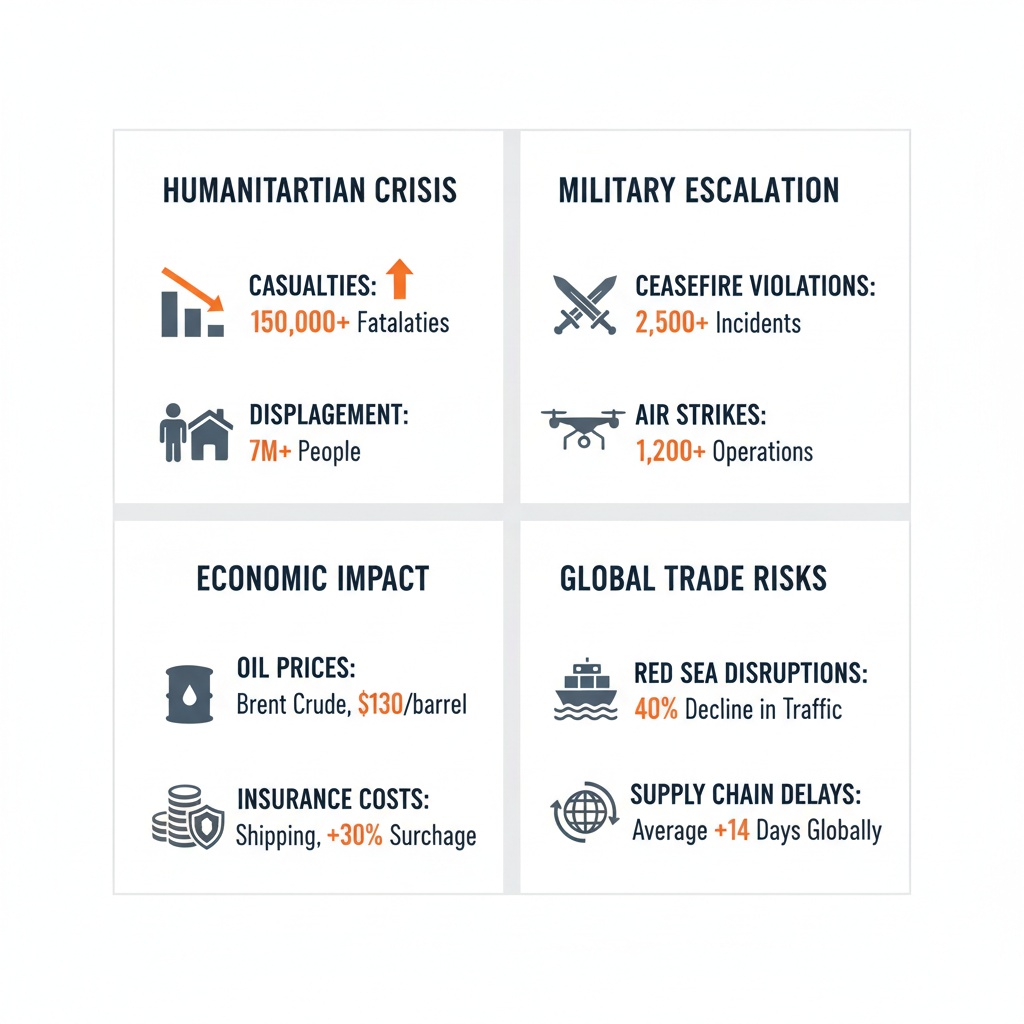
Infographic Image: Middle East Ceasefire Fragility and Regional Impact: Key Metrics Overview
The purpose of this report is to provide a comprehensive, evidence-based strategic assessment of the evolving geopolitical, military, humanitarian, and economic dimensions that shape the fragile ceasefire environment and broader regional dynamics. Grounded in data through May 2026 and encompassing rigorous interdisciplinary methodologies, the analysis seeks to illuminate core risk drivers, elucidate systemic impediments to durable peace, and advance actionable recommendations tailored to diverse stakeholder needs including policymakers, security actors, and humanitarian organizations.
Key focus areas include quantifying ceasefire breaches and their operational characteristics, evaluating progress and constraints within the US-Iran nuclear deal framework, assessing the humanitarian toll in Gaza and Lebanon amid aid obstacles, and analyzing the cascading economic impacts stemming from Strait of Hormuz disruptions. The report also scrutinizes Pakistan’s mediation role alongside emergent technological and governance paradigms that may influence conflict trajectories. By integrating these domains, the study aspires to facilitate informed decision-making aimed at conflict de-escalation and sustainable stabilization in a region central to international peace and security.
1. Executive Summary: Fragile Middle East Ceasefire Under Strain Amid Shifting Geopolitical Dynamics
Interlinked Crises: Escalating Casualties, Ceasefire Fragility, and Economic Shockwaves in the Middle East
This subsection establishes a foundational understanding of the intertwined humanitarian, military, and economic pressures currently destabilizing the Middle East. By quantifying casualty figures and displacement in Gaza and Lebanon, assessing the acute fragility of the ceasefire through recent violation statistics, and outlining the cascading economic implications from the Strait of Hormuz blockade, it frames the multifaceted risks challenging regional stability and global interests. This analysis forms the baseline for subsequent detailed examination of diplomatic and military developments and strategic response options.
Humanitarian Toll: Rising Casualties and Mass Displacement in Gaza and Lebanon during 2026
The 2026 Middle East conflict has inflicted catastrophic human losses and widespread forced displacement, underscoring the severe strain on civilian populations in Gaza and Lebanon. In Gaza, the death toll has escalated to over 72,500 Palestinians killed, including more than 38,000 women and children, demonstrating the disproportionate impact on vulnerable groups. Concurrently, displacement has reached staggering proportions, with approximately 2.3 million individuals—nearly 90 percent of Gaza's population—having been uprooted internally, often multiple times, reflecting both the intensity and persistence of the conflict dynamics.
Lebanon similarly faces a profound humanitarian crisis due to the intensifying Israel-Hezbollah engagements. Since early March 2026, official data confirms over 3,000 fatalities have occurred, with civilian casualties constituting a significant share amidst ongoing airstrikes and ground incursions. The displacement crisis is acute, with over one million people—approximately twenty percent of Lebanon's population—displaced, creating one of the most severe population upheavals relative to country size in recent history. The destruction of residential infrastructure, including entire villages, compounds the urgency of needs for shelter, healthcare, and essential services.
Ceasefire Breaches: Quantifying the Fragility and Enforcement Challenges in the Israel-Hezbollah and Gaza Theatres
Despite formal ceasefire agreements initiated in early 2026, violations remain pervasive and have intensified, eroding prospects for durable peace. In Gaza, systematic breaches have resulted in over 1,600 documented violations since the October 2025 ceasefire announcement alone, causing more than 680 deaths during the so-called peaceful interlude. These breaches include frequent Israeli airstrikes targeting militant and civilian zones, as well as retaliatory attacks by Hamas. The persistence of hostilities illustrates the deep mistrust and operational challenges in sustaining commitments amid competing strategic objectives.
In Lebanon, ceasefire enforcement has faltered amid continued Israeli air raids and Hezbollah rocket fire, resulting in several hundred deaths since the declared truce. Israeli military statements indicate a continued offensive posture targeting what it identifies as militant infrastructure in southern Lebanon, further complicating peace efforts. Independent sources report daily casualty incidents and displacement episodes, signaling the ceasefire’s substantive limitations in protecting civilians and halting hostilities. The frequent civilian targeting, whether intentional or collateral, raises critical concerns about compliance with international humanitarian norms.
Economic Reverberations: Global Energy Markets and Trade Disruption from Strait of Hormuz Tensions
Concurrently, the closure and intermittent blockade of the Strait of Hormuz—a choke point responsible for approximately 20 percent of global oil and LNG shipments—has induced severe disruptions in energy supply chains with broad economic implications. The consequential spike in crude oil prices from under $75 per barrel pre-conflict to an ongoing average surpassing $110 reflects the scale of market volatility triggered by restricted maritime transit and heightened military risks.
This disruption has reverberated through multiple sectors, escalating transportation and insurance costs, forcing supply chain recalibrations, and heightening inflationary pressures globally. Strategic analyses underscore the tradeoff countries face between enduring high energy prices and potential supply shortages. Many nations have accelerated diversification efforts, including investment into alternative pipelines, energy storage, and renewables, but these structural adaptations are unfolding amid ongoing uncertainty. The economic effects are especially acute in energy-importing nations across Asia, Europe, and Africa, while Iran leverages control of the passage to strengthen geopolitical bargaining positions.
The quantification of humanitarian losses and displacement, alongside the detailed documentation of ongoing ceasefire breaches and the global economic effects from the Strait of Hormuz disruption, collectively illustrate the acute multidimensional nature of the current Middle East crises. This foundational overview informs the subsequent in-depth assessments of diplomatic negotiations, military escalations, and policy options that follow in the report.
Clarifying Report Purpose Through Rigorous Methodology and Targeted Analytical Scope
This subsection delineates the foundational parameters underpinning the report’s analytical rigor, emphasizing the transparent selection of source materials, the application of methodological frameworks, and the specification of intended stakeholders. Establishing these elements is crucial for ensuring the reliability, relevance, and strategic usability of the insights concerning the fragile Middle East ceasefire, the US-Iran negotiations, and the Israel-Hezbollah conflict.
Document Selection Criteria Ensuring Authoritative and Recent Geopolitical Insights
The report’s evidence base is constructed from a carefully curated corpus of sources that emphasize both temporal relevance and thematic depth. Selection prioritized official statements, diplomatic communications, expert analyses, and verified media coverage capturing developments through late April to May 2026. Inclusion criteria required sources to offer substantive coverage of US-Iran diplomatic engagements, ceasefire dynamics in Lebanon, and conflict escalations affecting Israel-Hezbollah relations, while excluding speculative or uncorroborated accounts.
Geopolitical sources were drawn from a spectrum including international news agencies, regional think tanks, government briefings, and academic reports, balancing perspectives to account for potential bias or framing effects. Primary data from diplomatic releases and official negotiations reports present the backbone of the analysis, supporting grounded insights rather than conjecture. As such, the selection process upholds the imperative to provide stakeholders with accurate, actionable intelligence amid rapidly evolving circumstances.
Analytical Frameworks Integrating Geopolitical, Military, and Humanitarian Dimensions
Methodologically, the report employs a multilayered geopolitical assessment framework, amalgamating qualitative content analysis of diplomatic communications with quantitative monitoring of conflict incidents and humanitarian indicators. This interdisciplinary approach enables elucidation of causal linkages between political negotiations and military developments, while contextualizing economic and humanitarian repercussions.
The analytical lenses applied include conflict escalation theory to interpret Israel-Hezbollah ceasefire breaches, strategic negotiation theory to evaluate US-Iran engagement trajectories, and regional security complex theory to understand proxy interactions. Data triangulation ensures validity, juxtaposing open-source intelligence with expert interpretations to identify patterns and emergent risks. Together, these frameworks facilitate a comprehensive understanding necessary for nuanced policy and strategic decision making.
Intended Audiences and Strategic Utility for Policy, Security, and Humanitarian Stakeholders
The report targets a spectrum of professional audiences engaged in Middle East affairs, including diplomatic policymakers, security strategists, intelligence analysts, and humanitarian coordinators. By tailoring analyses to intersect with their distinct mandates, the report supports informed decision making at governmental, multilateral, and operational levels.
For policymakers, it offers strategic situational awareness and risk assessment critical for diplomatic maneuvering and crisis management. Security agencies benefit from insights into conflict dynamics and proxy networks that affect regional stability. Humanitarian actors gain understanding of conflict-driven vulnerabilities influencing aid delivery and protection efforts. This multidimensional orientation ensures that findings are pragmatically relevant and actionable across the diverse stakeholders influencing outcomes in the region.
Having established the report’s foundational parameters, the analysis now proceeds to dissect the evolving US-Iran diplomatic landscape, which constitutes a pivotal variable influencing the fragile ceasefire and broader regional stability.
2. Geopolitical Landscape: US-Iran Relations and Nuclear Negotiations
Navigating Complex US-Iran Diplomatic Engagement Amid Domestic Political Pressures and Emerging Deal Dynamics
This subsection critically examines the current state and trajectory of US-Iran diplomatic efforts, focusing on the interplay between burgeoning negotiation progress and persistent domestic political challenges. It situates recent developments within the broader context of strategic concessions, sanctions relief mechanics, and congressional oversight—key factors shaping the probability and durability of any emerging agreement. This analysis provides a foundation for assessing how diplomacy interacts with internal US political dynamics and Iranian strategic calculations at this pivotal juncture.
Impact of US Congressional Polarization on Iran Nuclear Negotiations Trajectory
The evolving US-Iran negotiations are deeply influenced by significant congressional divisions that both constrain and complicate executive diplomacy. While elements within the administration pursue engagement frameworks, the US Congress exhibits marked bipartisan skepticism and opposition toward any agreement that might be perceived as insufficiently constraining Iran’s nuclear capabilities or too lenient on sanction relief. This polarization introduces legislative uncertainties that could delay or derail implementation, emboldening opposition coalitions that frame sanctions relief as a security risk and a threat to regional allies.
Key congressional actors from both parties have voiced concerns about maintaining economic pressure on Iran, underscoring the dual-purpose nature of sanctions as tools for negotiation leverage and broader geopolitical containment. Legislative initiatives aimed at curbing executive war powers and demanding rigorous compliance oversight signal ongoing congressional vigilance and potential for institutional pushback against prematurely endorsed deals. This institutional dynamic adds complexity to diplomacy, as any agreement must anticipate and accommodate congressional scrutiny to secure sustainable bipartisan support.
Sanctions Relief and Oil Export Permissions as Levers in the Deal’s Pace and Substance
Central to the negotiation framework is the phased relief of US-imposed sanctions, notably those restricting Iran’s oil exports, alongside a timeline for the release of frozen Iranian assets. The proposed 60-day memorandum outlines a conditional process where sanctions waivers are awarded in tandem with verifiable Iranian actions, such as demining the Strait of Hormuz and reducing uranium stockpiles. This calibrated approach ensures economic benefits are tied to concrete performance, thereby safeguarding leverage within the deal’s window.
Such graduated sanctions relief serves multiple strategic purposes: it alleviates Iran’s economic distress enough to incentivize compliance, while maintaining US tools to respond to any deviations. The reopening of the Strait of Hormuz figures prominently as both a symbolic and practical milestone, underpinning global energy stability. The implicated oil market dynamics, including insurance premium adjustments and shipping costs, hinge on these sanctions and navigational freedoms, amplifying the broader geopolitical impact of these economic measures.
Assessing Negotiation Progress Metrics and Iran’s Strategic Positioning
Recent meetings in Doha and Islamabad have yielded incremental progress with emergent consensus on key deal components, notably the cessation of hostilities involving Hezbollah and commitments to nuclear transparency. However, significant substantive issues remain unresolved, particularly around the extent of uranium enrichment limitations and the permanence of sanctions relief. Iranian negotiators have emphasized cautious optimism but deny breakthroughs, reflecting their wariness shaped by prior abrupt disruptions.
The discourse reveals Tehran's delicate balancing act: securing economic reprieve without conceding strategic nuclear ambitions or domestic political vulnerabilities. Iran’s willingness to consider phased stockpile dilution or transfer arrangements indicates tactical flexibility but also signals the protracted nature of technical and verification negotiations. This nuanced disposition underscores the complexity of translating framework agreements into legally binding and politically sustainable accords.
The outlined diplomatic engagement intricately weaves evolving negotiation milestones with entrenched political constraints, setting a precarious stage for potential breakthroughs. Understanding these dynamics critically informs the subsequent analysis of military escalations and their impact on ceasefire viability, demonstrating how unresolved diplomatic tensions increasingly intertwine with active conflict theatres in the region.
Nuclear Issues and Strategic Constraints: Enrichment Limits, Breakout Risks, and Congressional Oversight Timelines
This subsection critically examines the technical and political hurdles at the core of US-Iran nuclear negotiations, focusing on Iran's uranium enrichment levels, estimated breakout capabilities, and the shaping influence of US congressional oversight. These factors collectively define the boundaries within which diplomatic progress is possible and frame the strategic calculations of all parties involved.
Current Uranium Enrichment Levels Allowed by Iran: Negotiation Stalemates and Technical Realities
Iran currently retains a uranium stockpile enriched up to approximately 60 percent purity, nearing weapons-grade thresholds, with estimates around 400 to 440 kilograms. This level is far above the 3.67 percent enrichment cap established under the 2015 nuclear accord but below the 90 percent threshold generally required for a nuclear weapon. Tehran has consistently refused US demands to surrender this stockpile or cease enrichment entirely, viewing uranium enrichment as a sovereign right under the Nuclear Non-Proliferation Treaty. Negotiations have seen Iran propose postponing concrete commitments on uranium disposal to subsequent phases, while expressing openness to diluting enriched uranium or transferring portions to third-party custody in some proposals, though no agreement has been reached.
The US, in contrast, insists on a complete halt to enrichment activities and relinquishment of highly enriched uranium stocks. This hardline stance, framed as a ‘red line’ by US policymakers, aims to eliminate Iran’s breakout potential but faces strong resistance given Iran’s emphasis on nuclear sovereignty and regional security considerations. The deadlock over enrichment levels remains a central obstacle to progress, as Iran's leadership perceives any rollback as a threat to national prestige and strategic deterrence.
Iran’s Breakout Nuclear Capability: Shrinking Timelines and Heightened Risks
Iran’s nuclear breakout time, defined as the duration needed to produce sufficient weapons-grade fissile material for a nuclear weapon, has significantly contracted due to advances in enrichment capacity and stockpile accumulation. Intelligence assessments suggest current breakout timelines range between a few weeks to one to two months, representing a substantial decline from the roughly one-year timeline enforced by the 2015 agreement. This compression is attributed to Iran’s deployment of advanced centrifuges and increased uranium enrichment purity.
Such accelerated breakout capacity elevates the risk of rapid, potentially undetectable weaponization efforts, complicating verification measures and raising alarms about Iran’s ability to amass a covert arsenal. While Iran denies intentions to develop nuclear weapons, the capability to shorten breakout time increases regional and global proliferation concerns and heightens the urgency for robust monitoring and enforceable constraints within any diplomatic settlement.
Congressional Oversight and Legislative Timelines: Impacts on Verification and Deal Implementation
The trajectory and durability of any nuclear agreement with Iran are heavily influenced by the US congressional oversight environment, which imposes procedural and political constraints on the executive branch’s negotiating flexibility. Congressional committees tasked with oversight of national security and foreign policy apply stringent scrutiny to verification mechanisms, enrichment ceilings, and compliance enforcement, impacting the timing and content of negotiated deals.
Mandated review processes and legislative deadlines create compressed windows for diplomatic breakthroughs and ratification, often coinciding with electoral cycles and broader political dynamics that can undermine continuity. Such oversight can extend to requiring detailed reporting on verification procedures, restricting funding for monitoring agencies, and imposing conditions that complicate phased or incremental agreements. The resulting legislative timetable exerts pressure on negotiators to align deal terms with congressional acceptability, sometimes at the expense of technical compromises necessary for conflict de-escalation.
Understanding the multifaceted nuclear issues—spanning technical enrichment constraints, the narrowing timeline for potential weaponization, and the constraining force of congressional oversight—provides a crucial foundation for assessing how diplomatic negotiations proceed under pressure. These realities shape the strategic environment within which broader regional conflicts, such as the Israel-Hezbollah hostilities, unfold and intertwine with the fragile ceasefire landscape.
Pakistan’s Mediation Role: Diplomatic Catalyst Amidst Structural Constraints
This subsection critically evaluates Pakistan’s evolving role as a mediator in the US-Iran conflict, emphasizing its diplomatic initiatives, coordination mechanisms with regional and international actors, and inherent limitations. By unpacking Islamabad’s influence on negotiations and identifying systemic challenges, the analysis offers insight into the effectiveness and sustainability of Pakistan-led mediation within the broader geopolitical landscape.
Pakistan’s Proactive Diplomatic Initiatives and Engagement Strategy
Pakistan has emerged as a pivotal intermediary between Washington and Tehran, leveraging its unique position characterized by cordial relations with both parties, a significant Shia population, and the absence of US military bases on its soil. The leadership of Pakistan’s Army Chief has been central to these efforts, involving direct high-level meetings with Iranian officials including the Foreign Minister and chief negotiators, aimed at de-escalating tensions and preventing military resurgence. Islamabad has hosted direct talks between US and Iranian representatives for the first time in decades, providing a neutral venue that fosters dialogue while maintaining political neutrality. Such efforts have been publicly recognized by Iranian diplomats and echoed by US officials who continue to endorse Pakistan as the primary interlocutor facilitating communication channels amidst a highly charged conflict environment.
These initiatives reflect Islamabad’s strategic intent to contain regional escalation, safeguard its own national security interests, and stabilize a volatile Middle Eastern landscape that directly impacts Pakistan’s economic and security calculus. The government’s multifaceted approach includes diplomatic engagement led by the Foreign Office, military diplomacy driven by defense leadership, and coordination with allied mediators such as Qatar and Oman. These dynamics illustrate Pakistan’s attempt to balance operational diplomacy with broader geopolitical considerations, positioning itself as an indispensable but cautious mediator in an otherwise stagnant negotiation process.
Coordinated Diplomacy: Multilateral Actor Engagement and Mediation Architecture
Pakistan’s mediation role functions within a network of regional and international actors who contribute supplemental diplomatic support, notably Qatar and Oman, both of which have historical experience facilitating US-Iran dialogue. Coordination among these actors underscores the complexity of maintaining an effective negotiation environment where bilateral mistrust runs deep. Pakistani officials have emphasized shuttle diplomacy, relaying proposals and counterproposals, while navigating divergent strategic interests of allied states backing either side. This multilateral engagement serves to expand the communication bandwidth beyond direct contacts, although it also complicates message transmission and decision-making processes given differing priorities among intermediaries.
Despite the involvement of multiple brokers, Islamabad retains a central mandate officially acknowledged by both Tehran and Washington to manage the diplomatic trance of hostile engagements. However, this role appears largely tactical and focused on preventing immediate escalation rather than resolving substantive strategic disagreements. While Pakistan’s military and diplomatic leadership engage frequently with Iranian counterparts and US officials, there is limited evidence of sustained multilateral frameworks or institutionalized mediation platforms that could facilitate a comprehensive peace architecture. Efforts remain reliant on episodic high-level meetings shaped heavily by individual personalities rather than enduring institutional mechanisms.
Structural and Political Limitations Tempering Mediation Effectiveness
The effectiveness of Pakistan’s mediation is circumscribed by several structural and political factors that constrain its ability to engineer a lasting resolution. The conflict’s intractable nature, rooted in deep-seated mistrust, national security doctrines, and competing regional ambitions, minimizes the scope for third-party influence over decisive strategic choices. Islamabad’s efforts largely operate within a narrow tactical bandwidth, conveying messages but unable to alter fundamental negotiating positions or security calculations. This is reflected in the repeated deadlocks and absence of breakthrough agreements despite intensive shuttle diplomacy.
Domestically, Pakistan faces considerable pressures that complicate sustained mediation efforts. Rising economic vulnerabilities, energy insecurities, and potential backlash from regional power blocs create a delicate balancing act between maintaining regional credibility and safeguarding national interests. Furthermore, Pakistan’s neutrality may be perceived ambiguously, risking alienation from Gulf states aligned with the US or Iran’s entrenched strategic allies. Critics argue that Pakistan risks becoming a perpetual negotiation venue or process manager without translating its diplomatic visibility into concrete strategic or economic benefits. Without a clear monetization framework or formalized mediation mandates, Pakistan’s role remains reactive and contingent.
Institutionally, the reliance on personality-driven diplomacy over structured multilateral processes undermines consistency and predictability. The absence of durable mediation mechanisms, formal communication channels, and conflict resolution frameworks diminishes the sustainability of engagement. Consequently, momentum for de-escalation is fragile and liable to rapid reversal, as evidenced by recurring ceasefire violations and diplomatic stalling. This fragility highlights the need for a recalibrated mediation approach that incorporates broader regional stakeholders and institutionalizes dialogue modalities beyond episodic high-level talks.
Understanding both the tactical successes and inherent constraints of Pakistan’s mediation illuminates the broader strategic environment shaping US-Iran negotiations. These insights set the stage for exploring how evolving military dynamics and proxy conflicts exert additional pressure on ceasefire stability, informing subsequent sections that analyze conflict escalation and regional ramifications.
3. Military Developments: Israel-Hezbollah Conflict Intensifies
Ceasefire Breaches and Tactical Adaptations Shape Escalating Israel-Hezbollah Confrontation
This subsection provides a rigorous assessment of the deteriorating ceasefire observance between Israel and Hezbollah, quantifying the intensity and frequency of violations while dissecting how evolving Hezbollah asymmetric tactics, particularly drone warfare, have compelled adaptive Israeli Defense Forces (IDF) responses. It situates these military developments within the broader conflict dynamics, revealing critical indicators of conflict volatility and operational shifts that undermine the regional truce and influence strategic decision-making.
Quantitative Surge in Israel-Hezbollah Ceasefire Violations Reflects Conflict Volatility
Since the initiation of the ceasefire in mid-April 2026, the fragile truce between Israel and Hezbollah has regularly eroded, with documented breaches occurring at a considerably high rate. Hezbollah officially claimed over 330 operations against Israeli forces within a single 30-day period, averaging approximately 11 attacks per day, with activity peaking at 30 assaults on the most intense days. This range of engagements primarily targeted Israeli positions in southern Lebanon but also included strikes inside northern Israel, reaching as far as 15 kilometers beyond the border. The scale of these violations is underscored by the thousands of Israeli airstrikes launched in retaliation, with the IDF striking over 1,100 Hezbollah military targets and reportedly eliminating 350 militants since the ceasefire commenced. These figures point to a persistent and escalatory pattern, where ceasefire commitments have been overshadowed by kinetic operations on both sides, emphasizing the exceedingly tenuous nature of the truce.
Despite ongoing US-brokered agreements granting temporary pauses and extensions of the ceasefire, hostilities have intensified rather than abated. Lebanese civilian casualties continue to mount, with health ministry reports indicating over 400 deaths post-ceasefire onset and more than one million displaced persons within Lebanon. Simultaneously, Israel has suffered casualties and destruction to military assets, including tanks, armored personnel carriers, and infrastructure. This sustained exchange reflects a conflict environment where ceasefire agreements serve more as operational pauses than effective mechanisms for conflict resolution, signaling a volatile security atmosphere that challenges diplomatic initiatives.
Proliferation and Impact of Hezbollah FPV Drone Operations Elevate Asymmetric Threat
Hezbollah’s deployment of First Person View (FPV) fiber-optic tethered drones represents a tactical innovation that has markedly altered the battlefield calculus in southern Lebanon and northern Israel. These drones, assembled from low-cost 3D-printed components and commercially available fiber-optic cabling, operate with near invisibility to conventional electronic warfare countermeasures, circumventing Israel’s radio-frequency jamming systems and active defense radars. By evading detection and exploiting Israel’s reliance on radar-optimized defenses, these drones have inflicted disproportionate damage on expensive and mechanized Israeli assets, including Merkava tanks, armored bulldozers, and infantry fighting vehicles. The operational use of such drones peaked during April and May 2026, with Hezbollah claiming their employment in the majority of ground attacks against IDF positions during this period.
The strategic ramifications of Hezbollah’s reliance on these unmanned systems are profound. By integrating low-signature drone attacks into a combined arms approach that also involves rocket and missile fire, Hezbollah has enhanced its asymmetric strike capability, complicating Israeli force protection and necessitating rapid adaptation in defensive tactics. The tactical evolution challenges traditional Israeli deterrence paradigms and forces resource reallocation to counter-drone technologies, increasing operational complexity amid an already intense conflict.
IDF Tactical Shifts Demonstrate Escalating Intensity and Adaptation to Emerging Threats
In response to persistent Hezbollah aggression and the advancement of new drone technologies, the Israeli Defense Forces have recalibrated their tactical posture to maintain operational pressure and protect borders. Since April 2026, the IDF has intensified precision airstrikes, targeting key Hezbollah infrastructure including weapons storage facilities, command centers, and tactical launch sites in southern Lebanon. These strikes number over 1,100 targets in just over a month, reflecting a shift toward relentless attritional bombardment aimed at degrading Hezbollah’s operational capacity.
Ground force adjustments include expanding a demilitarized buffer zone in southern Lebanon up to the Litani River, complemented by increased intelligence-driven engagements intended to suppress asymmetric threats before they materialize on the battlefield. Notably, Israeli military leadership has committed to accelerated operations with a stated objective of ‘crushing’ Hezbollah’s military capability, openly acknowledging the evolving drone threat and deploying specialized countermeasures. This strategic posture underscores a willingness to sustain high-intensity operations that blur the line between ceasefire and active combat, reinforcing the complexity of achieving a lasting cessation of hostilities.
The analysis of ceasefire violations and military tactical evolution between Israel and Hezbollah underscores the fragile and deteriorating security environment that challenges regional stabilization efforts. These developments directly influence broader strategic considerations involving diplomatic negotiations and risk management frameworks addressed in subsequent sections.
Humanitarian Toll of the Israel-Hezbollah Conflict: Casualties, Displacement, and Healthcare Access Crises
This subsection critically assesses the human costs stemming from the intensified Israel-Hezbollah hostilities. Quantifying casualty figures, tracking displacement trends, and evaluating healthcare service accessibility collectively illuminate the severe humanitarian challenges undermining civilian wellbeing. These insights provide essential grounding for strategic interventions and aid prioritization in the conflict-affected areas of southern Lebanon.
Escalating Casualty Figures Reflect Intensifying Conflict Severity
The ongoing conflict between Israel and Hezbollah has resulted in a staggering loss of life, underscoring the war’s relentless escalation despite intermittent ceasefires. Lebanese health authorities report that since early March 2026, over 3,100 individuals have been killed due to Israeli military operations, with a significant portion of these fatalities occurring post-ceasefire. Recent strikes have resulted in multiple single-day death tolls exceeding 20 casualties, inclusive of women and children, evidencing the persistent threat posed to civilian populations even under fragile truce agreements. This high casualty rate reflects both direct airstrikes targeting Hezbollah-affiliated sites and collateral damage affecting densely populated areas.
The disproportionate impact on non-combatants is accentuated by documented casualties among healthcare workers and the destruction of medical infrastructure, complicating efforts to provide critical emergency response and undermining civilian resilience. The repeated air attacks on southern Lebanese townships have not only inflicted mass casualties but have also intensified psychological trauma within affected communities.
Civilian Displacement Patterns Highlight Acute Humanitarian Needs
Conflict-induced displacement has reached crisis proportions, with estimates indicating that approximately one-fifth of Lebanon’s population—over 1.5 million people—have been forcibly uprooted since hostilities resumed. These displacements are largely concentrated in southern Lebanon, where Israeli military advances and evacuation orders have compelled civilians to abandon homes, often multiple times amid ongoing violence. The scale and speed of displacement have overwhelmed local capacities and charitable organizations, resulting in overcrowded shelters and widespread insecurity among vulnerable populations.
Despite ceasefire declarations, return movements remain circumscribed by lingering security threats, unexploded ordnance, and extensive infrastructural damage. Displacement camps and temporary settlements are reported to face acute shortages of essential services including food, clean water, medical care, and sanitation. Intermittent humanitarian access further exacerbates these conditions, endangering displaced persons’ health and safety, and complicating prospects for durable solutions.
Healthcare Accessibility Severely Compromised Amidst Sustained Hostilities
The conflict has inflicted profound disruption on Lebanon’s healthcare system, critically impairing the capacity to deliver medical services in areas hardest hit by hostilities. Official reports indicate the destruction or severe damage of numerous hospitals and clinics, alongside targeted attacks causing more than 100 healthcare worker fatalities. Many ambulances and health centers have been impaired or forced to close, limiting emergency response and routine care for injured civilians and those with chronic conditions.
Barriers to healthcare access are further compounded by damaged infrastructure, lack of medical supplies, and security constraints restricting the movement of patients and medical personnel. The degradation of health services is leading to escalating mortality not only from conflict-related injuries but also from treatable diseases and compromised management of non-communicable illnesses. Psychosocial impacts are significant, with long-term trauma and mental health disorders pervasive but inadequately addressed due to resource shortages and systemic collapse.
Understanding the depth and breadth of civilian suffering is imperative to inform the subsequent strategic evaluation of military dynamics and regional policy responses. The intersection of sustained casualties, protracted displacement, and failing healthcare infrastructures underscores a humanitarian imperative that must be integrated within conflict resolution and stabilization efforts.
Strategic Implications for Regional Actors Amid Escalating Israel-Hezbollah Tensions
This subsection examines the broader strategic consequences of the renewed Israel-Hezbollah conflict for regional actors beyond the immediate battlefield. It assesses evolving alliance patterns, cross-border spillovers into neighboring territories, and the risk of wider coalition formations. Understanding these dynamics is crucial for anticipating potential shifts in the Middle East’s geopolitical architecture and informing stakeholder risk assessments and policy calibrations.
Hezbollah’s Post-April 2026 Alliance Shifts and Lebanese Internal Dynamics
Hezbollah’s position within Lebanon and the wider region remains complex and evolving following the ceasefire agreement brokered in mid-April 2026. Despite substantial losses during the preceding conflict phase, including the elimination of senior leadership figures, Hezbollah has managed to adapt operationally by decentralizing command and increasing reliance on low-cost tactical innovations like locally produced kamikaze drones. These adaptations underscore the group’s intent and capability to maintain pressure on Israel while recalibrating to a diminished supply line through Syria.
Simultaneously, Lebanon’s domestic political landscape is undergoing notable shifts. The Lebanese government, under Prime Minister Nawaf Salam, has taken a firmer stance against Hezbollah’s military autonomy, formally banning its military activities in early March 2026. This has fueled tensions between Hezbollah and the state, reflecting a broader struggle over sovereignty and the monopoly on legitimate use of force. Political actors sympathetic to reducing Iranian influence within Lebanon have gained momentum, further complicating Hezbollah’s posture within the state framework.
Hezbollah’s rhetoric following the ceasefire signals a dual strategy: it insists on reciprocal cessation of hostilities while asserting readiness to retaliate against Israeli violations. The group’s leadership also seeks renewed cooperation with Lebanese governmental institutions, suggesting an interest in leveraging state structures to consolidate its position amid increasing internal and external pressures. These developments imply a recalibration of Hezbollah’s alliances—from a purely militant actor toward one engaging more directly with Lebanese political structures, albeit underpinned by its established regional Iranian patronage.
Cross-Border Spillover Dynamics: Lebanon-Syria Border and Broader Regional Stability
The intensification of Israel-Hezbollah hostilities has reverberated beyond the immediate Lebanon-Israel border, with rising concerns about security along the Lebanon-Syria frontier. Syria’s recent military deployments along the shared 330-kilometer border, including troops, rocket units, and reconnaissance forces, are officially aimed at curbing smuggling and preventing militant incursions. However, these measures also reflect Damascus’s efforts to stabilize its northern border amidst the ongoing regional conflict escalations.
These border security enhancements coincide with a surge in cross-border displacement, with over 120,000 Lebanese reportedly crossing into Syria by mid-March 2026 to seek refuge from escalating violence. This movement threatens to exacerbate humanitarian challenges in an already fragile Syrian recovery phase and raise the potential for localized clashes involving Syrian security forces, Lebanese factions, and residual Hezbollah networks operating in both countries.
Additionally, Syria has taken cautious steps to arrest and disrupt Hezbollah cells allegedly involved in assassinations and terrorist plotting, indicating a nuanced position toward the group that balances alliance commitments with the need for national sovereignty and order. The Lebanon-Syria border dynamics thus represent a salient vector for regional escalation, linking the Israel-Hezbollah conflict to broader Levantine security challenges and underscoring the transnational dimensions of the crisis.
Forecasting Wider Coalition Risks from Israel-Hezbollah Escalation
The protracted Israel-Hezbollah confrontations carry significant risk of triggering broader coalition formations and alliances shifting in response to the conflict dynamics. Iran’s sustained support for Hezbollah remains a critical factor, ensuring that the conflict retains a proxy dimension with Tehran leveraging the group as part of its strategic deterrence and regional influence posture. Tensions between Washington and Tehran, heightened by ongoing US-Iran nuclear negotiations, compound the unpredictability of conflict escalation paths.
Regional actors have exhibited diverse and sometimes contradictory responses. While some, such as Bahrain, have intensified internal security operations against Iranian-linked actors, others like Qatar and Egypt have heightened diplomatic outreach aimed at de-escalation, demonstrating an awareness of the detrimental risk posed by wider conflict contagion. Moreover, initiatives toward a comprehensive ceasefire involving Israel and Lebanon are underway but face fragile prospects given persistent Israeli strikes and Hezbollah retaliations.
The risk of a broader coalition emerges also from the potential involvement of other non-state and state actors with vested interests, such as Syria, the Houthis in Yemen, and possibly Palestinian factions. An uptick in proxy-driven hostilities, asymmetric warfare tactics, and indirect confrontations could expand the geographic scope and intensity of conflict, undermining fragile peace efforts. The prospects for a durable regional realignment that includes integration of Hezbollah’s military capabilities under state control remain uncertain, raising the risk that escalating tensions may precipitate an expanded and more difficult-to-manage conflict.
The evolving strategic implications of the Israel-Hezbollah conflict illustrate the complex interplay between armed non-state actors, fragile state institutions, and regional power rivalries. Understanding these dynamics is essential to forecasting future conflict trajectories and shaping effective diplomatic and security policies designed to mitigate broader regional destabilization.
4. Economic Dimensions: Energy Markets and Trade Disruption
Strait of Hormuz: Global Energy Corridor Under Siege with Escalating Economic Pressures
This subsection examines the critical importance of the Strait of Hormuz as a linchpin for global energy flows amid ongoing conflict-related disruptions. It analyzes the direct commercial and financial impacts of restricted passage through the strait, focusing on market sensitivity, maritime insurance premiums, and the economic viability of alternative routing solutions. Understanding these dynamics is essential for stakeholders assessing risk exposure and planning strategic responses in the evolving Middle East geopolitical landscape.
Quantifying Oil Price Elasticity Amid Hormuz Disruptions
The closure and intermittent blockade of the Strait of Hormuz have triggered significant volatility in global oil markets, demonstrating highly inelastic demand and supply sensitivities under strained geopolitical conditions. The strait, through which approximately 20-25% of global seaborne oil trade normally passes, became effectively closed in early 2026, with vessel traffic plummeting to just 5-10% of pre-conflict levels. This drastic disruption has pushed Brent crude prices beyond the $100 per barrel threshold, with projections suggesting prices could surge to $120 and potentially $150 per barrel if the blockade persists beyond mid-2026.
The price elasticity of oil demand declines markedly during periods of high macroeconomic and geopolitical uncertainty, as market participants are less responsive to price shifts due to limited short-term alternatives. In the current environment characterized by elevated uncertainty, estimated demand elasticity has tightened from ranges of -0.52 to -0.15 under stable regimes to approximately -0.36 to -0.11. This shrinkage in elasticity exacerbates price shocks when supply is constrained and enhances market volatility, magnifying the economic repercussions of any further interference in Hormuz transit.
These factors combine to suggest that the traditional buffering mechanisms within global oil systems, such as strategic reserves and supplier flexibility, are increasingly inadequate. The continuing blockade accentuates supply rigidities that ripple through economies disproportionally, especially energy-import-dependent states, intensifying inflationary pressures and complicating monetary policy responses.
Rising Maritime Insurance Premiums: Financial Strains from War Risk Repricing
The resurgence of hostilities, naval blockades, and asymmetric threats in the Gulf have precipitated a dramatic recalibration of maritime war risk insurance premiums, transforming them into a critical cost driver beyond direct operational expenditures. Prior to April 2026, war risk premiums for vessels transiting the Gulf averaged between 0.2% and 0.4% of hull value per voyage. Following intensification of naval actions and the imposition of a U.S. naval blockade, these premiums escalated sharply, reaching 0.8% to 1.2%, with subsequent surges of 40-60% expected after specific triggering events involving vessel attacks.
For a vessel valued at $100 million, this translates into an additional war risk premium burden jumping from an already elevated $200,000-$400,000 range per transit to upwards of $800,000-$1.2 million, with expectations of further escalation. This exponential rise in insurance costs, compounded by sharply increased freight rates, is compelling commercial operators to divert routes, reduce shipments, or absorb significant financial strain, ultimately transmitting upward pressure on global commodity prices and supply chain costs.
The rapid insurance repricing also reflects heightened operational risk levels and lower market confidence in safe passage, effectively extending conflict-related disruptions from physical chokepoints into the economic logistics dimension, exacerbating uncertainty and impairing planning horizons for exporters and importers alike.
Economic Feasibility and Impact of Alternative Hormuz Route Options
With the Strait of Hormuz effectively closed and direct maritime transit severely constrained, shippers and exporters have increasingly pivoted to alternative routing strategies. These primarily include two pipeline corridors—the East-West Petroline across Saudi Arabia and the Abu Dhabi-Fujairah pipeline—that serve as partial bypasses, as well as long-range maritime rerouting via the Cape of Good Hope. While the pipelines provide some capacity relief, their combined throughput remains well below the typical daily maritime volume transiting Hormuz, with the East-West pipeline capable of handling approximately 4.8 to 7 million barrels per day and the Abu Dhabi-Fujairah pipeline about 1.5 to 1.8 million barrels per day, far less than the roughly 17 million barrels per day through the strait.
Maritime rerouting around the Cape of Good Hope imposes significant cost and time penalties, adding an estimated 9,000-11,000 kilometers and up to 12-16 days per voyage. For a Very Large Crude Carrier, these additional transit expenses can amount to $2.25 to $3.5 million per trip. Furthermore, the longer journey exacerbates operational risks and delays, raising freights and associated logistic costs. Liquefied natural gas exports, particularly critical for countries like Qatar, face even more constrained options as existing pipelines cannot accommodate LNG shipments, making maritime transit via Hormuz indispensable.
These alternatives, while partially mitigating the supply disruption, carry inherent capacity constraints and elevated geopolitical risk profiles themselves. Consequently, the economic feasibility of these options diminishes as conflict prolongs, necessitating recalibration of global energy supply chains and potential acceleration of investment in renewable energy and strategic reserves among import-dependent nations.
Having delineated the acute economic shocks stemming from the Strait of Hormuz blockade, including oil price responsiveness, spiraling war risk insurance costs, and the limitations of alternative transit routes, the analysis now transitions to assessing sector-specific vulnerabilities and broader economic ramifications across industries reliant on uninterrupted energy and trade flows.
Sector-Specific Vulnerabilities: Manufacturing Decline, Tourism Collapse, and Financial Instability from Capital Flight
This subsection delves into the immediate and sectoral economic impacts thrust by the US-Iran conflict and the broader Middle East upheavals. Focusing on manufacturing, tourism, and financial markets, it reveals how disruptions to trade routes, travel bans, and investor sentiment converge to exacerbate regional economic fragilities. These insights are critical for stakeholders aiming to tailor responsive economic policies and risk mitigation strategies amid the increasingly precarious geopolitical environment.
Manufacturing Sector Contraction in Conflict Zones: Real GDP Impact and Output Reduction
Manufacturing industries across conflict-affected Middle Eastern regions have experienced notable output contractions driven by disruptions in supply chains, damaged infrastructure, and declining demand. Empirical data indicates these declines translate directly into measurable GDP losses within the sector, where firms adjust production downward due to both input scarcities and market uncertainties. This contraction is matched by a corresponding reduction in production costs, suggesting firms reduce operational scale proportionate to demand shortfalls rather than improve efficiencies. Consequently, economic activity in manufacturing hubs shows a sustained downturn, undermining regional industrial capacity and competitiveness.
Moreover, the persistence of conflict-related disruptions limits investment in capacity restoration and technology adoption, further entrenching structural weaknesses. This effect compounds over time, with long-term declines in total factor productivity as capital stock depreciates and workforce displacement rises. The overall manufacturing GDP loss reverberates through export earnings and employment, intensifying socio-economic stress in affected populations.
Tourism Sector Collapse: Travel Restrictions, Flight Disruptions, and Revenue Losses
The tourism industry in the Middle East, a critical economic pillar particularly for Gulf Cooperation Council countries, faces unprecedented strain as travel bans, airspace closures, and escalating conflicts depress international visitor arrivals steeply. Airspace restrictions linked to the US-Iran war have led to a cascading effect on flight operations, with over 26,000 flights disrupted since early 2026 and airline route suspensions spanning key cities including Tel Aviv, Beirut, Doha, and Kuwait City. This has translated into a visitor decline estimated between 11% and 27% year-on-year, resulting in tens of millions fewer arrivals and a projected loss in visitor spending ranging from $34 billion to $56 billion within 2026 alone.
The immediate fallout includes sharp hotel occupancy drops, diminished airline revenues, and volatile fuel and insurance costs driving operational expenses higher. Regional hubs such as Dubai, Doha, and Istanbul, while showing potential for recovery if conditions stabilize, have recently witnessed significant passenger traffic declines and contractions in hospitality revenues. The sector’s deep exposure to geopolitical risk amplifies uncertainty, necessitating strategic focus on confidence restoration and resilient tourism infrastructure investments to enable medium- to long-term recovery.
Financial Sector Pressures: Currency Depreciation and Capital Flight Risks
Economic instability triggered by Middle East conflicts extends into financial markets, exhibiting as accelerated capital flight and currency depreciation. Investor risk aversion amid escalating geopolitical tensions has supercharged large-scale capital outflows, placing downward pressure on local currencies and undermining financial market stability. Such currency depreciation drives imported inflation, elevating costs for essential goods and eroding purchasing power, further destabilizing domestic economies.
Observable trends include capital withdrawals stemming not only from fears of prolonged conflict but also from concerns over fiscal sustainability and political instability. These outflows have induced heightened volatility in exchange rates, diminishing foreign direct investment inflows, and raising borrowing costs. The combined effect is a contraction in credit availability and a tightening of financing conditions, particularly detrimental for emerging and lower-income economies with shallow financial markets. Without effective policy intervention, this dynamic risks precipitating a broader real economic recession, compounding the direct damage from the conflict itself.
Given the pronounced vulnerabilities identified in manufacturing, tourism, and financial sectors, the following section will explore the enduring structural adjustments underway within the regional energy landscape, assessing how shifts in supply chains and infrastructure investments may recalibrate regional and global economic dependencies.
Long-Term Structural Adjustments: Strategic Pipeline Expansion, Renewable Acceleration, and Energy Import Realignments
This subsection analyzes the enduring infrastructural and strategic shifts in Middle Eastern and adjacent energy sectors precipitated by the ongoing conflict and ceasefire in 2026. Understanding planned pipeline investments, the expedited adoption of renewables, and evolving import dependency profiles is essential for anticipating the post-crisis energy landscape. These structural adjustments underpin both regional resilience and global market stability, making them a critical dimension of strategic decision-making.
Planned Pipeline Investments to Bypass Strait of Hormuz Vulnerabilities
The 2026 regional ceasefire and prior escalations have accelerated plans to diversify energy transit routes and reduce chokepoint dependency on the Strait of Hormuz. Major Gulf states, including the UAE and Saudi Arabia, are actively investing in pipeline infrastructure that circumvents the Strait to ensure uninterrupted crude exports. Such projects, notably the Habshan-Fujairah pipeline, exemplify strategic rerouting efforts aimed at mitigating geopolitical risk inherent in maritime passage control. These developments fit within a broader $100 to $200 billion global pipeline investment horizon, heavily concentrated in the Middle East and proximate regions where political risk remains elevated.
This pipeline investment wave is shaped by the imperative to secure energy supply chains amid unpredictable regional tensions. However, many new projects traverse multiple countries, complicating risk management with varying degrees of political stability. Effective realization of these infrastructure initiatives will require careful navigation of transnational governance and security considerations. For energy-importing nations reliant on the Strait, such diversification promises enhanced trade route resilience and a strategic buffer against future disruptions.
Acceleration Metrics in Renewable Energy Uptake Driven by Energy Security Imperatives
The crisis has catalyzed a marked acceleration in renewable energy adoption across the Middle East and Asia, driven by energy security concerns that outweigh traditional environmental motivations. Governments are foregrounding renewables such as solar, wind, and electric vehicles as means to reduce fossil fuel dependency exposed by conflict-related supply chain shocks. This shift, described by experts as an 'Asia’s Ukraine moment,' reflects both the plunging costs of competitive renewable technologies and heightened geopolitical risk awareness.
Quantitatively, investment in renewables has surged paralleling policy realignments and corporate shifts toward more resilient energy portfolios. For example, countries such as Saudi Arabia and the UAE are combining pipeline diversification with aggressive renewable capacity expansions, evidencing integrated strategies. International energy agencies highlight that technology innovations, coupled with AI-enabled grid management and storage solutions, are further compressing the timeline for transition. Despite these positive trajectories, uneven adoption persists across the region due to political and institutional challenges.
Moreover, the renewable sector’s growth is poised to permanently reshape energy consumption patterns and reduce exposure to volatile fossil fuel markets. This realignment aligns with long-term global commitments to decarbonization but now carries additional weight as a strategic imperative for economic stability and national security.
Shifts in Energy Import Dependencies and Strategic Realignments by Major Importers
The aftermath of regional conflict and Strait of Hormuz disruptions have forced major energy importers to reevaluate and restructure their supply dependencies. India, despite impressive diversification across 41 crude-supplying countries, still sources about 30% of its crude via the Strait, underscoring ongoing vulnerability. The limited inflow during periods of closure has spotlighted the fragility of existing import channels and incentivized investment in strategic reserves and alternative routes.
Similarly, other Asian economies, including China and Japan, face pressing needs to accelerate pipeline diversification and stockpiling to buffer against extended supply shocks. The increasing role of Iran as a gatekeeper of the Strait post-conflict has heightened geopolitical risk premia on energy imports, compelling import-dependent nations to hedge via varied sourcing strategies, enhanced storage capacity, and domestic energy transition investments.
These shifts also involve economic ramifications beyond energy markets: currency stability concerns, adjustments in trade financing, and potential recalibration of diplomatic alignments to secure favorable terms and infrastructure access. This evolving energy import landscape reflects not only immediate crisis response but a fundamental strategic realignment with implications for global energy security architectures.
Taken together, pipeline expansion, renewable energy acceleration, and evolving import dependencies form an interconnected framework of long-term structural adjustments. These combined trajectories establish the foundation for more resilient, diversified, and geopolitically adaptive energy systems in the post-conflict Middle East and neighboring regions. The strategic implications of these transformations will be further explored in the subsequent sections addressing economic consequences and policy recommendations.
5. Humanitarian Imperative: Addressing Systemic Failures
Gaza and Lebanon: Humanitarian Crises Deepen Amidst Ongoing Conflict and Aid Blockades
This subsection critically examines the compounded humanitarian emergencies in Gaza and Lebanon, focusing on the persistent barriers to aid delivery, critical protection gaps affecting vulnerable populations, and systemic institutional failures undermining effective response efforts. Understanding these intertwined dimensions is essential for formulating targeted humanitarian policies and operational frameworks that address the immediate and structural needs in these conflict-affected zones.
Obstacles to Humanitarian Aid Flow in Gaza and Their Impact on Civilian Survival
The humanitarian situation in Gaza remains dire due to significant restrictions and irregularities obstructing the delivery of essential aid. Despite ceasefire agreements envisioning the daily entry of substantial humanitarian cargo, actual volumes fall markedly short, with only around 150 trucks permitted daily against a planned 600. These shortfalls have been exacerbated by bureaucratic impediments, including protracted border inspections and stringent limitations on medical and food supplies—many shipments are rejected based on minor technicalities such as pallet sizing, further delaying critical assistance.
As a direct consequence, malnutrition is widespread, with reports indicating that roughly 20% of Gazan families subsist on a single meal per day, and child malnutrition has reached alarming levels. The blockade has caused a crippling shortage of medical supplies, with nearly half of essential medications out of stock and specialized surgical equipment prevented from entering, severely constraining rehabilitation efforts for tens of thousands suffering life-changing injuries. Hospital functionality is severely compromised, with none operating at full capacity and an overwhelming proportion only partially functional. These barriers not only prolong suffering but also increase mortality and morbidity risks across vulnerable groups, particularly children, pregnant women, and the injured.
Protection Gaps and Civilian Vulnerabilities in Lebanon Amid Escalating Regional Violence
In Lebanon, the ongoing military tensions along the Israel-Hezbollah border have compounded pre-existing socio-economic vulnerabilities, dramatically exacerbating civilian protection deficits. Recurrent hostilities disrupt access to basic services, while displacements and infrastructural damages have left large segments of the population in precarious conditions. Water scarcity, fueled by the region’s worst recorded drought, has further stressed essential service delivery, notably in sheltering displaced persons and maintaining sanitation standards.
Moreover, the proliferation of unexploded ordnance and improvised explosive devices in contested areas presents enduring threats to civilians, with children disproportionately affected. Casualty data reveal significant injury and fatality rates from these hazards, undermining communal safety and recovery prospects. The lack of robust institutional support mechanisms and weakened emergency response capacities hinder effective risk mitigation, amplifying civilian exposure to harm amidst fragile security and humanitarian frameworks.
Institutional Accountability Failures Compounding Humanitarian Breakdown
Systemic failures in accountability and governance critically undermine humanitarian outcomes in both Gaza and Lebanon. In Gaza, the controversial establishment of militarized aid distribution centers has fragmented and politicized assistance channels, reducing efficiency, restricting access, and fostering community distrust. Key UN and partner agencies face operational constraints and funding shortfalls, exacerbated by donor fatigue and inconsistent enforcement of international legal obligations by occupying and other conflicting parties.
International frameworks designed to safeguard civilian populations and ensure impartial aid delivery suffer from implementation gaps, including weak monitoring, inconsistent enforcement of ceasefire terms, and political obstructions. These institutional inadequacies perpetuate cycles of deprivation, impede sustainable recovery, and limit the efficacy of mechanisms intended to protect vulnerable groups. Without addressing these accountability deficits, humanitarian initiatives remain vulnerable to manipulation and insufficient to meet the escalating needs on the ground.
Having delineated the acute humanitarian crises and institutional impediments in Gaza and Lebanon, the report will next explore strategic implications and coordinated international responses aimed at reversing these trends and stabilizing regional human security.
International Response Frameworks: Legal Gaps, Monitoring Deficiencies, and Funding Constraints Undermining Humanitarian Efforts
This subsection critically evaluates the international response architecture as it pertains to ongoing conflicts in Gaza and Lebanon. By scrutinizing legal compliance with humanitarian norms, assessing the operational effectiveness of UN-backed monitoring mechanisms, and analyzing current patterns of global funding, this section exposes systemic weaknesses that hinder protection and relief efforts. The insights serve as a foundation for formulating reforms that enhance accountability, oversight, and resource mobilization amid continuing crises.
Widespread and Persistent Violations of Geneva Convention Protections in Recent Conflicts
Despite the well-established legal framework of the Geneva Conventions, breaches remain frequent and severe in the current Middle East hostilities. Repeated violations target civilians, medical personnel, and infrastructure, exacerbating human suffering and impeding humanitarian access. Reports document near-daily ceasefire breaches, including offensive actions that contravene the principle of distinction and proportionality under international humanitarian law. Disarmament obligations, particularly concerning armed groups such as Hamas, continue to be a critical sticking point that delays comprehensive conflict resolution, indirectly sustaining the cycle of violence and civilian harm.
Judicial and enforcement mechanisms have struggled to address these breaches meaningfully, with some national courts adopting interpretations that dilute protections intended by the Conventions. This jurisprudential ambiguity contributes to impunity and diminishes the normative force of international law. High-profile incidents have drawn widespread condemnation, yet have not triggered effective corrective action, illustrating a fundamental disconnect between legal obligations and operational realities on the ground.
Evaluation of UN Monitoring and Enforcement Challenges in Conflict Zones
Existing United Nations monitoring frameworks exhibit significant limitations in preventing and responding to violations. While UN missions actively document infractions, their ability to enforce compliance or deter further abuses remains constrained by restrictive mandates, limited access, and reliance on cooperation from conflicting parties. Collaborations between the UN and member state actors have occasionally resulted in tension, especially where political considerations impede impartiality or comprehensive oversight.
The gap between monitoring and tangible enforcement measures undermines confidence in international mechanisms. The practical inability to sanction actors who flagrantly violate ceasefires or humanitarian laws contributes to the fragility of truces. Additionally, coordination challenges within the UN system and between UN entities and regional bodies weaken the coherence and responsiveness of these efforts, leaving civilian populations exposed to continuing risks.
Funding Shortfalls and Donor Fatigue Hampering Effective Humanitarian Operations
Humanitarian actors confronting crises in Gaza, Lebanon, and broader occupied territories face chronic underfunding, which severely restricts their operational capacity. The 2026 flash appeal underscores a staggering funding gap, with only a fraction of requested resources mobilized to meet critical needs. Reduced financial flows have forced cuts in essential services such as food assistance, medical care, and infrastructure repair, directly affecting vulnerable populations.
Donor fatigue, compounded by competing global crises and shifting geopolitical priorities, has manifested in declining contributions from traditional donors. Furthermore, logistical and access constraints, including border controls and damaged infrastructure, compound the effects of financial shortfalls by limiting the delivery of aid. These converging challenges highlight the urgency for revitalized donor engagement strategies, increased transparency in fund allocation, and reinforced commitments to sustained humanitarian aid.
The systemic deficiencies revealed through the legal breaches, monitoring inefficiencies, and critical funding gaps necessitate an integrated approach to humanitarian response. Strengthening international legal adherence, enhancing the operational mandate and capacity of monitoring bodies, and reinvigorating donor engagement are essential steps toward mitigating civilian suffering and creating conditions conducive to durable peace in the region.
Innovative Pathways for Protection and Sustainable Recovery in Gaza and Lebanon
This subsection is critical to the humanitarian imperative section as it focuses on actionable frameworks and technological tools that can enhance protection for vulnerable populations amidst ongoing conflict, while also proposing financing models to support sustainable reconstruction efforts. Building on the analysis of humanitarian crises and institutional failures, it transitions toward practical solutions that can be implemented to mitigate suffering and enable longer-term recovery.
Phased Intervention Protocols: Modular Approaches to Crisis Response in MENA
Phased and modular intervention frameworks have demonstrated efficacy in conflict-affected settings across the Middle East and North Africa, allowing actors to prioritize immediate lifesaving measures while laying the groundwork for subsequent reconstruction phases. In Gaza particularly, modular reconstruction has emerged as a strategic response to donor fatigue and funding uncertainties, enabling incremental progress through targeted small-scale investments rather than awaiting large-scale financial transfers. This approach empowers local authorities and communities to demonstrate tangible improvements, thereby sustaining donor confidence and guiding resource allocation adaptively.
Examples from recent efforts highlight that phased protocols begin with rapid emergency relief – restoring critical infrastructure such as water, sanitation, and healthcare – followed by stabilization interventions including debris clearance, explosive ordinance disposal, and reestablishment of governance capacities. These phases are then supplemented by longer-term development priorities focused on housing, education, and economic revitalization. This sequential design allows continuous adaptation to evolving conflict dynamics while ensuring that early gains in humanitarian protection are preserved and built upon.
Technology-Enhanced Monitoring Systems as Catalysts for Aid Accountability and Effectiveness
Recent advances in technology have transformed monitoring and verification mechanisms crucial to humanitarian aid delivery in volatile conflict zones. Systems integrating satellite imagery, AI-powered data analytics, and digital tracking enable real-time oversight of supply chains, beneficiary targeting, and resource allocation, thereby enhancing transparency and reducing leakage or diversion of aid.
For instance, the deployment of centralized electronic emergency response management platforms connects warehouses, coordinates inventory levels, and tracks aid shipments from donors directly to recipients, significantly minimizing human error and enhancing accountability. Crowdsourcing technologies and mobile reporting tools have also empowered affected populations to provide timely feedback on assistance quality and accessibility, which is critical in dynamic conflict environments where conditions shift rapidly and traditional monitoring may lag behind.
Blockchain applications have been piloted to secure transparent, direct disbursement of funds, bypassing intermediaries and cutting administrative delays. Such decentralized finance models, combined with smart contracts, promise automated, condition-based release of resources, which could be particularly impactful in contexts like Gaza and Lebanon where corruption and bureaucratic obstacles hinder aid effectiveness.
Innovative Financing Models for Sustainable Reconstruction in Gaza and Lebanon
Sustainable reconstruction financing in conflict-affected regions requires blending traditional donor aid with innovative financial instruments that incentivize investment while managing risks tied to political volatility. Emerging models in Gaza involve sustainable reconstruction bonds and green shelter initiatives, which integrate employment generation, environmental sustainability, and resilience building.
These models embrace phased funding arrangements, combining donor grants, concessional loans, and private sector participation to address upfront capital shortages and ensure continuity in reconstruction efforts. Risk transfer mechanisms, such as results-based financing, have seen success in improving service delivery and cultivating local ownership, critical factors for longevity beyond the immediate post-conflict period.
A key element lies in transparent governance frameworks that define clear mandates, promote accountability, and facilitate coordination among the Palestinian Authority, local municipalities, international donors, and NGOs. In Lebanon, where economic collapse compounds humanitarian needs, rebuilding confidence in financial and banking sectors is simultaneously a prerequisite and a parallel challenge to reconstruction financing. Efforts must therefore be inclusive, balancing depositor interests, institutional stability, and socio-political reconciliation.
It is also important to recognize that the ongoing regional tensions have global economic repercussions. For example, the blockade of the Strait of Hormuz has caused crude oil prices to surge from $75 to $110 per barrel, exerting inflationary pressures that indirectly affect humanitarian funding and economic stability in conflict zones. This price shock underscores the interconnectedness of geopolitical conflicts and humanitarian financing dynamics, further complicating recovery efforts in Gaza and Lebanon [Chart: Impact on Crude Oil Prices Due to Hormuz Disruptions].
Having articulated practical intervention phases, monitoring innovations, and financing pathways, the analysis now advances to strategic assessment. The next section will focus on identifying prioritized risks and developing contingency plans that integrate these humanitarian imperatives with broader geopolitical calculations, aligning stakeholder interests toward sustainable conflict resolution.
6. Strategic Assessment: Navigating Uncertainty
Dynamic Risk Matrix and Adaptive Contingency Planning for Middle East Ceasefire Stability
This subsection critically addresses the prioritization of emerging threats to the fragile Middle East ceasefire by quantifying escalation probabilities and timelines, identifying decisive thresholds for intervention, and assessing the efficacy of multi-layered contingency frameworks. These analyses support a proactive strategic posture that anticipates rapid shifts and informs calibrated responses, thus underpinning the broader strategic assessment aimed at navigating uncertainty in an exceptionally volatile environment.
Quantifying Escalation Probabilities and Timelines Amidst Volatile Military and Diplomatic Interactions
The current Middle East landscape is marked by a high probability of escalation driven by overlapping diplomatic stagnation and intensifying military engagements. Evidence indicates that ceasefire agreements are increasingly fragile, with repeated breaches and military deployments validating a credible risk of renewed kinetic conflict. Escalation probabilities are accentuated by stalled negotiations, particularly those centered on US-Iran nuclear diplomacy, and Israel-Hezbollah hostilities that persist despite intermittent ceasefires. Historical and recent conflict data suggest that trigger points for escalation could materialize within weeks to months if key issues such as sanctions relief, strait reopenings, and border hostilities remain unresolved.
Timelines for critical escalation events are compressed due to concurrent pressures: the open naval blockade of Iranian ports disrupts global energy routes while Israeli strikes in Lebanon risk provoking broader retaliations. Notably, roughly 20% of global crude oil and LNG shipments transit the Strait of Hormuz, underscoring how tensions in this maritime chokepoint place a significant portion of the global energy market at risk, thereby amplifying economic and security stakes in the region. These concurrent theatres create interdependent risk nodes where escalation in one domain heightens vulnerability in another. Modeling such dynamics requires integration of probabilistic analysis with real-time intelligence to refine the expected timing of conflict intensification, enabling policymakers to anticipate and potentially pre-empt critical escalation moments.
Defining Thresholds and Decision Triggers for Rapid, Evidence-Based Crisis Response
Effective containment of conflict escalation necessitates clearly articulated thresholds—both qualitative and quantitative—that, once crossed, compel immediate decision-making and action. Such thresholds should encompass military indicators, including frequency and scale of ceasefire violations, deployment patterns, and activation of air defense systems, alongside diplomatic and economic markers such as negotiation deadlocks or critical failures in sanctions implementation.
The establishment of decision triggers serves as a cognitive and procedural compass for stakeholders, delineating when evidence surpasses tolerable risk levels and mandates intervention. These triggers, framed as ‘buckets’ of accumulating indicators, allow for the aggregation of diverse risk signals that, upon reaching pre-set levels, activate command protocols. This layered approach enhances situational awareness and prioritizes response agility without succumbing to reactive, fragmented decision-making under pressure.
Mapping and Optimizing Layered Contingency Response Protocols to Mitigate Escalation Impact
The complex and multi-domain nature of the Middle East crisis demands contingency frameworks capable of adapting to cascading and interconnected threats. Layered response protocols encompass graduated military posturing, diplomatic engagements, economic sanctions enforcement, and humanitarian interventions, each calibrated to specific escalation levels. These must be synchronized across national and regional actors to avoid miscalculations and to maintain de-escalation momentum.
Operationalizing contingency plans requires continual validation of their effectiveness through scenario analysis and real-time monitoring. This involves stress-testing response options against probability-weighted scenarios, updating risk assessments based on new intelligence, and integrating technological solutions such as automated escalation triggers linked to confidence thresholds. Adaptive contingencies also benefit from incorporating multilateral coordination nodes, such as Pakistan’s mediation role, to harmonize clear communication and rapid conflict de-escalation across stakeholders.
Building on the calibrated risk prioritization and contingency structures detailed here, the subsequent analysis will focus on aligning interests among stakeholders and formulating actionable policy recommendations that leverage these risk insights to stabilize the ceasefire and advance diplomatic solutions.
Stakeholder Alignment Strategies: Bridging Divergent Interests to Stabilize a Fragmenting Region
This subsection critically examines the complex and often conflicting interests of key actors involved in the Middle East ceasefire dynamics. It evaluates existing efforts to establish common ground and the structural robustness of communication channels facilitating dialogue. The insights here serve as a foundation for crafting viable strategies to overcome entrenched divides, thus playing a pivotal role in the broader strategic assessment aimed at navigating the current geopolitical uncertainty.
Conflicting Interests Among Regional and Global Actors Undermining Resolution
The divergent political and security objectives driving key players in the Middle East create substantial obstacles to durable conflict resolution. For instance, the United States prioritizes constraining Iran’s nuclear capabilities while supporting Israel’s security, a dual imperative that complicates direct negotiations with Tehran. Conversely, Iran seeks recognition of its regional influence and safeguards against perceived existential threats, further hardening its negotiating stance. Regional actors such as Israel and Hezbollah engage in asymmetric conflict dynamics fueled by historical grievances and proxy competition, which exacerbate mistrust and entrench hostility.
Pakistan's unique positioning as a mediator navigating complex loyalties illustrates the intricacies of balancing competing interests. Although Islamabad maintains cordial bilateral ties with both Washington and Tehran and enjoys domestic credibility due to its sizeable Shia population, conflicting internal and external pressures limit its ability to fully reconcile antagonistic perspectives. Simultaneously, third-party states like Qatar and Oman play supportive but constrained roles in shaping dialogue, revealing systemic limitations in the current regional mediation architecture. These divergent interests foster a fragmented environment where ceasefire commitments become increasingly tenuous, and escalation risks are magnified.
Effectiveness and Limitations of Common Ground Initiatives in Conflict Mediation
Common ground initiatives, primarily brokered by Pakistan and supported by multilateral actors, have demonstrated some success in catalyzing high-level engagement between the United States and Iran. Negotiations mediated by Islamabad have yielded rounds of 'intense and constructive' dialogue, facilitating tentative consensus on ceasefire commitments and mutual restraint. These efforts underscore the potential of trusted intermediaries to foster communication channels otherwise blocked by historical animosities and geopolitical rivalry.
However, these initiatives face persistent challenges including deep-rooted mistrust, asymmetric power perceptions, and domestic political constraints within the involved states. For example, congressional oversight in the United States injects unpredictability into the negotiation timeline and limits flexibility. Similarly, Iran’s internal factionalism affects the durability of its negotiating mandates. While mediation narratives emphasize optimism, the absence of broad-based stakeholder inclusion — particularly non-state actors and local communities affected by hostilities — constrains the depth of conflict resolution and the sustainability of agreements.
Communication Channels: Assessing Robustness, Gaps, and Trust-Building Mechanisms
Robust and reliable communication channels are indispensable for maintaining continuous dialogue and managing escalating tensions. Pakistan’s role as a conduit for bilateral US-Iran interactions underscores the value of established, trusted lines of communication that enable candid exchanges of proposals and counterproposals. Yet, the fragility of these channels is evident in their susceptibility to political volatility and operational disruptions. The intermittent nature of diplomatic contact, compounded by asymmetric messaging strategies and strategic mistranslations, reduces the efficacy of confidence-building measures.
Moreover, communication gaps between official state actors and proxy groups complicate the mediation landscape. The absence of direct dialogue between Israel and Hezbollah, for example, perpetuates mutual misperceptions and limits de-escalation opportunities. Enhanced communication frameworks incorporating technology-enabled monitoring, third-party verification, and multilateral oversight mechanisms may provide greater transparency and foster incremental trust. Nonetheless, overcoming historical animosities requires sustained investment in communication infrastructures beyond formal diplomatic conduits to include societal and intergroup channels that address reciprocal fears and foster reconciliation.
Having articulated the underlying conflicting interests, assessed the successes and limits of mediation initiatives, and evaluated the robustness of existing communication frameworks, the report now transitions toward developing actionable policy recommendations that accommodate stakeholder heterogeneity while reinforcing mechanisms for durable peace and regional stability.
Policy Recommendations: Concrete Milestones, Incentives, and Success Metrics for Effective Regional Stabilization
This subsection distills actionable policy recommendations derived from the preceding analyses on diplomatic engagements, military escalations, economic shocks, and humanitarian crises in the Middle East. It focuses on defining clear, time-bound milestones for governments, identifying quantifiable incentives to galvanize private sector participation, and establishing robust metrics to measure policy outcomes. By translating strategic insights into operational frameworks, this section equips policymakers and stakeholders with concrete tools for navigating the region’s fragile ceasefire environment and complex geopolitical matrix.
Establishing Clear, Time-Bound Milestones for Governmental Action
To ensure systematic progress in resolving the intertwined crises straining the Middle East ceasefire, governments must adopt phased milestones aligned to realistic timelines. It is advisable to structure these milestones quarterly over the next 12 to 24 months, allowing continuous assessment and recalibration amid fluid regional dynamics. Key government actions include formalizing ceasefire adherence protocols, advancing US-Iran nuclear and trade negotiations with defined deliverables, and enhancing coordination with regional mediators such as Pakistan. For instance, a feasible initial milestone by Q3 2026 could be securing an interim agreement on sanctions relief mechanisms coupled with commitment to ceasefire monitoring enhancements, followed by Q4 2026 targets focusing on substantive uranium enrichment limits and verified asset unfreezing.
Embedding such milestones within broader strategic frameworks facilitates transparency and helps manage expectations among multiple stakeholders, including legislative bodies and allied governments. Additionally, integrating cross-sectoral collaboration—linking diplomatic, military, and economic efforts—ensures that no dimension advances in isolation. Routine public reporting on progress against these milestones, supported by third-party verification, can reinforce accountability and support policy legitimacy in an environment often marred by distrust and misinformation.
Quantifiable Incentives to Drive Private Sector Compliance and Engagement
The private sector's role in stabilizing the region extends beyond economic resilience to encompassing compliance with sanctions frameworks, supply chain integrity, and investment in reconstruction and sustainable infrastructure. Designing incentives that tangibly offset risks and enhance competitiveness is paramount. Governments and international bodies can develop targeted tax relief programs, streamlined regulatory approvals, and credit access facilitation for companies demonstrating robust compliance and conflict-sensitive investment practices, particularly in high-risk sectors like energy, manufacturing, and logistics.
Moreover, linking incentives to clear performance criteria enhances uptake. For example, awarding preferential insurance premiums or access to public contracts contingent on the adoption of transparency mechanisms or anti-corruption compliance can motivate ethical engagement. Public-private partnerships that provide co-financing for innovative technologies supporting humanitarian aid delivery or environmental sustainability may further harness market dynamics. Importantly, these incentive structures must be communicated effectively to ensure businesses understand tangible benefits and compliance expectations without creating excessive administrative burdens.
Developing Robust Metrics for Short- and Long-Term Policy Effectiveness Measurement
Evaluating the impact of policies requires predefined, multidimensional metrics encompassing geopolitical, economic, and humanitarian indicators. Short-term metrics can include frequency and severity of ceasefire violations, volume of cross-border humanitarian access, and fluctuations in regional oil throughput via critical chokepoints. These metrics offer near-real-time feedback essential for rapid decision-making. Long-term metrics should assess structural changes such as durability of negotiated agreements, private sector investment trends in reconstruction projects, and improvements in population-level health and economic well-being metrics.
To operationalize these measurements, integrating quantitative data streams with qualitative feedback mechanisms is crucial. Routine data collection through independent monitoring bodies alongside stakeholder surveys aids in capturing both objective changes and perceived legitimacy. Establishing dashboards that visualize key performance indicators for different government and business units enables continuous tracking. Most critically, success metrics must be calibrated to reflect realistic policy goals, avoiding overly idealistic targets that could obscure incremental progress or foster stakeholder disengagement.
Having articulated concrete policy steps, incentives, and metrics, the subsequent report section will synthesize these elements into integrated strategic frameworks. This will provide stakeholders with coherent pathways to manage uncertainty, align interests, and reinforce sustained multilateral engagement toward lasting regional stability.
7. Conclusion: Toward Sustainable Solutions
Synthesis of Key Findings: Quantifying Ceasefire Breaches, Identifying Systemic Reform Needs, and Clarifying Knowledge Deficits
This subsection consolidates the report’s analytical insights by quantifying the ongoing instability of the ceasefire as of May 2026, pinpointing entrenched systemic shortcomings impeding durable peace, and delineating critical knowledge gaps that obstruct comprehensive understanding and effective policy interventions. It serves as a foundation for the concluding strategic appraisal by weaving the most salient empirical evidence into a clear picture of where ceasefire efforts falter and where reform and research priorities must be concentrated.
Quantification of Ceasefire Violations and Escalation Dynamics Through May 2026
Monitoring data confirms that the ceasefire brokered in April 2026 between Israel and Hezbollah, alongside related US-Iran agreements, has suffered significant and sustained breaches. In southern Lebanon alone, lethal confrontations attributed to violations including Israeli air strikes and Hezbollah rocket fire have resulted in thousands of casualties, with over 2,800 deaths reported since early March and a profound displacement crisis exceeding one million affected individuals. Recorded fatalities include both combatants and civilians, with injuries and infrastructural damage compounding humanitarian distress. Gaza's condition similarly reflects a fragile truce, with multiple daily air strikes by Israel recorded post-ceasefire, contributing to over 850 Palestinian fatalities and continual militant provocations.
The frequency and magnitude of violations demonstrate an ongoing trend of low-level but persistent violence rather than outright cessation. Ceasefire enforcement mechanisms lack effective monitoring and compliance incentives, creating an environment where violations perpetuate reciprocal retaliations. Compounded by the assassination of key leadership figures and external military interventions, this volatility undermines any prospects for stabilization and drives an inexorable cycle of hostilities across multiple theaters.
Despite the ceasefire’s intention to reduce harm, recent data illustrates the persistent lethality of the conflict. Whereas pre-ceasefire fatalities in Lebanon reached approximately 3,000, post-ceasefire deaths have continued at a significant level, with around 400 fatalities recorded, indicating ongoing civilian and combatant vulnerability and underscoring the fragile nature of the truce [Chart: Rising Casualties in the Israel-Hezbollah Conflict].
Persistent Reform Areas: Structural Obstacles to Enduring Peace and Stability
Analysis reveals deep-rooted structural challenges embedded within the peace process that obstruct substantive reform and durable ceasefire maintenance. Key deficits include the absence of robust governance frameworks capable of enforcing ceasefire provisions and managing political reconciliation. Security sector reforms have been initiated but are incomplete, characterized by fragmented command structures and unresolved territorial security arrangements, exacerbated by competing actor interests at local, national, and regional levels.
Humanitarian institutions grapple with capacity constraints, bureaucratic inefficiencies, and fragmented coordination, resulting in inadequate aid delivery and accountability gaps. Moreover, ongoing proxy conflicts, asymmetric military tactics, and technological escalations intensify insecurity, preventing the establishment of stable order. These persistent systemic flaws, alongside political mistrust and divergent agendas, have perpetuated a status of neither peace nor war, embedding instability into the region’s conflict dynamics.
Knowledge Gaps Impeding Conflict Understanding and Policy Formulation
A comprehensive assessment of available data highlights critical knowledge gaps that impede informed strategic decision-making. These include insufficient real-time and granular data on ceasefire violations, particularly concerning the precise identification of civilian versus combatant casualties and geographic incidence patterns. Vital information on vulnerable populations—such as children, displaced persons, and marginalized communities—is patchy or outdated, limiting accurate humanitarian risk assessments and tailored interventions.
There is also a dearth of systematic monitoring on the long-term psychosocial impacts and recovery trajectories for affected populations. Operational challenges restrict access to conflict zones, producing underreporting and skewed narratives. Furthermore, datasets frequently lack integration across sectors, undermining holistic conflict and peace-building analysis. Filling these information voids requires enhanced data collection, transparency, and coordination among international organizations, host governments, and local actors.
The quantified instability of the ceasefire, coupled with entrenched structural obstacles and critical information deficits, establishes the imperative for targeted reforms and improved knowledge frameworks. These insights underpin the subsequent forward-looking analysis of risk scenarios, stakeholder alignment strategies, and actionable policy recommendations essential to advancing a transition toward regional stability.
Envisioning Stabilized Governance, Technological Innovation, and Multilateral Engagement for Middle East Peace
This subsection projects forward from the strategic assessment of current Middle East tensions to outline actionable governance models, anticipate the transformative role of technology in conflict resolution, and establish concrete metrics for sustained multilateral cooperation. Its purpose is to equip policymakers and stakeholders with a forward-looking perspective that integrates political, technological, and diplomatic dimensions to foster durable peace and stability in the region.
Projecting Governance Models for Regional Transition and Stability
Sustainable resolution of the Middle East conflict requires the design and implementation of governance models that can effectively manage the delicate political transition from active conflict to lasting peace. These models should integrate multiple tiers of governance—local, regional, and national—ensuring that authority is legitimate, transparent, and responsive to diverse stakeholder interests. Hybrid governance frameworks that blend formal institutional mechanisms with adaptive network-based partnerships offer promising pathways, enabling flexibility in a fluid geopolitical environment and fostering inclusive participation of civil society and marginalized groups.
In operational terms, transitional governance should emphasize mechanisms for conflict de-escalation, coordination of reconstruction efforts, and accountability structures that build trust among antagonistic actors. Utilizing frameworks that have supported other complex peace transitions, such as interim governance bodies with multi-stakeholder representation, can help consolidate policy development and public service delivery during volatile phases. Importantly, these governance structures must be calibrated to the region’s unique ethno-sectarian divisions and proxies, ensuring equitable power-sharing arrangements that forestall renewed violence.
Forecasting Technological Advances Impacting Conflict Resolution and Peacebuilding
Rapid developments in artificial intelligence, real-time data analytics, and digital communication platforms have the potential to revolutionize how conflicts are anticipated, managed, and resolved. AI-powered early warning systems, for instance, can synthesize vast arrays of socio-political and economic data to detect emerging escalation risks with unprecedented speed and accuracy, enabling preemptive diplomatic or humanitarian interventions.
Moreover, the integration of generative AI and digital mediation tools into peace processes offers opportunities to enhance negotiation efficacy and increase transparency. While these technologies may also introduce novel challenges—such as vulnerabilities to misinformation or digital manipulation—their strategic deployment can mitigate friction points and facilitate sustained dialogue among conflicting parties.
Equally important is the development of frameworks for responsible technology governance in conflict zones, including digital literacy programs and monitoring systems designed to detect and counter disinformation and synthetic media that threaten peace efforts.
Outlining Multilateral Engagement Metrics and Targets for Enduring Peace
Establishing clear, quantifiable metrics to guide and evaluate multilateral diplomatic engagement is critical to sustaining momentum in peace-building initiatives. These metrics should measure progress across political, security, humanitarian, and economic domains, enabling stakeholders to identify inflection points and adjust strategies accordingly.
Effective engagement also demands the institutionalization of communication channels and coordination mechanisms that align the interests of regional actors, external powers, and international organizations. Confidence-building measures, incentive structures for compliance, and inclusive negotiation formats are essential to mitigate mistrust and foster durable cooperation.
In addition, tracking humanitarian delivery, ceasefire adherence, and infrastructure reconstruction within agreed timelines will provide tangible indicators of success. This approach facilitates accountability and helps mobilize sustained funding, while enabling early detection of backsliding or emerging tensions.
Finally, embedding multilateralism within adaptive governance and technological innovation frameworks ensures a comprehensive strategy that addresses both the symptoms and root causes of instability.
Building upon the integrated assessment of political tensions, military dynamics, and humanitarian imperatives, this forward-looking perspective commits to actionable pathways that embrace adaptive governance, harness strategic technological innovation, and operationalize rigorous multilateral collaboration—thereby laying a foundation for sustainable peace and regional stability.
Conclusion
This report’s synthesis confirms that the April 2026 ceasefire between Israel and Hezbollah is marked by persistent violations resulting in escalating casualties, widespread displacement, and severe degradation of civilian infrastructure in Lebanon and Gaza. The humanitarian system struggles against fragmented institutional capacities and political obstruction, while pervasive accountability gaps undermine aid effectiveness. Structurally, unresolved security sector dynamics, incomplete governance reforms, and entrenched proxy conflicts perpetuate instability, creating a volatile environment where neither peace nor full-scale war prevails.
Diplomatic efforts, particularly US-Iran nuclear negotiations facilitated by Pakistan’s mediation, exhibit cautious incremental progress but contend with deep-seated mistrust, legislative constraints, and complex verification challenges—especially surrounding uranium enrichment ceilings and breakout timelines. Simultaneously, the blockade of the Strait of Hormuz has amplified global economic volatility, driving crude prices sharply upward and compelling critical supply chain adjustments that reverberate beyond the region.
Looking forward, sustainable resolution demands multifaceted governance models that integrate inclusive, transparent authority frameworks capable of managing ethno-sectarian complexities and proxy influences. Technological innovations—such as AI-enabled early warning systems and sophisticated digital monitoring platforms—offer promising tools to enhance conflict anticipation, aid accountability, and dialogue transparency. However, realizing these benefits necessitates institutionalizing robust multilateral engagement mechanisms anchored by clear, time-bound milestones, aligned incentives, and rigorous success metrics.
Ultimately, the pursuit of enduring Middle East peace hinges on coordinated global and regional stakeholder commitment to systemic reforms, innovative diplomacy, and resilient humanitarian and economic architectures. Failure to act risks deeper entrenchment of conflict dynamics, greater humanitarian catastrophe, and widening geopolitical and economic disruptions. This report emphasizes that carefully calibrated, evidence-driven strategies must underpin all efforts to navigate the region’s fragility and secure a more stable future for its populations and the international community alike.
References
- Escalating Tensions: The Israel-Iran Conflict and Its Regional Implications
- Details emerge of a potential Iran deal as Trump says not to rush
- Board of Peace will ask the UN Security Council to press Hamas to disarm
- Hezbollah drone strike videos show evolving tactics against Israel
- US-Iran War Highlights: Iran FM Abbas Araghchi leaves Pakistan after meeting Sharif, Munir
- Trump: Iran Losing Millions Amid Hormuz Pressure
- Escalation in the Israel-Hezbollah Conflict: Urgent Evacuations and Strategic Implications
- US-Iran Talks Live: Iran's top negotiators arrive in Doha for crucial talks on possible deal with US - India Today
- Live updates: US and Iran signal progress on peace deal but still negotiating key terms | CNN
- PDF 6. Peace negotiations in the Middle East
- Iran Cripples U.S. Military Network: 16 Bases Hit, Critical Radar Destroyed as Pentagon Narrative Collapses Amid Middle East Escalation - Defence Security Asia
- ‘Enriched uranium must remain in Iran’: Khamenei rejects key US demand; peace talks falter
- Palestine: Killings, destruction and settler encroachment continues
- Aftermath of Israeli airstrike in city of Nabatieh, southern Lebanon-Xinhua
- Pakistan's Strategic Diplomacy: How Pakistan Brokered Historic US-Iran Ceasefire Talks - Life In Pakistan
- Pakistan to continue facilitating US-Iran talks, says Dar; urges ceasefire
- Israel threatens broader strikes against Iran, Hezbollah as ...
- US-Israel-Iran War Latest Update: Israel Kills 17 in Lebanon as Trump Signals ‘Project Freedom Plus’ Amid Iran Standoff
- Middle East: Israel, Lebanon agree to extend truce, US says
- Israel and Lebanon agree to extend ceasefire, US state department says
- Day 75 of Middle East conflict — Iran ceasefire talks stalled as Trump pushes for a deal with Tehran | CNN
- FO rejects claims of sheltering Iranian aircraft
- RECITALS
- Oman Joins UAE, Qatar, Egypt, Bahrain, Iraq, Saudi Arabia And More Countries In Middle East In Mounting Emergency Again Freezes Receiving Travelers From Canada, UK, US, India, Japan And Italy As Iran Again Blocks Strait Of Hormuz Over Alleged US Hijacking Fears And Triggers Fresh Wave Of Flight Suspensions And Tourism Cautions - Travel And
- US Iran War Highlights: Israel Strikes Lebanon as Iran Escalates Threats Against US Forces
- Iran US War Live Updates: Trump Confirms Weapons Were Sent to Kurdish Fighters in Iraq
- Analysis-As Trump claims victory, Iran emerges bruised but powerf
- Ceasefire Ends as Russian Armed Forces Continue Special Military Operation
- Israeli strikes in Gaza kill three, medics say, testing fragile ceasefire - The Hindu
- Trump Calls Russia-Ukraine Ceasefire 'Beginning of the End' After Putin and Zelenskyy Accept His Three-Day Truce | IBTimes UK
- Trump says war will be ‘over quickly’ as Iran considers US peace proposal
- Sweden releases Russian captain of detained tanker — radio - Society & Culture - TASS
- Israeli forces warn residents to evacuate now
- Trump Signals No End to War After Rejecting Tehran 14-Point Peace Plan and Critical 30-Day Ultimatum | IBTimes UK
- Israeli air strikes on Lebanon kill 41 people in 24-hours | Israel attacks Lebanon News | Al Jazeera
- How Much Has the US Spent on War? $8+ Trillion and Counting | WarCosts
- ‘Neither war nor peace’: What Gaza looks like six months into ‘ceasefire’
- Hunger grows in Gaza as food aid is cut due to higher costs caused by war in Iran : NPR
- Gaza: Israel Curbs Aid, Kills Civilians During Ceasefire
- Gaza: Economic Collapse and Humanitarian Catastrophe
- MSF accuses Israel of manufacturing a malnutrition crisis in Gaza
- MSF accuses Israel of manufacturing a malnutrition crisis in Gaza | Israel-Palestine conflict News | Al Jazeera
- Israeli strike kills colonel in Gaza police force, say Palestinian medics | Israel-Palestine conflict News | Al Jazeera
- Lebanon strikes deepen crisis as hunger rises and conditions worsen in Gaza
- Number of amputees set to rise in Gaza as Israel blocks aid, NGO warns
- UK, France, Canada among 11 countries condemning Israel’s UNRWA demolitions | Israel-Palestine conflict News | Al Jazeera
- Israel launches new military operation in Gaza a day after Trump leaves the Middle East | PBS News
- PDF Iran Nuclear Agreement
- Senate advances measure curbing Trump's Iran war powers | KSL.com
- ATOMIC ENERGY ACT OF 19541 [As Amended Through ...
- U.S.-Iran Ceasefire: Assessment, Reactions, and Issues for ...
- Do Americans back the Iran war? – Pentagon chief vs. polls — RT World News
- Democrats threaten to sue Trump over Iran war – Time — RT World News
- Five Questions on Polarization and International Politics - IGCC
- Fetterman crosses party lines to defeat Iran War Powers vote
- Legislative Process - EveryCRSReport.com
- US Oil Waiver Extension Amid Iran-Israel Crisis Continues
- لبنان؛ اسرائیل کی رہائشی عمارت پر حملے میں بچوں سمیت 5 افراد جاں بحق - ایکسپریس اردو
- The Humanitarian Crisis in Gaza and Its International Repercussions
- Middle East: Deadly weekend in Lebanon, continued violence in Gaza
- Israeli army shells southern Lebanon, destroys homes in new strikes
- Senators press US military on Israel’s displacement campaign in Lebanon | Israel attacks Lebanon News | Al Jazeera
- Gaza Death Toll Reaches 72,549 as Humanitarian Crisis Deepens Amid Systematic Ceasefire Violations
- The New Arab
- Iran accuses US of violating parts of deal framework, says ceasefire is 'unreasonable'
- How Israel’s invasion of southern Lebanon created a humanitarian crisis
- IMPACTS OF THE CONFLICT IN THE MIDDLE EAST ON ...
- Monthly Updates on Macroeconomics and Financial Market
- Globally Traded Oil Shrinks Rapidly As Next Oil Shock Beckons Over Iran War
- The timing of the impending crude crisis | Brookings
- Strategic Management and Energy Market Stability
- Analysis of the Impact of the Strait of Hormuz Blockade on China’s Energy Market – MEPEI
- Macroeconomic uncertainty and the impact of oil shocks
- PDF The US-Israel-Iran Conflict seven weeks later Economic, market, and ...
- PDF The Hormuz Blockade: Winners, losers, and vulnerabilities
- PDF Q1 2026 Market Summary - withumwealth.com
- Sailing through storms: The fallout of Red Sea disruptions for global trade and inflation
- A Model For The Probability Of Nuclear War
- PDF Building Climate Resilient Cities and Communities in the Republic of Azerbaijan
- Digital financial services and risk management
- Managerial Perception of Supply Chain Quality Risk
- Managing Project Risk | Highway Knowledge Portal
- Probability in Managerial Decision Making: Tools and Techniques - CompleteEra
- Risk assessment document for National Patient Safety ...
- PDF UNCLASSIFIED - Joint Chiefs of Staff
- PDF Re-Tooling the Estimator's Approach to Escalation Forecasti
- AI Sales Analytics Data-Driven Revenue Optimization Guide
- Israeli attack on Gaza kills three family members, including infant | Israel-Palestine conflict News | Al Jazeera
- Israeli attack on Gaza kills three family members, including infant
- Middle East crisis live: Iran warns it will ‘open new fronts’ against US if attacks resume after Trump suspends strikes | US-Israel war on Iran | The Guardian
- Long Island Rail workers strike; Hezbollah’s fiber-optic drone warfare; Ebola outbreak in DRC
- Death toll from Israeli strikes on Lebanon passes 3,000, officials say
- Israel attacks 1,100 Hezbollah targets killing 350 militants in Lebanon since Apr 8 — IDF - World - TASS
- Israeli killings in Lebanon rise: Is even the pretence of a ceasefire over?
- Israel deports two Gaza aid flotilla activists
- U.S. sinks 7 Iranian boats as Iran attacks UAE, ships in Strait of Hormuz
- PDF 2025 Water Scarcity and Drought Preparedness & Response
- The six grave violations against children during armed conflict
- Escalation in the Middle East and Beyond: The Humanitarian Response [EN/AR]
- UN-Habitat and the Republic of Korea Inaugurate Rehabilitated Bekaa Regional Civil Defense Centre
- PDF Addressing Improvised Explosive Devices
- Middle East: World leaders must centre protection of civilians and agree an enduring and sustainable ceasefire
- PDF JCP_2510013 251. - Cambridge University Press & Assessment
- FOSTERING REGIONAL COOPERATION ON NATURAL ...
- PDF LEBANON Climate Fact Sheet - .NET Framework
- Pager Explosions: Lebanon's Security Breach
- Why and When to Use the Media for Conflict Prevention and ...
- The Effects of the Israeli-Palestinian Conflict on Water ...
- PDF United Nations Country Analysis
- Criminal Justice Reform in Post-Conflict States
- PCR 111
- PDF World Bank Document
- PDF A 'Peace Lens' for the New UK National Security Strategy
- PDF United Nations S Security Council - unpeacemission.org
- PDF Full text: Trump's 20-point 'comprehensive plan to end the Gaza conflict'
- Vatican’s Peace-Mediation Role and Papal Reform Milestones: A Data-Driven Review
- PDF Drought-Ready Communities - PrepareCenter
- PDF Multi-Agent Systems Transform Enterprise AI in 2026
- WaveMaster 8000HD Oscilloscopes (20 GHz-65 ...
- PDF Groundwater Monitoring and Management Plan
- PDF Real-Time Gaze Tracking with Event-Driven Eye Segmentation
- PDF Domain-Specialized Agent Systems in Enterprise AI - Zenodo
- PDF World Bank Document
- PDF Psychological Influences On Consumer Decision Making
- Risk Metrics and KRIs for Investment Management
- The Dangerous Impact Of AI On Decision-Making
- PDF The 2026 Iran War - cmenaf.org
- The Middle East Conflict: Key Legal Considerations for Investors and Commercial Operators | Paul Hastings LLP
- The Impact of the Red Sea Crisis on Global Shipping and ...
- PDF The Stakes of Houthi Aggression Against International Shipping Since October 7, 2023
- The impact of the USA/Israel war against Iran on the global economy
- PDF Conflict And Commerce in A Post-Pandemic World: Unraveling the Impacts of The Russia ...
- Strait of Hormuz Blockade: Global Energy Market Impact
- Hormuz Closure: Shipper Rerouting Guide + Insurance Repricing April 2026
- Oil Markets Reprice War Risk After Congress Rejects Iran Pullback | OilPrice.com
- Hormuz Strait Blockade Sends Ship Insurance Premiums Up Tenfold, Hitting Exporters
- Trump says not to rush as details emerge of a potential Iran deal
- Exclusive: What's inside the Iran deal Trump is close to signing
- What we know and don't know about the emerging deal to end the Iran war
- U.S. close to reaching an Iran deal as Trump says not to rush | PBS News
- Trump says not to rush as details emerge of a potential Iran deal - ABC News
- Everything we know about the latest draft US-Iran peace deal
- Trump says 'not to rush into a deal' as potential Iran agreement emerges - ABC News
- How Trump’s ‘one page memo’ takes us back to square one in Iran
- The (Un)Intended Consequences of Oil Sanctions Through ...
- Oil Prices Surge on Iran Conflict - How High Could Crude Go? | Canadian Mining Report
- US-Israel-Iran War Latest Updates: Israeli Air Raids Hit Southern Lebanon; Pakistan Army Chief to Visit Tehran
- Board of Peace will ask the UN Security Council to press Hamas to disarm
- End of ceasefire, over 30,000 violations by Ukraine: Russian Defense Ministry statements - Russian Politics & Diplomacy - TASS
- Israel deports 2 activists detained for leading an aid flotilla to Gaza
- PDF CHILDREN and ARMED CONFLICT ANNUAL REPORT of the SECRETARY-GENERAL
- Project Freedom Statistics 2026 | Ships, Strait of Hormuz & Facts - The World Data
- Israeli right-wing Ministers urge Netanyahu to resume Beirut strikes to counter Hezbollah drone attacks
- Middle East crisis live: Trump insists any Iran deal will be ‘great and meaningful’ amid criticism from fellow Republicans | US-Israel war on Iran | The Guardian
- Israel intensifies strikes on Lebanon as Netanyahu vows to ‘crush’ Hezbollah
- Hezbollah Launches 20 Attacks on Israeli Forces Across Southern Lebanon
- Israel says it killed Hezbollah commander in first strike on Beirut since ceasefire
- Iran Update Special Report, April 28, 2026
- Hezbollah’s Deadly Fiberoptic Tethered Drones Poke Huge Hole in Israel’s Defenses
- Which Regional Proxy Groups Expanded Operations Since ...
- Iron Dome vs Iron Beam: Israel's Layered Defense System Explained [2026]
- PDF The Global Conflict Risk Index (GCRI) Regression model: data ingestion ... - Europa
- Conflict and the role of the media
- Beyond the Battlefield: Framing Analysis of Media Coverage in Conflict Reporting
- Journal of Intercultural Communication (JICC)
- BIODIVERSITY AND ECOSYSTEM SERVICES
- Advancing Multi-Agent Systems Through Model Context Protocol: Architecture, Implementation, and Applications
- PDF Knowledge Boundary of Large Language Models: A Survey
- PDF Humanitarian Aid Delivery Amid Conflicts & Disasters
- PDF The Global Partnership for Education Knowledge and Innovation Exchange ...
- PDF Evacuation and shelter guidance | Non-statutory guidance
- Intelligent Assistants for the Semiconductor Failure Analysis with LLM-Based Planning Agents
- Energy-efficient and secure routing strategy for opportunistic data transmission in WSNs
- Mastering organizational network infrastructure: A strategic ...
- PDF National Response Framework, Third Edition - Ready.gov
- Performance Evaluation of IoT Communication Protocols in ...
- Overview on Intrusion Detection Systems for Computers ...
- Vision-Language-Action (VLA) Models: Concepts, Progress, Applications and Challenges
- Supporting Mobility Events within a Hierarchical Mobile IP-over- ...
- What is Layered Security? Meaning, Architecture, Examples, Use Cases, and How to Measure It (2026 Guide) - DevSecOps School
- PDF Formal and Informal Enforcement Actions Manual - FDIC
- Reconciling independence and accountability in judicial ...
- External Review of the Board Approved Reforms to the ...
- Enforcement Actions and Professional Liability Claims ...
- PDF Designing Higher Education Funding Models to Promote Student Success - SSTAR Lab
- PDF Policy Memo: Sports Policy - eloncdn.blob.core.windows.net
- PDF Political Accountability
- [PDF] Managerial Accountability in the Western Balkans | CEF
- PDF Moral Boundaries in Sports Governance: Ethical Reflections on ...
- From Neglect to Misconduct: A Time-Aware Review of Recent Judicial Outcomes
- Maths behind Hormuz toll: Is paying Iran for transit cheaper than blockade?
- Russian finance minister warns Hormuz blockade could trigger global recession-Xinhua
- The Impact of the U.S.-Israel-Iran Conflict on the Global Economy
- The Closure of the Strait of Hormuz and Its Impact on Colombia
- Strait of Hormuz Crisis Impact on Global Economy
- How Does the Closure of the Strait of Hormuz Impact the Global Economy?
- Hormuz Blockade Explained: Africa's Fuel Crisis & Economic Impact 2026 | News | informedclearly
- The Strait of Hormuz and the 2026 energy supply shock
- Hormuz Strait blockade would slow Q2 economy at 2.9 pp annual rate
- PDF The NEA Small Modular Reactor Dashboard: Volume II
- PDF Nuclear Energy in a Sustainable Development Perspective
- National Tourism Policy 2026 – 2036 - GOV.VG
- Modular Nuclear: Research Upcoming Modular Nuclear Stocks, News, IPOs To Watch
- Nuclear Power in Iran - World Nuclear Association
- PDF Value Based Health and Care Action Plan: Measurement Framework 2026
- PDF National Infrastructure Protection Plan
- PDF National Infrastructure Protection Plan - Department of Energy
- IAEA Chief Warns Severe Radiation Risks Over Strikes Near Iran's Bushehr Plant - World En.tempo.co
- Lee to seek Beijing's support on N. Korea, economic cooperation during January trip - The Korea Times
- Destabilization in the Middle East and its Impacts on Japan's Energy Security - proposal - Society of Security and Diplomatic Policy Studies
- New EIA Report Shows Extent of Hormuz Oil Disruptions
- ‘Move from words to action to gradually remove current hatred in society’
- Two wanted shooters held after exchange of fire in central Delhi
- World Migratory Bird Day march intensifies as activists warn of ecological collapse in Navi Mumbai
- What are Alternatives to Strait of Malacca?
- Strait of Hormuz Shipping Disruption: 2026 Global Energy Crisis
- Qatar’s Strategic Balancing Amid Escalation and Disruption
- Maersk levies emergency freight surcharge on Gulf routes amid Hormuz risks
- PDF Presentation - unionbankofindia.bank.in
- North Korea Security Reports — SecurityStudies.info
- Israel Hit Over 1,100 Hezbollah Targets Since Ceasefire Began – IDF
- US-Iran War 2026: Strategy, Attrition & Exit Architectures // CommandEleven Intelligence
- War 'drones' on: From blitz to grind - is Putin's Ukraine strategy starting to crack?
- Fiscal Policy under Pressure: High Debt, Rising Risks
- PDF UNITED STATES - ISRAEL - IRAN WAR: PROBABLE TRAJECTORY ... - Zenodo
- With all quiet on the Iran front, Israel turns its sights on Hezbollah | The Times of Israel
- Iran Conflict Update – April 2026: Current State, Military Progression
- Netanyahu said to ask Trump not to move forward with Iran ceasefire at this stage | The Times of Israel
- Trump, in expletive-laden message, threatens to rain 'hell' on Iran if Strait of Hormuz stays shut - Japan Today
- PDF Foresight report on the long term impacts of megatrends on labour markets and welfare ...
- Implementation Toolkit: OECD Recommendation on Regional Development Policy
- 2024 JOINT ACTION PROPOSAL FOR SUSTAINABLE ...
- Developing regional climate resilience strategies and ...
- WHITE PAPER FOR SOCIAL WELFARE
- Energy Transition
- PDF Desalination 4 - Countries Needing Desalination Desalination Projects in the Middle ...
- SCAG Regional Resilience Toolkit, February 2026
- PDF Building a Sustainable and Resilient Tourism Economy: the Role of ...
- PDF Global Perspectives on Triangular Co‐operation 2025
- LAW OF ARMED CONFLICT DESKBOOK - JAGCNet
- PDF Letter to Hegseth on Minab Bombing CIVCAS Iran
- THE RECORD
- Illegal Occupation: Framing the Occupied Palestinian ...
- UNITED NATIONS
- Israeli Soldiers Caught on Film Pissing on Palestinian Corpse While Ordering Each Other to 'Record Me' | IBTimes UK
- Guide to National Security Policy and Strategy
- THE RELATIONSHIP BETWEEN INTERNATIONAL ...
- ECONOMIC AND SOCIAL COUNCIL
- Geneva Conventions | British Red Cross
- ANNEX - Deliverable Report D 5.2 Case studies
- Limits of Developer-led Partnership and Benefit-sharing in ...
- Hegemonic Disruption - Air University
- The United Nations and nuclear orders
- PDF Analysis of Challenges, Gaps and Good Practices in District Heating and Cooling
- Global Security Concerns
- Korea's National Interests and Security Conditions in the ...
- PDF Rationality, norms and identity in international relations
- Widening the Scope: How Middle Powers are Changing ...
- 5 major unresolved issues haunting US-Iran deal
- Has Iran agreed to give up its uranium stockpile? Here's what we know - BusinessToday
- Iran Deal
- Trump Pauses Iran Attack Amid Peace Proposal and Ceasefire Discussions - SSBCrack News
- ‘Unacceptable’: What’s Iran’s peace proposal that Trump has rejected?
- Trump vows to get Iran’s enriched uranium — RT World News
- What we know about Iran’s response to the latest US ceasefire proposal
- What we know about Iran’s response to the latest US ceasefire proposal | US-Israel war on Iran News | Al Jazeera
- What are US proposals to end war, and will Iran agree to them?
- What are US proposals to end war, and will Iran agree to them? | US-Israel war on Iran News | Al Jazeera
- Comparative News Framing of the 2026 US–Israel War ...
- Explaining China's Global Security Initiative
- Middle East Geopolitical Tensions: Implications for Global Markets and Indonesian Industry
- 14 FAH-2 H-360 TECHNICAL EVALUATION CRITERIA AND PLAN
- PDF Country Risk Report Eng 2026 - bbvaresearch.com
- The Impact of the 2026 Iran War on Global Trade, Energy ...
- PDF Cybersecurity considerations 2026
- PDF Cultural Differences and the Application of Diplomatic Protocol in the ...
- Global Economic Outlook 2026: Central Bank Divergence and the Global Macro Reset
- SK Shield Partnership’s Ripple Effect on Cybersecurity Market Dynamics
- Under pressure: Global evidence on conflict and firms
- The lasting economic impacts of war
- PDF HAITI RAPID CRISIS IMPACT ASSESSMENT - budget.gouv.ht
- PDF Haiti Rapid Crisis Impact Assessment
- Economic Bulletin Issue 2, 2026 - European Central Bank
- The lasting economic scars of war
- State Export Credit Guarantees in a Globalised World
- Economic Impact of Selected Conflicts in the Middle East
- The economic consequences of war
- PDF THE ECONOMIC CONSEQUENCES OF WAR - effibenmelech.com
- Deadly Israeli strikes pound south, east Lebanon
- Israeli strikes kill at least 29 in S. Lebanon as border clashes persist despite ceasefire-Xinhua
- Israel, Hezbollah war persists despite truce extension; Lebanon's death toll passes 3,000
- Lebanon death toll tops 3,000 in latest fighting between Israel and Hezbollah | PBS News
- Lebanon: Israeli strikes have killed 380 since truce
- 'One big glow': Trump's horrifying threat of apocalypse
- Iran threatens to blow up ceasefire if 'Project Freedom' enacted
- PDF DIPLOMACY - sinisagrgic.net
- PDF Enhancing Team Effectiveness Through Conflict Management: Strategies and Interventions
- Sept/Oct2013 Industrial Management-Choosing conflict resolution by culture
- PDF Interpersonal Conflict Management in Professional Settings
- Mastering Conflict Resolution in Historical Analysis
- Research Guides: Human Rights and Technology: Home
- Blockchain Dispute Resolution
- Conflict Forecast | WFP Innovation
- Audiovisual Generative AI and Conflict Resolution
- Military Conflict Impact on Oil Prices: Market Analysis
- Improving Compliance Mechanisms of the International ...
- The United Nations, Disarmament and Security
- Toward an Institutional Mechanism for Stakeholder ...
- PDF Toward an Institutional Mechanism for Stakeholder Engagement in the New ...
- Compliance Mechanisms for Disarmament Treaties
- Experimentally Testing the Effectiveness of Human Rights Treaties | Chicago Journal of International Law
- PDF Paper on good practices of anti-corruption monitoring mechanisms
- Democracy and Human Rights in U.S. Foreign Policy: Evolution, Tools, and Considerations for Congress
- Human rights presentation
- PDF Protecting What Matters: Towards a more confident, cohesive, and ...
- PDF What methods work for evaluating the impact of public investments in RD&I - GOV.UK
- Land Consolidation – The Fundamentals to Guide Practice
- A Proposed Tiered Model of Assessment in Writing Instruction
- PDF Evolving Corporate Business Engagement in Community and Economic Development
- PDF A GUIDE TO ACADEMIC PROGRAM REVIEW - uvm.edu
- Independent Evaluation Guidelines for Public Sector ...
- CDB - Evaluation of Haiti Country Strategies and Programme
- Evidence-based Final Narrative Report
- 12. Evaluating the Initiative | Community Tool Box
- PDF The Role of Media in Shaping Rivalries: Framing Contention in the Middle East Regions
- PDF Iran's Proxy Network: The Role of Hamas, Hezbollah, and the Houthis in ...
- PDF Mission Impossible? UN Mediation in Libya, Syria and Yemen
- All Azimuth | Decentring Western IR Theories: Unveiling Efforts from the Arab World
- US-IRANIAN COMPETITION: THE GULF MILITARY ...
- Iran Update, January 29, 2026
- TRENDS Israel-Iran War Analysis: An Unprecedented Confrontation that Reshaped the Middle East’s Power Balance
- PDF 2025 Israel-Iran war: Implications on Global Peace and security
- Iranian Puzzle Piece_Understanding Iran in the Global ...
- [PDF] The Rise of Non-State Actors and the Implications for International ...
- 3 killed, 6 injured in Israeli strikes in southern Lebanon amid ceasefire
- Displaced Lebanese children keep learning amid displacement
- Lebanon war leaves families foraging for food despite ceasefire
- Video. At Beirut shoreline camp, volunteer barber brings dignity with free haircuts | Euronews
- RT crew films Israel striking Lebanon despite US-mediated truce (VIDEO) — RT World News
- Uncertainty over the Strait of Hormuz remains, as ceasefire nears its end
- Donald Trump announces Israel-Lebanon ceasefire - Newsweek
- Israel’s Offensive Plans In Southern Lebanon Raise Humanitarian Alarms
- Bahrain Joins Saudi Arabia, UAE, Iraq, Iran, Israel, Oman and Others as Qatar, Egypt, Turkey, and Pakistan’s Peace Efforts Could Stabilize Middle East Tourism Recovery and Boost Travel Demand Across the Region - Travel And Tour World
- Number of Russians’ trips abroad rises by 15.4% in Q1 - Business & Economy - TASS
- Bahrain Joins Qatar, Iran, Iraq, Israel, Lebanon, Kuwait, Syria, and Others in Totally Depending on Jordan, Egypt, Saudi, UAE, and Oman as They Play the Role of Main Southern Bypass for All Middle Eastern Nations by Operating a Handful of Flights to UK, Spain, France, Germany, US, Mexico, Canada, and More Amid Visa Expiry and Airspace Restrictions - Travel And Tour World
- Turkey Joins Saudi Arabia, Egypt, Qatar, Bahrain, UAE, Kuwait, Oman, Azerbaijan, Jordan and Other Countries in Witnessing a Potential Bounce Back in Middle East Tourism If the US–Iran Ceasefire Sustains: Latest Update You Need to Know - Travel And Tour World
- 'Ghost Towns': Dubai Airports Lose Millions of Passengers and Hotels Left Half Empty as US-Iran War Bites | IBTimes UK
- Iran Joins Lebanon, Iraq, Yemen, Syria, Somalia, Afghanistan and Other Countries in Facing a Decline in Middle East Regional Tourism as UAE, Saudi Arabia, and Qatar Issue Travel Bans and Security Alerts Amid Escalating Regional Conflict - Travel And Tour World
- Regional tensions weigh on GCC outlook with short-term contraction and uneven impact across economies | The Peninsula Qatar
- Middle East Tourism 2026: Navigating regional and industry resilience
- Iran war's shockwaves impact Turkish tourism industry
- Why Middle East conflict could have lasting impact on travel and tourism
- ‘I don’t think about anybody’: Trump focused on nuclear Iran, not US financial struggle | News24
- PDF The Effectiveness of Sanctions As a Tool of Coercive Diplomacy: an ...
- Section 1: Background and Status of Iran’s Nuclear Program | Arms Control Association
- the middle east in 2015
- US intel says Iran nuclear weapon timeline unchanged despite war: Report
- PDF Europe, the US and the Iran deal: The need to resolve transatlantic ...
- THE FUTURE OF US STRATEGY TOWARD IRAN
- PDF Iran's Enrichment Dilemma: Between Nuclear Sovereignty and Global
- Iran and Nuclear Weapons Production | Congress.gov | Library of Congress
- [PDF] Iran Nuclear Standoff
- Policy Brief
- Applying the Behavior Change Technique Taxonomy from ...
- PDF United Nations A/CONF.230/2025/7 Original: English
- CBD/COP/16/13
- World Bank Group Support for Small and Medium Enterprises (SMEs)
- Factors Contributing to Treaty Effectiveness
- A National Security Primer
- Understanding Media and Information Literacy (MIL) in the ...
- What is Diplomacy?
- A Survey on Cloud Gaming: Future of Computer Games
- Quantum Limits to Accuracy Now Precisely Defined by New Theory
- Enabling Technologies and Cyber-Physical Systems for ...
- PDF A Survey on Satellite Communication System Security
- The Economic Implications of Disruptions to Maritime Oil ...
- PDF A Comprehensive Review of Digital Signal Processing (DSP) Algorithms ...
- [PDF] New Communication Approaches in the Digitalized World | AVESİS
- PDF The Role of Communication Channels and Communication Strategies in ...
- PDF Geographical Analysis on Network Reliability of Public Transportation Systems: A Case ...
- Navigating the Digital Frontier: Quantum Advances, Crypto Currents, and Cybersecurity in Mid-2025
- Funding shortfalls constraining humanitarian operations in occupied Palestinian territory: UN-Xinhua
- Resolutions and Decisions of the Economic and Social ...
- PDF Policy Framework for Sustainable Financing and Subsidy Management in ...
- 1 THE (UN)MAKING OF NCD POLICY IN BOTSWANA
- Evaluating PEPFAR, the global fund and the world bank map
- PDF Impacts of The Conflict in The Middle East on The Palestinian Economy
- Global Transfusion Safety: A Novel and Invigorating Approach
- PDF MSC_2026_MSR_RZ_WEB - securityconference.org
- PDF Rebalancing Military Spending for a Sustainable and Peaceful Future
- PDF Donor Analysis - Arthur Davis Consulting
- Healthcare Access Disparities among Marginalized Communities | Global Perspectives in Health, Medicine, and Nursing
- Developing health system research capacity in crisis- ...
- What would prolonged war mean for Sudan?
- PDF Comprehensive Analysis of the Kashmir Conflict: Historical Roots ...
- Tibial Fracture Fixation: Difference between revisions
- PDF Operational Guidelines for MOBILE MEDICAL UNITS
- PDF Psychological trauma and resilience in war-afected populations
- PDF Infrastructure for Peacebuilding
- The Impacts of Armed Conflict on Human Development
- The path that ends AIDS: UNAIDS Global AIDS Update 2023
- malaysia economic monitor - World Bank Document
- U.S. Ethane: Market Issues and Opportunities
- PDF Evaluating the Impact of Recent Select Geopolitical Conflicts on Exchange Rate Dynamics
- Financial Systems and Development in Africa
- PDF Examining the Determinants of Exchange Rate Behavior in Selected ...
- The Relationship between Energy and Socio-Economic ...
- Emerging Market Capital Flight: Causes & Impact
- PDF The Economic Consequences of War
- PDF Financial Liberalization in The Developing Countries: Failures of The ...
- PDF How US$ Controls the World Economy? The End of the Petrodollar
- PDF Optimizing Administrative Operations: A Conceptual Framework for Strategic Resource ...
- PDF Innovation and Technology in Strategic Management
- Top 10 Target Audience PowerPoint Presentation Templates in 2026
- PDF Public Diplomatic Shaming: Examining Effects of International Criticism ...
- Section 3: Audience Analysis
- Using Audience Analysis To Help Find The Purpose Of Your Speech – Content Writing Series 1 of 5
- APPLICATION OF MATHS IN BUSINESS
- PDF Training of Diplomats - Diplomacy Dialogue
- Semiconductor Advanced Substrate Market - Forecasts from 2025 to 2030
- The Ultimate Contextual Analysis Checklist | Discovering Strategies for Effective Thinking
- Immigration Reform and Control Act of 1986
- Best practices and policy proposals for North Carolina to ...
- PDF DUN22296 - hassan.senate.gov
- PDF A Review of the Department of Justice's Issuance
- PDF Renovating the People's House - American Governance Institute
- PDF December Regulatory Implementation Summary: NRC Progress Under the
- PDF Regulatory Implementation Summary: NRC Progress Under the ADVANCE Act
- PDF Draft IRR of R.A. 12009 as of 10 February 2025
- PDF The Implementing Rules and Regulations of Republic Act No. 12009 or The New Government ...
- Kevin Rudd’s US Ambassador Departure Reshapes Australia-America Strategic Relations
- A Guide for Local Government Executives on Energy ...
- Energizing Green Cities in Southeast Asia
- AI Governance at a Crossroads: America’s AI Action Plan and its Impact on Businesses | Edmond & Lily Safra Center for Ethics
- Use of Artificial Intelligence in the Ontario Government
- PDF Strategic planning and investment analysis for affordable housing: Enhancing viability ...
- HIV PREVENTION 2025 Road Map
- PDF Integrated Master Plan and Integrated Master Schedule Preparation and ...
- PDF Financial modelling in government - National Audit Office
- How Cities Create Climate Action Plans
- Action Plan - Federal Data Strategy
- PDF Algeria Economic Update
- PDF Sustainable Transformation of Algeria's Energy System
- PDF Analyzing Transitional and Strategic Corruption and Kleptocracy in the ...
- PDF World Bank Document
- Military Effects on Political Stability
- Sustainable Transformation of Lebanon's Energy System
- Landscape Alterations in the MENA Region (Chapter 5) - Biodiversity and Nature Conservation Law and Policy in the Middle East and North Africa Region
- moroccan islam: between invention and reality— analyzing ...
- PDF Regional Gender Action Plan
- PDF Microsoft Word - CEDAW_FINAL_Kemanjah.doc - University of Oregon
- Inside the Capital Plans of America's Largest Utilities
- Energy Geopolitics in a Fragmented World: A Comparative Analysis of Europe and the Middle East
- Investing in Energy Security Risk Mitigation
- PDF Infrastructure Delivery Pipeline - The Scottish Government
- PDF Analysis of the National Infrastructure and Construction Pipeline 2023
- PDF World Energy Investment 2025 - 10th Edition
- 2026 Geopolitical Outlook
- US-Iran Ceasefire: What the Two-Week Deal Means for Tech, AI Chips, and Data Centers | AI & Intelligence | Vucense
- Iran war oil market impact: Strait of Hormuz crisis deepens
- Iran is ‘the elephant in the room’ as NATO meets amid escalation fears - National | Globalnews.ca
- In Lebanon, everything and nothing has changed since 2000
- How Hezbollah’s $300 drones are challenging Israeli military | Hezbollah | The Guardian
- Why the Lebanon-Israel ceasefire is 'in name only' | CBC News
- PDF FRACTURING - israelpolicyforum.org
- Down but not out: In war with Israel, Hezbollah shows it is still powerful
- Hezbollah leader vows to retaliate against Israeli ceasefire violations, seeks fresh start with Lebanese gov't-Xinhua
- Voices inside Iran: Residents break internet blackout to describe life during ceasefire
- Displaced Lebanese return home as 10-day ceasefire between Israel, Lebanon takes effect-Xinhua
- Rockets, drones & missiles: Can Hezbollah sustain a full-scale war with Israel?
- Live updates: US and Iran signal progress on peace deal but still negotiating key terms | CNN
- Trump says US, Iran nearing peace deal after talks involving Pakistan army chief | Arab News
- Late-night talks in Tehran between Abbas Araqchi and Assem Munir to prevent a resumption of war
- Pakistan faces pressure over mediator role in Iran war
- Iran welcomes any Indian initiative to defuse West Asia crisis: Dy Foreign Minister Kazem Gharibabadi
- Nation rallies behind forces on Marka-e-Haq first anniversary
- Pakistan continues mediation efforts to end U.S.-Iran conflict: Iranian ambassador-Xinhua
- PDF Pakistan's Defence Diplomacy: An Analysis of Its Evolving Strategies and Challenges ...
- Amid Mideast crisis, Pakistan emerges as central actor asserting beyond South Asia: US magazine
- Dawei Wang, PhD Student
- transforming management through space satellite data and ...
- UNHCR WFP Joint Assessment mission Algeria 2016
- PDF National Policy Guidelines on Vulnerable Groups in Disasters 2025
- Water for Our Future
- PDF AI - Zenodo
- PDF Exploring the Use of Technology for Remote Ceasefire Monitoring and Verification
- Digital Dollars
- Economic Impact of Tax Incentive Programs New York State
- Future of the Irish Retail Sector
- PDF Addressing Growing Protection Gaps through Better Public-Private Insurance Programmes
- PDF รายงาน ภาวะและแนวโน้มธุรกิจ
- Digital Technology for Traceability in Vietnam's Fruit and ...
- PDF A practical guide for national anti-corruption agencies Engaging the ...
- PDF Role of Government Ministers Minister of Environment: Climate Policy ...
- Tourism Policy and Regulation: Importance & Definition
- PDF Private Governance in Climate Mitigation: A Global Comparison of Corporate ...
- PDF Evaluating the Renewable Energy Landscape in Algeria: Achievements ...
- PDF Introduction to Renewable Energy - Zenodo
- The impact of carbon trading on industry: Evidence from ...
- PDF The Expansion of Incentive (Performance Based) Regulation of Electricity Distribution ...
- PDF Renewable Energy Investment Ecosystem in Central Asia
- APEC Services Competitiveness Roadmap (ASCR) Final ...
- PDF Integrating Renewable Energy Solutions in Urban Infrastructure: A ...
- PDF Energy Transition and the Potential for Renewable Energy Development in ...
- Strait of Hormuz Crisis: How Iran's 2026 Closure is Reshaping Global Energy Security | News | informedclearly
- PDF AI s dual promise: Enabling positive climate outcomes and powering the energy transition
- Lebanon and Syria reshape ties amid Israeli attacks and regional shifts | Politics News | Al Jazeera
- Lebanon and Syria reshape ties amid Israeli attacks and regional shifts
- The relation between consumer environmental attitude and ...
- Fresh strikes: Israel-Lebanon ceasefire on the brink
- Syria and Lebanon make ‘significant progress’ at talks on joint interests | Politics News | Al Jazeera
- War-battered Syria now sells itself as a safe corridor amid regional conflict
- Targeting Vulnerabilities
- PDF Middl E East Conflict Ripple Effects & Scenario S
- Middle East Escalation Spilling into Syria, Driving Displacement, Civilian Harm, Deputy Special Envoy Warns Security Council | UN Meetings Coverage and Press Releases
- Combating Weapons of Mass Destruction in the Middle East
- Iran Slams Persian Gulf States for Aiding US-Israeli Aggression | Tasnim News Agency
- Ghalibaf: Iran's 14-point proposal only path forward
- PDF Beyond Mediation: Rethinking Peacebuilding in a Transnational Middle East
- PDF Iran's Proxy Strategy: Militant Networks and Regional Influence in the ...
- Iran's Proxy Network: The Role of Hamas, Hezbollah, and ...
- US Iran Relations: Current Tensions & Strategic Impact
- Beyond the war: China's moment?
- PDF COLLEGE CREDIT IN HIGH SCHOOL Working Group Report
- Structuring An Effective Mentorship Program: 6-Steps to Success
- A Survey of Self-Evolving Agents
- How to Measure Media Effectiveness - Rajiv Gopinath
- The Best Metrics for Innovation: Apollo21
- Maria Harju: Integrating product master data and PDM systems in ...
- The AI Leadership Blueprint
- How to Empower Your Team with AI for eLearning Success
- Change Management Toolkit - UC Berkeley
- Agentic AI Trends 2025: The Complete Guide to Autonomous Intelligence Revolution - Collabnix
- Gaza reconstruction envisages building ‘islands’ out of rubble
- The World Bank Monthly Operational Summary
- Results-Based Financing - World Bank Document
- PDF Geopolitical Outlook for 2026 - bkagency.co
- The New Architecture of Sustainable Finance
- Gaza: Human development set back 77 years as recovery costs rise to $71 billion
- South Korea and Indonesia Discuss Energy Security, Sign Agreements on Minerals and Tech
- [PDF] Reconstruction of an Anti-Fragile Universities in Gaza
- Korea Managing an External Surplus - World Bank Document
- Global value chains - European Parliament
- 孙亚方:How do imports change the energy consumption of China? An analysis of its ...
- PDF The Value of Coffee
- PDF Geopolitics of the energy transition: Energy security - IRENA
- The price, real and financial effects of exchange rates
- Emerging Global Energy Security Risks
- PDF On the horizon - autonomy.work
- Occasional Paper Series - The EU's Open Strategic Autonomy ...
- Strait of Hormuz Crisis: Oil Market & Economic Impact
- [PDF] UNITAR Global Diplomacy Initiative Papers
- Global Investment Outlook 2026 - Shifting Currents - Enterprise
- 20-F - 02/28/2024 - Similarweb Ltd.
- PDF GeoQuant: Geopolitical Risk Outlook Oct 1, 2024
- Airspace of the Middle East (Iran, Iraq, Israel, Jordan and Lebanon) | EASA
- PDF Strategic Contestation and Regional Realignment: Israel- Iran Dynamics ...
- Weighing Benefits and Costs of Military Action Against Iran.
- Israel claims Hezbollah fired missiles at troops in Lebanon amid ceasefire - India Today
- Oil Prices React to US-Iran Deal Prospects in 2026
- Pakistan’s mediation faces limits as Iran-US tensions deepen
- Justice beyond courtrooms
- Pakistan mediation with us–Iran falters as Munir seeks revival amid fading relevance: report
- Pakistan’s role as US–Iran mediator
- No Iran-US peace talks 2.0! How Pakistan's bid to mediate a breakthrough fell short - The Times of India
- Shifting Signals in U.S.-Iran Ceasefire Negotiations
- Pakistan mediation role: opportunities and limits