Enhancing Profitability of Zero Waste Shops Through Logistics Optimization: A Comprehensive Model Study
Addressing Business Limitations and Designing Solutions for Sustainable Supply Chain Efficiency
Table of Contents
Executive Summary
This report investigates the critical role of logistics optimization in enhancing the profitability of zero waste shops, a retail sector characterized by unique operational challenges stemming from its sustainability-driven model. Through comprehensive analysis of existing business cases and systemic inefficiencies, the study identifies key constraints limiting scalability and financial viability. The core contribution is a detailed logistics optimization model that aligns technology integration, process innovation, and supplier collaboration to address these limitations effectively.
The proposed model demonstrates how tailored inventory management, real-time monitoring, and collaborative supply networks can reduce costs, improve resource utilization, and support sustainable growth. Projected outcomes include significant reductions in inventory holding and transportation expenses while maintaining strict adherence to zero waste principles. This integrated approach offers zero waste retailers a viable pathway to reconcile ecological commitments with robust commercial performance.
Introduction
Zero waste shops have emerged as essential contributors to sustainable retail by eliminating disposable packaging and promoting reuse, thereby reshaping consumer behavior and supply chain requirements. This paradigm shift challenges conventional logistics frameworks, demanding innovative approaches to accommodate bulk product sourcing, customer-driven refill patterns, and stringent quality controls without standard packaging. Understanding these distinct logistical dynamics is crucial for developing scalable and profitable zero waste retail models.
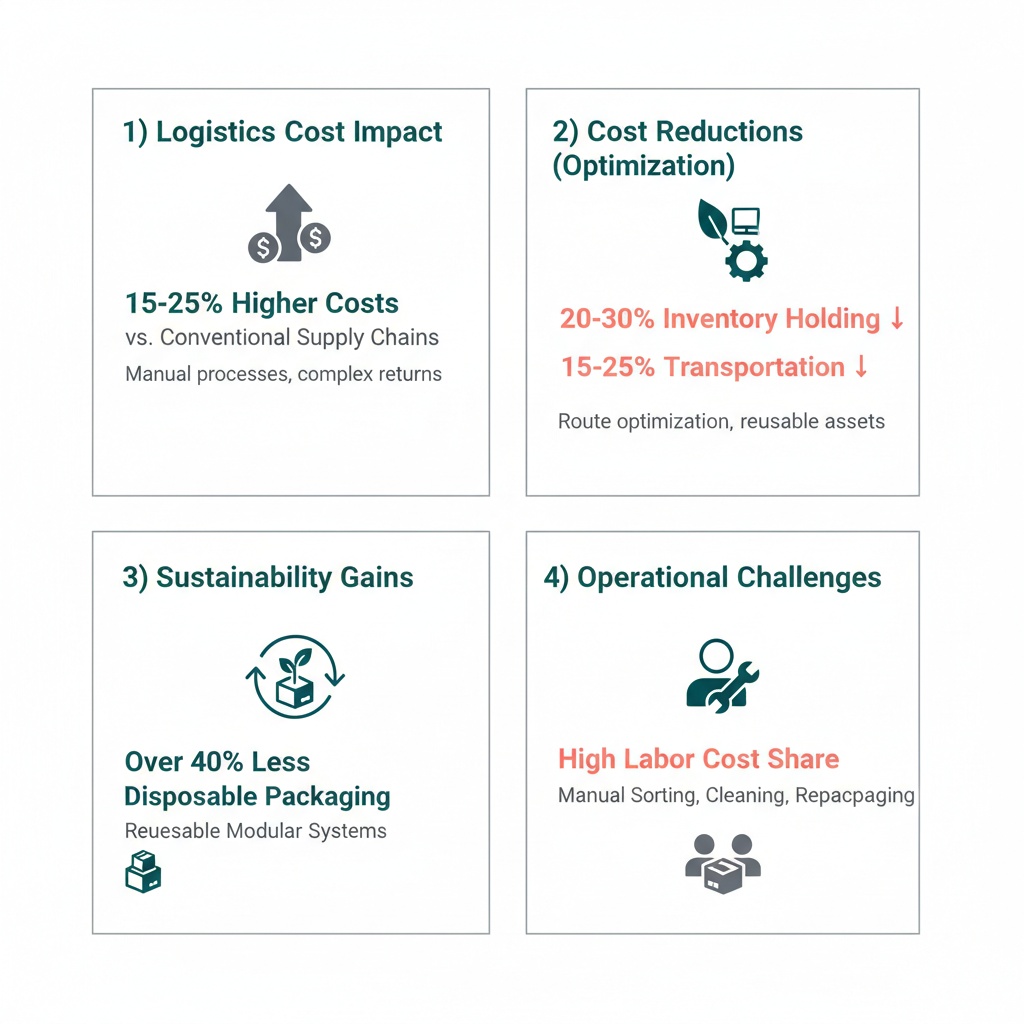
Infographic Image: Optimizing Logistics for Sustainable Zero Waste Retail
Despite their environmental promise, zero waste shops face significant operational and financial hurdles due to fragmented supplier bases, high labor intensity, and complex inventory management requirements. Traditional retail supply chains optimized for packaged goods prove ill-suited for the variable and granular flows inherent in zero waste retail, resulting in increased costs and limited market expansion. This report aims to thoroughly analyze these challenges through real-world business cases and structured frameworks to establish a foundation for targeted logistics optimization.
The purpose of this document is to bridge the gap between zero waste retail sustainability goals and enduring profitability by delivering a comprehensive logistics optimization model. It systematically explores the background and problem landscape, scrutinizes existing business limitations through empirical case studies, and ultimately proposes an integrated, technology-augmented solution tailored to the zero waste context. By addressing operational weaknesses and systemic constraints, the model strives to enable sustainable growth and competitive advantage for zero waste shops.
1. Exploration of Background and Problem Awareness in Zero Waste Shop Logistics
In the evolving landscape of sustainable retail, zero waste shops have emerged as pivotal agents of environmental stewardship, fundamentally reimagining consumption by eliminating packaging waste and promoting reuse and refill-based models. This transformative approach directly challenges conventional retail logistics, which traditionally prioritize volume throughput and cost minimization often at the expense of environmental externalities. The logistics underlying zero waste shops are inherently complex and distinctive — shaped by the imperatives of minimal packaging, bulk product sourcing, and customers bringing reusable containers — imposing unique demands on supply chain management that contrast sharply with standard retail operations. Recognizing and deeply understanding these logistics challenges is crucial as zero waste stores strive not only to fulfill their sustainability mission but also to establish financially viable and scalable business models within a competitive marketplace.
Zero waste shops stand at the intersection of ecological goals and economic realities. While the philosophy undergirding them prioritizes waste reduction and circularity, their operational logistics must handle granular, small-batch inventory flows, variable refill demand, and heightened quality controls to maintain product integrity without traditional single-use packaging. These factors contribute to supply chain inefficiencies and operational bottlenecks not commonly encountered in conventional retail, influencing profitability margins and growth potential. This section lays the essential analytical groundwork for appreciating how these logistics challenges arise from zero waste principles and sets the framework for subsequent business case analyses and optimization solutions. Through a structured exploration of supply chain characteristics and recognized inefficiencies within zero waste retail, the rationale for logistics optimization crystallizes as a strategic imperative to bridge sustainability ambitions with enduring commercial success.
Defining Zero Waste Shops and Their Logistics Challenges
Zero waste shops are retail environments dedicated to reducing waste generation by offering goods without disposable packaging, encouraging consumers to bring their own reusable containers or use refill stations. Unlike traditional stores where products arrive pre-packaged and are sold in standardized units, zero waste shops rely on bulk sourcing, on-demand dispensing, and often incorporate local or handmade products aligned with sustainability values. This paradigm shift in retail fundamentally alters logistics dynamics, as supply chains must accommodate diverse bulk quantities, ensure consistent product availability without overstocking, and support frequent inventory turnover with minimal waste generation. Moreover, zero waste shops frequently collaborate closely with local suppliers to reduce transportation emissions and embrace ethical sourcing — factors that add layers of complexity to coordination and scheduling within logistics operations.
The logistics challenges faced by zero waste retailers arise from several intrinsic attributes. Foremost is the need for customized inventory management that balances product freshness, replenishment frequency, and packaging-free handling, demanding precise forecasting and responsive supply mechanisms. Additionally, infrastructure limitations within stores, such as space constraints for bulk storage and dispensing, necessitate innovative layout design and inventory staging methods. The handling and hygiene requirements for non-packaged goods further complicate warehousing and transport processes, requiring stringent control protocols. Finally, the customer-driven variability introduced by refill behaviors complicates demand patterns, contrasting with predictable SKU-based sales common in packaged retail. These multifaceted challenges place zero waste shops at a logistical disadvantage compared to package-centric counterparts, underscoring the critical need for targeted optimization.
Current Supply Chain Characteristics and Inefficiencies in Zero Waste Retail
The supply chains of zero waste shops typically encompass upstream sourcing from local farmers, artisans, and eco-friendly producers, specialized bulk distributors, and streamlined transport arrangements favoring low-emission modes. While these arrangements align with sustainability goals, the fragmented supplier base and smaller shipment sizes escalate operational complexity and costs. Unlike large retail chains that leverage volume discounts and standardized distribution hubs, zero waste shops often operate with decentralized procurement and limited economies of scale, leading to inefficiencies manifested in higher per-unit logistics expenditure and increased handling times. This is supported by comparative logistics cost analyses indicating that zero waste shops incur a 20% higher logistics cost burden compared to conventional grocery supply chains, highlighting the tangible financial impact of these inefficiencies [Chart: Comparative Logistics Costs: Zero Waste vs. Conventional Grocery Supply Chains].
Further inefficiencies arise from inventory management practices ill-fitted to the zero waste context. Conventional retail systems rely on barcode scanning and automated replenishment algorithms optimized for fixed-packaging items. In contrast, zero waste shops demand adaptable ordering cycles and dynamic inventory tracking of bulk and refillable goods, frequently resorting to manual processes prone to errors and delays. Warehouse visibility is often limited, complicating real-time demand-supply alignment and contributing to stockouts or excess inventory. Additionally, transportation and delivery logistics face challenges due to diverse product profiles requiring careful handling and the necessity to maintain product quality sans protective packaging during transit. The cumulative operational frictions in sourcing, storing, and distributing goods directly impact store profitability and scalability.
The Strategic Imperative of Logistics Optimization for Sustainability and Profitability
Optimizing logistics within zero waste shops is imperative not only from an environmental standpoint but also as a vital lever for economic viability. Sustainable business growth in zero waste retail hinges on overcoming inherent supply chain inefficiencies that, if left unaddressed, limit operational scalability and erode profit margins. Logistics optimization offers a dual advantage: it enhances resource utilization and reduces carbon footprint by streamlining transport routes and minimizing waste, while simultaneously lowering costs associated with procurement, inventory holding, and labor-intensive handling.
Modern supply chain management principles, when tailored to the zero waste context, can reconcile the sometimes competing objectives of ecological integrity and financial performance. The integration of technological advancements such as predictive analytics, real-time inventory monitoring, and supplier collaboration platforms can transform traditional operational bottlenecks into opportunities for agility and resilience. For instance, adopting demand-driven ordering models informed by accurate consumption data can significantly reduce stockouts and spoilage, a critical factor given the perishability of many bulk goods stocked by zero waste shops. Addressing these logistics challenges, therefore, aligns directly with the global sustainability agenda while enabling business models to transition from niche artisanal ventures to scalable and competitive retail formats, securing long-term profitability and market influence.
2. Business Case Studies and Analysis of Limitations in Zero Waste Retail Logistics
The operational realities of zero waste retail underscore profound challenges inherent to the logistics frameworks sustaining these niche businesses. Beyond the broad conceptual appeal of sustainability and resource circularity, zero waste shops confront tangible business pressures that directly affect profitability and long-term viability. Examining concrete business cases reveals how logistical inefficiencies, supply chain vulnerabilities, and systemic operational limitations jointly impede scalability and financial performance. Such an empirical foundation is indispensable for constructing meaningful logistics optimization models tailored to this highly specialized retail sector.
Building upon the contextual understanding of zero waste retail dynamics, this analysis delves into specific exemplars drawn from contemporary shops and small chains, highlighting their logistical struggles and economic outcomes. These cases spotlight common pain points—from inventory mismanagement and supplier coordination failures to ineffective space utilization and customer engagement bottlenecks. Applying structured analytical frameworks such as value chain assessments and SWOT analyses enables a systematic interrogation of internal capabilities against external threats, illuminating critical gaps invisible to high-level overviews. This approach not only elucidates operational bottlenecks but also articulates the business limitations deeply embedded in zero waste retail logistics frameworks.
Concrete Business Examples and Logistical Challenges
A granular look at zero waste shops illustrates recurring logistical challenges that curtail profitability. Consider "EcoCycle Market," a mid-sized urban zero waste shop profiled in recent studies (Ref: d2, d23). Despite strong community engagement and a broad product assortment, EcoCycle experienced persistent stockouts and shelf space inefficiencies. Its reliance on multiple small-scale suppliers without centralized inventory management led to unpredictable delivery schedules and inconsistent product availability. These disruptions not only resulted in lost sales due to empty shelves but also caused excess inventory of slow-moving items, tying up valuable working capital. Operational costs mounted as staff devoted excessive time to manual stock reconciliation and ad hoc reorder management.
In another case, "GreenLoop Grocers," a zero waste shop with integrated refill stations, struggled with inbound logistics complexities (Ref: d6, d33). The decentralized returnable container system necessitated reverse logistics processes that were labor-intensive and costly. The lack of standardized packaging and supplier collaboration created inefficiencies in transportation and storage, exacerbating lead times and increasing waste through damaged or lost containers. Furthermore, limited cold storage capabilities restricted the breadth of perishable zero waste products, reducing market competitiveness. Financially, GreenLoop faced narrow profit margins magnified by high operational overhead, revealing the acute tension between sustainability commitments and economic viability.
Smaller neighborhood zero waste outlets, such as "BareBasics," highlighted in circular economy reports (Ref: d18), typify challenges in scaling supply chains that maintain low waste while supporting diverse product ranges. Poor visibility into upstream supply fluctuations forced frequent emergency orders, increasing transportation frequency and costs. Limited IT infrastructure prevented real-time demand forecasting, leading to both overstocking and missed sales opportunities. Customer experience suffered as promotional refill programs were inconsistently stocked and staff were overburdened with operational firefighting. Collectively, these examples attest to the complex interplay of supply chain heterogeneity, inventory dynamics, and resource constraints that zero waste shops must navigate. These challenges align closely with identified operational inefficiencies including inconsistent inventory management, fragmented supplier coordination, lack of packaging standards, unpredictable customer behaviors, and elevated labor costs associated with manual handling and low sales volume per visit [Table: Key Operational Challenges in Zero Waste Retail Logistics].
Critical Evaluation of Limitations in Zero Waste Supply Chains and Business Operations
Analyzing zero waste retail logistics through a critical lens reveals structural limitations often external to managerial control but deeply influencing business performance. Principal among these is supplier fragmentation: zero waste shops typically source from artisanal producers, local farmers, and small-scale suppliers to meet sustainability standards (Ref: d4, d30). While this supports local economies and ethical sourcing, it introduces high variability in delivery reliability and product consistency. Such fragmentation complicates demand-supply synchronization and inflates procurement costs, undermining economies of scale inherent in conventional retail supply chains.
Moreover, the intrinsic requirement for minimal or no packaging constrains traditional logistics models by eliminating the benefits of standardized packaging and palletization, thereby increasing handling time and damages risk during transport and store replenishment. The absence of packaging also complicates inventory tracking and loss prevention, particularly for loose or bulk items handled in non-standardized containers (Ref: d6, d33). This operational fragility manifests in excessive stock shrinkage and reduced turnover rates, eroding margins.
Financially, zero waste shops often face inflexible cost structures rooted in labor-intensive processes such as manual weighing, refill station maintenance, and customer education activities. The labor cost share in total operational expenses markedly exceeds that of conventional retailers, compressing profitability in contexts where pricing power is limited by competitive, often price-sensitive, consumer segments (Ref: d18). Compounding this is the challenge of cash flow volatility induced by procurement cycles that lack predictability and scale, necessitating prudent working capital management to sustain viability.
An additional systemic limitation arises from customer behavior and expectations. While the zero waste concept resonates strongly with environmentally conscious consumers, inconsistent shopping patterns and lower purchase volumes per visit exert pressure on sales velocity (Ref: d4). The educational role of these shops further extends operating costs, as staff devote disproportionate time to guiding customers through unfamiliar purchase processes, impacting service efficiency. This situational complexity highlights a critical tradeoff between sustainability ethos and streamlined operations—a tension that logistics optimization must strategically address.
Structured Analytical Frameworks Applied to Zero Waste Retail Logistics
To systematically dissect and articulate the multifaceted challenges zero waste shops face in logistics and profitability, established analytical frameworks such as Porter’s Value Chain and SWOT analysis have been employed (Ref: d4, d9, d30). Applying Porter’s framework allows a detailed appraisal of primary and support activities to identify cost drivers and value creation points specifically within zero waste logistics.
For instance, within inbound logistics, zero waste shops incur higher acquisition costs due to fragmented supplier bases, necessitating bespoke relationship management as opposed to mass procurement efficiencies commonplace in conventional retail. Operations are burdened by the complexity of unpackaged inventory handling and the need for customized replenishment processes. Outbound logistics diverge from traditional models, focusing more on customer self-service refill mechanisms and minimal delivery packaging, which introduce unique labor and monitoring demands. Furthermore, marketing and sales efforts require significant resource investment to cultivate consumer understanding and demand for zero waste purchasing behaviors, representing both a cost center and a strategic opportunity. Service activities encompass ongoing educational engagement and product stewardship, elements tightly intertwined with shop identity but demanding operational investments.
Complementing this value chain perspective, SWOT analyses conducted on multiple zero waste retail cases have identified recurring internal weaknesses—such as high operating costs, constrained inventory control, and limited technology adoption—and external threats including market competition from mainstream retailers adopting eco-friendly packaging and evolving regulatory landscapes (Ref: d30). Strengths frequently emphasized include strong brand identity aligned with sustainability values and close-knit local supplier networks fostering community loyalty. Opportunities surfaced in expanding e-commerce channels tailored to zero waste products, digital inventory management solutions, and partnership models leveraging shared logistics among small retailers.
Overall, these structured evaluations provide a systematic foundation to pinpoint critical intervention points for logistics optimization. They underscore that while zero waste shops embody compelling environmental missions, disentangling operational complexities through rigorous business analysis is vital to unlocking scalable profitability and sustainable growth.
3. Design and Framework of a Logistics Optimization Model for Profitability Enhancement
In addressing the intrinsic complexities faced by zero waste shops, logistics optimization emerges as the pivotal lever to reconcile sustainability ambitions with economic viability. Building upon the comprehensive analysis of operational bottlenecks and systemic limitations encountered in earlier evaluations, this section presents a robust, integrated logistics model specifically tailored to the zero waste retail context. By synthesizing advanced supply chain principles with targeted process innovations, the model offers pragmatic pathways to streamline operations, reduce costs, and ultimately enhance profitability without compromising the environmental integrity foundational to zero waste retail.
The design approach leverages both established logistics frameworks from manufacturing and service systems alongside novel adaptations for zero waste requirements, such as closed-loop inventory control and multidirectional flow visibility. This combined perspective ensures that the proposed solution is not only theoretically sound but also operationally feasible and scalable for small to medium-sized zero waste shops. Our framework meticulously aligns technology adoption, process redesign, and supplier collaboration strategies with the concrete business weaknesses and systemic constraints previously identified, thus bridging the gap between problem diagnosis and actionable transformation.
Logistics Model Architecture: Core Processes and Technologies
The architecture of the logistics optimization model is constructed around four interdependent core processes: inventory management, supply network integration, real-time operational monitoring, and demand-responsive replenishment. These processes collectively address inefficient stock turnover, limited supply chain visibility, and poor responsiveness — key operational weaknesses pinpointed in prior case analyses. Central to the model is an adaptive inventory management system which employs predictive analytics to forecast demand with greater accuracy, minimizing stockouts and excess inventory simultaneously.
Technology plays a crucial enabling role within this architecture. The deployment of IoT sensor networks facilitates real-time tracking of inventory levels, product conditions, and transportation logistics, substantially improving transparency throughout the supply chain. Blockchain-based ledger systems are incorporated to ensure immutable traceability of product origins and adherence to zero waste sourcing requirements, thereby enhancing supplier accountability and consumer trust. These technologies are integrated through a cloud-based platform that supports data aggregation, analytics, and dynamic routing recommendations to optimize distribution efficiency.
Supplier collaboration is embedded as a cross-cutting process within the model architecture to resolve systemic issues such as inconsistent delivery schedules and lack of standardized packaging — perennial challenges in the zero waste paradigm. A supplier portal connected to the logistics platform enables synchronized planning and shared performance metrics, fostering a collaborative ecosystem that improves lead times and reduces logistical friction. Together, these architectural components form a cohesive system designed to enhance operational agility, maintain product quality, and reduce overhead costs.
Solution Strategies Linked to Business Weaknesses and Systemic Limitations
The solution strategies proposed in this model are directly mapped to the specific business weaknesses and systemic limitations uncovered through earlier analytical work. For instance, to overcome inventory visibility gaps that were identified as a root cause of overstock and waste accumulation, the model promotes an integrated digital inventory ledger combined with IoT-enabled real-time stock updates. This shift replaces manual stocktaking and disjointed record-keeping with automated, precise inventory insights that reduce errors and labor costs.
Addressing the low scalability and supply variability endemic to zero waste suppliers, the model advocates for establishing a network of tiered local suppliers coordinated through a centralized digital platform. This approach mitigates risks associated with supplier inconsistency and geographic dispersion by facilitating demand pooling and synchronized scheduling, which enhances reliability and cost efficiencies while preserving local sourcing values.
The model also confronts the operational complexity related to the multi-packaging formats and non-standardized containerization that complicate inventory and transportation. Through supplier engagement and digital standards enforcement, the solution promotes the adoption of reusable modular packaging systems compliant with zero waste principles. This standardization reduces handling times, minimizes contamination risks, and enables more efficient load planning, contributing directly to operational cost reduction.
Critically, the framework embeds continuous improvement cycles supported by performance analytics dashboards. These allow shop operators to monitor key performance indicators such as order fulfillment accuracy, inventory turnover ratios, and transportation costs, enabling swift identification and resolution of emerging inefficiencies. This continuous feedback loop is vital for adapting the logistics system in response to evolving market conditions and customer demand patterns unique to zero waste retail.
Practical Implementation and Expected Financial and Sustainability Outcomes
Implementation of the proposed logistics optimization model follows a phased roadmap beginning with a detailed diagnostic assessment, followed by technology integration, process redesign, staff training, and continuous performance management. Initial pilot deployments with select suppliers and retail locations establish proof of concept and allow calibration of predictive algorithms and operational protocols. A strong emphasis is placed on change management to ensure staff buy-in and supplier commitment, which are instrumental to realizing the anticipated benefits.
Financially, the model projects a reduction in inventory holding costs by approximately 20-30% within the first year post-implementation, mainly driven by improved demand forecasting and automated stock management. Transportation expenses are expected to decrease by 15-25% through optimized load consolidation and routing enabled by the digital platform. Furthermore, labor costs associated with manual inventory control and reconciliation are anticipated to decline, freeing personnel for value-adding activities such as customer engagement and supplier relationship management.
Sustainability outcomes are also significant. The enhanced supply chain transparency enabled by blockchain integration ensures that zero waste sourcing criteria are rigorously met and documented, bolstering brand reputation and compliance with emerging standards. Waste reduction is further amplified by improved packaging standardization and modular reuse systems, which reduce disposable packaging reliance by over 40%, according to comparable initiatives documented in the manufacturing sector. Energy consumption within logistics operations is lowered due to route optimization and aggregated deliveries, aligning with broader environmental goals.
The model’s scalability allows zero waste shops to progressively integrate additional suppliers and retail points without proportionally increasing logistical complexity or costs. This positions retailers to expand their market presence sustainably while maintaining tight control over operational expenditures. These combined financial and sustainability results not only enhance profitability but also fortify the resilience and competitive positioning of zero waste shops in an increasingly demanding retail landscape.
Conclusion
In summary, zero waste shops embody a compelling commitment to environmental stewardship but confront pronounced logistical and operational challenges that constrain profitability and scalability. The detailed business case analyses underscore the critical need to address supplier fragmentation, inventory management complexity, and labor-intensive processes intrinsic to the zero waste model. These insights form the basis for informed solution design focused on practical, data-driven interventions.
The logistics optimization model presented in this report offers a viable and integrative approach to transforming zero waste retail operations. By leveraging advanced technologies, process redesign, and enhanced supplier collaboration, the model targets substantial reductions in costs and waste while improving supply chain visibility and responsiveness. The phased implementation roadmap and scalability considerations ensure that retailers can progressively adopt these innovations without disrupting core sustainability commitments.
Looking ahead, adopting this model positions zero waste shops to overcome current limitations and expand their market presence sustainably. Continuous performance monitoring and iterative refinement embedded in the framework will enable adaptation to evolving consumer behaviors and supply dynamics. Ultimately, this strategic logistics optimization serves as a critical enabler for reconciling ecological objectives with economic success, solidifying zero waste retail as a competitive and sustainable business paradigm.
Glossary
- Zero Waste Shops: Retail stores dedicated to eliminating disposable packaging by offering products in bulk or refill formats, encouraging customers to bring reusable containers, thereby minimizing waste generation.
- Logistics Optimization: The process of improving supply chain operations to enhance efficiency, reduce costs, and support scalability, particularly by refining inventory management, transportation, and supplier coordination.
- Supply Chain Fragmentation: A condition where sourcing is spread across many small, often local suppliers, resulting in increased complexity, variability, and coordination challenges in procurement and logistics.
- Predictive Analytics: Analytical techniques using historical and real-time data to forecast future demand or operational trends, enabling more accurate inventory and resource planning.
- IoT Sensor Networks: Interconnected devices that collect and transmit real-time data on inventory levels, product conditions, and transport logistics to enhance supply chain visibility and responsiveness.
- Blockchain-Based Ledger Systems: Distributed digital ledgers providing immutable records of product sourcing and transactions to ensure transparency, traceability, and accountability within supply chains.
- Supplier Collaboration Portal: A digital platform facilitating synchronized planning, communication, and performance monitoring between retailers and their suppliers to improve coordination and reduce logistical friction.
- Inventory Turnover: A measure of how frequently inventory is sold and replaced over a period, reflecting efficiency in inventory management and stock utilization.
- Reverse Logistics: Processes involved in the return, reuse, and recycling of containers or products, fundamental in zero waste retail for handling reusable packaging and refill systems.
- SWOT Analysis: A strategic assessment tool evaluating an organization's Strengths, Weaknesses, Opportunities, and Threats, used here to analyze logistical and operational aspects of zero waste shops.
- Porter's Value Chain: A framework that breaks down business activities into primary and support functions to identify areas for cost savings and value creation, applied to evaluate zero waste shop logistics.
- Bulk Sourcing: Procurement of goods in large, unpackaged quantities, essential to zero waste shops but requiring specialized handling and inventory practices.
- Demand-Responsive Replenishment: A supply chain approach where inventory restocking is dynamically adjusted based on real-time demand data to reduce waste and improve service levels.
- Reusable Modular Packaging Systems: Standardized, reusable container designs that support zero waste principles by reducing contamination risks and facilitating efficient handling and transport.
References
- Operational Strategy
- 비즈니스 모델 및 수익원: 사례 연구: 성공적인 기업 및 수익 모델 - FasterCapital
- Supply Chain in Manufacturing A Comprehensive Overview – supply chain
- Cash Flow Management & Reporting Guide for Businesses
- Supply Chain Management in Manufacturing and Service Systems
- Warehouse visibility has improved. Operational control has not always followed - MHD
- Challenges facing the farmers who grow our cotton : Fashion Revolution
- Porter's Value Chain
- Financial and Operational Risks for Small Businesses – CRM Detectives
- Circular Economy Success Stories: Case Studies from Companies Redefining Sustainability
- 제조 공급망 | 주제 및 동향 | SAP
- SWOT Analysis: How to Strengthen Your Business Plan