Discover the 2026 Ansan International Street Arts Festival: Schedule, Highlights & Visitor Guide
A Complete Guide to Korea’s Premier Spring Street Arts Celebration in Ansan
Table of Contents
Introduction
The Ansan International Street Arts Festival 2026 serves as a vibrant cultural highlight within South Korea’s spring festival calendar, celebrated for its dynamic street performances and multicultural heritage. This guide is designed to provide prospective attendees, tourists, and cultural enthusiasts with a comprehensive understanding of the festival’s background, scope, and significance, equipping them to fully appreciate its artistic and social dimensions.
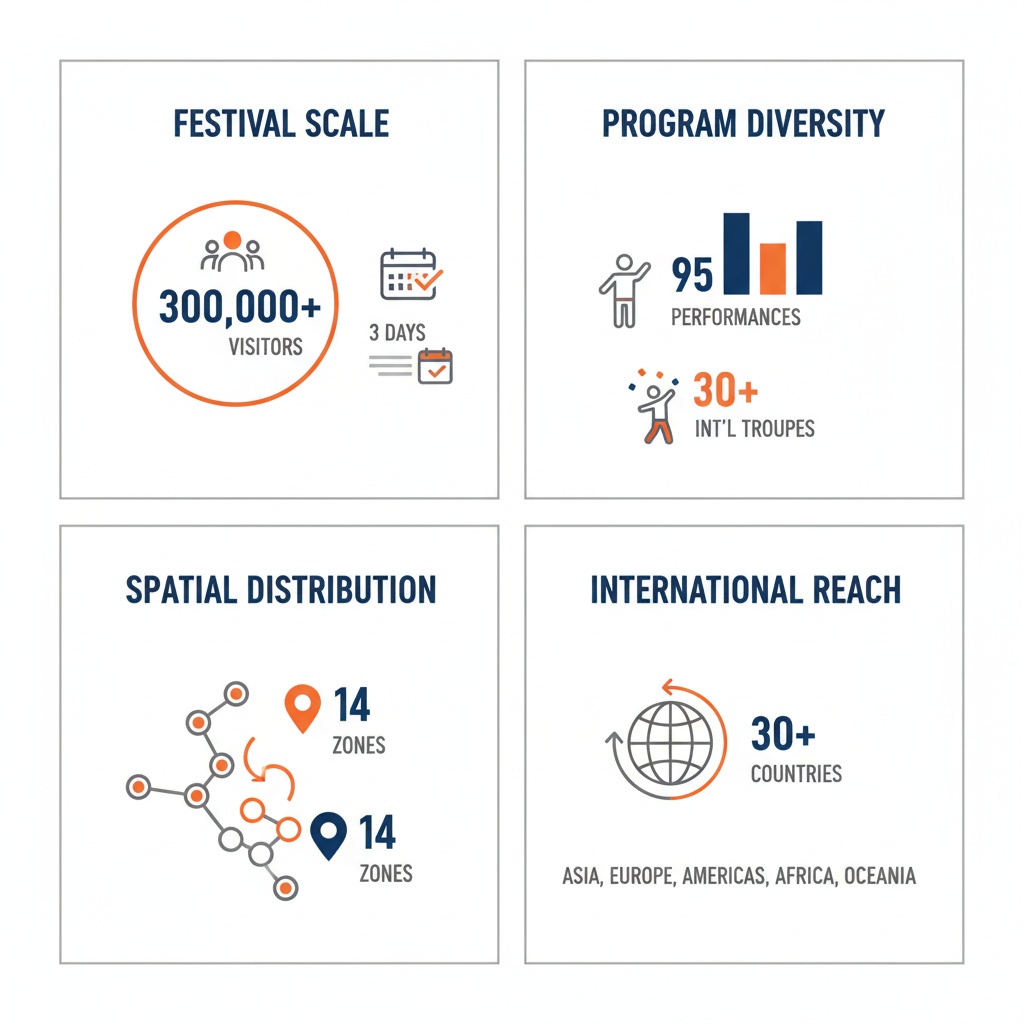
Infographic Image: Ansan International Street Arts Festival 2026 – Key Highlights
Targeting first-time visitors as well as returning festival-goers, the guide outlines the festival’s unique open-air, pedestrian-friendly format spanning multiple zones across Ansan Cultural Square and surrounding urban spaces. Readers will find clear explanations on how to navigate the festival layout, engage with diverse performances, and immerse themselves in an environment that fosters cultural exchange and artistic innovation.
To maximize practical value, the guide also introduces core themes underpinning the 2026 festival edition, emphasizing its commitment to diversity and social harmony through street arts. Instructions on how to effectively use this guide are interwoven throughout, encouraging readers to explore historical context, detailed program schedules, and visitor tips in a structured, accessible manner.
1. Festival Overview and Background
Nestled within South Korea’s dynamic cultural tapestry, the Ansan International Street Arts Festival has emerged as an emblematic event that not only entertains but also bridges diverse communities through the universal language of street performance. Since its inception in 2005, this festival has evolved from a modest local gathering into one of the nation’s most significant cultural celebrations, drawing audiences exceeding 300,000 annually. It epitomizes the vibrant spirit of Ansan, a city renowned for its rich multicultural population, serving as both a showcase and catalyst for artistic innovation amidst urban life. Positioned within the broader Korean and international festival landscape, the 2026 edition reaffirms the festival’s role as an essential cultural landmark for practitioners, locals, and visitors alike.
What sets the Ansan International Street Arts Festival apart is its innovative open-performance format, which transforms expansive cityscapes into an interconnected stage. Rather than confining audiences to traditional theaters or single-stage venues, the festival unfolds organically across Ansan Cultural Square and multiple adjacent urban zones. This pedestrian-friendly design encourages free and spontaneous encounters with artistry, where spectators meander through fourteen performance zones including cultural plazas, commercial sectors, and localized hubs. Such an immersive, decentralized arrangement amplifies accessibility and interaction, fostering an atmosphere of communal participation where art is seamlessly woven into the urban fabric. This approach reflects an intentional departure from conventional festival models, privileging inclusivity and unpredictability in audience experience.
Anchored by the 2026 theme ‘Art Meets Diversity: Bridging Society Through Street Performance,’ this year’s festival foregrounds the powerful role of arts in nurturing multicultural coexistence and social harmony. Ansan’s distinctive demographic composition—home to a significant immigrant population alongside Korean residents—makes it an exemplary setting for dialogues around integration and cultural exchange. The festival’s programming integrates narratives and aesthetics from various ethnic communities, illuminating shared humanity and collective creativity. By leveraging street arts as a medium, the event advances a vision where diversity is celebrated not only in presence but through active collaboration, dialogue, and mutual understanding. This thematic focus elevates the festival beyond entertainment, positioning it as a dynamic platform for social engagement and cultural empathy in contemporary Korea.
Historical Growth and Cultural Significance
Originating in 2005 as a localized street performance initiative, the Ansan International Street Arts Festival has undergone notable growth in scale and prominence over the past two decades. Initially conceived to revitalize the city’s public spaces and promote local artistic talent, the festival steadily expanded its scope to encompass international street artists and increasingly diverse performance genres such as circus acts, puppetry, mime, contemporary dance, and interdisciplinary spectacle. By 2016, it garnered national recognition as the first regional festival to receive the coveted National Brand Award in South Korea, signifying its exceptional contribution to cultural development. Moreover, international validation came through consistent accolades from the World Federation of Street Arts Festivals, underscoring its status as a benchmark street arts event within Asia.
This trajectory reflects not only successful event management but also a deepening cultural resonance: the festival has become a key medium for preserving and innovating artistic traditions within a modern urban context. It consistently attracts over 30 international troupes and nearly 100 programs annually, bringing global performance practices into dialogue with local sensibilities. The festival’s integration into Ansan’s civic identity is also palpable—leveraging public spaces as platforms for art democratizes cultural consumption, blurring boundaries between performers and audiences to cultivate a shared urban cultural vitality.
As Ansan’s population diversified rapidly over recent years, the festival evolved concurrently as a space to foreground multicultural voices, positioning itself as a microcosm of Korea’s emergent social landscape. This inclusive ethos, intertwined with artistic excellence, has cemented the festival’s reputation as a cultural beacon fostering community cohesion and intercultural understanding.
Open Performance Format in Urban Space
The festival’s distinctive format adopts a fluid and decentralized spatial logic, utilizing the entire Ansan Cultural Square and its surrounding city zones as an expansive canvas for performances. This format shuns the traditional ‘stage-audience’ paradigm in favor of multiple simultaneous spectacles unfolding across fourteen designated performance zones, including eight cultural plaza stages, three commercial areas, and three key hubs. This spatial dispersal invites visitors to organically encounter performances during their navigation of the festival area, transforming transit into discovery and spectatorship into participation.
This innovative design capitalizes on Ansan’s wide pedestrian paths and urban architecture to cultivate a safe, accessible, and versatile environment supportive of diverse performance modalities—from intimate interactive acts to large-scale circus shows. The absence of physical barriers and the freedom of movement inherent in this approach amplify audience agency, enabling visitors to curate their own festival experience, interact in small groups, or immerse themselves fully in selected performances.
Furthermore, the open format facilitates a vibrant cross-pollination of performance styles and cultural expressions. Artists can adapt dynamically to audience proximity and environmental cues, enhancing the immediacy and emotional impact of their acts. The festival thus operates as a living organism where artistic creation is inseparable from the spatial and social flows of the city. This engagement strategy also helps intensify communal bonds among Ansan residents and visitors, as public spaces become shared sites of celebration, conversation, and cultural exchange.
2026 Theme: Diversity and Social Harmony Through Arts
The 2026 festival theme, ‘Art Meets Diversity: Bridging Society Through Street Performance,’ crystallizes the Ansan International Street Arts Festival’s commitment to leveraging creative expression as a conduit for social inclusion and multicultural dialogue. With Ansan recognized as one of Korea’s most ethnically diverse cities—hosting substantial migrant worker, immigrant, and refugee communities—the festival consciously amplifies narratives that reflect this diversity. This year’s programming consciously highlights artworks that grapple with themes of belonging, coexistence, and cultural hybridity, capturing both the tensions and the potential that arise within pluralistic urban settings.
Artistic selections include collaborative projects that feature performers from Korean, Southeast Asian, Central Asian, and Western backgrounds, fostering intercultural encounters not only onstage but also among festival audiences. The festival’s storytelling elements emphasize empathy and shared human experiences, asserting that street arts have inherent power as accessible and evocative vehicles for social commentary and community building. This focus aligns with global trends in cultural festivals that position the arts as active agents in peacebuilding and minority representation, underscoring Ansan’s role as a progressive model for multicultural urban festivals.
Importantly, the 2026 festival does not merely celebrate diversity through spectacle but integrates it into its operational ethos—curatorial decisions, community outreach, and all levels of production reflect an ethos of inclusivity and dialogue. This makes the festival a meaningful cultural interlocutor that harnesses the joyous and spontaneous qualities of street arts to invite audiences to reconsider fixed notions of identity and foster social harmony.
2. 2026 Festival Program and Performance Schedule
Marking a definitive phase in the festival experience, the 2026 Ansan International Street Arts Festival unfolds from May 1st through May 3rd within the vibrant and expansive setting of Ansan Cultural Square. This temporal and spatial specificity transitions the global narrative from the festival’s rich cultural essence into a precise, actionable itinerary, spotlighting the exceptional diversity of performances and enabling attendees to plan their immersive journeys with accuracy and confidence. Anchored at Ansan Cultural Square—a pedestrianized, open-air urban arena—the festival’s layout balances artistic accessibility with a dynamic cityscape ambiance, creating a uniquely engaging platform for street arts.
The 2026 iteration presents an ambitious program portfolio comprising 95 individual performances distributed deliberately across 14 differentiated zones that collectively activate the entirety of the Ansan Cultural Square and its surrounding precincts. This multi-zone conception is a strategic design choice enabling a tapestry of simultaneous artistic expressions that cater to varied audience preferences and encourage fluid movement throughout the festival space. By providing clear scheduling and performance site details, visitors can navigate this rich environment purposefully, optimizing their experience amid an eclectic convergence of cultural narratives and performance styles.
Festival Dates and Venue Details
The 2026 festival officially opens on Friday, May 1st, and runs continuously through Sunday, May 3rd, encompassing a full weekend that coincides strategically with early May holidays. This timing is selected to maximize public participation and cultural engagement during a season favorable to outdoor festivities. All events center around Ansan Cultural Square, located at 157 Gwangdeok-daero, Danwon-gu, Ansan-si, Gyeonggi-do, transforming this urban core into a sprawling stage for the duration of the festival.
Ansan Cultural Square’s pedestrian-friendly environment forms the backbone of the festival’s spatial organization, creating an accessible and secure setting for attendees of all ages and mobility levels. The square and adjacent streets are closed to vehicle traffic during the festival to enhance safety and allow uninterrupted viewing experiences. This open-space format facilitates spontaneous discovery and multiple encounter points with artists and performances, a hallmark defining the Ansan festival's ambiance.
Visitors are encouraged to explore multiple performance zones that intersperse the cultural plaza with commercial and community hubs, crafting a festival ecosystem that reflects Ansan’s multicultural identity and urban fabric.
Program Overview: 95 Performances Across 14 Zones
The festival’s 95 programs unfold across a meticulously curated framework of 14 distinct performance zones. These include eight cultural plaza stages that serve as primary artistic focal points, three commerce-related zones that integrate performance with local business districts, and three dedicated hubs fostering community interaction and thematic exploration. This distributed model ensures a comprehensive spread of engaging content while managing crowd density and encouraging diverse pathways through the festival grounds.
Programming spans various street arts genres such as circus acts, magic shows, theatrical performances, acrobatics, dance, and live music, each contributing uniquely to the festival’s narrative of artistic innovation intertwined with multicultural coexistence. The performances are scheduled throughout the daylight and evening hours, with strategically staggered times to facilitate audience mobility and maximize opportunities for festival-goers to attend multiple shows.
An emphasis is placed on accessibility, with all performances offered free of charge, reinforcing the festival’s commitment to inclusiveness and community participation. The format invites visitors to experience the spontaneous, serendipitous encounters that street arts inherently cultivate.
Key Headline Performances and Timetable
Highlighting the festival schedule is the prestigious opening act by the Dongchun Circus, a historic Korean troupe with over a century of legacy. Their 'Variety Circus Show' inaugurates the festival on May 1st at 7:00 PM at Zone E within Ansan Cultural Square, delivering an hour-long spectacular featuring daring aerial acrobatics, ground stunts, and signature illusions such as the famed 'Wheel of Death'. This opening event sets a high-energy tone and draws significant audience attention, often requiring early arrival for optimal seating and viewing positions.
Another marquee event, the Canadian troupe 'Caravante', presents the festival’s grand closing performance on May 3rd at 8:00 PM, also at Zone E. This show is notable for its blend of aerial feats, comedic elements, and ensemble choreography, offering a vibrant farewell encapsulating the festival’s spirit of multicultural collaboration. Following the performance at 9:00 PM, a synchronized fireworks display orchestrates a spectacular finale that illuminates the Ansan night sky, symbolically underscoring the festival’s culmination and communal celebration.
Amid these headline shows, Lee Eun-gyeol, South Korea’s foremost illusionist, performs a masterful magic event positioned strategically to maintain audience engagement throughout the festival. His illusions combine traditional sleight-of-hand with contemporary effects, scheduled at multiple times across May 2nd, providing flexible opportunities for attendance. These performances are interspersed within the broader program, enabling attendees to weave seamlessly between diverse artistic experiences.
Beyond the major acts, the timetable facilitates simultaneous performances across all zones, reflecting the festival’s open-concept design that animates the entire venue. Schedules for secondary performances are detailed in the official program guide, allowing visitors to customize their itineraries based on artistic interests and timing preferences. Festival organizers emphasize that while headline shows have fixed prime-time slots, the multiplicity of concurrent events relies on visitor agency and on-ground exploration.
3. Visitor Information and Tips
The Ansan International Street Arts Festival 2026 invites visitors into a vibrant, open-air celebration that transforms the heart of Ansan Cultural Square into a live canvas of dynamic, free-access street performances. Navigating this lively and expansive festival requires strategic preparation to maximize enjoyment amid its 95 programs spread across 14 diverse performance zones. Emphasizing accessibility and cultural harmony, the festival's layout and operational planning prioritize pedestrian mobility, enabling attendees to fluidly explore multiple stages and immersive art installations that unfold simultaneously throughout the venue. Understanding the practical aspects of attendance—from free admission logistics to crowd management and transportation options—is essential for a seamless festival experience that truly reflects the inclusive spirit underpinning this cultural event.
Following the detailed program schedule and festival background, this section translates those insights into actionable guidance. It equips visitors with essential knowledge on how to navigate the pedestrian-friendly spaces, efficiently plan their viewing of concurrent performances, and engage respectfully within Ansan’s multicultural artistic environment. Ultimately, this practical advice not only ensures comfort and safety but also deepens visitors’ connection to the festival’s underlying message of multicultural coexistence and artistic innovation.
Free Admission and Navigating Multiple Performance Zones
One of the most compelling features of the Ansan International Street Arts Festival is its completely free admission policy, inviting a broad audience to experience the eclectic mix of street performances without barriers. The open layout of Ansan Cultural Square and its surrounding zones allows visitors to move freely between 14 distinct performance areas, including eight dedicated cultural plaza stages, three commerce zone stages, and three hub zones. This distributed design encourages exploration and spontaneous discovery, enabling audiences to encounter a range of artistic expressions from acrobatics and illusion magic to traditional circus acts and interactive installations.
While free movement promotes a richly diverse viewing experience, it also requires visitors to develop a flexible navigation strategy. The festival’s pedestrian-only environment—enhanced by restricted vehicular access during the event—ensures safety and ease of movement but can lead to congestion at popular stages, particularly during headline acts such as the Dongchun Circus's opening performance or the closing Canadian troupe show. To mitigate crowding, the festival planners have distributed performances strategically both in time and space, staggering start times and dispersing major events across multiple zones. Visitors are encouraged to consult the official festival map and mobile guidance apps available on-site to identify less congested pathways and discover alternative routes between stages.
Practical navigation also involves optimizing visit flow by balancing time spent watching performances with opportunities to engage with interactive and cultural experience areas. The embedded ‘experience zones’ like the YES Kids Zone and various multicultural storytelling installations offer lively yet less crowded spaces, providing natural interludes that refresh visitor engagement without missing key performances. Such an approach supports a more sustainable festival attendance rhythm, reducing fatigue and enhancing overall enjoyment.
Scheduling Attendance and Managing Simultaneous Performances
Given the festival’s format of multiple simultaneous performances, effective scheduling becomes crucial for visitors aiming to experience a broad spectrum of programs. The 2026 edition features 95 programs spanning three intense days—from May 1st to 3rd—with several key headline performances occurring at overlapping times. Although the official schedule provides precise times and locations for these events, visitors must approach planning with adaptability, as crowd conditions and natural delays can occur.
To optimize attendance, it is advisable to adopt a prioritization strategy: identify must-see headline acts early, such as the Dongchun Circus variety show opening the festival or the Canadian troupe’s grand closing combined with a spectacular fireworks display, and plan to arrive ahead of the start time to secure good viewing spots. For the remainder of the day, switching between stages offering smaller, more frequent acts can enhance cultural breadth without the pressure of battling large crowds.
Moreover, visitors should build flexibility into their schedules. Street performances, by nature, may invite audience interaction or extend beyond announced times. Being open to spontaneous art encounters and leveraging downtime at food stalls or rest areas between performances adds to the festival’s communal atmosphere. For families and visitors with limited mobility, focusing on centralized zones near amenities ensures comfort while enabling participation in both main and side programs.
Importantly, the festival’s free access model allows for gradual circulation, encouraging moving with the crowd rather than against it, thereby improving flow and minimizing bottlenecks. Festival organizers also recommend downloading the official program app, which provides real-time updates on crowd density and performance progress, enabling visitors to adjust their itinerary dynamically.
Transportation, Safety Measures, and Respectful Visitor Behavior
Transportation to and from the Ansan International Street Arts Festival is optimized around the pedestrian-centric design of the venue and the obligatory traffic restrictions in place during the event. From April 29th at 10:30 PM until May 4th at 5:00 AM, all roads leading into Ansan Cultural Square are closed to private vehicles, bicycles, electric scooters, and motorcycles to ensure pedestrian safety. Consequently, personal car access and on-site parking are extremely limited and not recommended.
The most efficient and environmentally friendly way to reach the festival is via Seoul Metro Line 4, disembarking at either Gojan Station or Jungang Station. Both stations are positioned within walking distance of the festival grounds, allowing visitors to bypass road closures and avoid traffic delays. Several local buses also serve the surrounding area but may be subject to detours during the festival. The festival organizers strongly encourage combining public transit with walking to minimize congestion and support Ansan’s wider urban sustainability goals.
Inside the festival, ample signage and mobile app guides assist with orientation and emergency information. Safety personnel are strategically positioned throughout the festival zones, and first aid stations are clearly marked. Visitors are advised to wear comfortable footwear given the expansive walking areas and to carry essentials such as water and light outerwear, since spring weather can be variable.
Culturally, the festival emphasizes its foundation in multicultural coexistence and respect for diverse communities. Attendees are encouraged to engage with performances and participants respectfully, observing common courtesies such as refraining from obstructing performers, managing noise levels during performances, and adhering to guidance from festival staff. Photography is generally permitted but should be done considerately, especially around interactive acts involving children or vulnerable groups. The festival also provides multilingual assistance booths to support international visitors, reflecting Ansan’s inclusive cultural ethos.
Finally, as a pedestrian-centric event, visitors should remain vigilant of their belongings in dense crowd settings and cooperate with any public safety directives promptly. By embracing these travel, safety, and etiquette recommendations, attendees contribute to a harmonious and memorable festival atmosphere for all.
Conclusion
In summary, the Ansan International Street Arts Festival 2026 offers an unparalleled cultural experience that combines innovative street performances with a profound celebration of multicultural coexistence. Visitors are encouraged to leverage this guide’s insights to navigate the extensive program of 95 performances across 14 zones, ensuring a rewarding and immersive festival journey.
For those seeking to deepen their engagement beyond the event, the festival’s official website, mobile app, and on-site information centers provide additional resources and real-time updates. Embracing the festival’s ethos of inclusion and creativity opens pathways to continued cultural exploration within Ansan and the broader Korean arts scene.
As a next step, prospective attendees should plan their visits carefully using the detailed schedules and visitor tips presented herein, preparing to experience a uniquely accessible and vibrant celebration that not only entertains but also connects diverse communities through the universal language of street arts.
Glossary
- Ansan International Street Arts Festival: An annual cultural event held in Ansan, South Korea, featuring a diverse range of street performances across multiple urban zones, celebrating multicultural coexistence through arts.
- Open Performance Format: A festival design approach where performances occur simultaneously across multiple public spaces without physical barriers, enabling free movement and spontaneous audience interactions.
- Performance Zones: Designated areas within the festival site where multiple simultaneous performances take place; in 2026, there are 14 zones including cultural plazas, commercial areas, and community hubs.
- Dongchun Circus: A historic Korean circus troupe with over 100 years of legacy, renowned for acts like aerial acrobatics and the 'Wheel of Death,' featured as the festival’s prestigious opening performance.
- Lee Eun-gyeol: South Korea’s foremost illusionist, known for blending traditional sleight-of-hand magic with modern effects, performing multiple shows during the festival.
- Multicultural Coexistence: The harmonious presence and interaction of diverse cultural and ethnic communities, a central theme of the festival emphasizing social inclusion through artistic expression.
- Pedestrian-Friendly Environment: An urban area design that prioritizes safety and accessibility for foot traffic by restricting vehicle access; at the festival, roads around Ansan Cultural Square are closed to vehicles during events.
- Festival Program App: A mobile application provided by the festival organizers offering real-time updates on schedules, crowd density, and navigation assistance to enhance visitor experience.
- Simultaneous Performances: Multiple artistic acts occurring at the same time across different zones within the festival, requiring visitors to plan and prioritize attendance strategically.
- Cultural Plaza: One of the primary types of performance zones in the festival, typically open public squares designed to host cultural and artistic events.
- Fireworks Display: A scheduled pyrotechnic show concluding the festival’s grand closing performance, enhancing the celebratory atmosphere and symbolizing communal celebration.
- National Brand Award: A prestigious South Korean recognition granted to outstanding regional festivals, awarded to the Ansan International Street Arts Festival in 2016 for its cultural excellence.
References
- 2026 안산 국제 거리극 축제 공연 시간 장소 프로그램 일정
- 2026 경기도 문화 축제 목록 56개
- Instagram의 Contemporary Performance님 : "Goyang Street Arts Festival 2026 – South Korea Apply to this street performance festival open call for international artists. Performance fee up to 10,000,000 KRW (~$7,200) plus accommodation, per diem, and production support. Airfare and cargo costs are not covered Open to non-Korean artists working in street arts, circus, theatre, mime, puppetry, and interdisciplinary performance. Deadline: April 20, 2026 Apply via link in bio Explore more opportunities at contemporaryperformance.com #ArtistOpenCall #StreetArts #PerformanceFestival #InternationalArtists #OpenCall"
- [2026년 5월] 안산국제거리극축제 총정리 | 일정·프로그램·교통통제·관람팁